Specs are compiled from manufacturer listings and verified buyer reviews and can change over time — please confirm the key details on the product page before buying.
Cold, wet hands turn a long shift into a miserable one. The glove that solves it needs a real waterproof barrier against slush and standing water plus a thermal liner that holds heat without leaving your fingers soaked in sweat. Most gloves on a store shelf claim both and deliver only one. This guide separates the pairs that genuinely keep water out from the ones that soak through in minutes.
This guide is built by comparing the manufacturers’ published specifications and the patterns across verified customer reviews, so you get each pick’s real strengths and trade-offs instead of marketing spin.
You will see which pairs run true to size, which coatings stay flexible below freezing, and where a leather palm is worth the extra spend over a dipped shell. By the end you will know exactly which pair fits your workday, your climate, and your hands — which is the whole point of shopping for waterproof insulated work gloves.
Top Picks


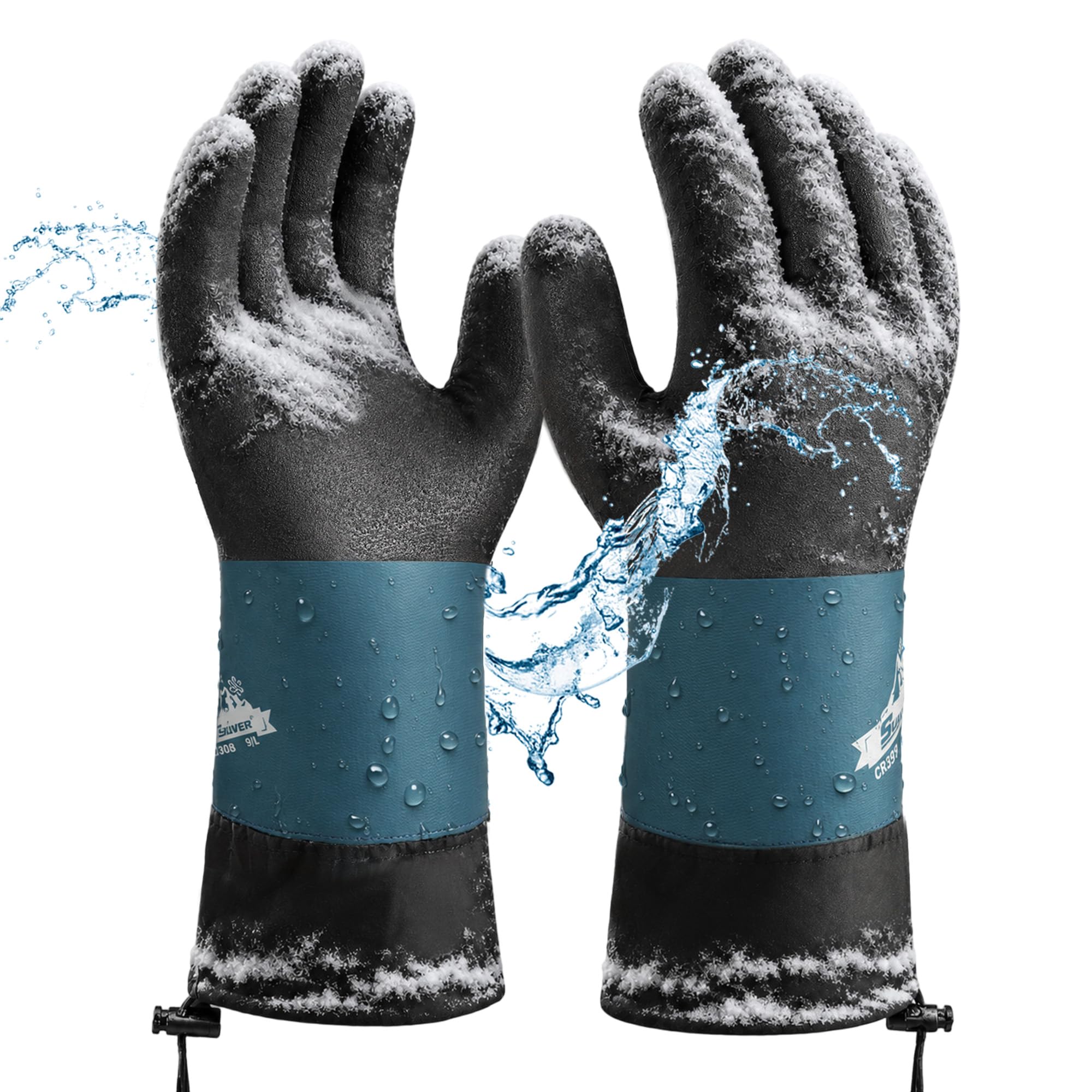
How To Choose The Best Waterproof Insulated Work Gloves
Most buyers pick on the temperature rating alone, and that is the mistake. A glove rated for extreme cold can still be useless to you if the palm cannot hold a wet wrench or the fingers are too stiff to tie a knot. Work through the four decisions below and the right pair narrows fast.
Waterproof layer versus water-resistant shell
A water-resistant shell slows moisture down; a waterproof barrier stops it. Look for gloves that either carry a fully dipped coating or a sewn-in waterproof insert behind the shell. The Carhartt Knit Cuff and the Wells Lamont both use an insert; the FrogWear and the Schwer use a dipped or coated shell that blocks water outright.
Lining material and how warm it actually feels
Fleece, acrylic, terry cloth, and imitation lambswool all trap heat differently. A brushed terry liner in the FrogWear flexes with your hand. A fleece liner in the toolant holds warmth close to the skin. Thicker is not automatically warmer on the job — bulk costs dexterity, so match the lining to the fine control your work demands.
Palm grip on wet and icy surfaces
Smooth rubber slides right off a wet pipe. Textured particles, sandy latex, or a goatskin leather palm all add friction where it counts. If you move slippery objects in the wet all day, the sandpaper-style grip on the FrogWear or the textured particles on the Schwer palm matter more than any temperature figure.
Cuff coverage and sizing
A knit cuff sits at the wrist. An extended cuff or a drawstring gaiter runs up the forearm and seals against snow blowing into your sleeve. Measure your palm and check the maker’s chart — several gloves in this category lean small, and sizing up is the standard fix when you land between two sizes.
Side-by-Side Comparison
| Model | Best For | Waterproof Claim | Lining / Insulation | Cuff / Closure | Amazon |
|---|---|---|---|---|---|
| Carhartt Men’s Waterproof Insulated Knit Cuff Glove★ Best Overall | All-purpose winter work | Waterproof insert | Ultrasoft insulation, fleece cuff | Knit cuff, adjustable wrist strap | Amazon |
| FrogWear 8490 Work GlovesBest Value | Freezer and chemical handling | 100% waterproof PVC dip | smooth brushed terry cloth | 12″ gauntlet | Amazon |
| Schwer CR3308 XLBest for Deep Cold | Wet outdoor work in deep cold | 100% waterproof, water up to 30 cm | Plush imitation lamb wool | Extended cuff, one-hand adjust | Amazon |
| HANDLANDY 2 Pairs Waterproof Work Gloves for Cold Weather | Two-pair value for mixed jobs | 100% waterproof latex cover | Thermal fleece lining | Stretch-fit knit | Amazon |
| toolant Winter Work Gloves | Breathable wet-weather work | 100% waterproof water-based PU | Thick fleece | One-handed drawstring adjuster | Amazon |
| SHOWA TEMRES 282-02 Waterproof Insulated Winter Work Gloves | Deep snow and long shifts | 100% liquid-proof seal | Thermal acrylic fleece, rated to -58°F | Integrated drawstring gaiter | Amazon |
| Wells Lamont Men’s Insulated HydraHyde Waterproof Grain Leather Hybrid Winter Gloves | Leather-palm durability | Waterproof / breathable insert | Fleece-lined, 150-gram 3M Thinsulate | Hook and loop | Amazon |
| Carhartt Men’s Waterproof Thermal-Lined Secure Cuff Glove | Dexterity on the job site | Waterproof insert | Fleece-lined spandex | Secure cuff, hook and loop | Amazon |
| Vgo CA7722FW | Impact protection on heavy jobs | Waterproof | Lined leather | — | Amazon |
Detailed Reviews
1. Carhartt Men’s Waterproof Insulated Knit Cuff Glove
Our pick — 4.5+★ from 37,000+ verified ratings; the strongest balance of quality and price.
The one pair that covers a shovelled driveway, a frozen tailgate, and a job site without complaint.
This is the glove most people picture when they hear “cold weather work glove,” and the reputation is earned. A waterproof insert sits behind a durable reinforced shell, so slush on the truck bed does not soak through to your fingers. The grippy palm keeps a shovel handle or ratchet from spinning loose when it is wet. A sweat-wicking layer inside moves moisture away from your skin, which is the difference between dry-warm and damp-cold after a hard hour.
The details around the collar do real work. Soft fleece cuffs seal the wrist and an adjustable wrist strap cinches them down so snow and slush stay out. There is a clip off the wrist that keeps the pair together in a coat pocket, and a nose wipe that earns its keep on a raw January morning. The ultrasoft insulation is the kind that feels warm the moment you pull it on rather than requiring twenty minutes of hand-warming first.
Buyers praise the build quality most, and warmth in cold runs a close second. The catch is sizing and water resistance: some buyers with large hands find the cut runs small, and a few report dampness during long wet exposure. The shell is not a fully dipped barrier, so standing water over a long shift will eventually test it.
knit cuff seal
- Waterproof insert keeps slush out while the shell stays tough
- Grippy palm holds a wet shovel or tool steady
- Sweat-wicking lining stops the damp-cold feeling
- Fleece cuff plus adjustable wrist strap seals out snow
- Wrist clip keeps the pair together in a pocket
bulky for tasks
- Fit runs small for some large-handed buyers — check the chart
- Water resistance splits opinion on long wet shifts
- Not a fully dipped barrier for sustained immersion
grab this pair if: you need one glove for shovelling, errands, and light job-site work in wet cold.
look elsewhere if: you stand in water all day — a fully dipped glove serves you better.
2. FrogWear 8490 Work Gloves
A fully dipped shell that shrugs off water, grease, and a freezer aisle without flinching.
Where the Carhartt leans on an insert, this one goes the other way: a triple-dipped PVC coating covers the whole glove. That makes it the pick for the absolute wettest, messiest jobs — cold storage, freezers, snow removal, commercial fishing, and petrochemical work. Buyers report the pair keeps hands dry and warm even in extreme cold, with one note of it performing at -15 below zero. The PVC stays flexible down to -5°F, so the coating does not go stiff and crack when the temperature drops.
A smooth brushed terry cloth liner (a soft, looped fabric inside) flexes with your hand instead of bunching, which cuts hand fatigue over a long cold shift. The fingers and palms have a sandpaper-style grip that bites into slippery, wet objects. The long 12-inch gauntlet (the cuff that extends up your arm) runs a fair way up the forearm to keep spray and slush off your sleeve. It also handles oils, greasy materials, and chemical residue — though you should always verify compatibility for the specific chemical you work with.
Durability is where the picture splits: plenty of pairs come through with no cracks or rips, while others wear through at the palm and fingers faster than expected. That trade-off is the price of a soft, flexible dip. For freezer work and wet handling at a budget-friendly tier, very little else covers as much ground.
triple dip coating: the freezer worker, the snow-shoveller, the person handling wet and greasy material all shift. The full dip is the reason it works where sewn gloves give up.
blue color shows dirt: a soft flexible dip wears at the high-wear points over time, so treat the palm and fingers as the parts that will go first.
reach for this if: your work is wet, cold, and messy, and you want a full waterproof barrier.
pass if: you need fine finger dexterity — a dipped shell is bulkier than a knit glove.
3. Schwer CR3308 XL
Built to stay soft and grippy when the thermometer reads well below freezing.
The number that matters here is -22°F (-30°C) — the temperature at which the water-based PU coating is still meant to stay soft and flexible. That is deep-cold territory, the kind of morning where a stiff glove turns your hands into useless claws. The trade-off for that flexibility is that the shell is a water-based coating rather than an insert, and it is rated as 100% waterproof even for short tasks with hands in water up to 30 cm deep. Washing a vehicle or grabbing wet equipment does not soak through.
The extended cuff is the other headline feature. It runs warmth and coverage up over most of the wrist and forearm, and the one-handed adjuster lets you cinch it snug without taking the other glove off — handy when snow is blowing sideways. A plush imitation lamb wool lining holds heat, and the glove wicks sweat so your hands stay dry from the inside too. Textured particles across the palm add friction for wet pipes, icy equipment, and firewood.
Owners are happiest with the fit and the warmth — the two things they mention most. One review calls them ideal for servicing pools in winter, which says a lot about how they handle cold and water together. The watch-out is durability at the fingertips: a few pairs punctured within a week of hard use. So this is a glove for buyers who want warmth and grip rather than a shell built to survive years of abrasion.
best matched to: ice fishing, pool service, snow removal, and any outdoor job that runs through genuine deep cold.
think twice if: you drag your fingertips across rough surfaces all day — the coating is the soft spot.
4. HANDLANDY 2 Pairs Waterproof Work Gloves for Cold Weather

Two pairs of wet-weather work gloves that cover both hands of a job and a backup.
Getting two pairs changes how you use a glove. One is drying while the other works, which matters when the job runs long in wet cold. The build here is a polyester shell fully covered in waterproof latex, so ice, water, and wind stay out and the sandy latex palm keeps tools from slipping in dry or wet conditions. A thermal fleece lining traps body heat, and the shell is rated for active use down to -20°F (-29°C).
The flexible stretch-fit keeps dexterity reasonable for maintenance, carpentry, freezer work, ice fishing, and construction, and the touchscreen fingertips save you pulling a glove off to tap a phone. Care is straightforward but worth noting: they are machine washable on a gentle cycle inside out, though hand washing in cold water and air drying is the safer route to protect the waterproof layer. Sizing tends to run small, so measure your palm and size up if you land between two sizes.
Owners rate the grip, functionality, and water resistance highly, while warmth and fit split — some find them warm and true to large hands, others feel the cold creep in and the cut run tight. It is the practical pick if you want two working pairs and do not need a leather palm.
two pairs per pack: two latex-coated pairs mean a dry backup on the rack while the first one airs out — a real advantage in wet, cold weeks.
thinner single layer: fit and warmth are the split points, and a latex-covered shell is warmer but less breathable than a knit winter glove.
pick these if: you want an affordable two-pair setup for wet yard work, freezer tasks, and general cold-weather jobs.
alternatively: if you demand precise dexterity for fine work, a fitted leather-palm glove suits you better.
5. toolant Winter Work Gloves

For hands that sweat as much as they freeze, this pair lets the moisture out while keeping water off.
Most waterproof gloves solve one problem and create another: block the rain and your hands marinate in sweat. This one goes after both. A micro-porous water-based PU membrane is built to let sweat evaporate out while blocking water from getting in, and the water-based coating avoids DMF for a lower-odor, healthier material. A thick fleece lining locks heat in and blocks cold air, and the curved micro-porous surface of the palm adds friction for a firmer grip when things are wet.
The one-handed drawstring adjuster is the feature people notice first in daily use — you tighten the cuff with a single tug, no need to remove the other glove. It suits hiking, winter sports, fishing, duck hunting, and around-the-house work where you need warmth without a clammy feeling after an hour of activity. Owners find them excellent for cold, wet conditions, keeping hands dry and protecting against the weather, with one noting they are particularly useful when working with cold water or products.
If your work keeps you moving and building heat, the breathable membrane is the reason to choose this over a fully dipped shell. If you stand still in bitter cold, a thicker liner may hold warmth longer.
suits you when: you stay active in wet cold and hate the swampy feeling inside a sealed glove.
less ideal if: you stand still in freezing air all shift — breathable means some heat escapes too.
6. SHOWA TEMRES 282-02 Waterproof Insulated Winter Work Gloves

The deep-freeze specialist with a cuff that seals snow out and a breathable seal that lets sweat escape.
Two numbers set this pair apart. The acrylic fleece liner is rated down to -58°F (-50°C), the coldest figure on this list by a wide margin, and the polyurethane coating stays flexible in that cold instead of cracking. The second number is the breathability: the TEMRES technology keeps a 100% liquid-proof seal while letting moisture and heat out, so high-intensity work does not leave your hands soaked from the inside.
An integrated drawstring gaiter (a built-in sleeve with a toggle) is the real snow solution. It seals tight around your arm or jacket sleeve, which keeps snow, ice, and debris from blowing up your wrist during deep-snow activity. The rough-textured finish gives a secure grip on wet pipes, frozen tools, and oily surfaces. The glove is anatomically shaped to follow the natural curve of your hand, and a smooth knit liner removes pressure points for long shifts.
Warmth and quality are the two strengths owners single out most, with the liner giving, in one buyer’s words, just the right amount of insulation, and it holds up at 26°F. The recurring gripe is fit: several find the sizing runs small, so measure and size up if you are on the fence. For skiing, ice fishing, and cold construction, the gaiter is the feature that earns a spot in the bag.
breathable TEMRES shell
- -58°F liner rating handles the harshest cold
- Breathable 100% liquid-proof seal stops sweat build-up
- Drawstring gaiter seals snow and ice out at the sleeve
- Flexible PU stays crack-free in freezing temperatures
- smooth knit liner cuts pressure points on long shifts
snug sizing runs small
- Sizing runs small for several buyers — check the chart
- The longer gaiter cuff adds bulk at the wrist
go for it when: you face deep snow, ice fishing, skiing, or extended cold shifts and want the coldest-rated liner here.
clear of it if: a slim knit cuff matters — the gaiter adds wrist bulk for the seal.
7. Wells Lamont 867XL

A genuine goatskin palm under a waterproof insert — leather toughness for rough, cold work.
If your gloves always die at the palm, this is the pair that lasts longer there. A 100% genuine goatskin palm brings high abrasion and puncture resistance, the stuff that stands up to wire, splinters, and rough tools. The HydraHyde leather (a treated leather) is water-resistant and breathable and stays soft and supple for the life of the glove. A separate waterproof and breathable insert backs it up so hands stay dry and warm through the day.
The warmth comes from a fleece lining paired with 150-gram 3M Thinsulate insulation — a spec that names the exact insulation weight, which is more than most listings tell you. Around the leather, a water-resistant nylon fabric keeps the construction tough, and a hook-and-loop closure cinches the wrist against debris. That combination is a hybrid on purpose: leather where it grips and wears, fabric where lighter weight helps.
Warmth is the strength most talked about, and hands stay only slightly cold in hard conditions. But quality control and fit split opinion more than on most gloves — some find them amazing, others hit a tight fit or early tearing. This is a premium pick for the buyer who values a real leather palm over a fully dipped shell.
choose this if: a durable goatskin palm is your top priority for rough, abrasive cold work.
skip the leather if: you want exactly-true sizing every time — the cut can run a little tight.
8. Carhartt Men’s Waterproof Thermal-Lined Secure Cuff Glove

A low-profile glove for people who need to actually feel what their fingers are doing in the cold.
Not every cold-weather job wants a bulky shell. This is the dexterity answer: fleece-lined spandex that is stretchy and breathable, so your fingers keep their range in a low-profile, lite-to-mid-weight glove. Synthetic leather reinforces the grip and durability exactly where you need it, and a waterproof insert keeps the snow from soaking in. For wrench-turning, tying off, and home projects, the dexterity is the whole point.
A hook-and-loop closure seals the wrist against debris so grit does not find its way inside. That spandex build is noticeably less stiff than the dipped shells on this list — think of it as the pair you can keep working in rather than the one you wear to stand around the fire. It stays comfortable for general winter wear and holds warmth through the day without the fingerless bulk of a full work glove.
Build quality is the headline strength, with the construction taking the most praise. The split points are fit and long-term durability — some find the sizing just right, others say it runs large, and a handful see them wear quickly under heavy abrasion. Buyers who want max toughness from day one should weigh a leather palm instead.
secure cuff fit: a stretchy spandex shell with reinforced grip zones lets you work with your fingers, not against them — ideal for jobs that need feel more than brute coverage.
sizing varies: the cut runs large for some hands, and heavy abrasion can shorten its life sooner than a leather-palm glove.
best for you if: dexterity and a low-profile fit matter more than maximum toughness.
consider a leather palm instea: you drag your grip across abrasive material all day.
9. Vgo CA7722FW

A lined leather work glove built for the heavy, cold jobs where your knuckles take hits.
This one is aimed at the trades that need more than warmth: auto work, power tools, motorcycling, utility, construction, warehousing, driving, forest, carpentry, ranching, and landscaping. The line-up reads like a list of jobs where impact and cold arrive together, and the leather build with impact protection is meant to handle both. It carries a waterproof rating so rain and snow do not soak the leather through.
Where the knit and dipped gloves focus on waterproofing or breathability, this pair prioritizes protection — a leather impact glove that keeps working hands covered on the heavy-duty jobs. It is the premium end of the list, and the build reflects that intent. Warmth and quality are the two things owners value most in cold, wet conditions, and it works notably well in rain and snow.
The honest limits sit in durability and fit: some pairs have fallen apart within two months of hard use, and the sizing splits between true-to-size and running large. That makes it the pick for buyers who want impact protection and are prepared to treat it as a working glove rather than a forever pair.
worth it when: your job throws impact and cold at you together and warmth alone will not cut it.
weigh the fit: sizing is inconsistent enough that checking the chart before you buy saves a return.
Know the Specs
Waterproof inserts vs. dipped coatings
A waterproof insert is a thin barrier sewn inside a glove, behind the shell, so water cannot reach your skin. It keeps the outer shell feeling like fabric or leather while still blocking moisture. A dipped coating, by contrast, covers the whole glove in a rubbery layer — think triple-dipped PVC. Dips win on the wettest, messiest jobs; inserts win when you want a softer, more natural feel and lighter weight.
Temperature ratings explained
A number like -22°F or -58°F describes the cold a liner is rated to handle, not a promise your hands feel toasty at that number. Low ratings usually come with thicker, warmer liners — and often more bulk, which costs dexterity. Match the rating to your real environment and your need for finger control, not to the lowest number on the shelf.
Insulation weight and warmth
Some listings name the actual insulation weight, like 150-gram 3M Thinsulate. A gram figure tells you how much insulating fill is packed in — higher tends to mean warmer but bulkier. When a glove only says “thick fleece,” the named-gram spec is the more transparent sign of what you are getting.
Grip materials on wet surfaces
Latex, textured PU particles, sandy finishes, and goatskin leather all grip differently when wet. Leather palm offers abrasion and puncture resistance; a sandpaper-style dip bites into slippery objects; a micro-porous PU surface adds friction. Match the grip to your surface — wet pipes and greasy tools want a textured or dipped finish, while dry abrasive work leans toward leather.
Common Questions
Are waterproof work gloves really waterproof or just water-resistant?
How do I size waterproof insulated work gloves when I am between two sizes?
Can I machine wash waterproof insulated gloves?
Will dipped work gloves crack in freezing temperatures?
What is the difference between a knit cuff and an extended gaiter cuff?
Do leather-palm gloves keep hands as dry as rubberized ones?
How warm are gloves rated down to -58°F for everyday work?
Can I use waterproof work gloves for chemical handling?
Why do my hands still feel cold in insulated gloves?
The Bottom Line
For most people, the waterproof insulated work gloves winner is the Carhartt Knit Cuff, because it balances a waterproof insert, grippy palm, and sweat-wicking lining in one all-purpose pair. If you work wet and messy all day, grab the FrogWear 8490 for its full triple dip. And for deep snow and extreme cold, the SHOWA TEMRES 282-02 and its -58°F liner with the drawstring gaiter is the one to reach for.
How we choose
We do not accept paid placement. Every pick is matched to a real buyer and a real use-case; we do not hands-on test units.
Sources
Specifications: manufacturer listings and product documentation. Review insights: verified customer reviews, as of November 2026. Pricing: not shown on this page (it changes often); check the current price via the retailer link.
As an Amazon Associate, Tactical Gear Guy earns from qualifying purchases. This does not affect which products we feature.