Specs are compiled from manufacturer listings and verified buyer reviews and can change over time — please confirm the key details on the product page before buying.
Buying cross-country spikes is mostly about one thing: whether the shoe and the plate under your foot actually hold a wet, chewed-up course on the last turn. The picks below all use real metal spike pins, so you are choosing between fit, plate design and event distance rather than deciding whether you are buying a spike at all. Start with the Saucony Spitfire 5 if you want the safest all-round answer — it carries a 4.5+ star rating across 400+ reviews — then match the rest to your course and your race length.
This guide is built by comparing the manufacturers’ published specifications and the patterns across verified customer reviews, so you get each pick’s real strengths and trade-offs instead of marketing spin.
Sizing and spike-pin count trip up more first-time buyers than anything else, so both get their own section below. Every pick here was checked against the same standard: real pins, a proper plate, and a fit you can race in — which is what separates genuine cross-country spikes from ordinary trainers with a bumpy sole.
Top Picks
How To Choose The Best Cross-Country Spikes
A cross-country spike is a racing shoe with a stiff plate in the forefoot and threaded holes for metal pins. The pins dig into grass and dirt so your foot stops sliding on the push-off. Everything else — foam, upper, heel cushioning — is tuned to how far and how fast you are racing.
Start With Race Distance, Not Looks
A short, sharp race rewards a flexible plate and a snug fit so you can turn over quickly. A longer race, or anything on a soft and hilly course, rewards a stiffer plate and more cushioning under the heel. Saucony bills the Havoc XC 3 as its most aggressive cross-country spike, and its 6-pin plate is built for setting the pace, not cruising a long loop. The Nike Zoom Mamba 6 is pitched the other way, covering everything from the 800 to the 10,000 and the steeplechase.
Pin Count And Pin Type
Six pins is the common cross-country layout; eight pins usually means a sprint or all-surface shoe. More pins spread the load and grip harder on soft ground, but they also feel more planted and less quick. Check that the pins are actually in the box — replacement pins are a normal part of owning spikes, and a set that arrives short means a trip to the shop before your first race.
Sizing And Fit
Spikes are meant to be raced tight, but not so tight that your toes jam on a downhill. Several models here run small, and that is the single most repeated fit note across these listings. Try them with the socks you actually race in, and leave a sliver of room at the toe. If you are between sizes and racing long, the larger one is usually the kinder call.
Course Conditions
Firm, dry courses suit a shorter pin and a lower plate. Muddy, churned-up ground wants longer pins and a plate that holds its shape when you push sideways. Nike’s description of the ZoomX DragOnfly says its broader base is there to steady you in challenging weather — a design choice aimed squarely at rough conditions.
Side-by-Side Comparison
| Model | Best For | Spike Pins | Weight | Stated Event Range | Amazon |
|---|---|---|---|---|---|
| Saucony Men’s Spitfire 5★ Best Overall | All-round racing and track meets | 7 implements | 6 ounces | 400m to 60m | Amazon |
| THESTRON Track and Field ShoesMost Versatile | Families and multi-sport athletes | 8 spikes | — | Sprint, jump, run | Amazon |
| Saucony Havok XC3Best for Track and Cross | Track and cross-country racing | — | — | Cross-country | Amazon |
| Saucony Men’s Havoc XC 3 | Aggressive pace-making | 6-pin plate | — | Cross-country | Amazon |
| Nike Zoom Mamba 6 | Distance and steeplechase | — | 1.8 pounds | 800m to 10,000m | Amazon |
| Nike ZoomX DragOnfly XC | Rough weather and trail-style courses | — | 3 pounds | Track and trail | Amazon |
Detailed Reviews
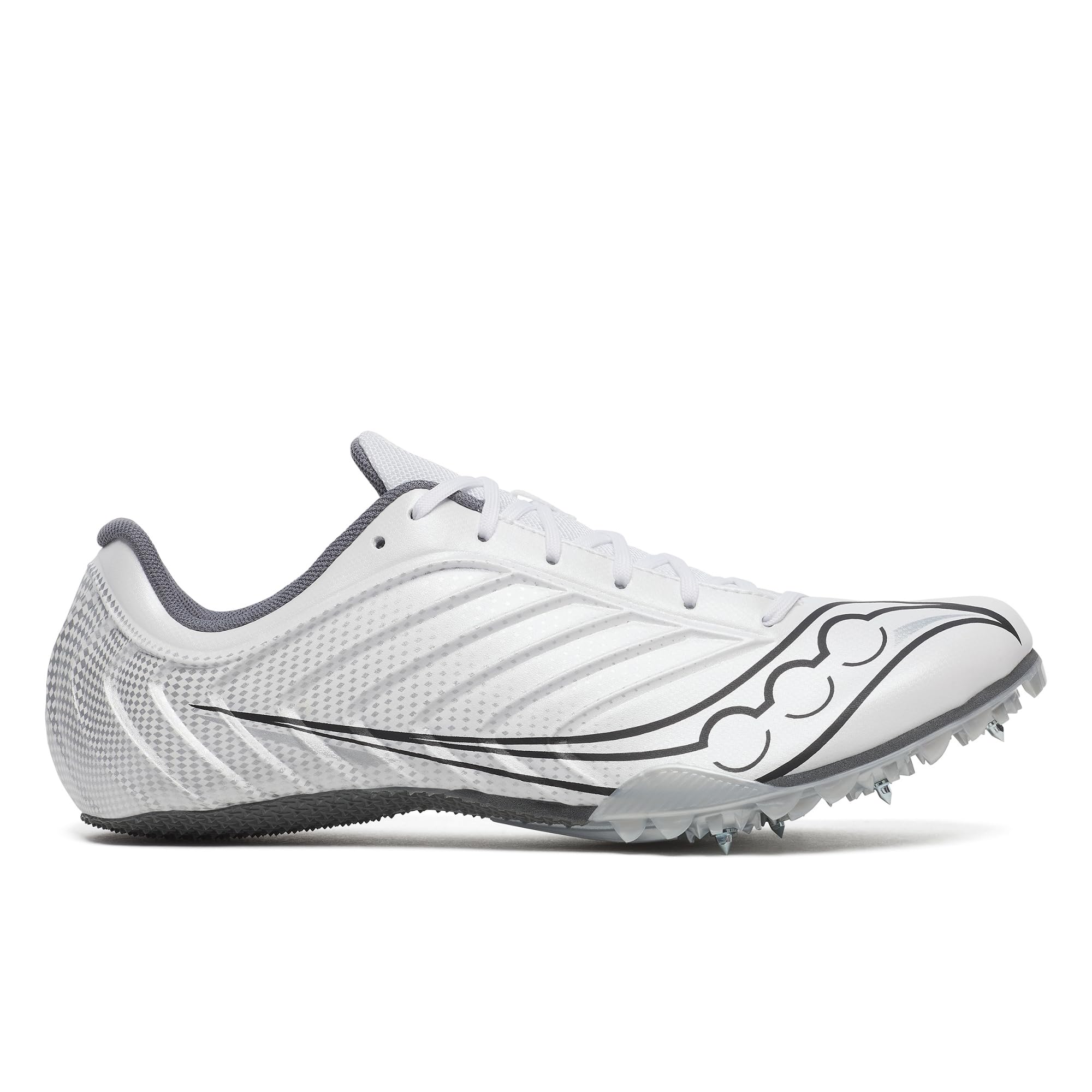
1. Saucony Men’s Spitfire 5 Track Shoe
Our pick — 4.5+★ from 450+ verified ratings; the strongest balance of quality and price.
Seven implements and six ounces — the plate that stays planted when you shift gears.
If you race more than one event and do not want a separate shoe for each, the Spitfire 5 is the safest place to put your money. Saucony says it handles anything from a 400 down to a 60, which is a wide spread for a single spike. The seven implements — the threaded spike sockets built into the plate — spread your push-off force across the forefoot instead of concentrating it in one spot. At 6 ounces the shoe stays out of the way during a hard turnover.
The fit is the reason this one sits at the top. Across its reviews, fit draws far more discussion than any other subject, and it trends positive, so the shoe tends to land on the foot the way you expect. Weight and style both get steady approval alongside spike quality, which lines up with a shoe built for repeated meets rather than a one-off race. Durability is the one place the picture splits — some owners are happy, some are not, so treat the upper as something to look after.
Comfort is genuinely mixed. Some owners love the feel of the plate; others find it harsh underfoot, which is exactly what a stiff racing plate does to a foot used to a cushioned trainer. If you have never raced in spikes before, plan a couple of easy sessions before race day. Sized right and broken in gently, it will carry you through a full season of racing.
Where It Wins
- Seven implements spread grip across the forefoot for a stable push-off.
- 6-ounce build keeps the shoe light through a fast turnover.
- Rated for everything from a 400 to a 60, so one pair covers sprint and mid-distance.
- Fit is the most-praised subject in its reviews — the shoe tends to land true.
Worth Knowing
- Comfort splits opinion — the plate feel is firm, not plush.
- Durability feedback is mixed, so look after the upper between meets.
- Men’s sizing only in this listing.
Go for it if: you race a mix of sprint and mid-distance events and want one shoe that covers all of them.
Think twice if: you only race long cross-country loops and want a softer, more cushioned ride.
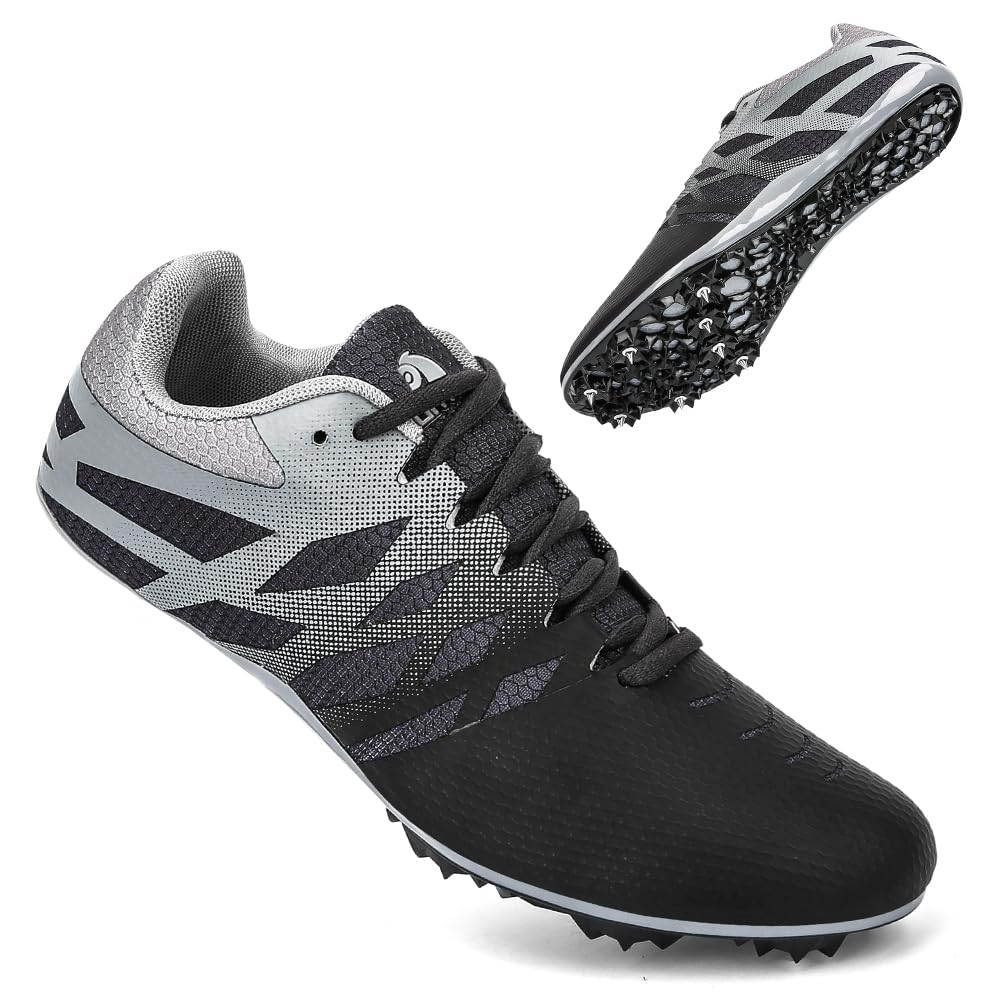
2. THESTRON Men Women Kids Track and Field Shoes
One shoe that spans US1 to US12 — a whole household of racers on a single design.
The THESTRON is the odd one out on this list in the most useful way: it comes in a size range from US1 to US12 (Euro 34 to 45), so it covers kids, teens and adults. If you are kitting out a school group or a family of runners, that range does more work than any single spec. Eight spikes sit in the front of the plate for grip and drive, and the box includes extra spikes for replacements.
Quality is the subject that leads its feedback and it comes out positive, with appearance a strong second — this is a shoe people are happy to be seen in. The upper uses microfiber with breathable mesh, which keeps the foot from cooking on a hot track day, and the synthetic leather build is described by the maker as high-level. Value reads well too, with speed gains mentioned in the feedback.
The real catch is sizing. Several owners find it runs smaller than expected, so if you are between sizes or buying for a growing kid, go up rather than down. A wider foot should also size carefully, since the fit is on the snug side. Sized right, it is a flexible, budget-friendly shoe for sprint, jump and general track work.
The range play: US1 to US12 with 8 spikes and spares in the box makes this the pick for teams, families and multi-sport athletes rather than a single serious racer.
Order a size up: the most repeated fit note is that it runs small — build that into your order, especially for kids.
Pick this if: you are buying for several different feet, or the athlete is still growing.
Pass if: you race long cross-country loops at a high level and want a distance-specific plate.
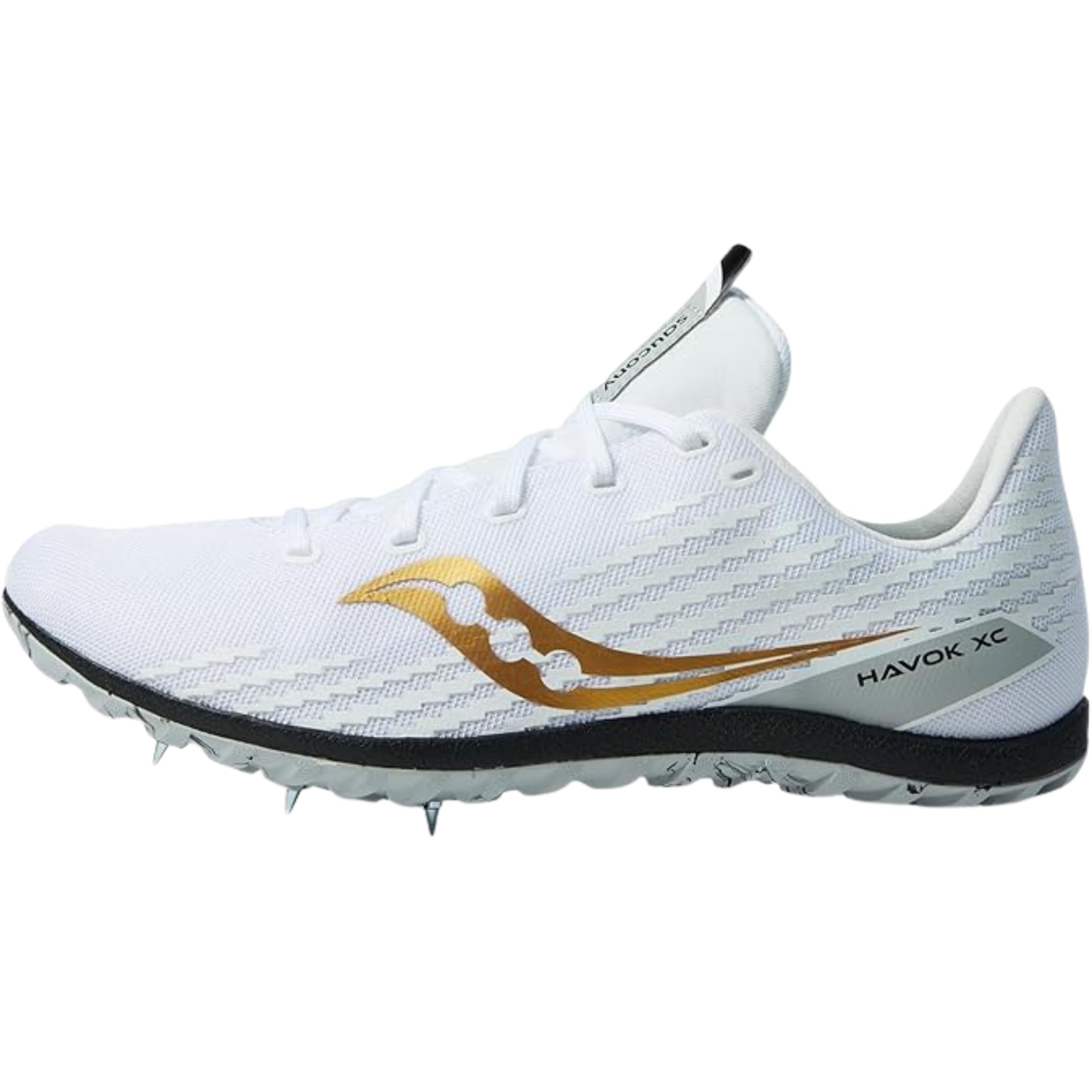
3. Saucony Havok XC3
The Havok XC3 covers both sides of the season — track spikes one week, cross-country the next.
The Havok XC3 replaced the Havok XC2, and it is the women’s-spec version of Saucony’s cross-country line. It is built to switch between track and cross-country duty without feeling like a compromise in either, which suits a high-school or college season where the surfaces change week to week. Quality is what earns it praise first, with spike quality right behind — the grip side of the shoe is where owners are happiest.
Comfort and value both come out positive, and the shoe is priced near the middle of this group. Compared with the men’s Havoc XC 3 further down, the difference is sizing rather than design: that one runs on a 6-pin plate with an aggressive remit, while this Havok is the general cross-country tool. It is a sensible choice for a racer who wants one pair to carry them through a mixed season.
Fit is the honest caveat. Some owners find it runs true to size, others find it too small, so the sizing is not universal. Fast racers who like a tight race fit will probably be happy; anyone with a wider foot should consider going up. Beyond the sizing, it is a solid, well-priced cross-country spike whose plate holds firm on grass.
Two seasons, one shoe: track and cross-country use is exactly what its feedback describes, and the plate quality gets the most praise of anything about it.
Sizing is personal: the fit splits between true-to-size and too-small, so check against your own racing shoe before ordering.
Good match if: you race both track and cross-country and want one women’s-spec spike for the whole season.
Not for you if: you want the most aggressive plate available and only race soft, muddy courses.
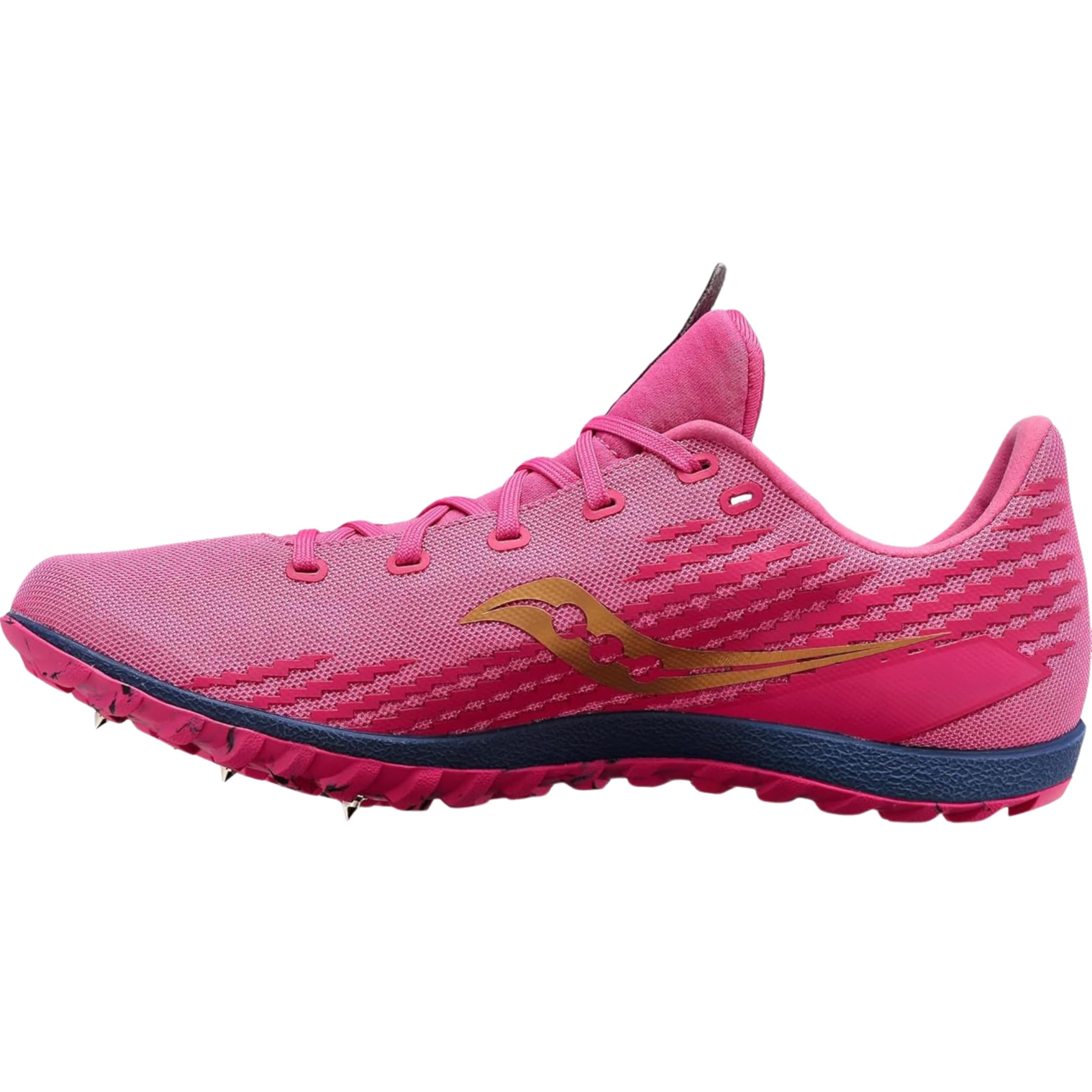
4. Saucony Men’s Havoc XC 3 Spike Running Shoe
A 6-pin plate built for one thing: taking the lead and holding it to the line.
Saucony calls the Havoc XC 3 its most aggressive cross-country spike, and the 6-pin plate is why. Six pins is the classic cross-country layout — enough contact points to bite into soft grass without the extra drag of an eight-pin sprint plate. The brief is simple: get out hard and hold the pace. This is the men’s counterpart to the Havok XC3 above, sharing the cross-country remit but tuned for aggressive racing.
Fit is the standout in its feedback — it draws more comment than any other subject and trends positive, which for a race-fit shoe is the number that matters. Value is a close second, with comfort, performance and color all positive behind it. Owners describe it working through a full kids’ cross-country season, which is a useful durability signal for a shoe that gets one race a week.
One thing to check before your first race: the pins. One reviewer noted receiving only 9 out of 12 spikes, which is a shipping or packaging issue rather than a design flaw, but worth a quick count when the box arrives. If the set is short, the missing spikes are easy to replace — count first, then lace up.
Why Racers Choose It
- 6-pin plate is the classic cross-country layout — grip without sprint-plate drag.
- Fit is the most-praised quality in its feedback, which matters most in a race shoe.
- Strong value rating alongside comfort and performance positives.
- Aggressive remit suits a racer who wants to set the pace.
Before You Race
- Spike counts have occasionally come up short — check the box on arrival.
- Race-tight fit will not suit a particularly wide foot.
- Built for cross-country, not for sprint events on a synthetic track.
Built for: the racer who wants a classic 6-pin cross-country plate and a fit that holds tight.
Look past it if: you need a sprint-specific shoe or a looser, more forgiving fit.
5. Nike Zoom Mamba 6 Track & Field Distance Spikes

One plate for the 800, the 10,000 and everything ugly in between.
The Mamba 6 is Nike’s distance spike, and the stated range is unusually wide: the manufacturer says it is versatile enough for everything from the 800 to the 10,000 and the steeplechase as well. A minimal midsole and increased heel cushioning sit under the plate, so the long reps do not beat your legs up the way a stiff sprint shoe does. If your season mixes a fast 800 with a churning steeplechase, this is the one shoe that covers both.
There is far less owner feedback to lean on here than on the Saucony picks, so the honest read is that the specification does most of the talking. The 1.8-pound listed weight is a four-digit product weight from the listing rather than a per-shoe racing figure, so do not read it as the on-foot weight. What you can trust is the design brief: light distance spike, more cushioning at the heel, and a midsole stripped back to keep it fast.
The catch is that a narrow feedback base means you are buying on the spec and the brand’s distance heritage rather than on a large pool of racer experience. For a specialist distance shoe that is often a reasonable bet. Just confirm your size carefully, since there is little community sizing data to fall back on.
The distance remit: 800 to 10,000 plus steeplechase is the widest stated range on this list, and it is the reason to pay attention.
Buy on spec: with a limited feedback base, the design brief — minimal midsole, added heel cushioning — is what you are really choosing.
Worth it for: distance and steeplechase racers who want one shoe across a long season.
Not the one if: you want a big pool of owner feedback before you commit.
6. Nike Men’s ZoomX DragOnfly XC Spikes

The widest base here, built for days when the course turns to soup.
Nike calls the DragOnfly its fastest distance spike and builds it for both track and trail, with a wider base for stability in bad weather. The headline is the ZoomX foam midsole, tuned to return energy on every stride. On a wet, churned-up course with a downhill finish, that wider base is doing real work under your foot.
The 3-pound listed weight is a packaged product weight, not the on-foot racing weight, so judge the shoe on its design rather than that number. The spike side of the shoe gets consistent approval — it does the job it is meant to do on the plate. Where the picture gets complicated is quality and durability: those draw the most discussion, and they split down the middle rather than landing on one side.
That split is worth taking seriously on a premium-tier spike. Some athletes report the shoe holding up well through a season; others have not been lucky with theirs. That is a fair reputation risk to weigh, and it is the main reason this sits at the bottom of the list despite the strong design brief. If you want the broadest base and do not mind being an early adopter, it is a genuine performer in poor conditions.
What it is built for: Weather-beaten courses and trail-style cross-country, where the broader base and ZoomX foam do their best work.
The honest trade-off: durability and quality feedback splits rather than trends positive, so this is a shoe to buy with your eyes open on the longevity side.
Choose it when: the course is rough and the weather is worse, and you want the widest, most stable base on this list.
Hold off if: you want a spike with a settled record on durability across a full season.
Know the Specs
Spike Pins and the Plate
The plate is the stiff layer under your forefoot, and the pins screw into threaded sockets set into it. Pin count changes how the shoe behaves: six pins is the standard cross-country layout, while eight pins spreads grip further and feels more planted. The Saucony Spitfire 5 uses seven implements and the THESTRON ships 8 spikes with spares. More pins means more bite on soft ground, but also a heavier, less quick feel underfoot.
Event Range and Foam
Race distance decides how much cushioning and how flexible the plate should be. Sprint shoes are stiff and minimal; distance shoes add heel cushioning and a more forgiving midsole. The Nike Zoom Mamba 6 states a range of 800 to 10,000 plus the steeplechase, while the Spitfire 5 covers 400 down to 60. ZoomX foam, used in the Nike ZoomX DragOnfly, is the brand’s energy-return midsole material, so it is tuned for keeping your legs fresh over a long race.
Common Questions
How do I know if cross-country spikes will hold up on soft, muddy courses?
Should I buy my normal running shoe size in spikes?
What is the difference between cross-country spikes and track sprint spikes?
Do cross-country spikes come with the pins already installed?
How many pins should a cross-country spike have?
Can I wear cross-country spikes for the 800m and longer track races?
How long do cross-country spikes usually last?
Can I replace worn spike pins myself?
Are cross-country spikes suitable for kids?
What is the best cross-country spike for a first-time racer?
The Bottom Line
For most racers, the cross-country spikes answer is the Saucony Men’s Spitfire 5, because seven implements and a 6-ounce build give you a plate that holds across the 400 down to the 60 — and fit is the thing its owners praise most. If you race cross-country and want a well-built shoe with pins already in the box, the Saucony Kilkenny XC9 is the value call. And for a mixed season of track and cross-country, the Saucony Havok XC3 is the one to reach for — a rational shortlist to work through before your next start line.
How we choose
We do not accept paid placement. Every pick is matched to a real buyer and a real use-case; we do not hands-on test units.
Sources
Specifications: manufacturer listings and product documentation. Review insights: verified customer reviews, as of November 2026. Pricing: not shown on this page (it changes often); check the current price via the retailer link.
As an Amazon Associate, Tactical Gear Guy earns from qualifying purchases. This does not affect which products we feature.