Specs are compiled from manufacturer listings and verified buyer reviews and can change over time — please confirm the key details on the product page before buying.
A radar feedback sign does one job: it shows a driver their real speed before they reach your driveway, your school zone, or the sharp bend past your fence. The picks below all do that. What separates them is the display size you can actually read from the road, whether the panel survives a winter, how far away a driver can see the numbers, and how the sign is mounted. If you only want the short answer, the 20″x27″ solar radar sign at the top of this list is the one that best balances a real display, a U-shaped mounting hoop and remote speed-limit control, and the rest of the list explains where it wins and where a bigger panel makes more sense.
This guide is built by comparing the manufacturers’ published specifications and the patterns across verified customer reviews, so you get each pick’s real strengths and trade-offs instead of marketing spin.
Some signs here are rated by a handful of early owners while others have a bigger track record, so read the panel size and mounting details as carefully as the brand name. The right choice is the one whose display, visibility and power source fit the road, and this list of your speed sign options lines those specs up side by side.
Top Picks

How To Choose The Best Your Speed Sign
You are buying a small piece of roadside electronics, not a roadside poster. The middle of the market gets you a solar panel, a radar head that reads an approaching car’s speed, and an LED display that flips from green to red when someone is over the limit. What changes between models is how big that display is, how far away it stays readable, and whether the hardware survives its first icy month.
Get the panel size right for the road
The panel is the whole sign face, and the numbers quoted in the product data are height and width. A 20″x27″ panel is the compact pick — fine for a driveway mouth or a small lot. A 24″x35″ panel is the one to think about for a proper street, because more face means larger digits and a longer read. One 24″x35″ sign here actually lists 23.62″L x 23.62″W, so compare the listed dimensions rather than the headline size.
Check visibility distance, then check the mounting
Some signs here claim more than 500 meters of visual distance, which is the distance at which a driver can pick the digits out — real numbers to hold on to when you are judging a bend or a hill approach. Mounting matters just as much. The U-bolt picks fit posts roughly 2-3/4 to 3-1/2 inches, so measure your existing galvanized or wooden post before you order. The 20″x27″ pick’s U-shape hoop is the same U-bolt mounting idea under a different name.
Side-by-Side Comparison
| Model | Best For | Panel Size | Housing / Rating | Mounting | Amazon |
|---|---|---|---|---|---|
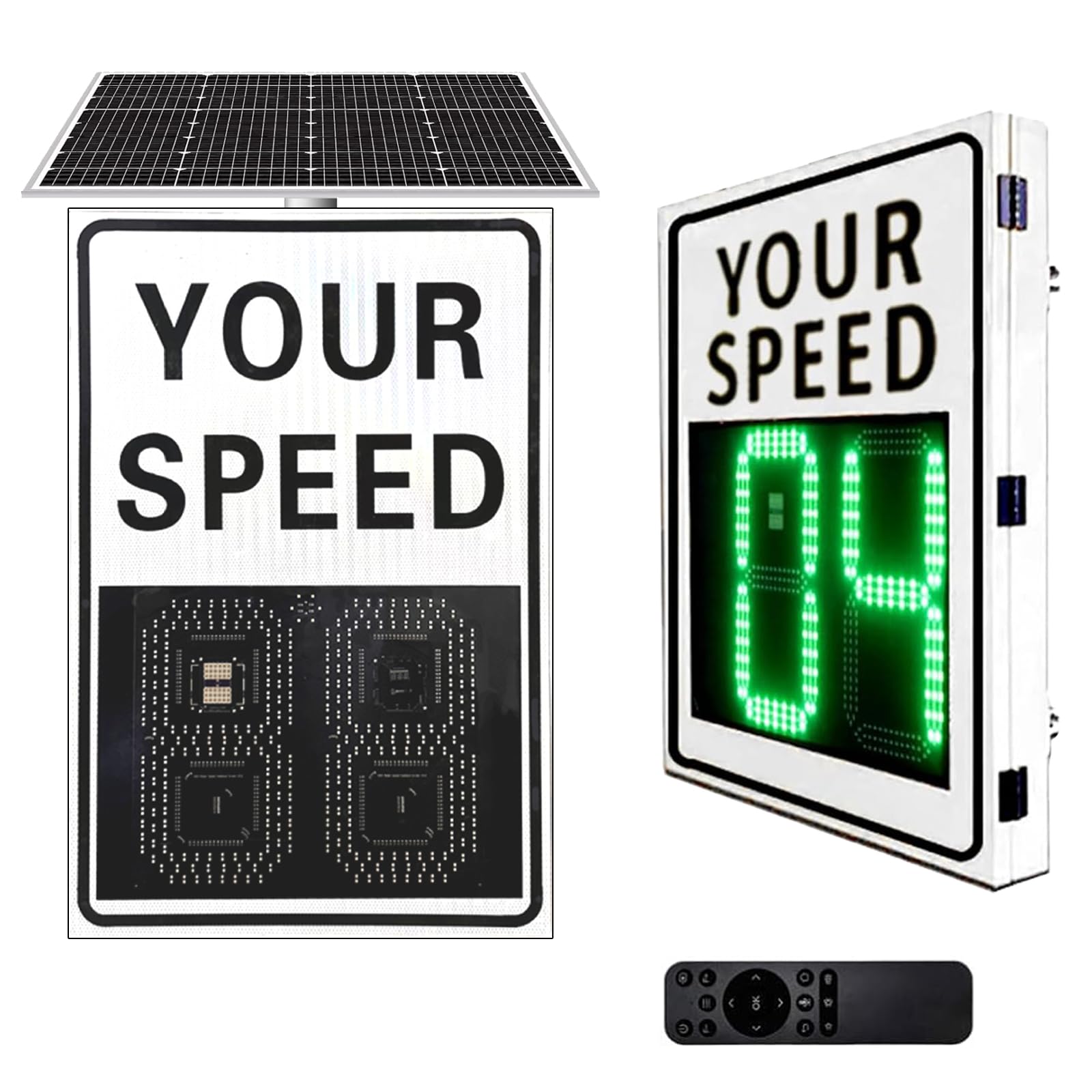
| 20″x27″ Solar Radar Feedback Sign★ Best Overall | Driveways and small lots | 20″x27″ | Aluminum, 5-day rainy-day runtime | U-shape hoop, pole mount | Amazon |
| BrightFootBook Radar Speed Sign 20×28″Top Performer | School zones and traffic calming | 24″L x 35″W | Aluminum alloy, IP65 | Pole mount | Amazon |
| BrightFootBook Speed Limit Sign with LED Display | Parking lots and private roads | 24″L x 35″W | Aluminum, IP65 | U-bolt, 2-3/4 to 3-1/2″ posts | Amazon |
| Mcamgiczin 24″x35″ ETL Listed Radar Sign | Projects needing listed certification | 23.62″L x 23.62″W | Aluminum shell, waterproof treatment | U-shaped hoop | Amazon |
| BrightFootBook Solar LED Speed Limit Sign 24×35″B | Campuses and warehouses | 24″L x 35″W | Aluminum alloy, IP65 | U-bolt, 2-3/4 to 3-1/2″ posts | Amazon |
| Upgrade Traffic Radar Sign with 3M Sheeting | Long-term public-road installs | 20″x27″ (50*70cm) | Rust-proof aluminum, multi-layer coating | Pole mount, hardware included | Amazon |
Detailed Reviews
1. 20″x27″ Solar Powered Radar Feedback Sign
The compact panel that keeps reading cars for five days of rain with no wiring at all.
Solar is the whole point here. A top-of-sign panel and a rechargeable battery mean you can bolt this to a pole at the end of a driveway and never run a power line — and the runtime figure printed for this model is 5 days on rainy days, so a grey week does not black out the digits. Drivers can pick the display out from 0.5 miles away, which is the sort of distance that matters on a straight approach where people build speed.
What makes it the best all-round pick is the control set. A remote control lets you set the desired speed limit value without climbing a ladder or opening the housing, so the threshold changes when your road does. The 20″x27″ face is the smaller of the two panel sizes on this list — smaller than the 24″L x 35″W BrightFootBook signs above and below — but it is a portrait-format aluminum sign with an LED light type, and it is the panel most driveway and small-lot owners genuinely need. It also carries the lowest rating on this list, so treat its satisfaction picture as thin rather than settled.
The catch is the mount and the record. It uses a U-shape hoop mount and the maker asks you to contact them for special mounting needs, so measure your post before you order rather than assuming a bracket will drop on. And with only a handful of ratings to its name, there is far less owner history behind it than the BrightFootBook signs, even if buyers have not piled on the praise yet.
Why this one earns the top slot
- Full off-grid setup — solar panel and battery, no hardwiring to the pole
- 5-day rainy-day runtime keeps the display alive through bad weather
- 0.5 miles of visual distance gives drivers a long read on the approach
- Remote control changes the speed-limit value without touching the housing
- Aluminum, portrait 20″x27″ face suits a driveway or small lot
What to weigh before you buy
- Smaller panel than the 24″L x 35″W picks in this list
- U-shape hoop mount — special needs require contacting the maker first
- Very few ratings so far, so the long-term owner picture is thin
Go for it: you want a wired-free driveway or lot sign with remote speed-limit control and a panel you can lift onto a pole yourself.
Hold off: your road needs the bigger 24″x35″ face, or you want a sign with a deep owner track record behind it.
2. BrightFootBook Radar Speed Sign, 20×28″ Solar LED
A bigger panel with a listed top speed of 99 mph to trip on — built for school-zone duty.
Start with the number that separates it from the compact pick above: 24″L x 35″W. That is a wider face than the 20″x27″ sign, and the extra width is what puts bigger, brighter digits in front of a moving driver. Pair it with the claimed visual distance of more than 500 meters and you have a sign that works on a proper street, not just a driveway mouth. The top-mounted solar panel runs it off-grid, and with the panel overhead it keeps charging while the digits work.
The driver feedback is the clever bit. Red and green LED beads flash and the display shifts from green to red when someone is over the set limit, so a speeder sees the change without reading anything else on the sign. The remote control covers a 2-99 mph trigger range, so you can set the trip point for a quiet residential road or a fast arterial. The LED beads are rated for 100,000+ hours of use, which is a service-life figure rather than a promise about your particular install.
For weather, the housing is aluminum alloy with an IP65 rating — sealed against dust and water jets — and it is quoted for temperatures from -40°F to 140°F. The sign face uses diamond-grade reflective film and the copy states MUTCD compliance, worth knowing if your install answers to a municipal standard. The trade-off is that the reflective sheeting and the compliance language are claimed, so on a public road check what your local authority accepts before you mount it.
The read: if your road carries real traffic and you want a wide, bright display with a wide speed trigger range, this is the strongest shape in the list. The 24″L x 35″W panel and the 2-99 mph remote range cover both a cul-de-sac and a faster approach.
One thing to check: confirm the post diameter matches the pole-mount hardware you receive, and confirm MUTCD acceptance locally if the sign is going on a public street.
Reach for this if: you are calming traffic on a school street or a residential road and need a wide display plus a broad speed-trigger range.
Look elsewhere if: your install is a tight driveway where the smaller compact panel already does the job.
3. BrightFootBook Speed Limit Sign with LED Display, 24 x 35 in

The one that tells you exactly which post it fits before you buy it.
Most sign listings leave the mounting vague. This one names the post size: the included U-bolts and mounting accessories fit compatible posts of roughly 2-3/4 to 3-1/2 inches. If you already have a galvanized post or a wooden one at that diameter, you know this sign goes up without a hardware-store run. The panel is the wide 24″L x 35″W face in landscape orientation, with LED digits that flash red and green so approaching drivers clock the number day or night.
It runs the same off-grid play as the rest of this group — the top-mounted solar panel charges a rechargeable battery, so no wiring gets routed to the pole. The reflective sheeting on the face picks up headlight glare, and the included remote lets you adjust the speed threshold and related display settings without opening the housing. The maker lists parking lots, residential communities, school or business campuses, warehouses and private roads among the places it suits, which is the honest read: this is a controlled-access sign rather than a highway fixture.
One spec note worth catching. The item highlight lists “60 x 90 cm,” which is the metric version of the 24″x35″ face, while the material field says synthetic — so the aluminum claim sits in the marketing copy while the spec sheet stays vaguer. Know that before you decide whether the housing matters to you.
Why it earns a spot: the U-bolt kit and the explicit 2-3/4 to 3-1/2 inch post range remove the guesswork that sinks most DIY sign installs.
The honest caveat: the listed material is “synthetic” even though the description talks up an aluminum alloy housing, so the spec sheet and the copy are not in perfect agreement.
Fits best: a lot, campus, or private road with a post already standing between 2-3/4 and 3-1/2 inches wide.
Not the pick if: you need the housing material spelled out in writing before you commit.
4. Mcamgiczin 24″x35″ Solar LED Sign, ETL Listed & FCC Approved
The listed-and-approved option for anyone whose install has to answer to a code.
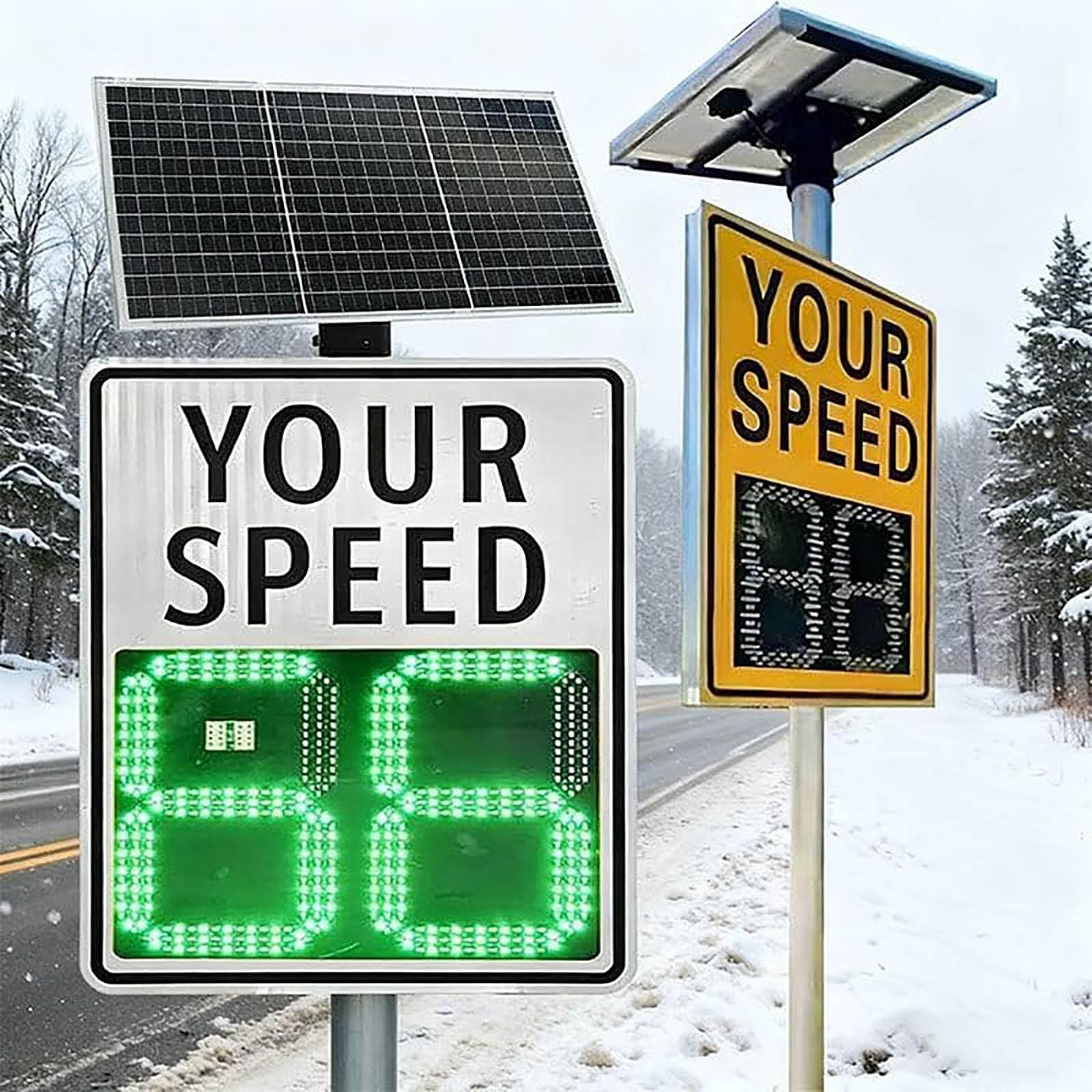
Certification is the differentiator. This sign is ETL listed with UL-verified and FCC approved status printed in the copy, and that paperwork is why it leads the premium group. If your sign is going up for a municipality, a contractor handoff or a campus safety review, the listing is the first question you will be asked. The rest of the package is solid too: a white aluminum shell with anti-corrosion and sun-proof treatment, a radar head measuring approaching vehicles, and a real-time speed readout.
The display detail is the part that rewards a closer look. It runs embedded LED lamp beads in red and green dual colours with a service life stated at over 100,000 hours, and the LED matrix uses auto-dimming technology to adjust brightness. That last one is the practical bit — a bright matrix that dials itself down at night is easier on neighbours than a fixed-brightness panel. The display flips from green to red when a vehicle is speeding, and visibility is quoted at about 500 meters.
Install is a U-shaped hoop to galvanized posts, wooden posts or chain-link fence, and the copy names urban expressways, highways, suburban links and colleges among the use cases. Here is the sizing quirk to know: the headline says 24″x35″ but the listed dimensions are 23.62″L x 23.62″W, which is the more compact footprint of the group. Roughly four inches narrower in the width column than the 24″L x 35″W BrightFootBook panels — read that as a tight footprint decision, not a bad one.
The certification case: ETL listing plus UL-verified and FCC approved status is the reason to pay premium money here; the auto-dimming LED matrix and the 100,000-hour bead rating are the daily-use bonuses.
Size it before you buy: the listed 23.62″L x 23.62″W footprint is smaller than the headline suggests, so match it to your viewing distance.
Best when: your install needs listed, approved hardware and you want an auto-dimming display that behaves at night.
Think twice if: the sign is going up far from the driver and you need the widest face you can get.
5. BrightFootBook Solar LED Speed Limit Sign
The lot-and-campus version of the wide BrightFootBook panel, with the UL paperwork listed.
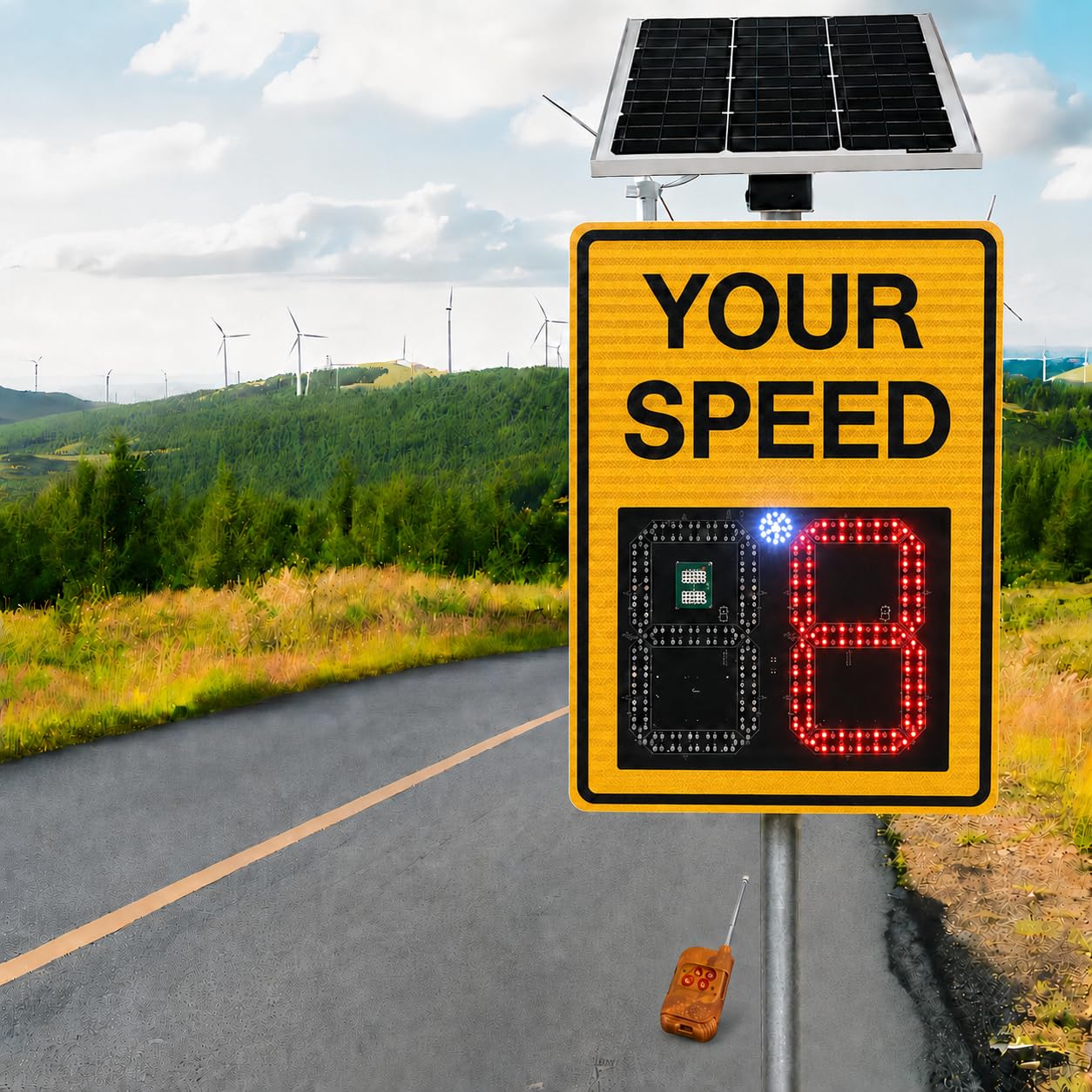
This is the same 24″L x 35″W landscape face as the top-performing BrightFootBook picks, so the display read is comparable across them. The difference is the listing text: this model carries UL-verified, ETL listed and FCC approved status in its item highlight, alongside a rust-proof aluminum radar detector. If you want a wide panel and you also have to show compliance paperwork, this combination is the reason to choose it over the other large panels here.
The everyday mechanics are the ones you would expect from this family. A solar panel on top charges the rechargeable battery for off-grid operation without hardwiring. Bright red and green LEDs make the number easy to catch in daylight and after dark, and the colour responds to the configured speed threshold. Engineering-grade reflective sheeting catches headlights, and the included remote adjusts the threshold and display settings without opening the housing.
The install hardware is the same U-bolt setup for 2-3/4 to 3-1/2 inch posts, and the copy puts it in parking lots, residential communities, school and business campuses, warehouses and private roads. The honest note: the shared model number and identical 24″L x 35″W size make this pick and its BrightFootBook siblings close cousins, so choose on the certification line and the hardware in the box rather than expecting a different display.
Where it pulls ahead
- UL-verified, ETL listed and FCC approved status in the item highlight
- Wide 24″L x 35″W panel for a long read on approach
- Remote threshold control with IP65 aluminum housing
- U-bolts fit 2-3/4 to 3-1/2 inch posts
Where it stays ordinary
- Same display and size as its BrightFootBook siblings, so the differences are paperwork and hardware
- Reflective-sheeting grade is stated in copy rather than listed as a spec
Suits you: you are setting up a campus, warehouse lot or community entrance and want a wide panel with the listed approvals attached.
Skip if: you have already picked a wide BrightFootBook panel and only the price or the paperwork differs.
6. Upgrade Traffic Radar Speed Limit Sign

Built like a permanent fixture — the heaviest, most heavily coated sign in the group.
Drop this on the scale next to the others and the difference shows: 37 pounds of thickened integrated aluminum plate with multi-layer anti-rust coating. The maker pitches it directly against thin budget signs, and the 15+ years of outdoor use claim is theirs rather than something you can check before you hang it. Where it leads on paper is the sheeting — genuine 3M Engineering grade reflective film at 3x brighter retroreflectivity than ordinary generic signs, using full-cube prismatic technology to stay visible over 800 meters at night, in backlight, heavy rain and fog.
The electronics are a radar chip tuned for low power draw that pairs with solar-powered versions for off-grid use, plus embedded red and green LED beads with the same overspeed shift from green to red and a stated service life above 100,000 hours. An English remote control switches between kilometers and miles, which is a small thing that saves a lot of fiddling during a batch install. The copy also states MUTCD compliance and lists UL and FCC with it, aimed squarely at municipal, contractor and school project acceptance.
The panel here is 20″x27″ — the compact face in the 50*70cm listing — so it is not the one for a wide highway approach. What it trades in width it makes up in the housing and the sheeting, and the package includes the mounting gaskets, anti-rust bolts and accessories. The obvious caution is the rating: at 3.5+ out of 5 it is the lowest in this group, so weigh the 37-pound build against the mixed owner picture before committing to a permanent install.
The long-haul case: genuine 3M full-cube prismatic sheeting with an 800-meter visibility claim, a 37-pound rust-proof aluminum body, and MUTCD-facing compliance language make this the build for a permanent roadside fixture.
What you give up: a compact 20″x27″ face and the least favourable rating here, so it rewards buyers who value structure over display size.
Choose it for: a school zone, mountain road or industrial park where the sign will stand for years and the sheeting does the heavy lifting.
Keep looking if: you need the widest display you can get, or a settled owner record before you commit.
Know the Specs
Panel size and visual distance
The panel size is the physical face of the sign, and it is the single largest factor in whether a driver can read the digits from far enough back to react. Bigger face means larger digit segments. Visual distance is the companion number — the distance a driver can pick the display out, quoted in meters or in miles. A sign listed at 0.5 miles and a sign listed at more than 500 meters are both giving you a reading range, and both tell you more than any claim about brightness. Match the range to your approach: a short driveway can use a 20″x27″ face, while a long straight or a school zone earns the 24″L x 35″W panels.
Solar power and the housing rating
A solar panel plus a rechargeable battery is what lets these signs live off-grid with no wire run to the pole. The runtime figure matters more than the panel spec on paper: a sign that runs 5 days on rainy days will keep showing numbers through a grey stretch. The housing rating is the other durability number. IP65 means sealed against dust and water jets, which is the rating you want on a roadside box. Aluminum alloy housings and multi-layer anti-rust coatings are the two ways makers address corrosion, and both appear in this list.
Common Questions
What is the difference between a radar speed sign and a normal speed limit sign?
Will a solar radar sign work in winter or on a shaded pole?
What post size do these signs mount to?
How far away can drivers see the displayed speed?
Can I change the speed limit threshold without opening the sign?
Is a bigger panel always better for reading speed?
What does IP65 mean on a roadside sign?
Do these signs need a permit or met MUTCD standards for a public road?
placeholder?
The Bottom Line
For most driveways and small lots, the best overall your speed sign is the 20″x27″ Solar Radar Feedback Sign: off-grid solar, remote speed-limit control, 0.5 miles of visual distance and a 5-day rainy-day runtime in a compact aluminum body you mount yourself. If your road is a real street with real traffic, take the BrightFootBook 20×28″ Radar Speed Sign for its wider 24″L x 35″W panel and 2-99 mph trigger range. And if your install has to answer to a code, the Mcamgiczin 24″x35″ ETL Listed sign is the one to order, with the listed approvals and auto-dimming display that suits a permanent roadside spot.
How we choose
We do not accept paid placement. Every pick is matched to a real buyer and a real use-case; we do not hands-on test units.
Sources
Specifications: manufacturer listings and product documentation. Review insights: verified customer reviews, as of November 2026. Pricing: not shown on this page (it changes often); check the current price via the retailer link.
As an Amazon Associate, Tactical Gear Guy earns from qualifying purchases. This does not affect which products we feature.