Specs are compiled from manufacturer listings and verified buyer reviews and can change over time — please confirm the key details on the product page before buying.
Your work boots fit fine — it’s the flat slab of foam inside them that wrecks your arches by noon. The fix is an insole with real, structured arch support that survives a full shift on concrete, not a soft gel pad that flattens in a week. Below are the nine work boot insoles for arch support worth your money, sorted by what they actually do underfoot: the firm shells that hold your foot in place, the cushioning-first picks for wide feet, and the thin ones that squeeze into boots you can’t size up.
This guide is built by comparing the manufacturers’ published specifications and the patterns across verified customer reviews, so you get each pick’s real strengths and trade-offs instead of marketing spin.
Arch height is the number that separates a fix from a waste of money — too low and your foot rolls inward, too high and you feel every step for a week. Each pick here states its arch design plainly, so you can match it to your own foot before you buy any of these work boot insoles for arch support.
Top Picks


How To Choose The Best Work Boot Insoles for Arch Support
A flat foam insole lets your arch collapse by noon; a structured one holds it up through a twelve-hour shift. Three things decide which camp you land in: arch height and firmness, how much room the insole leaves inside the boot, and what the top layer does with sweat. Nail those three and the insole disappears underfoot.
Match Arch Height Before Anything Else
Arch support comes in a range, and a high, rigid arch under a flat foot will hurt for the first week while your foot adapts. Insoles here run from a medium, firm arch to a 36mm high-arch build, and the higher models usually tell you to break them in over a few days. Flat feet do best starting with a medium arch and a deep heel cup. If your arch is already high, go higher.
Check That It Will Actually Fit Inside the Boot
Work boots are often snug to begin with, so a thick insole can lift your heel off the back and squeeze your toes. Some picks here are shaped to a specific boot last, like a round-toe ARIAT fit, while others are slim on purpose for safety boots that already fit. Trim-to-fit models give you a cutting guide, but once you cut, you own it — measure against the boot’s own liner first.
Decide Between Firm Support and Soft Cushioning
A firm shell controls overpronation (your foot rolling inward) and keeps your alignment steady, which is what you want for arch problems. A softer PU or memory foam build feels better in the first minute and is easier on wide feet, but it gives more under weight. If you weigh more than 220 pounds or stand on concrete, look for a reinforced plate or a hard EVA layer under the foam.
Watch the Top Layer for Sweat
Boots don’t breathe like sneakers, so the fabric against your sock matters. A polyester or moisture-wicking top cover moves sweat away and cuts friction; a plain-weave fabric stops your foot sliding. Both beat a bare foam surface, which turns slick with sweat by mid-shift.
Side-by-Side Comparison
| Model | Best For | Arch Support | Fit Style | Weight | Amazon |
|---|---|---|---|---|---|
| PowerStep Pinnacle Maxx★ Best Overall | Firm, stable support all day | Firm shell, 2-degree medial post | Transfer between shoes, no trimming | 5.29 oz | Amazon |
| IFITNA 240+ LBS Heavy DutyBest Support Per Ounce | Heavier wearers needing hard support | 36mm high arch | Trim to fit most shoes | 4.97 oz | Amazon |
| ARIAT Energy Max Round ToeBest Boot-Specific Fit | ARIAT round-toe work boots | Anatomical contour | Pre-shaped round-toe last, sizes 7–15 | 6.38 oz | Amazon |
| ROCKROOSTER Anti-Fatigue | Wide feet and long concrete shifts | High arch contour design | True-to-size, no trimming | 8.15 oz | Amazon |
| BestHalo Heavy Duty 220+ lbs | High arches and heel pain | High arch, deep heel cup | Trim to fit up to Men 12.5–14.5 | 10.55 oz | Amazon |
| EASYFEET Orthotic Work Insoles | Snug safety boots that can’t take bulk | Medium firm arch, deep heel cup | Slim, trim to fit | 3.28 oz | Amazon |
| Welnove Heavy Duty (XL) | Standing all day with flat feet | Strong high arch | Trim to fit, multiple sizes | 8.82 oz | Amazon |
| KEEN Utility K30 | High arches in KEEN boots | Contoured high arch | Sized S–XL, men’s 6.5–14 | — | Amazon |
| Superfeet Work Cushion | Concrete floors, odor control | Premium arch, soft cushioning | Trim to fit, size up and cut down | 7.41 oz | Amazon |
Detailed Reviews
1. PowerStep Pinnacle Maxx Orthotic Insoles
Our pick — 4.5+★ from 19,500+ verified ratings; the strongest balance of quality and price.
The firm-shell pick that stops your foot rolling inward instead of just softening the blow.
If your arches collapse under a shift’s worth of weight, this is the one to start with. PowerStep builds the Pinnacle Maxx around a firmer shell than its original Pinnacle, with a firmer arch support design that holds your midfoot up rather than letting it sink. The squared heel sits flat in the boot and won’t roll to either side — a small detail that matters when you’re pivoting on a ladder or a loading dock.
What wins people over is how it holds alignment over a full day, especially for flat feet and overpronation. The 2-degree medial post (a slight built-in tilt toward the inside of your foot) nudges your foot into a more neutral position, and the deeper heel cup keeps it there. The 100% polyester top fabric is there to cut friction and heat so your socks stay drier than they would against bare foam.
No trimming is needed — you lift it from one pair of work boots to another and it drops in square. The trade-off is the firmness itself: this is not a plush, sink-in insole, and the first few days under a high, rigid arch can feel like pressure until your foot settles. It’s also the heaviest, bulkiest build here at 5.29 ounces with a 14.25-inch package, so it eats more room inside an already-snug boot.
What earns it the top slot
- Firmer shell plus a 2-degree medial post keeps the foot from rolling inward
- Squared heel design sits flat in the boot and resists side-to-side roll
- Transfers between boots with no trimming required
- 100% polyester top fabric reduces friction and heat
Where it asks something of you
- Stiff, structured feel — not a soft cushion-first insole
- Takes up real interior room, so it’s tight in snug boots
- Heavier than most picks here at 5.29 ounces
Made for: flat feet, overpronation, and anyone who wants a firm arch that holds its shape shift after shift.
Think twice if: your boots are already tight or you want a plush, soft step from day one.
2. IFITNA 240+ LBS Orthotic Insole
A 36mm arch under a reinforced plate, for the wearer who needs the whole footbed to carry weight.
Here’s the number that matters: 36mm of high arch support. That is a genuinely tall, built-up arch designed to lift the middle of your foot and spread pressure off a strained arch and heel. Underneath sits a hard TPU plate (a stiff plastic base) that keeps the insole from folding under load, and the maker rates the build to support over 240 pounds.
The weight gap tells you how different these builds are. At 4.97 ounces, the IFITNA is far lighter than the BestHalo insoles on this list, which run 10.55 ounces — a little over twice the weight for the same job. In a heavy work boot, that 5.58-ounce gap is weight you lift with every step of a twelve-hour shift.
The cushioning is layered: a plain-weave fabric up top to stop slipping, full-length hard EVA in the middle for structure, and extra pads at the forefoot and heel to take pressure off the spots that throb. Owners are split on value — the support and build quality land well, but expectations vary on what you get for the outlay. It’s also a high-arch design, so a foot that’s already flat will need a break-in period.
The honest read: You get a tall arch and a rigid base for a mid-range outlay, which suits heavier wearers or anyone who stands on concrete. The counterweight is that it’s a high-arch shape, so give your feet a few days to adapt before judging it.
Who it wins for: a big guy or gal in a work boot who wants the plate to carry the load, not the foam alone.
Reach for this if: you’re a heavier wearer who needs a tall arch and a stiff plate holding it up.
Look elsewhere if: you want a low-profile arch or a plush, cushion-first feel.
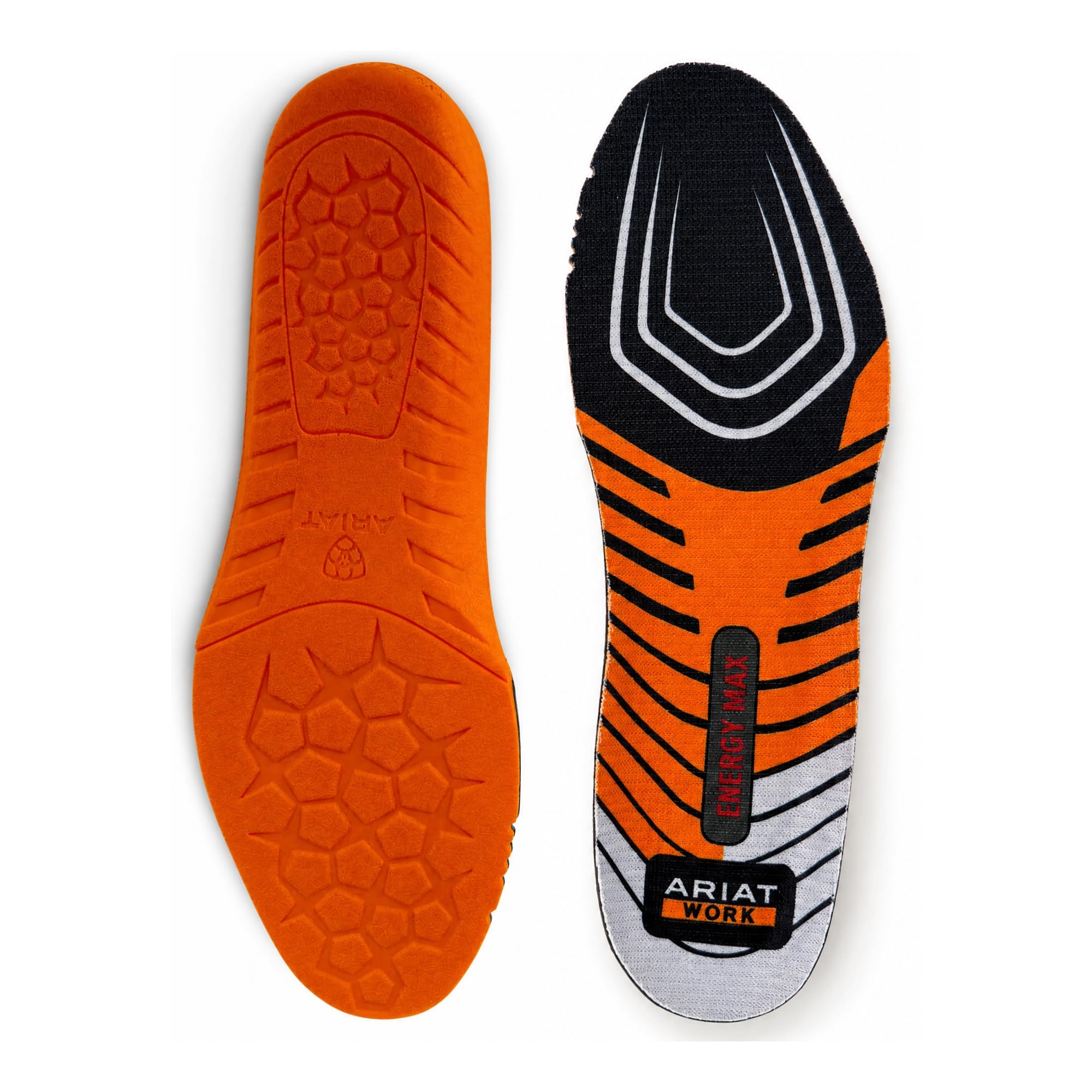
3. ARIAT Men’s Energy Max Work Insole, Round Toe
Built to the shape of a round-toe ARIAT boot, so it drops in without lifting your heel.
If you already wear ARIAT round-toe work boots, this is the closest thing to a factory fit you’ll find on this list. It’s pre-shaped to a round-toe last, so it follows the inside of the boot rather than fighting it. The Energy Max layer compresses under each step and springs back — that rebound feeds a bit of energy back into your stride, which is what takes the drain out of a long shift on hard floors.
What people rave about is the overall build quality; the anatomical shape is contoured to the foot’s natural lines so weight spreads evenly and the support doesn’t vanish after an hour. Sizing is straightforward: order your usual US men’s size in D (medium), across whole sizes 7 to 15 and half sizes 7.5 to 11.6. It’s noticeably lighter than the BestHalo pick too — 6.38 ounces against 10.55, and slimmer at 0.6 inches thick.
The trade-off is a real one: cushioning divides opinion, with part of the crowd wanting more padding and part saying the comfort holds up. Longevity is similarly mixed — some report it holding up for a year, others less. It’s a supportive work insole with a boot-specific shape, not a heavy cushioning pad.
The fit advantage: Round-toe shaping and a full men’s size run mean you install it and forget it, no trimming required.
The catch: If you want deep cushioning or a guaranteed multi-year lifespan, this isn’t the pick — support and shape are its strength, not plushness.
Best match: ARIAT round-toe boot owners who want factory-style fit and rebound in the stride.
Skip if: you wear a different boot last, since the pre-shaped round toe works best in the boot it was molded for.
4. ROCKROOSTER Anti-Fatigue Work Boot Insoles
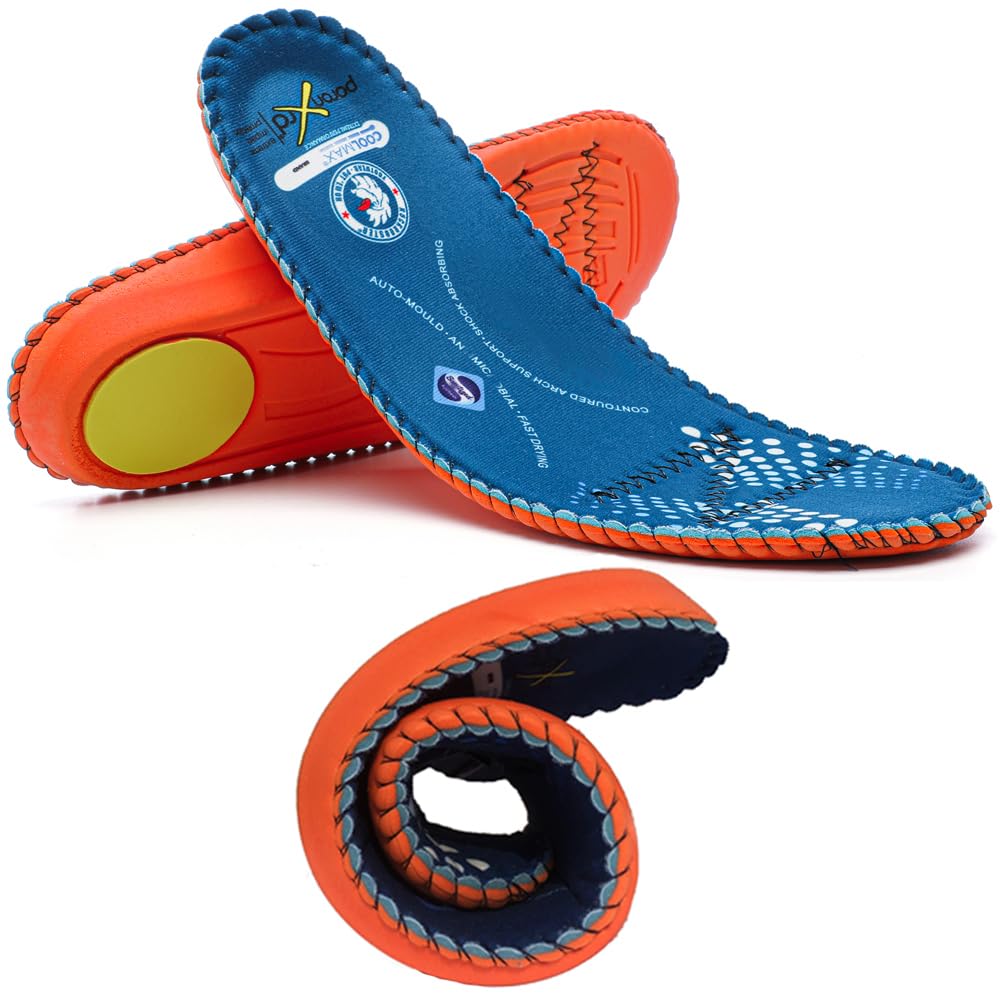
A high-arch contour with a wide-foot shape, for feet that feel cramped in every standard insole.
Wide-footed workers get squeezed by most insoles, and the ROCKROOSTER is built with that in mind. The flexible shape fits wide-width boots and work shoes, and a thick perimeter stitch stops the edges from fraying or flattening out. Layered PU and memory foam cushion immediately on stepping in, so there’s no break-in period to grind through before relief starts.
The arch is an engineered contour design that is designed to improve balance and posture while keeping your feet aligned through the day. A reinforced heel cushion takes the brunt of impact to ease strain on joints and arches. Up top, COOLMAX fabric wicks sweat and heat so feet stay cooler and fresher during long wear.
The heft is real — this one comes in at 8.15 ounces with a 1.1-inch profile, which is thicker than the ARIAT’s 0.6 inches and noticeably bulkier than the slim EASYFEET. That fullness is where the cushioning comes from, but it does take up room, so if your boots are tight, that extra thickness is the thing to check.
Why wide-foot owners pick it
- Flexible shape sized for wide-width boots and work shoes
- Layered PU and memory foam cushions from the first step
- COOLMAX fabric pulls sweat and heat away
- Thick perimeter stitching resists fraying and flattening
What to know first
- At 8.15 ounces it’s heavier and thicker than slim picks
- The 1.1-inch profile eats interior room in snug boots
- Smaller review base than the biggest names here
This one is for: wide-footed workers on concrete who want cushioned relief without a rigid break-in.
Not for: tight-fitting boots where a 1.1-inch insole would crowd your toes.
5. BestHalo 220+ lbs Insoles

A deep heel cup paired with a tall arch, aimed squarely at high arches and heel strain.
This is the pick for feet that already have a high arch and need something that respects it rather than flattening it. The build is centered on a high arch support system that promotes alignment and encourages a more natural walk, plus an ergonomic deep heel cup that holds the heel steady and helps control overpronation and supination — your foot rolling inward or outward.
Cushioning comes from premium EVA foam with gel, which spreads impact across the foot during prolonged standing and walking. It’s built to be trimmed, fitting most footwear from athletic shoes to work boots, and the size on this listing covers Men 12.5–14.5 and Women 13.5–15.5. It’s also the beefiest in the lineup at 10.55 ounces — heavy and substantial underfoot.
Plan on a short adjustment window: the maker notes mild pressure during the first 3–7 days as your feet adapt, and recommends starting at 2–3 hours a day before building up. A tall structured arch always costs a few days of pressure, so don’t wear them for a full shift on day one.
Where it shines: A deep heel cup and high arch give structured support for heel strain and arch discomfort, and the gel-and-EVA layer keeps the impact from reaching your joints.
The honest trade-off: This is a heavy, tall build at 10.55 ounces, and the arch is high — if your feet are flat you’ll want to break them in gradually rather than all at once.
Made for: high arches, heel pain, and heavier wearers who want a substantial, structured footbed.
Choose differently if: you need a slim insole or a flat-foot-friendly low arch.
6. EASYFEET Orthotic Work Insoles

The slim one that slips into safety boots without squeezing your toes or lifting your heel.
Most orthotics are too bulky for work boots that already fit, and that’s exactly the gap this one fills. At 3.28 ounces it’s the lightest build here, and it’s made slim on purpose — it fits under your foot without pushing your toes together or lifting your heel off the back of the boot. If you’ve tried other insoles and given up because they made your boots feel two sizes small, start here.
A medium, firm arch supports the middle of your foot through long shifts, while a deep heel cup keeps the heel steady. Shock-absorbing pads at the heel and metatarsal area cushion the spots that hit the floor hardest, which is where the relief lands for nurses, warehouse crews, and servers on hard floors. The breathable top layer moves air and moisture away so your socks are drier at the end of a shift.
It’s shaped to keep its form for a stretch of shifts rather than wearing out in a season, and it trims to your boot’s liner for a fitted result. The honest limit: cushioning is moderate, not plush — the point is support in a thin package, so if you want a deep, soft step this isn’t the one. It’s sized by boot liner, so size it against the liner before you cut.
The slim-profile win: A low 1.16-inch build and 3.28 ounces keep a snug boot from feeling stuffed, while a firm medium arch still does the supporting.
Point to weigh: Cushioning is on the firmer side and the arch is medium height, so heavy cushioning fans should look at the softer builds on this list.
Reach for it if: your safety boots are already snug and you need support without added bulk.
Pass if: you want maximum cushioning or a very tall arch.
7. Welnove Heavy Duty Inserts for Pain & Fatigue Relief (XL)
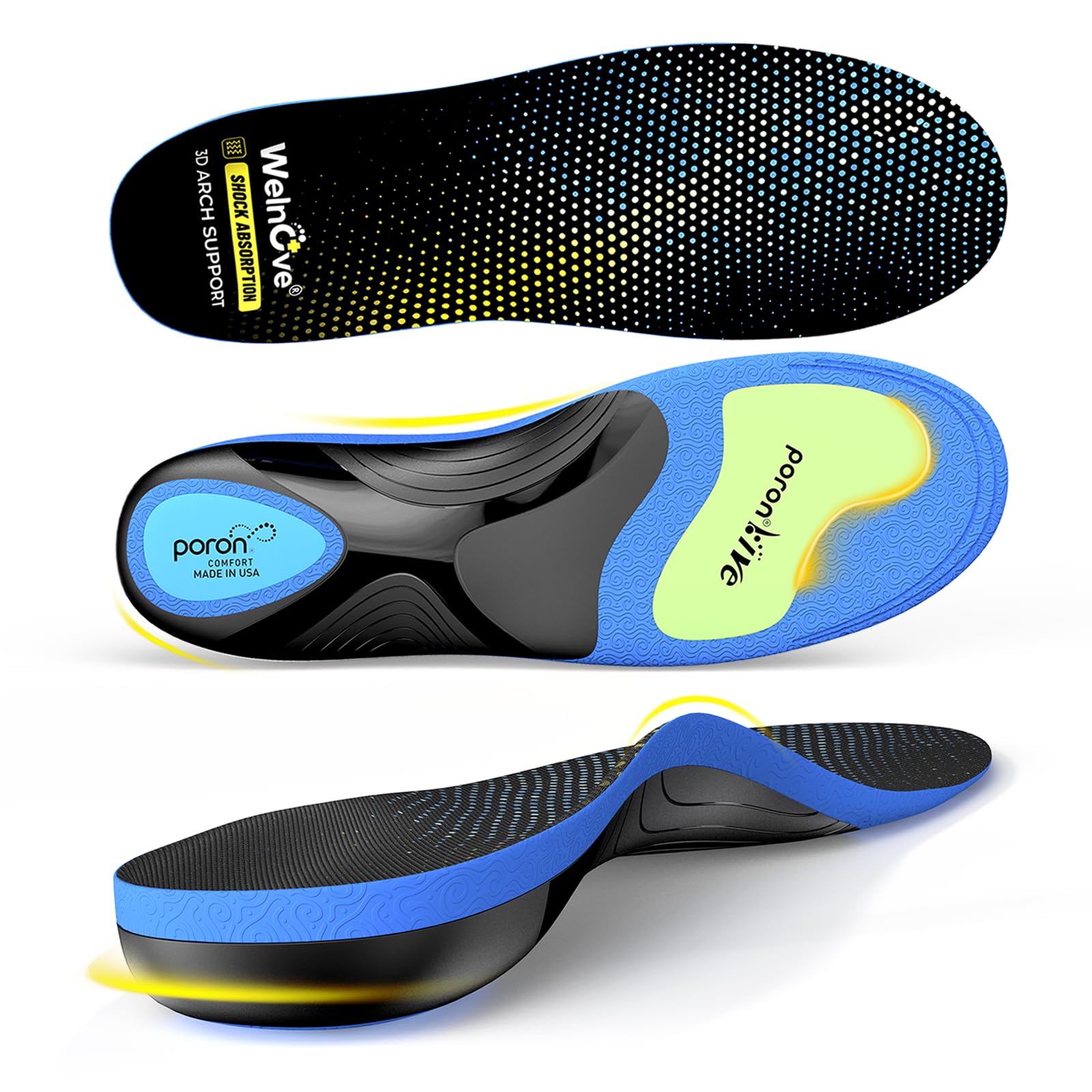
A strong arch that spreads weight across the foot, for flat-footed workers on their feet all day.
Flat feet and long standing shifts are the exact combination this one targets. A strong, high arch support is designed to distribute weight and cut the impact that lands on your feet and lower back. The memory foam gradually molds to the shape of your foot, while softer materials absorb shock as you walk — a pairing that’s meant to feel more comfortable the longer you wear it.
Sizing flexibility is a plus: multiple size choices and a trim-to-fit design let you run it in work boots, sneakers, loafers, or hiking shoes. That makes it a decent everyday swap if your job changes footwear through the week.
Give it patience. The maker recommends starting at 3–5 hours a day and building up over the first 2–5 days, since the arch adjustment can feel like mild pressure at first. Fit divides opinion — some land a perfect match, while a few find it doesn’t reach all the way to the front of the shoe. It’s also a mid-range build, so it’s not the slim, low-profile option on this list.
What works in its favor
- Strong, high arch for flat feet and weight distribution
- Memory foam molds gradually to your foot shape
- Trim-to-fit across work boots, sneakers, loafers, hiking shoes
- Soft materials absorb shock while you walk
What to plan around
- 3–5 day break-in at reduced hours before all-day wear
- Fit varies — some find it short of the shoe front
- Not a slim build for tight boots
Good fit for: flat-footed workers who want a strong arch and are willing to break it in over a few days.
Look elsewhere if: you want an out-of-the-box plush feel or wear very tight boots.
8. KEEN Utility K30 High Arch

A contoured high arch that leaves the guesswork out of sizing, with four male size bands.
For a lot of buyers the appeal here is the sizing, not the arch. Instead of a trim-to-fit sheet you measure and cut, the K30 comes in four men’s bands — Small for 6.5–8, Medium for 8.5–10, Large for 10.5–12, and X-Large for 12.5–14 — so you pick your band and drop it in. The contoured insole is built specifically for high arches and extra underfoot support, distributing pressure, absorbing shock, and improving stability.
What owners respond to most is the overall quality of the build, and the arch support that reaches both the arch and the metatarsal (ball-of-foot) area — a combination that tends to feel like full-foot support rather than just a bump under your midfoot. It fits well in KEEN shoes especially, since it’s shaped for that family of boots.
The honest catch is value: the build is premium-tier, and some buyers feel the cost sits high for what it is. Durability also divides opinion. If you wear KEEN boots and want a high arch that fits your foot’s size band without cutting, it earns its place; if you’re budget-focused, a trim-to-fit model will cover you for less.
Why it works: Four fixed men’s size bands take the guesswork out of installation, and the contour is built for high arches specifically.
What to know: Premium-tier cost, and some owners feel it’s priced steeply for what you get — worth it mainly if you wear this brand of boot.
Best pick for: high-arched wearers in KEEN boots who want a sized rather than trimmed fit.
skip it if: you’re on a tight budget or wear a boot that doesn’t match the KEEN shape.
9. Superfeet Work Cushion Insoles
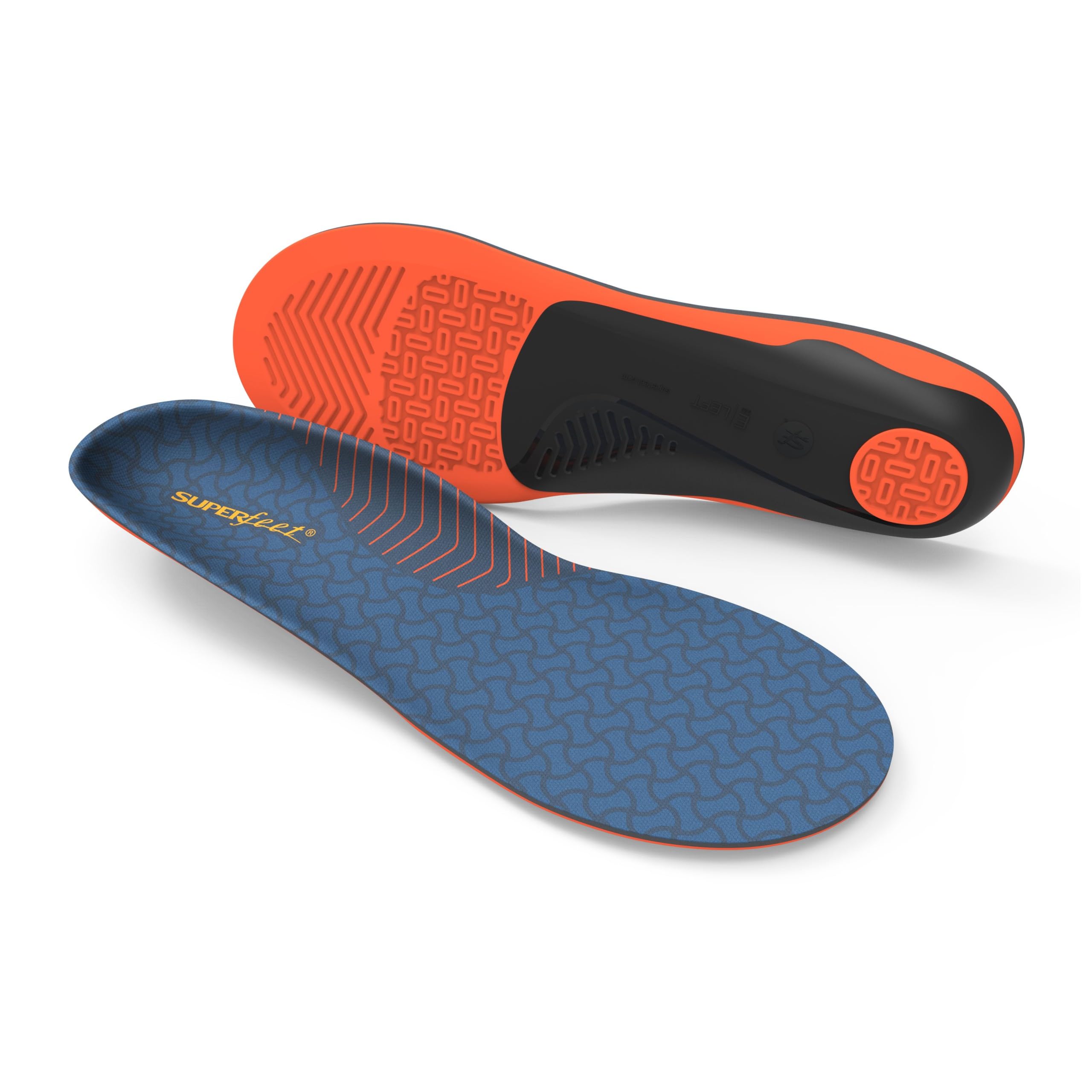
Soft, anti-fatigue cushioning built for the people who stand on concrete all day.
If your day is spent on poured concrete rather than dirt or decking, the cushioning here is the point. Superfeet builds the Work Cushion for long hours on your feet, with soft underfoot cushioning that carries anti-fatigue support across all arch heights. It’s sized for work boots and roomy work shoes, and it’s built to keep its shape for up to 12 months of wear.
The moisture-wicking top cover does double duty — it pulls sweat away to keep feet fresher and helps control odor, which matters in a boot you don’t get to air out between shifts. It’s a lightly structured support rather than a rigid orthotic, so it suits anyone who wants cushioning-heavy comfort over a hard corrective arch.
Here’s where you size carefully: it’s trim-to-fit, and if you fall between sizes you size up and trim down. Fit is the contentious part — some report a perfect fit straight from the start, while others find them too tight. Start by measuring against your boot’s own liner, and remember the cushioning wants room.
The anti-fatigue core: Soft cushioning and a moldable trim-to-fit shape make this the friendliest pick for hours standing on hard floors.
The realistic caveat: It’s a lightly structured support, not a tall corrective arch — and fit can run tight, so order up and trim down.
Go with this if: you stand on concrete all day and want soft anti-fatigue relief plus odor control.
Choose another if: you need a firm, tall corrective arch or your boots run narrow.
Know the Specs
Arch Height and Firmness
Arch height decides comfort versus correction. A high, rigid arch can take days to break in but supports a fallen arch best, while a medium, firm arch suits most feet with less adaptation. Firmness is the shell’s resistance — a firm shell controls your foot’s roll rather than letting the foam give under weight.
Deep Heel Cup and Heel Stability
The heel cup is the raised rim around the back of the insole that holds your heel in one spot. A deeper cup keeps the heel from sliding and helps steady your foot against rolling inward or outward, which takes load off your arch over a long shift.
Weight and Profile Thickness
An insole’s weight and thickness decide how much room it leaves inside the boot. A slim, light build slips into snug boots without crowding your toes; a heavy, thick build cushions more but can lift your heel and squeeze the front of an already-fitting boot.
Top Cover Material
The top cover is the fabric against your sock. Polyester or COOLMAX wicks sweat away and cuts friction, while a plain-weave fabric stops your foot slipping. In a boot that doesn’t breathe, this layer is what keeps your socks from turning damp and slick mid-shift.
Common Questions
How do I know if my work boots need an insole with high arch support or medium?
Will these insoles fit inside safety boots that are already snug?
Do I need to trim these insoles to fit?
How long does a work boot insole hold up before I should replace it?
Why does a new insole feel uncomfortable for the first few days?
Is a firm-shell insole better than a soft memory foam one for arch support?
Which insole is best for someone standing all day on concrete?
Can someone over 220 pounds use these insoles?
Do these insoles control odor in boots?
What size insole do I order if I wear half sizes?
The Bottom Line
For most people who need arch support in a work boot, the PowerStep Pinnacle Maxx is the pick that solves the actual problem — a firm shell with a 2-degree medial post holds your foot from rolling, and it transfers between boots without trimming. If you’re a heavier wearer who needs a tall arch on a stiff plate, the IFITNA gives you 36mm of arch and a TPU base. And if you’re squeezing an insole into snug safety boots, the slim EASYFEET is the one that won’t crowd your toes. Match the arch height to your foot, allow a week to adapt, and pick the model shaped for your boot.
How we choose
We do not accept paid placement. Every pick is matched to a real buyer and a real use-case; we do not hands-on test units.
Sources
Specifications: manufacturer listings and product documentation. Review insights: verified customer reviews, as of November 2026. Pricing: not shown on this page (it changes often); check the current price via the retailer link.
As an Amazon Associate, Tactical Gear Guy earns from qualifying purchases. This does not affect which products we feature.