Specs are compiled from manufacturer listings and verified buyer reviews and can change over time — please confirm the key details on the product page before buying.
You stop chasing hum, crackle, and dead channels when the stage lights kick on if you buy a cable with thicker copper and a real metal shell. The short answer: a 22AWG (American Wire Gauge, a standard measure of wire thickness where a lower number means thicker copper) pure-copper conductor inside a braided shield is what separates a cable that stays quiet for years from one that starts buzzing three gigs in. The picks below are the ones worth plugging in.
This guide is built by comparing the manufacturers’ published specifications and the patterns across verified customer reviews, so you get each pick’s real strengths and trade-offs instead of marketing spin.
Below you get the honest trade-offs on shielding, strain relief, and length so you can match a cable to your rig. The goal is a quiet run from mic to mixer, and these are the xlr speaker wire picks that deliver it without drama.
Top Picks
How To Choose The Best XLR Speaker Wire
An XLR cable carries a balanced audio signal, which means it sends the signal twice with opposite polarity and cancels out noise at the receiving end. That is why a properly shielded cable sounds clean and a badly shielded one hums. Your job as a buyer is to check four things: the conductor gauge, the shielding layers, the connector shell, and the length.
Start with the conductor gauge
Gauge is just the thickness of the copper wire inside, and a lower number means thicker copper. A 22AWG conductor carries signal with less resistance than a 24AWG one, which helps over long runs. Thicker copper also survives flexing better, so the cable does not fail at the connector after months of coiling and uncoiling.
Shielding is what keeps the hum out
A braided copper shield wraps the conductors and sheds electromagnetic interference from lights, power cables, and amps. A foil layer underneath blocks high-frequency noise. Cables that combine both layers — like a copper braid plus aluminum foil — stay quiet in the noisiest rooms, such as a stage full of dimmers or a bar with neon signs.
Look at how the ends are built
The connector shell protects the solder joints, and a metal shell like zinc alloy survives drops better than a plastic housing. A spring strain relief at the base of the connector flexes with the cable instead of letting it crease and break. Self-locking plugs grip the socket firmly so the cable does not pop out when someone trips over it mid-song.
Match the length to the job
A 5-foot cable suits a rack or a desk patch bay where everything sits close. A 25-foot run covers most stage-to-mixer distances, and a 75-foot cable reaches the back of a large room or a DMX lighting rig. Buy a length that fits your space with a little slack, not one so long that you are coiling tangles of spare cable after every show.
Side-by-Side Comparison
| Model | Best For | Length | Gauge | Connector | Amazon |
|---|---|---|---|---|---|
| Kxable Premium XLR 25 FT★ Best Overall | All-round stage and studio cable | 25 feet | 22AWG | Male-to-female, self-locking | Amazon |
| Hosa Pro Balanced InterconnectCompact Pick | Short studio and monitor runs | 5 feet (60 inches) | 24AWG | Male-to-male | Amazon |
| Aqdocvf 2-Pack 25ftBest Value | Two stage runs on a budget | 25 feet (2-pack) | — | Male-to-female | Amazon |
| Elebase XLR 2-Pack 10FT | Karaoke and busking kits | 3 meters / 10 feet (2-pack) | — | Male-to-female, non-slip | Amazon |
| Amazon Basics XLR 50 Foot | Long home-studio and PA runs | 50 feet | — | Male-to-female, nickel-plated | Amazon |
| NUOSIYA XLR 20 Ft 2-Pack | Audio and DMX lighting runs | 20 feet (2-pack) | — | Male-to-female | Amazon |
| D’Addario Classic Series 25 Feet | Long-life studio and live cable | 25 feet / 7.62 meters | 24AWG | Male-to-female, molded | Amazon |
| Elecan Heavy Duty 75 Feet | Big rooms and DMX rigs | 75 feet | 24AWG | Male-to-female, self-locking | Amazon |
Detailed Reviews
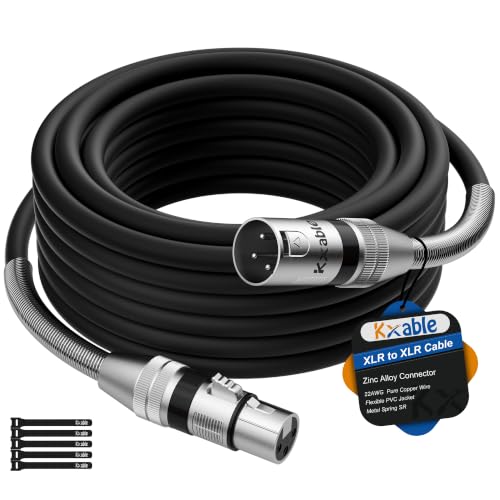
1. Kxable Premium XLR Cable 25 FT
Our pick — 4.5+★ from 700+ verified ratings; the strongest balance of quality and price.
Thicker copper than most rivals, wrapped in shielding built to fight stage noise.
The number that decides this pick is 22AWG — thicker pure copper than the 24AWG you will find on several cables in this list. That extra copper means the signal meets less resistance on its way to the mixer, so a 25-foot run from a mic at the front of the stage stays clean instead of thinning out. It is also a 3-pin male-to-female cable, so it plugs straight from a microphone into a mixer, preamp, or patch bay.
What wins people over is how it handles real abuse — the functionality is the most-praised thing about this cable, and the construction backs that up. The shell is zinc alloy, which is stronger than aluminum, and the male plug uses a self-locking design so it clicks in and stays there when someone catches the cable with a foot. A metal spring strain relief at the connector end flexes instead of creasing, which is the spot where cheap cables always die. Both copper braid and aluminum foil layers sit inside to resist the interference that stage lights and amps throw at you.
The catch is that it comes as a single cable, so if you need two runs you are buying twice, and the 0.49 kg weight is noticeable when you are coiling it after a gig. It also runs indoor and outdoor, which covers most setups. For a stage or studio cable that has to survive weekly use, this is the one to anchor your rig around.
Where the money goes
- 22AWG pure copper conductor beats the 24AWG common on cheaper cables
- Copper braid plus aluminum foil shielding against EMI and RFI
- Zinc alloy shell and self-locking male plug resist drops and pull-outs
- Metal spring strain relief protects the flex point that usually fails
- Five cable ties included to keep a rig tidy
Worth knowing first
- Sold as a single cable, so stereo pairs mean buying two
- At 0.49 kg it has real heft when you coil it up
Go for it if: you want one cable that can handle a loud, light-heavy stage every week without going noisy.
Hold off if: you need a matched pair from the start — this ships one at a time.
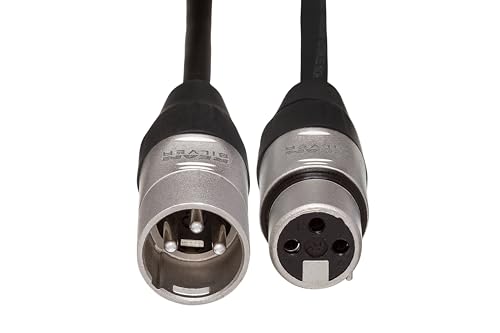
2. Hosa Pro Balanced Interconnect XLR Cable, 5 feet
A short studio patch cable that keeps studio monitors dead quiet at close range.
If your gear sits inches apart — a monitor on a desk, an interface stacked on an amp — this 5-foot (60-inch) balanced interconnect is the right size, and the build quality is what earns it the spot. It uses REAN connectors and a 24AWG conductor, and it is built as a balanced interconnect with male-to-male ends so it links gear rather than running to a mic. That is a different job from a long stage cable, and it does that job quietly.
The sound is where this one sells itself. It pairs cleanly with JBL studio monitors and stays noise-free in a near-field setup where a stray hum would be obvious in every mix. Quality is the aspect that draws the most praise, with functionality close behind — owners treat it as a reliable studio workhorse rather than a stage cable.
Here is the limit to weigh: at 5 feet it will not stretch to a stage position, and the male-to-male wiring means it is not a drop-in replacement for a mic cable. For a desktop or rack patch where short runs and clean signal matter more than reach, it is a dependable choice.
The real strength: a 5-foot balanced interconnect with REAN connectors and a 24AWG conductor that stays noise-free with studio monitors.
The honest limit: male-to-male ends and a short 60-inch reach mean it suits linking gear, not mic-to-mixer stage work.
Reach for this if: you are patching a desktop studio and want the shortest, quietest run between two boxes.
Look elsewhere if: your mic stands more than a few feet from the mixer.
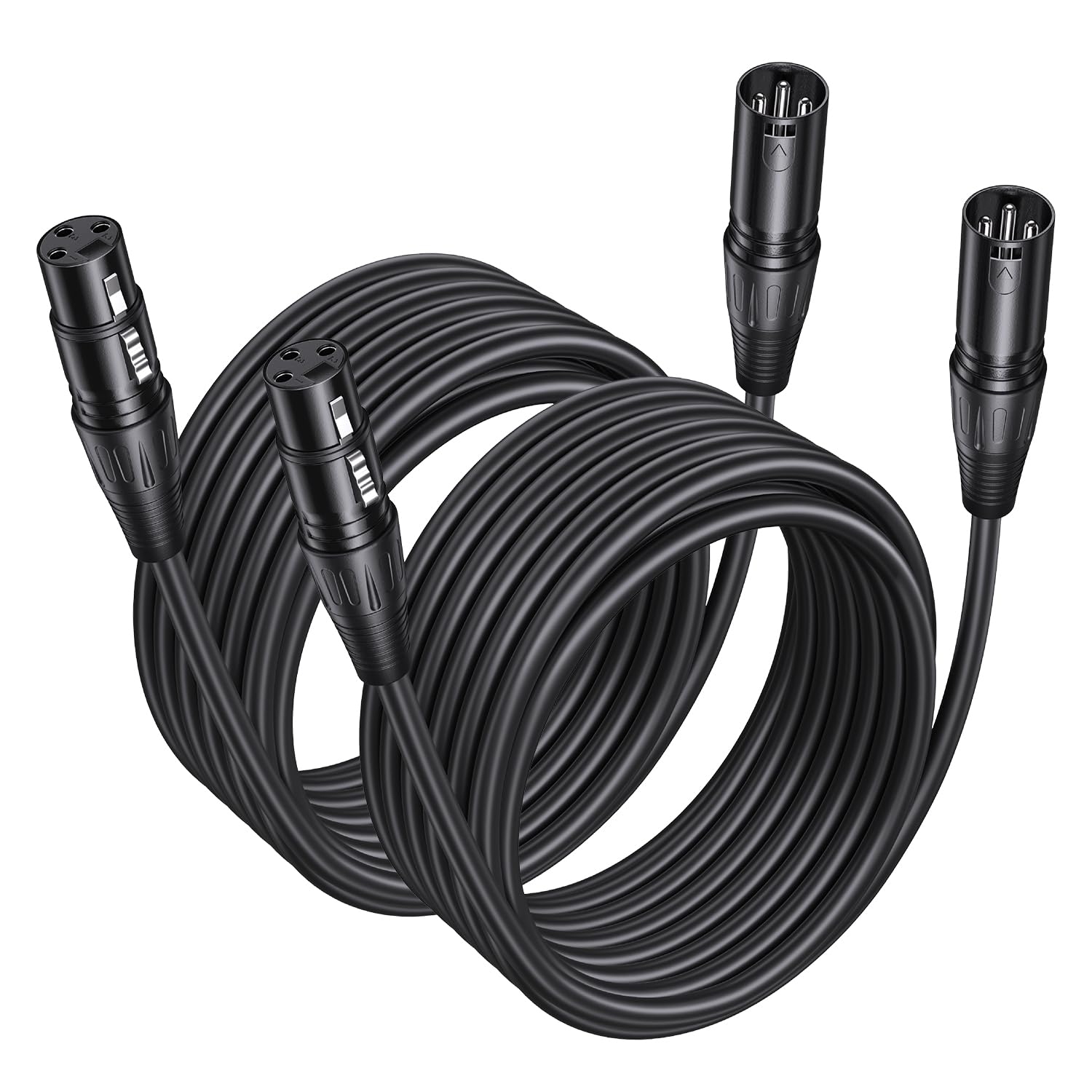
3. Aqdocvf 2-Pack Premium XLR Cable, 25ft
Two 25-foot stage cables for the price of one, with a bend rating that says they last.
The pitch is two 25-foot cables in one bag, backed by a rating of over 20,000 bends and 10,000 plug cycles. That is the number to care about if your cables travel — it means the manufacturer expects the flex point and the plug to survive heavy use. The conductors are oxygen-free copper (OFC) with a balanced design, which is the standard recipe for keeping interference low on a long run.
The connectors are 3-pin male-to-female with a self-locking design that clicks into place, so setup is fast and the plug holds. The soft PVC jacket keeps the cable flexible when you are running it around a stage, and it is rated for both indoor and outdoor use. Owners lean on these for wireless mics into a mixer and for desktop studio setups, and the quality is the thing that draws the most praise, with functionality right behind it.
One caveat: the cable itself has no gauge figure published, so if matching a specific 22AWG conductor is your goal, the Kxable pick above is the clearer choice. Come for the two-pack value and the bend rating, and these will cover a pair of stage positions without a second purchase.
Two runs, one bag: ideal if you need a matched pair of 25-foot stage cables and want to spend once.
Check the gauge: if you specifically need a documented 22AWG conductor, look at the top pick instead.
4. Elebase XLR to XLR Mic Cable 2-Pack, 10FT

The braided-jacket pair built for karaoke nights and street performances.
A soft nylon braided jacket is what separates this pair from the plain PVC crowd, and that jacket is the reason it can take being stuffed in a bag and dragged to a gig. You get two 3-meter (10-foot) cables with male-to-female 3-pin ends, so you can run a mic and a second source without buying twice. Inside, oxygen-free copper carries the signal and multiple layers of high-density braided shielding cut the noise that creeps in on a crowded stage.
Plugging and unplugging stays easy while the cable holds tight to the mic, thanks to a non-slip mechanism in the metal connector — which matters when a performer is moving around. The 10-foot length is the balance for a small setup: enough slack to move, not so much that you are coiling tangles. Owners say the build outclasses the price, and they rate functionality and value highly.
The trade-off is reach: 10 feet will not cover a large stage or reach across a room, so this is a small-rig cable by design. For karaoke, busking, and compact home setups, the two-pack gives you a spare without a second trip to the store.
Why it travels well: a nylon braided jacket over oxygen-free copper with multi-layer shielding, in a two-pack of 10-foot male-to-female cables.
Size it right: 10 feet suits a small stage or home setup; a big room needs a longer run.
Perfect pairing: small-venue performers who want a durable braided pair with a built-in spare.
Not for the back of the hall: the 10-foot reach runs out fast on a wide stage.
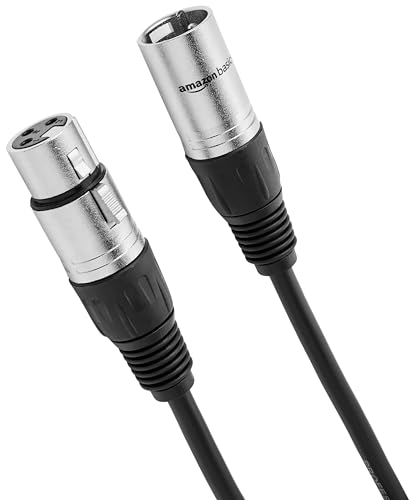
5. Amazon Basics XLR Microphone Cable, 50 Foot
Fifty feet of copper that lets a singer walk the whole room mid-song.
The crowd favorite on this list, and the length is the reason — 50 feet of cable gives a vocalist room to roam a venue instead of standing pinned to the mic stand. Inside, all-copper conductors run through an inner copper spiral shield that cuts noise interference, so a long run does not turn into a hum factory. The 3-pin connectors are zinc alloy with nickeling and a protective metal housing, all wrapped in a flexible 6.0mm PVC jacket.
Sound quality is the second most-praised trait after the overall build, and home-studio owners lean on these for the clean signal. The length draws steady praise, along with a snug fit in the jacks — a plug that seats firmly and does not wobble loose. Tens of thousands of owners have bought it, making it the most reviewed cable here.
The recurring gripe is on the connector and durability side, where feedback is mixed — treat the ends with care and coil it loosely rather than yanking it out by the cord. The other honest limit is indoor-only use, so it stays out of the rain. For a long indoor run where value and reach matter, this is the safe, well-worn choice.
Reach and reputation: a 50-foot all-copper cable with a copper spiral shield and zinc alloy 3-pin connectors.
Handle the ends kindly: connector and durability feedback is mixed, and the cable is rated for indoor use only.
Best when length leads: singers and presenters who need to move across a room on one cable.
Keep it indoors: this one is not built for outdoor gigs in the weather.
6. NUOSIYA XLR Cable 20 Ft 2-Pack
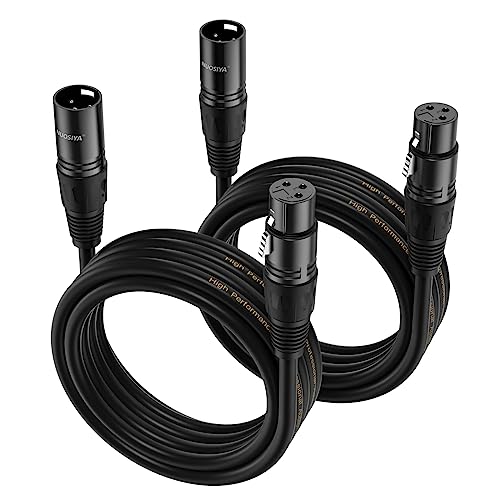
One pair that carries both your audio and your lighting signal.
Most cables on this list do one job; this pair is built to move audio and DMX data on the same XLR connection. That means the same two 20-foot cables can feed a mixer and run a lighting rig, and the manufacturer specifically calls out an end to strobing, flickering, and signal loss on the DMX side. Inside you get oxygen-free copper with polyethylene insulation and copper braided shielding to cancel noise and hum while keeping the high frequencies intact.
The cable stops pulling out at the connector thanks to double spring-style strain relief (a flexible collar that absorbs tugging) — the failure point on a lighting truss that gets set up and torn down every night. Heavy duty metal housing and grip treads add to the hold, and the PVC (polyvinyl chloride, a tough plastic) braided jacket is rated to resist both high and low temperatures. Owners rate the build and functionality solid for the price.
The honest limit is that 20 feet is a mid-length run — fine for a club stage, short for a big room, and there is no gauge figure published to compare against the 22AWG top pick. If your rig mixes sound and lighting on one cable type, this pair is the practical pick.
Dual-purpose buy: anyone running both audio and DMX lighting who wants one cable type for both.
Measure your room: the 20-foot reach suits a club stage more than a large venue.
7. D’Addario Classic Series XLR Cable, 25 Feet

Two layers of shielding for the quietest possible run to the board.
Two layers of shielding sit inside this 25-foot cable, and that is the spec that matters if you play rooms with noisy power and dimmers. The double shielding rejects hum so the signal stays clean, and the 24AWG conductor is paired with the brand’s low-capacitance design, which it says keeps the signal transparent and the cable long-lived. The molded plugs protect the solder joints and add strain relief, which is the spot that fails first on a cable that gets coiled and thrown in a bag.
The build is what owners come back for — solid connectors, noise-free sound, and enough flexibility that it never feels stiff or cheap. It curls neatly around a mic stand after a set, and it holds up to live playing without the shell cracking. D’Addario builds these to the same quality controls it has used for years, and the results show in how the cable feels in the hand.
Weigh the trade-off: the conductor here is 24AWG, thinner than the 22AWG on the top pick, so over a very long run the Kxable has the edge on resistance. For a 25-foot stage or studio cable where quiet operation and build quality lead the decision, this one is worth the step up.
Built to be quiet
- Two shielding layers reject noise for clean, hum-free operation
- Molded plugs add strain relief at the joint that usually fails
- Flexible jacket coils easily and never feels stiff
- Solid connectors hold up to live playing
Where it gives ground
- 24AWG conductor is thinner than the 22AWG on the top pick
- The premium build costs more than the value pairs
The step-up choice: players who want the quietest run and the most durable ends on a 25-foot cable.
Thin-copper caveat: if a thick conductor is your priority, the 22AWG Kxable beats it here.
8. Elecan Heavy Duty XLR Cable, 75 Feet

Seventy-five feet of shielded copper for the back of the biggest room.
When the run has to cross a whole venue, this 75-foot cable is the one that reaches, and it does it with 24AWG pure copper conductors that resist oxidation and corrosion. The shielding fights EMI and RFI, so the long distance does not fill with static, and the metal connectors are the heavy duty sort built for wireless mic rigs. Pure copper nickel-plated pins pair with a self-locking male-to-female design that plugs in easily and locks firmly.
The PVC jacket is rated for more than 10,000 bending tests, which suits a cable coiled and packed away after every show. You also get 10 cable ties in the box to keep a long run neat instead of snaking across the floor. Owners call the build above professional grade, citing clean signal and connectors that seat snugly.
Count the limits honestly: 24AWG is thinner than the 22AWG top pick, and over 75 feet a thicker conductor would hold signal better, so this is a reach cable rather than the lowest-loss one. It is also a single cable, not a pair. For stage speakers, PA, and DMX lighting across a large space, the length and the shielding make it the practical answer.
For the long run: 75 feet of 24AWG pure copper with EMI/RFI shielding and self-locking nickel-plated connectors.
The long-distance caveat: 24AWG loses more signal over 75 feet than a 22AWG conductor would, so treat it as a reach cable, not a short-run one.
Distance first: stage managers and DMX crews who must cross a large room or lighting truss.
Short runs deserve better copper: for a close mixer, a 22AWG cable keeps more signal.
Know the Specs
Wire gauge (AWG)
Gauge measures the thickness of the copper conductor, and a lower number means thicker wire. A 22AWG conductor has more copper than a 24AWG one, so it carries the signal with less resistance. That matters most over a long run: a thicker conductor keeps the signal strong from a mic at the front of the stage to the mixer at the back, where a thin one can start to thin out.
Shielding (braid and foil)
Shielding is the metal layer wrapped around the conductors to block interference from stage lights, dimmers, and power cables. A copper braid sheds electromagnetic noise, and a foil layer blocks high-frequency noise. Cables that combine both layers — like a copper braid plus aluminum foil — stay quieter in a noisy room than a cable with a single layer, so look for both if your venue is full of electrical gear.
Connector type and gender
XLR connectors are 3-pin, and the gender pairing decides what the cable plugs into. Male-to-female is the standard mic-to-mixer setup, with the male pin end going to the mic and the female socket end to the board. Male-to-male links two pieces of gear together — which is why a studio interconnect like the Hosa is wired that way, and why it will not drop into a mic run.
Strain relief and jacket
Strain relief is the flex protection at the base of the connector, where a cable bends most and fails first. A spring or molded plug spreads that bending over a longer section so the copper does not crease and snap. The jacket is the outer skin — a PVC jacket protects the shield, and a braided or high-elastic jacket takes more abuse when a cable travels to gigs and gets coiled and uncooled nightly.
Common Questions
Can I use an XLR mic cable as a speaker cable?
Does 22AWG really sound better than 24AWG?
Will an XLR cable work with my DMX lighting rig?
How long a cable can I run before the signal degrades?
What is the difference between male-to-female and male-to-male XLR?
Do self-locking XLR connectors stay put on stage?
How do I stop a cable from failing at the connector?
Is a braided jacket worth it over a plain PVC jacket?
Can I use these cables outdoors?
What do the included cable ties actually do for me?
The Bottom Line
For most rigs, the xlr speaker wire winner is the Kxable 25 FT because its 22AWG pure copper and copper braid plus foil shielding give you the quietest, most durable everyday run. If you want two matched stage runs and a heavy bend rating, grab the Aqdocvf 2-Pack. And for the back of the biggest room or a DMX lighting truss, the Elecan 75 FT is the one to reach for. Any of these beats a cable that hums — pick the length and gauge that fit your stage and you are set.
How we choose
We do not accept paid placement. Every pick is matched to a real buyer and a real use-case; we do not hands-on test units.
Sources
Specifications: manufacturer listings and product documentation. Review insights: verified customer reviews, as of November 2026. Pricing: not shown on this page (it changes often); check the current price via the retailer link.
As an Amazon Associate, Tactical Gear Guy earns from qualifying purchases. This does not affect which products we feature.