Specs are compiled from manufacturer listings and verified buyer reviews and can change over time — please confirm the key details on the product page before buying.
You know the pain: kneeling on a concrete slab to retie a snapped lace, or hauling a mud-caked boot off at the end of a shift just to free your foot. A BOA system (a dial-and-wire closure that tightens the whole boot with a twist) fixes both problems, but not every BOA work boot is built to the same standard. This guide breaks down seven real options by what actually matters on a job site — toe protection, waterproofing, outsole grip, and how the dial holds up over a full season.
This guide is built by comparing the manufacturers’ published specifications and the patterns across verified customer reviews, so you get each pick’s real strengths and trade-offs instead of marketing spin.
The picks below range from a lightweight casual work boot to an all-weather industrial rig. We will walk through what each is actually built for, where it falls short, and which one fits your daily grind. The right pair of work boots with boa system should match your toe type, waterproofing needs, and outsole grip to the surface you actually stand on.
Top Picks


How To Choose The Best Work Boots with BOA System
Buying a BOA work boot is less about the dial looking futuristic and more about whether the steel wire pulls tension evenly across your whole foot. A good system locks your heel in without crushing the top of your foot. A bad one digs in on the instep and leaves you reaching for the release button every half hour. Before you buy, check these four things.
Toe Protection: Steel vs. Composite
Steel toe caps protect against impact forces and are common in heavy construction. Composite toes are lighter and non-conductive, so they do not get as cold in winter. If you work near electrical hazards, look for an EH (electrical hazard) rating on the boot. If you are on your feet all day on concrete, a composite toe can reduce the weight pressing down on your toes by a noticeable margin.
Waterproofing and Breathability
A waterproof boot uses a sealed membrane to keep water out, while a water-resistant boot only sheds light splashes. On a wet job site, you want the sealed membrane. On a warm indoor floor, a fully waterproof boot can trap sweat if the lining is not breathable. Look for boots with moisture-wicking linings or breathable membranes if you work in warm weather.
Outsole Material and Grip
Slip resistance matters more than most buyers realize until they are carrying a load across an oily floor. Rubber outsoles with a pronounced lug pattern shed mud and grip on uneven ground. A PU/rubber blend outsole often handles heat better than pure rubber, which can soften near hot work areas. Check the heel type, too: a low-profile 90-degree heel is easier to plant on a ladder rung.
Side-by-Side Comparison
| Model | Best For | Toe Type | Waterproofing | Weight / Material | Amazon |
|---|---|---|---|---|---|
| Danner Vicious 8″ NMT★ Best Overall | All-day comfort on mixed terrain | Composite | Waterproof membrane | Full-grain leather | Amazon |
| DEWALT Richardson BOABest Value | Wide feet and budget-minded pros | Steel | Water resistant | Nubuck leather | Amazon |
| Wolverine I-90 EPX Boa | Oil and chemical exposure | CarbonMAX | Waterproof | 1 lb 13 oz | Amazon |
| Timberland PRO Morphix Boa | Sneaker-like break-in | Composite | Waterproof | — | Amazon |
| Timberland PRO Boondock Boa | Heavy industrial protection | Composite | Waterproof | 3 lb | Amazon |
| ARIAT Stump Jumper 6″ BOA | Mud and rock work sites | Composite | Waterproof | — | Amazon |
| ARIAT Workhog XT 8″ BOA | Oil and gas, side-to-side stability | Carbon | Waterproof | 5.5 lb | Amazon |
Detailed Reviews
1. Danner Work Boots for Men, Vicious 8″ NMT
Our pick — 4.5+★ from 800+ verified ratings; the strongest balance of quality and price.
A lightweight 8-inch boot that feels broken in on day one, not week three.
The Danner Vicious earns the top spot by solving the biggest complaint about work boots: they are heavy and stiff. This one is built around an 8-inch shaft with full-grain leather and a composite toe, which is lighter than a steel cap and does not conduct cold the same way. The speed lace system and a low-profile 90-degree heel let you get the boot on and planted fast. For anyone walking between a truck, a ladder, and a concrete slab all day, that combination saves your feet and your patience.
What wins people over is the comfort — owners describe the ride as close to a tennis shoe, and that is not a line you hear about a safety toe boot often. The watertight, breathable lining keeps the swamp out without baking your feet in warm weather. A Vibram outsole with slip-resistant and oil-resistant properties gives you grip on wet concrete and loose gravel. If you are an electrician or lineman, the ASTM F2892-18 EH rating on the soles matters — it means the boot is rated to resist electrical hazards.
The catch is durability on the upper. Some buyers report the leather at the toe ripping sooner than expected, and waterproofing experiences are split — most stay dry, but not everyone. The fit also runs a bit large for some, so try before you commit. It is a fair trade-off if you value comfort and light weight over armoring the toe box.
What earns the top spot
- Composite toe saves weight and stays non-conductive in cold
- Vibram outsole is slip- and oil-resistant for wet shop floors
- Watertight but breathable lining reduces sweat buildup
- ASTM F2892-18 EH rating covers electrical hazard work
Where it asks for care
- Toe leather can wear through faster than the rest of the boot
- Fit runs somewhat large for some foot shapes
- Waterproofing satisfaction is not universal
Go for it if: you want an 8-inch BOA boot that feels light and flexible from the first shift.
Think twice if: you drag your toes constantly or work in abrasive material that punishes leather uppers.
2. DEWALT Richardson Men’s BOA Fit System Steel Toe
A wide-fitting steel toe boot that proves you do not need to spend big for a dial closure.
If your feet run wide and most boots pinch at the ball, the Richardson is built for you. DEWALT designed this model with a wider outsole and last, using a PU/rubber blend that stands up to heat up to 300°C and delivers slip resistance with a built-in ladder grip. The steel toe cap is rated to protect against impact forces up to 200J. A toe scuff guard covers the outside of the toe box, which is a smart add for anyone who kicks tools or drags toe-first on concrete.
The BOA system here uses a dial you can micro-adjust on the fly, and the nubuck leather upper is water resistant with a soft, velvety surface. Owners call the boot professional and stylish, with the BOA holding up well over time. For a value-tier boot, the quality-to-complaint ratio is strong — no single issue dominates the feedback. The ratcheting mechanism is the star: you twist to lock in, pop the dial to release at the end of the shift.
The honest limit is water resistance versus full waterproofing. If you stand in puddles all day, a water-resistant boot will not cut it. But for dry or damp job sites and a budget-conscious buyer, this is a strong entry into BOA boots without the premium markup.
The wide-fit advantage: A PU/rubber outsole that handles heat and ladders, plus a steel toe rated for 200J, makes this a serious safety boot at a value price.
Worth knowing: Water resistance is splash-level, not submersion-level.
The man with wide feet: this one’s built around your foot shape, with a ladder grip and steel toe in the bargain.
The deep-puddle worker: a fully waterproof boot is the safer call.
3. Wolverine Men’s I-90 EPX Boa CarbonMax 6″ Boot
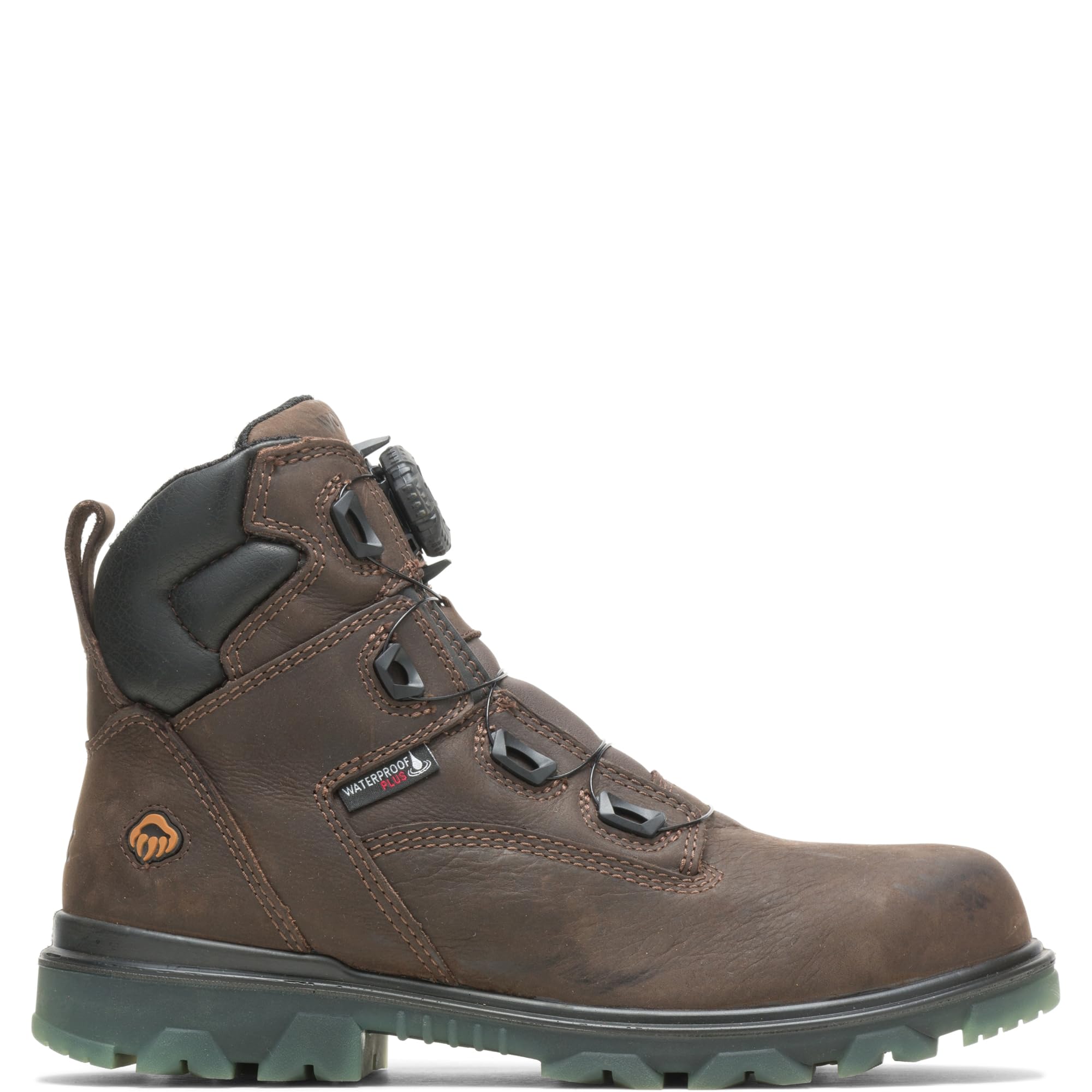
The boot that sheds ice, dirt, and oil off its dial so you can tighten it with gloves on.
Wolverine’s I-90 EPX is a 6-inch waterproof boot built around a CarbonMAX nanotechnology safety toe that meets ASTM F2413-18 F I/75 C/75 EH standards. That toe is lightweight and non-conductive to heat or cold, and it gives you a roomier toe box than a steel counterpart. The micro-adjustable BOA Fit System is designed to shed ice, dirt, and oil — a real advantage when you are working in slop and need to cinch up without stopping to clean the dial first.
At 1 lb 13 oz for a single size-11 boot, it stays manageable on long days. The EPX footbed cushions and flexes, and a nylon shank adds lightweight stability without the dead weight of a steel shank. The TPU outsole has a pronounced lug pattern and is built to stand up to water, oil, chemicals, and heat. Comfort and durability are what owners talk about most — this is a boot that earns its keep over seasons rather than months.
Plan for the fit: it runs narrow and slightly small, and the 6-inch height is not as easy to get on and off as a taller boot with a pull loop. If you have wide feet, size up or look elsewhere. For medium-width feet, this is among the most well-rounded BOA boots you can buy.
Built for the messy shift: The glove-friendly BOA dial, CarbonMAX toe, and ASTM F2413-18 EH rating make this a natural fit for oil and chemical work.
Sizing note: Runs narrow and a touch small — wide-footed buyers should size up or look elsewhere.
Pick it for: oil, chemical, or ice work where the dial needs to keep functioning under grime.
Pass it if: you need a wide toe box or a taller shaft for ankle coverage.
4. Timberland PRO Men’s Morphix Boa 6″ Composite Toe
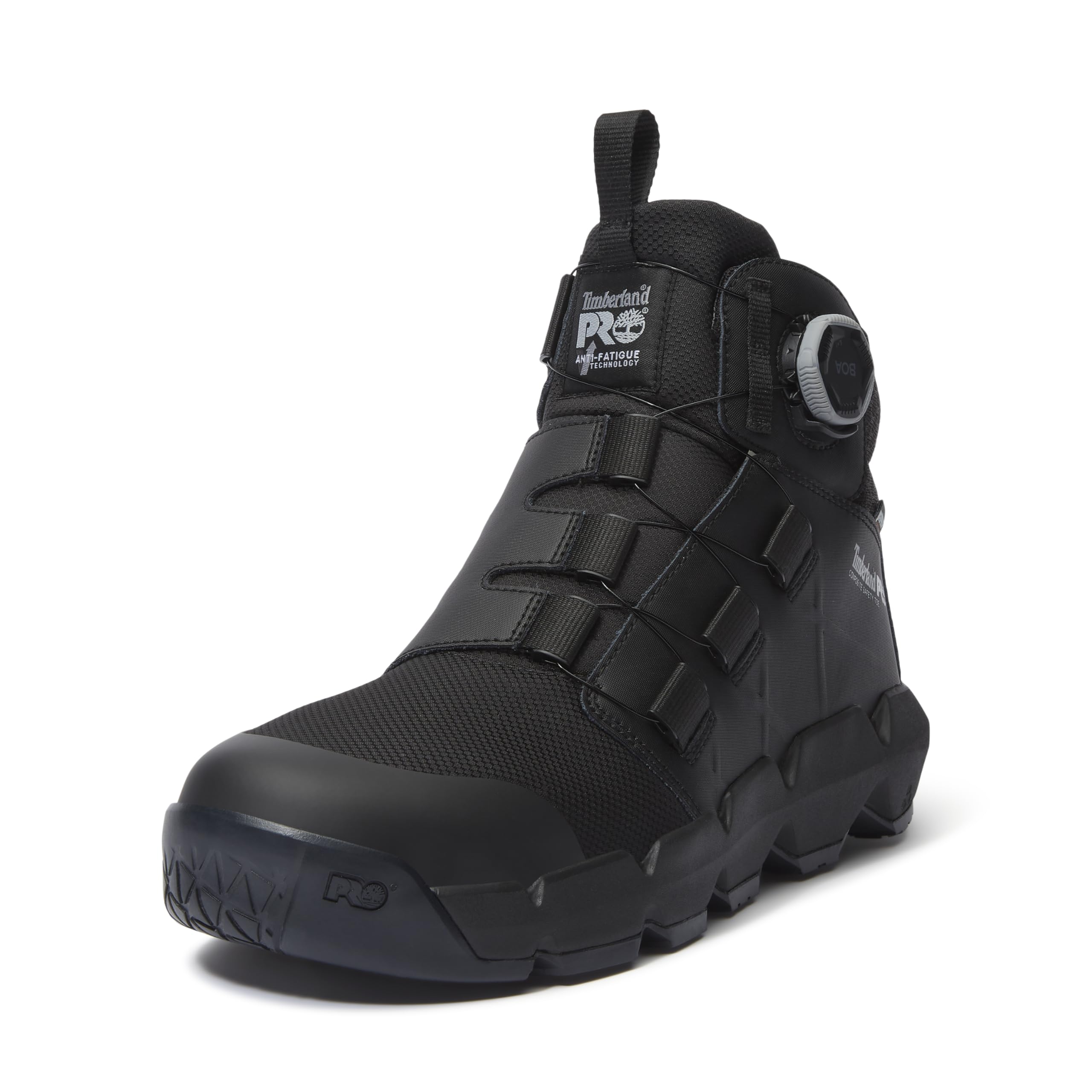
A waterproof composite-toe boot that owners describe as feeling like a high-top sneaker.
Timberland PRO swapped traditional laces for the BOA Fit System on the Morphix, using a PerformFit Wrap configuration that tightens with a quick turn of the dial. Inside, Anti-Fatigue Technology delivers shock absorption and HoverSpring technology returns energy with every step. For a 6-inch composite-toe boot, that combination is aimed squarely at workers who are on their feet for long shifts and need cushioning more than ankle armor.
The comfort and build quality are what buyers talk about most, and the sneaker comparison is the one you hear over and over. The composite toe keeps the boot lighter than a steel version, and the waterproof construction means you are not dodging puddles. The BOA dial tightens evenly, which is a genuine upgrade over laces if you have ever had to retie a boot in the middle of a job.
The trade-off is fit and the lace system. The Morphix runs narrow for some foot shapes, and the ease of use is more mixed than on a standard lace boot — some find it easy to get on, others report feet sliding inside or catching on something when they pull the boot on. If your foot is medium-to-narrow and you want a cushioned, sneaker-like boot with a dial, this delivers. If you have a wide foot, try before you buy.
For the worker who hates stiff boots: HoverSpring returns energy with each step and Anti-Fatigue technology softens the concrete.
Skip if you need a roomy toe box: the narrow fit will bother wide feet.
5. Timberland PRO Men’s Boondock Boa Composite Toe WP
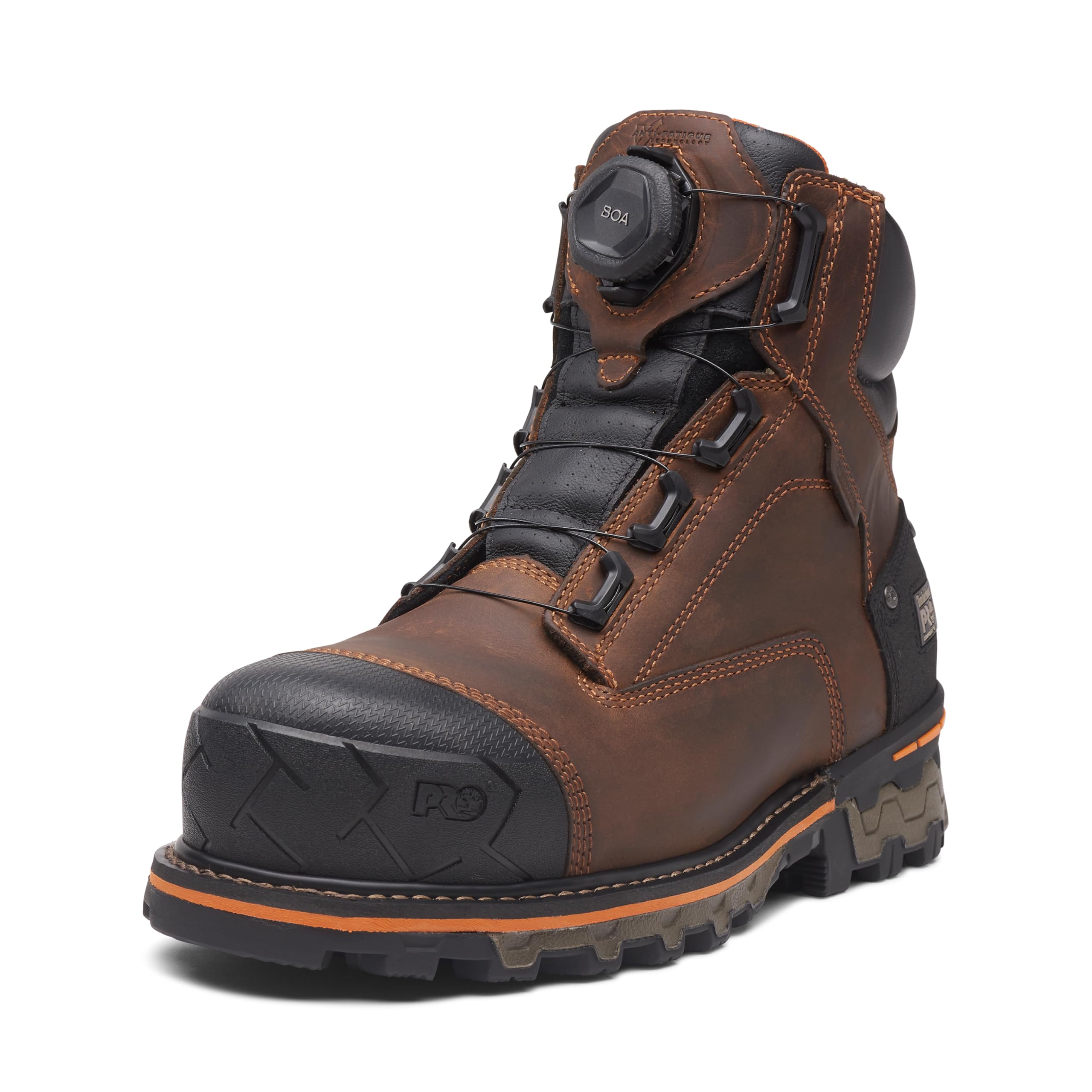
Industrial-grade protection from every angle — including a rubber toe protector as thick as a standard outsole.
The Boondock is the boot for the job that eats lesser footwear. It starts with premium Timberland waterproof leather uppers and internal waterproof, breathable membranes, then adds molded rubber toe protectors that are as thick as standard boot outsoles. Composite safety toes, rigid external heel cups for lateral support, and Anti-Fatigue Technology footbeds round out the protection package. This is a manufacturing and heavy-industrial boot, not a site-visit boot.
At 3 lb per boot, it is not a featherweight, and the weight is the one thing buyers flag. But that weight comes from visible protection: a heat-, slip-, oil-, and abrasion-resistant, non-marking, lightweight All-Weather TPU outsole, plus breathable, moisture-wicking linings made of ReBOTL fabric containing at least 50% recycled plastic. The BOA dial gives you a precision fit without laces to trip over or freeze up.
Quality is what wins people over — this is a boot customers call perfect for work, with solid performance in winter and wet conditions. The fit runs mixed, so dial in your size carefully. If your job involves heavy materials, crushing toes, and wet concrete, the Boondock is built for that environment.
Protection where it counts
- Rubber toe protector as thick as a standard outsole
- Internal waterproof membrane plus waterproof leather upper
- Rigid external heel cup supports lateral movement
- ReBOTL lining uses at least 50% recycled plastic
What it costs you
- At 3 lb per boot, it is noticeably heavier than composite-toe alternatives
- Fit feedback is mixed — sizing needs attention
Reach for this if: you work around heavy materials and need toe and heel protection from every angle.
Look elsewhere if: you are on ladders all day — the weight and bulk will slow you down.
6. ARIAT Work Stump Jumper 6″ BOA
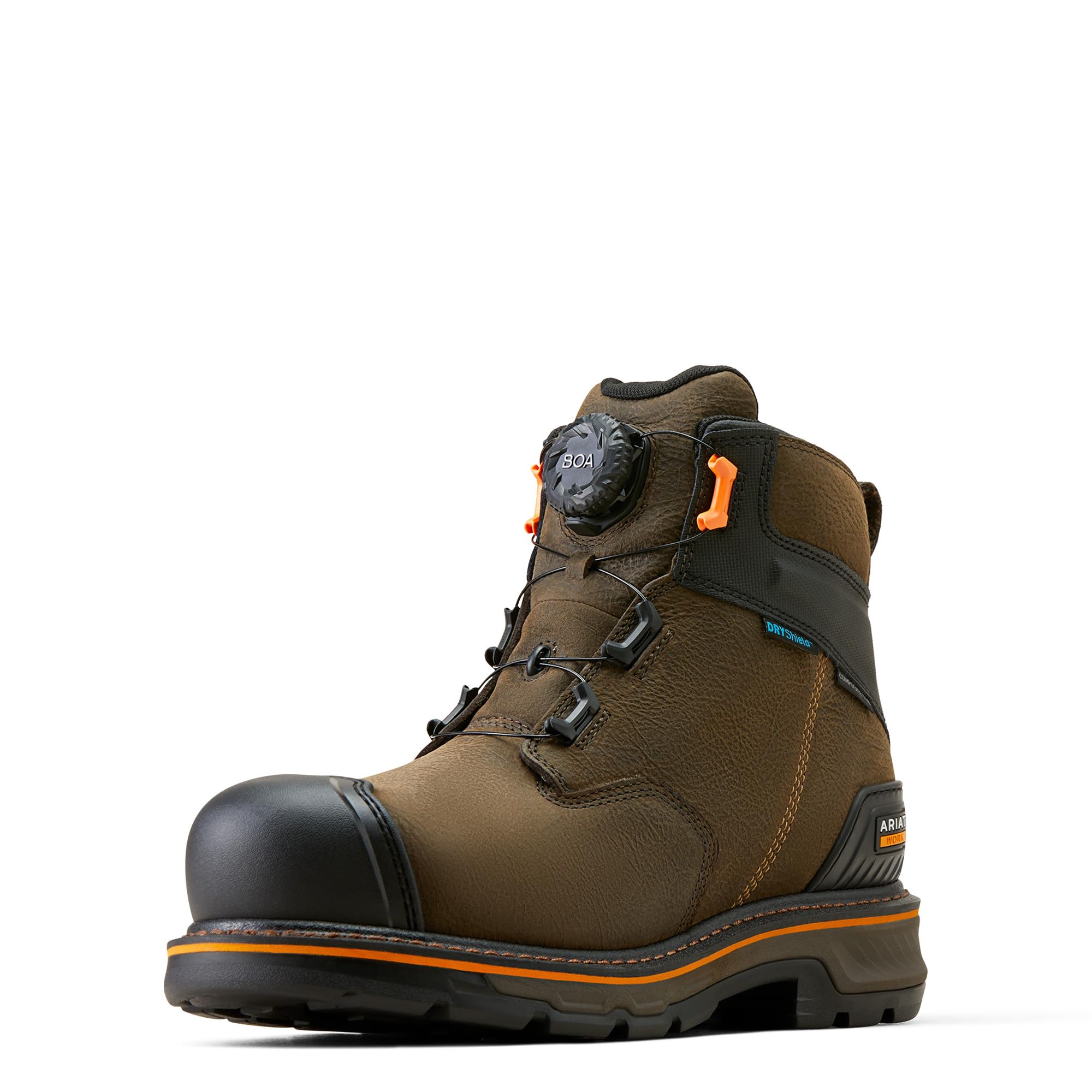
An aggressive outsole that spits out mud and rocks so you stay planted on harsh ground.
The Stump Jumper is designed for extreme outdoor work — the kind where the ground is mud, rocks, and roots rather than a clean concrete slab. The aggressive, debris-releasing outsole is the defining feature: it is built to shed mud and rocks instead of packing them into the lugs until you are walking on stilts. The BOA system gets the boot snug fast, and the composite toe adds protection without the weight of steel.
Fit is what wins people over here — the BOA system gets the boot snug around your foot, and owners note the boots handle heavy rock walking well. The cushioning is another point of praise; this is a boot built for long days on your feet, not just rugged looks. The waterproof construction keeps your feet dry through wet conditions on the jobsite.
The honest catch is weight and bulk. These are not light boots, and the aggressive outsole that gives you grip also adds material. The 6-inch height is a compromise between ankle coverage and mobility. If you are working in mud and rock all day, that trade-off makes sense. If you are on a finished floor indoors, this is more boot than you need.
The outdoor grunt: debris-releasing lugs and a snug BOA fit keep you moving through mud and rock without stopping to clean out the tread.
The indoor worker: this boot’s bulk and aggressive outsole are overkill for clean floors.
7. ARIAT Men’s Workhog XT 8″ Boa Waterproof Carbon Toe

An 8-inch waterproof carbon-toe boot built for side-to-side stability on oil and gas sites.
The WorkHog XT is the boot for the job site that fights back. It is an 8-inch waterproof boot with a carbon safety toe and a Goodyear welt construction that makes it resolable — you can have the outsole replaced instead of buying a new boot when it wears through. ATS Max technology disperses pressure across your foot, and the removable Energy Max anti-fatigue insole adds cushioning. For oil and gas work, that stability and cushioning package is aimed at keeping you upright and comfortable through long shifts.
The DRYShield waterproof breathable construction with full-grain leathers and an impermeable barrier keeps your feet dry, and the Duratread sole is oil- and slip-resisting with a hot contact rating of 300°C/572°F. The BOA dial delivers micro-adjustable precision fit. The ASTM F2413 rating meets the standard for electrical hazard-resistant footwear. At 5.5 lb, it is a substantial boot, but the stability it provides is the point.
Comfort and durability are both mixed in the feedback — some owners find them comfortable and durable, others report they hurt or wear quickly. Sizing also runs about half a size larger than expected, so plan accordingly. For the oil and gas worker who wants a resolable, stable, waterproof boot with a dial closure, this is the premium option.
The long-shift investment: A Goodyear welt means the outsole can be replaced, and the 300°C/572°F hot contact rating on the Duratread sole is built for hot work environments.
Size down: This boot runs about half a size larger than expected, so order carefully.
For the oil and gas hand: side-to-side stability, a resolable welt, and a waterproof carbon toe make this a long-term work boot.
Not for the flat-footed: the half-size gap means you need to try your size carefully before committing.
Know the Specs
The BOA Fit System
A BOA closure replaces laces with a dial, a wire, and a release button. You twist the dial to tighten the wire evenly across the boot, and pull the dial to release. On work boots, the dial is typically designed to shed debris and function with gloves on. The wire can fail if cut or kinked, but the system eliminates lace retying and the loose-lace trip hazard.
Safety Toe Ratings
A steel, composite, or carbon toe cap is rated to protect against impact and compression. The ASTM F2413 standard covers impact resistance (I) and compression resistance (C), and the EH suffix means the boot is rated for electrical hazard resistance. Composite and carbon toes are lighter and non-conductive, while steel toes are typically heavier and can conduct cold. The rating does not mean the toe is indestructible — it means it meets a defined protection threshold.
Common Questions
Do BOA work boots loosen over time?
Can I replace the BOA dial if it breaks?
Is a steel toe or composite toe better for construction work?
How do I know if a work boot is truly waterproof?
What is the difference between ASTM F2413 and ASTM F2892?
How should BOA work boots fit compared to lace-up boots?
Are BOA boots good for cold weather?
Can I wear BOA work boots indoors or on finished floors?
How long does a BOA wire last?
The Bottom Line
For most people, the strongest all-around pick is the Danner Vicious 8″ NMT — a lightweight composite-toe boot with a Vibram outsole and an EH rating that owners describe as comfortable enough to forget you are wearing it. If your feet run wide and you want a steel toe without the premium price, the DEWALT Richardson is the value choice. And for oil and gas work with a resolable welt, the ARIAT WorkHog XT is the premium option. The Danner draws the most consistent praise, while the DEWALT covers the wide-foot fit the others do not. Match the toe type and waterproofing to your job, and the dial becomes the least of your worries.
How we choose
We do not accept paid placement. Every pick is matched to a real buyer and a real use-case; we do not hands-on test units.
Sources
Specifications: manufacturer listings and product documentation. Review insights: verified customer reviews, as of November 2026. Pricing: not shown on this page (it changes often); check the current price via the retailer link.
As an Amazon Associate, Tactical Gear Guy earns from qualifying purchases. This does not affect which products we feature.