Specs are compiled from manufacturer listings and verified buyer reviews and can change over time — please confirm the key details on the product page before buying.
Buying a youth bat is really two decisions: the length that matches your player’s body right now, and the drop weight that lets them whip the barrel through the zone without dragging. Get those two right and the barrel comes around on time without dragging. Get them wrong and you have spent real money on a bat that stings hands and saps confidence. Every pick below carries the USSSA 1.15 BPF stamp (the mark that makes a bat legal in USSSA travel ball), so nothing here will get flagged at the plate.
This guide is built by comparing the manufacturers’ published specifications and the patterns across verified customer reviews, so you get each pick’s real strengths and trade-offs instead of marketing spin.
Two-piece composites soak up hand sting, one-piece alloys swing with a stiff punch, and the drop number decides whether your player can actually control the barrel. The picks below cover travel ball, coach pitch, and everything in between, and each one earns its spot on a real spec or a real playing trait rather than a poster campaign. Here is how to sort the youth USSSA baseball bats worth your money.
Top Picks


How To Choose The Best Youth USSSA Baseball Bats
Start With the Stamp, Not the Paint Job
USSSA play requires the 1.15 BPF stamp, which marks a bat as certified for that league’s performance limit. A USA Baseball or BBCOR stamp will not clear a USSSA umpire’s check, no matter how good the bat feels in the cage. Every bat on this list carries the USSSA stamp, so the certification decision is already made for you.
Match the Drop to the Player, Not the Hype
The drop is a negative number that tells you how much lighter the bat is than its length. A -10 in a 30-inch bat weighs about 20 ounces, while a -5 in the same length is roughly 25. Bigger drop means a lighter bat that swings faster and suits smaller or younger hitters. Smaller drop puts more mass behind the ball, which stronger travel-ball players can use for harder contact.
One-Piece Alloy or Two-Piece Composite
A one-piece alloy bat is a single solid stick, and it feels crisp and stiff on contact. A two-piece composite joins a barrel and handle with a connection point, which softens vibration before it reaches the hands. Composite bats generally run softer and more forgiving, while alloy bats generally deliver a sharper, more direct feedback. Neither is better across the board — it depends on how much hand sting your player notices.
Barrel Size and balance
A 2 3/4-inch barrel is the common USSSA size, and it gives a larger hitting surface than a smaller profile. A wider barrel is more forgiving on off-center contact, which matters most for younger hitters still learning to find the middle. Check that the barrel diameter matches what your league allows before you commit.
Side-by-Side Comparison
| Model | Best For | Drop | Construction | Length | Amazon |
|---|---|---|---|---|---|
| Rawlings 2026 ICON★ Best Overall | All-around travel ball | -5 / -8 / -10 | Two-Piece Composite | 30″ | Amazon |
| Easton HYPEBest Value | Value composite pop | -8 / -10 | Two-Piece Composite | 31″ | Amazon |
| Marucci CATX CompositeBarrel Control | Barrel control | -5 / -8 / -10 | Two-Piece Composite | 29″ | Amazon |
| DeMarini 2024 Zoa | Young 9U hitters | -10 | Two-Piece Composite | 28″ | Amazon |
| Easton 2026 MAV1 Flash | Coach and machine pitch | -10 | One-Piece Alloy | 26″ | Amazon |
| Marucci CATX2 Senior League | Balanced control | -5 / -8 / -10 | Two-Piece | 30″ | Amazon |
| Rawlings Clout AI | Durable alloy feel | -5 / -8 / -10 | One-Piece Alloy | 31″ | Amazon |
| Louisville Slugger 2026 Supra | Travel-ball sound and feel | -10 | Two-Piece Composite | 29″ | Amazon |
Detailed Reviews
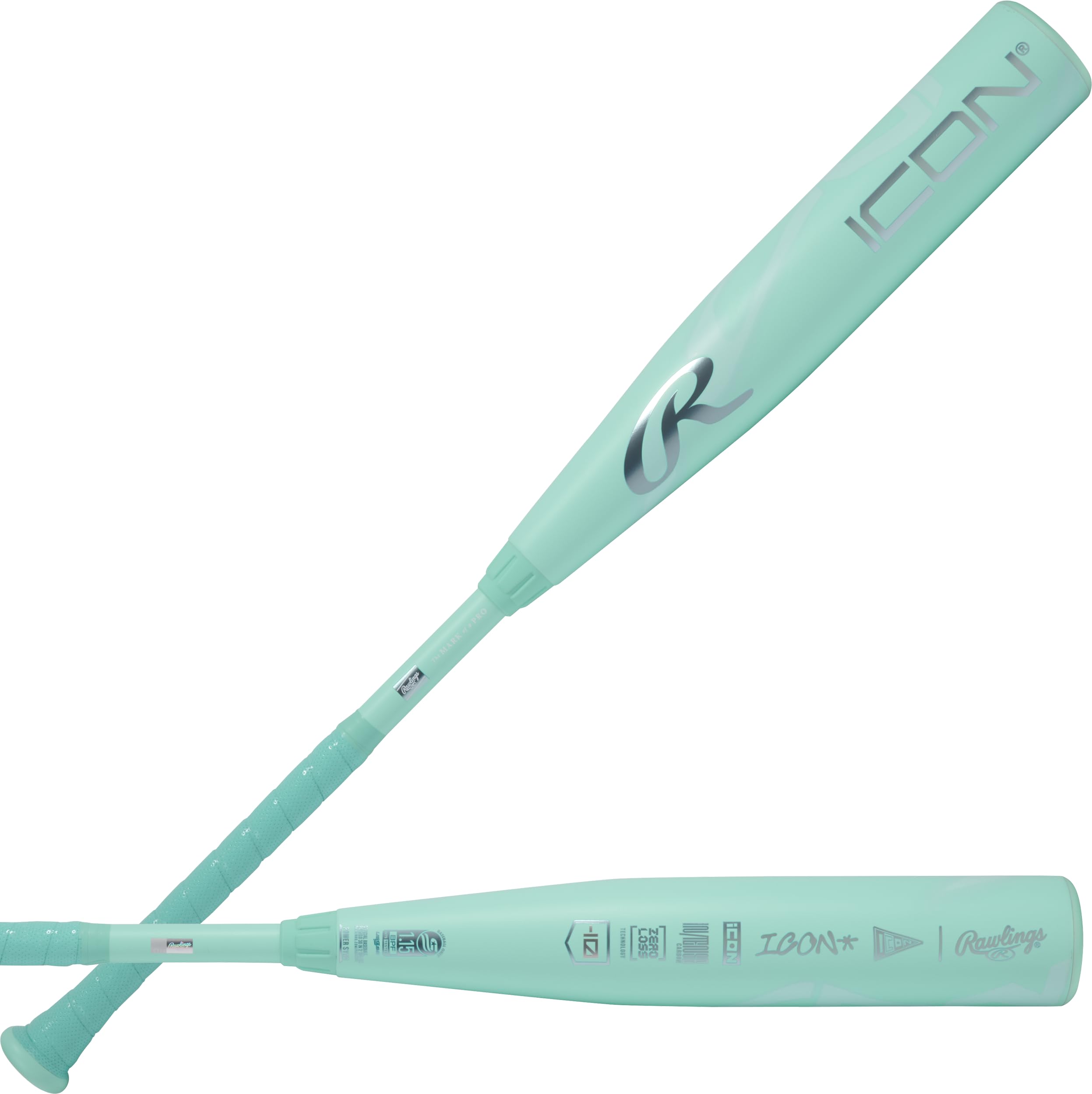
1. Rawlings 2026 ICON Baseball Bat
Our pick — 4.5+★ from 80+ verified ratings; the strongest balance of quality and price.
A composite bat that gives you a wide balance and a swing that soaks up sting.
One design covers three drops — -5, -8, and -10 (drop is the bat’s length in inches minus its weight in ounces) — so the same model can fit a younger player now and a bigger, stronger one a season or two later. The barrel is built from In/Tense Carbon Composite, a layered carbon material formed into a smooth barrel. In plain terms, it flexes on contact and springs the ball back, so pop spreads across a wide balance instead of one small spot.
A TPU connection point sits between the barrel and the handle. TPU is a rubbery plastic that absorbs jolt, so mis-hits and cold-morning contact sting your player’s hands far less. Rawlings also builds in a slight end load — meaning the weight sits a touch toward the far end of the barrel — while keeping the overall swing weight balanced. The result is a bat that still swings fast but carries a bit of punch through the strike zone.
The honest trade-off is feel. A composite bat like this rewards a player who finds the barrel, and some hitters who are used to the crisp feedback of a one-piece alloy bat miss that sharp crack. It also runs as a premium-tier option, so it is the pick for a family ready to commit to a serious travel-ball bat. One quick nudge: this is a USSSA-stamped bat, so if your league runs USA Baseball rules, check the stamp before you buy. For USSSA play, this is the strongest overall buy in the lineup.
Why It Wins The Top Spot
- In/Tense Carbon Composite barrel spreads pop across a big, forgiving balance.
- TPU connection point cuts vibration so mis-hits hurt the hands less.
- Comes in -5, -8, and -10 drops to match a growing player.
- Balanced swing weight with a slight end load keeps the bat quick without feeling hollow.
The Flip Side To Weigh
- Composite feel is softer than a crisp one-piece alloy bat, and some hitters prefer the sharper response.
- Premium-tier pricing means it is a real commitment for a growing player.
Reach for this if: you want one bat that serves a serious USSSA travel-ball player across a range of drops with a wide, lively balance. skip it if your player is still growing into the game and needs the lightest swing available.
Look elsewhere if: your player is welded to the stiff, sharp feel of a one-piece alloy bat.
2. Easton HYPE Baseball Bat
A budget-friendly composite that brings real pop without emptying the wallet.
The HYPE earns its spot on swing weight: Easton bills it as the lightest-swinging bat in its lineup, which helps a young hitter get the barrel around faster. Its Thermo Composite Technology pairs a large barrel and balance, and the 2 3/4-inch barrel (the widest USSSA allows) with -8 or -10 drop options puts it squarely in USSSA travel-ball territory. It also runs longer than the MACH AI — 31 inches to that bat’s 30 — so it suits a player who has already grown into a fuller-length stick. If your player is still at the coach-pitch stage, this one is more bat than they need.
Where the HYPE earns its keep is vibration control. The ConneXion Max junction is injected with Nitrocell foam, a filler that damps jolt on contact, and it pairs with a pro-stiff carbon handle for a solid feel. The Power Boost soft knob gives the bottom hand extra comfort and a bit more leverage. The grip is Easton’s high-tack Flow Tack, which holds firm through a swing even when the day is hot.
The recurring note from the review pages is not a flaw so much as an expectation: a light, composite bat rewards clean contact, so players who lunge at the ball may feel the barrel go quiet on mishits. For a bat in the value tier, though, the quality-over-cost story is the thing buyers keep coming back to. It is a smart first step into composite pop without a premium-tier outlay.
Value read: Quality and pop are the traits this bat is known for, and both show up on the spec sheet — a Thermo Composite barrel built for a light swing.
Fit check: The 31-inch length suits a player already swinging a full-size bat, so a smaller kid may want a shorter option.
Smart money says: a composite first bat with genuine pop for a player swinging full length, without a premium-tier spend.
But keep in mind: if your hitter is still on the smaller side, a shorter bat will fit them better.
3. Marucci CATX Composite USSSA Senior League Bat
A big barrel built for hitters who want control and a smooth, damped response.
Fine-tuned barrel profiles are the quiet star of the CATX Composite. Marucci shapes each profile into a more balanced design, so a player can generate faster swing speeds while still swinging the larger composite barrel. The MDX barrel uses multi-directionally patterned layers of composite — think of woven layers laid in several directions to hold their springiness across the whole hitting face. That produces a consistently responsive barrel instead of one that only jumps on dead-center contact.
The feel story comes from the stiff S-40 composite handle, which passes more energy from player to ball, plus Marucci’s outer locking system at the connection. That junction is built to stiffen the join between barrel and handle while dismissing nearly all the vibration at contact. The practical payoff is a smooth swing that doesn’t rattle a player’s hands on a cold day. The handle taper is shaped per weight drop for a better fit and more bat control, and there is a micro-perforated grip for a secure hold.
Bat quality is the trait this bat is best known for, and the value story holds up alongside it. The 29-inch length and 2 3/4-inch barrel make it a natural for a mid-size USSSA player working on control at the plate. If your player is between sizes, this is a bat that rewards them for finding the barrel rather than muscling through.
Craft read: Quality is what this bat is celebrated for, and the spec backs it — a layered MDX composite barrel and a vibration-damping locking system.
Sizing note: At 29 inches it fits a mid-size player, so a taller kid may want the extra inch.
Worth grabbing for: a hitter in the middle size range who wants a big, responsive barrel with a smooth, low-vibration swing.
One caveat: the 29-inch length will feel short to a player already swinging 30 or 31 inches.
4. DeMarini 2024 Zoa (-10) USSSA Baseball Bat

A featherweight composite made for the smallest hitters finding their swing.
At 1.1 pounds, the Zoa is the lightest bat on this list, and for a young player that is the whole point. The Anomaly End Cap uses light, durable materials at the tip to pull the swing weight down, so a small hitter can control the barrel without fighting it. Continuous Fiber Composite forms the barrel from long, unbroken threads of carbon, which adds strength and consistency across a broad hitting area. On a -10 drop in a 28-inch bat, the math puts it around 18 ounces — light enough that a beginner can get the barrel around on time.
A stiff composite handle pairs with the barrel through the Anomaly Connection to offer feedback while keeping swing speed up. That means a player learns where contact happens on the barrel rather than being shielded from it entirely. The two-piece construction spreads the weight for a balanced feel.
The visible trade-off is durability. Composite bats this light take real wear, and a thin barrel on a small bat can crack under heavy use faster than a stouter bat might. That said, the light swing and beginner-friendly weight make the Zoa a smart starting point for a 9U-aged hitter who is still building confidence and control at the plate. Just plan for a bat that will get replaced as the player grows and swings harder.
Who it serves: the lightest bat here at 1.1 pounds, built for young hitters who need an easy-to-control swing.
Where to be careful: the thin composite barrel shows its wear sooner under heavy use, so treat it as a stepping-stone bat.
Best first bat for: a small, young USSSA hitter who needs a light swing to build control and confidence.
Go a stouter route if: your player already swings hard and needs a barrel built to take heavy contact season after season.
5. Easton 2026 MAV1 Flash Baseball Bat

A coach-pitch alloy bat built so the balance stays live across the whole barrel.
This is the shortest bat on the list at 26 inches — 3 inches shorter than the HYPE’s 31 — so it is built for the earliest stage of youth ball. The Flashpoint Alloy is a game-ready aluminum built for swing speed and pop straight from the wrapper, with no break-in period to wait out. For a coach-pitch or machine-pitch player, that ready-to-swing quality is a real plus.
Easton’s Wavewall barrel technology is the notable bit. It is shaped to deliver consistent performance across the barrel with no dead spots, which means a young hitter who meets the ball off-center still gets a lively result. The one-piece balanced construction keeps the bat quick and responsive, giving a solid, direct feel on contact. The 2 3/4-inch barrel matches USSSA standards, and the bat is certified for USSSA competition.
Here is the honest limit: one-piece alloy bats transmit more of the hit straight to the hands than a composite with a damping connection would. For a coach-pitch player hitting softer pitches, that stiffer feel is usually fine. It becomes more of a consideration once the player faces faster pitching with harder contact. For the entry level of youth ball, this is a well-built, ready-to-go alloy bat.
Entry-level strength: the shortest bat here at 26 inches, a no-break-in alloy that swings easy for a coach-pitch player.
Fit boundary: one-piece alloy sends more vibration to the hands, so it suits softer coach-pitch contact better than harder travel-ball contact.
The right starter: a coach-pitch or machine-pitch player who needs a short, easy-swinging alloy bat right away.
Step up when: your player starts facing faster pitching and wants a softer, sturdier build.
6. Marucci CATX2 Senior League Bat

Precision-balanced for control, with a gel system that smooths out the sting.
The CATX2 earns its place on balance and vibration control, which is exactly what a mid-level player working on consistency needs. Its multi-variable wall design expands the balance, so more of the barrel gives lively contact instead of a dead zone outside center. Precision-balanced construction lowers the bat’s M.O.I. (moment of inertia — its resistance to being spun), which means easier control and faster swing speeds. A power hitter who wants a heavier, end-loaded feel should look elsewhere.
The feel trick is Marucci’s patented Liquid-Gel System in both the knob and the endcap. This gel filler soaks up vibration before it reaches the hands, giving a smooth, solid response on contact. The handle uses a micro-perforated grip with a 1.75mm size, which gives a firm hold for a smaller hand. It carries the USSSA 1.15 BPF stamp and comes in 27/17, 28/18, 29/19, 30/20, and 31/21 sizes, so a family can match length and weight precisely to the player.
Well-made is the trait this bat is known for, and the value side holds up too. At 1.3 pounds it carries more heft than a light alloy while the balanced design keeps it swingable. The premium-tier build rewards a player who swings often and wants a controlled, damped feel rather than a raw, stiff one. It is the pick for a family that has already settled on a proper size and wants the bat to grow with the player through the travel-ball years.
What stands out: the Liquid-Gel System in the knob and endcap takes the sting out of mishits, giving a smooth feel even on off-center contact.
Sizing upside: five length-and-weight combos let you nail the matching size for a mid-level player rather than settling for the closest one.
Matches players who: want a well-made, precision-balanced bat with real vibration damping across a full spread of sizes.
Pause if: your player is brand new and not yet locked into a size — the precise sizing here shines once they have settled in.
7. Rawlings Clout AI Baseball Bat

A one-piece alloy with a balanced barrel and a stiff, direct alloy punch.
The Clout AI is the alloy purist’s pick on this list. It is built from Red Alloy+, which Rawlings calls its highest-grade alloy material, shaped through a patent-pending AI design process into a fully tune one-piece bat. A one-piece alloy transmits the hit straight to the hands, giving that crisp, sharp feedback some hitters love. The barrel is balanced to split swing weight, responsiveness, and forgiveness, so it stays controllable rather than end-heavy.
At 31 inches and 2 3/4 inches wide, this is the longest bat in the group, matched to the HYPE’s length. That fuller length suits a player who has grown into a full-size stick and wants more barrel reach at the plate. It comes in the -5, -8, and -10 drops, so the same frame can be fitted across a range of strengths.
The thing to know here is durability. Alloy is not immune to damage, and a thin alloy barrel can dent on hard contact, which is the nature of the material rather than a fault of this bat. Quality and value are what this bat is best regarded for — it delivers a lot for the money. It is a strong pick for a player who prefers the stiff, sharp alloy response and wants a long barrel to grow into.
Alloy character: a one-piece Red Alloy+ build gives a sharp, stiff contact feel for hitters who like direct feedback.
Reach note: at 31 inches it is one of the longest options here, so it fits a player already swinging a full-length bat.
Dialed in for: a player who loves a stiff, crisp one-piece alloy feel and wants a long 31-inch barrel for extra reach.
Trade to expect: hard contact on a thin alloy barrel can dent over time, so keep an eye on the hitting surface.
8. Louisville Slugger 2026 Supra USSSA Baseball Bat

A soft-feeling composite with a loud contact sound and a damped connection.
The Supra earns its spot on feel and sound: its APX Composite Technology barrel gives a soft, game-ready response right out of the wrapper, with a loud crack on contact. For a player who likes the ball to announce itself off the bat, that is a real draw. The 2 3/4-inch barrel profile is designed to create a larger balance, and the XPND performance end cap keeps performance alive toward the end of the barrel, so more of that wide profile stays live. If you want a quiet, understated bat, this is not it.
The two-piece composite construction runs a composite barrel and handle, with the VCX3 vibration control connection system working to reduce hand sting while still giving the player useful feedback. At 1.5 pounds, the Supra is the heaviest bat in this lineup, so it suits a stronger travel-ball player rather than a small beginner. The 29-inch length, -10 drop, and premium LS Pro Comfort Grip round out a bat aimed at players who swing with real intent.
The honest follow-up question is durability. The APX barrel is a soft composite, and a soft composite barrel does not take abuse forever under heavy use. The build is a balanced one, making it easy to swing, which offsets the 1.5-pound heft by keeping the balance neutral. This is a bat for a travel-ball player who wants a soft feel, a big barrel, and a standout sound at the plate.
What Sets The Sound Apart
- APX Composite barrel delivers a soft, game-ready feel and a loud, high-performance sound.
- VCX3 connection dampens vibration to reduce hand sting while keeping feedback.
- 2 3/4-inch barrel profile and XPND end cap keep the balance large and live.
- Balanced composite construction offsets the 1.5-pound heft for a swingable feel.
The Honest Question
- The soft composite barrel is more prone to cracking under heavy, long-term use.
- At 1.5 pounds it is the heaviest bat here, which leans toward stronger players.
Wins over: a strong travel-ball player who wants a soft composite feel, a huge barrel, and a loud crack at contact.
Not the match for: a young beginner who needs a lighter bat to learn control, or a hitter who leans on heavy contact all season.
Know the Specs
USSSA 1.15 BPF Stamp
The BPF number (Ball Performance Factor) rates how lively a bat’s barrel is, and 1.15 is the USSSA limit. A bat carrying the stamp is certified for USSSA play, so it clears the umpire’s check. USA Baseball and BBCOR stamps are different certifications for different rules, so match the stamp to your league before you swing.
The Drop Number (-5, -8, -10)
The drop is the gap between a bat’s length in inches and its weight in ounces. A -10 bat that is 30 inches long weighs roughly 20 ounces. A bigger negative number means a lighter bat, which swings faster and suits smaller or younger hitters. A smaller negative number puts more mass behind the ball, which stronger players can turn into harder contact.
Two-Piece Composite vs One-Piece Alloy
A two-piece composite bat joins a barrel and handle, often through a connection point that absorbs vibration before it reaches the hands. A one-piece alloy bat is a single metal stick that feels crisp and direct. Composite tends to feel softer and more forgiving; alloy tends to feel sharper and stiffer. The choice is about how much hand sting a player notices and what feel they prefer.
Barrel Diameter
Most USSSA bats use a 2 3/4-inch barrel, which gives you a wide hitting surface and a larger balance. That bigger barrel is more forgiving on off-center contact, so a younger hitter still learning to find the middle gets more out of a mishit. Always confirm the barrel size your league allows before buying.
Common Questions
What does the USSSA 1.15 BPF stamp mean on a youth bat?
How do I pick the right drop for my player?
Is a two-piece composite bat better than a one-piece alloy bat for youth players?
How long should a youth USSSA bat last?
What length bat should a young player use?
Do composite bats need a break-in period before USSSA play?
Can my youth player use an adult or senior league bat in USSSA games?
Does a louder-sounding bat hit the ball farther?
Should I buy a bat sized for now or one to grow into?
The Bottom Line
For most USSSA travel-ball families, the youth usssa baseball bats winner is the Rawlings 2026 ICON, because its In/Tense Carbon Composite barrel spreads pop across a wide balance in -5, -8, and -10 drops, so it serves a growing player. If a light, composite first bat is the goal, grab the Easton HYPE. And for the earliest coach-pitch stage, the short 26-inch Easton MAV1 Flash is the one to reach for.
The ICON is the strongest overall buy, but here is the honest picture: if your player needs a lighter bat to learn control, the 1.1-pound DeMarini Zoa is a sharper fit for a young hitter than the top pick would be. Match the bat to the player’s current size and strength, then step up in length and drop as they grow.
How we choose
We do not accept paid placement. Every pick is matched to a real buyer and a real use-case; we do not hands-on test units.
Sources
Specifications: manufacturer listings and product documentation. Review insights: verified customer reviews, as of November 2026. Pricing: not shown on this page (it changes often); check the current price via the retailer link.
As an Amazon Associate, Tactical Gear Guy earns from qualifying purchases. This does not affect which products we feature.