Specs are compiled from manufacturer listings and verified buyer reviews and can change over time — please confirm the key details on the product page before buying.
You bought an Xbox Series X or Series S. Now the screen is the thing holding it back. A TV that cannot accept a 4K signal at high frame rates will quietly cap your console at 60Hz (60 refreshes per second), and you will never see the smoothness the hardware was built to deliver. One honest note before we start: this list uses flexible, human-like matching for the 120Hz-or-higher gaming requirement, so not every pick is the exact number you searched — the nearest same-type size or equivalent panel serves the same purpose, and each listing below tells you exactly what it does.
This guide is built by comparing the manufacturers’ published specifications and the patterns across verified customer reviews, so you get each pick’s real strengths and trade-offs instead of marketing spin.
Every set here is native 4K (3840 x 2160 pixels) and every one can accept a high-frame-rate game signal, but the differences that matter are panel type, brightness and HDMI 2.1 ports (the newer connector that carries 4K at 120Hz). The right xbox 4k tv depends on your room and how many high-speed devices you own.
Top Picks
How To Choose The Best Xbox 4K TV
Your console sends the signal, but the TV decides how much of it you ever see. Three specs do most of the work: the panel’s native refresh rate, whether the HDMI ports are version 2.1, and how well the set holds up in your room’s lighting. Nail those three and every other spec is a tiebreaker.
Refresh rate is the number that gates your console
A 60Hz panel refreshes the picture 60 times a second. A 120Hz-or-higher panel can show 120 frames per second or more, which is what smooths fast pans in shooters and racing games. Look for the word “native” — it means the panel itself runs at that speed, not a processing trick.
Why HDMI 2.1 ports matter more than port count
HDMI 2.1 is the newer connector standard that carries a full-bandwidth 4K signal at high frame rates. A set with four HDMI 2.1 inputs lets you plug in your Xbox, a PS5, and a PC without unplugging anything. Older HDMI 2.0 ports can cap you at lower frame rates.
Bright room or dark room changes your panel choice
Mini-LED sets push very bright highlights and fight reflections, which suits a sunny living room. OLED sets turn individual pixels off for true black, which suits a dimmed room and movie nights. Mini-LED wins a sunlit room; OLED wins a dim one.
Side-by-Side Comparison
| Model | Best For | Panel | Native Refresh | Size | Amazon |
|---|---|---|---|---|---|
| Samsung 65″ S90H OLED★ Best Overall | All-round gaming flagship | OLED | 165Hz (Motion Xcelerator) | 65 inches | Amazon |
| TCL 65″ T7 QLEDBest Value | Value 144Hz gaming | QLED | 144Hz | 65 inches | Amazon |
| Toshiba 65″ Z670R Mini-LEDBright-Room Pick | Bright-room Mini-LED | Mini-LED QLED | 144Hz | 65 inches | Amazon |
| Roku 75″ Pro Series QLED | Big-screen simplicity | QLED Mini-LED | 120Hz | 75 inches | Amazon |
| Hisense 55″ U7 Mini-LED | Compact high-refresh | Mini-LED QLED | 165Hz | 55 inches | Amazon |
| Hisense 65″ U8 Mini-LED | Brightness champion | Mini-LED ULED | 165Hz | 65 inches | Amazon |
| iFFALCON 85″ Mini-LED | Giant-screen console rig | Mini-LED | 144Hz | 85 inches | Amazon |
| Samsung 55″ S90F OLED | Smaller-room OLED | OLED | 144Hz (Motion Xcelerator) | 55 inches | Amazon |
| LG 77″ C6 OLED evo | Cinematic big-screen OLED | OLED evo | 120Hz | 77 inches | Amazon |
| TCL 85″ QM8L Mini-LED | Max-size brightness | SQD-Mini LED | 144Hz | 85 inches | Amazon |
| LG 77″ G5 OLED evo | Flagship wall art | OLED evo | 120Hz | 77 inches | Amazon |
Detailed Reviews
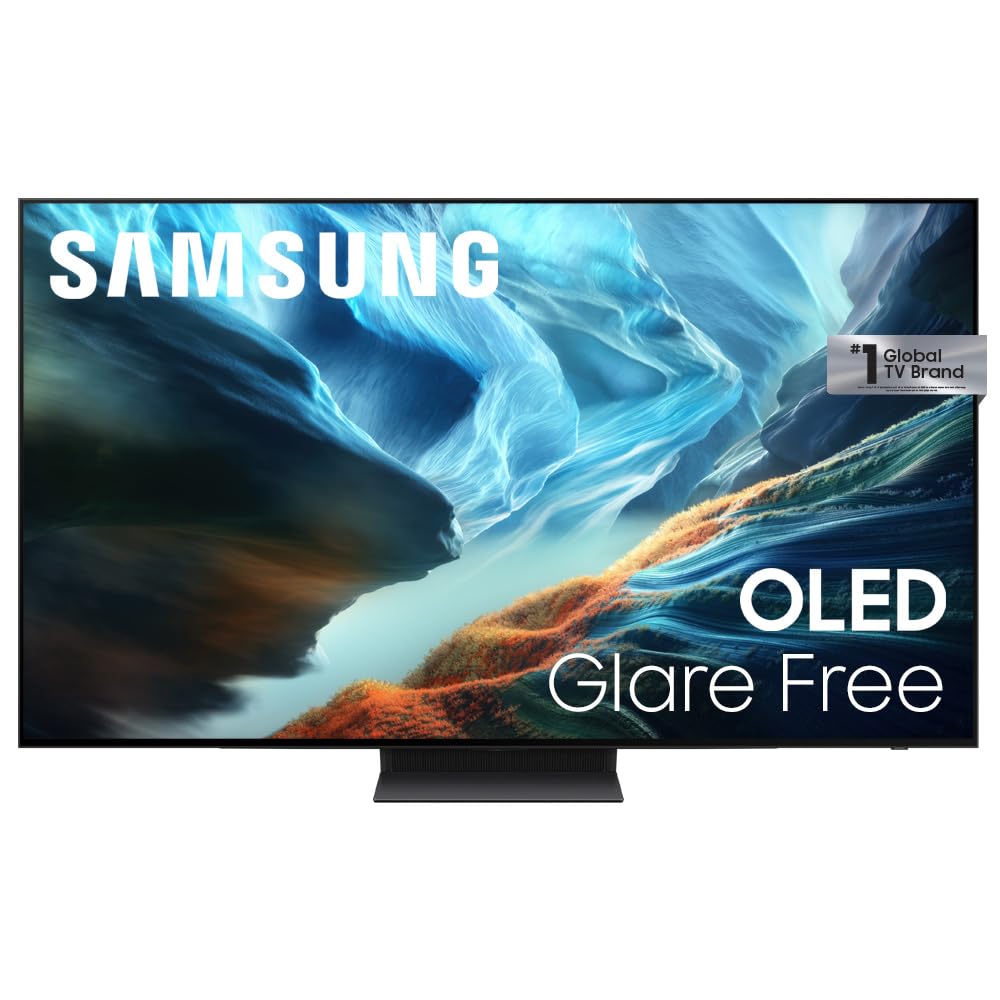
1. Samsung 65-Inch Class S90H Series OLED 4K Smart TV
Our pick — 4.5+★ from 250+ verified ratings; the strongest balance of quality and price.
The set that pairs OLED black with a 165Hz game engine and glare control.
If your Xbox lives in a room with a window behind the couch, this is the pick that solves your problem. Glare Free technology is designed to kill the distracting reflections that wash out dark game scenes, and OLED HDR+ handles the contrast side — so shadowed corridors stay readable instead of turning into grey mush.
What wins people over is the picture, hands down. Owners describe shows and movies looking almost 3-D, and the anti-glare work ranks among the most-discussed strengths of the set. The gaming side is just as serious: Motion Xcelerator 165Hz, NVIDIA G-SYNC and AMD FreeSync Premium Pro all combine to keep the action tear-free and low-latency. The NQ4 AI Gen3 processor runs 128 neural networks to upscale everything to 4K, which matters because plenty of game modes render below native 4K.
Here is the honest trade-off. Buyers report mixed rather than glowing performance feedback, and the user interface draws more lukewarm commentary than the picture does. The catch is that you are paying OLED-tier money for a 65-inch screen, so measure your wall first — and if you need a giant panel, the 85-inch picks further down give you more diagonal for a similar outlay.
What earns it the crown
- Glare Free OLED HDR+ keeps bright-room reflections off the screen so dark scenes stay dark.
- Motion Xcelerator 165Hz with G-SYNC and FreeSync Premium Pro for tear-free console play.
- NQ4 AI Gen3 processor upscales sub-4K game modes to 4K using 128 neural networks.
- Auto HDR Remastering lifts older, non-HDR content to HDR-like quality.
Where it asks more of you
- Mixed performance and interface feedback means the smarts are not the star of the show.
- 65 inches only — big-room buyers will want more diagonal.
Buy this one when: you want the best-balanced OLED for gaming in a room that gets daylight.
Think twice if: your heart is set on a 75-inch or larger canvas.
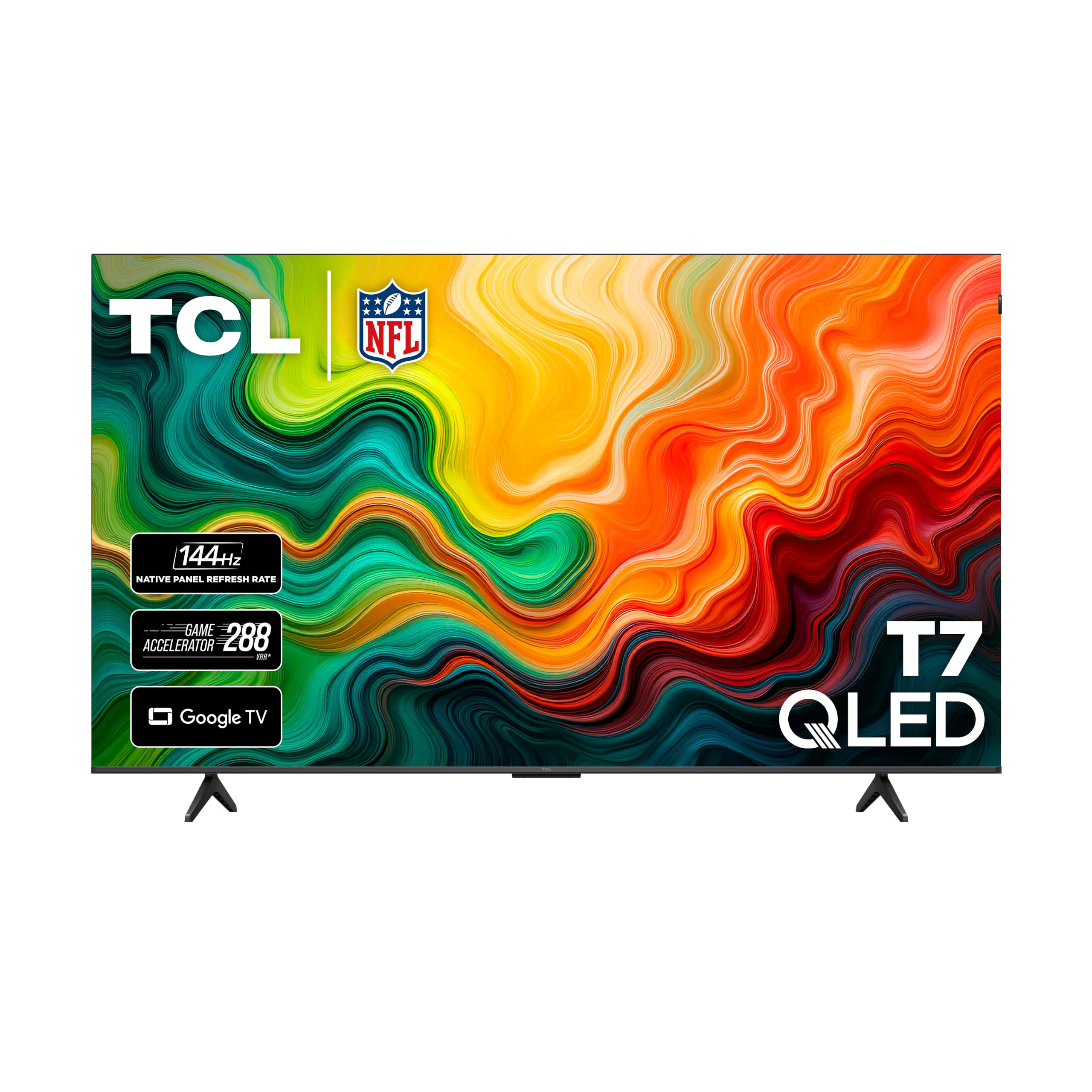
2. TCL 65 Inch T7 Series 4K 144Hz QLED Smart Google TV
Proof that a true 144Hz gaming panel does not need a flagship budget.
For a first 4K gaming set, the T7 is the smart-money move. The 144Hz panel refresh rate is the headline — that is 144 frames per second versus 60 frames per second on a standard TV, so fast pans and quick turns in shooters stay smooth instead of smearing. TCL also lists a 288Hz Variable Gaming Refresh Rate, which is the mode that syncs the panel to your console’s frame output.
Owners are clear about what they like: quality and picture dominate the conversation, with value close behind, and the 144Hz gaming capability is a repeated talking point. Setup is quick and the Google TV interface responds fast. QLED color covers nearly the entire DCI-P3 color space, so HDR games look rich, and the four HDMI inputs (one with eARC) mean your console and soundbar can both stay plugged in.
The honest note is reliability — a few units reportedly shut off at random times, which is the one blemish on an otherwise well-liked set. It is a fit issue for anyone who cannot tolerate a return, not a reason to dismiss the T7 outright. Wi-Fi 5 is the other older spec; wire it with Ethernet if you can.
Why it earns its spot: you get a native 144Hz QLED panel (144 refreshes per second), four HDMI inputs and Dolby Atmos (surround sound that fills the room) at an entry-level budget — a rare combination. The Google TV platform with Alexa, Google Assistant and Apple HomeKit support keeps controlling it easy.
The trade you accept: Wi-Fi 5 rather than a newer wireless standard, and an occasional report of random shut-offs.
Right call for: a gamer who wants genuine high-refresh 4K without overspending.
Wrong call for: anyone who needs the newest wireless standard built in.
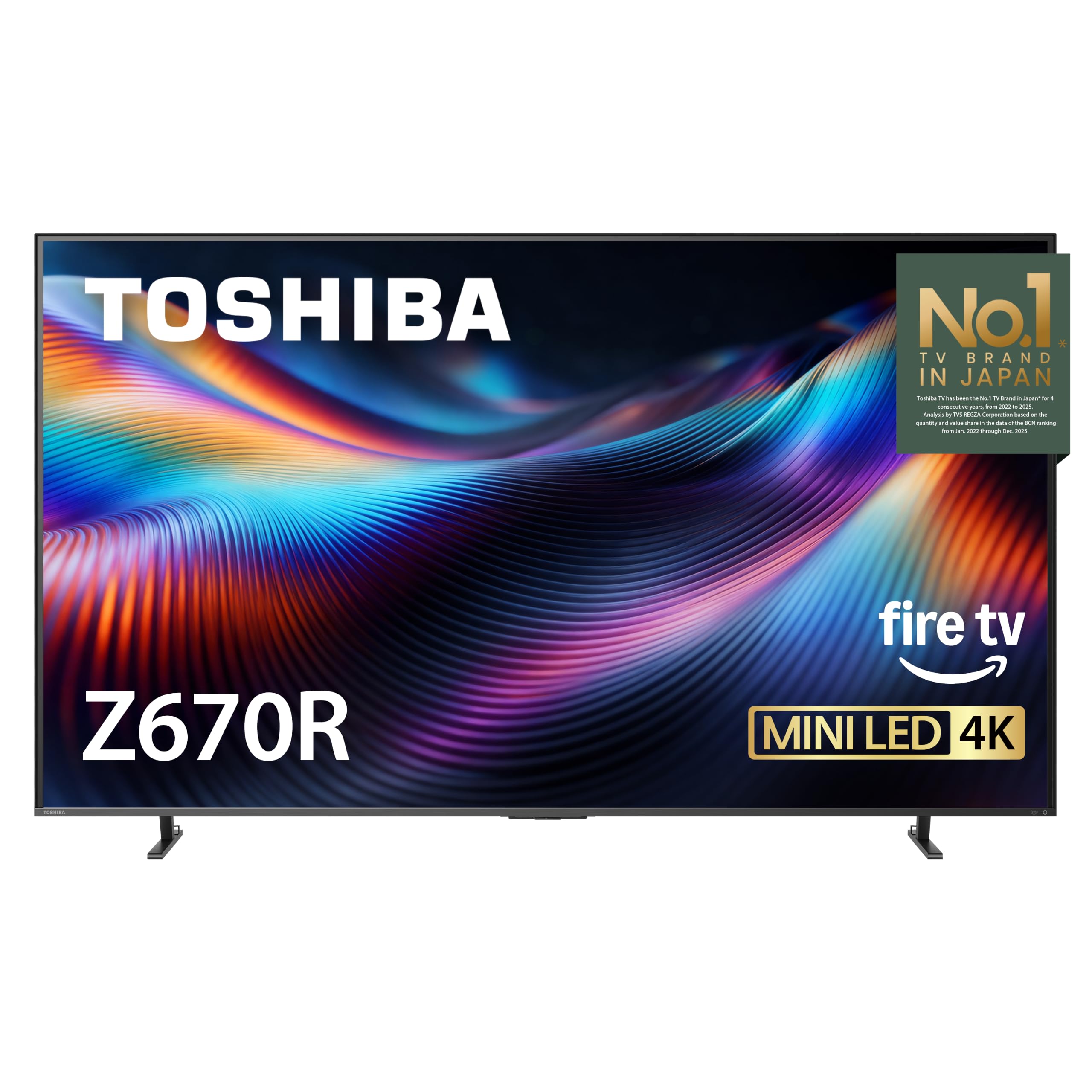
3. Toshiba 65″ Class Z670R Series Mini-LED 4K Fire TV
Mini-LED brightness plus a native 144Hz panel, tuned by Toshiba’s REGZA engine.
Start with the contrast machinery, because that is what separates this from an ordinary QLED. Precision Mini LEDs work with Full Array Local Dimming to darken the shadows and brighten the highlights — so a night-time firefight shows detail in both the flame and the dark alley behind it. The REGZA Engine ZRi Gen3 processes clarity, contrast and audio scene by scene.
Gaming is fully sorted: a native 144Hz refresh rate with AMD FreeSync Premium, VRR at 144Hz and ALLM for low-latency response. That combination beats the 120Hz Roku Pro Series lower down this list on raw refresh — 144Hz versus 120Hz, if you count frames. Audio gets a dedicated REGZA Bass Woofer so explosions carry weight without a soundbar.
The honesty clause: the picture is the star, but a few sets reportedly fail within the first month, which makes your retailer’s return window worth keeping an eye on. Integration with Fire TV and Alexa is smooth if you already live in that ecosystem. The AI Light Sensor Pro adjusts brightness to your room, so a sunny afternoon and a dark evening both look right.
Standout reasons to pick it
- Full Array Local Dimming over Mini LEDs for deep blacks and bright highlights.
- Native 144Hz with FreeSync Premium, VRR and ALLM for console gaming.
- REGZA Bass Woofer adds low-end punch without extra speakers.
- Dolby Vision IQ and HDR10+ give strong HDR coverage on both major formats.
Reasons it may not fit you
- A small number of sets reportedly failed inside a month.
- Fire TV ties you to Amazon’s interface rather than Google TV.
Pick it for: a bright living room where you game by day and watch by night.
Pass if: you would rather have Google TV as your smart platform.
4. Roku Smart TV 75-Inch Pro Series 4K QLED

A 75-inch QLED with gaming features and the easiest interface to live with.
The pitch here is scale without complication. At 75 inches you get a big QLED canvas for couch-distance gaming, and the 120Hz refresh rate handles live sports and fast action. Automatic game mode drops you into the action the moment your Xbox wakes, and it pairs that with FreeSync Premium Pro, ALLM and VRR.
Owners mention praise for quality and picture again and again, and the remote is a genuine highlight — it is rechargeable with hands-free voice controls and backlit buttons, so finding it in a dark room is one less problem. Dolby Vision IQ handles HDR (high dynamic range, which keeps bright and dark scenes detailed) and Dolby Atmos with side-firing speakers fills the room. Setup is quick, and the Roku interface stays user-friendly.
Connectivity is the mixed area; some sets reportedly fight with Wi-Fi now and then, so an Ethernet drop is the safer play. Compared with the Toshiba above, you trade 24 frames of refresh rate — 120Hz versus 144Hz — for a much larger screen. Roku’s own smart platform with thousands of mini-LEDs behind the panel gives realistic depth, which holds up well in a larger, brighter room.
Where it shines: a 75-inch QLED with a rechargeable backlit voice remote, Dolby Vision IQ and Dolby Atmos for a living-room centerpiece that is easy for the whole household to navigate.
The fine print: Wi-Fi is the occasional weak link, so wired networking is the more reliable setup.
Go here for: a huge screen the family can use without a tutorial.
Look elsewhere if: your gaming room demands every last hertz of refresh.
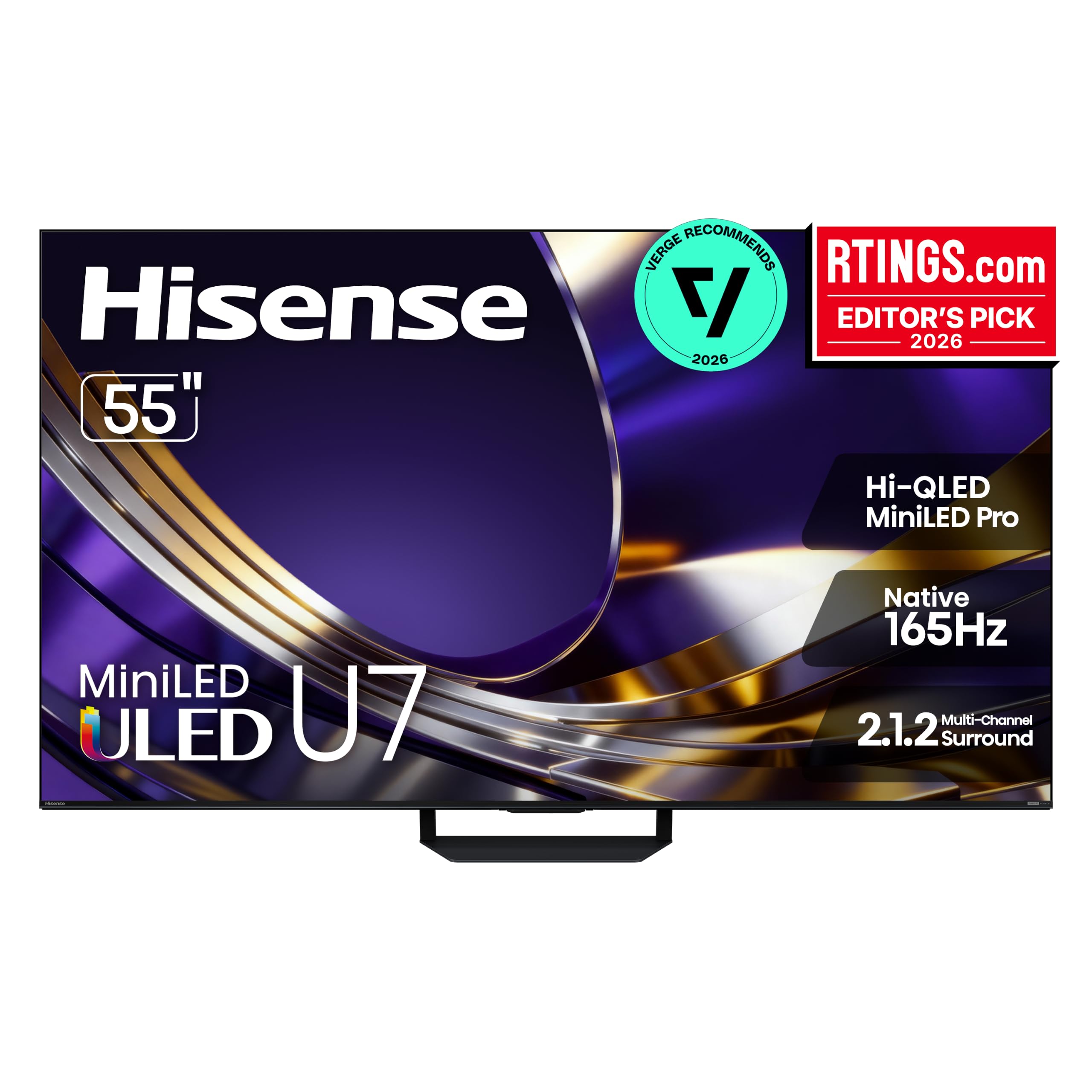
5. Hisense 55″ U7 Mini-LED ULED 4K Google TV
A 55-inch desk-and-den monster hiding a native 165Hz game panel.
If your gaming setup lives in a bedroom or a small office, this is the strongest fit on the list. The native 165Hz refresh rate is one of the highest refresh rates in this whole article, which means blur and lag have less room to creep in during fast close-quarters play. Hi-QLED MiniLED Pro throws thousands of backlights behind the picture for pinpoint lighting control.
Bright-room play is handled by an anti-reflection, glare-free dual-layer screen treatment, so afternoon sun through a window does not ruin a match. The Hi-View AI Engine Pro adjusts color, contrast and detail automatically, scene by scene. Owners describe it as a beast with phenomenal sound and picture, and the brightness in a well-lit room is repeatedly part of the story.
The limit you should know: it tops out at 55 inches, so it is a personal or small-room pick, not a living-room centerpiece for a crowd of five. Local dimming zones run up to 3000 and peak brightness hits up to 3000 nits, so contrast and highlight punch hold up in bright spaces. Dolby Vision IQ and Atmos come standard.
Reasons it punches above its size
- Native 165Hz refresh rate — the highest on this list.
- Up to 3000 local dimming zones and up to 3000 nits peak brightness.
- Anti-reflection, glare-free screen treatment for bright rooms.
- Hi-QLED color is Pantone Validated for accurate hues.
What limits it
- Capped at 55 inches — too small for a wide, distant viewing room.
Made for: a bedroom or den gaming setup that wants every frame it can get.
Skip if: you need a screen that fills a large family room wall.
6. Hisense 65″ U8 Series ULED Mini-LED 4K Google TV
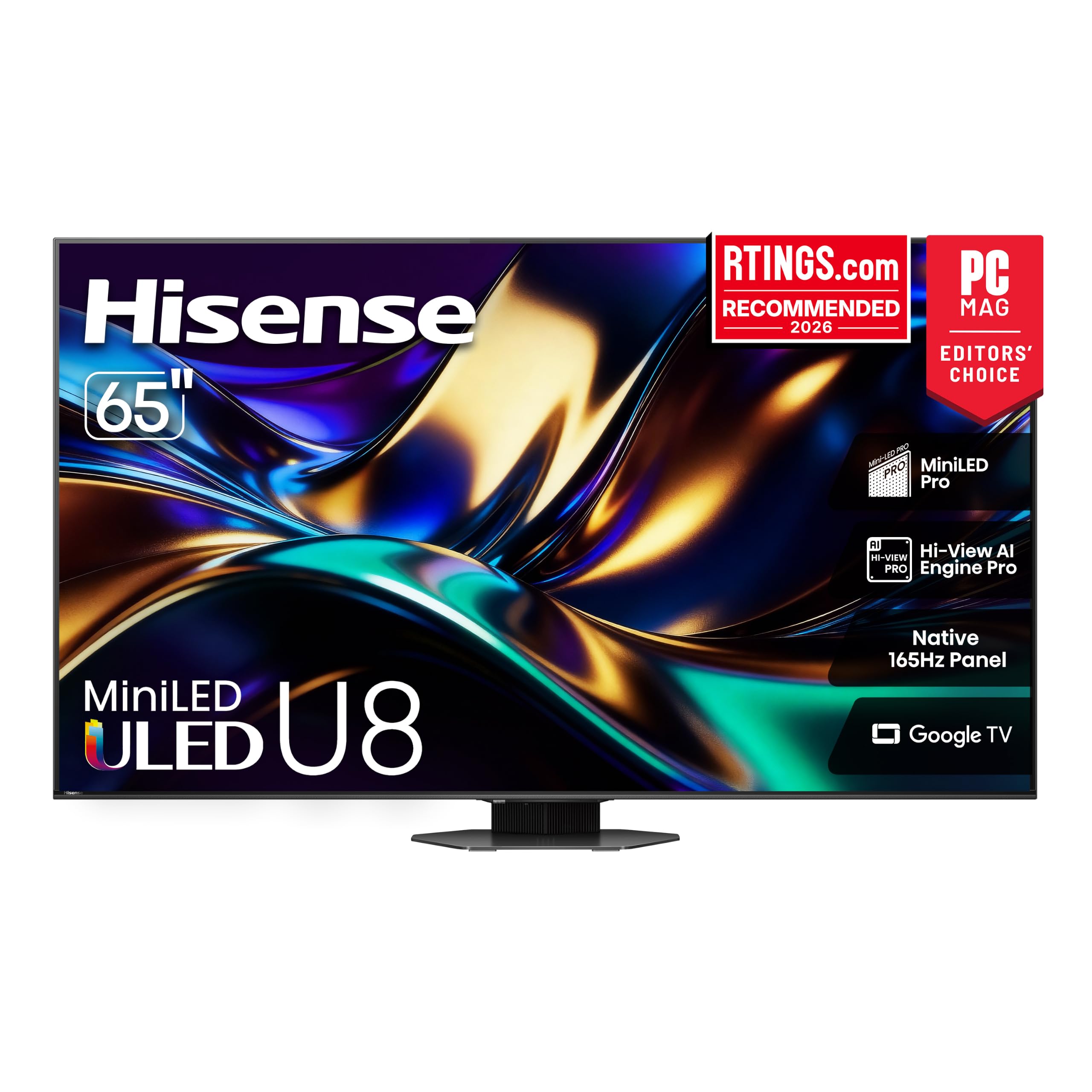
The set built to win a sunlit room — up to 5000 nits and a 165Hz panel.
Peak brightness is the whole story here. Up to 5000 nits and up to 5600 local dimming zones turn HDR highlights into something you feel, and small details stay visible in both shadow and blinding sun. Anti-Reflection Pro pushes the fight against glare into the liquid crystal layer itself, so a bright window does not flatten the picture.
Gaming gets the full treatment: a native 165Hz panel with Variable Refresh Rate from 48Hz to 165Hz, AMD FreeSync Premium Pro, Auto Low Latency Mode and Game Booster 288. The Enhanced Game Bar lets you tune settings and monitor performance from the remote while you play. Audio is a genuine 4.1.2-channel Dolby Atmos system with two up-firing speakers, so stadium roar comes from above you, not just in front.
What owners praise first is the picture — a clear, bright display with standout HDR that can make older movies look newer. The thing to weigh: this is a 65-inch panel at a mid-range price, so if size is your driving want, the 85-inch iFFALCON below gives far more screen for a comparable outlay. IMAX Enhanced and Filmmaker Mode round out the movie-night credentials.
The case for this set
- Up to 5000 nits peak brightness and up to 5600 local dimming zones.
- Native 165Hz panel with VRR 48Hz–165Hz, FreeSync Premium Pro and Game Booster 288.
- 4.1.2-channel Dolby Atmos audio with up-firing speakers.
- Anti-Reflection Pro coating built into the screen layers.
What to keep in mind
- 65 inches only — larger rooms will want more diagonal.
Choose it when: brightness and HDR punch matter more to you than screen size.
Keep looking if: you want a giant canvas for a wide room.
7. iFFALCON 85″ 4K MiniLED Smart TV 85U85
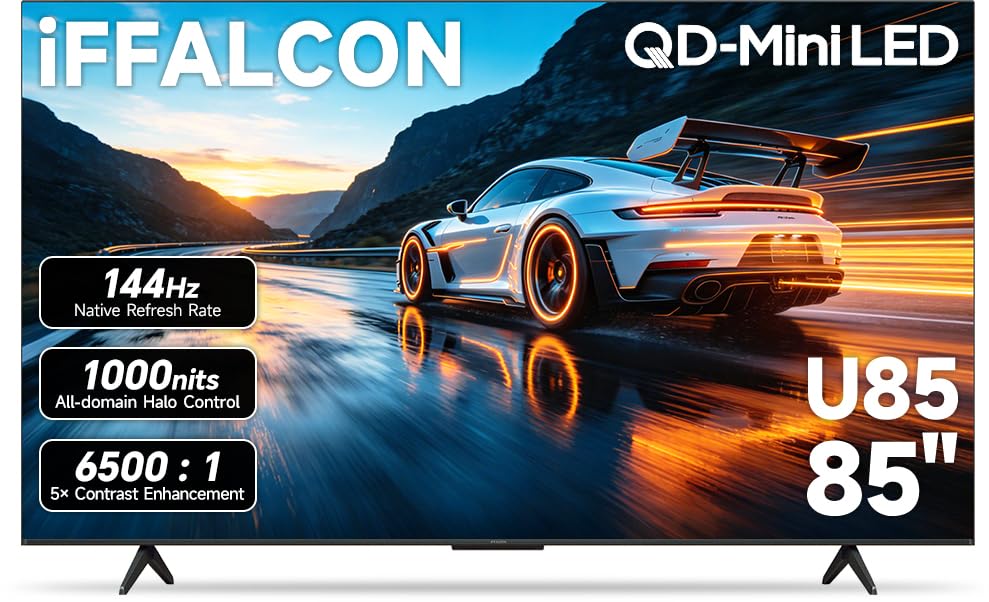
Four HDMI 2.1 ports and 85 inches of Mini-LED gaming canvas.
The port count is the killer detail. Four HDMI 2.1 inputs let your Xbox, a PS5, a PC and a soundbar all stay connected at once, and two of those ports run 4K at 144Hz for next-gen consoles. That is more high-bandwidth ports than most of the sets above, which is a real convenience if you juggle multiple devices. A native 144Hz panel with VRR up to 288Hz and FreeSync Premium Pro keeps motion fluid.
Picture quality holds up on the big canvas — Dolby Vision IQ reads your room’s light and adjusts automatically, and Dolby Vision Gaming switches in for your console without menu diving. Up to 1000 nits with local dimming and a 6,500:1 contrast ratio give neon game worlds their glow. The built-in 2.1-channel audio puts 50W behind Dolby Atmos and DTS Virtual:X, with eARC on HDMI 4 if you want to add a soundbar later.
There is a niche bonus: Google TV hotel mode, an IR blaster and IP control come built in, features consumer sets this size rarely bother with. Owners call it well-made and praise the picture and colors. Accept that 85 inches demands a genuinely large room to sit back from, and that an 85-inch panel is not the place for subtlety at close range.
Why it stands out: four HDMI 2.1 ports, a 144Hz panel with VRR to 288Hz, and 50W of Dolby Atmos audio on an 85-inch Mini-LED screen.
The practical limit: you need the square footage to sit properly back from a panel this size.
The right buyer: a multi-console household filling a large wall.
The wrong buyer: a small room where the couch sits close to the screen.
8. Samsung 55-Inch Class S90F OLED 4K Smart TV

OLED contrast in a smaller room, with VRR gaming at up to 4K 144Hz.
For a bedroom or a compact gaming den, OLED is the flex. It brings deep contrast in every pixel and a 144Hz VRR ceiling, so console play gets tear-free motion without sacrificing the blacks that make night scenes in games actually scary. The NQ4 AI Gen3 processor runs 128 neural networks to upscale content to 4K and boost brightness in subtle areas.
Owners keep landing on contrast and color — white whites and black blacks come up as the recurring theme. Setup is quick and performance is described as flawless by many. AI Motion Enhancer Pro smooths fast-moving balls and on-screen text, which helps in sports titles where scoreboards and motion blur normally fight each other. SDR content gets transformed to HDR-like quality with brighter highlights and clearer detail.
The honest catch: a few reports mention the screen not powering up, which makes the return window your safety net on any OLED. It is also the smaller 55-inch size, so this is a room-specific pick rather than a wall-filler. If you want bigger OLED, the 77-inch C6 sits further down this list.
What makes it worth it
- OLED contrast with VRR gaming at up to 4K 144Hz.
- NQ4 AI Gen3 processor with 128 neural networks for 4K upscaling.
- AI Motion Enhancer Pro reduces blur on fast-moving balls and text.
- Auto HDR Remastering lifts older SDR shows to HDR-like quality.
What to weigh honestly
- A small number of sets reportedly fail to power on.
- 55 inches only — smaller than most picks here.
Great match for: a compact room where OLED blacks beat sheer size.
Not the match for: a big shared living room.
9. LG 77-Inch OLED evo C6 4K Smart TV
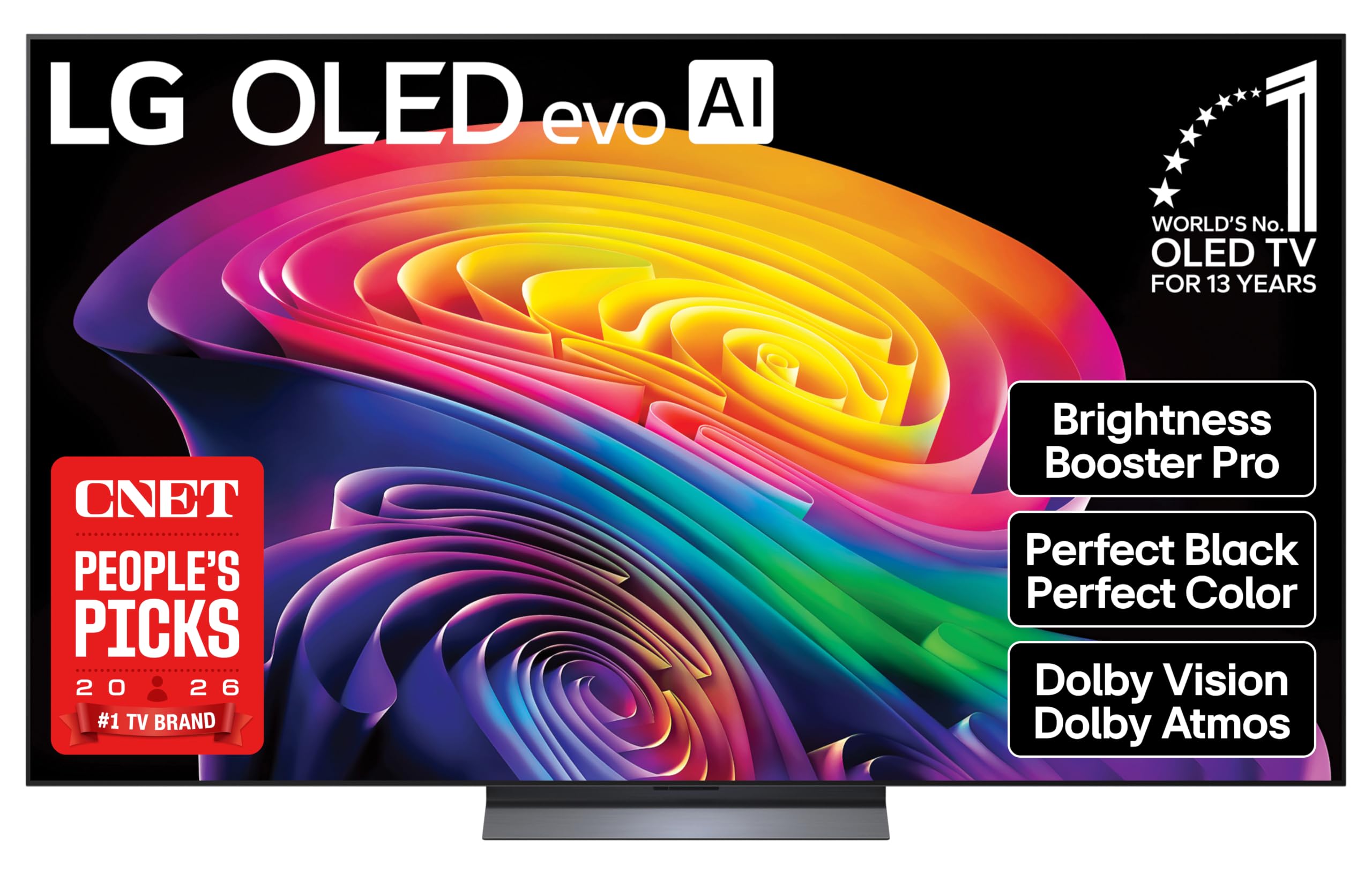
A 77-inch OLED built for next-gen consoles and movie nights in equal measure.
This is the home-theater-first option with gaming muscles underneath. A 120Hz native refresh rate pairs with VRR, ALLM, G-SYNC Compatible and FreeSync Premium, so console play stays smooth. Four HDMI ports deliver full-bandwidth connections, meaning your Xbox and a PC can both run at full tilt without swapping cables.
Picture quality is where it wins — rich, vibrant color with deep blacks, the kind of contrast that makes a dark space feel cinematic. Dolby Vision and Dolby Atmos are both on board, and the built-in 40W 2.2-channel speaker system can pair with a compatible LG soundbar, with WOW Orchestra syncing TV and soundbar speakers. Filmmaker Mode with Ambient Light Technology adjusts the picture to your room.
The trade-offs are real and worth sizing. Brightness draws mixed comments — some find it plenty bright, others note reflections in a sunlit room — and the remote and interface draw criticism. A 77-inch OLED means accepting dimmer brightness and a fussier remote. OLED Care helps protect the panel over time. Dimensions with stand are 67.4″ x 40.7″ x 10.5″, so measure your console before you commit.
The highlight reel: a 77-inch OLED evo panel with 120Hz native motion, four HDMI ports, Dolby Vision and Atmos, plus WOW Orchestra to unite it with an LG soundbar.
The honest drawback: OLED brightness and reflections in a very bright room, plus a remote and interface that fall short.
The right caller: a dim theater room where OLED depth wins the night.
Wrong for: a wall of windows that you never want to curtain off.
10. TCL 85 Inch QM8L Series SQD-Mini LED QLED 4K Google TV
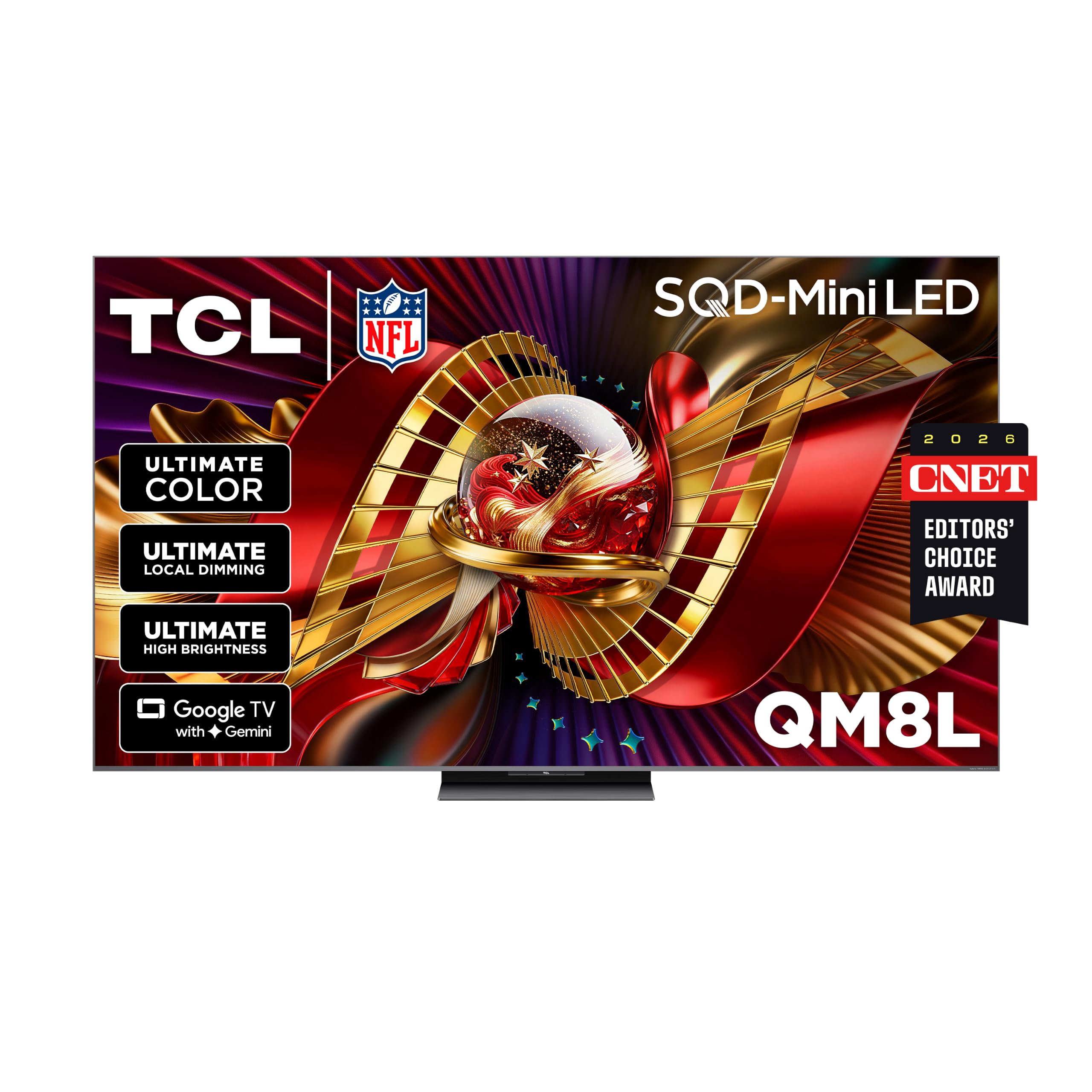
85 inches of Mini-LED with up to 6000 nits and a 144Hz game suite.
When you want the biggest picture and the brightest highlights together, this is where you land. Up to 4000+ discrete dimming zones and up to 6,000 peak nits combine for depth and glare-fighting punch on an 85-inch canvas. Wide viewing angles mean the people sitting off to the sides still get accurate color.
The gaming package mirrors TCL’s smaller sets but on a grand scale — Game Accelerator 288 VRR, Game Bar and AMD FreeSync Premium Pro all tuned for low latency. AI Color, AI Contrast, AI Clarity, AI Motion, AI Upscaling and AI Sound each handle a slice of the processing. Owners describe the picture as stunning with sharp contrast and impressive brightness, and the setup is simple enough to finish before the pizza arrives.
The catch is that 85 inches needs a big wall, and you pay for both the diagonal and the 6,000-nit ceiling. If a 65-inch TCL above already fills your room, skip it. But if you sit far back and want peak brightness at 85 inches, nothing smaller delivers it.
Reasons it earns the size premium
- Up to 4000+ dimming zones and up to 6,000 peak nits.
- 144Hz panel with Game Accelerator 288 VRR and FreeSync Premium Pro.
- Wide viewing angles keep color accurate across the room.
- AI-powered picture tuning across color, contrast, clarity and sound.
Reasons to measure first
- 85 inches demands a large room and a distant couch.
- The size-and-brightness ceiling pushes it to a premium tier.
Made for: a big room where maximum nits and maximum inches both matter.
Skip if: your seating distance is short and your wall is narrow.
11. LG 77-Inch OLED evo AI 4K G5 Series Smart TV

The flagship that hangs flush and hits 0.1ms gaming response.
This is the top of the mountain, and the number that changes everything is 0.1ms — the response time that lets the G5 keep up with the fastest games without blur or tearing. It runs up to 120Hz with NVIDIA G-Sync, AMD FreeSync Premium and VRR, and all four HDMI inputs are version 2.1, so every device you own gets a full-bandwidth port.
The One Wall Design sits nearly flush on the wall and can display art when you are not gaming, which turns a giant black rectangle into something you actually want in the room. Brightness Booster Max magnifies each individual pixel, and the set is verified by UL for Discomfort Glare Free with a UGR below 22, so it holds up in varied lighting. Over 8.3 million self-lit smart pixels deliver perfect black and color.
Value splits owners: some call the flagship price fair, others find it steep. Wall-mount feedback is mixed, so budget for a proper mount or set expectations. The Alpha 11 AI Processor Gen2, webOS with over 350 free LG Channels, and up to 5 years of software updates with webOS Re:New keep the smart side current for years.
what separates it: a 0.1ms response time (how fast a pixel changes color, so fast motion stays sharp), up to 120Hz with G-SYNC and FreeSync Premium (screen-sync tech that stops tearing) across four HDMI 2.1 inputs, over 8.3 million self-lit pixels, and a flush One Wall Design.
What you pay for it: a premium-tier outlay and mixed wall-mount feedback to plan around.
For the buyer who: wants the absolute best OLED gaming picture with a design that disappears into the wall.
For the buyer who should not: wants maximum size per dollar over flagship finish.
Know the Specs
Native refresh rate
The numberof times per second the panel redraws the picture. A native 120Hz panel draws 120 frames a second; 144Hz and 165Hz panels draw even more. Higher native numbers keep fast pans and quick turns smooth instead of smearing. Always check the word “native” — a “motion rate” figure is processing, not the panel’s real speed.
HDMI 2.1 and VRR
HDMI 2.1 is the newer connector standard that carries a full-bandwidth 4K signal at high frame rates, so your Xbox can run at its ceiling. VRR (Variable Refresh Rate) syncs the panel to the console’s frame output to stop tearing. ALLM (Auto Low Latency Mode) flips the set into game mode the instant you start playing, so you skip the menu.
Mini-LED versus OLED
Mini-LED uses thousands of tiny backlights behind the panel with local dimming, so bright highlights punch hard and reflections are easier to fight. OLED lights each pixel individually and can switch it fully off for true black. Mini-LED tends to suit bright rooms; OLED tends to suit dim theater rooms.
Nits and dimming zones
A nit is a unit of screen brightness — higher nits mean highlights pop and the picture survives daylight. Dimming zones are the separately controlled patches of backlight: more zones mean finer control between a bright object and the dark around it, which reduces the halo glow around highlights.
Common Questions
Does my Xbox Series X need a 120Hz TV to look its best?
What is the difference between VRR and ALLM for gaming?
Will a 4K TV with HDMI 2.1 make my games load faster?
Is OLED or Mini-LED better for gaming in a bright room?
How many HDMI 2.1 ports do I actually need?
Does screen size matter for 4K gaming?
What does Dolby Vision IQ add during games?
Should I worry about burn-in on an OLED gaming TV?
Will these TVs upscale older games and shows to 4K?
How far should I sit from a 75- or 85-inch gaming TV?
The Bottom Line
For most people shopping for the best xbox 4k tv, the winner is the Samsung 65-Inch S90H OLED because Glare Free OLED (a screen that stays clear in daylight), Motion Xcelerator 165Hz with G-SYNC and FreeSync Premium Pro, and a 128-network AI processor handle both gaming and a room that gets daylight. If you want a genuinely high-refresh 4K panel without the flagship outlay, grab the TCL 65 Inch T7 — its native 144Hz panel and four HDMI inputs cover console play well. And if size is the whole point, the Roku Pro Series 75-Inch gives you a big QLED canvas with the easiest remote to live with.
One last honest nudge: the Samsung S90H is the crowd favorite here, holding the higher score at 4.5+ stars while carrying fewer ratings than several cheaper picks — the TCL T7 has more reviews, 777 to 263, but sits a step below at 4.0+. That gap in score, on a set with fewer voices behind it, is worth noticing when you weigh the top spot against the value pick.
How we choose
We do not accept paid placement. Every pick is matched to a real buyer and a real use-case; we do not hands-on test units.
Sources
Specifications: manufacturer listings and product documentation. Review insights: verified customer reviews, as of July 2026. Pricing: not shown on this page (it changes often); check the current price via the retailer link.
As an Amazon Associate, Tactical Gear Guy earns from qualifying purchases. This does not affect which products we feature.