Specs are compiled from manufacturer listings and verified buyer reviews and can change over time — please confirm the key details on the product page before buying.
If you are tall or heavy, most mountain bikes simply are not built for you — the cockpit feels cramped, the wheels look undersized, and the frame flexes under a real rider. The three bikes below are the ones that actually fit an extra-large body and hold up on unpaved trails. One honest note before you read on: this list uses flexible, human-like matching for XL and extra-large frame sizing, so it accepts XL or larger frames and rejects small and medium ones. That means not every pick is the exact number you searched — the nearest same-type size serves the same purpose.
This guide is built by comparing the manufacturers’ published specifications and the patterns across verified customer reviews, so you get each pick’s real strengths and trade-offs instead of marketing spin.
Tall riders get overlooked in most bike coverage, so this page focuses on frame fit, rider weight limits, and wheel size first. Below you will find the best xl mountain bike picks broken down by who each one actually fits.
Top Picks

How To Choose The Best XL Mountain Bike
The big mistake tall and heavy riders make is buying a bike by wheel size alone and ignoring frame fit and the rider weight limit. An XL frame gives you the reach and standover clearance you need, and a published weight limit tells you whether the frame and components are rated for your body. Get those two wrong and the bike feels twitchy no matter how good the parts are.
Start with the rider weight limit, not the paint job
A mountain bike’s frame material decides how much rider weight it can take and how it behaves on rough ground. High-carbon steel frames resist bending and stress, which is why one of the picks here publishes a 400 lb rider limit. Aluminum frames save weight and resist rust, but check the listed limit before you commit if you are a heavier rider.
Match wheel size to your height and terrain
Larger 29-inch wheels roll over roots and rocks with more stability and suit a taller rider’s longer legs. A 26-inch wheel with a wide 4-inch fat tire gives you a bigger contact patch for sand, snow, and loose ground. Neither is “better” — they solve different problems, so pick the one that matches where you actually ride.
Suspension: full versus front-only
A full suspension bike has both a front fork and a rear shock, which soaks up impacts at both ends and keeps the rear wheel planted. A front-suspension-only bike is simpler and lighter. If you climb a lot, look for a lockout fork — it stiffens the front end so your pedal effort goes into forward motion instead of bouncing.
Side-by-Side Comparison
| Model | Best For | Frame Material | Suspension | Wheel Size | Amazon |
|---|---|---|---|---|---|
| Gravity FSX 1.0 Dual Full Suspension★ Best Overall | All-round trail riding | Aluminum | Full (front and rear) | — | Amazon |
| Max4out 26 Inch Fat Tire Mountain Bike | Big and tall riders, loose ground | Carbon Steel | Front fork only | 26-inch, 4-inch tires | Amazon |
| Gravity FSX 29 LTD Dual Suspension | Tall riders who want big wheels | Aluminum | Full, with lockout fork | 29-inch | Amazon |
Detailed Reviews
1. Gravity FSX 1.0 Mountain Bike
Our pick — 4.0+★ from 400+ verified ratings; the strongest balance of quality and price.
The full-suspension all-rounder that keeps both wheels working under a big rider.
Cushioning at both ends is the reason to start here. This aluminum-frame mountain bike runs suspension at the front and the rear, so harsh impacts get absorbed before they reach your body. The rear shock keeps the back wheel tracking the ground, which is exactly what a heavier rider wants on unpaved trails.
Stopping power is nailed down too. It has disc brakes front and rear, so you get consistent full-bike braking rather than a stronger front and weaker rear setup. The trigger shifters are easy to use and the drivetrain is a front and rear derailleur setup. The double wall rims are built to hold up, and the quick release wheels front and rear make it simpler to load into a truck or store in a garage.
The one thing you cannot skip: this bike requires assembly and tuning before riding. Budget for a proper setup or a shop tune, because a badly adjusted derailleur ruins the ride. The recurring gripe in owner feedback is that the gear adjustments are fiddly to fine-tune. Quality is the most-praised thing about this bike by a wide margin, with buyers calling it well-built with good components. The front suspension is rebound adjustable, and riders report smooth operation off-road, including at 30mph.
Where the FSX 1.0 Delivers
- Suspension front and rear absorbs hits at both wheels
- Disc brakes front and rear for consistent stopping
- Aluminum frame keeps weight down and resists rust
- Quick release wheels make transport easier
What to Plan Around
- Requires assembly and tuning before your first ride
- Gear adjustments can be finicky to dial in
Made for: the rider who wants both ends cushioned on rough trails and does not mind a proper setup session.
Think twice if: you refuse to touch a wrench — this one needs assembly and tuning before it rolls.
2. Max4out 26 Inch Fat Tire Mountain Bike
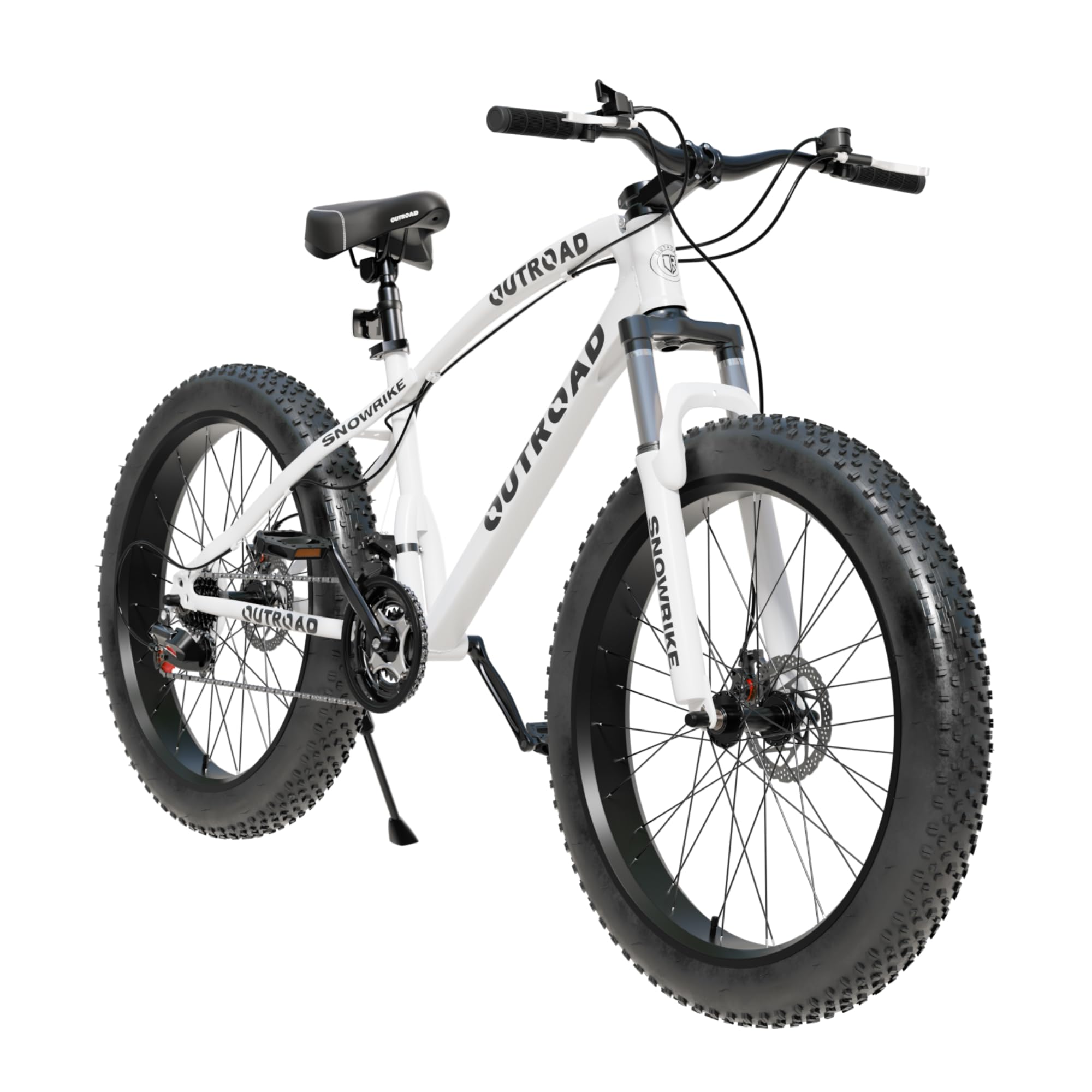
Built for the tall, heavy rider who has been told no bike will fit them.
Here is the number that changes everything for a big rider: this bike fits heights from 5’5″ to 7’1″ and supports up to 400 lbs. That is a rider-adaptive design on purpose, aimed at taller and heavier bodies rather than the compact average. The reinforced high-carbon steel frame resists bending and stress under that load, and the ergonomic shape keeps the ride comfortable.
Ground grip is the second reason it earns a spot. The extra-wide 4-inch tires give you a big contact patch for trails, sand, snow, or pavement. A front suspension fork with reinforced construction absorbs harsh impacts, and the damper is tuned to cut vibration. The 21-speed drivetrain with twist-grip shifting gives a wider gear range for steep climbs than a 7-speed setup.
One caveat to weigh honestly: this is a front-fork suspension bike, not dual suspension like the Gravity FSX 1.0 above, so the rear end is rigid. If you want cushioning at both wheels, that is a real trade-off. Assembly tools are included, which removes one hassle. Its 4.5+ star rating rests on a small pool of early ratings, so treat it as a promising newcomer rather than a proven veteran.
Who it fits: if you are 6’4″ and 300 lbs, or anywhere in the 5’5″ to 7’1″ range with a heavy build, this is the pick that was engineered for your body first — the 400 lb limit and 4-inch tires do the work.
Reach for this if: height or weight has shut you out of mainstream frames and you ride loose or soft ground.
Look elsewhere if: you want rear suspension — that cushioning is reserved for the full-suspension picks here.
3. Gravity FSX 29 LTD Dual Suspension 21 Speed Mountain Bike

Rollover comfort from 29-inch wheels, with a fork you can stiffen for climbs.
Roll over roots and rocks with less fuss. The 29-inch wheels on this aluminum-frame dual suspension bike carry momentum across chunky ground, and the full suspension setup pairs a front fork with an adjustable rear shock. That adjustable rear means you can tune the back end to your weight and terrain instead of accepting a fixed setup.
The lockout fork is the practical detail worth calling out. Flip it to stiff and your pedal effort drives the bike forward on a climb instead of compressing the front end. The 21-speed drivetrain and trigger shifters give you a wide gear range, and the disc brakes are described as powerful. A lock is included, so you have one less accessory to buy.
At 3.5+ stars, this sits below the other two picks, and the feedback is split. Appearance is the most-praised thing about it in owner reviews. Handling is more of a mixed bag, with praise for its nimbleness sitting next to notes that it is not built for big drops. Treat this as a confident trail and path bike for a tall rider, not a downhill machine.
The honest read: you are picking this for the 29-inch wheels and the lockout fork, not for a proven track record. The rear-suspension adjustability is a genuine plus, but the handling ceiling is the trade-off a hard-charging rider will feel.
Pick this one if: big wheels and a lockable fork matter more to you than jumping and dropping.
Leave it for: riders who plan big drops — a nimble trail bike is not a downhill rig.
Know the Specs
Frame material and rider weight limit
Frame material decides how a bike handles load and rough ground. High-carbon steel resists bending and stress, which is why the Max4out publishes a 400 lb rider limit. Aluminum frames save weight and resist rust but carry lower listed limits. If you are a tall, heavy rider, find the published weight limit before anything else.
Wheel diameter: 26-inch fat versus 29-inch
A 26-inch wheel with a 4-inch fat tire gives you a wide contact patch for sand, snow, and loose trails. A 29-inch wheel rolls over roots and rocks with more stability and suits a taller rider’s longer legs. Choose the wheel that matches your terrain and height rather than assuming bigger is better.
Suspension: full, front-only, and lockout
Full suspension runs a front fork plus a rear shock, absorbing impacts at both ends and keeping the rear wheel planted. Front-only suspension is simpler and lighter. A lockout fork lets you stiffen the front end so climbing effort goes forward instead of into bounce.
Drivetrain and shifting
A 21-speed drivetrain gives a wide range for climbing and speed on flat ground. Trigger shifters shift with a thumb and finger motion, while twist-grip shifters rotate at the handlebar. More gears help on steep slopes, but the derailleurs need proper tuning before the bike rides well.
Common Questions
What counts as an XL mountain bike frame for a tall rider?
Can a heavy rider use a standard mountain bike frame?
Is a 26-inch fat tire bike better than a 29-inch mountain bike?
Do I need full suspension or just a front fork?
What does a lockout fork actually do on a trail?
How much assembly does a mountain bike need before riding?
Why do the derailleurs need adjusting so often?
Are disc brakes better than rim brakes on an XL mountain bike?
How do I pick the right wheel size for my height?
The Bottom Line
For most riders, the xl mountain bike winner is the Gravity FSX 1.0 because it cushions both wheels with full suspension and disc brakes front and rear, and its quality is what owners praise most. If height or weight has been shutting you out of mainstream frames, grab the Max4out Fat Tire — a 400 lb limit and 4-inch tires make it a rare fit for big and tall riders. And if you want 29-inch rollover plus a fork you can lock out for climbs, the Gravity FSX 29 LTD is the one to reach for. For a shortlist this narrow, the FSX 1.0 is the safest first stop, since it carries more owner experience behind it than the other two combined.
How we choose
We do not accept paid placement. Every pick is matched to a real buyer and a real use-case; we do not hands-on test units.
Sources
Specifications: manufacturer listings and product documentation. Review insights: verified customer reviews, as of November 2026. Pricing: not shown on this page (it changes often); check the current price via the retailer link.
As an Amazon Associate, Tactical Gear Guy earns from qualifying purchases. This does not affect which products we feature.