Specs are compiled from manufacturer listings and verified buyer reviews and can change over time — please confirm the key details on the product page before buying.
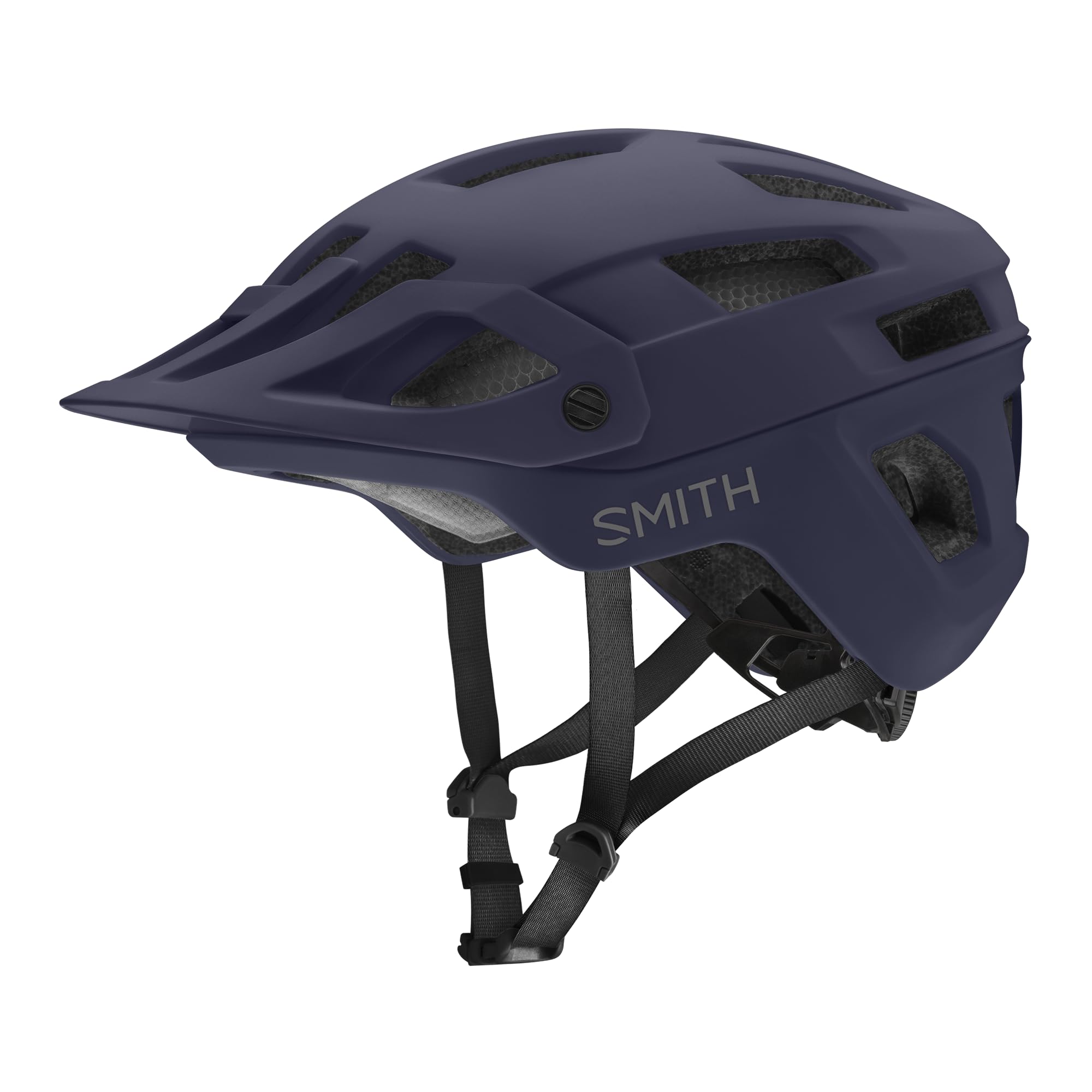
If your head tape reads past 60cm, most helmets on the shelf simply will not go there. This guide is built around nine helmets that actually come in X-Large or XXL sizing, so you can stop buying a medium and hoping. Every pick below was checked for real coverage, a working fit dial, and the kind of retention that stays put when you hit a bump. The strongest overall is the Smith Engage, which pairs MIPS (a low-friction layer that slides inside the shell) with zonal Koroyd (crash-absorbing tubes built into the foam) — a two-layer approach to impact protection that most helmets at this level skip entirely.
This guide is built by comparing the manufacturers’ published specifications and the patterns across verified customer reviews, so you get each pick’s real strengths and trade-offs instead of marketing spin.
We looked at shell material, vent counts, certified standards, and how each lid handles a wide head shape. Below you will find the honest trade-offs spelled out — including which helmets fit big heads cleanly from the start and which demand a tape measure and a bit of patience. Use this breakdown of the x-large bike helmets to match a shell to your actual head circumference and riding style.
Top Picks


How To Choose The Best X-Large Bike Helmets
Buying an X-Large helmet is a sizing problem first and a features problem second. If the shell does not sit down over your temples and wrap the back of your skull, no amount of vents or lights will save the ride. Measure your head with a soft tape around the widest point — roughly an inch above your eyebrows and around the back bump — then match that number to the centimeter range the maker publishes.
Why the centimeter range beats the letter on the box
A helmet marked X-Large from one brand can be a full size smaller than another brand’s X-Large. The Pro-Tec Full Cut, for example, lists its X-Large as 60-62cm, while the Xnito extra-large covers 23.6 to 25 inches. That gap is why you should always buy from a maker who publishes a real number. Think of the letter as a rough guide and the centimeters as the actual contract.
What MIPS and Koroyd actually add to the shell
MIPS is a thin slip layer between your head and the foam that lets the shell rotate slightly on an angled hit. Koroyd is a honeycomb of crushable tubes welded into the foam that absorbs energy on impact. The Smith Engage uses both together, and the Smith Persist uses both plus 21 fixed vents. More layers generally mean more protection, but they also add bulk and weight — so a heavier shell is not automatically a worse buy for trail riding.
When a dial-fit system rescues the fit
Almost every helmet in this guide has a rear adjustment dial, and that dial is your best friend if you sit near the top of a size range. A dial pulls a plastic cradle tight against the back of your head, which takes up the slack a too-large shell leaves behind. It cannot fix a shell that is genuinely too small, though. If your measurement lands above the maker’s top number, size up rather than trusting the dial to do the impossible.
Vent count, weight, and coverage trade-offs
More vents mean more airflow and less sweat pooling on your brow, but each vent is a hole in the protective foam — which is why downhill and skate-style shells tend to run fewer vents than road lids. The 20-vent Smith Engage and the 21-vent Smith Persist both prioritize airflow. Commuter and e-bike lids like the Lumos Ultra and the Xnito tend to run fewer openings to make room for lights and thicker foam.
Side-by-Side Comparison
| Model | Best For | Certification | Weight | Vents | Amazon |
|---|---|---|---|---|---|
| SMITH Engage MIPS★ Best Overall | Trail and mountain riding | CPSC & CE EN 1078 | 0.63 kg | 20 | Amazon |
| TSG EvolutionTriple Certified | Skate, BMX, and mixed riding | Triple certified (US skate, US bike, EU bike/skate) | 0.46 kg | 14 | Amazon |
| ILM E3-12LSNight Rider Pick | E-bike and night commuting | NTA-8776, CE, CPSC | 465 g | 10 | Amazon |
| LAZER Tonic KinetiCore | Road and everyday cycling | — | 240 g | — | Amazon |
| Pro-Tec Full Cut | Skate and BMX styling | CPSC, ASTM F1447, ASTM F1492 | 14.4 oz | 11 | Amazon |
| Bell 4Forty MIPS | Trail and all-mountain | — | 1.6 lb | — | Amazon |
| Lumos Ultra | Commuting and night visibility | CPSC; TÜV-certified visibility | 390 g | — | Amazon |
| SMITH Persist | Road and distance riding | CPSC, CE EN 1078, AS/NZS 2063 | 10.56 oz | 21 | Amazon |
| Xnito LED Commuter | E-bike, scooter, onewheel | CPSC & NTA-8776 dual certified | 13.28 oz | — | Amazon |
Detailed Reviews
1. SMITH Engage MIPS Cycling Helmets
Our pick — 4.5+★ from 300+ verified ratings; the strongest balance of quality and price.
A mountain-bike shell built for wide heads, not squeezed into one.
For a big-headed trail rider, the Engage is the most complete package on this list. It carries MIPS (the slip layer that reduces rotational force on angled impacts) plus zonal Koroyd, a honeycomb of crushable tubes built into specific zones of the foam. Smith certifies it to both CPSC and CE EN 1078, so you are covered under both the US and European bike helmet standards.
Airflow is the part that matters for a hot ride. The Engage runs 20 fixed vents, double the 10 on the ILM E3-12LS, which on a long climb means noticeably less heat trapped against your scalp. The Ionic+ lining handles sweat-activated odor control, so a helmet that lives in a gym bag between rides does not turn ripe. A two-position visor flips up for sun or goggle clearance, and the low-bulk single-layer webbing keeps the straps from digging into your cheeks.
The trade-off is weight. At 0.63 kg it is heavier than the 0.46 kg TSG Evolution, and its shell dimensions run 14 x 11 x 9 inches — noticeably bulkier than the TSG’s 10.24 x 8.66 x 7.09 inches. On a long climb you will feel that extra mass, and if you are coming off a featherweight road lid the difference is real. For trail and mountain riding where coverage matters more than grams, it is the right sacrifice.
What earns its place at the top
- Two-layer protection: MIPS slip plane plus zonal Koroyd tubes
- 20 fixed vents — double the airflow openings of the ILM E3
- Dual CPSC and CE EN 1078 certification
- Ionic+ lining fights odor between rides
- Two-position adjustable visor handles sun and goggles
Where it asks you to compromise
- 0.63 kg is heavier than the 0.46 kg TSG Evolution
- Bulky 14 x 11 x 9 inch shell takes up bag space
- Sits at the premium end of the value ladder
Reach for this if: you ride trails, want two impact technologies in one shell, and value airflow over saving grams.
Look elsewhere if: you need the lightest possible lid for long road climbs — the LAZER Tonic sheds far more weight.
2. TSG Evolution Bike & Skate Helmet
Three safety standards in one shell, and it actually fits a large skull.
The Evolution is the helmet you buy when you split your riding between a skate park and a bike path. It clears three separate standards: the American skateboarding and trick roller skating standard, the American bike helmet standard, and the European bike and skateboard standard. An ABS outer shell shrugs off cold-weather brittleness, while the EPS inner liner is there to soak up impact energy.
What makes it suit a big head is the Snug Fit cradle, which is shaped to follow the curve of the human skull and create a contact ring all the way around. That design keeps the shell from wobbling during jumps. Two sizes of heat-sealed padding ship in the box — both machine and hand washable and quick drying — so you can dial in the fit without buying extra foam.
Fourteen vents with airflow channels pull cool air in and push warm air out. At 0.46 kg it is the lighter pick against the Smith Engage’s 0.63 kg, and its 10.24 x 8.66 x 7.09 inch shell is physically smaller than the Engage’s 14 x 11 x 9 inches.
Shape and wear: The low-fit design wraps the back and sides without cutting into your field of view, and the contact-ring fit is what keeps it planted on a landing.
Worth noting: The same coverage that makes it stable at the skate park adds bulk at the rear compared with a road helmet.
Built for: riders who want one certified lid for BMX, skating, and street cycling.
Think twice if: you ride long road miles and want a vented racing profile — the rear coverage here is deliberately deep.
3. ILM Adult Bike Helmet E3-12LS
Lights, turn signals, and brake warnings built right into the shell.
If you commute after dark on an e-bike or scooter, the E3 is the helmet that turns your head into a signal. Front and rear lights switch on automatically in low light, and they stay off in daytime. Tilt your head more than 15 degrees to the left and the left turn signal stays lit for 10 seconds; the right side does the same. Under emergency braking the rear lights jump to 100% brightness.
The certification is the real story for speed riders. It carries NTA-8776, CE, and CPSC ratings — and NTA-8776 is the standard written for higher-speed e-bike protection, covering impacts up to 28mph. The PC shell and EPS liner wrap further down the head than a road helmet, which matters when you are moving faster than pedal power alone.
Here is the honest part. There are only 10 vents, half the 20 on the Smith Engage, so on a hot commute you will notice the heat. The front lights are the weaker half of the lighting system, brighter from behind than ahead. And the Bluetooth pairing draws consistent complaints about connection reliability. None of that ruins the helmet for its intended job — riding lit through traffic — but 10 vents make it a poor summer road-racing lid.
The night-visibility angle: Automatic lights, 10-second turn signals, and brake-bright rear lamps all work together to make you obvious in traffic.
The honest catch: E-bike certification and the light bar add weight and heat — 465 g with only 10 vents means a warm ride on a summer evening.
Your pick if: your commute runs through dusk or dark and you want signaling built in rather than strapped on.
Wrong tool if: you ride fast road miles in summer heat and prioritize airflow over lighting.
4. LAZER Tonic KinetiCore Bike Helmet

At 240 grams, this is the lightest shell in the group by a wide margin.
Pick up the Tonic and the first thing you notice is nothing. At 240 g it is roughly half the 465 g ILM E3 — the difference between a helmet that sits heavy on your neck and one you forget about on a three-hour ride. That lightness comes from KinetiCore, a set of crumple zones built into the helmet structure that are designed to disperse impact energy rather than relying only on a slip layer.
The rear adjustment knob is the other reason people keep this one on. It tightens the cradle around the back of your head for a secure, tailored fit, and it does that without adding bulk. The PC outer shell and foam inner structure pair with good ventilation, so airflow across the top of your head holds up on a climb. An adjustable fit system across the range makes it workable for a broad spread of head sizes.
The catch is that Lazer does not publish a MIPS-style rotational slip layer on this model, so if rotational-force protection is your personal must-have, the Smith or Bell options cover that base explicitly. The Tonic’s strength is a 240 g shell with a rear dial that holds, which is exactly what most everyday riders need most.
Why lightweight riders love it
- 240 g — the lightest pick here, roughly half the ILM E3’s 465 g
- KinetiCore crumple zones disperse impact energy
- Rear adjustment knob delivers a secure, personalized fit
- Ventilation keeps the top of your head cool on climbs
The fine print
- No MIPS-style rotational slip layer published for this model
- Lazer lists minimal detail, so fit varies by head shape
Top choice for: riders who feel every gram on long days and want a light shell with a dial that holds.
Second-guess it if: rotational-force protection is a non-negotiable for you — go with a MIPS-equipped lid instead.
5. Pro-Tec Full Cut Certified Helmet

Old-school Full Cut looks with modern multi-sport certification inside.
The Full Cut is the helmet your favorite skate pioneer wore, rebuilt to today’s safety standards. The ABS outer shell and EPS foam liner manage impacts, and 11 strategically placed vents keep air moving through the shell. It carries three certifications — CPSC for bicycle helmets, ASTM F1447 for recreational biking and roller skating, and ASTM F1492 for skateboarding and trick roller skating.
Sizing is the important detail for this guide. Pro-Tec lists the X-Large at 60-62cm, one of the clearest centimeter ranges of any helmet here, and it also publishes X-Small through Large. That means you can measure around your forehead and pick a shell with confidence instead of guessing. Compression-molded interior pads give it a snug, cushioned fit.
The one thing to know before buying: padding comfort is where this helmet draws the most mixed feedback. Some riders find the fit spot-on right away; others find the included padding too thin and want more cushion. It is worth ordering knowing you may want to swap or add foam. For a classic skate silhouette with CPSC, ASTM F1447, and ASTM F1492 certification, that is a manageable quibble.
Certification is the headline: three separate standards across biking, skating, and skateboarding in one shell is a strong safety story for a classic lid.
Pad plan: the compression-molded pads are the first thing to check on arrival — comfort is where opinions split most.
Fits the bill for: skaters and BMX riders who want iconic style backed by real ASTM and CPSC certification.
Try another route if: you want plush padding straight from the start and dislike fiddling with foam.
6. Bell Bike 4Forty MIPS Bicycle Helmets
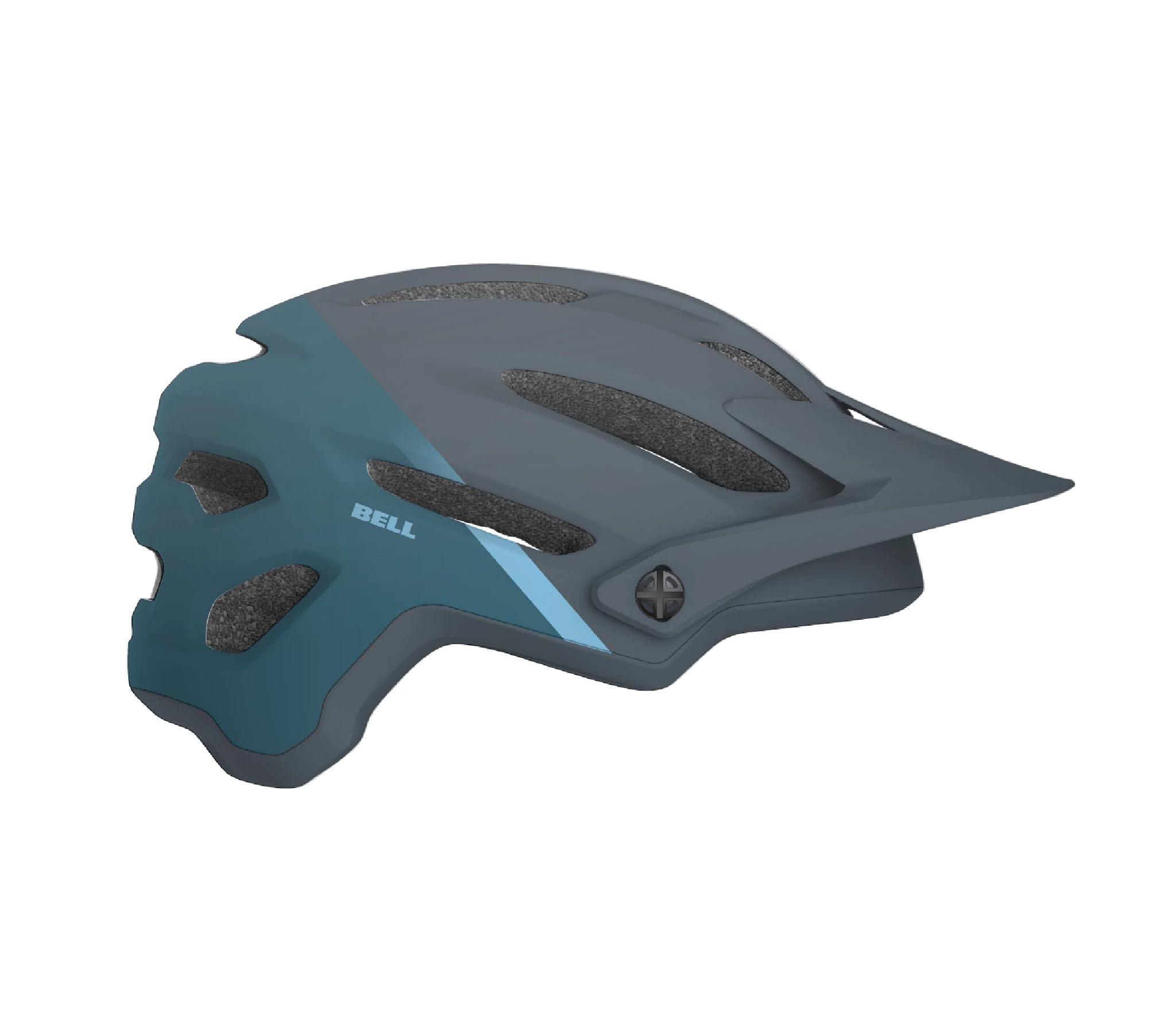
MIPS Evolve integrated into the dial, which is a smarter way to build a shell.
Bell’s approach with the 4Forty is to bury the MIPS slip plane inside the retention system instead of floating it on top. That cuts down on complexity and weight, and it lets the shell sit closer to your head with better airflow through the vents. The rubber overmolded dial on the back ties directly into that MIPS layer, so one turn adjusts both fit and protective layer together.
The details that win trail riders over are small and practical. Quick-adjust fasteners keep the straps flat against your face instead of twisting. The Sweat Guide pad design pulls moisture away from your brow and away from your eyewear, so your glasses stay clear on a hot climb. An adjustable visor covers your eyes from sun and accepts goggles when you flip it up.
The catch is that Bell lists this helmet as budget-minded brain protection, and at 1.6 pounds it is the heaviest pick in this group. That weight is the cost of the deeper all-mountain coverage. A few riders also find sizing and sweat management imperfect at the margins, so measure before ordering and expect to work the dial a little.
Smart integration: putting MIPS inside the retention dial makes the protective layer feel like part of the helmet rather than an insert.
Watch the scale: at 1.6 pounds, this is the heaviest lid here — fine for descents, noticeable on long climbs.
The one to grab for: all-mountain and trail riders who want rotational protection woven into the fit dial.
Leave it on the shelf if: you want the lightest climbing helmet — there is a lot of shell weight here.
7. Lumos Ultra Bike Helmet

The commuter helmet that makes you impossible to miss after dark.
Front and rear LEDs give the Lumos Ultra TÜV-certified 360° visibility, so drivers can pick you out day or night rather than only when someone’s headlights catch you. The rear turn signals fire from an included wireless Remote Lite mounted on your handlebars, which means your hand never leaves the grip to signal. If you pair it with the Lumos Remote, sold separately, you also get automatic brake lights and synced flashing.
Battery life is the practical side of all that lighting. You get up to 10 hours per charge and it tops up through USB-C, so a full week of short commutes fits inside a single charge. Brightness and light modes are adjustable through the Lumos app. At 390 g it stays reasonably light despite all the electronics inside.
The honest limitation is the lighting runtime itself — battery life is the one aspect that gets mixed feedback, and how long you get depends on which mode you run. Set it to a brighter flashing pattern on a long winter commute and expect to charge more often. There is also a no-MIPS Charcoal Black version of this helmet; if you want the MIPS slip layer, choose the variant that includes it.
Where it shines
- TÜV-certified 360° front and rear visibility
- Wireless Remote Lite activates rear turn signals from the bars
- Up to 10 hours of light per USB-C charge
- App controls brightness and modes
- CPSC-certified protection at 390 g
Know before you buy
- Battery life varies by mode and use, and draws mixed feedback
- Automatic brake lights need the separate Lumos Remote
- This specific charcoal version ships without MIPS
Hand this to: daily commuters who want signaling and visibility built into the helmet rather than bolted on.
Check first if: you want the MIPS slip layer — pick the Ultra variant that includes it, not this charcoal version.
8. SMITH Persist Cycling Helmet

Twenty-one vents and a fit so dialed you forget you have it on.
The Persist is Smith’s road answer to the Engage’s trail build. It runs 21 fixed vents against the Engage’s 20, and it carries the same MIPS slip layer plus zonal Koroyd coverage. Certification is broader than almost anything here: CPSC for US bicycle helmets, CE EN 1078 for Europe, and AS/NZS 2063 for Australia and New Zealand. If you ride internationally or just want maximum certification, this covers all three.
The AirEvac system is designed to work with Smith eyewear, channeling air past the brow so your glasses stay clear instead of fogging on a climb. An adjustable dial on the back lets you fine-tune the fit, and at 10.56 ounces the shell stays light for its length of coverage.
This is a road-first helmet, and that framing matters. The Persist is built for lunch rides and weekend 60-milers, not rock gardens, so if your riding is mostly trail and you want a visor to block low sun, the Engage is the better partner.
The airflow case: 21 vents plus the AirEvac brow channel make this the coolest-running road lid here, and the eyewear integration is a genuine bonus.
The road-only reality: no trail visor and a long shell orientation — great on a drop bar, less useful on a mountain bike.
The one for you if: you log road miles, wear riding glasses, and want three-continent certification in one shell.
Save your money if: your riding is trail-focused and you need a mount for a visor and goggles.
9. Xnito Bike Helmet with LED Lights
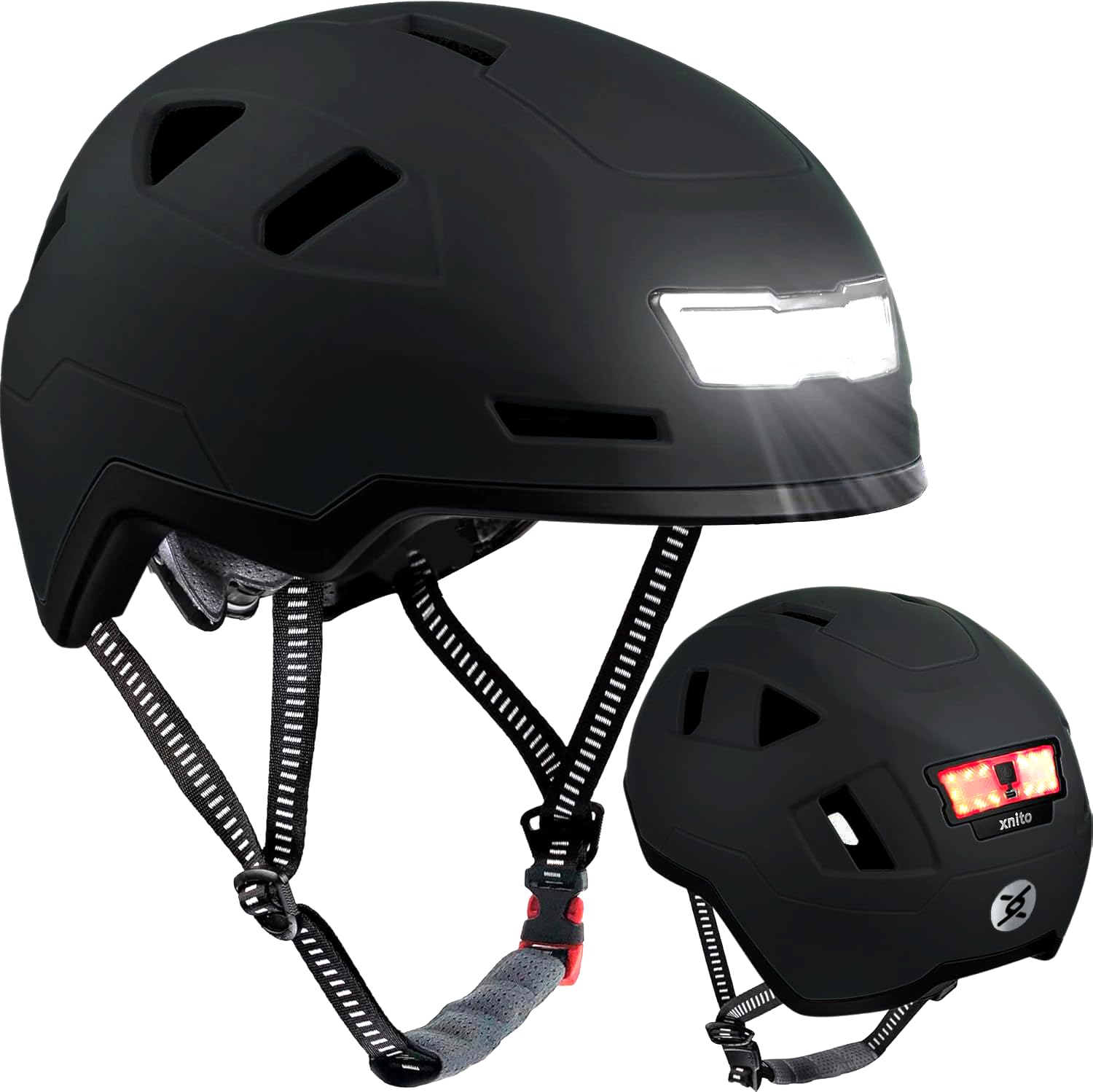
Sized for the biggest heads and certified for 28mph e-bike speeds.
The Xnito is the one that most clearly names a size for a genuinely large head. Its extra-large fits 23.6 to 25 inches, and it publishes the full range — large covers 22.8 to 23.6 inches and medium covers 21.2 to 22.8 inches. That published range is worth a lot when you are buying a helmet online without trying it on.
It carries CPSC and NTA-8776 dual certification, and that second standard is the one written for higher-speed e-bike protection up to 28mph. A thicker layer of EPS foam adds crash coverage across the temples and rear of the head, and it’s rated for Class 3 e-bikes, e-scooters, e-skateboards, and onewheels as well as pedal bikes. Integrated front and rear LED lights boost visibility up to 100% at night and in fog, run up to 10 hours per charge, and recharge over USB-C with three modes: flash, static, and wavy.
The trade-off worth planning around is durability, which draws the mixed end of the feedback here, though Xnito backs the helmet with a lifetime guarantee that replaces it free if you damage it in an accident. At 13.28 ounces it stays light for all that foam and lighting. Ordering through Amazon gets you direct support if anything goes wrong with the shell.
Size honesty: a published extra-large range of 23.6 to 25 inches is the clearest fit signal in this guide.
The e-bike edge: NTA-8776 certification up to 28mph matches the speed a Class 3 e-bike can actually reach.
Ideal for: bigger-headed riders on fast e-bikes, scooters, or onewheels who want lights and speed-rated protection in one package.
Consider the alternative if: you ride a standard pedal bike slowly and only need a simple ventilated shell.
Know the Specs
MIPS and rotational protection
MIPS is a thin low-friction layer between your head and the foam. On an angled hit it lets the shell rotate a little so the force is not transferred straight into your skull. You will find it on the Smith Engage, the Smith Persist, and the Bell 4Forty, where Bell builds it into the retention dial. It is not on every helmet here, so if rotational protection matters to you, check for the letters before you buy.
Koroyd and KinetiCore
Both are alternative impact-absorption structures built into the foam. Koroyd is a honeycomb of crushable tubes used on the Smith helmets; KinetiCore is a set of crumple zones built into the LAZER Tonic’s structure. They aim at the same goal — soaking up energy on impact — through different shapes. Neither replaces the need for the right fit, but both absorb impact energy the EPS foam alone would not.
Certification badges explained
CPSC is the US bicycle helmet standard. CE EN 1078 is the European bike standard. NTA-8776 is the standard written for higher-speed e-bike protection, often rated up to 28mph. ASTM F1447 covers recreational biking and roller skating, while ASTM F1492 covers skateboarding. More badges mean more independent testing across more types of use, which matters if you skate and ride on the same helmet.
Weight and vent count trade-offs
Weight is measured in grams and directly affects how the helmet feels on a long ride. The lightest lids here run around 240 g and the heaviest around 1.6 pounds, and that difference shows up in your neck and shoulders. Vent count is the number of openings that let air in and heat out — more vents mean airflow but slightly less foam, which is why downhill and skate helmets run fewer openings than road lids.
Common Questions
What head size counts as an X-Large bike helmet?
Does a rear dial actually fix a helmet that feels too big?
Is NTA-8776 different from a regular bike helmet standard?
How long do the lights last on a helmet with built-in LEDs?
Can I use a skate-style helmet for road cycling?
What is Koroyd and do I need it?
How should I measure my head before ordering?
Do the MIPS and koroyd helmets weigh a lot more?
Are helmet pads replaceable if mine wear out?
Is a helmet with built-in lights as safe as one without?
The Bottom Line
For most riders with a head that will not fit a standard medium, the x-large bike helmets winner is the Smith Engage MIPS because it combines MIPS and Koroyd in one CPSC and CE EN 1078 certified shell with 20 vents for trail riding. If you split your time between skate parks and bike paths, the TSG Evolution carries three standards and a contact-ring fit that survives jumps. And if you ride fast on an e-bike or scooter after dark, the Xnito LED Commuter gives you NTA-8776 protection up to 28mph plus lights that make you visible. Whichever way you go, measure your head in centimeters first — a shell only protects you if the foam sits where it should.
How we choose
We do not accept paid placement. Every pick is matched to a real buyer and a real use-case; we do not hands-on test units.
Sources
Specifications: manufacturer listings and product documentation. Review insights: verified customer reviews, as of November 2026. Pricing: not shown on this page (it changes often); check the current price via the retailer link.
As an Amazon Associate, Tactical Gear Guy earns from qualifying purchases. This does not affect which products we feature.