Specs are compiled from manufacturer listings and verified buyer reviews and can change over time — please confirm the key details on the product page before buying.
If you want one straight answer: the LONGER LK10 Plus is the XL 3D Printer most people should buy. It pairs a 320×320×400mm build volume with 500mm/s Klipper-driven speed, and it ships at 30.8 pounds — light enough that one person can lift it onto a workbench. A quick disclosure before we go further: this list uses flexible, human-like matching for extra-large build volume, so the XL class here means roughly 300mm or larger on at least one axis. Not every pick is the exact number you typed into the search bar. The nearest same-type size serves the same purpose, and each entry is noted honestly.
This guide is built by comparing the manufacturers’ published specifications and the patterns across verified customer reviews, so you get each pick’s real strengths and trade-offs instead of marketing spin.
Below you will find ten large-format FDM machines ranked by what they actually do well, from a light 320mm workhorse to a 400mm dual-toolhead CoreXY built for studios. Every spec is paired with the everyday consequence, so you can tell which machine fits your bench, your materials, and your patience level before you commit. This is the practical shortlist for anyone hunting the best XL 3D Printer without drowning in spec sheets.
Top Picks

How To Choose The Best XL 3D Printer
The mistake most first-time large-format buyers make is buying the biggest cube they can find. A huge build volume is useless if the frame shakes at 400mm tall, or if the bed warps under the heat of a long ABS print. What separates a good XL machine from a frustrating one is how well the frame, the bed and the motion system hold steady once you push them.
Read all three build dimensions, not just the headline
A 320×320×400mm volume gives you a tall, fairly narrow box — great for figurines, vases and tall prototype housings. A 400×400×400mm volume gives you a taller, wider cube, which is where batch printing small parts in one job starts to pay off. When a listing only brags about one axis, check the other two before you assume you can print a wide flat panel.
Speed means nothing without stability
Print speed in mm/s is the number the marketing leans on hardest, but the real limiter is acceleration in mm/s². A machine rated at 700mm/s with 20,000mm/s² acceleration will finish a tall print faster and cleaner than one rated at 500mm/s with 8,000mm/s². Vibration compensation and input shaping are the software tricks that stop a fast machine from leaving ripples on vertical walls — look for both.
Enclosure and heated chamber change your material list
An open-frame printer handles PLA, PETG and TPU comfortably. Add an enclosure and a 65°C heated chamber, and ABS, ASA and carbon-filled nylon stop warping mid-print. This is the single feature that most separates a hobby machine from a workshop machine, and it is why enclosed CoreXY models cost more.
Multi-color is a system, not a spec
Multi-material printing only works if you also own the matching filament changer. On some listings the changer is bundled, on others it is a separate purchase, and on a few it is not included at all. Read that line carefully — a four-color printer without its changer is a single-color printer.
Side-by-Side Comparison
| Model | Best For | Build Volume | Max Speed | Weight | Amazon |
|---|---|---|---|---|---|
| LONGER LK10 Plus★ Best Overall | Best overall balance | 320×320×400mm | 500mm/s | 30.8 lb | Amazon |
| LONGER New LK10 PlusBest Value | Light large-format starter | 320×320×400mm | 500mm/s | 30.5 lb | Amazon |
| Creality Ender 3 V3 MegaMost Flexible Filament | Flexible TPU work | 420mm build volume | 500mm/s | 46.6 lb | Amazon |
| Creality Ender-5 Max | Raw speed for the size | 400×400×400mm | 700mm/s | 68.9 lb | Amazon |
| Anycubic Kobra S1 Max Combo | Enclosed multi-color value | 350×350×350mm³ | 600mm/s | 78.8 lb | Amazon |
| Anycubic Kobra S1 Max Combo (49-point) | Chambered engineering materials | 350×350×350mm³ | 600mm/s | 77.8 lb | Amazon |
| QIDI Max4 Combo | High-temperature composites | 390×390×340mm | 800mm/s | 120 lb | Amazon |
| Snapmaker Artisan | 3-in-1 workshop machine | 400×400×400mm | — | 79.8 lb | Amazon |
| Original Prusa XL 2-Toolhead | Dual-toolhead multi-material | 14.17×14.17×14.17 in | — | 63.4 lb | Amazon |
Detailed Reviews
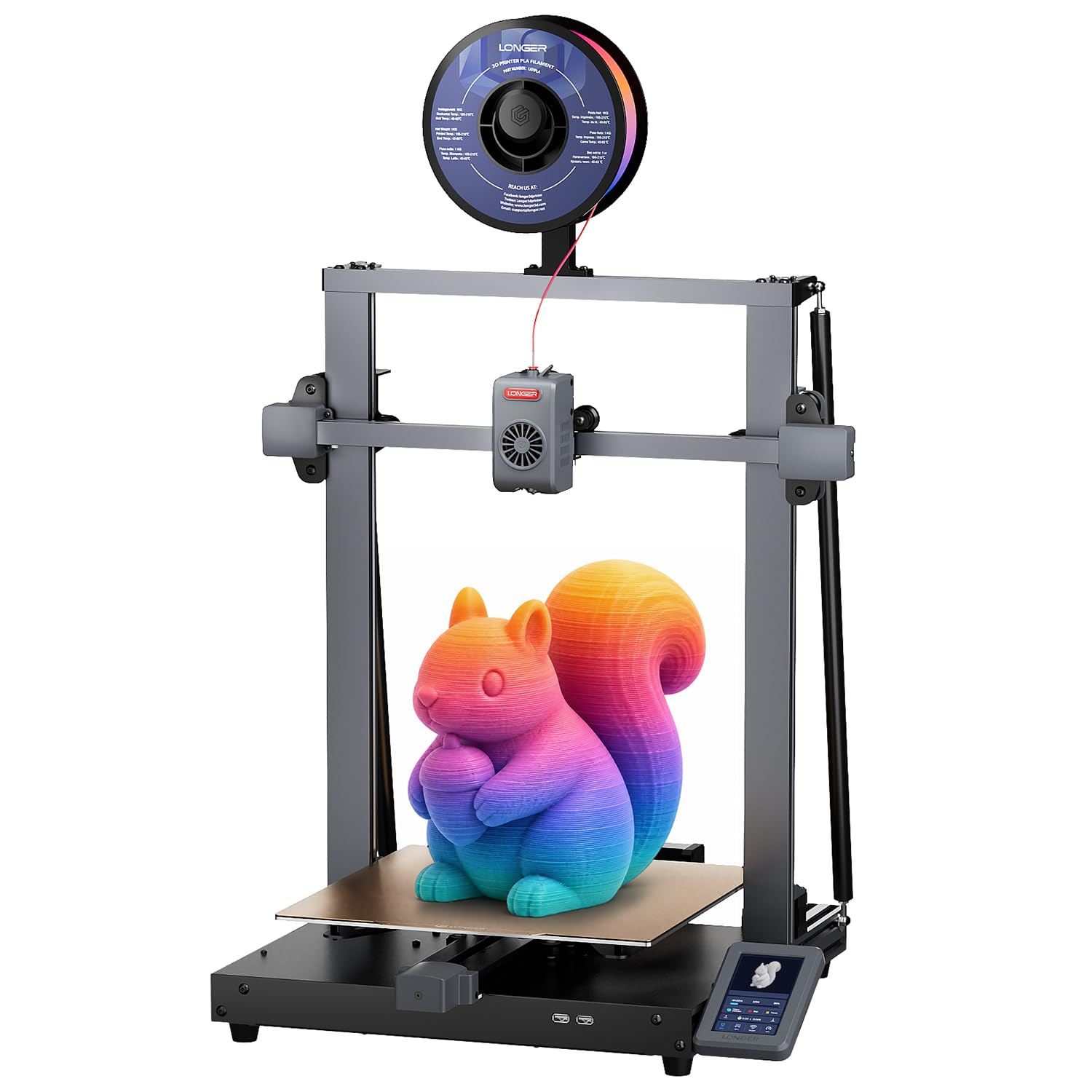
1. LONGER LK10 Plus High Speed 3D Printer
Our pick — 4.0+★ from 1,500+ verified ratings; the strongest balance of quality and price.
A tall 400mm workhorse you can carry alone at 30.8 pounds
Start with the thing that makes this the pick. The LONGER LK10 Plus gives you a 320×320×400mm build volume — a box tall enough for a full helmet or a stack of prototype housings — while weighing 30.8 pounds. Compare that to the Anycubic Kobra S1 Max Combo at 78.8 pounds: at 30.8 pounds, this one is a single-person setup instead of two. If your workshop is a spare room and you move the printer to clear space, that gap is the whole argument.
Speed is the second pillar. Klipper firmware (open-source print-control software that offloads the math to a faster chip) pushes it to 500mm/s with 10,000mm/s² acceleration. In practice, 500mm/s means a mid-size bracket finishes before you have walked away for coffee. Eddy-current bed sensing handles auto leveling and Z-offset on its own, so the first layer lands without you turning three thumbwheels and praying.
The dual-gear direct drive extruder feeds PLA, PETG, ABS, TPU and Nylon from a spool mounted close to the nozzle, which keeps flexible filament from kinking on the way in. Filament runout detection stops a print when the spool runs dry, and power-loss recovery resumes it after a trip to the breaker box. Dual-band WiFi on 2.4GHz and 5GHz lets you send jobs from a browser tab. TMC2209 silent drivers and a dual Z-axis keep the noise down and the gantry square. For a machine in this class, buyers keep circling back to how well it prints straight away, and how clean the interface is for someone who has never sliced a model before.
What earns it the top slot
- Tall 400mm Z axis at 30.8 pounds — genuinely one-person portable
- 500mm/s with 10,000mm/s² acceleration from Klipper firmware
- Eddy-current auto leveling and automatic Z offset
- Runs PLA, PETG, ABS, TPU and Nylon through a dual-gear direct drive
- Filament runout detection plus power-loss recovery
Where it asks for patience
- An open frame, so draughty rooms can pull at tall ABS prints
- 320mm on X and Y narrows what wide flat panels you can lay down
- Single-color only — no bundled filament changer
Buy this one: you want the biggest tall-print capacity per pound of machine, and you want it running the same afternoon it arrives.
Pass if: your work is ABS at full bed width, where an enclosed 350mm cube machine is the better fit.
2. LONGER New LK10 Plus 3D Printer
The same 400mm tower, trimmed to 30.5 pounds
This is the newer revision of the machine above, and the headline spec is nearly identical: 320×320×400mm of build space, 500mm/s through Klipper firmware, 10,000mm/s² acceleration. What changed is the scale. At 30.5 pounds versus 30.8 pounds for the original LK10 Plus, that is not a difference you will feel in your back. What you will feel is the price of entry, which sits at the same level while the spec sheet reads just as long.
The bed leveling here is worth spelling out for a beginner. Eddy current sensors read the bed surface and the machine adjusts the nozzle gap on its own, so a nozzle crash or a smeared first layer does not happen just because you set the gap wrong. The direct drive extruder takes the same PLA, PETG, ABS, TPU and Nylon list. Dual-band WiFi (2.4GHz and 5GHz) is onboard, and the TMC2209 stepper drivers keep the machine quiet enough to sit in a home office while a job runs.
There is one honest snag. Fewer than two dozen buyers have rated this revision so far, so you are buying a spec sheet and an established model line rather than a long track record. The original LK10 Plus has the crowd behind it. If you want proven real-world mileage, the machine above has it; if you want the newest build of the same design and equal specs, this one delivers.
What you actually gain: the same 320×320×400mm volume and 500mm/s Klipper speed as the top pick, in a chassis that shaved down to 30.5 pounds.
What gives up: track record — the rating count here is thin, so you are trusting the platform rather than a thousand owner reports.
Reach for this if: you like the LK10 Plus formula and want the current revision of it.
Look elsewhere if: you would rather buy the version with a deep history of owner feedback behind it.
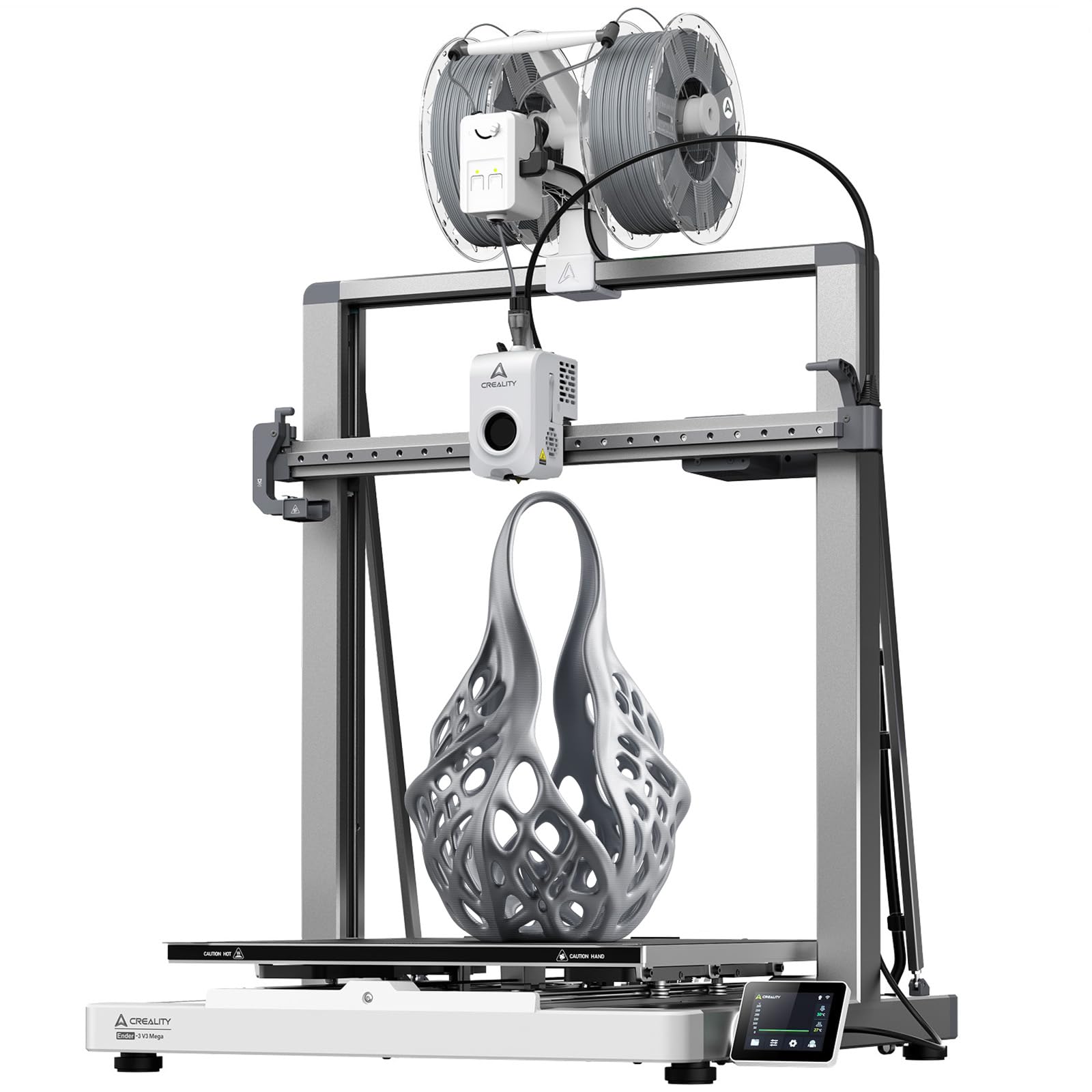
3. Creality Ender 3 V3 Mega Large-Format 3D Printer
The XL machine that actually feeds squishy filament
Most XL 3D printers treat TPU as an afterthought. This one treats it as a specialty. The tune extrusion system handles 85A, 90A and 95A TPU — the shore hardness numbers for soft rubber-like filament — which opens up footwear soles, flexible gaskets and protective parts that a rigid-only printer simply cannot produce. If your project list includes anything that needs to bend, that single capability decides the purchase.
The build volume is a 420mm figure, the largest one-axis number in this list. It holds 81 points of auto leveling across the platform, and more sample points means a more reliable first layer when the bed is not perfectly flat. Speed tops out at 500mm/s with 8,000mm/s² acceleration, paired with vibration compensation so the surface stays clean at speed. Note the acceleration figure against the Ender-5 Max at 20,000mm/s²: this machine tops out at 500mm/s versus 700mm/s, and gets there with noticeably less shove.
Creality added automatic filament relay — when a spool runs out, the machine switches to another loaded spool without stopping — plus tangle and runout detection. That is the feature you appreciate on a two-day large print. The quick-swap hotend means a clog is a five-minute fix rather than an afternoon on your back. Assembly runs short, and beginners tend to get a decent first print without much fiddling.
The reason to pick it: 85A to 95A TPU support and 81-point bed leveling on a 420mm platform.
The catch: it is a 46.6-pound open-frame machine, so high-temperature engineering filaments want a draught-free room.
Fits you if: flexible parts are on the list and you want the widest platform in this group.
Think twice if: you plan to run ABS at full width, where the open frame works against you.
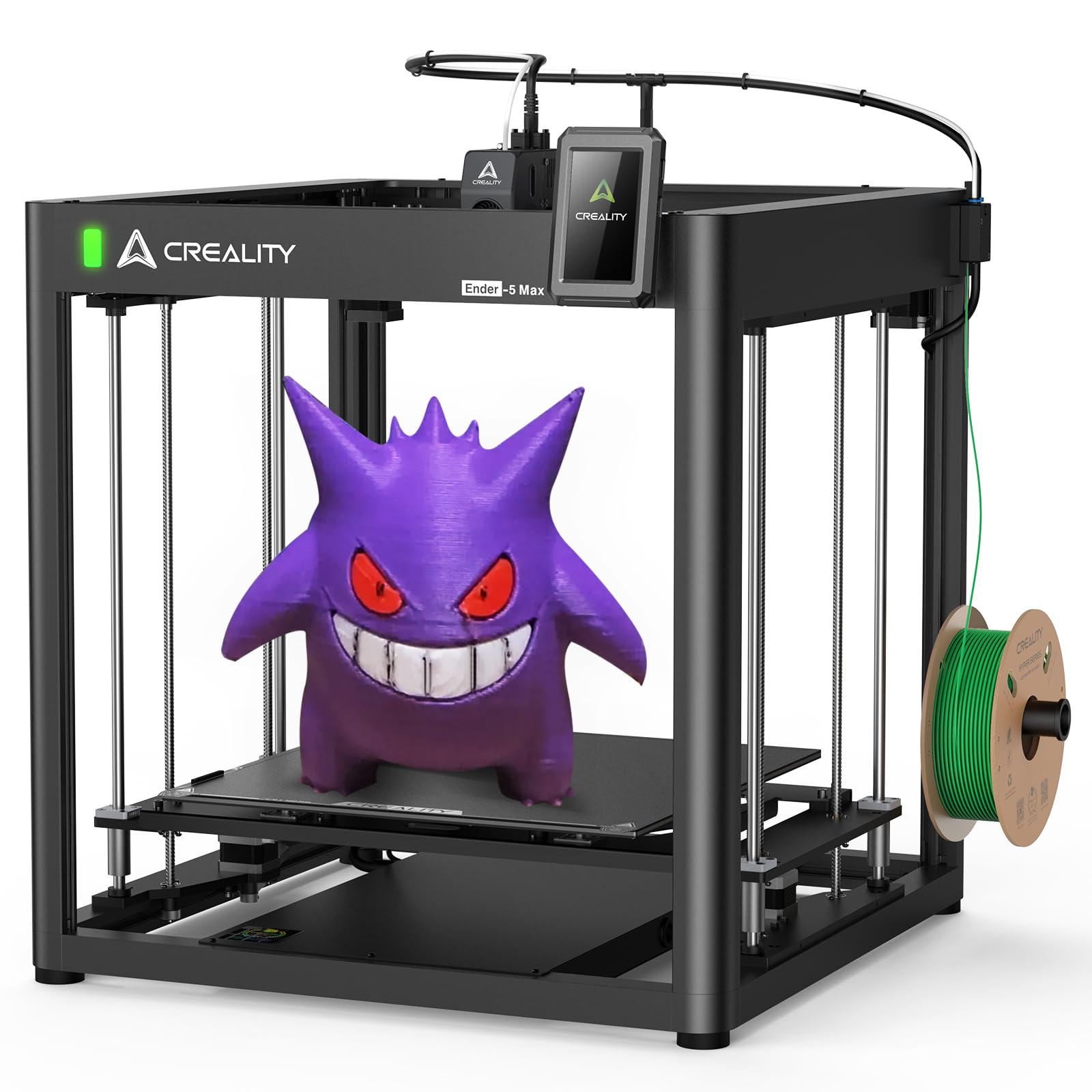
4. Creality Ender-5 Max 3D Printer
A full 400mm cube that hits 700mm/s and 20,000mm/s² acceleration
The Ender-5 Max leads on raw motion numbers in this group. Peak speed is 700mm/s against 500mm/s on the LONGER LK10 Plus, and acceleration hits 20,000mm/s² against the Ender 3 V3 Mega’s 8,000mm/s². For someone printing batch after batch of the same part, that combination compresses a workday into an afternoon. The dual-gear near-end extruder is all-metal, built to hold up over long continuous runs without clogging.
The build volume is a true 400×400×400mm cube, which is the shape that makes batch printing viable: forty small brackets on one plate instead of ten. The 36-point auto leveling system samples the bed across 36 spots so adhesion stays put. LAN-based control is included so one workstation can manage several Ender-5 Max units, and the upgraded Creality Print slicer ties it together.
Here is the honest part. This is the largest open-frame machine here at 68.9 pounds, and the bed and Z-axis assembly have drawn mixed owner feedback — warped aluminium beds and Z-axis trouble show up in the reports, along with the occasional failed extruder fan or gear. That is not universal, and plenty of owners print happily. But on a machine this heavy and this fast, treat the bed as the part to inspect on arrival, and expect to learn the Z-axis behaviour early. It is also 25.5 x 33.5 x 28.4 inches on your bench, against 20.71 x 24.76 x 21.57 inches on the LK10 Plus — that footprint needs a dedicated table.
Numbers that impress
- 700mm/s peak speed and 20,000mm/s² acceleration
- True 400×400×400mm cube for real batch printing
- 36-point auto leveling for adhesion across a wide bed
- LAN multi-printer control for a small print farm
Numbers that make you plan
- 68.9 pounds, and a footprint that eats a whole table
- Bed flatness and Z-axis behaviour are the recurring variables
- Open frame, so high-temp materials need a controlled room
Worth it for: makers who measure output in parts per day and have a stable table to dedicate to the machine.
Not the pick for: anyone who wants a printer they can lift alone or stash on a shelf between projects.
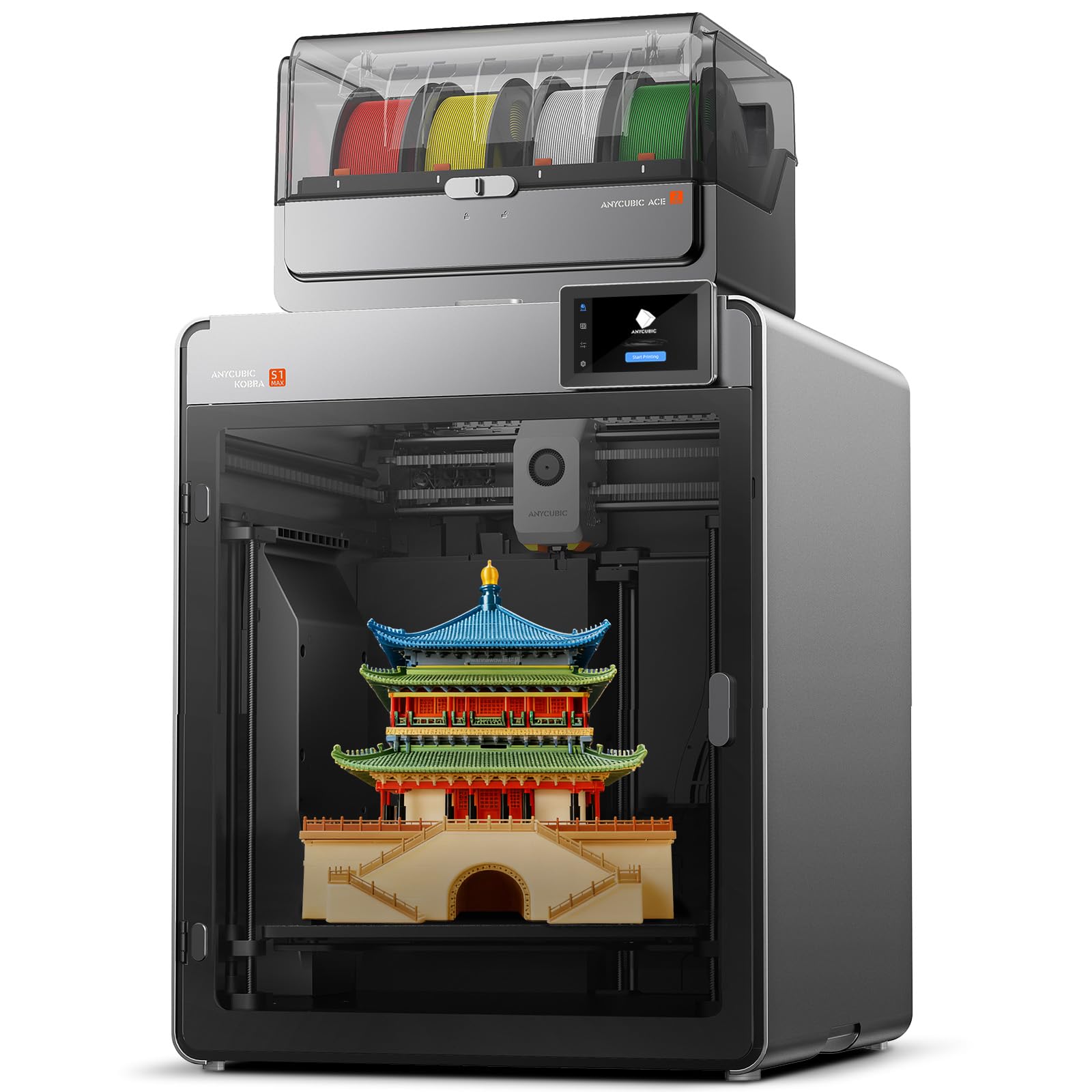
5. Anycubic Kobra S1 Max Combo
Four colors at once, sealed inside a 65°C heated box
Four-color printing is the front-of-house feature here. The bundled ACE 2 Pro delivers 4-color work from the start, and connecting four ACE 2 Pro units takes it to 16 colors — which means a single job can print a red-and-white helmet shell without a single manual spool swap. That is the difference between a machine you model on and a machine you can sell finished parts from.
The enclosure is what makes the material list serious. A 65°C heated chamber plus a 350°C hotend supports PLA, PETG, TPU, ABS, ASA and PVA. Keeping the air warm is what stops big ABS panels from cracking partway up, and the same heat is why tall prints survive in a spare room with a draughty window. The CoreXY frame (a motion layout that keeps the toolhead light and the shake contained) with active vibration compensation keeps ringing off the walls of a 600mm/s print.
Extrusion is built for abrasive filament: hardened steel gears and nozzle, plus a titanium alloy throat tube to resist clogging. LeviQ 3.0 auto-leveling reads and corrects an uneven bed, and filament runout plus power-loss recovery protect a long job. The trade-off is the one every enclosed machine carries: at 78.8 pounds versus 30.8 pounds for the LK10 Plus, and you need clear space on both sides to open it. It is also new to market, so the owner record is short — that is a risk to weigh, not a fault.
Why it earns its place: 4-color printing bundled, 16 colors when expanded, and a 65°C chamber for ABS and ASA in a 350×350×350mm³ footprint.
The honest weight: 78.8 pounds and a short owner record — this is a machine you commit bench space to, not one you move around.
Go for it if: you want color and engineering filaments from one enclosed box without buying the filament changer separately.
Hold off if: your workshop has no room for a stationary, cabinet-sized unit.
6. Anycubic Kobra S1 Max Combo 3D Printer
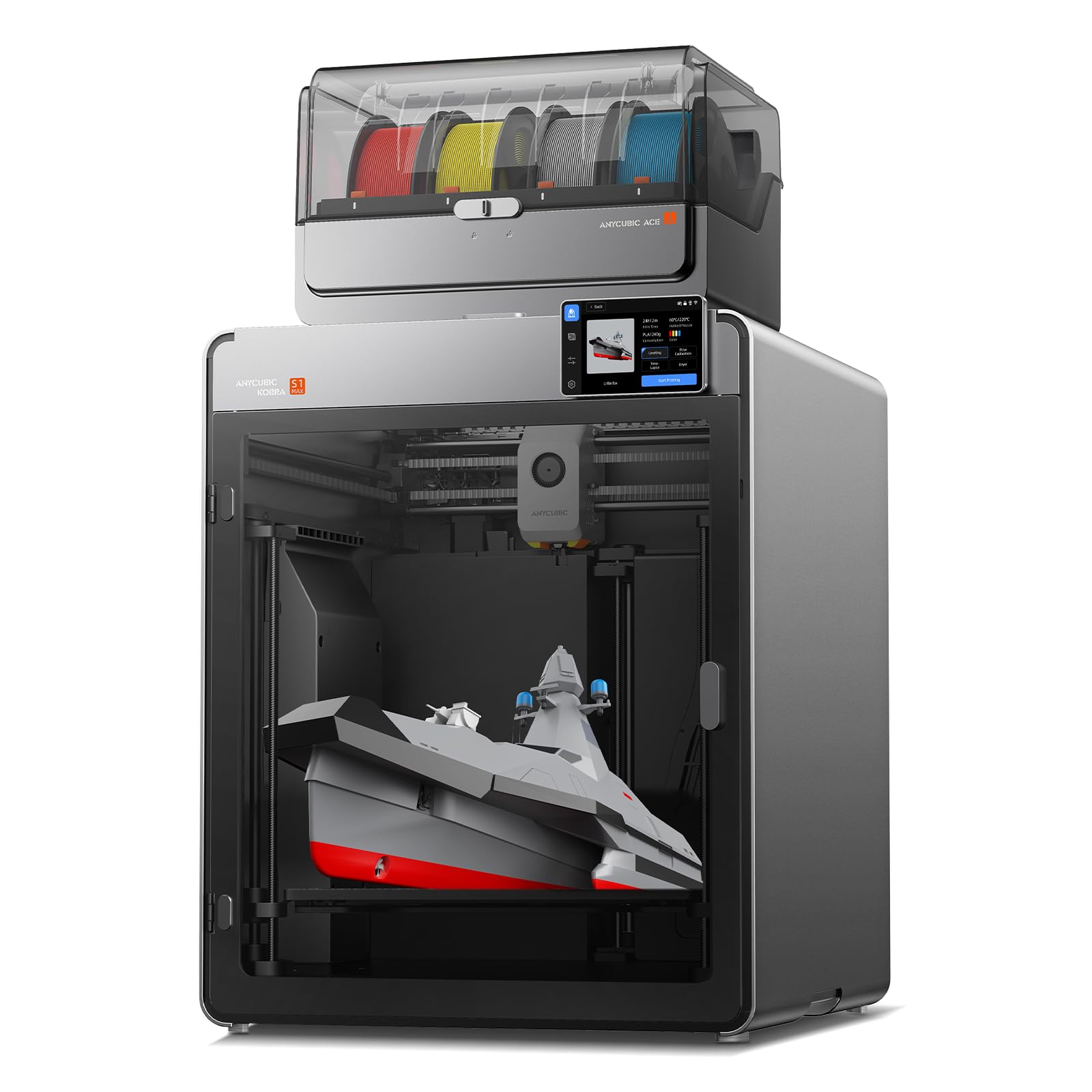
A sealed 350mm cube built to keep big ABS panels from cracking
This is the same Kobra S1 Max Combo platform as the pick above, sold in its 49-point leveling version, and the material story is the reason to consider it over the cheaper sibling. The 65°C heated chamber and 350°C hotend let you run ABS, ASA, PVA, TPU, PLA and PETG, with the chamber holding temperature steady so a large part does not warp or split between layers. If your parts are functional enclosures rather than display models, that is the spec that matters.
Speed is 600mm/s with 20,000mm/s² acceleration, on a solid all-metal frame that stays steady at top speed. The CoreXY design keeps the toolhead light so tall models print straight. Native color support is 4 colors with the bundled ACE 2 Pro, expandable to 16 with four units, so the multi-color line is a real workflow rather than a promise. LeviQ 3.0 runs 49-point auto leveling with real-time flow dynamics calibration, which is the reason the first layer lands without manual bed dialing.
The part you need to hear honestly: this model has a mixed owner record on print quality and reliability. Some owners are delighted, others hit repeated errors and quality problems. Weigh that against the fact that this is a newer, more complex machine than the open-frame picks. Buy it for the chamber and the color system, and buy it knowing you may be doing some early troubleshooting.
Where it shines: 65°C heated chamber, 350°C hotend and 49-point leveling on a 350×350×350mm³ enclosed frame.
What to expect: a machine with real capability and a mixed early reputation, so plan on dialing it in.
Choose it for: high-temperature filaments and multi-color work in one enclosed unit.
Skip the complexity if: you want a proven, quiet first printer — the open-frame options are less fussy.
7. QIDI Max4 Combo 3D Printer
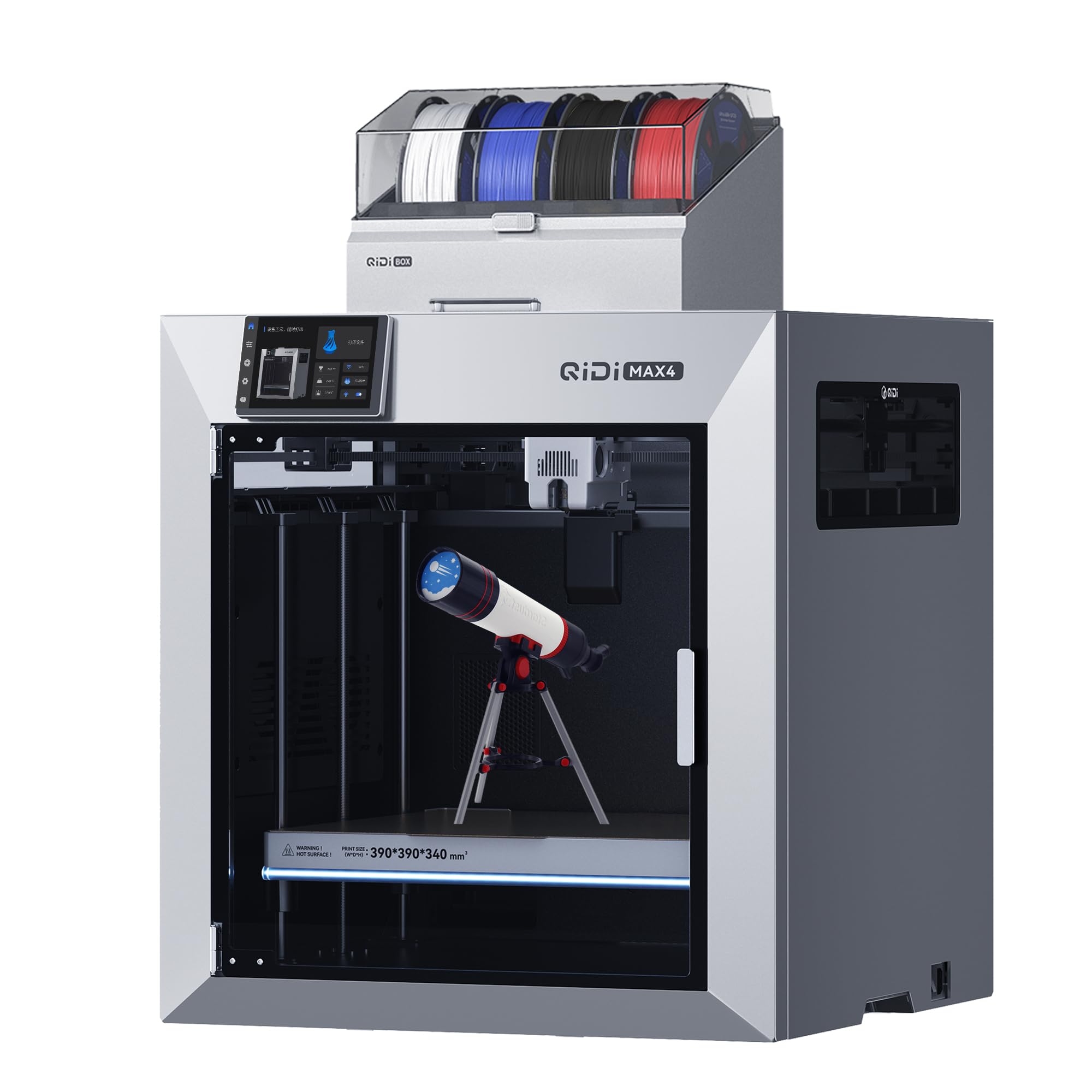
800mm/s with closed-loop motors and a 65°C chamber for carbon nylon
Nothing else on this list prints faster. The Max4 Combo reaches 800mm/s with 30,000mm/s² acceleration, and the X and Y axes use closed-loop motors — a setup that watches its own position and corrects drift rather than trusting the motor to have moved exactly where told. On a tall large-format print, that correction is what keeps the layer stack honestly aligned.
The chamber is aimed at composites. A 65°C active heated chamber with a self-developed Polar Cooler is built for high-temperature materials like ABS-CF, PC and PPS-CF, and the 40mm³/s high-flow hotend with a hardened steel nozzle handles carbon fiber-reinforced nylon. Standard PLA and ABS work too. The full-surface silicone heated bed spreads heat evenly across the 390×390×340mm area, which is a big part of why large prints stick and stay flat. A 2mm lead screw and anti-backlash nut on the Z-axis tighten vertical accuracy.
Setup and build quality are what buyers talk about most, and the reports are good. One buyer confirmed successful printing across PLA, PETG and ASA. The AI camera spots spaghetti failures and pauses the job to save material. Expansion runs to QIDI BOX for 16 colors, though that is an add-on. Two notes before you buy: the Polar Cooler is not included in the Max4 series and must be bought separately, and at 120 pounds this is the heaviest machine in the article — it is a floor-standing decision, not a bench one.
The standout spec: 800mm/s and 30,000mm/s² with closed-loop X/Y motors — the highest speed figure here.
Two footnotes: Polar Cooler costs extra, and 120 pounds means a permanent station.
Pick it for: carbon-filled and high-temperature engineering parts on a large bed, with speed to spare.
Choose the lighter options if: you want a machine you can shift by yourself and never need a composite chamber.
8. Snapmaker Artisan 3D Printer

One 400mm frame that swaps between printing, laser and CNC
Buy this one for the platform, not the printhead. The Artisan is a 400×400×400mm work area that accepts interchangeable toolheads and build platforms — the quick-swap design moves it between 3D printing, laser engraving and CNC carving in about a minute. The model listed here is the 3D printing version. The laser and CNC modules come in the bundle options, so read the listing carefully if you want the full 3-in-1.
The 3D printing side is no slouch either. A dual-extrusion module with a 7:5:1 planetary gear ratio and dual extrusion gears lets you run two materials at once and print easy-remove supports. The all-metal build uses steel guide rails ground at micron level on a one-piece die-cast base plate, which is why the machine stays rigid even during CNC work — the same rigidity is what keeps a 400mm tall print from ringing at the top.
The 7-inch touchscreen shows live job status, both nozzle temperatures and G-code previews, and you can swap modules without powering down. Support runs to 600+ materials across the three modes, including PLA, ABS, PETG, TPU and Nylon on the 3D printer side, plus wood, metal, leather and acrylic with the laser modules. The real caution is the platform bet: this is a niche machine that only becomes a smart purchase if you will genuinely use the laser or CNC capacity. The printer-side value on its own is thinner than a dedicated large-format machine.
What you are buying: a 400×400×400mm frame, dual extrusion, micron-ground steel rails and a 7-inch touchscreen, with laser and CNC modules available in the bundles.
What to weigh: the price is a premium for the modularity, and that only pays off if you need more than printing.
The right buyer: a small workshop or designer who wants one footprint doing printing, engraving and carving.
The wrong buyer: a pure printing hobbyist who will never touch the laser module.
9. Original Prusa XL 2-Toolhead
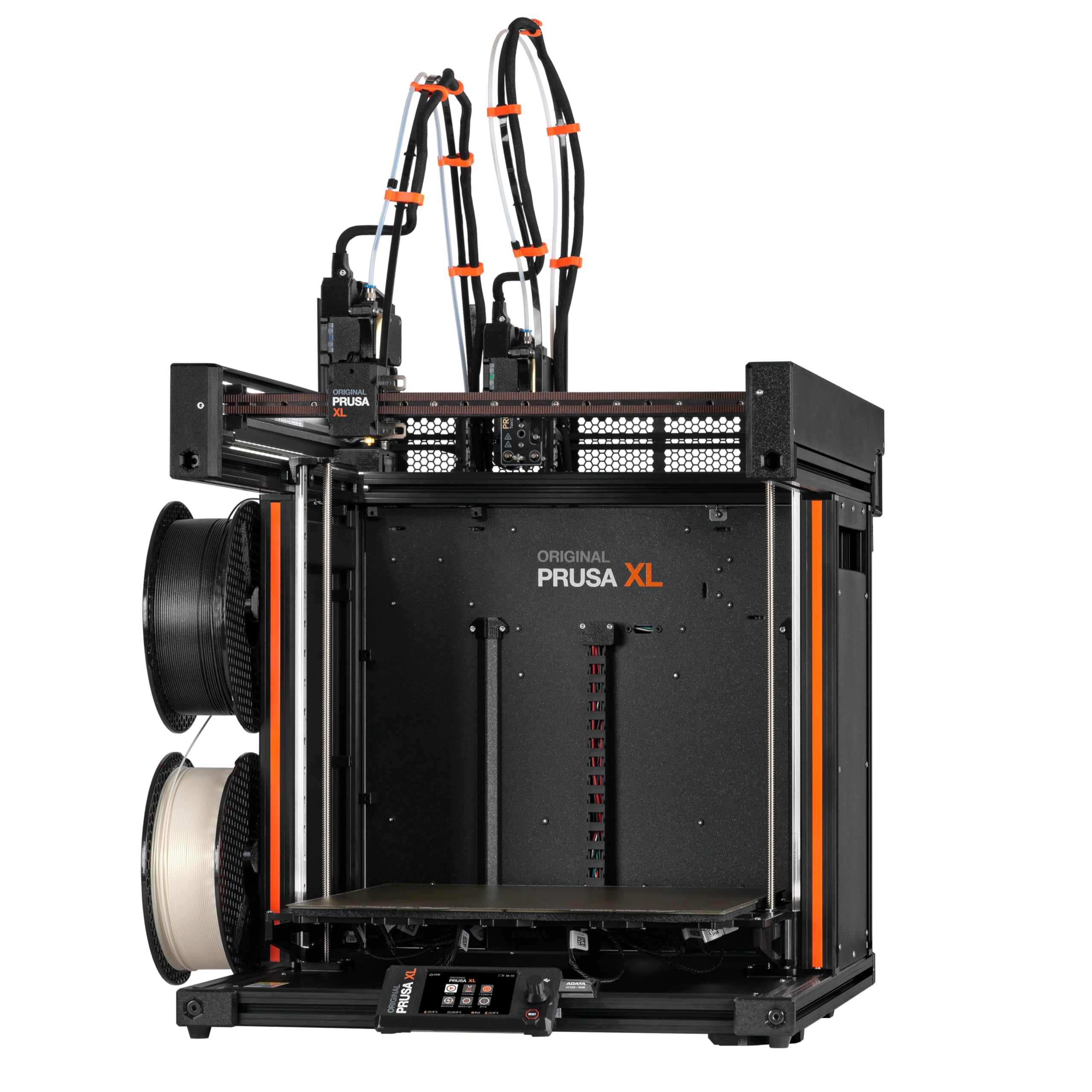
Two toolheads, one segmented bed, zero purge waste to spare
The pattern that wins people over here is the tool changer. The Prusa XL runs two toolheads, switching between materials for a print that mixes hard and soft plastics or uses soluble supports, and it does so with intelligent tool switching that minimizes purge waste. On an 800-gram multi-material print, that purge saving is far more consequential than a faster speed number.
The other engineering decision is the segmented heated bed. Rather than heating one giant plate, the platform heats in zones, so energy goes only where the print sits and warping drops on large parts. Build volume is 14.17×14.17×14.17 in — a full cubic foot of space for engineers and studios printing large prototypes. The CoreXY frame keeps the motion stable during multi-material jobs, and it arrives with a Satin print sheet and a 1kg spool of Prusament PLA. Prusa also offers lifetime technical assistance and 24-hour support.
Two things to weigh. Assembly is partial: fragile parts like the LCD, extruder assembly, Wi-Fi antenna and spool holder ship separately and need fitting — the process is straightforward, but it is not a plug-in job. And reliability is the recurring weak point in the owner reports, with some describing it as not reliable, alongside a divided view on value. Some consider it a great buy, others an expensive toy. If you need proven uptime on day one, look at the QIDI or the LK10 Plus. If you want the tool-changer workflow in the Prusa ecosystem, this is the machine.
The engineering draw
- Two toolheads with minimal purge waste between materials
- Segmented heated bed that heats only the zones you use
- 14.17×14.17×14.17 in build space on a CoreXY frame
- Prusa ecosystem: PrusaSlicer, Printables.com and lifetime support
What to accept
- Partial assembly — LCD, extruder and antenna need fitting
- Reliability is the recurring divide in owner reports
- The highest price tier in this group, so a studio-grade purchase
Made for: engineering teams and studios that need dual-material printing with the Prusa software stack.
Think twice if: you want one-color printing with zero setup and a stable track record.
Know the Specs
Build Volume in Three Angles
Build volume is written as three numbers — width, depth and height — because it defines a box, not an area. A 320×320×400mm machine gives you a tall narrow space; a 400×400×400mm machine gives you a cube. Choose by the longest dimension of your biggest part, then check the other two, or you will find out the hard way that a flat panel will not fit.
Print Speed vs Acceleration
Print speed in mm/s is how fast the nozzle travels, and acceleration in mm/s² is how quickly it gets up to that speed. A machine that hits 700mm/s but only reaches 20,000mm/s² will finish a short wall slower than one tuned harder, because it spends more time speeding up and slowing down. For tall, curved or detailed parts, acceleration and vibration compensation matter more than the top speed figure.
What a 65°C Heated Chamber Does
An enclosed chamber held at 65°C keeps the air around a print warm so the plastic cools slowly and evenly. That is what stops big ABS and ASA parts from cracking as they cool. A 350°C hotend is the other half — it can melt engineering plastics that a standard hotend cannot reach. Together, chamber and hotend decide which materials your machine can print reliably.
Auto Leveling Point Counts
Auto leveling samples the bed at a set number of points, then maps the surface so the first layer lands evenly. More points means a more accurate picture of a slightly warped plate. A 36-point or 49-point system on a large bed is doing much more precise work than a handful of samples. The count is not the only factor, but it is a fair proxy for how much care went into the bed.
Toolheads and Filament Changers
Multi-color printing comes in two forms: a filament changer that swaps spools into one nozzle, or multiple independent toolheads. A changer is cheaper and simpler but wastes some filament on purge between colors. A dual-toolhead machine like the Prusa XL keeps two materials ready and cuts that waste. Either way, confirm the changer is included — some listings require the module separately.
Weight and Bench Reality
An XL machine is heavy because large beds and stiff frames are heavy. The spread here runs from 30.5 pounds to 120 pounds. Under 40 pounds, one person can move it. Over 70, it needs a fixed station and a solid table. Before you buy, measure the footprint and clear the space — an enclosed 350mm cube needs room on both sides to open.
Common Questions
What does “XL” actually mean for a 3D printer?
Can a 320×320×400mm volume print a wearable helmet?
Is 500mm/s really faster than 700mm/s in daily use?
Do I need a heated chamber for ABS and ASA?
Does the Creality K2 Plus come with a filament changer?
What is the difference between CoreXY and a bed-slinger frame?
How much floor or bench space does an XL printer need?
Can these printers handle carbon fiber filament?
Is a dual-toolhead printer worth it over a filament changer?
Why do some XL printers arrive partly assembled?
Can I run an XL printer overnight unattended?
The Bottom Line
For most people, the xl 3d printer that makes the most sense is the LONGER LK10 Plus. It gives you a 320×320×400mm build volume and 500mm/s Klipper speed in a machine that weighs 30.8 pounds, and it has the deepest owner base of any pick here. That combination of tall print capacity and one-person portability is hard to find in this class. If flexible filament is on your list, the Creality Ender 3 V3 Mega handles 85A to 95A TPU on a 420mm platform. For high-temperature composites and the fastest motion here, the QIDI Max4 Combo hits 800mm/s with a 65°C chamber. And if you want dual-toolhead multi-material in the Prusa ecosystem, the Original Prusa XL is the one to reach for. The crowd favorite is the machine at the top — 4.0+ stars across 1,800+ ratings and the most proven build in this group.
How we choose
We do not accept paid placement. Every pick is matched to a real buyer and a real use-case; we do not hands-on test units.
Sources
Specifications: manufacturer listings and product documentation. Review insights: verified customer reviews, as of November 2026. Pricing: not shown on this page (it changes often); check the current price via the retailer link.
As an Amazon Associate, Tactical Gear Guy earns from qualifying purchases. This does not affect which products we feature.