Specs are compiled from manufacturer listings and verified buyer reviews and can change over time — please confirm the key details on the product page before buying.
If your lower back aches by hour four, the chair’s lumbar support is the problem, not your posture. A good work desk chair gives you three things: adjustable lumbar support, a seat depth that matches your leg length, and a recline that locks where you set it. This guide covers 11 chairs that hit those marks, and it names the exact specification behind each one so you can compare before you buy.
This guide is built by comparing the manufacturers’ published specifications and the patterns across verified customer reviews, so you get each pick’s real strengths and trade-offs instead of marketing spin.
You will see which chairs lock their recline, which ones slide the seat depth, and which ones give you 3D or 4D arms instead of fixed pads. Each entry is here because its own spec sheet and owner feedback back it up, and every measurement below comes straight from the maker’s listing. Here is the honest read on the work desk chair worth putting under your desk.
Top Picks

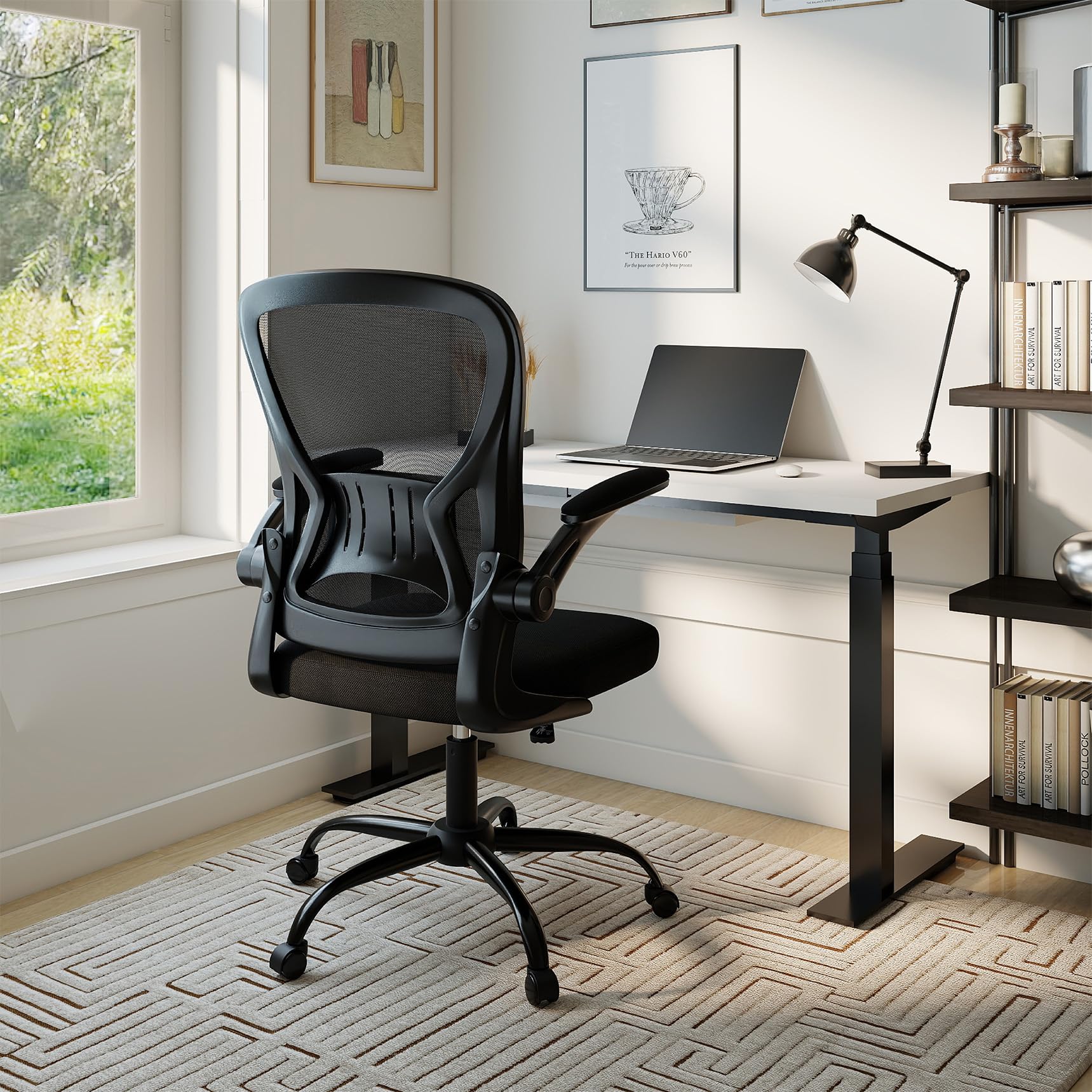
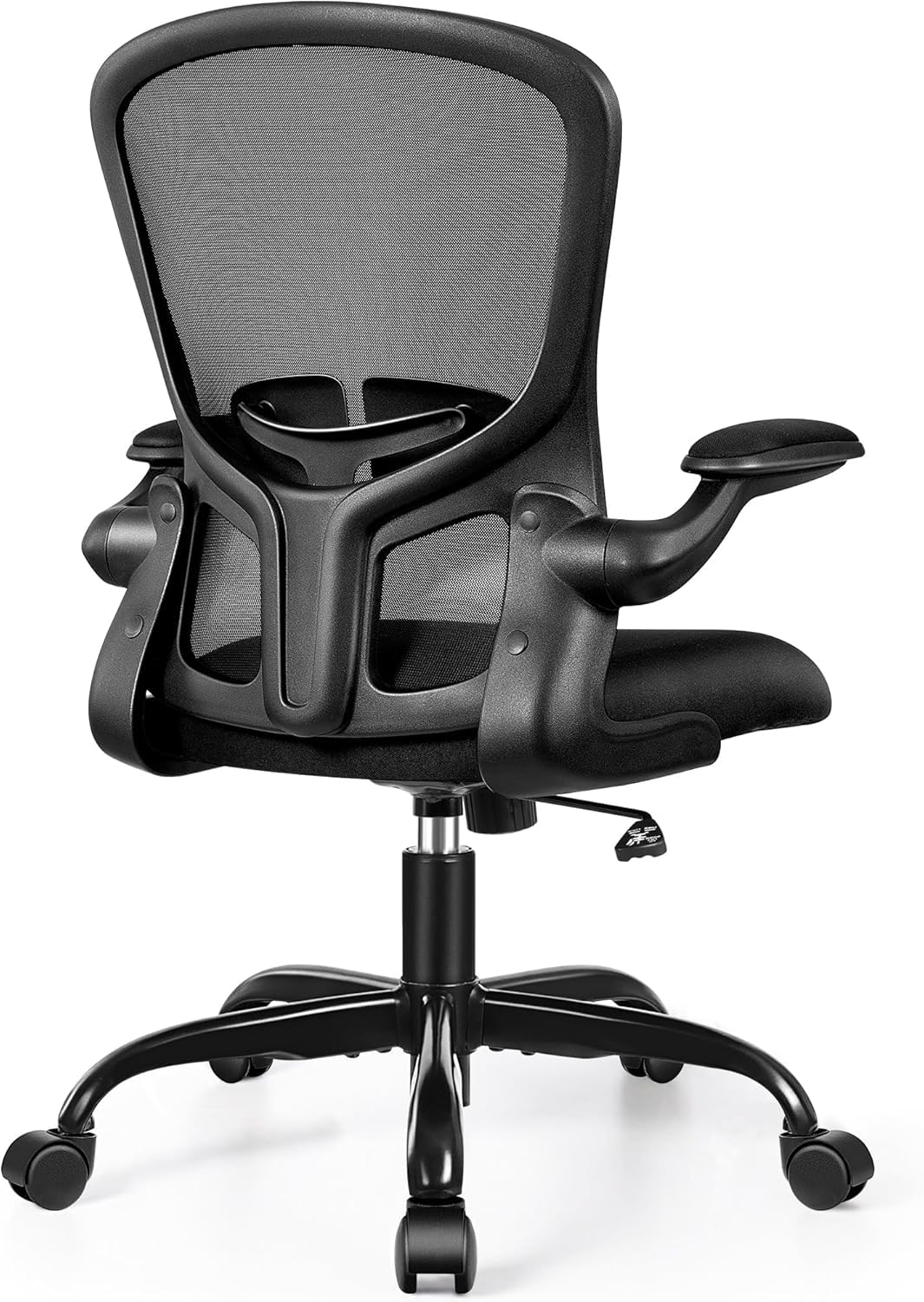
How To Choose The Best Work Desk Chair
Most buyers start by looking at the backrest and end up buying a chair that fights their legs. The seat and the arms decide whether you can sit for a full day, so start there and work upward. Below are the four things that separate a chair you forget about from one you keep shifting in.
Seat height and depth come first
Your feet need to rest flat with your thighs level, and the front edge of the seat should not press into the backs of your knees. That is why a seat-depth range beats a fixed cushion. The COLAMY slides from 15.75 to 17.72 inches, while the Staples Kroy tops out at 22.76 inches of seat height for taller desks. Check both numbers against your own leg length before anything else.
Lumbar support has to move with you
A fixed bump in the backrest helps one body shape and hurts the next. Look for support that travels — the HUANUO moves its lumbar pad 1.18 inches forward and back plus 2.16 inches up and down, and the MOLENTS adjusts both up-down and forward-back. If lower-back pain is why you are shopping, prioritize a lumbar pad that moves up-down and forward-back over a fixed back curve.
Armrests decide whether your shoulders stay loose
Fixed arms force your elbows to wherever the pad happens to sit. A 3D armrest moves forward and back, up and down, and side to side, which lets you line the pad up under your forearm while you type. The flip-up style on the Youhauchair and FelixKing is a different trade: it swings out of the way so the chair slides under the desk when you are done.
Mesh or foam, and what holds the weight
A mesh back moves air across your spine and stays cooler through a long afternoon. A foam seat spreads pressure but holds heat. Neither is wrong — pair a mesh back with a firm seat cushion if you run warm. Then check the base: chairs here carry up to 300 lbs or 330 lbs depending on the model, and an aluminum or steel base keeps the whole thing steady when you lean back.
Side-by-Side Comparison
| Model | Best For | Recline Range | Backrest Width | Weight Capacity | Amazon |
|---|---|---|---|---|---|
| MOLENTS Ergonomic Office Chair★ Best Overall | All-day desk work | 90°–120° | 19.7 in | — | Amazon |
| Youhauchair Adjustable Mesh ChairBest Space Saver | Small spaces | 30° rocking | 19.69 in | 300 lbs | Amazon |
| FelixKing Office Desk ChairWidest Backrest | Wide-back comfort | 30° recline | 25.6 in | — | Amazon |
| HUANUO Ergonomic Office Chair | Neck and lumbar support | 90°–120° | — | 300 lbs | Amazon |
| Staples Kroy Mesh Task Chair | Tall desks | Swivel-tilt + lock | 27.9 in | 275 lbs | Amazon |
| YFO Home Office Desk Chair | Cross-legged seating | — | 15.8 in | — | Amazon |
| SIHOO M57 Ergonomic Chair | Long sessions | 90°–126° | 20.07 in | 330 lbs | Amazon |
| GABRYLLY Chair with Footrest | Napping at the desk | 90°/110°/135° | — | 300 lbs | Amazon |
| COLAMY Sliding Seat Chair | Fine-tuned fit | Lockable tilt | — | 300 lbs | Amazon |
| HON Ignition 2.0 | Office-standard reliability | Advanced tilt | 19 in | — | Amazon |
| Branch Ergonomic Chair Pro | Custom fit above all | Tilt + forward tilt | — | — | Amazon |
Detailed Reviews
1. MOLENTS Ergonomic Office Chair, Mesh Desk Chair
Our pick — 4.5+★ from 400+ verified ratings; the strongest balance of quality and price.
The desk chair that lets your lower back pick where it gets supported.
Your lumbar pad travels up and down and forward and back, so the support lands where your spine actually curves rather than where a mold decided it should. The arms go further than most: they slide forward and back, rise vertically, rotate, and shift sideways — a 3D setup that lets you tuck the pads under your elbows while you type. The mesh back runs full length, which means air moves across your whole spine on a warm afternoon instead of just the middle.
Measurement-wise, the backrest is 19.7 inches wide and the seat sits between 19.5 and 23.3 inches off the floor. Those two figures cover a lot of body types — short enough for someone at a low desk, high enough to pair with a standing-desk converter. Assembly is a 15-minute job with the included tools, though there is one quirk: the base leg ships nested inside the seat, so do not panic when a part looks missing before you unpack the bag holding both.
The crowd read here is what you would hope for — 4.5+ stars with the quality of the build and the clarity of the instructions doing the heavy lifting in the feedback. Where owners split is height adjustment, and a few find the mechanism fussier than they would like. MOLENTS sells alternate gas lifts for shorter or taller users, which softens that gap if you know your fit in advance.
Why this earns the top slot
- Lumbar support adjusts in two directions, so it tracks your spine instead of jabbing it
- 3D arm pads move in depth, height, pivot, and width
- Backrest measures 19.7 inches wide — room to shift without hitting an edge
- Tilt locks at 90° to 120°, so you can lean back without the chair drifting
What to know before you order
- Height adjustment gets the most mixed feedback of any feature
- The base leg hides inside the seat during shipping — check the parts list carefully
- If you prefer a fixed arm panel, you will need to ask the maker for one
Your chair if: you sit six or more hours a day and your lower back is the part that complains first.
Look elsewhere if: you want a chair that arrives fully dialed in without a height-adjustment conversation.
2. Youhauchair Adjustable Mesh Ergonomic Office Chair
A chair that folds its arms up and disappears under the desk.
The arms on this one flip up 90°, so the whole chair slides under a work surface when the day ends — a real difference for a small apartment or a shared desk. The backrest is 19.69 inches wide, narrower than the FelixKing’s 25.6-inch span, and that 30% narrower footprint makes it the easier fit in a tight corner.
The base is a 5-point nylon frame with an SGS-certified gas lift, rated to 300 lbs. The back is ventilated mesh over a high-resilience foam seat, and the arms are padded rather than bare plastic. You get 360° swivel and a 30° rocking mechanism, which keeps the chair moving with you instead of locking you upright.
Owners here tend to lead with the assembly and the way the arms move out of the way — the height and the lumbar both get called out as functioning well, and the flip-up arms are the reason many chose it over a fixed-arm chair in the same range. Nothing in the feedback paints the build as fragile, but the pad height is fixed to the arm assembly, so if you like to plant your elbows high, this one will not dial in as snugly as a 3D chair does.
Fit and function: the flip-up arms and the 300-lb gas lift make this the sensible pick for a compact office where the chair has to vanish after hours.
Trade-off: fixed arm height, so tall users may sit with their elbows a little below shoulder level.
Reach for this if: your desk has to double as a fold-away station and the chair needs to tuck under it.
Skip the flip-up design if: you need elbow support at a height you can set.
3. FelixKing Office Desk Chair
The S-curve back with more shoulder room than any chair on this page.
At 25.6 inches, this backrest is the widest in the group — noticeably more room than the Youhauchair at 19.69 inches, and the difference shows up in a specific way: broad shoulders do not hang off the edge of the mesh. The shape is an S-curve rather than a flat panel, so it follows the line of your back instead of pressing a single point into it.
Height travel covers 3.94 inches, and the chair swivels a full 360°. Recline stops at 30°, and the pressure-resistant structure distributes your weight so the seat does not turn into a hard spot after lunch. The arms flip up 90° for storage, and the thickened base plate keeps the footing steady when you lean.
Comfort is what the feedback centers on — specifically the way the mesh keeps soreness away through long sitting stretches, and the lumbar support doing its job without needing constant fiddling. The arm height measures 30 inches, which lands on the higher side and suits a regular-to-tall desk setup better than a low typing station. If your desk is unusually short, measure that figure against your workspace before you commit.
Where the FelixKing leads
- 25.6-inch backrest — the roomiest shoulder fit here
- 3.94 inches of height adjustment for a real range of desks
- S-curve mesh back follows your spine rather than flattening it
The honest limits
- 30-inch arm height sits high for low desks
- 30° recline is shallower than the 120°–135° options above
The pick for broad frames: the extra backrest width is the whole reason to choose this chair.
Measure first: that 30-inch arm height wants a standard or tall desk, not a compact one.
4. HUANUO Ergonomic Office Chair
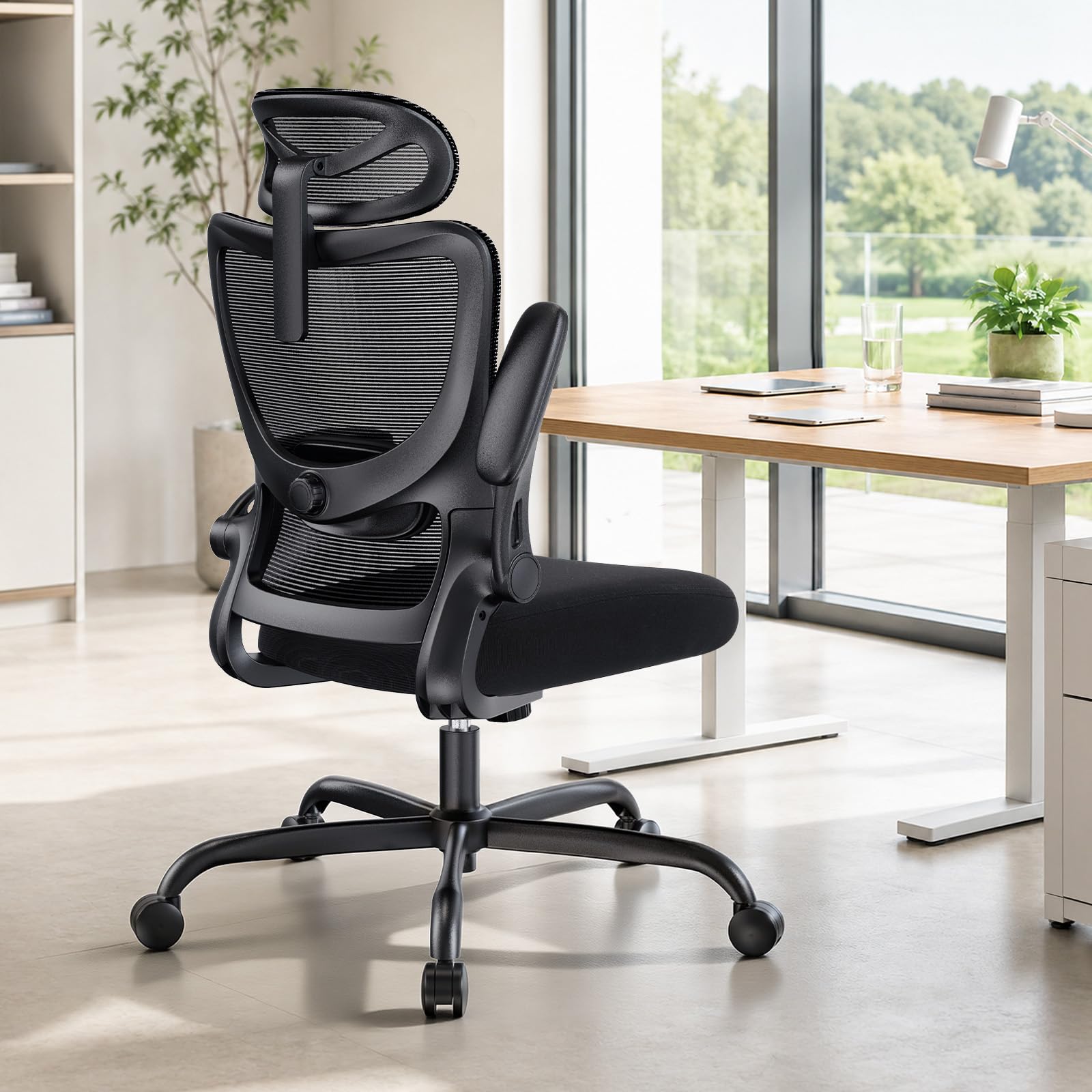
A headrest and a lumbar pad that both move — a rare pair.
Two adjustments separate this chair from most of the list. First, the headrest is 2D adjustable, so it tilts and lifts to meet your neck. Second, the lumbar support shifts 1.18 inches forward and back plus 2.16 inches up and down, which lets you plant it exactly at the curve of your lower back. Add 3D armrests that travel 1.96 inches in depth, swivel 15°, and flip up 90°, and you have a chair built to be re-fitted every time you switch tasks.
The seat cushion measures 3.14 inches of high-density foam, and the weight capacity reaches 300 lbs. The mesh back keeps air moving, and the whole chair is SGS-certified. The reach of those 3D arms is the detail buyers notice — you can drop your elbow right onto the pad while typing and swing the arm clear when you get up.
Size and value dominate the feedback, with the neck and lumbar support both earning praise and assembly described as user-friendly. The one honest wobble is stability and cushioning, which split verdicts — a handful of owners found the seat softer than they hoped for long stints. If you want a firm, deep cushion, try this one in person first or plan on a cushion topper.
What clicks: headrest, lumbar pad, and 3D arms all move, so this is the most re-settable chair below the premium tier.
Worth knowing: the seat runs soft, and a few buyers want more firmness under them by mid-afternoon.
Best for neck-focused sitting: if your neck takes the strain instead of your low back, the 2D headrest earns its keep.
Consider a topper if: you want a dense seat rather than a cushioned one.
5. Staples Kroy Ergonomic Mesh Task Chair
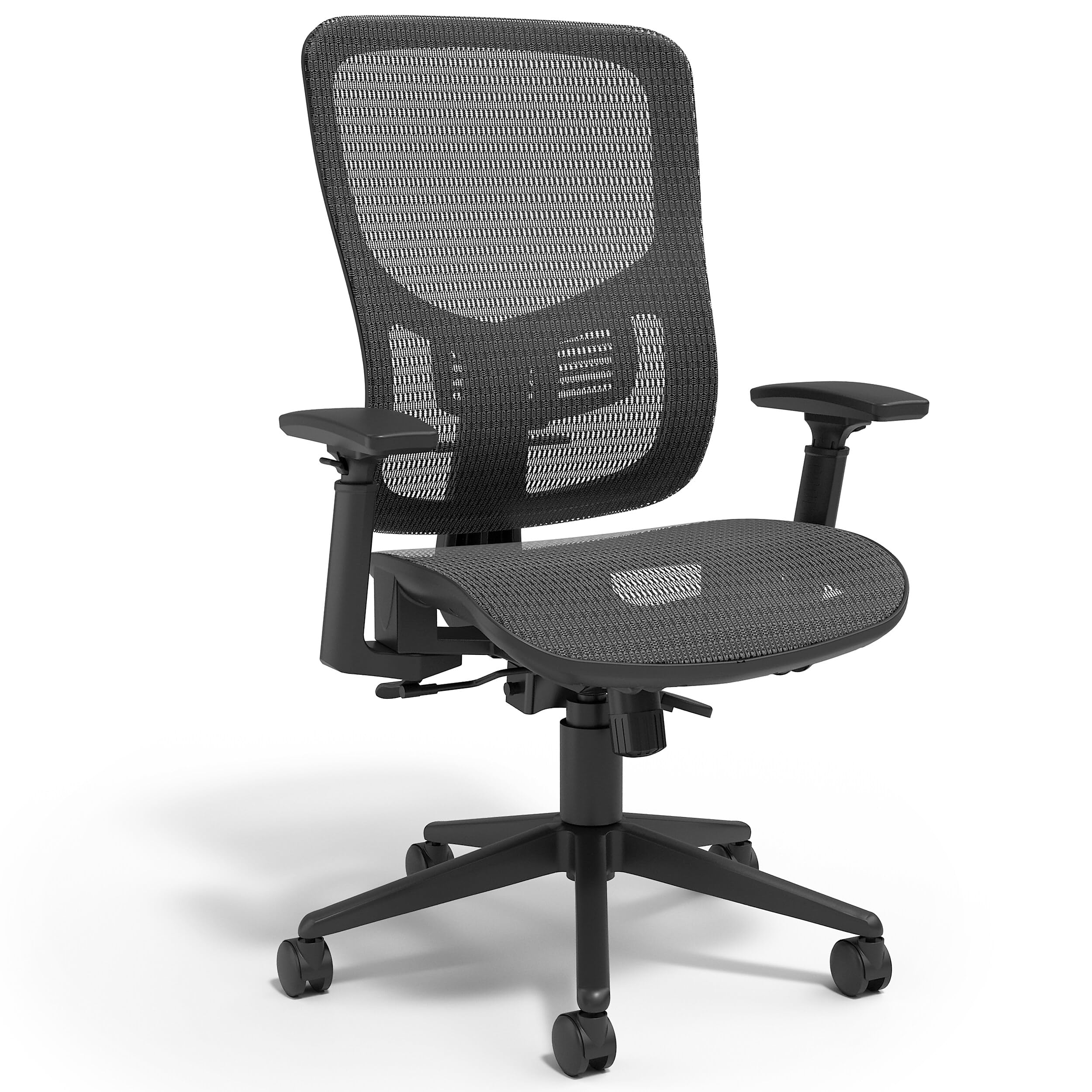
The task chair that climbs high enough for a standing-desk converter.
Seat height tops out at 22.76 inches, the tallest reach on this list — so this is the chair that pairs with a raised desk or a tall stool-height counter. The seat itself is 19.59 inches wide and 16.54 inches deep. The backrest, at 27.9 inches, is the widest here, and the mesh runs across both the seat and the back so air moves under you as well as behind you.
Recline is handled with a swivel-tilt mechanism, adjustable tension, and a tilt lock — you can lock it upright for focused typing or dial the resistance down for a leaning break. The lumbar support adjusts vertically and the arms adjust in height. The whole chair carries a 275-lb limit and a 5-year limited warranty, the longest warranty coverage on the list.
Comfort and assembly are the two themes that come through — owners describe sitting in it all day without complaint, and the adjustable height and arms get called out as easy to work with. The honest concern in the feedback is a handful of units that came apart early in their life. That does not make the chair poor; it means inspect the joints during your first few days and use that warranty if anything wobbles.
Where the Kroy wins
- 22.76-inch max seat height — the tallest desk reach here
- 27.9-inch backrest, the widest on this page
- Full mesh seat and back for airflow from both sides
- 5-year limited warranty, the longest on the list
Watch these
- 275-lb capacity sits below the 300–330-lb chairs here
- A small number of units came apart early — check the joints on arrival
The fit for tall desks: if your work surface sits high, this seat reaches it.
Lighter-duty note: the 275-lb limit lands under the heavy-duty chairs, so check your weight against it.
6. YFO Home Office Desk Chair, Brown Leather

An armless option built for tucking one leg up while you work.
You can install the arms or leave them off — take them off and the seat turns into a cross-legged perch, which almost no other chair here allows. The seat measures 22 inches wide and 20 inches deep, and the leather upholstery covers a spring-packed cushion sitting over a wooden board. That leather-over-spring-cushion build runs soft rather than firm, so it suits lounging more than firm all-day support.
Underneath, the casters are rubber and roll across wood floors, carpet, and marble — owners describe the glide as smooth as roller blades. The backrest is 15.8 inches across, which is narrow, so read that as a lean-back chair rather than a shoulder-wrapping one. The frame is iron, and the whole thing leans toward the executive-chair look rather than the ergonomic mesh crowd.
Owners rave about the look and the roll — the wheels are the recurring delight, and the cushion comes in for real praise as plush rather than flat. Where it splits is seat width and lumbar: the generous cushion reads as too wide for some, and the back support is not as pronounced as a dedicated lumbar track. If you want a plush leather chair for cross-legged sitting and can accept lighter lumbar support, this is the pick.
Where it shines: an armless setup, a soft spring cushion, and rubber casters that move quietly across mixed floors — a warm, cozy chair, not a clinical one.
The honest gap: back support is lighter than the mesh ergonomic chairs, and the 15.8-inch backrest is narrow, so this is not the chair for a broad-shouldered sloucher.
Best for lounging work: pick this if you sit cross-legged and want cushioning over rigidity.
Not for serious lumbar needs: the back support here is modest, so look at the MOLENTS or SIHOO if your low back is the problem.
7. SIHOO M57 Ergonomic Office Chair
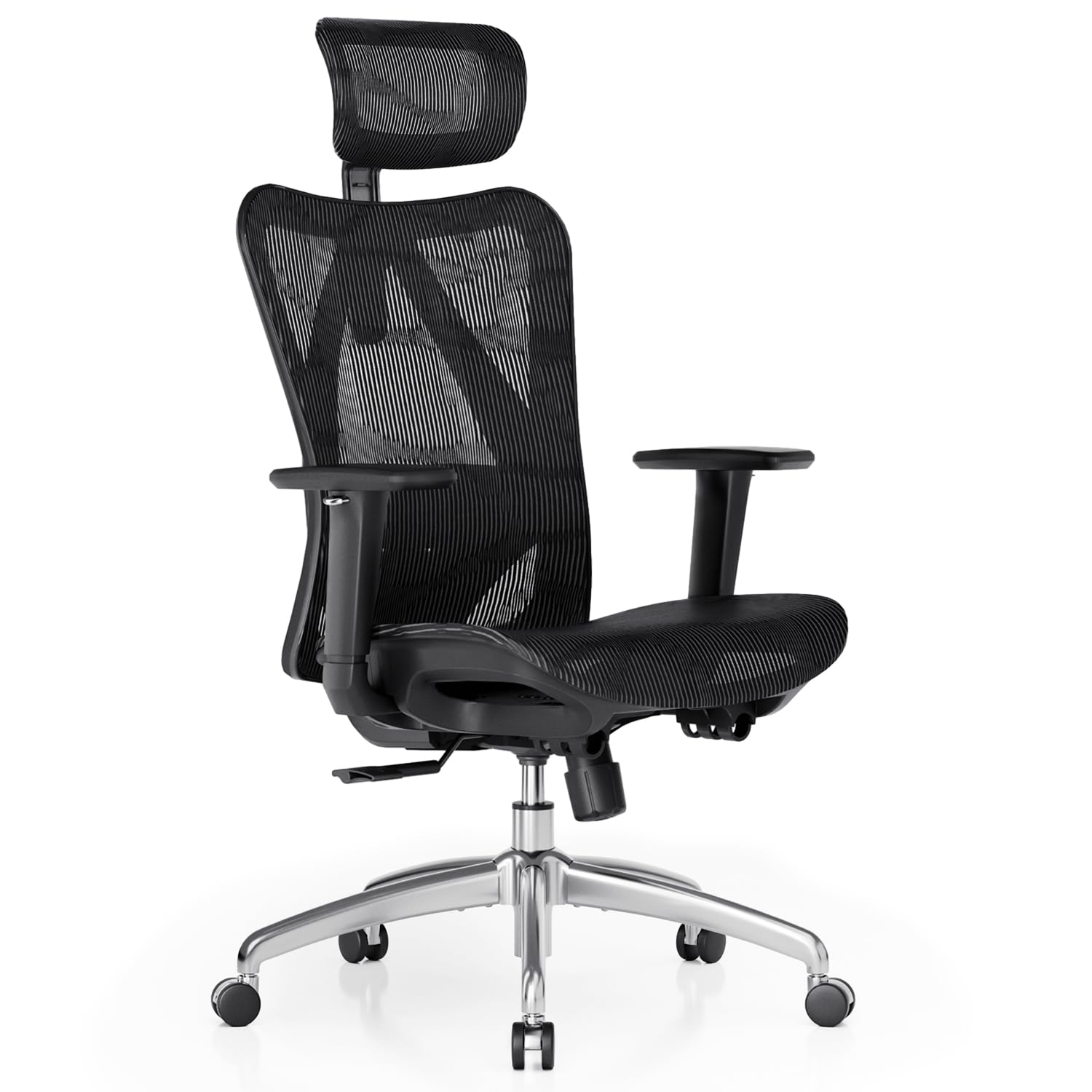
The heaviest-duty chair on this list, with the tallest weight limit.
330 lbs is the highest weight figure on this page, and it sits on a reinforced aluminum base with a dual-frame backrest — that frame is why the number is higher than the 300-lb chairs close by. Recline travels from 90° to 126°, the widest range below the GABRYLLY, and the headrest tilts and lifts while the lumbar support moves in height and depth. The backrest is 20.07 inches wide.
The backrest is split rather than one flat panel, so it cushions along the spine instead of pushing a single ridge into it. The seat has a waterfall front edge, which keeps the lip off the backs of your legs and helps circulation over a long day. The casters are built to roll quiet and avoid scratching, and a 3-year warranty with 30-day returns covers the whole thing.
The build quality and adjustability are the two things buyers keep returning to — the chair adapts without fuss, and the headrest and lumbar are easy to set before you settle in. The honest note is stability: a slice of the feedback reports a wobble, and a smaller group mentions the back support not suiting them. It is still a widely owned chair with a strong overall read, but if you need rock-solid footing, check it on arrival.
What owners praise most: the amount of adjustment for the money — headrest, lumbar in two directions, and a recline that goes to 126°.
Worth knowing: a few owners describe a wobble, and back support is a personal fit rather than a universal win.
Pick it if: you want the highest weight rating here and a recline that reaches 126°.
Look at the Kroy if: a 5-year warranty matters more to you than the 330-lb rating.
8. GABRYLLY Ergonomic Office Chair with Footrest
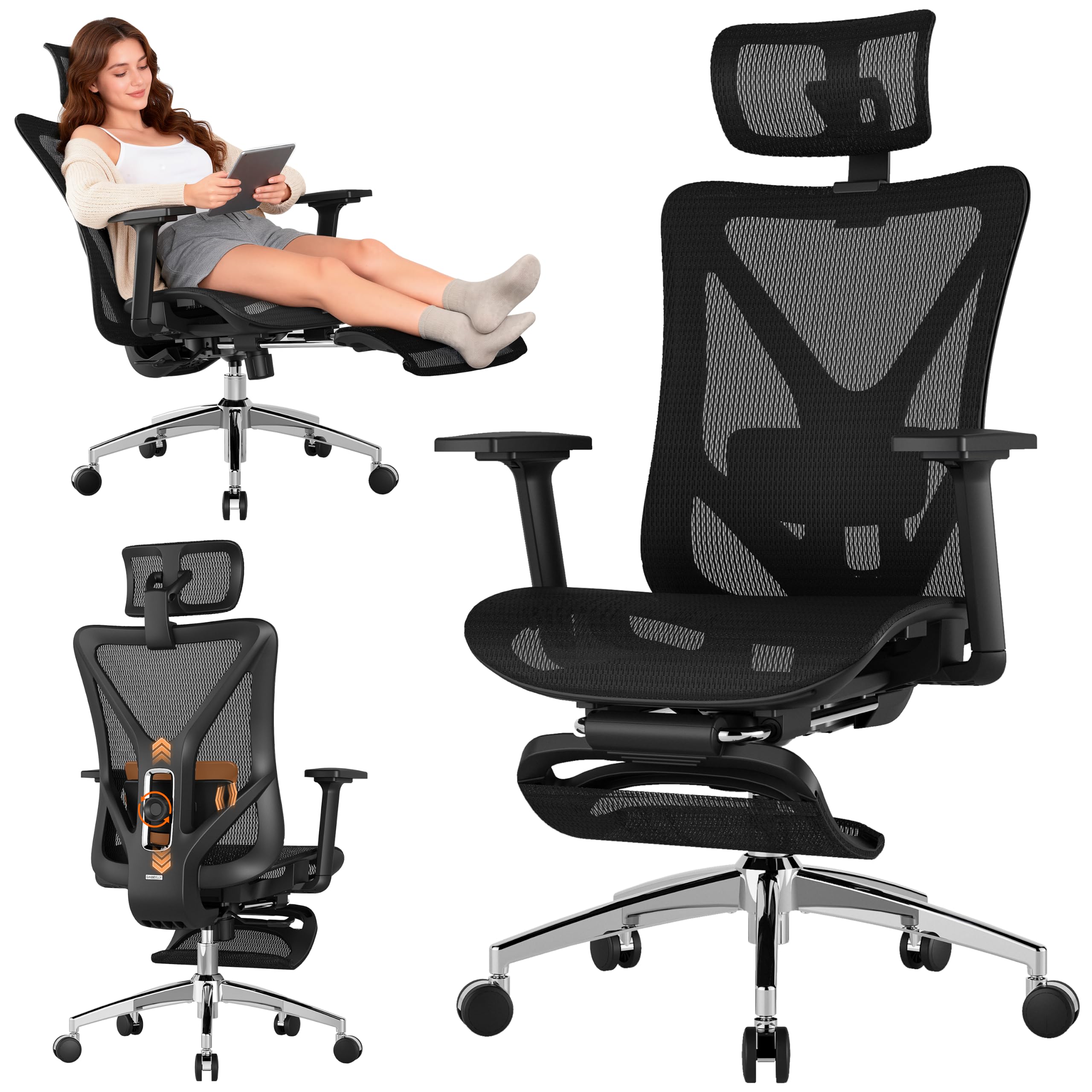
The chair that turns your workspace into a nap station at 135 degrees.
Three recline positions — 90°, 110°, and 135° — and a steel footrest that extends up to 18.1 inches. That combination is why this chair can double as a break lounger: lock it at 135°, pull out the footrest, and lean back with your legs supported. The 27.5-inch-diameter base keeps it stable even at full recline, which is the part that matters when the footrest is out.
The lumbar pad moves 3 inches vertically and 1.6 inches horizontally, the arms are 3D adjustable in height, depth, and width, and the headrest has three adjustment points for height, angle, and bracket. The whole chair carries a 300-lb limit, is tested by SGS and BIFMA, and assembles in 15 to 25 minutes with the included Allen wrench and screw kit. It is sized for users between 5’3″ and 6′ tall.
Size and comfort are what buyers focus on — the mesh is described as tight, the seat roomy, and assembly as unusually clear. The wheels are the honest weak spot: a slice of buyers report they do not glide smoothly across the floor. If your floor is a hard surface and you move around a lot, plan on swapping the casters or living with a bit more drag than you would like.
Where this one stands out
- 135° recline with a lock — a real napping angle
- 18.1-inch retractable footrest with a 27.5-inch base to steady it
- 3D arms plus a headrest with three adjustment points
- Sized for users between 5’3″ and 6′ tall
The trade-offs
- The casters do not glide smoothly for every buyer
- Above 6′ tall, the built-in height sizing runs short
The chair for a five-minute reset: the footrest and 135° recline let you break up a hard afternoon without leaving the desk.
Check the floor: if you have hard flooring and roll a lot, expect the stock casters to drag.
9. COLAMY Ergonomic Office Chair with Sliding Seat
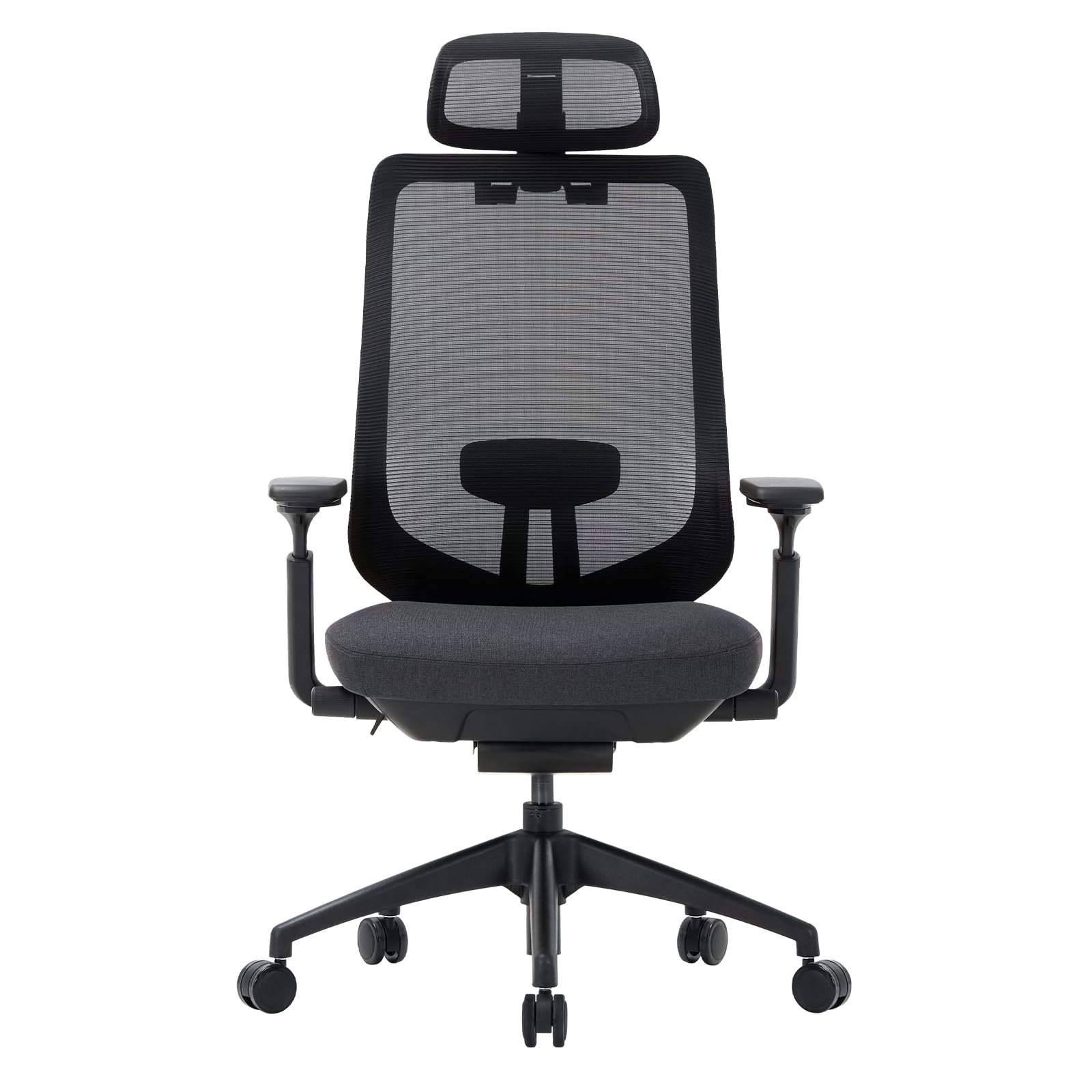
The seat slides to your leg length — short legs do not have to tolerate a deep cushion.
A knob on the left side of the cushion slides it forward and back between 15.75 and 17.72 inches. That range is the difference between the seat edge digging into the back of your knees and it stopping where your legs actually end. The cushion itself is 3.54 inches thick and 20.47 inches wide, and the seat height runs from 16.73 to 21.06 inches — one of the lowest starting points here.
Arms move in height, slide forward and back, pivot side to side, and rotate — four directions, which is why they earn the 4D label. The lumbar support climbs a vertical track, the headrest lifts and tilts on a ratchet, and the backrest locks with a tension dial so you can match the recline to your size. Underneath it all is an aluminum alloy five-star base rated to 300 lbs, tested to ANSI/BIFMA X5.1 standards for 136 kg seat impact, 120,000 swivel cycles, and 300,000 recline cycles.
The build and the comfort both read well in the feedback — owners describe sitting for hours without an issue, and the Korean mesh back gets credit for airflow. Where it splits is lumber support and sturdiness: some owners find they feel tilted forward, and a share of the durability feedback mentions wear under regular use. Six-step assembly with the included Allen key keeps setup simple.
The standout: a seat that slides 15.75 to 17.72 inches in depth, which lets you tune thigh support instead of accepting a fixed position.
The catch: lumbar positioning and long-term wear are the two areas with split feedback — set the backrest angle carefully on day one.
The precise-fit pick: buy this if your leg length is unusual or the seat edge on other chairs always bites.
Give it a shake-down: the lumbar and durability feedback is mixed, so test the fit during your first week.
10. HON Ignition 2.0 Ergonomic Office Chair
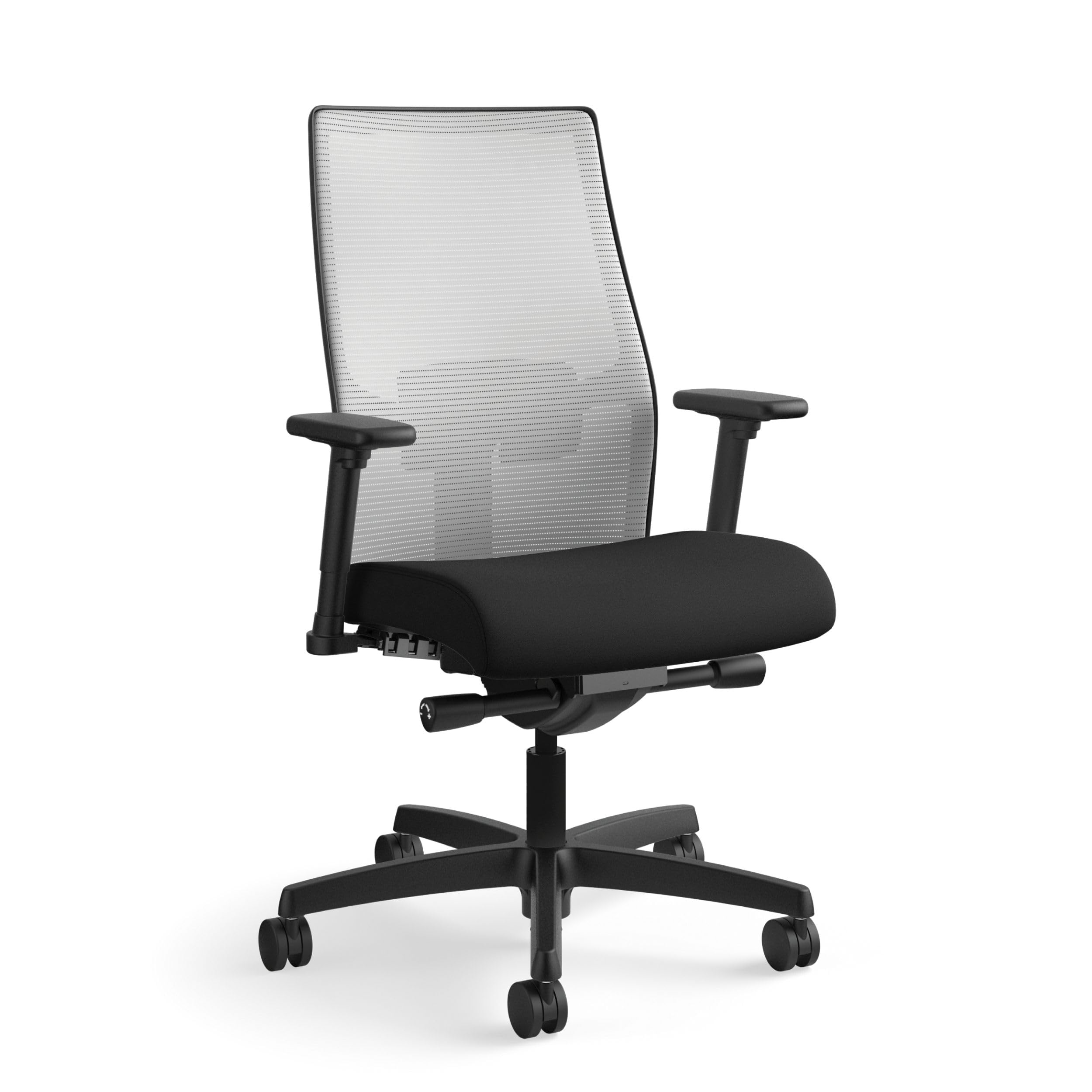
A mid-back mesh office chair built for a full warranty, not a spec-sheet duel.
This chair wins on a different axis than the rest of the list. The HON Full Warranty is the headline, and the build is a mid-back mesh design with a 19-inch backrest, meaning the mesh stops below your shoulders rather than wrapping them. The arms adjust in height and width, and the tilt mechanism moves with you rather than locking flat. There is no lumbar track or 3D arm — this is a workplace chair, not a tuner’s chair.
For a work-from-home setup or a small office, that simplicity has an upside: fewer moving parts and fewer things to fidget with when you sit down. The mesh back keeps air moving, the swivel rolls freely, and the fog mesh back color sits neutrally in any room. It is also the chair that behaves like a piece of office furniture rather than a gaming throne.
Quality and comfort earn real praise, especially for long hours at the desk, and the adjustability lands where it matters for height and arms. The honest split is assembly — wheel installation trips some buyers up — and stability, with some describing wobbly parts.
What earns its place: the HON Full Warranty and height-plus-width arms, a combination built for a working office rather than a spec contest.
Rearview: mid-back only, no lumbar track, and wheel installation can frustrate — this is a chair for someone who wants less adjustment, not more.
Buy it for the backing: the full warranty and simple mid-back mesh suit a home office that needs a dependable seat.
Pass if you want deep tuning: there is no lumbar track here, so a lumbar-focused chair will serve your back better.
11. Branch Ergonomic Chair Pro
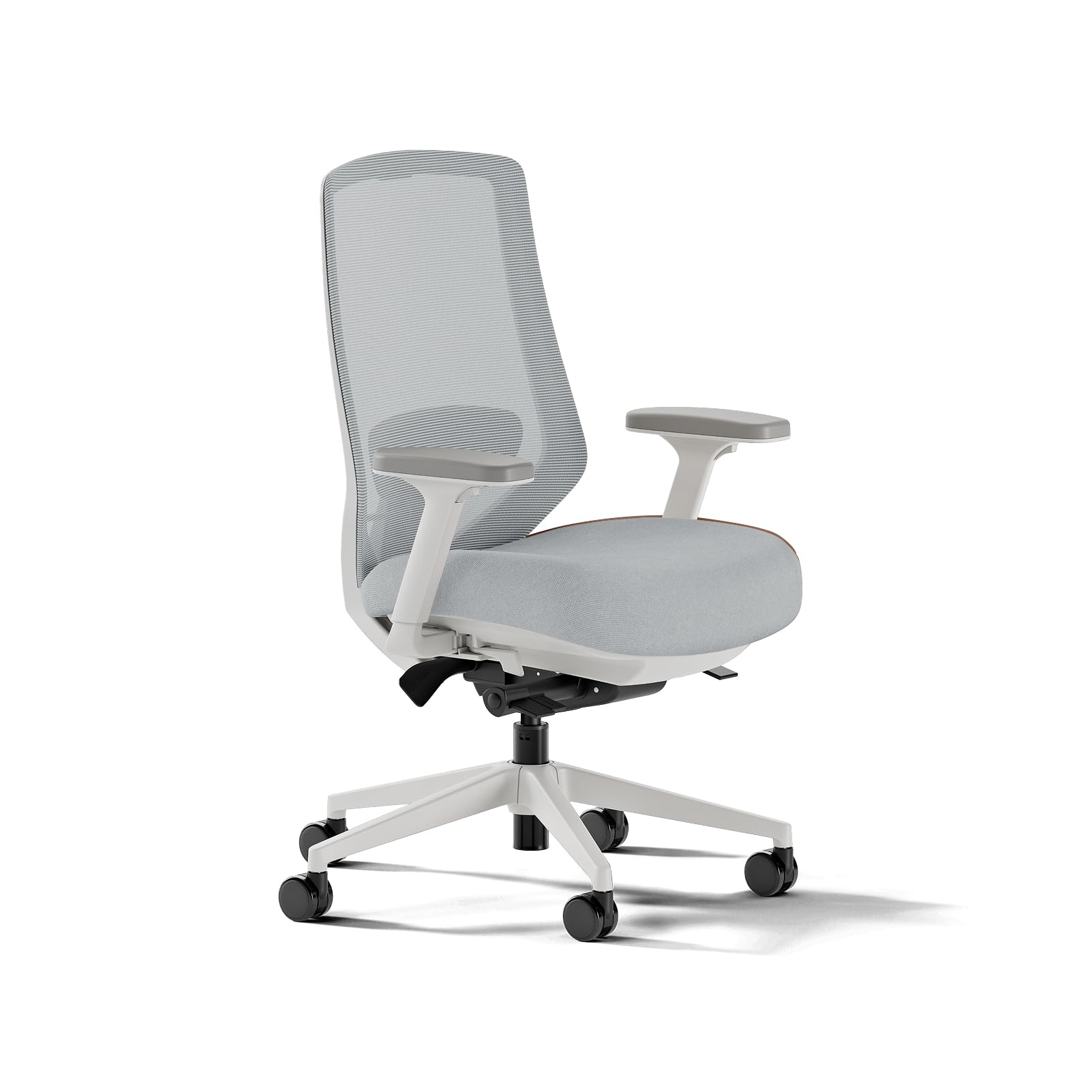
Fourteen knobs and pads to set, if you want to dial a chair to your body exactly.
Fourteen points of adjustment is the pitch, and the arms account for a big share: the 5D armrests move in height, width, depth, pivot, and pad position — the most arm travel on this page. The lumbar cushion adjusts vertically in two directions, and the molded high-density foam seat distributes weight evenly instead of packing down into one hard spot. Everything sits on an aluminum frame, 27 inches deep and 29.3 inches wide.
The tilt runs smooth tension, plus a forward-tilt seat cushion that supports the active-sitting posture — leaning in toward the keyboard without hunching. That forward tilt is a genuinely different feature from the recline-and-nap chairs; it is built for keyboard work and quick posture shifts rather than lunchtime lounging. The whole chair is solid-back rather than mesh, with a tall back and molded padding.
The build and the adjustability are what owners respond to, and the chair’s look earns its own share of credit — one pick that suits a home office without shouting about it. The honest limit is the arms: 5D travel means five ways to second-guess whether you have the pad right. If you would rather not tune a chair, a fixed-arm model like the Youhauchair is simpler, but for anyone who wants the fit exact, this is the last stop on the list.
Why the adjustability matters
- 14 adjustment points, the most on this page
- 5D arms move in height, width, depth, pivot, and pad position
- Forward tilt seat supports active posture during keyboard work
- Aluminum frame with high-density molded foam
What to weigh
- Five arm axes means a longer setup before the chair feels right
- Solid back rather than mesh, so less airflow than the mesh picks
For the tinkerer: if you will spend an hour getting the arms and lumbar exactly right, the 14 adjustment points pay off.
Not for a quick setup: if you want a chair that feels right on day one, this one asks more of you first.
Know the Specs
Lumbar support adjustment
This is the pad that sits into the curve of your lower back. A fixed pad fits one body; a moving pad lets you raise it to where your spine curves and push it in to the depth your back wants. The MOLENTS adjusts up-down and forward-back, the HUANUO moves 1.18 inches forward and 2.16 inches up and down, and the GABRYLLY moves 3 inches vertically and 1.6 inches horizontally. The more travel, the more body types it can fit — that is why it is the first feature to check if your back is the reason you are shopping.
Seat depth and seat height
Seat depth is how far the cushion runs front to back. Too deep and the front edge presses into the backs of your knees; too shallow and your thighs hang unsupported. The COLAMY slides between 15.75 and 17.72 inches, which lets you tune that edge. Seat height is how tall the chair sits, and it needs to match your desk: the Staples Kroy reaches 22.76 inches, while the COLAMY starts as low as 16.73 inches. Measure your own leg length and desk height before you buy either.
Armrest types (1D to 5D)
The number tells you how many directions the pad moves. 1D is height only — the Staples Kroy arms work this way. 3D adds forward-back and side-to-side, which is what the HUANUO and MOLENTS offer. 4D adds pivot or rotation, which the COLAMY has. 5D adds pad position, which the Branch uses. More axes mean a snugger elbow fit while you type, but also more to set up. Fixed or flip-up arms are the simple option when you mostly want the chair to tuck away.
Recline range and tilt lock
Recline is the angle the backrest leans back to, measured in degrees from upright. The MOLENTS runs 90° to 120°, the SIHOO goes to 126°, and the GABRYLLY reaches 135° with a footrest. A tilt lock holds the chair at your chosen angle so it does not drift while you work; without a locksit upright, the recline moves with you. Tension dials let you match the resistance to your body weight — heavier users need more tension to hold an angle.
Common Questions
How do I know which seat height works for my desk?
What is the difference between 3D and 4D armrests on an office chair?
Will a footrest chair work as my only office chair?
How much weight can a mesh office chair hold?
Do I need a headrest on a work desk chair?
What is a sliding seat depth and why does it matter?
How long does assembly take on these chairs?
Is mesh better than leather for a home office chair?
Will flip-up armrests be strong enough for daily use?
Can I swap out the casters if they roll badly?
The Bottom Line
The work desk chair that earns the top spot is the MOLENTS Ergonomic Office Chair because it puts two-way lumbar support and 3D armrests on a chair most people can actually fit — and it carries the strongest owner satisfaction on the list at 4.5+ stars. If the backrest is where you want extra room, the FelixKing gives you a 25.6-inch back, the widest here. And if you want a chair that reclines to 135° with a footrest for real breaks, the GABRYLLY is the one to reach for.
Two more worth naming. The SIHOO M57 beats every other chair here on weight capacity at 330 lbs, and the COLAMY leads on seat adjustability with a cushion that slides 15.75 to 17.72 inches. Match the spec that matters most to the body part that bothers you: 330 lbs for weight, 15.75–17.72 inches of seat depth for leg fit, 135° for reclining.
How we choose
We do not accept paid placement. Every pick is matched to a real buyer and a real use-case; we do not hands-on test units.
Sources
Specifications: manufacturer listings and product documentation. Review insights: verified customer reviews, as of November 2026. Pricing: not shown on this page (it changes often); check the current price via the retailer link.
As an Amazon Associate, Tactical Gear Guy earns from qualifying purchases. This does not affect which products we feature.