Specs are compiled from manufacturer listings and verified buyer reviews and can change over time — please confirm the key details on the product page before buying.
You want a bin that turns kitchen scraps into usable compost without drowning your worms or leaving you scooping sludge out of a tray. The short answer: buy on drainage, airflow, and how easy the trays are to empty. Those three things separate a worm farm that runs quietly for years from one that turns into a smelly science experiment by week three. Below you get the real differences between seven kits – capacity in liters, tray count, what tools ship in the box, and the trade-offs owners run into.
This guide is built by comparing the manufacturers’ published specifications and the patterns across verified customer reviews, so you get each pick’s real strengths and trade-offs instead of marketing spin.
Worms die from bad conditions, not bad intentions, so the specs that matter are airflow, drainage, and tray access. This guide breaks down the best worm farm kit by matching each bin to the space and volume you actually have to work with.
Top Picks
How To Choose The Best Worm Farm Kit
A worm farm kit is a stacked bin system where composting worms eat food scraps and leave behind castings – a crumbly, nutrient-dense material you dig into your garden soil. The bin itself does three jobs: hold the bedding, breathe, and drain. Get those wrong and your worms climb the walls or drown. Get them right and the bin mostly runs itself.
Capacity and tray count decide how often you feed
Capacity is listed in liters or gallons, and it tells you how much scrap volume the system can work through before it fills. A two-tray bin is a starter size; a five-tray stack lets you add fresh waste up top while the lower trays finish, so you harvest without stopping the whole farm. If you cook at home most nights, more trays means fewer interruptions.
Drainage is the difference between compost and soup
Worm bedding has to stay damp like a wrung-out sponge, not wet. A liquid collection tray at the base catches the runoff – called worm tea – so it does not pool under the bedding and suffocate your colony. Look for a spigot or a lift-out tray, because pouring tea out of a full bin is nobody’s idea of a good afternoon. A worm-saver tray above the liquid catches strays before they drop in.
Airflow and odor control
Ventilation slits or molded aeration points let oxygen reach the bedding, which keeps the breakdown aerobic and the smell down. A sealed, airless bin goes anaerobic fast, and that is where the rotten smell comes from. Tray-based systems with side vents or airflow channels are the ones that can live indoors without you regretting it.
What comes in the box
Some kits are just trays and a lid. Others ship gloves, a shovel, a turning fork, a soil meter, coco-coir bedding, and a fabric cover. None of them include live worms – you buy those separately – so factor that into your planning. The extras matter most for a first-time keeper, since bedding and a moisture meter are the two things beginners underestimate.
Side-by-Side Comparison
| Model | Best For | Capacity | Trays | Material | Amazon |
|---|---|---|---|---|---|
| Original Vermihut 5★ Best Overall | Most households | 50 liters | 5 | HDPE | Amazon |
| VIVOSUN 5-LayerMost Complete Kit | Small kitchens and balconies | 50 liters | 5 | PP plastic | Amazon |
| Blütezeit 3-Tray | Beginners and kids | 7.93 gallons | 3 | PP plastic | Amazon |
| FCMP Essential Living | Year-round indoor use | 8 gallons | 2 | Recycled polypropylene | Amazon |
| TOP XIAN 100L | High-volume scrap households | 100 liters | 5 | PP plastic | Amazon |
| Maze Worm Farm | Balconies and small patios | — | 2 | Recycled material | Amazon |
| Urban Worm Bag V2 | Big batches, easy harvest | 150.75 liters | Continuous flow bag | 900D oxford fabric | Amazon |
Detailed Reviews
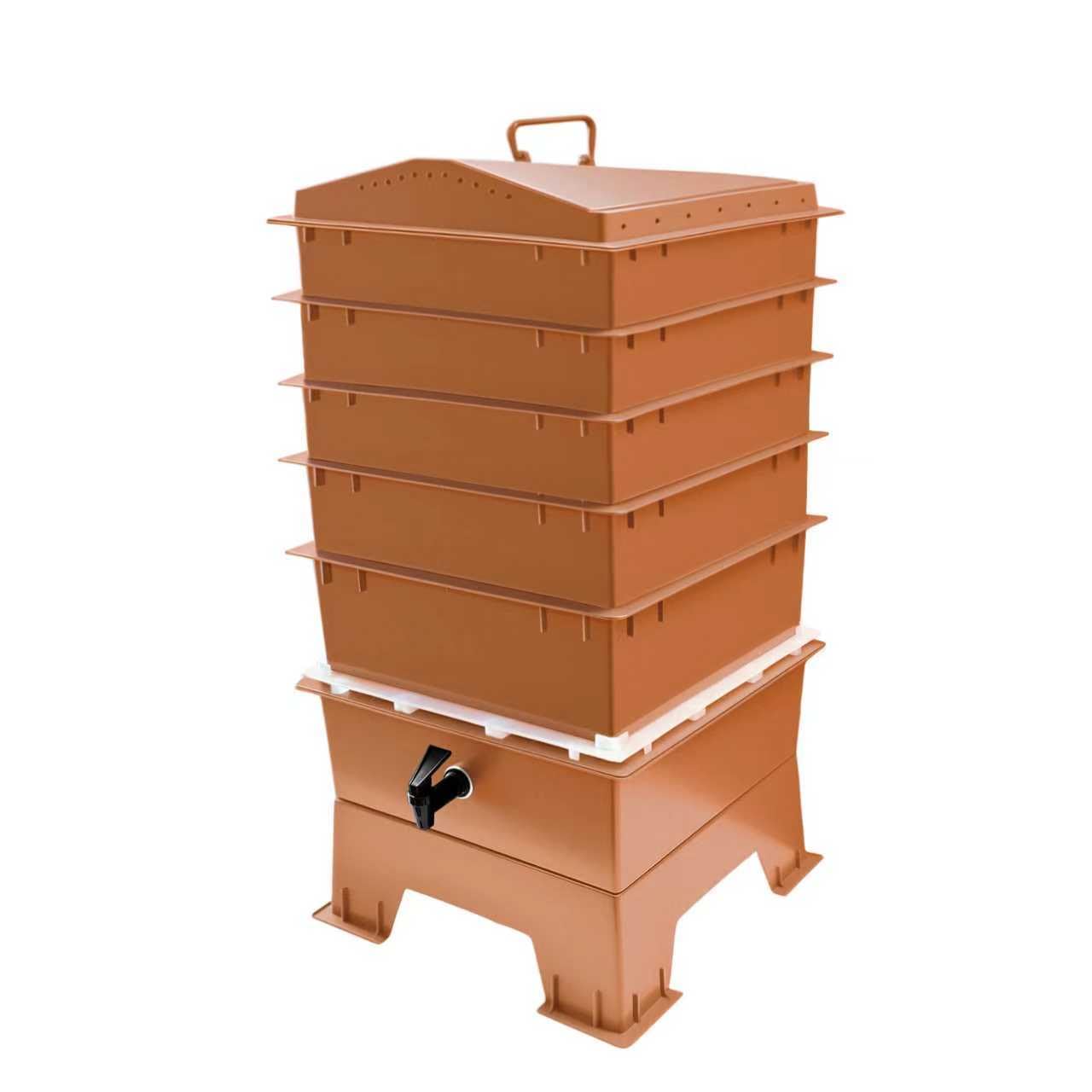
1. Original Vermihut 5 Tray Worm Composter
Our pick — 4.5+★ from 800+ verified ratings; the strongest balance of quality and price.
Five trays, a worm-saver floor, and a footprint small enough to tuck beside the fridge.
Here is the number that decides it for most people: 50 liters across 5 trays. That stack means you add scraps to the top tray while the bottom trays finish curing, so you never have to pause the whole farm to harvest. The worm-saver tray sits above the liquid reservoir and catches worms before they tumble down into the tea – a small design detail that saves you from fishing casualties out of a puddle.
The build is high density polyethylene (HDPE), a thick food-grade plastic that resists cracking and cleans up with a rinse. Footprint is 16 inches by 16 inches at the base, so it fits a corner of a kitchen or a balcony without eating the whole space. Airflow control is adjustable, which is the part that matters: worm colonies crash in still, soggy bins, and this one lets you dial the vents to keep the bedding right. Owners consistently report thriving colonies and steady casting output, which is why this kit holds the top spot.
Colony health is the single most-praised strength in owner reviews, ahead of every other trait by a wide margin. Assembly is the close second – the trays stack and go. Two things to know before you commit. The instructions get mixed reactions, so watch a setup video rather than relying on the paper alone. And a few owners find the trays snugger than expected once they are loaded, so do not overfill before stacking.
Where It Earns The Top Slot
- 50 liters across 5 trays means continuous feeding with no shutdown for harvest
- Worm saver tray keeps the colony out of the liquid reservoir
- Adjustable airflow lets you correct a damp bin before the worms suffer
- 16″ x 16″ base footprint suits a kitchen corner or balcony
What To Plan Around
- Printed instructions are thin, so budget ten minutes to find a walkthrough
- Loaded trays can feel tight to seat – leave headroom before stacking
The verdict: The default pick for a normal household that wants steady castings and a bin that behaves indoors.
Reconsider if: you want the absolute largest scrap volume, in which case the fabric bag further down handles far more.
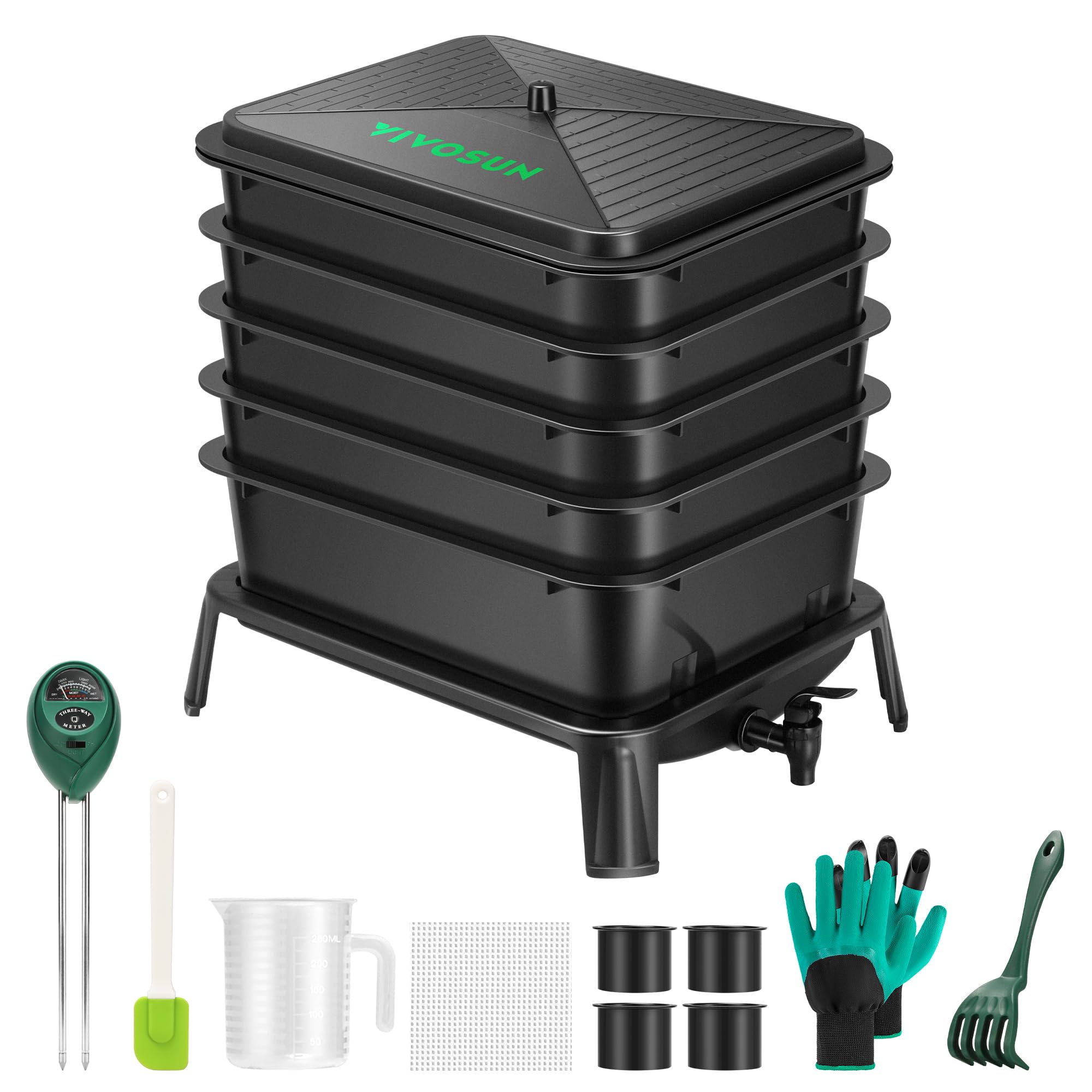
2. VIVOSUN 5-Layer Worm Compost Bin
The only bin here that hands you gloves, a scraper, and a soil meter in the same box.
Set it up in about five minutes – that is the maker’s stated assembly time, and the five-layer stack is why it goes together so quickly. The base tray carries a spigot, so you open a tap to draw off worm tea instead of lifting a full reservoir. That one part is what keeps a 50-liter tower from becoming a two-person job at harvest.
It is a tall, narrow tower at 12.3 inches by 13.18 inches at the base, rising to 23.54 inches. That is a genuinely small floor footprint for 50 liters of capacity, which is why it slots into balconies and tight kitchen corners. Weighing in at 3.4 kg, it is the sort of thing you can move alone when it needs a new spot. Compared with the Vermihut above, you give up some width but gain the spigot and a much fuller accessory set.
The trade-off is pests. Ventilation slits are what keep the bedding aerated, and they are also the openings fruit flies find. Expect to bury food scraps properly and keep the fabric cover in place, or you will be swatting. Size also splits opinion – the footprint is compact by design, but a few buyers expected more bulk for the listed capacity. If you want a starter kit that arrives ready to run, this is the one.
What ships in the box: four anti-slip foot pads, a 250ml measuring cup, a soil meter, a rack, a rubber scraper, a piece of non-woven fabric, and a pair of gloves. For a first worm farm, the fabric cover and the soil meter alone save you from buying twice.
Reach for this if: you want everything in one delivery and a tap instead of a lift-out tray.
Look elsewhere if: fruit flies would drive you mad – a sealed bag design further down sidesteps that entirely.
3. Blütezeit 3-Tray Worm Composter

Bedding, tools, and a moisture meter arrive together – the least stressful first week you can buy.
Most worm farm kits leave you to source bedding separately. This one includes a coco-coir brick, which you soak and fluff into the tray as the worms’ starting home. It also ships a soil meter that reads moisture, pH, and light, so you are not guessing whether the bedding is too wet. For someone who has never kept worms, that meter is the difference between a colony that settles in and one that bails out overnight.
Capacity lands at 7.93 gallons across 3 trays. That is roughly on par with the FCMP bin below at 8 gallons, so neither wins on volume – the split is trays versus construction. Three trays here against two there, and the modular PP (polypropylene) design lets you add trays later as your scrap output grows. Dimensions come in at 16.14 inches long, 12.6 inches wide, and 13.78 inches tall, which is short enough to sit under a counter lip.
Owners rate it highest for worm-friendliness, with beginner suitability a close second. Sturdiness and functionality both draw praise. What to weigh up: the size draws mixed views, with some finding it smaller than the listed capacity suggests, so measure your scrap bin before you commit. Also note the worms are not included – you source those yourself.
Included
Turning fork, shovel, soil meter, non-woven fabric, coco-coir brick, four anti-slip feet, and a 250ml cup.
Not Included
Live composting worms. Budget for those separately, and let the bedding soak before they arrive.
Pick this for: a first bin where you want the learning curve flattened by included tools and bedding.
Weigh the size: the capacity is real but compact, so heavy scrap producers will outgrow it faster than a five-tray stack.
4. FCMP Outdoor Essential Living Composter
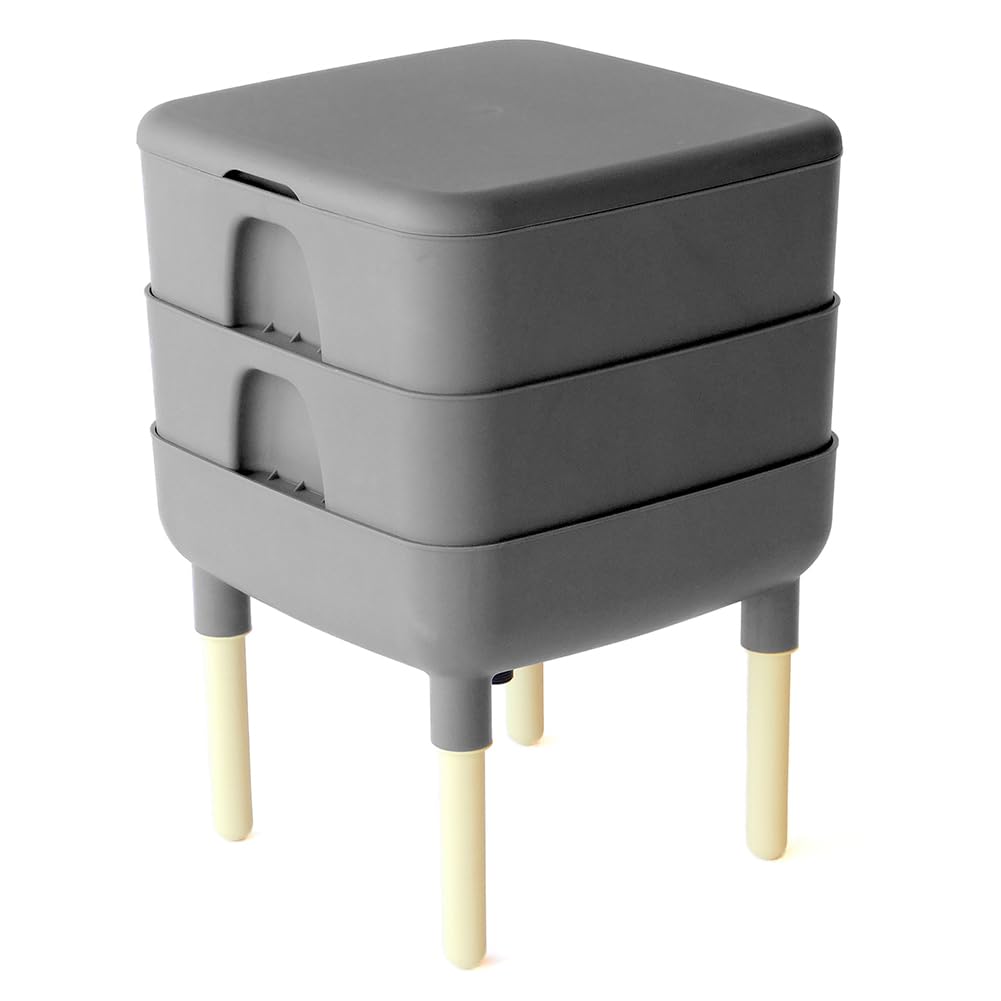
Two trays with real engineering inside – moisture channels and tunnels built into the mold.
Look inside the trays and you find 52 angled migration tunnels extending down from the base of each one. Those are the openings worms use to move between trays as food runs out below, so the colony follows the food instead of sitting stranded. Around the outside of each tray runs a moisture control water retention channel, which collects water and keeps the bedding at the edges from drying out. Anyone who has watched a worm bin turn crusty at the borders will recognize why that matters.
Molded aeration support points on the tray sides allow 360-degree airflow. The reservoir base collects worm tea, and the maker’s guidance is to mix one part tea with one part water for a liquid fertilizer. Capacity is 8 gallons over 2 trays – practically level with the Blütezeit at 7.93 gallons, so the decision is structure, not volume. This bin is the more cleverly molded of the two; the Blütezeit gives you an extra tray and more accessories.
It is made in Canada from BPA-free, UV-inhibited recycled polypropylene, which means it tolerates sun exposure better than untreated plastic and can sit on a balcony. Setup is straightforward and owners rate it well for sturdiness. The honest catch: at 2 trays, you fill it faster than a 5-tray stack, and the design is built for a steady modest feed rather than bulk scraps. A one-year limited replacement warranty against manufacturing defects covers you on the plastic.
The clever part: the moisture channel and the 360-degree aeration points do the work that most bins leave to you and a spray bottle.
The honest limit: two trays means more frequent harvesting than a five-tray system.
Suits you if: the bin lives inside year-round and you want molded ventilation rather than cut slits.
Not your bin if: you generate scraps daily and want stack depth to absorb the volume.
5. TOP XIAN 5-Tray 100L Worm Composter
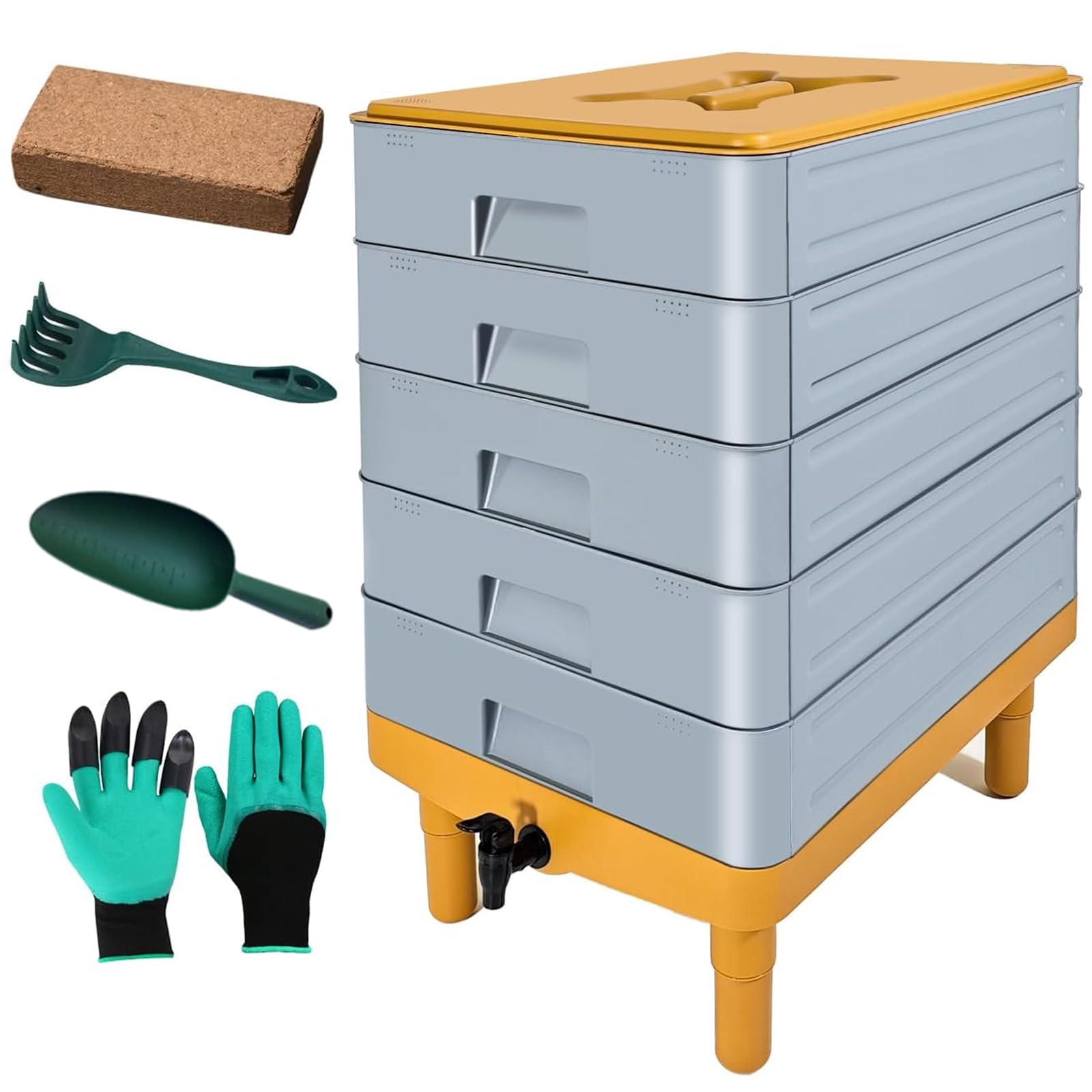
100 liters of capacity versus the standard 50-liter kits, with a faucet on the front.
For scrap volume, this is the outlier: 100 liters across 5 re-usable trays. The Vermihut and the VIVOSUN both hold 50 liters, against 100 liters here. If you cook most nights and have a garden to feed, that headroom means you stop rationing what goes in the bin. A faucet on the unit lets fertilizer flow straight out instead of you lifting a reservoir.
The size brings weight and footprint with it. At 6.33 kg it is heavier than the VIVOSUN’s 3.4 kg, which tells you how much more plastic is in the stack – expect to place it once and leave it. Base dimensions are 20 inches by 15 inches and it stands 26 inches tall, so clear real floor or balcony space before ordering. The closed design keeps odors contained while vents let oxygen in, which is the combination that lets a bin this size run in a small space.
Buyers praise overall quality first and worm compatibility second, since the trays keep the colony contained. Build quality, though, draws mixed feedback, and assembly is the most-discussed point of all: the trays may arrive needing to be put together yourself. Go in expecting some build time and you will be fine.
Why Volume Buyers Like It
- 100 liters is the largest tray-based capacity in this lineup
- Faucet drains worm tea without a lift-out reservoir
- Closed-body ventilation contains odor in tight spaces
- Ships with gloves, coconut bricks, shovel, and silicone scraper
Go In Knowing
- Trays may need assembling on arrival – set aside setup time
- Build quality feedback is mixed, so inspect the stack on delivery
Buy this when: you want a lot of scrap capacity in a stacked tray format and can give it permanent floor space.
Skip the upgrade if: your kitchen output is modest – 50 liters is plenty and easier to manage.
6. Maze Worm Farm

Nine pounds, a lift-off lid, and two working trays you rotate when one fills.
This is a light bin at 9 pounds, made from recycled material diverted from landfill. Two working trays rotate: fill one, then slide in the second and let the first finish while the worms migrate across. A sliding worm-saver tray sits below to catch strays, and a separate liquid collection tray handles the tea. The lid lifts off and hangs out of the way, which sounds minor until you are feeding twice a week with one hand.
Optimal airflow for the worms is designed in, and the square footprint at 15 inches by 15 inches by 11 inches tall is a low, wide shape rather than a tall tower. That low profile keeps it stable on a balcony and easy to reach into without bending deep. It arrives with coconut peat for bedding, so the first setup does not need a separate trip. Assembly is quick and the whole thing can be lifted and moved by one person.
Owners mention worm containment most often – the colony stays in the trays, which is the one job a worm farm cannot get wrong. Quality and the general look both get positive word of mouth; people call it handsome for a compost bin, and in a courtyard that counts. The knob worth turning down is capacity: two trays is a modest working volume, and no liter figure is published, so measure your weekly scraps and think honestly about whether two trays keep up.
Why it travels well: at 9 pounds with a 15″ x 15″ footprint and a hangable lid, it is the bin you can shift from patio to shed without help.
Best for: renters and balcony keepers who need a bin they can reposition and carry.
Think twice if: you want documented capacity – no liter rating is listed here, so volume planning is on feel.
7. Urban Worm Bag V2

No trays, no stacking, no worm sorting – feed the top, empty the bottom.
Fabric, not plastic, and that changes everything about how you harvest. The 900D oxford fabric (a heavy woven cloth, rated by its denier – the thread weight) breathes, so moisture escapes slowly and the bedding does not sour. You feed through the top and collect finished castings from a fully removable bottom with no zipper. That removes the worst chore in vermicomposting: separating worms from trays at harvest. The colony stays put and keeps reproducing.
Capacity is the headline at 150.75 liters, versus 100 liters on the TOP XIAN and 50 liters on the standard tray kits. At 26.75 inches square and 31.75 inches tall, it is the largest object in this lineup – this is a floor-standing unit, not a countertop one. Weight is 4.81 kg, so despite the size it is manageable to set up alone. Assembly is stated at under five minutes with no tools, glue, or complicated instructions, and the detachable flap opens or closes to tune humidity.
Quality is the most-discussed strength and worm health follows right behind, so the fabric bag keeps the colony healthy. Where it gets honest: the sturdiness and durability picture is mixed, with the frame wobbling on some units and a few reporting breakage early on. Treat the frame gently, set it level, and do not drag it across a patio. Odor control draws praise, which is the payoff of that breathable fabric.
The Case For Fabric
- 150.75 liters is the largest capacity here by a wide margin
- Zipper-free removable bottom means harvest without worm sorting
- 900D oxford fabric breathes, which keeps odor and moisture in check
- Under five minutes to assemble with no tools
Where It Needs Care
- Frame feedback is mixed – wobble shows up on some units
- Needs level ground and gentle handling to keep the structure true
The pick for volume: a household that wants the biggest batch capacity and a harvest that skips the tray-shuffling entirely.
The catch: it is furniture-sized at 26.75 inches square, so confirm floor space before you order.
Know the Specs
Capacity in Liters and Gallons
Capacity tells you how much scrap the system works through before you have to change your habits. Kits here run from 7.93 gallons up to 150.75 liters, and the unit switches between gallons and liters from listing to listing – a liter is a slightly larger volume, so do not assume a gallon figure is bigger just because the number looks different. Match capacity to your weekly food waste, not to the biggest number on the page.
Tray Count and Continuous Flow
A tray system stacks fresh waste on top while lower trays finish curing. More trays means more buffer before you harvest, and a five-tray stack lets you keep feeding without a pause. A fabric bag takes a different route: continuous flow, where you add at the top and pull finished castings from the bottom. Trays give you structure; a bag gives you volume and a simpler harvest.
Drainage and Worm Tea
Liquid drains down through the bedding and collects in a base reservoir. That liquid – worm tea – is a fertilizer you dilute and use on plants. A spigot or faucet lets you draw it off cleanly; a lift-out tray means carrying the reservoir to a sink. Either way, drainage keeps the bedding from sitting in water, which is what kills colonies.
Material and Airflow
HDPE, PP, and recycled polypropylene are all rigid plastics that hold their shape and rinse clean. Fabric bags breathe through the weave, which helps moisture and odor. Airflow is the through-line for every material: vents, slits, aeration points, or woven cloth all serve the same purpose – keeping oxygen in the bedding so the process stays aerobic and the smell stays away.
Common Questions
Do worm farm kits come with live worms?
How much food waste can a 50-liter worm bin handle?
What is worm tea and how do I collect it?
Will a worm farm smell in my kitchen?
Why are fruit flies in my worm compost bin?
Is a tray system or a fabric bag easier to harvest?
Can I use a worm farm bin outdoors on a balcony?
How do I stop worms escaping from the bin?
How long does it take to get usable compost?
Do I need a soil meter for a worm bin?
The Bottom Line
For most households the worm farm kit to buy is the Original Vermihut 5, because 50 liters across five trays with a worm-saver floor and adjustable airflow is the balance that keeps a colony healthy indoors without constant fiddling. If you want everything in one delivery and a tap instead of a lift-out reservoir, the VIVOSUN 5-Layer ships gloves, a soil meter, a scraper, and a fabric cover in the box. And if scrap volume is your whole reason for buying, the Urban Worm Bag V2 at 150.75 liters with a zipper-free removable bottom turns harvest into a five-minute job instead of an afternoon. The Vermihut also holds the top rating of this group at 4.5+ across 800+ owners, the strongest signal here that the colony actually thrives. Start with the bin that matches your weekly scraps, not the biggest stack you can fit.
How we choose
We do not accept paid placement. Every pick is matched to a real buyer and a real use-case; we do not hands-on test units.
Sources
Specifications: manufacturer listings and product documentation. Review insights: verified customer reviews, as of November 2026. Pricing: not shown on this page (it changes often); check the current price via the retailer link.
As an Amazon Associate, Tactical Gear Guy earns from qualifying purchases. This does not affect which products we feature.