Specs are compiled from manufacturer listings and verified buyer reviews and can change over time — please confirm the key details on the product page before buying.
If you climb ladders, work roofing, or spend the day on steel grating, a flat sole is the wrong tool. The boots here all have a real heel — the drop behind your foot that catches a rung so you stop sliding — and the picks below cover everything from an 8-inch lace-up logger to a slip-on Chelsea that takes two seconds to get into. Choose the heel type and toe protection first, the brand third.
This guide is built by comparing the manufacturers’ published specifications and the patterns across verified customer reviews, so you get each pick’s real strengths and trade-offs instead of marketing spin.
You will see how heel height, shaft height, leather type, and safety-toe ratings change what a boot is actually good at. Each entry spells out who it fits and where it falls short, so the work boots with a heel you pick is the one that matches your job, not the loudest label on the shelf.
Top Picks


How To Choose a Work Boot with a Heel
The heel is the part of a work boot buyers notice last and depend on most. A raised heel behind your foot digs into ladder rungs, catches the edge of a roof, and keeps your weight from sliding forward in mud or gravel. Pick the heel shape for your trade, then build the rest of the boot around it.
Heel shape: 90-degree, roper, or logger
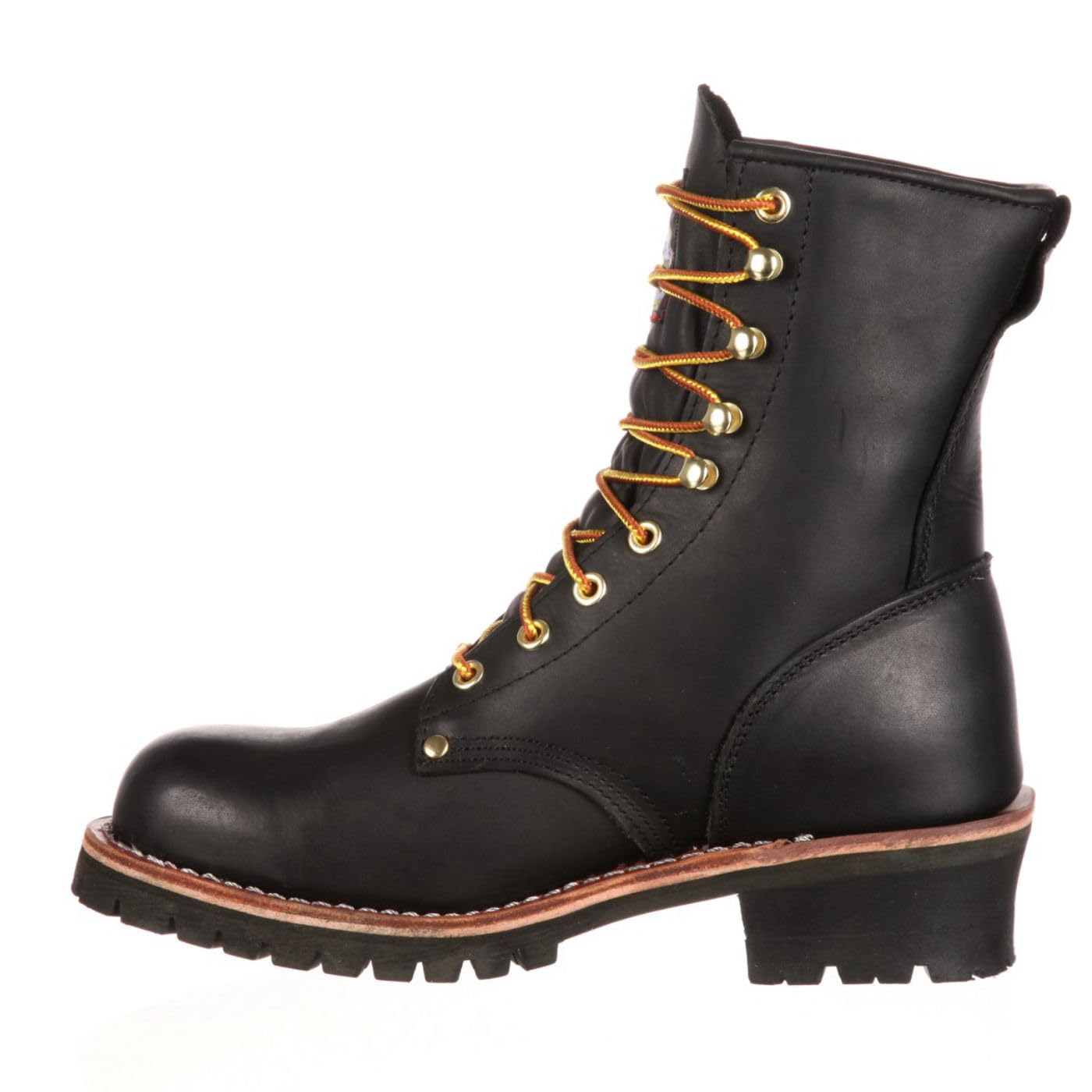
A 90-degree heel sits flat at the back with a sharp drop down to the ground, which is why roofers and ladder workers favor it — the edge catches a rung instead of skidding off. A roper heel is lower and more squared, aimed at riding and everyday wear rather than steep climbs. A logger heel is the deep traditional block seen on heavy lace-up boots made for timber work and mud.
Lace-up or slip-on
Lace-up boots let you tighten the fit around your instep, which keeps your foot locked when you climb. Slip-on Chelsea styles trade that adjustment for speed, with stretch panels at the sides so you can pull them on without untying. If you go up and down ladders all day, laces keep your foot planted; if you are in and out of a truck cab, slip-on wins.
Toe type and what it weighs
Steel toes take the most impact but feel heavier on your feet. Composite toes use non-metallic material and, per KEEN’s own specs here, are noted as 15% lighter than steel for the Cincinnati. Soft-toe boots feel most like a normal shoe but offer no cap protection. Match the toe to your site rules before you fall in love with a leather finish.
Shaft height and insulation
An 8-inch shaft covers your ankle and lower calf and gives laces more room to hug the leg, good for brush, debris, and wet ground. Lower cuts like a 6-inch boot or a Chelsea feel quicker to put on and cooler in summer. Insulation is worth it only if you work cold — a boot with Thinsulate stays warm but runs too hot for a heated shop.
Side-by-Side Comparison
| Model | Best For | Heel Type | Toe / Safety | Weight | Amazon |
|---|---|---|---|---|---|
| Ariat Heritage Lacer★ Best Overall | All-day wear and a classic look | Roper, 1.375″ | Soft toe | — | Amazon |
| Ad Tec Logger BootsBudget Logger | Budget loggers for light jobs | Logger | Soft toe | — | Amazon |
| Georgia Boot LoggerSafety Toe Value | Lace-up durability with a safety toe | Logger | ANSI safety toe | 4.5 lb | Amazon |
| Carhartt Frontier Chelsea | Quick on/off in wet ground | Block heel | Soft toe | 3.4 lb | Amazon |
| KEEN Skokie Hiker | Sneaker feel on ladders | 90-degree heel | Composite toe | 22.9 oz per boot | Amazon |
| BRUNT Sullivan | Heat, slip, and oil resistance | 90-degree heel | Composite toe, EH rated | — | Amazon |
| KEEN Cincinnati | Heavy-duty ladder work | 90-degree, 5/8″ | Composite toe | — | Amazon |
| Ariat Groundbreaker | Wide square toe for long shifts | Work heel | Soft toe | 5.5 lb | Amazon |
| Irish Setter Mesabi | Wet weather and rough ground | Logger | Soft toe | — | Amazon |
| Georgia Low Heel Logger | Cold-weather waterproof work | Low logger | Soft toe | 4.5 lb | Amazon |
| Carolina Steel Toe Logger | Serious protection and grip | Logger | Steel toe, EH rated | — | Amazon |
Detailed Reviews
1. Ariat Men’s Heritage Lacer Boot
Our pick — 4.5+★ from 800+ verified ratings; the strongest balance of quality and price.
A 1.375-inch roper heel and an 8-inch shaft that feels broken in on day one.
The Ariat Heritage Lacer earns the top spot because it gets the heel right and the comfort right at once. That 1.375-inch roper heel — a lower, squared-off heel built for riding rather than a tall logger block — gives you a defined drop behind the foot without the deep tilt. The 8-inch shaft comes up over the ankle and grips the leg with laces, so your foot stays planted on a ladder or in a stirrup.
Inside, a forked shank runs under the arch to spread your weight, and the Duratread sole is built for wear. Full-grain leather makes up the foot and upper, with a breathable lining so the boot does not cook your feet over a long shift. The things people love most about it are the fit and the way it lasts, and it walks like a boot that knows your foot — the leather conforms instead of fighting you.
The honest catch: the full-grain leather splits opinion. Some love the genuine hide; a few find it cheaper than expected, and a small number of fit notes mean you should measure your foot rather than assume your sneaker size. The roper heel is also lower than a full logger, so it grips a rung less aggressively than a deep block heel — great for riding and standing, softer on steep climbs.
What earns it the crown
- 1.375″ roper heel gives a defined drop without the steep logger tilt
- Forked shank under the arch spreads weight across long days
- Full-grain leather upper with breathable lining
- Duratread sole built for wear
Where it asks you to compromise
- Lower heel grips ladder rungs less than a deep logger block
- Leather quality draws mixed opinions
- Measure your foot — don’t trust your sneaker size
Reach for this if: you want one boot for riding, standing, and everyday work with a heel that stays comfortable.
Look elsewhere if: you climb steep ladders daily and need the aggressive catch of a full logger heel.
2. Ad Tec Men’s Logger Boots
The entry-level way into a real logger block heel, stitched to hold.
If you want the tall logger look and a proper block heel without paying premium money, this is the pair to start with. The stitch work is what buyers keep praising — clean, tight construction that looks and feels heavier than the tier suggests. The leather draws a range of reactions, with some calling it high-grade and others likening it to an older-style Timberland finish.
The block heel sits under the back of the foot and digs into a rung or a shovel edge the way a logger heel is supposed to. It is a lace-up, so you can cinch the fit across the instep and keep your foot from wandering on uneven ground. For hauling, yard work, and general site duty, the formula works.
Know what you are buying: this is a value logger, and the finish sits a step below the premium options on this list. If your job involves heavy loads, constant climbing, or deep water, spend up. If you want the look and a real heel for lighter duty, this is a sensible first pair.
The value read: solid stitching and a real logger heel for entry-level money — a fair entry point for yard and light site work.
Suits: the buyer who wants the logger silhouette and heel on a tighter budget.
Step up if: your work is heavy, wet, or ladder-intensive — the premium loggers below take more punishment.
3. Georgia Boot Men’s Logger Work Boots
An 8-inch lace-up with an ANSI safety toe and a heel built for the job site.
Here is a logger that pairs a protective toe with a softer leather than most boots in its class. The upper is full-grain leather in a deep black, tough on the outside and — by all accounts — surprisingly soft against the foot. The lace-up design lets you dial the fit, and the stud hooks are anchored to steel washers so they stay put when you yank the laces tight.
The outsole is lugged and oil-resistant, and the ANSI-compliant safety toe shields against impact and compression. Quality is the strongest theme in the feedback, backed by comfort and fit. At 4.5 pounds it sits near its cousin, the 4.5-pound Georgia Low Heel Logger, well above the 3.4-pound Carhartt Chelsea — so if light feet matter, size down your expectations on weight.
The trade-off worth knowing: durability opinions split, with break-in also taking time for some. Treat these as a comfortable, protective everyday logger for moderate site work rather than an indestructible tank, and give them a patient break-in window.
Why it earns a look
- ANSI-compliant safety toe for impact and compression protection
- Soft full-grain leather with steel-washer lace hooks
- Lugged, oil-resistant outsole for site grip
- Lace-up fit adjustment over the instep
Weigh before you commit
- 4.5 lb boots feel heavy on long shifts
- Break-in takes patience for some
- Durability reports split — better for moderate duty
Good fit for: site workers who need a safety toe and a logger heel with a soft leather feel.
Think twice if: you want a featherweight boot or demand years of abuse from a single pair.
4. Carhartt Men’s Frontier Water Resistant Chelsea Work Boots

A block-heel Chelsea that slips on in seconds and weighs just 3.4 pounds.
Pull-on boots usually mean a flat sole, but this one carries a real block heel. The stretch gore panels at the sides let you step in without laces, so you get out the door fast. At 3.4 pounds these are a full pound and change lighter than the 4.5-pound Georgia Boot Logger — a real difference when you are on your feet all day.
Carhartt’s Rain Defender leather handles wet ground and light rain, and the Insite footbed with an EVA midsole adds cushioning underfoot. A FastDry lining wicks moisture so the inside stays dry through a hot shift. The grippy rubber outsole keeps you steady, and the wide toe box is a frequent point of praise.
The honest limit: a Chelsea’s block heel catches a rung less sharply than the 90-degree heels below, so it suits wet walks and warehouse floors better than steep ladder climbs. The slip-on design also gives less instep adjustment than a lace-up. It excels where speed and light weight matter more than aggressive grip.
The lightest pick here: at 3.4 lb it undercuts the 4.5 lb Georgia Logger, so quick on/off pairs with less foot fatigue.
Honest note: the block heel is friendly on wet ground but less aggressive on rungs than a dedicated 90-degree heel.
Pick this for: in-and-out days, wet warehouses, and anyone who hates lacing up.
Not the one for: steep ladder climbing where you want the sharp catch of a 90-degree heel.
5. KEEN Utility Men’s Skokie Hiker
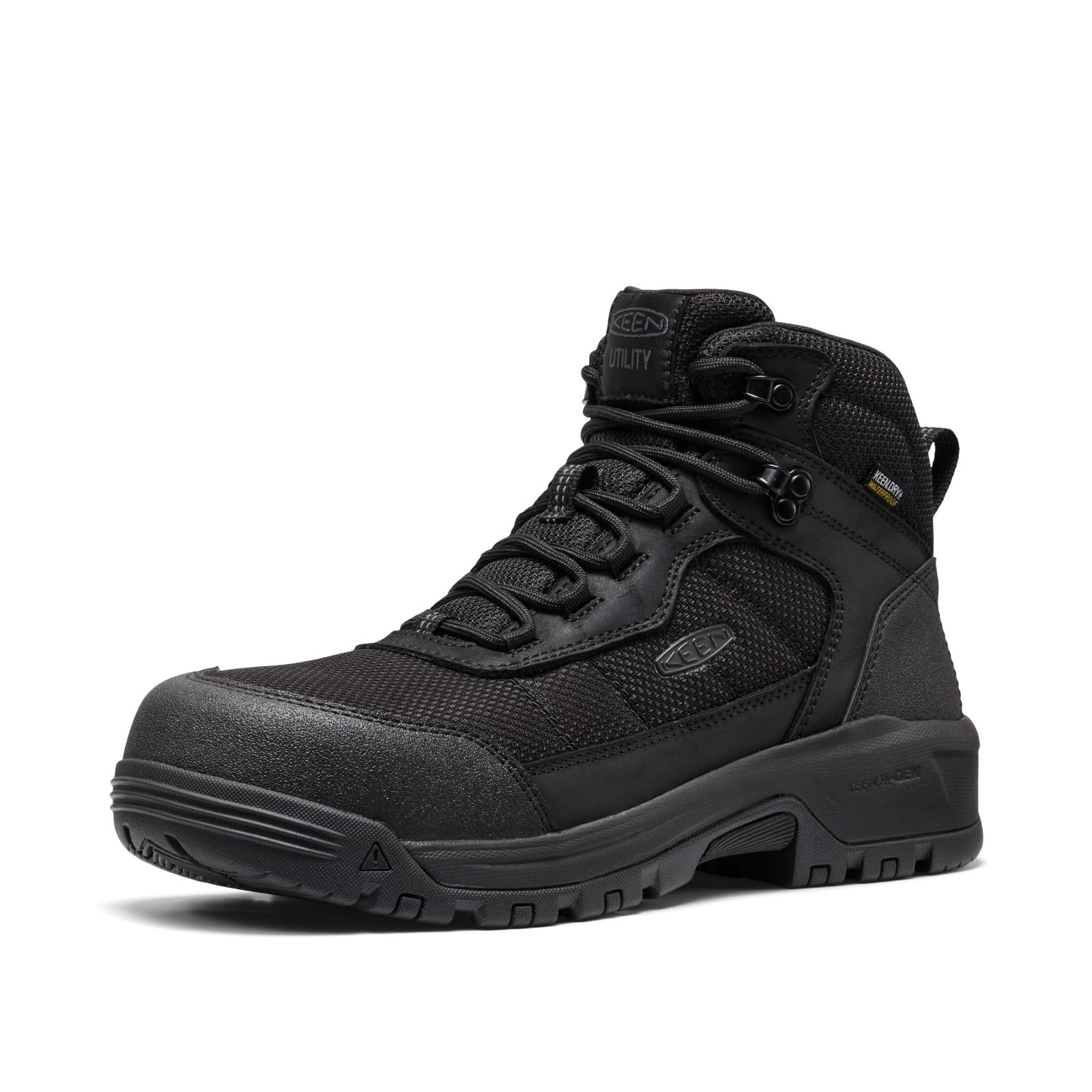
A waterproof work hiker that gives you a 90-degree heel without the boot bulk.
This is the pick for trades that want boot protection with sneaker manners. The 90-degree heel is designed to catch a ladder rung and lock your foot in place, and the boot weighs 22.9 ounces (650 grams) per boot — light enough to keep you quick on a roof. KEEN’s Original Fit gives extra room for toes to spread, and a waterproof membrane keeps the weather out while letting vapor escape.
The upper uses leather from tanneries certified by the Leather Working Group, and the insoles are removable. Lightweight and waterproof are the two themes that come up again and again in the feedback, and that combination suits medium-duty work in roofing, construction, utilities, landscaping, maintenance, and energy.
The catch is comfort and sizing: the fit runs small for some, with reports of heel pain and one description of the sole feeling like slab plastic. Order carefully and consider sizing up. The cushioning is there, but it is not the deep, plush ride of the lace-up leather loggers.
Where it shines
- 90-degree heel locks onto ladder rungs
- Waterproof membrane keeps feet dry
- 22.9 oz / 650 g per boot keeps you light on your feet
- LWG-certified leather, removable insoles
Fit watch-outs
- Runs small for some — size up if in doubt
- Heel pain reported by some
- Cushioning is not as plush as leather loggers
Best for: roofers and maintenance crews who want ladder grip without boot weight.
Skip if: you need a roomy, generous fit straight from the start.
6. BRUNT Sullivan Composite Toe Work Boot
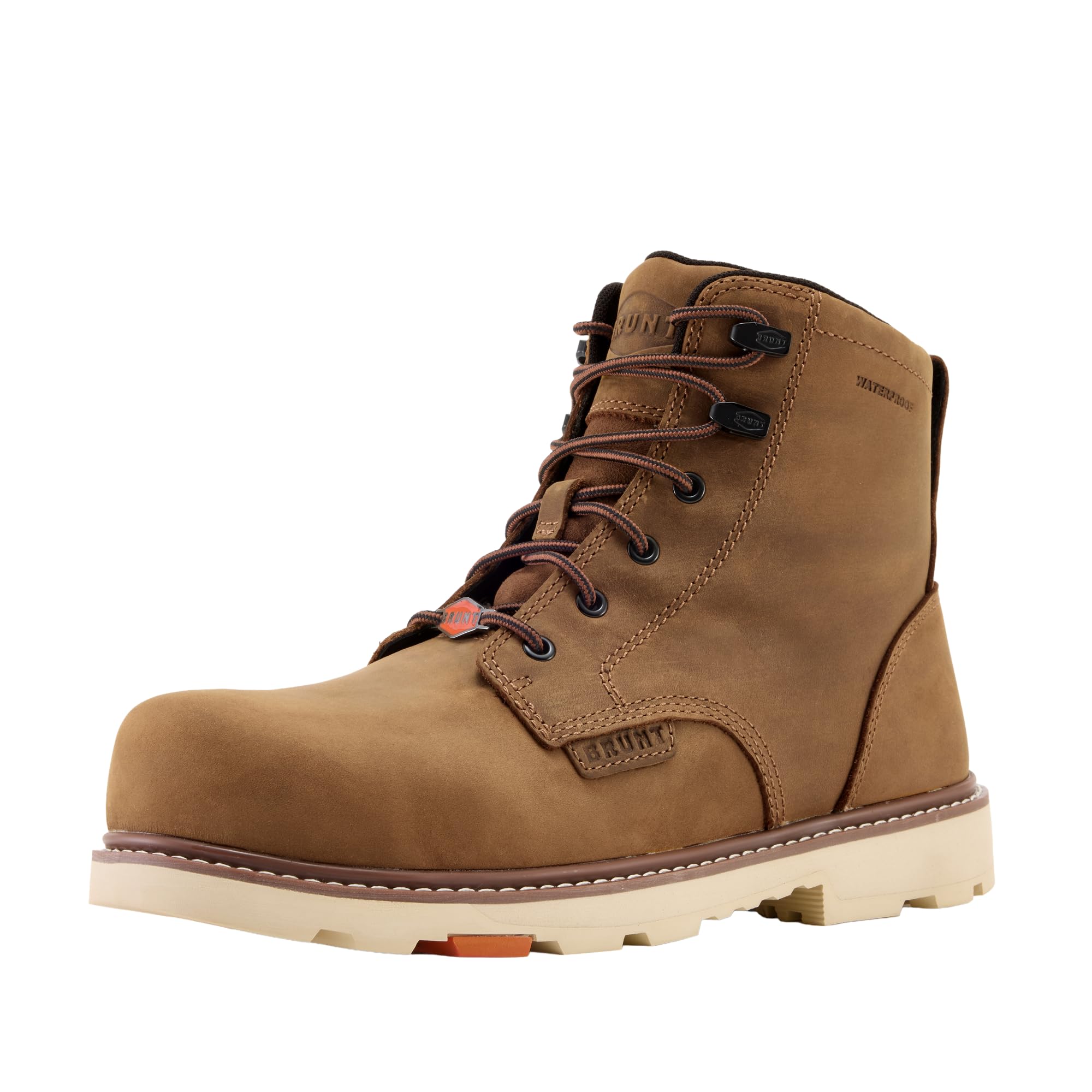
A 6-inch waterproof composite toe with a 90-degree heel and heat-resistant sole.
The Sullivan is built for sites that throw heat, oil, and slip hazards at you. It carries a 90-degree heel that catches a rung, a composite safety toe for impact protection, and an EH rating for electrical hazard resistance. The slip- and oil-resistant outsole is rated heat-resistant too, so hot work like welding or paving does not chew through the bottom.
Comfort from the first wear is the strongest thing about it — the boot breaks in easy, and the quality reads well above its size in the market. The adjustable fit lets you dial the 6-inch cut to your ankle.
The honest caveat: durability feedback is split, with some owners calling the Sullivan tough and others saying it is not rugged enough for the hardest work areas. If your job is brutal on boots, expect to replace them sooner than a Goodyear-welted logger. For most trade work with ordinary wear, the comfort and safety package holds up well.
The standout: a 90-degree heel plus EH rating, heat-resistant and oil-resistant sole — a safety package that suits hot, oily job sites.
What to weigh: some say these are not rugged enough for the hardest-use areas, so hard-abuse trades may want the Goodyear-welted loggers instead.
Made for: welders, pavers, and oil-exposed work that needs a heat- and slip-resistant sole.
Look past it if: you need maximum ruggedness from a single pair over years of abuse.
7. KEEN Utility Men’s Cincinnati Composite Toe Work Boots
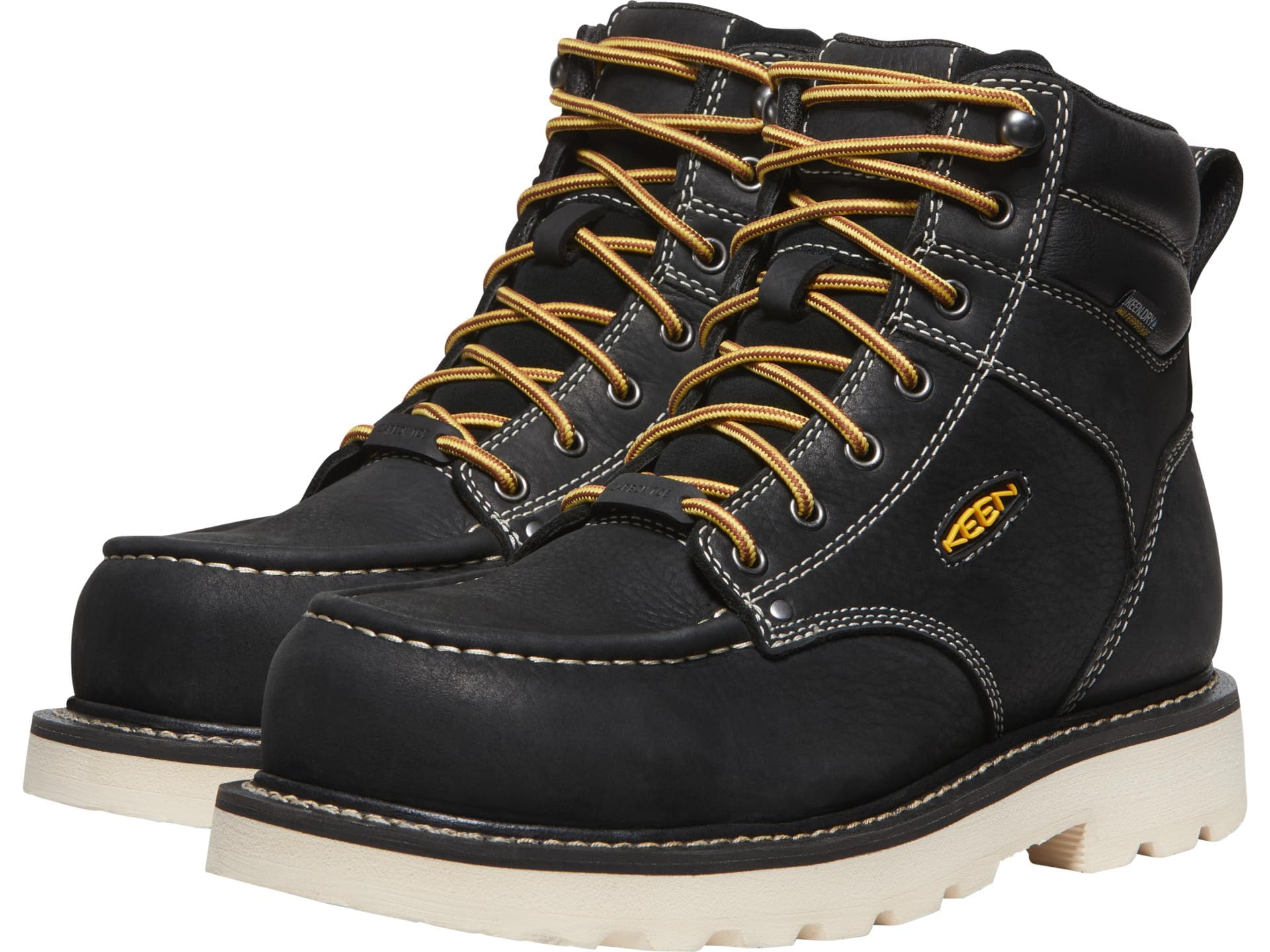
A heavy-duty boot whose 5/8-inch, 90-degree heel is engineered to catch and lock.
For roofers, linemen, and anyone who lives on ladders, this boot’s 5/8-inch 90-degree heel is the headline. That square drop at the back is designed to “catch or lock” your foot onto a rung so you are not sliding. A composite toe that is non-metallic and asymmetrical protects the front while keeping the boot lighter than a steel-cap build.
The KEEN.DRY waterproof membrane lets vapor out without letting water in, so your feet stay dry through wet days. Fit is the strongest thing owners praise — the boot settles around the foot and holds. All-day comfort is the second big theme, and appearance ranks third: it looks like serious gear and reads that way.
Two things to weigh. The sole has drawn complaints of splitting for some, so treat it as a work boot rather than an indestructible one, and watch the sole wear. Weight is a real gripe — this is not a featherweight hiker like the Skokie, so if lightness drives you, the Skokie above is the leaner pick. For a genuine 90-degree heel that grips hard, this is the one.
The ladder argument
- 5/8″ 90-degree heel locks foot in place
- Asymmetrical composite toe, non-metallic and lighter than steel
- KEEN.DRY waterproof membrane
- Settles around the foot for all-day comfort
Fair warnings
- Sole has split for some users
- Heavier than the Skokie hiker
- Watch for sole wear over time
Buy it if: ladder grip is your number-one requirement and you want a hard 90-degree heel.
skip it if: a light boot matters more than a locking heel.
8. Ariat Men’s Groundbreaker Wide Square Toe Work Boots

A roomy square toe and a real heel — the most popular boot on this list by a mile.
The Groundbreaker is the crowd favorite in this lineup, and the numbers back it — the largest pool of owners of any pick here. Quality is the theme that comes up first, followed by comfort that feels broken in right from the start. The wide square toe gives your foot room to spread, and the exterior leather and lining earn compliments on looks.
This is a pull-on western work boot with a defined heel that catches a stake or a rung, built for the way ranch and outdoor work actually feels. At 5.5 pounds it is a substantial boot, so count on heft — it is the heaviest weight on this page. That mass is part of the durability story; the build feels solid when you heft it.
Two things to know. Fit runs mixed, so try before you commit and consider the square toe sizing oddities. And getting them on is not always easy — some find them tough to pull on at first, though they loosen up with wear. Once on, the comfort and value are what keep people in them.
Why owners stay loyal: comfortable from the first wear, roomy square toe, and a look that draws compliments — a western work boot that earns its popularity.
The trade-off: at 5.5 lb it is the heaviest here, and pulling them on can take effort until the leather gives.
For you if: you want a roomy square toe and a proven pull-on work boot.
Not for you if: you want a light boot or an easy-on slip-on every morning.
9. Irish Setter Mesabi 8″ Soft Toe Logger Work Boot

An 8-inch waterproof logger stitched to last, with a Stars and Stripes lug sole.
This is a traditional 8-inch logger with the deep block heel and a Goodyear welt — a stitched construction that can be resoled rather than thrown away. The full-grain waterproof leather is backed by UltraDry waterproofing, and the outsole carries a heat-resistant rating plus slip resistance and an electrical hazard rating. There is also a removable EVA footbed for comfort you can swap or replace.
Comfort is exactly what people notice — the leather molds to the foot and the arch support earns specific praise for easing back and calf strain. It holds up in wetlands and handles all weather, so mud, puddles, and rain are not a problem.
The honest note: waterproofing is mostly praised but not universal, with a few finding moisture getting through over time, so keep the leather conditioned. This is a heavy leather logger, not a light hiker, so it suits rough ground and wet weather rather than quick-dry summer wear. The safety standards listed here are ASTM F2892-18, EH and ASTM F3445-21, SR for the soft-toe version.
The keeper: Goodyear welt construction means this logger can be resoled, and the waterproof leather plus HRO sole suit wet, rough work.
Keep in mind: a few report moisture getting in over time and the leather is heavy — condition it and expect break-in on rough ground.
Worth it for: loggers, arborists, and anyone on wet, rough terrain who wants a resolable boot.
Pass if: you want a light, quick-dry summer boot.
10. Georgia Boot Low Heel Logger GORE-TEX
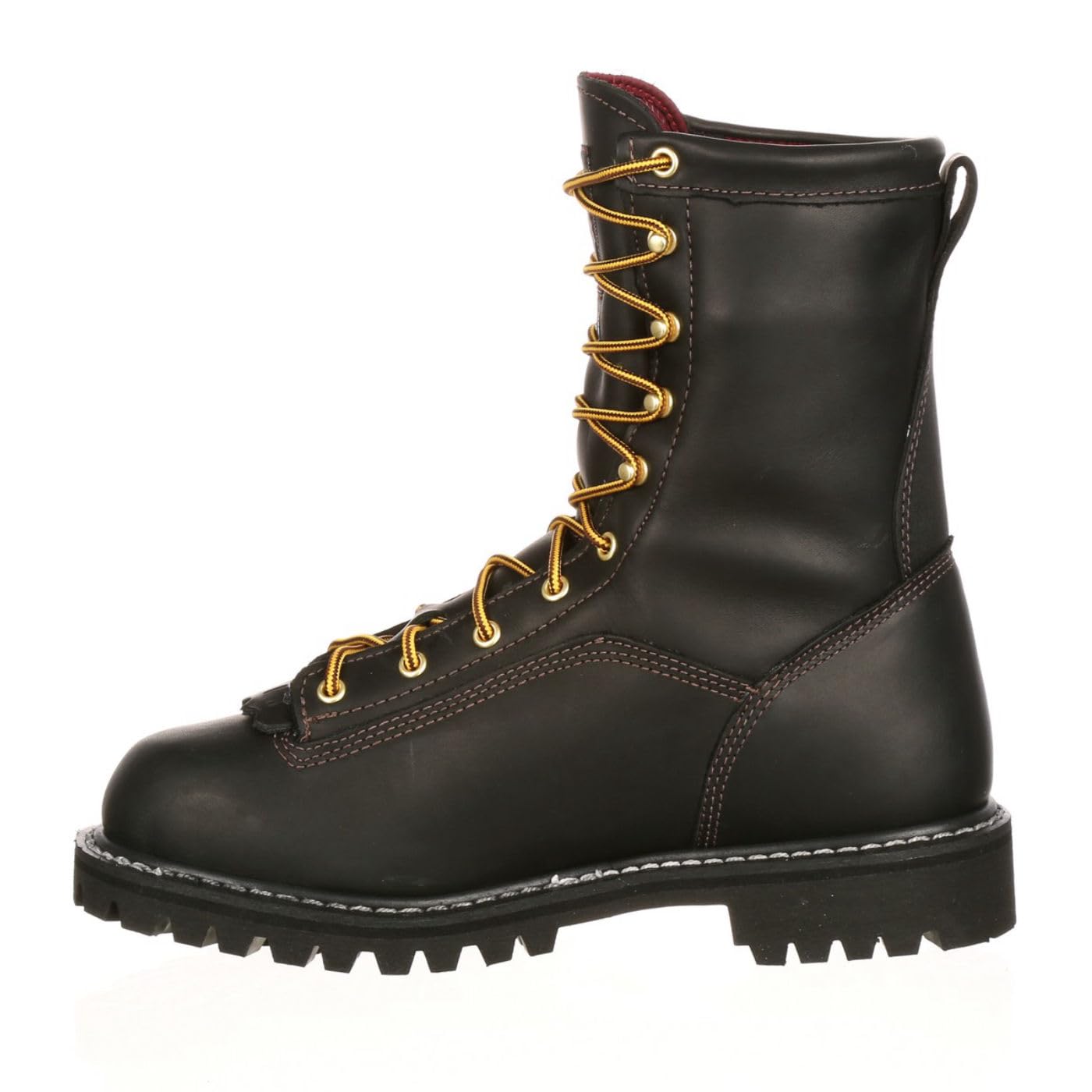
A lace-to-toe winter logger with 200 grams of Thinsulate and a Vibram lug sole.
When the ground is cold and wet, this Georgia brings warmth and a rugged sole together. Inside sits 200 grams of 3M Thinsulate insulation to keep your feet warm, and the interior is fully lined with a removable cushioned Orthotic insole. A steel shank under the arch gives steady footing and support across long days on hard ground.
The build is serious: Goodyear welt construction for durability, a lace-to-toe design that rests your foot securely, and Vibram lug rubber outsoles that resist abrasion, heat, chemicals, and oil while staying flexible. The black full-grain leather is tough but soft, and the eyelets and stud hooks are anchored to steel washers so they do not pull out.
Two honest points. Fit runs mixed — some find the fit great, while others say it runs narrow and is hard to lace snug. And insulation is only worth it in cold work; in a heated shop this boot will run warm. For winter fieldwork and wet conditions, the warmth and grip are the point.
Built for the cold
- 200g 3M Thinsulate insulation for warmth
- GORE-TEX waterproof protection
- Vibram lug sole resists oil, heat, and chemicals
- Goodyear welt with steel shank and steel-washer hooks
Before you buy
- Runs narrow for some
- Hard to lace snug for some
- Too warm for heated indoor work
The call for: winter fieldwork and wet conditions where warm, dry feet and grip matter most.
Not the call if: you need a wide fit or work mostly indoors in heat.
11. Carolina Men’s 8″ Waterproof Steel Toe Work Boots

An 8-inch logger with a steel toe, EH rating, and a triple-rib steel shank.
This Carolina is the boot for the toughest job sites, where protection comes before everything. The steel toe guards against impact and compression, and the EH-rated build adds electrical hazard resistance. A triple-rib steel shank adds stability — a real benefit for linemen and arborists climbing trees and rugged ground.
Waterproof construction keeps your feet dry in wet environments, and the slip-resistant, oil-resisting rubber lug outsole holds on slick or oily surfaces. Inside, a Pillow Cushion memory foam footbed softens long hours on your feet. The leather and welt construction point toward longevity, the kind of build that gives a working boot its staying power.
The one thing to know: the steel toe and steel shank add weight, so this boot leans heavy for all-day light work. For heavy-duty trade and serious traction, that mass is the price of protection. It is the most protective package on the list, and it is priced to match the premium end.
The full package: steel toe, EH rating, oil-resistant lug sole, and a memory foam footbed — the most protective boot here.
The cost of it: steel toe and steel shank make this a heavy pick for light-duty days.
Reach for it if: your site demands a steel toe and you want a rugged, stable logger.
Look elsewhere if: weight is your first concern or you have a soft-toe site.
Know the Specs
Heel type and height
A 90-degree heel is the sharp squared drop at the back that catches a ladder rung and locks your foot; the KEEN Cincinnati lists it at 5/8 inch. A roper heel, like the 1.375-inch one on the Ariat Heritage Lacer, is lower and built for riding and everyday wear. A block or logger heel is the deep traditional mass under heavy lace-up boots, made for mud and rough work. Match the shape to your day: climbing wants the sharp 90-degree catch, riding and standing prefer the lower roper drop.
Toe protection and weight
Steel toes guard against impact and compression but add heft. Composite toes use non-metallic material and, as KEEN notes for the Cincinnati, are 15% lighter than steel while staying protective. Soft toes feel lightest but offer no cap. Weigh that against the boot’s overall mass, which varies widely here — the Carhartt Chelsea sits at 3.4 pounds, the Georgia loggers at 4.5 pounds, and the Ariat Groundbreaker at 5.5 pounds — because a heavy boot tires your legs over a long shift.
Waterproofing and linings
A waterproof membrane, whether a named liner like KEEN.DRY or UltraDry, keeps water out while letting vapor escape so sweat does not build up. Water-resistant leather handles light rain and wet ground without full waterproof claims. A wicking lining such as FastDry pushes moisture away from the foot. If you work wet, a true waterproof membrane earns its place; if you work dry and hot, a breathable lining that vents well can be enough.
Sole construction and shanks
Goodyear welt construction stitches the upper to the sole so the boot can be resoled instead of replaced — the Irish Setter Mesabi and Georgia Low Heel Logger both use it. A shank is a stiff plate under the arch: a forked shank spreads weight (the Ariat Heritage), a triple-rib steel shank adds stability for climbing (the Carolina). An oil-, slip-, and heat-resistant outsole keeps you upright on slick or hot surfaces, and a vibram lug pattern bites into mud and gravel.
Common Questions
What is a 90-degree heel on a work boot?
Do work boots with a heel hurt your feet more?
Should I get a steel toe or a soft toe for ladder work?
How do I break in leather logger boots?
Are slip-on Chelsea boots good for real work?
What does EH rated mean on work boots?
How long do waterproof work boots stay waterproof?
Can I resole a Goodyear welted work boot?
What is the difference between a roper heel and a logger heel?
Are wide square toe boots better for a wide forefoot?
The Bottom Line
For most people, the work boots with a heel winner is the Ariat Heritage Lacer because its 1.375-inch roper heel, forked shank, and broken-in leather give you a defined drop without the steep logger tilt. If you climb ladders all day and want a 5/8-inch 90-degree heel that catches and locks, grab the KEEN Cincinnati. And for wet, rough ground where you want a resolable Goodyear-welted logger, the Irish Setter Mesabi is the one to reach for.
The crowd favorite by sheer volume is the Ariat Groundbreaker, and if you want a roomy square toe and a proven pull-on, it earns the attention. One honest nudge: pick the heel shape that matches your daily ground, then spend the difference on better socks and a conditioning routine — that is what keeps a leather work boot standing through the seasons.
How we choose
We do not accept paid placement. Every pick is matched to a real buyer and a real use-case; we do not hands-on test units.
Sources
Specifications: manufacturer listings and product documentation. Review insights: verified customer reviews, as of November 2026. Pricing: not shown on this page (it changes often); check the current price via the retailer link.
As an Amazon Associate, Tactical Gear Guy earns from qualifying purchases. This does not affect which products we feature.