Specs are compiled from manufacturer listings and verified buyer reviews and can change over time — please confirm the key details on the product page before buying.
Your work shoes decide whether you finish a shift standing or limping, so pick the pair that matches your actual job floor. A steel toe protects your toes, but it does nothing for a wet concrete slab, a truck bed, or a ten-hour day on your feet. The picks below sort that out by safety toe type, outsole grip, and how the shoe feels after hour eight — and every one of them can be worn legally on a site that asks for safety footwear.
This guide is built by comparing the manufacturers’ published specifications and the patterns across verified customer reviews, so you get each pick’s real strengths and trade-offs instead of marketing spin.
The list below separates the two, tells you which shell suits which job, and you can scan the whole lineup of zapatos de construcción without reading a single spec sheet.
Top Picks

How To Choose The Best Zapatos De Construcción
The first thing to work out is what your site actually requires. If a safety officer checks your shoes at the gate, you need a marked protective toe — either steel, alloy, or composite. If you spend the day in a warehouse aisle rather than under a beam, a slip-resistant outsole does more for you than a heavier toe shell ever will. Settle the toe requirement first, then the outsole, and the rest of the choice narrows fast.
Steel, alloy, or composite toe — the real trade-off
A steel toe cap is a metal shell sitting over your toes, and it is the classic option because it is tough and usually cheaper. An alloy toe does the same protective job with a lighter metal, and a composite toe uses a non-metal material instead. Composite and alloy toes are the ones to look at if your boots sit in a cold truck overnight, because metal pulls heat out of your toes fast on a winter pour. The DEWALT Halogen spells its protection out in full: it meets or exceeds ASTM 2413-11 I/75 C/75 — the standard that covers toe impact and toe compression — and it also carries Electric Hazard Protection.
Outsole grip on wet and oily concrete
A slip-resistant rubber outsole is the single most useful feature on any indoor or wet-weather job, and it is the one buyers underestimate. Look for wording like “slip and oil resistant” or “heat-, oil-, slip-, and abrasion-resistant” in the listing. The outsole is what touches the floor, so a certified toe cap on a slick sole still puts you on your back.
Upper material decides how the day feels
Full leather and nubuck uppers hold up to abrasion and shed light rain, but they do not breathe much. A nylon mesh or ripstop nylon upper lets heat out and keeps weight down, which matters if you are walking all shift. Mesh costs you some stiffness and some water resistance, so pick it for dry indoor work rather than a muddy site. If rain is a daily reality, look for the word “waterproof” printed on the model itself.
Fit is the spec buyers actually argue about
Fit draws more comment from owners than any other trait across this whole category, and it is where returns happen. A wider form like KEEN’s traditional last suits a broad foot; a boot described as running narrow will pinch a wide one. Read the size guidance on the specific model, not the brand, and size for the socks you actually wear on the job.
Side-by-Side Comparison
| Model | Best For | Toe Type | Stated Weight | Waterproof | Amazon |
|---|---|---|---|---|---|
| DEWALT Men’s 6″ Halogen Steel Toe Work Boot★ Best Overall | Site work with an electrical hazard check | Steel (ASTM 2413-11 I/75 C/75) | — | Water-resistant gusset only | Amazon |
| Skechers Men’s Wascana Millit WaterproofBest for Wet Weather | Rain and wet outdoor work | Composite | 3.1 pounds | Yes | Amazon |
| SUREWAY 10in Wellington Work BootBest Pull-On | Pull-on boots for muddy, quick-in quick-out days | Steel | — | Yes | Amazon |
| Skechers Mens Cankton Ebbitt Steel Toe Construction Shoe | Slip-on shifts with no laces to tie | Steel | 2.4 pounds | — | Amazon |
| Timberland PRO Men’s Intercept Mid Steel Safety Toe Shoes | Standing all shift on hard floors | Steel (asymmetrical, with puncture-resistant plate) | 2.71 pounds | — | Amazon |
| Timberland PRO Mens XR-1 MaxTrax Alloy Toe SRO Athletic | Long shifts where traction and toe room matter | Alloy (asymmetrical) | 4.21 pounds | — | Amazon |
| KEEN Utility Men’s Kenton Mid Composite Toe Work Sneakers | Light-duty warehouse and assembly floors | Composite | 18.3 oz per shoe (519 g) | — | Amazon |
| Cat Footwear Men’s Invader Mid Vent Ct | Hiker-style look with a non-metal toe | Composite | — | — | Amazon |
| Ariat Men’s Rebar Lift 6″ Waterproof Composite Toe Work Boot | Wet outdoor sites and squatting-heavy work | Composite | 5.5 pounds | Yes | Amazon |
Detailed Reviews
1. DEWALT Men’s 6″ Halogen Steel Toe Work Boot
Our pick — 4.5+★ from 650+ verified ratings; the strongest balance of quality and price.
The wheat-leather boot that turns a safety-toe slip-on into something your foot forgives.
Fit is the thing that makes or breaks this boot, and it is the trait that draws the most praise by a wide margin. That matters because a steel toe cap has no give, so a snug last pinches the toes it is meant to protect. It is a lace-up, which means you set the snugness yourself instead of fighting a fixed opening. A 3/4 tongue gusset blocks water and dirt from sneaking in around the laces, and the 90-degree heel gives you something to dig into when you plant a foot on a ladder rung.
Your feet get some give on oily shop floors and hard concrete, thanks to a slip and oil resistant rubber outsole over a dual density EVA midsole (EVA is a foam that cushions and springs back). The ProComfort insole stacks ergonomic arch support, a layer of memory foam, and a quick-recovery polyurethane bottom layer — meaning it pushes back instead of flattening after a month. Owners describe the ride as feeling like a sneaker rather than a steel-toe boot, which is the highest compliment this category hands out. The safety side is spelled out plainly: the steel toe meets or exceeds ASTM 2413-11 I/75 C/75 (the standard test for toe impact and compression), so a dropped beam won’t crush your toes. The boot also carries Electric Hazard Protection, so it earns its place on sites where the hazard list goes beyond a dropped beam.
The honest catch is break-in and weight. Nubuck leather with a steel cap is not a light package, and it takes a few shifts to mold to your foot compared with a mesh sneaker-style shoe. Construction is the one area where feedback splits — most buyers find the boot solid, and a smaller group has had complaints. So if you drag the toe through gravel daily, check the toe seam when the boot arrives and treat the leather with a conditioner to keep the upper from drying out. Cushioning and a certified ASTM 2413-11 toe rating are what you are paying for here, not feather weight.
halogen steel toe
- The fit draws more praise than any other trait, with a full 68 mentions and a positive read — the most-loved single aspect in this whole lineup.
- Layers real cushioning under the safety toe: memory foam over a quick-recovery polyurethane layer, with a dual density EVA midsole absorbing the hard floor.
- ASTM 2413-11 I/75 C/75 toe rating plus Electric Hazard Protection in one boot.
- Lace-up closure lets you dial the snugness at the ankle instead of accepting a fixed fit.
break-in period
- Nubuck leather with a steel cap means real heft, and a break-in period before the boot softens to your foot.
- Construction feedback is mixed rather than unanimous — a minority of buyers have had issues, so inspect the toe seam on arrival.
buy for steel toe: you want the best all-round balance of a certified safety toe, real arch support, and a grippy rubber sole for indoor and general site work.
skip if need soft toe: the taller 10-inch pull-on gives you a faster slip-on — this is a lace-up and stays a lace-up.
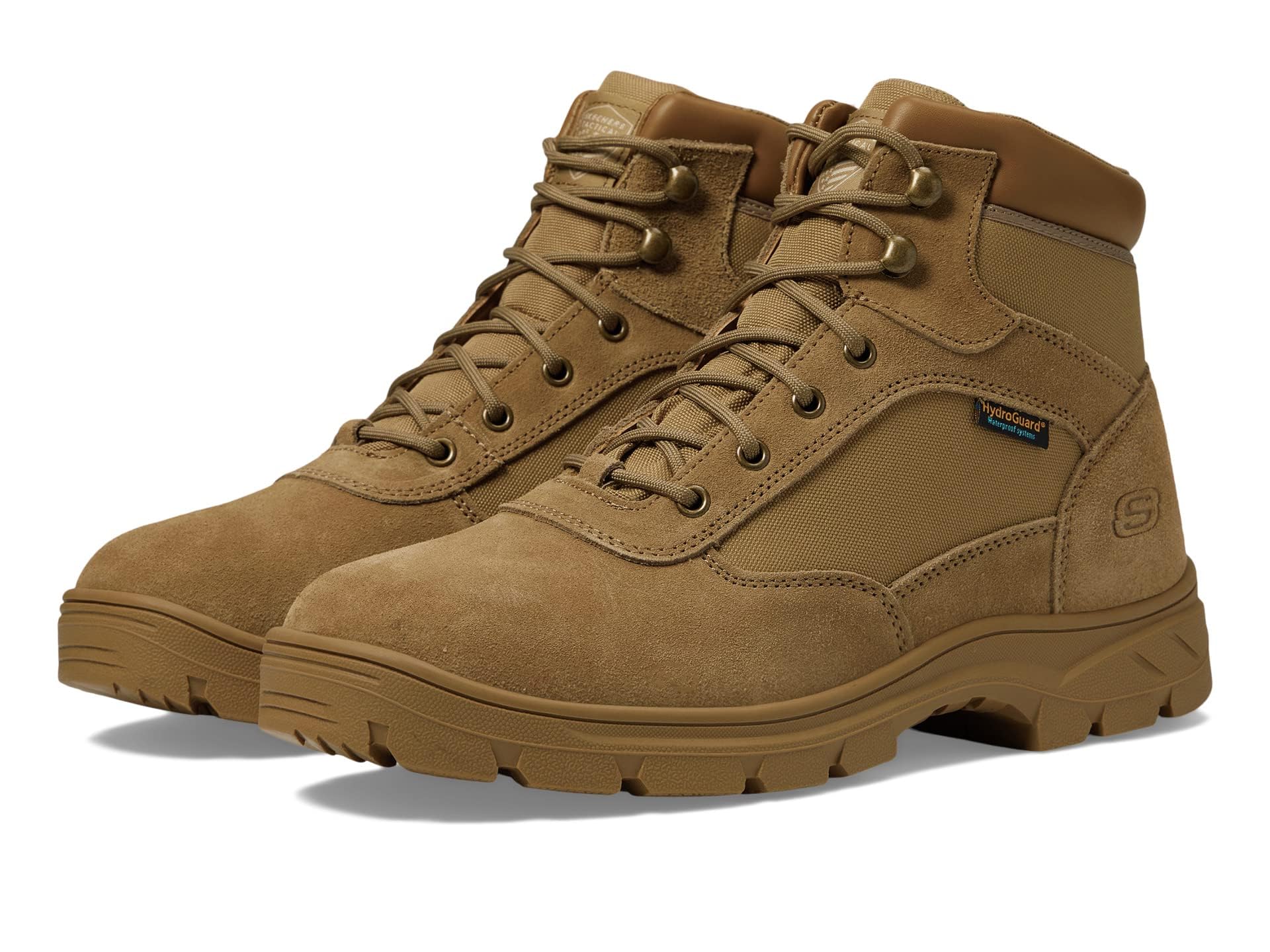
2. Skechers Men’s Wascana Millit Waterproof
A 3.1-pound waterproof boot that hides a composite toe behind a tactical-looking upper.
Rain is the deciding question for a lot of buyers, and this one answers it directly in the model name. The Wascana Millit is a waterproof tactical-style boot with a lace-up upper built from leather, synthetic material, and durable textile. The toe is a lightweight safety composite, not steel, which keeps the front of the foot warmer on a cold morning and shaves weight at the same time. Composite toes are also non-metallic, which is the option to look at if your site has metal detectors at the gate.
You stay sure-footed on wet and dry ground, because the slip resistant outsole is rated for traction in both conditions. The cushioned Air-Cooled Memory Foam insole carries you through a long shift. Comfort and appearance come up almost exactly equally among owners — the boot gets worn for long hours without complaint and looks good enough that nobody treats it as a throwaway work shoe. Weight comes in at 3.1 pounds, and its listed dimensions of 13.9 x 10.9 x 5.1 inches make it a chunky boot to stow in a locker. Check your bag has the room if you haul it in and out every day.
Durability is the split here, and it is worth being straight about it. Some owners get years of wear; others report tearing issues at the stress points. Read that split by job: a boot built around a lightweight textile upper is a bad fit for someone dragging it through gravel, rebar, and mud pits daily. It is a very good fit for someone walking wet concrete, loading docks, and paved sites. If your day is genuinely punishing, the Ariat Rebar Lift further down this list is built heavier for exactly that reason.
waterproof millit build: a waterproof upper, a non-metal composite toe, and a memory foam insole in a boot that weighs 3.1 pounds — that combination is why it suits wet weather more than it suits a demolition site.
upper runs snug: textile and synthetic panels mean it will not shrug off sharp contact the way a full leather boot does, and the durability feedback reflects that.
reach for wet days: you work outside in rain, on wet paving, or on a dock, and you want a non-metal toe.
look elsewhere for wide feet: your boots take a beating from sharp materials — the textile-heavy build is the weak link, not the sole.
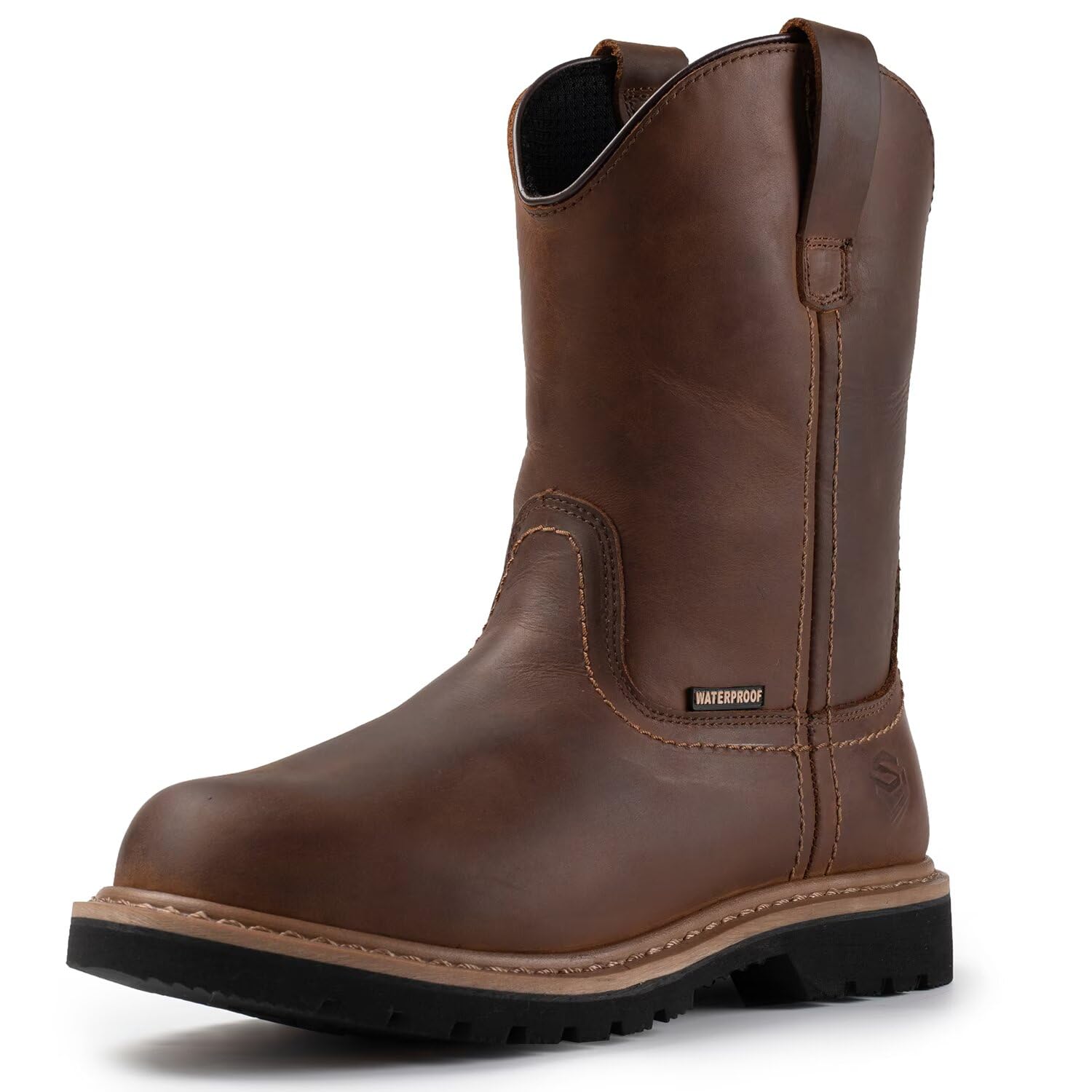
3. SUREWAY 10in Mens Steel Toe Waterproof Wellington Work Boot
A 10-inch wellington that goes on hands-free and comes off when you want it to.
Wellington boots exist for a reason: no laces to foul with mud, and a tall shaft that keeps debris off your socks. The SUREWAY runs to a 10-inch height and pairs it with a high-strength steel toe, so the protection is metal rather than composite. The leather is waterproof, the design is pull-on, and the boot is built to carry you from the job site into everyday wear without looking like a specialist piece of kit.
Quality is what owners single out more than anything — overwhelmingly the most-praised trait of this boot, and comfort is a close second. The leather gets called out by name as a highlight. The look is polished enough that it does not read as pure site gear. Fit lands positive too, so the size you normally wear is a fair starting point rather than a gamble.
Two things to weigh before you commit. The inside liner has torn on some pairs, which is the kind of thing a boot this price usually avoids — but it is not universal, and most buyers report the boot holding up well. The other is the pull-on itself: some owners pop it on and off easily, while others find it a real fight to get back off at the end of the day. If you have a high instep or wide foot, a pull-on without laces is the hardest fit to tune, so try before you commit if you can. Full waterproof leather and a steel toe are what you get in exchange for a fixed, unadjustable opening.
best for muddy sites: mud-heavy, boot-off-boot-on days where laces are a nuisance and you want waterproof leather.
trade-off is weight: no laces means no adjustment — if a fixed opening bites your instep, this is not your boot.
4. Skechers Mens Cankton Ebbitt Steel Toe Construction Shoe

The 2.4-pound steel-toe shoe that slips on in a second and never looks like work gear.
If you want a safety shoe you can step into without bending over, this is the obvious shortlist entry. It is a slip-on, built from leather, synthetic material, and mesh, with a steel toe cap and Memory Foam cushioning. A shock-absorbing midsole and a high-traction rubber outsole sit underneath. At 2.4 pounds it is the lightest steel-toe option in this lineup, and that gap versus the 4.21-pound Timberland PRO XR-1 is a big one — you feel that difference in the last hour of a shift.
Owners rate it as outstanding for work, with the slip-on convenience and the steel toe both drawing positive notice. The appearance gets a specific compliment worth repeating: it does not look like a clumsy work shoe. That matters if you go from the shop floor to a client meeting without a wardrobe change. Styling is genuinely part of the value here, not an afterthought.
Fit is the one place buyers disagree. Some find the shoe roomy and perfect; others find it too loose, which is exactly what you would expect from a slip-on that cannot be tightened. Sizing down is the usual fix, and trying on with your actual work socks is the only reliable test. One note on the listing photos: the image link supplied with this model needs the full Amazon media path to load. If the picture does not appear, the shoe is still the correct product, and the size chart on the listing is the reference to use. Roomy is a feature on a long shift and a frustration on a narrow foot — decide which foot you have before you size.
steel toe convenience: a steel toe, memory foam, and a 2.4-pound build in a shoe with no laces — the fastest thing to put on in this entire list.
fit runs narrow: the same slip-on opening that makes it fast makes it impossible to snug up, so buyers on the narrow side report a loose hold.
pick for easy on: quick-change shifts, warehouse floors, and anyone who wants a steel toe without tying laces.
size up carefully: a loose hold is the recurring fit note, so go down a half size if you are between sizes.
5. Timberland PRO Men’s Intercept Mid Steel Safety Toe Shoes

An athletic work sneaker that carries a steel toe and a puncture-resistant plate.
The Intercept Mid is aimed at the person who stands still rather than walks. Its 24/7 Comfort Suspension System is built to support your arch and cushion each step, which is why owners describe their feet feeling good at the end of long standing periods. It is also one of very few shoes here with a steel, puncture-resistant plate in the sole — a layer that stops a nail or screw from coming up through the bottom. On a site scattered with fasteners, that plate is worth more than any upper material upgrade.
The upper is a ripstop nylon that is abrasion-resistant and, per Timberland, mutilation-free, with breathable moisture-wicking mesh lining made of ReBOTL fabric containing at least 50% recycled PET plastic. Asymmetrical steel safety toes, electrical hazard protection, and electric shock-resistant soles round out the safety list. An injection-molded EVA outsole with anatomically placed flex grooves lets the shoe bend where your foot does. Listed weight is 2.71 pounds, so it sits in the middle of this lineup — heavier than the 2.4-pound Skechers Cankton, lighter than the 4.21-pound XR-1 further down.
What you give up is weather resistance and a leather upper. Ripstop nylon and mesh breathe beautifully and dry quickly, but they are not a waterproof boot, and they will not take the abrasion of a full-grain leather shaft. If you are on wet outdoor slabs in winter, look at the Wascana or the Rebar Lift instead. If your day is indoor standing, walking a hard floor, and the occasional fastener underfoot, this is among the most sensibly built shoes on the list.
worth buying for stability: the job is long hours on hard indoor floors and you want a steel toe plus a puncture-resistant plate.
not for hot climates: open weather — the ripstop nylon upper and mesh lining are built for breathability, not rain.
6. Timberland PRO Mens XR-1 MaxTrax Alloy Toe SRO Athletic
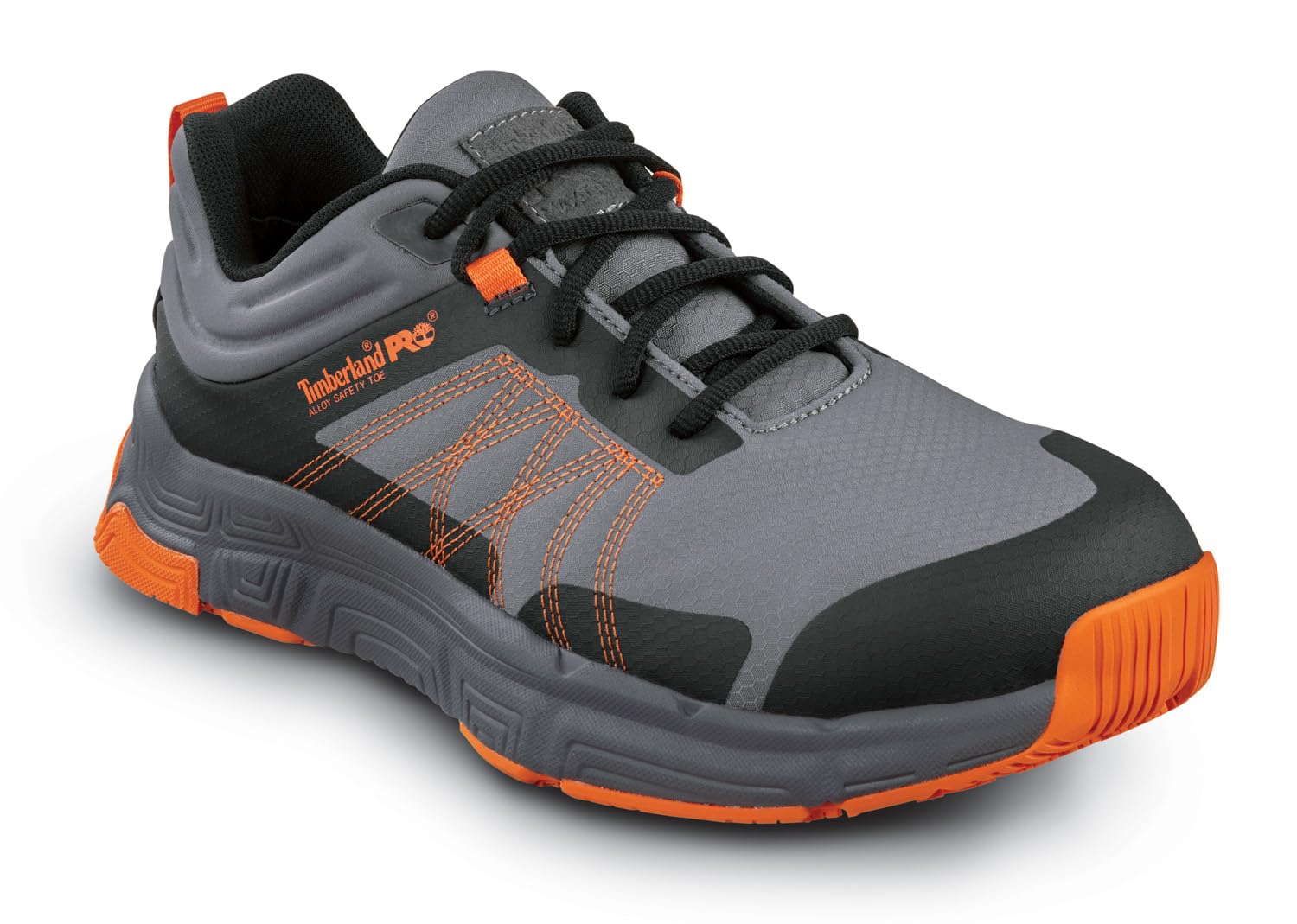
Built for twelve-hour shifts, with an outsized toe box and a sole that grips wet steel.
The XR-1 solves the problem that ruins most safety shoes for wide feet: the toe box. Timberland’s Dynamic Natural Fit is designed to give generous room up front so the toe aligns with the anatomy of your foot instead of crushing it. That room sits behind an asymmetrical alloy safety toe — alloy rather than steel, which lightens the metal shell. Electrical hazard protection is included too. This is a shoe you can wear for a full twelve-hour shift, which owners have said directly.
Traction is the other headline. The rubber outsole is rated heat-, oil-, slip-, and abrasion-resistant, and it is non-marking, so it will not scuff an indoor floor. Owners have found the anti-slip soles working exactly as claimed on wet and slick surfaces. Underfoot, a Hover Spring foam midsole supplies cushioning and flex, and the 24/7 Comfort Suspension System supports your arch. The breathable moisture-wicking lining is ReBOTL fabric with at least 50% recycled PET plastic. Quality is the most-praised trait by a long way, and comfort follows behind it — that is a lot of satisfied feet for a work sneaker.
Two things to know. At 4.21 pounds this is a noticeably heavier shoe than the 2.71-pound Intercept Mid — a full 1.5 pounds more per shoe — so if you are walking miles rather than standing, the weight shows up late in the day. Some owners also report squeaking from the sole, which is a cosmetic annoyance rather than a safety issue. Try a pair in person if noise in a quiet workplace drives you mad. Durability feedback is mixed rather than glowing, so keep an eye on the outsole bond if you are hard on shoes.
alloy toe athletic
- Quality is the most-praised trait of this shoe by a clear margin — owners rate the build highly across the board.
- Generous toe room up front suits wide feet without a pinch, an uncommon thing in safety footwear.
- Heat-, oil-, slip-, and abrasion-resistant rubber outsole that is non-marking for indoor floors.
- Alloy toe plus electrical hazard protection keeps the front of the foot light while staying certified.
sole wears fast
- At 4.21 pounds it is the heaviest shoe listed after the Ariat — a distance shoe rather than a sprint shoe.
- Squeaky soles have come up as a recurring noise complaint, harmless but noticeable in quiet rooms.
right buy for speed: wide feet, long standing shifts, and wet or oily floors where traction decides your day.
think twice for rough ground: you cover a lot of ground on foot — the 4.21-pound build is a real weight to carry.
7. KEEN Utility Men’s Kenton Mid Composite Toe Work Sneakers

A skate-shoe silhouette at 18.3 oz a shoe, hiding a composite toe inside.
Lightness is the whole idea here, and the number is the giveaway: 18.3 oz per shoe, or 519 grams. That is the spec to hold onto if your complaint about safety footwear is that it drags. The Kenton Mid wears like a casual sneaker with a composite toe built in, so it looks fine off the clock too. KEEN builds it on their traditional wider form, which is a meaningful detail if you have a broad foot and usually size up out of habit.
Quality and comfort are the two traits owners praise most, and they come up almost neck and neck at the top of the list. The skate-shoe look with a mid-high cut is the recurring description. It suits working environments where you are not hauling material — retail floors, light warehouse aisles, assembly line and maintenance work are all named as the right fit for it. The insoles are removable, which lets you swap in your own orthotic if you already have one. The leather comes from tanneries certified by the Leather Working Group, a body that audits environmental practice at the tannery level.
Durability is where the reviews split hardest. Some owners find them built to last; others report the uppers splitting after a couple of months. That is the fit question, not a hidden flaw: a light composite sneaker is designed for light duty, and putting it through heavy construction will find its limit. Sizing is the other complaint — enough owners mention a loose or odd fit that trying a half size down is sensible, especially since the wider KEEN form gives extra room to start with.
choose for light duty: light-duty indoor work where you want a composite toe that feels like a sneaker all day.
do not ask for heavy loads: handle heavy construction — the upper will split the same way it has for the buyers who pushed a light shoe too far.
8. Cat Footwear Men’s Invader Mid Vent Ct
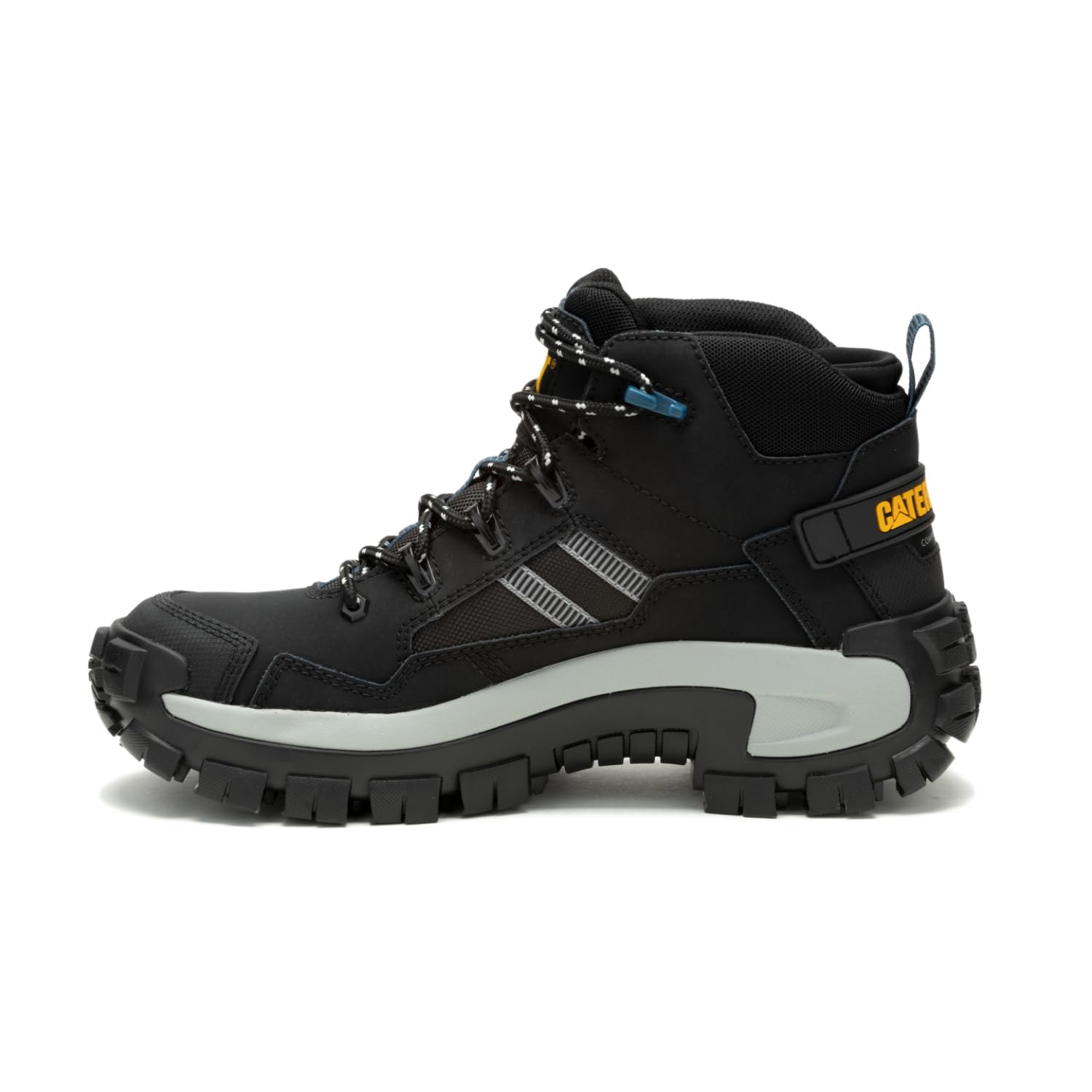
A hiking-boot cut with aggressive lugs and a non-metal toe, built to look good too.
This one goes after the buyer who has to wear safety footwear but does not want to look like they do. The Invader Mid Vent is styled like a hiker — mesh paneling, bold hardware, a lower cut. Underneath that, Cat has fitted non-metallic composite toe protection and aggressive lug patterns for grip.
Quality is what owners raise most, and appearance comes a close second — which is the whole point of a hiker-styled boot. The lighter feel gets noticed too. It is not a heavy leather logger, and Cat has kept the weight down for a boot with this much hardware. If your boots are a visual statement as much as a safety requirement, this is the one that carries that off.
The catch is width. Several owners find it runs narrower than expected, so a wider foot should size up or look at the wider-form KEEN instead. Laces have popped out on some pairs, which is a small fix with a spare lace but annoying mid-shift. It is also a vented design — that mesh paneling is what makes it breathe and what makes it a poor choice for sodden conditions. Dry-ish ground and a showroom wall, not a flooded trench.
vented mid cut: a hiker-silhouette boot with a composite toe, mesh paneling, and an aggressive lug tread — a real style edge over a plain black safety boot.
sizing runs small: it runs narrow, so a wide foot is fighting the last here; the vented mesh also means wet ground is not its home.
buy for grip: you want a hiker look with a non-metal toe and you have a normal or narrow foot.
skip if need wide fit: your feet run wide or your site is permanently wet — size up or look at the Wascana for rain.
9. Ariat Men’s Rebar Lift 6″ Waterproof Composite Toe Work Boot
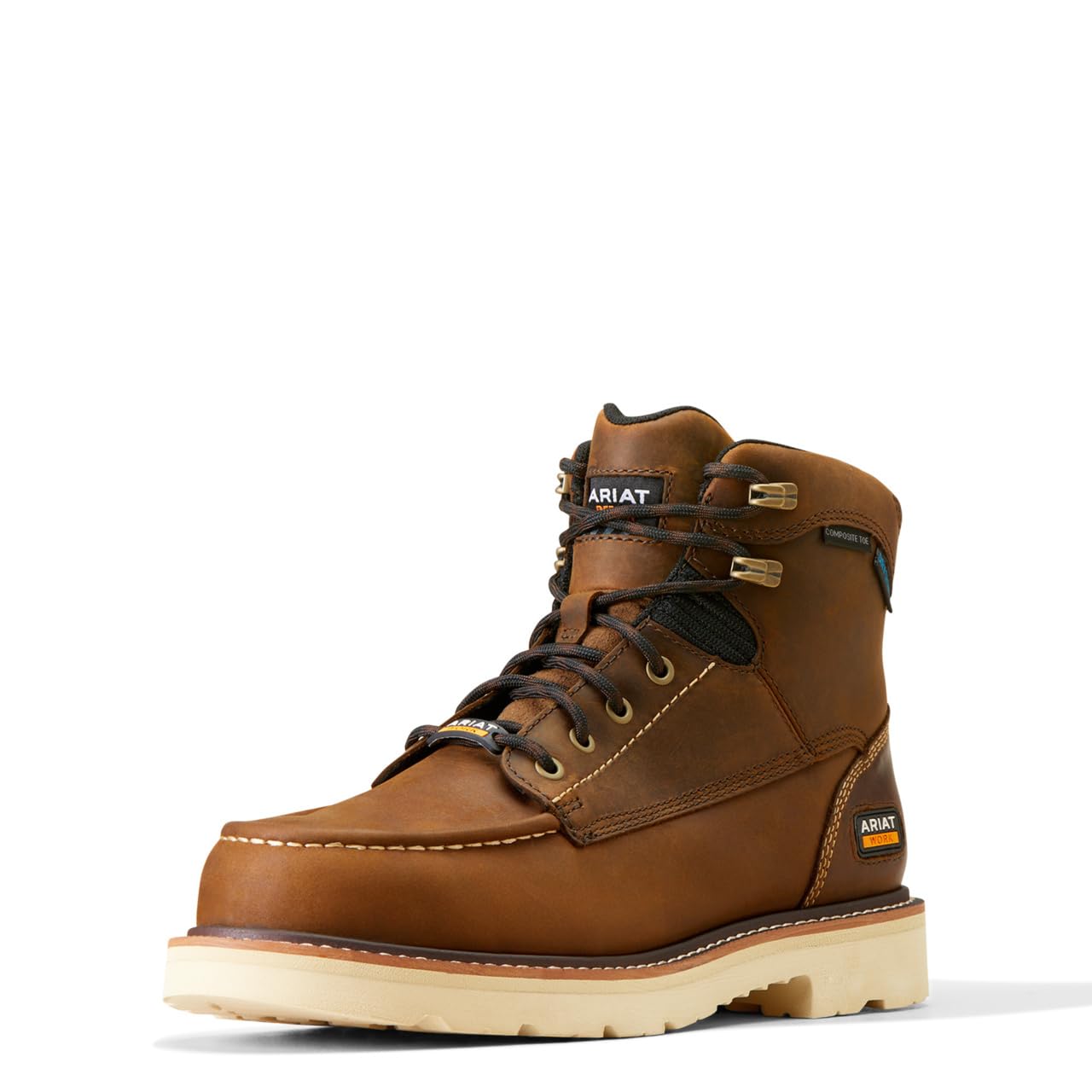
The heavy, cushioned boot for wet outdoor sites and a lot of squatting down.
Ariat built the Rebar Lift around cushioning and stability, which are the two things a long day on uneven ground drains out of you. It is a 6-inch waterproof boot with a composite toe, and at 5.5 pounds it is the heaviest in this article — so it is a deliberate choice rather than a general one. The composite toe keeps the front of the foot non-metallic, and the waterproof build is a real asset on a wet site rather than a dry warehouse floor.
Quality draws the most praise here, comfort follows immediately behind, and foot support gets specific positive attention. The elastic at the ankle has been called out for making it easier to squat down in — the kind of detail nobody puts on a spec sheet but everybody doing knee-level work notices. It looks the part too.
Durability is the concern that keeps the star score below the top of the list. Customers note the soles peeling apart and the boots falling apart after a couple of months — that is the one feedback line to take seriously here rather than dismiss. Watch the sole bond from the day the boot arrives, and treat it as a wet-weather and squatting boot rather than a general demolition workhorse. Fit is mixed and the value read is mixed too, so try before you commit if you can. For a waterproof boot that supports your arches and eases squatting, it delivers; for all-out durability, it is not the sturdiest option in this lineup.
for wet crouch work: a 5.5-pound waterproof composite-toe boot with ankle elastic that supports deep squat work.
caveat is break-in: sole separation has been reported by enough buyers that the boot’s lifespan is the real gamble here.
Know the Specs
ASTM 2413-11 I/75 C/75 — what that label means
It is the standard a steel or safety toe has to pass. The “I” stands for impact, meaning the toe must survive a heavy object dropped on it, and the “C” stands for compression, meaning the toe must not crush under a heavy squeeze. A toe that carries this rating is legally usable on most sites that demand protective footwear. It does not cover slip resistance, electrical shock, or puncture — those are separate ratings you should look for on a model-by-model basis.
Slip-resistant outsole and why oil matters
A slip-resistant rubber outsole is made from a compound that grips a wet or oily floor instead of sliding across it. Oil resistance matters because plain rubber can soften and lose grip when oil hits it; an oil-resistant compound will not break down the same way. Look for wording like “slip and oil resistant” or “heat-, oil-, slip-, and abrasion-resistant” on the listing — that tells you what the maker tested rather than what it looks like.
Steel vs composite vs alloy toe
Steel is metal, tough, and usually the cheapest option. Alloy is a lighter metal that does the same protective job. Composite is non-metal and stays warmer on a cold morning, making it easier to wear in winter. Non-metal toes also suit job sites that use metal detection. The protective standard is the same idea for all three — check that the actual model you buy carries a marked safety-toe rating.
Weight, and how it compounds over a shift
A shoe’s weight is listed per shoe or per pair depending on the maker, so read carefully before comparing two models. A heavier boot often means more leather and a stiffer sole, while a light one is easier to walk in all day. On a standing shift, a heavier boot can be a bonus for stability; on a walking shift, weight adds up by the hour. Compare like for like — the 18.3 oz per-shoe figure on the Kenton is not the same as a per-pair number.
Common Questions
Do steel toe and composite toe work shoes feel different on your feet?
Can I wear work sneakers on a site that requires safety boots?
How long does a waterproof work boot stay waterproof?
Is a steel toe better than a composite toe for puncture protection?
Why do some safety shoes squeak and can I stop it?
Should I buy wide or regular width in safety footwear?
What does the electric hazard rating on a work boot protect against?
Can safety toe shoes be resoled or repaired when they wear out?
The Bottom Line
For most people buying zapatos de construcción, the DEWALT Halogen is the most sensible buy. It carries a certified steel toe with Electric Hazard Protection, a memory foam insole over arch support, and a slip and oil resistant sole — a full safety package that owners find fits like a sneaker. If wet weather is your daily reality, the Skechers Wascana Millit answers with a waterproof upper and a non-metal composite toe at 3.1 pounds — a boot that keeps your feet warm and dry without the metal. And if you want the lightest thing on this page, the KEEN Kenton Mid gives you a composite toe at 18.3 oz per shoe for light-duty indoor days. Pick by the floor you actually stand on — wet concrete, oily shop floor, or dry warehouse aisle — not by the name on the side.
How we choose
We do not accept paid placement. Every pick is matched to a real buyer and a real use-case; we do not hands-on test units.
Sources
Specifications: manufacturer listings and product documentation. Review insights: verified customer reviews, as of November 2026. Pricing: not shown on this page (it changes often); check the current price via the retailer link.
As an Amazon Associate, Tactical Gear Guy earns from qualifying purchases. This does not affect which products we feature.