Specs are compiled from manufacturer listings and verified buyer reviews and can change over time — please confirm the key details on the product page before buying.
If your current boots feel like walking downhill all day, the fix is a level platform. Zero drop boots put your heel and the ball of your foot at exactly the same height, so your stride stays natural instead of pitching you forward. This guide covers nine men’s pairs that genuinely sit flat — leather work boots, winter hikers, and trail models, some waterproof and some not — with the real strengths and the honest catches spelled out.
This guide is built by comparing the manufacturers’ published specifications and the patterns across verified customer reviews, so you get each pick’s real strengths and trade-offs instead of marketing spin.
Some pairs here are thin-soled and ground-hugging, others add cushion and waterproofing for cold, wet trails. Every one keeps a level heel-to-toe platform. Below you’ll find the flat-sole options worth your money, ranked by how they actually wear: zero drop boots for men.
Top Picks


How To Choose The Best Zero Drop Boots for Men
Your first decision isn’t the brand — it’s how much material you want under your foot. That single choice decides whether a boot feels like a barefoot slipper or a cushioned trail hiker, and it matters far more than the logo on the side.
Start with stack height, not the label
Stack height is the thickness of everything between your foot and the ground. A low stack (a thin sole) lets you feel roots and rocks and keeps you agile, but your feet do more of the work. A taller stack softens impact on long days but mutes that ground feel. The Xcursion Fusion, for example, uses a 10mm sole, which sits toward the cushioned end for a barefoot boot.
Check the heel drop is truly level
A zero drop boot keeps the heel and forefoot at the same height — a 0mm heel-to-toe drop. That’s the whole point: no raised heel pushing your weight forward. Look for that 0mm figure stated plainly, because “minimalist” alone doesn’t guarantee a level platform.
Decide if you need waterproofing
A waterproof membrane keeps slush and rain out, but it also traps sweat. That’s why one Vivobarefoot model deliberately drops the membrane for breathability. If you hike wet trails in winter, waterproofing earns its place. If you wear them indoors or in dry heat, a breathable upper is the smarter trade.
Match the toe box to your foot width
A wide toe box lets your toes spread instead of stacking together. For men who’ve spent years in tight boots, that room is often the biggest surprise — a foot-shaped toe box that actually fits the shape of a foot.
Side-by-Side Comparison
| Model | Best For | Drop | Waterproofing | Upper / Build | Amazon |
|---|---|---|---|---|---|
| Jim Green African Ranger Barefoot★ Best Overall | Full-grain leather work & hiking | 0mm (zero drop) | Water resistant | Full grain leather | Amazon |
| HIKE Caspar Pro WinterWinter Pick | Cold-weather winter walking | 0mm (zero drop) | — | Winter barefoot build | Amazon |
| Hike Footwear HF WinterBest Warmth | Warm winter hikes & commuting | 0mm (zero drop) | — | Wide toe box | Amazon |
| Belleville Mini-Mil | Rucking & tactical wear | 0mm (zero drop) | Non-waterproof | Breathable mesh, 2mm midsole | Amazon |
| Xero Xcursion Fusion | Waterproof trail hiking | 0mm (zero drop) | Fully waterproof | 10mm sole, welded upper | Amazon |
| Vivobarefoot Tracker Leather | Breathable all-terrain hiking | 0mm (zero drop) | No membrane (breathable) | Leather upper, All Terrain sole | Amazon |
| Altra Lone Peak Hiker 3 | All-day trail comfort | 0mm (zero drop) | — | Polyester mesh, MaxTrac outsole | Amazon |
| Altra Lone Peak 9 Waterproof Mid | Wet-weather hiking with ankle support | 0mm (zero drop) | Waterproof membrane | Recycled mesh, Stoneguard insert | Amazon |
| Vivobarefoot Tracker Textile AT | Lightweight all-weather hiking | 0mm (zero drop) | Waterproof | Textile, puncture resistant | Amazon |
Detailed Reviews
1. JIM GREEN Men’s Barefoot African Ranger Boots
Our pick — 4.5+★ from 300+ verified ratings; the strongest balance of quality and price.
Leather that looks like a work boot and flexes like a barefoot shoe.
If you want the flat-footed feel of a barefoot boot without giving up real leather, this is the pair to start with. The upper is full grain leather, the same dense material you’d expect on a heavy work boot, yet the whole thing bends and twists like your foot does. That combination is rare — most zero drop boots are textile or mesh, so the leather here is genuinely the differentiator.
The sole is deliberately thin, which means you feel the ground underfoot rather than floating above it. The toe area is roomy enough that your big toe and pinky toe spread out instead of pressing against the sides. There’s no spring in the toe and no built-in arch support — the boot is built to let your foot do its own work. It’s marked water resistant rather than fully waterproof, so it shrugs off a damp trail but isn’t a boot for standing in puddles.
What wins people over is the leather-and-flex combination: full grain leather, sturdy construction, and a thin sole that lets you feel the ground. The catch is that a thin, flexible sole gives you less underfoot cushioning than a cushioned hiker, so if you want padding over ground feel, this isn’t your pick. It’s the strongest all-rounder here because it nails the leather-and-flex balance nobody else offers.
What earns its spot
- Full grain leather upper that bends like a barefoot shoe
- Thin sole delivers real ground feel
- Roomy toe box lets your toes spread freely
- Water resistant for damp trails
- No raised heel — a true 0mm platform
What to know first
- Water resistant only, not fully waterproof
- Thin sole means less underfoot cushioning
- Leather needs care to stay supple
Reach for it if: you want a leather boot that still lets your foot move and feel the ground.
Hold off if: you need a boot for standing water or want plush cushioning underfoot.
2. HIKE Footwear Caspar Pro Winter Barefoot Boots
The zero drop boot you’ll want when the temperature drops.
Winter boots are usually the opposite of natural movement — stiff, heavy, and tilted forward. The Caspar Pro is the exception in this list: it keeps the flat, level platform while adding the warmth and comfort of a cold-weather boot. The build is aimed squarely at winter walking, and the description pitches it on the toes’ natural posture and all-day comfort rather than numbers.
The non-slip outsole is the headline for frost and slush underfoot. Its ground-running comfort holds up on long walks too — the winter build walks like a barefoot shoe, which is unusual once temperatures fall. If your winters involve a lot of pavement walking rather than technical trail, this is a natural place to land.
The honest snag: the published specs on this listing are thin, so you’re trusting the winter-barefoot design rather than a detailed stack height or membrane spec. It’s the warmer option to consider when you want flat feet in December, not the most heavily documented boot on this list.
Cold-weather fit: a flat platform plus warmth — the pair to pick for winter commuting and cold walks where most boots force your heel uphill.
The trade-off: a thin spec sheet. You get the barefoot winter design claim, but not much under-the-hood detail to compare against the leather picks above.
Best for: the man who wants a level-heeled boot for cold-weather daily wear.
Skip if: you need a fully documented waterproof spec before you commit.
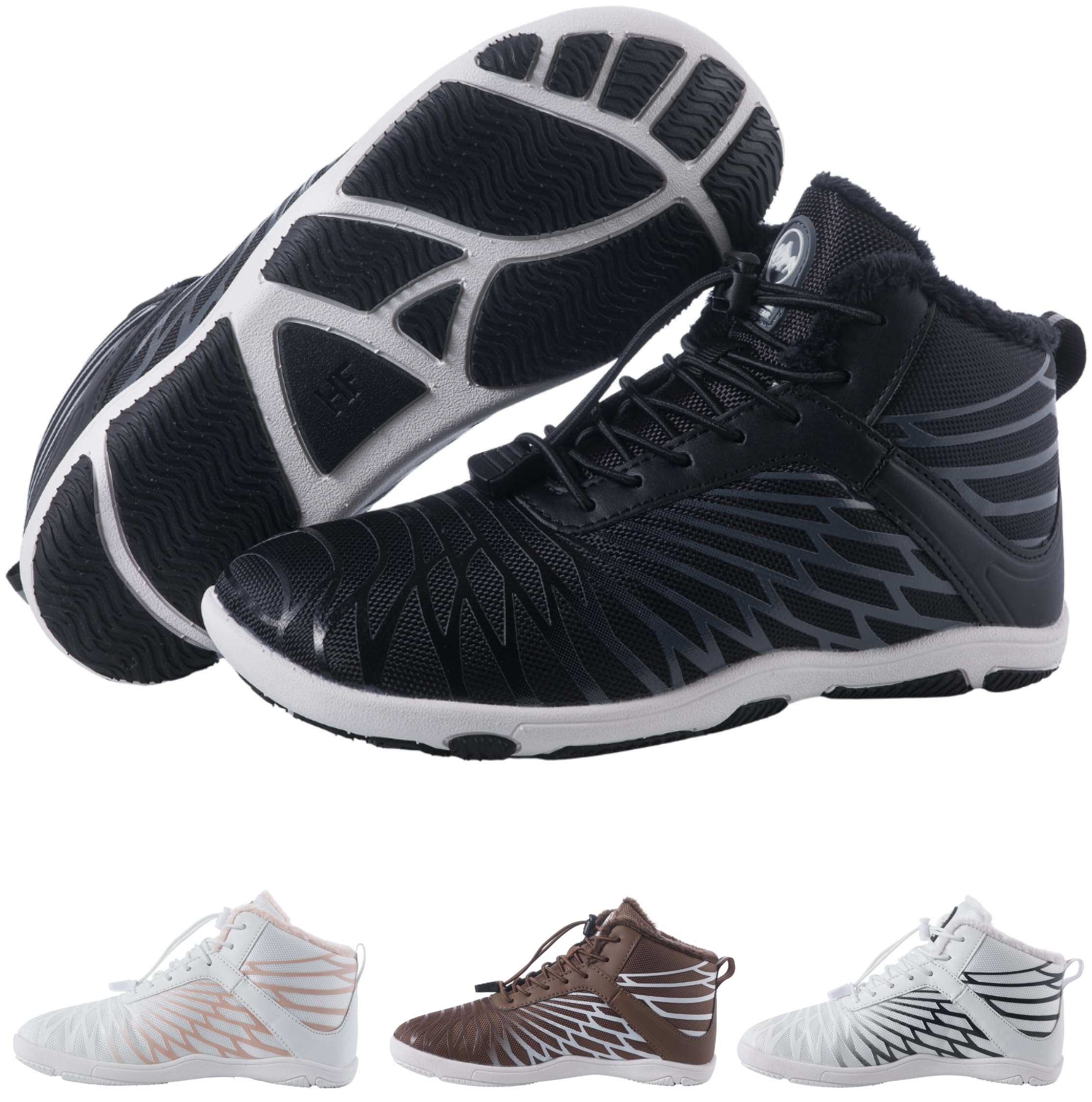
3. Hike Footwear HF Winter Barefoot Boots
Winter warmth without giving up the wide, flat, bendy feel.
This one is the winter remix of Hike Footwear’s best-selling barefoot shoe, and the goal is clear: keep the natural foot movement, add cold-weather protection. It’s designed for hiking, commuting, and winter walks — the day-to-day use where a stiff snow boot would fight your natural stride.
Where it earns loyalty is comfort and fit, the two things buyers return to again and again, followed by warmth. Owners also notice the lightweight build — it walks like a barefoot shoe rather than a clunky winter boot — and some buyers report better balance and steadier foot support after weeks of wear. The wide toe box keeps toes free inside, which is exactly what you want once thick winter socks are involved.
Here’s the realistic picture: it’s a fair-weather-spec boot in winter clothing. There’s no waterproof rating published and no stack-height figure to compare on, so treat it as a warm, comfortable winter walker rather than a deep-snow or standing-water boot. For cold sidewalks and light trails, though, the balance of warmth and barefoot flex is hard to argue with.
Why it lands here: comfort and fit are the two things that keep coming up, and that pair of wins is what you want from a boot you’ll wear every cold morning.
Honest limitation: no published waterproof rating or stack height — so save it for dry-cold days and light winter trails, not deep slush.
Pick this when: you want a warm, light winter barefoot boot for commuting and everyday cold-weather walks.
Look elsewhere when: you’re heading into deep snow or standing water and need proven waterproofing.
4. Belleville Mini-Mil Barefoot Hiking Shoes
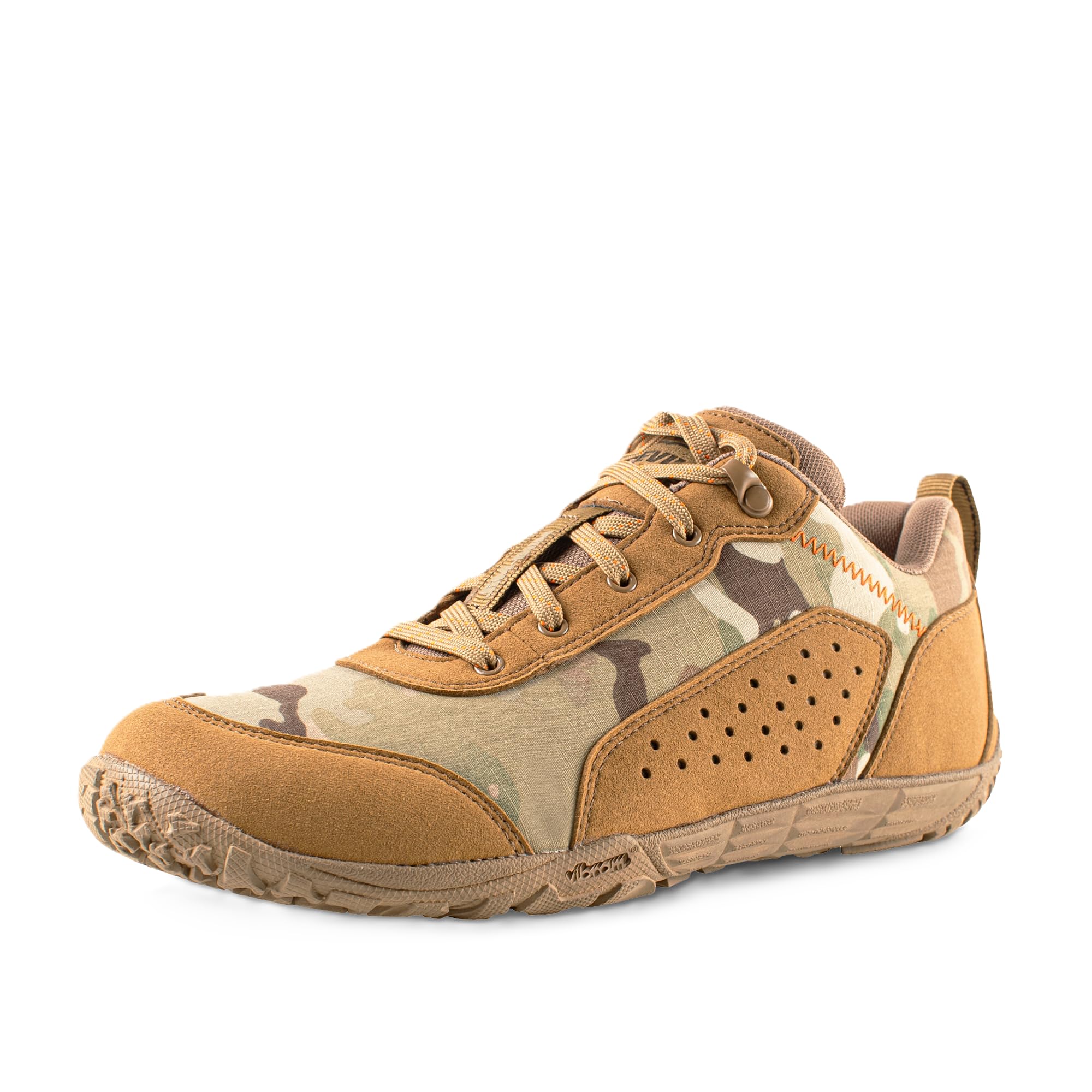
A minimalist shoe built for the guy who wears a pack and walks all day.
Belleville aimed this squarely at hikers, military personnel, law enforcement, and tactical wearers who want minimal footwear — so it’s the most work-oriented pick here. The zero-drop platform keeps your foot level, and the wide toe box gives your toes room to spread on long hikes. The lace-up closure lets you dial the fit before you head out.
The underfoot design is where it shows its purpose. A 2mm die-cut midsole adds a thin layer of shock-dispersing cushioning without going bulky, and the oil-resistant rubber outsole has tread suited to mixed terrain. Strobel stitch construction keeps the whole thing flexible as you move. A moisture-wicking lining helps keep feet drier over extended wear, and the breathable mesh upper handles late-fall and early-winter walks.
Two things to sort out before you buy. First, it’s non-waterproof, so wet trails need planning. Second, sizing runs mixed — some find it true to size, others report it fits about a half-size small, so check the size chart carefully. Otherwise the build quality and durability are what owners keep coming back to, and it looks sharp as a casual minimalist shoe too.
Why tactical wearers like it
- Zero-drop platform for a natural, level stride
- 2mm midsole for thin, honest cushioning
- Oil-resistant outsole grips mixed terrain
- Moisture-wicking lining for long wear
Before you order
- Non-waterproof — plan around wet trail days
- Sizing feedback is split; some say it runs about a half-size small
Made for: ruckers, hikers, and tactical wearers who want a flat, flexible shoe for long days on mixed ground.
Think twice if: you regularly walk wet trails or want a boot that guarantees a full waterproof seal.
5. Xero Shoes Xcursion Fusion Waterproof Hiking Boots
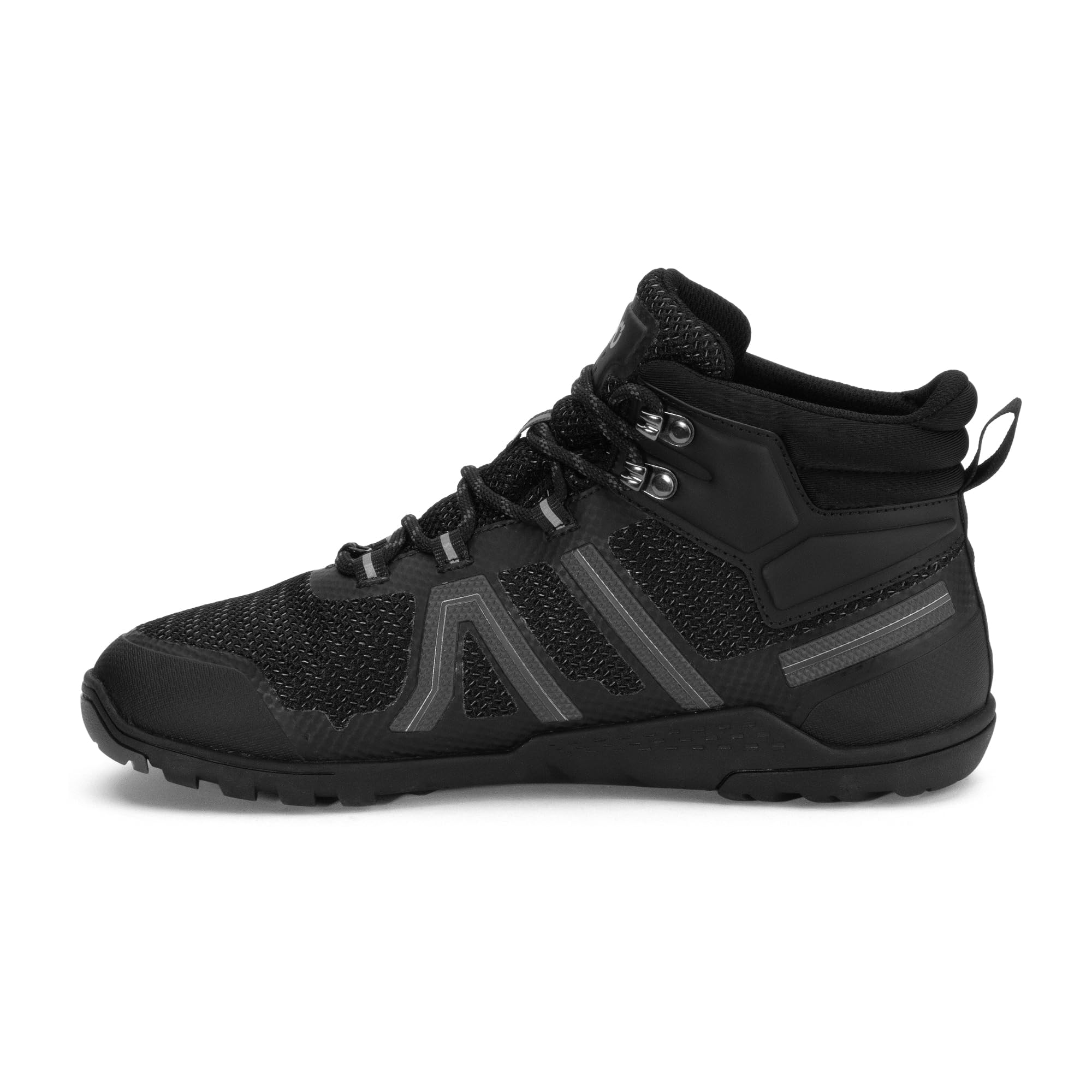
The waterproof trail boot that still lets you feel the ground.
Xero tunes the Xcursion Fusion for hikers who want protection without losing ground feel. The sole is a new 10mm FeelTrue platform, which is a thicker build for a barefoot boot — enough to cushion, thin enough that you still read the trail underfoot. A rugged dual chevron tread with 3.5mm lugs gives the bite, and an embedded TrailFoam layer adds comfort over rocks and roots.
It’s fully waterproof, with a seam-sealed inner bootie and a water-resistant membrane behind the outer mesh — so rain and shallow crossings are handled. The welded upper sits over Huarache-inspired tension straps for a snug fit and better abrasion resistance, and a protective toe cap takes the hits. At 13.7 ounces each for a Men’s 9, it stays light for a waterproof boot, which is why so many buyers call it one of the best options they’ve worn.
Set your expectations on fit though — the toe box draws mixed feedback, with some men finding it too narrow for a wide-foot design. Water resistance and durability also split opinion across owners, so it rewards a careful size check and realistic solo-trail use. For a rugged waterproof hiker that keeps the flat, flexible feel, it’s a strong walking partner.
The waterproof case: a seam-sealed inner bootie plus a 10mm FeelTrue sole and 3.5mm lugs — real rain protection with the ground feel a thick boot would kill.
The fit caveat: the toe box runs narrower than the wide-foot name suggests for a slice of wearers, so try your size before a long trip.
Worth it for: trail hikers in wet climates who want waterproofing without a stiff, dead-feeling sole.
Not the one if: you have very wide feet and need a guaranteed roomy toe box from the start.
6. Vivobarefoot Men’s Tracker Leather All Terrain Hiking Boot
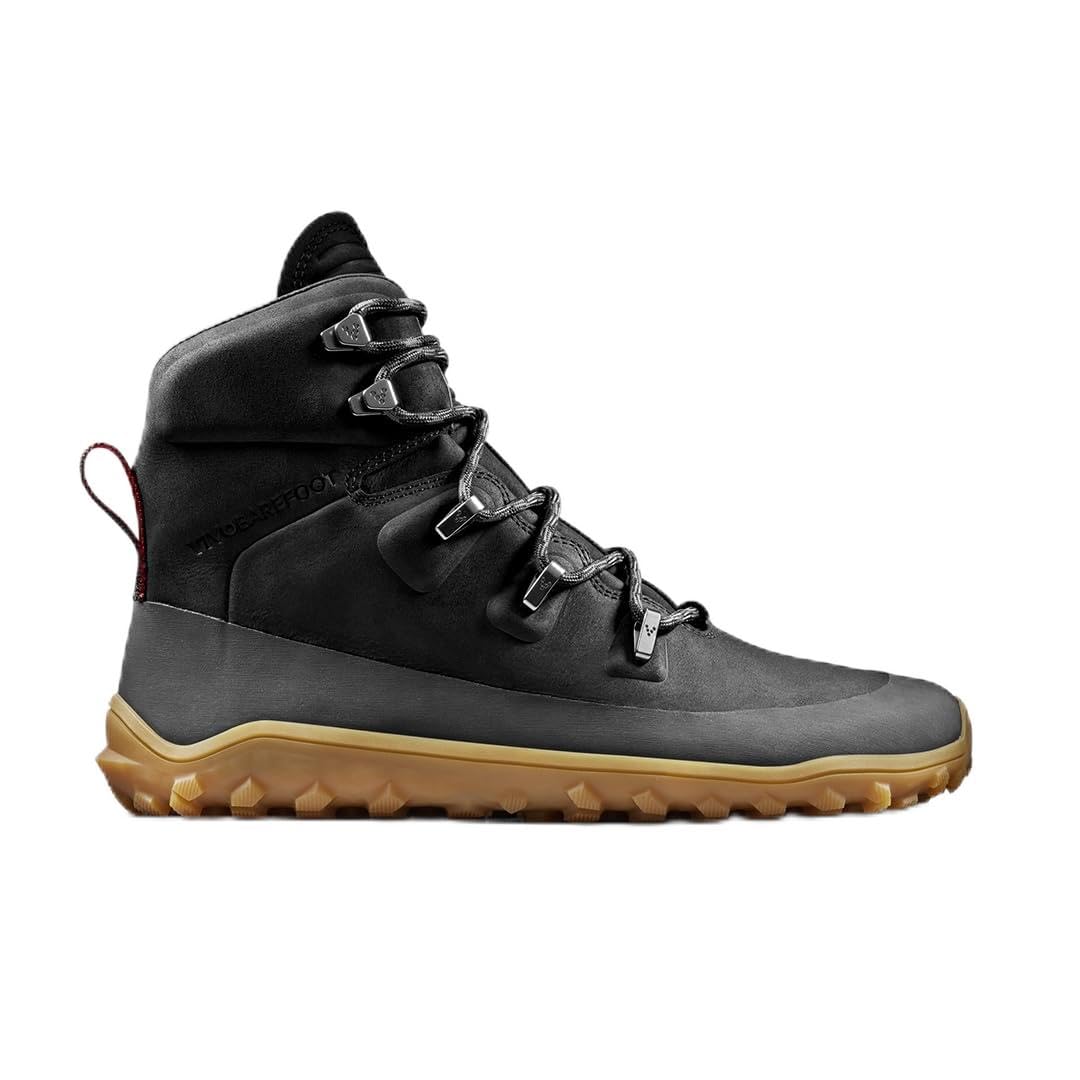
A leather hiker with the membrane removed so your feet can breathe.
This is the boot for a man who runs hot and hates a sweaty foot. Vivobarefoot reengineered the leather upper of its classic hiking boot onto a new All Terrain sole — and deliberately removed the waterproof membrane. The reasoning is simple: no membrane means better comfort and breathability, while the boot still holds up in wet conditions.
Owners love the barefoot feel, and the boot runs true to size. The wide toe box is what converts people — it makes a huge difference to men coming from narrow boots, and the roomier interior leaves feet less cramped and less fatigued over a long hike. The clean leather finish also wears well off the trail.
Understand the trade before you buy: by cutting the membrane, you accept that a downpour will eventually soak through, and leather without a membrane needs care to last. Build quality and durability draw mixed feedback, so this is a pick for breathable, true-to-size comfort rather than a rainproof guarantee. If you want dry air moving around your foot, nothing here does it better.
The breathing argument: no membrane, true-to-size leather, and a wide toe box — the most comfortable hot-weather hike here for men with cramped feet.
The rain reality: without the membrane, heavy rain will get in, and durability draws split opinions — so bring them on dry and damp days, not monsoons.
Choose it for: breathable leather comfort on dry and damp trails where sweaty feet are the enemy.
Pass if: you need a boot you can trust through sustained heavy rain.
7. ALTRA Men’s Lone Peak Hiker 3
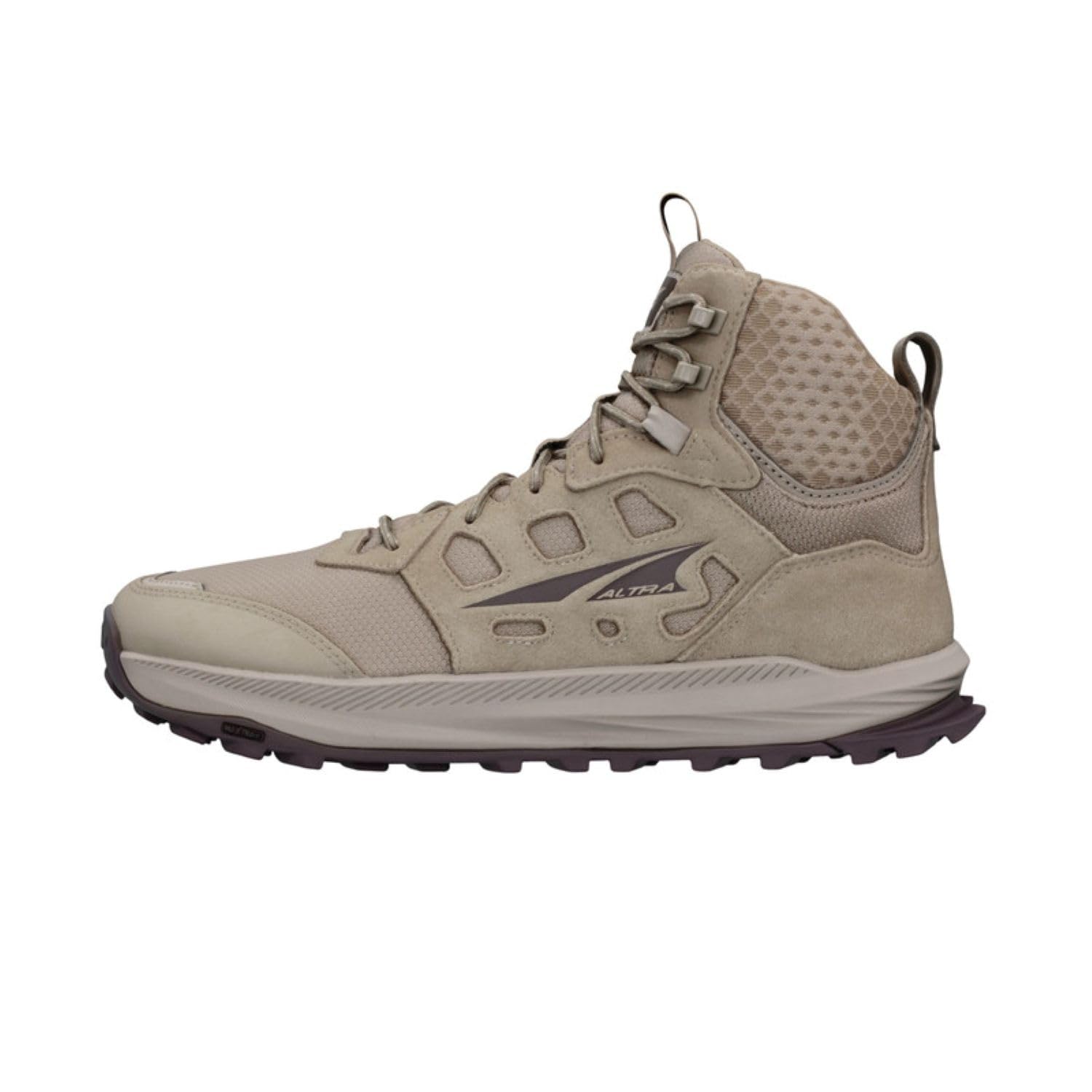
Ankle support and a roomy toe box in a boot light enough to forget.
Altra’s trail boot is the cushioned middle ground here. It weighs 12 oz and wraps the ankle for trail support. The platform is zero drop with a 25mm/25mm max stack height — heel and forefoot level, so no forward tilt. The polyester mesh vamp softens the feel, and a new air-mesh heel collar adds breathability while holding the fit secure.
A rubberized toe cap handles trail scrapes, and the grippy MaxTrac outsole is built for a mix of grip, traction, and durability on varied ground. The midsole uses Altra EGO foam, which is light and designed for comfort and a connection to the ground. The FootShape toe box gives Altra’s roomiest fit, with space through the midfoot so your toes can move freely. The 12 oz build and ankle-height cut carry it from the hike to the rest of your day.
One heads-up on fit: the toe box draws mixed feedback, with some men saying it isn’t wide enough in the toes despite the “roomiest” billing. Weight gets split opinions too. If a roomy-but-secure trail boot with ankle support is what you’re after, this is the comfort play — just size deliberately.
Where it shines: 12 oz, 25mm/25mm level stack, and an air-mesh heel collar — a light trail boot that still supports your ankle.
What to watch: some men find the toe box narrower than expected, so verify the width before you commit to a long hike.
A smart buy for: hikers who want ankle support and cushioning on a zero drop platform.
Second-guess it if: your priority is the absolute widest toe box and this runs narrow on you.
8. ALTRA Men’s Lone Peak 9 Waterproof Mid
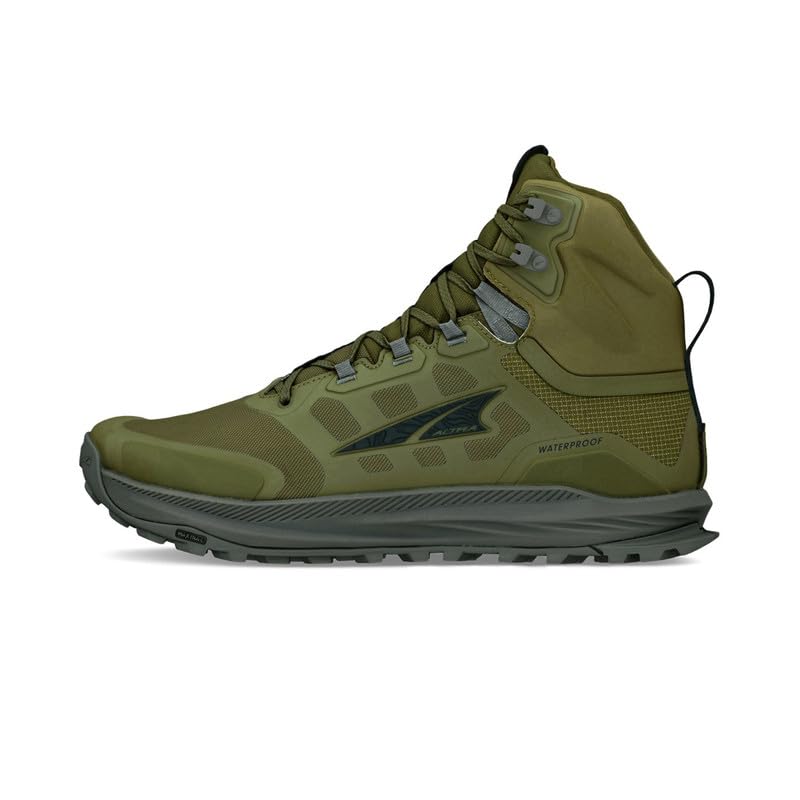
Ankle support plus a waterproof seal for cold, wet trails.
Take the Lone Peak comfort and add wet-weather armor and you get this mid-cut hiker. The upper pairs a Hydroguard waterproof membrane lining by Cosmo with a no-sew overlay and recycled polyester mesh. A molded heel collar and an enhanced lacing system with secure loops lock the fit down. At 13.45 oz it’s slightly heavier than the Hiker 3 above, which is the price of that extra protection and higher cut.
The zero drop platform and roomy toe box keep your stride natural, and a Stoneguard insert underfoot shields you from rocks and debris with a firm, stable feel. The MaxTrac outsole handles grip and traction across terrain, and the Altra EGO midsole keeps the cushioning light and connected to the ground. Buyers consistently rate the wide toe box and comfortable fit, and many appreciate that it stays relatively light for a waterproof mid.
Be clear-eyed about two things. Water resistance splits opinion — some owners find it totally waterproof, others say not at all — so treat “waterproof” as wet-weather protection rather than a guarantee. Toe lining durability drew a complaint, and several note the color isn’t as black as shown. Size and inspect on arrival, and this is a solid wet-trail companion.
For wet days: a Hydroguard membrane, a Stoneguard insert, and a 25mm/25mm level stack — ankle coverage and underfoot protection on a zero drop base.
The honest gap: the waterproofing holds for some and leaks for others, and the color runs off-black — so buy it for the support and fit, not a guaranteed seal.
Right for you if: you hike wet, rocky trails and want ankle support on a natural platform.
Better to pass if: a bulletproof waterproof seal is your single must-have.
9. Vivobarefoot Tracker Textile AT Barefoot Hiking Boots
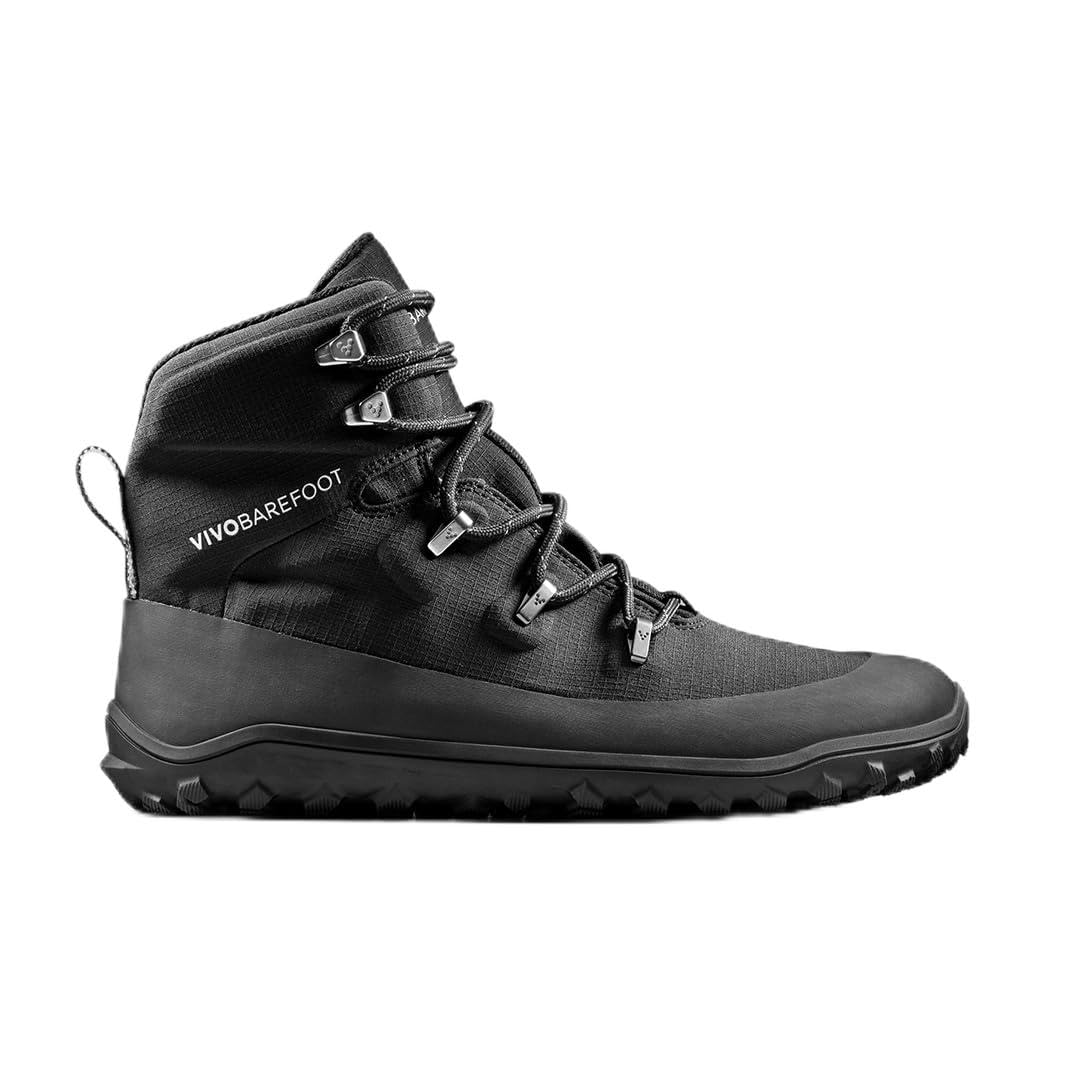
The textile all-weather version with a waterproof, puncture-resistant build.
Where the leather Tracker goes breathable, this textile version goes protective — it’s waterproof and built to be puncture resistant, so it covers wet and rough terrain that would worry a thin mesh boot. It’s the lightweight, all-weather option among the Vivobarefoot picks, with the same wide-fit, grounding approach to a barefoot stride.
Comfort is the clear win here — owners recommend the boot on that alone. The all-weather build means you’re not picking a dry day to wear it, which makes it the more practical textile choice for variable trail conditions.
The caution is durability. Some owners mention that the boot began breaking apart within a month or two, and value splits — some think it’s worth it, others find it overpriced for how long it lasts. It’s a great-feeling boot that asks you to keep an eye on wear, so consider how hard you’ll be on it before you commit over the leather version above.
The appeal: a comfortable, waterproof, puncture-resistant textile boot — the pick for wet, rough trails where you still want the barefoot feel.
The caveat: durability is the sticking point for some, so heavy technical use may wear it faster than the leather Tracker.
Ideal when: you want lightweight, waterproof, all-weather barefoot hiking on mixed terrain.
Hesitate if: you’re hard on boots and need them to survive season after season.
Know the Specs
Heel-to-toe drop (why 0mm matters)
Drop is the height difference between your heel and the ball of your foot. A 0mm drop — a zero drop — means they sit level, so your weight isn’t tipped forward the way a raised heel tips it. That’s what lets your foot land and move naturally on flat ground and trails.
Stack height and ground feel
Stack height is how much sole sits under your foot. A low stack keeps you close to the ground and agile but softer on cushioning. A taller stack adds protection while muting some ground feel. Neither is wrong — it’s a trade between feel and cushioning.
Wide toe box
A foot-shaped, wide toe box gives your toes room to spread instead of bunching. For men used to narrow boots, that extra room is the feature that most often turns a first pair into a repeat buy.
Waterproofing vs breathability
A waterproof membrane keeps rain and slush out but traps sweat in. Removing it improves airflow, which is why one leather Tracker here skips the membrane on purpose. Match the choice to your climate and how wet your trails get.
Common Questions
What does zero drop actually mean in a boot?
Are zero drop boots good for hiking?
How long does it take to adjust to zero drop boots?
Do zero drop boots have arch support?
Should I size up or down in a wide toe box boot?
Can I wear zero drop boots for work?
Are waterproof zero drop boots worth it?
What is the difference between the leather and textile Vivobarefoot Tracker?
Do zero drop boots need a break-in period?
How heavy are zero drop hiking boots?
The Bottom Line
Want a boot that lets your foot sit level and flex like it would barefoot? For most men, the best zero drop boots for men pick is the Jim Green African Ranger Barefoot. It pairs full grain leather with a thin, genuinely flexible sole, so the heel sits level with the toes (zero drop means no height gap between heel and toe) and the boot bends with your foot. If you hike wet trails and want waterproofing, reach for the Xero Xcursion Fusion. And for cold-weather commuting where warmth and comfort come first, the Hike Footwear HF Winter is the one to grab.
How we choose
We do not accept paid placement. Every pick is matched to a real buyer and a real use-case; we do not hands-on test units.
Sources
Specifications: manufacturer listings and product documentation. Review insights: verified customer reviews, as of November 2026. Pricing: not shown on this page (it changes often); check the current price via the retailer link.
As an Amazon Associate, Tactical Gear Guy earns from qualifying purchases. This does not affect which products we feature.