Specs are compiled from manufacturer listings and verified buyer reviews and can change over time — please confirm the key details on the product page before buying.
You want to peel bark off a log or shape a chair leg without fighting a blade that chatters and dives. The tool that fixes both is a draw knife — a two-handled blade you pull toward yourself instead of pushing away. Below you’ll find nine of them, chosen by how long the steel stays sharp, how the handles feel after an hour, and whether the blade actually follows a curve instead of skipping across it.
This guide is built by comparing the manufacturers’ published specifications and the patterns across verified customer reviews, so you get each pick’s real strengths and trade-offs instead of marketing spin.
A flexible blade, a bevel you can sharpen, and a grip that doesn’t blister separate a draw knife you reach for from one that sits in the shed. Start with our top pick and work down until one matches the wood you actually cut: the best wood shaving tool for curved debarking work.
Top Picks


How To Choose The Best Wood Shaving Tool
The biggest mistake first-time buyers make is grabbing the longest blade they can find. A long blade is great for stripping bark off a felled trunk, but on a chair spindle it digs in and rips. Match blade length and curvature to the wood you cut and the rest of the spec sheet matters far less.
Blade length and curvature
A curved edge — measured across the cutting span, from drawing a 5-inch edge to a 10-inch one — lets the tool hug the round of a log. A straight edge is the better pick for flat faces and joinery cleanup. If you cut green branches and fence posts more than you carve, lean curved. If you true up boards, lean straight or plane-style.
Steel type and bevel angle
A high-carbon steel blade sharpens easily and takes a keen edge, which matters because a draw knife is only as good as the edge you can restore. A 30-degree bevel is the common working angle for debarking steel; a flatter bevel shaves cleaner but dulls faster on gritty bark. Hardened tool steel — think 58–62 HRC on the Rockwell hardness scale — holds an edge longer on tough work.
Handles and grip
You control a draw knife by pulling with both hands, so handle shape is the whole game. Oak and ash handles finished with oil resist sweat and give you a consistent hold through long sessions. Straight, fixed handles are stable; offset or cranked handles clear your knuckles on deep cuts.
What kind of wood you cut
Bark-and-knot work is rough on any edge, while smooth seasoned hardwood or softwood rewards a finely honed blade. Several makers specifically note their knife is meant for bark-free, knot-free wood — read that line twice before you buy for firewood duty.
Side-by-Side Comparison
| Model | Best For | Blade Length | Blade Material | Handle Material | Amazon |
|---|---|---|---|---|---|
| FLEXCUT KN16 Draw Knife★ Best Overall | All-round curved shaving | 5 inches | 1095 High Carbon Steel | Ash Wood | Amazon |
| Wadoy 8in Curved Draw ShaveBudget Champion | Budget debarking | 5 inches | High Carbon Steel | Wood | Amazon |
| BeaverCraft DK1 Draw KnifeCompact Pick | Straight shaping and smoothing | 3 inches | High Carbon Steel | Oak Wood | Amazon |
| Beendou 10-Inch Curved Draw Knife | Broad log debarking | 10 inches | Manganese Steel | Wood | Amazon |
| BeaverCraft DK2s Draw Knife | Shaping with sheath included | 4.3 inches | High Carbon Steel | Oak Wood | Amazon |
| SUIZAN Kanna Japanese Planer | Pull-stroke smoothing | 1.42 inches cutting width | Japanese Steel | Oak Wood | Amazon |
| POWERTEC Chisel Plane 72162 | Tight-space trimming | Flat blade | SKD11 Tool Steel | Maple Wood | Amazon |
| RUITOOL Flat Spokeshave | Curved workpiece shaping | 3 mm thick | 65Mn Steel | Beechwood | Amazon |
| JORGENSEN NO.60-1/2 Planer | Detail planing and trimming | 1.38 inches cutting width | O1 Tool Steel | Ductile Iron Body | Amazon |
Detailed Reviews
1. FLEXCUT Wood Carving Tools Set 5-Inch Draw Knife KN16
Our pick — 4.5+★ from 950+ verified ratings; the strongest balance of quality and price.
The flexible edge that bends around a curve instead of fighting it.
What this knife does better than any other pick here is flex. Its 5-inch blade is built to bend slightly so it follows concave and convex surfaces — the round of a log, the hollow of a spoon bowl, the swell of a chair spindle. That flex is the difference between a tool that takes off shavings and one that gouges a groove you didn’t want.
The blade is 1095 high carbon steel, a simple, tough steel that takes a razor edge and gives it back every time you run it over a stone. Fresh from the box it’s shaving-ready, and the flex remains after ten minutes of pulling through green cedar. Cutting edge is convex, meaning the bevel rolls into the steel rather than meeting it at a sharp line — a sturdier edge for real work. Handles are ash wood, ambidextrous, so either hand leads without complaint.
The key spec: 5 inches of cutting edge. Compare it with the FLEXCUT’s closest competitor, the Beendou with its 10-inch blade — a leap in width, but that extra length comes with far less fine control on detail. And unlike the BeaverCraft, which is limited to bark-free wood, here the flex genuinely handles rough contour work. Flexcut has been making carving tools in Erie, Pennsylvania since 1992, so replacement blades and service are easy to find.
What makes it the front-runner
- Flexible 5-inch blade tracks contours for smoothing and shaving
- Leather sheath included to protect the edge between sessions
- 1095 high carbon steel sharpens easily and takes a keen edge
- Ambidextrous ash handles suit long two-handed pulls
Where it asks a little patience
- The blade should be honed before its first heavy use
- Not sized for stripping wide fence posts in one pass
- Demands a steady hand to avoid digging into soft wood
For the buyer who wants one knife that flexes for shaping and holds an edge for debarking, this is it. It’s the crowd favorite — 4.5+ stars across 900+ ratings, the highest of any draw knife in this guide.
Best for: anyone who shapes curves as often as they strip bark.
Look elsewhere if: you only ever work flat boards and want a fixed, rigid blade.
2. Draw Shave Knife, 8in Curved Draw Knife by Wadoy
Bark peels away on a log or fence post without blowing your tool budget.
Here’s the number to fix on: a 5mm-thick blade with a 30-degree bevel, on a 5-inch curved edge. That thickness is meaty for a knife in this class. It means the edge won’t deflect when you lean into a knot, so you peel off bark and shavings in a steady strip rather than a jerky bite.
The blade is heat treated to roughly HRC 30, soft enough to touch up on a stone in a few passes. Understand that number: 30 on the Rockwell C scale is on the soft side, which cuts both ways — it’ll take an edge quickly but need it back sooner than a harder tool steel. The upside is you can touch it up with a few passes on a stone. Hold the wood firmly in both hands, bevel up, and pull the shavings toward you. Bevel up, wood held firm, steady pull toward you — that’s the whole technique.
Two dual wooden handles give you that secure two-handed hold for better accuracy and less hand strain. It is a debarking tool first — logs, fence posts, firewood — and a rough shaper second, for hollowing a bowl or shaping a leg. When you want a tool to knock bark off green wood without a big spend, this is the value pick.
The value read: the blade is where the money went — a thick, curved, heat-treated cutting edge on a plain wooden handle. That’s the right trade at the entry tier.
Set your expectations: sharpness arrives mixed. Some blades come ready to shave and some need a session on a stone first. Budget a sharpening stone into your first day with it and you’ll be perfectly happy.
Grab this if: your job is bark removal and you want a thick blade cheap.
Pass if: you need a fine, pre-honed edge for carving detail straight from the box.
3. BeaverCraft Draw Knife DK1-4
A short straight blade for shaping clean, smooth wood into curves and flats.
This one is built for the carver who works knot-free, bark-free stock. Its 3-inch straight plain-edge blade shines when smoothing a spoon blank or fairing a chair leg — precise straight cuts, concave shapes, and intricate curves are what it was hardened for. For pure debarking on rough green logs, the flexible picks above do the job better.
The handles are durable oak treated with natural linseed oil, which keeps them supple and comfortable through long carving sessions. Craftsmanship comes from Ukraine, built for beginners and pros alike, and the high-carbon steel blade is expertly hardened for optimal firmness. One important note from the maker: the blade is best suited to smooth wood, free of bark and knots.
Length is 14 inches end to end — a full, long-span tool that wants two hands on it — versus the 5-inch working span on the Wadoy above, a substantial difference in reach and leverage. Owners rave about the quality most, and the sharpness reputation holds up right from the start.
Strengths it earns its keep with
- 3-inch plain high-carbon blade for controlled shaping
- Oak handles finished in linseed oil for long sessions
- Supports precise straight cuts and fine curves
Where it’s a narrower fit
- Not meant for bark or knotted wood
- A few buyers report the tang snapping under heavy use
- Durability feedback splits between sturdy and short-lived
Reach for it when: you’re smoothing clean hardwood or softwood, not peeling bark.
Think twice if: your work is rough firewood and green trunks with knots.
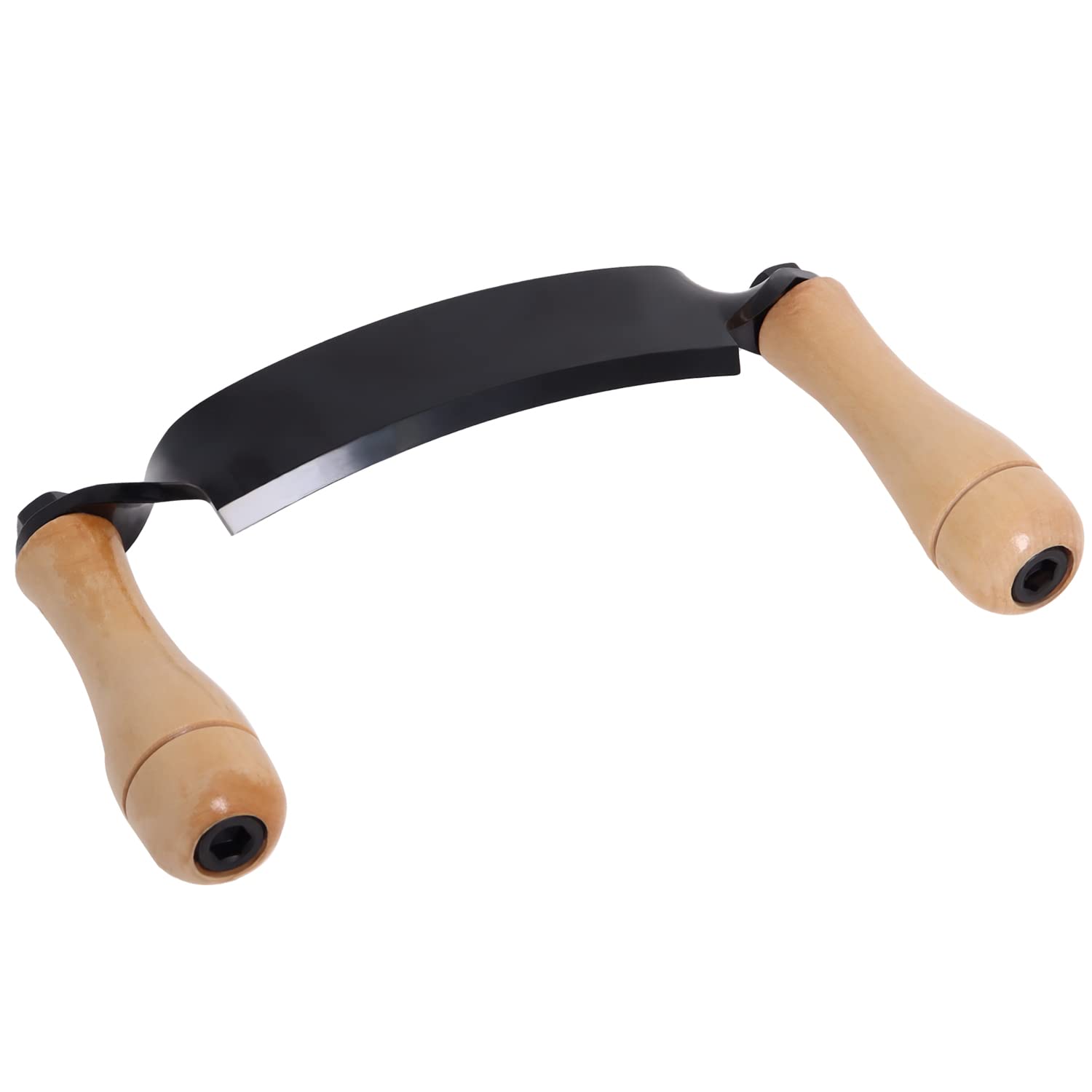
4. Beendou 10-Inch Curved Draw Knife
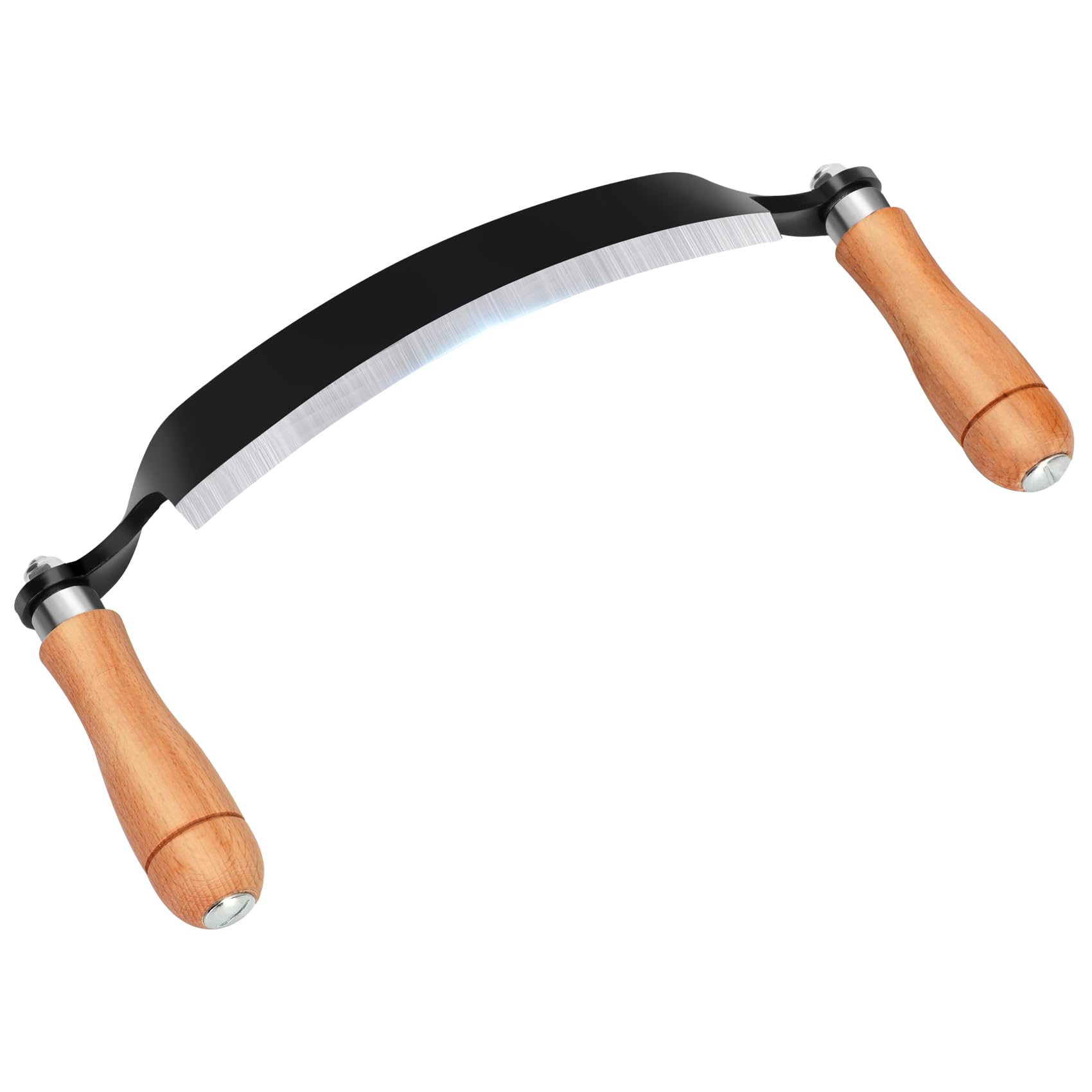
Ten inches of curved steel that eats bark off fence posts in broad strips.
When you strip bark off a whole fence post or a dozen logs, width is the whole game. Here the curved edge spans 10 inches, so every pulling stroke takes off a wide band. The flex on this blade is built into the curve, so it keeps contact with a round trunk as you work down the length. That’s how it covers so much ground per pass.
Manganese steel with a 30-degree bevel drives controlled stock removal. The blade is painted to reduce moisture exposure during routine storage, and the dual contoured wood handles keep a secure two-handed grip while you balance the draw. Use it for debarking, shaping posts, tapering, preparing firewood, or roughing out a blank before you reach for the carving knife. The maker backs it with a one-year warranty.
The one caveat buyers raise most is the edge as shipped: it arrives serviceable but not the finished pocket-knife bite you might picture. Give the bevel a light hone, wear cut-resistant gloves, secure the workpiece, and this curved beast settles in. Its value-for-money reception is positive overall.
Where it shines: broad debarking. The 10-inch curved edge wants big round work, and on it you’re full-width on every stroke.
The morning routine: sharpen before use with the bevel facing up, and inspect the edge between projects. A light hone before each session keeps the 10-inch edge biting through bark instead of skidding over it.
Pick it for: fence posts, firewood, and logs that need bark gone fast.
Skip it for: fine spoon carving where a 10-inch blade is too much tool.
5. BeaverCraft DK2s Draw Knife with Leather Sheath

Comes with its own leather sheath, so the sharp edge travels safely between jobs.
It weighs 136 g and measures 12.99 inches end to end, with a 4.3-inch high-carbon steel blade. The standout is right at the shipping box: a leather sheath is included, protecting the edge in a tool bag and keeping it honest on the trail. For anyone who carries a draw knife out to a work site, that’s a small thing that matters daily.
The blade is hardened, sharpened, and polished, so you can pick this up and shave a live edge straight away. It cuts both softwood and hardwood without struggling. Handles are ergonomic oak under natural linseed oil, designed so you can work a long stretch before your hands tire. NOTE: it works best on wood with no bark or knots.
Ease of use earns steady mention, and live-edge work is where it gets noticed. That said, the durability and long-term material quality earn mixed feedback here — some owners find it wears well, others don’t. Treat the tang with care on deep pulls, and it does what a shaping draw knife should.
The case for it
- Leather sheath keeps the blade protected in transport
- Sharpened and polished for use right from the start
- Oak linseed-oiled handles reduce hand fatigue
The honest catch
- Designed for bark-free, knot-free wood only
- Durability feedback is split between holding up and not
- Some find the value less certain at the mid-range tier
Best matched to: carvers shaping clean stock who want a sheathed, ready-to-work blade.
Not the pick for: rough bark stripping where knots will chew at the edge.
6. SUIZAN Kanna Japanese Wood Planer 1.7″ Double Blade
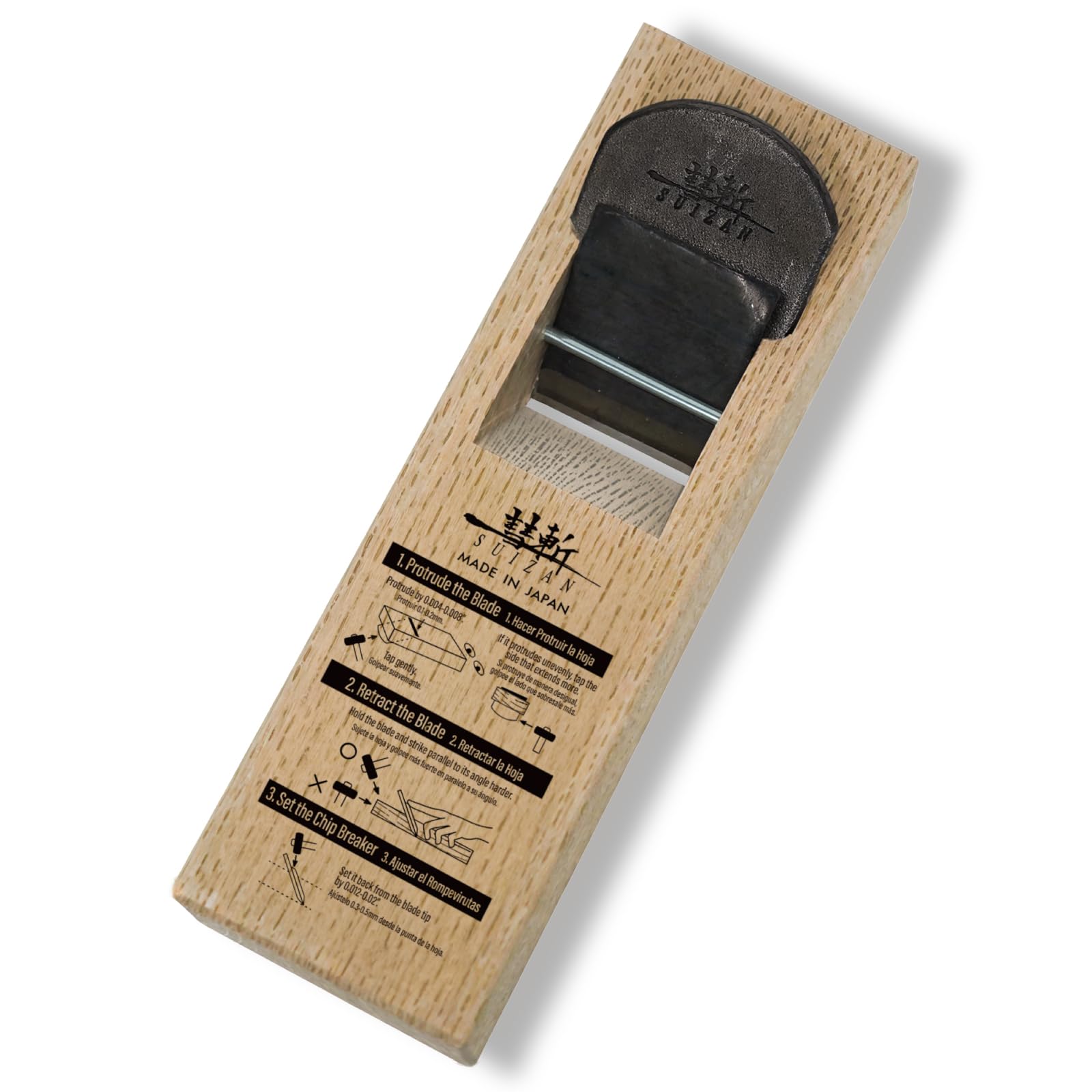
A pull-stroke plane that shaves a sheet so thin you can read through it.
This isn’t a two-handle draw knife — it’s a Japanese hand plane, and it earns a spot because it shaves in the same smooth, controlled way for finishing work. You pull it toward you, which gives better control than pushing, and it handles smoothing, flattening, and chamfering on small parts. The oak body is 7.09 inches long, and its Japanese steel blade is 1.65 inches wide with a 1.42-inch cutting width.
The double-blade set is one plane iron paired with a metal chip breaker. There are no adjusting screws: you tap the top of the blade with a hammer to advance it a little at a time, and tap the body left and right to retract it. Set the chip breaker close to the edge and it glides.
At 11.29 oz (305 g) and hand-powered, it wants to live on a workbench rather than in a tool roll, but a serious hobbyist will appreciate its weight and balance. It leaves very smooth, flat finishes on both hard and soft woods. If you want the final finish on a tabletop or picture frame, this is the tool that gets you there.
How it differs: no adjustment screws, no sharpening jig. It’s an old-school plane that rewards a learning afternoon — once you’ve tapped the blade into place, that feel becomes yours.
Set up before you cut: sharpen on a whetstone whenever the edge dulls, and set the blade using light taps only. It arrives sharp and glides right away.
Suits: the woodworker who wants a whisper-thin finishing shaving on small boards.
Not for: debarking a whole log or anyone who expects a screw to set the depth.
7. POWERTEC Chisel Plane with Flat Blade 72162
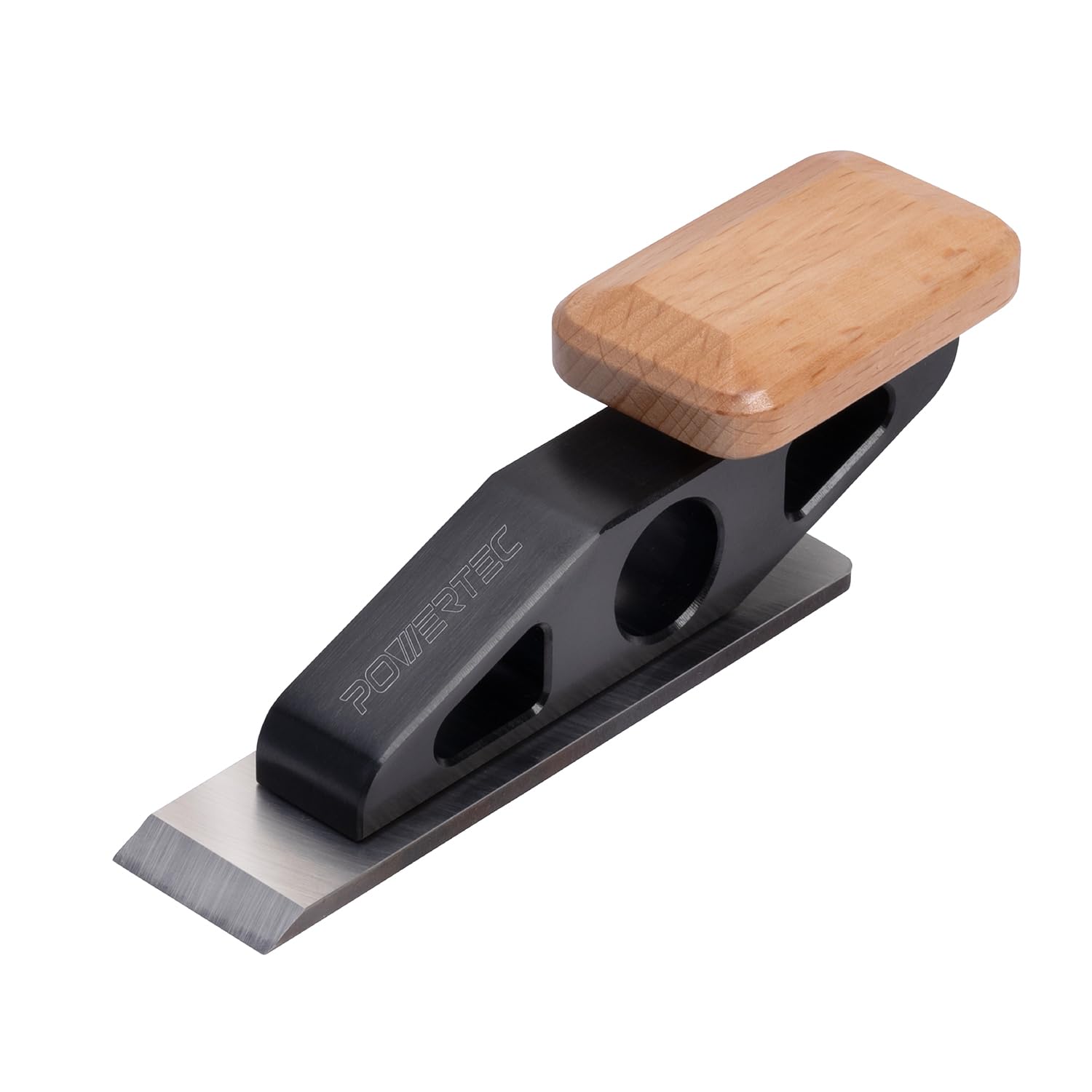
The small flat plane that reaches corners and tight spots the big planes can’t touch.
Where the others shave big surfaces, this one shaves the spots you can’t reach. It trims plugs flush, cleans dried glue squeeze-out, and pares joinery surfaces in tight corners. The blade is a high-carbon SKD11 tool steel at 58–62 HRC — a hard, wear-resistant edge that holds up when you’re digging into glue and end grain.
This is a compact tool that is easier to control than a traditional large chisel plane. The one-piece machined aluminum body weighs 5.92 ounces, and the resin-infused maple handle keeps a firm grip. Setup is simple: the polished blade is centered and locked by a single screw and an alignment pin, so no complex fiddling. And when the blade wears, the POWERTEC 72164 flat blade and 72165 spear point blade drop in as replacements.
Sharpness and ease of sharpening are what win people over most, with trimming performance close behind. It’s a bench tool for detail work, not a bark stripper. Grab it when a flush plug or a glue line needs surgery and your block plane doesn’t fit.
Where it gets called for: trimming wooden plugs, cleaning glue from corners, and paring joinery surfaces right where two pieces meet.
What to expect: it’s a small tool. For leveling a wide board it’s the wrong tool entirely; for the tight, fussy spot it’s exactly right.
Worth grabbing if: clean plugs and tight joinery are part of your routine.
Leave it if: you need to shave large flat surfaces.
8. RUITOOL Flat Spokeshave for Woodworking
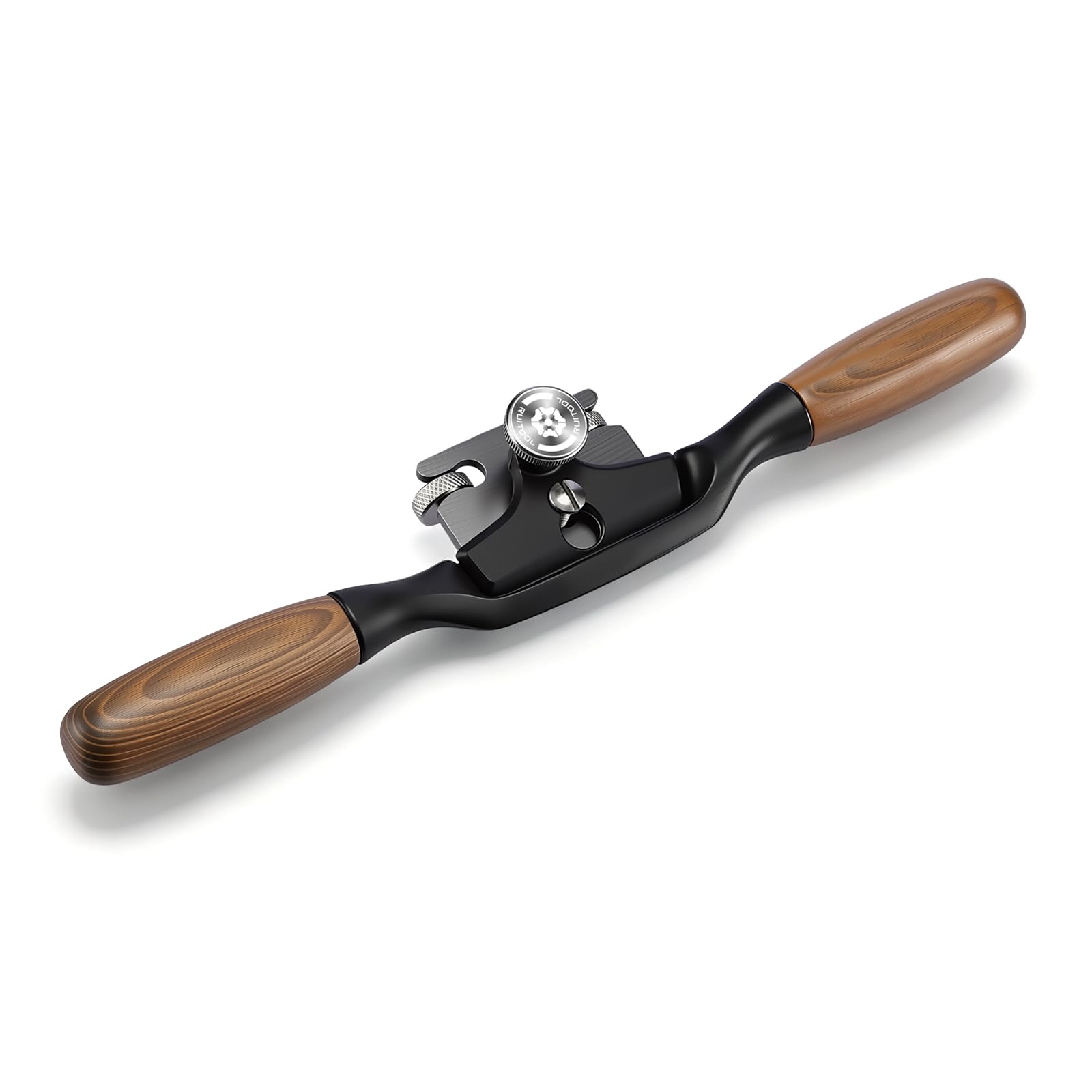
A spokeshave that dials in fine cuts on curved and flat workpieces alike.
A spokeshave is the tool to reach for when a draw knife is too blunt and a plane won’t follow a curve. This one’s 3 mm-thick 65Mn hardened steel blade rates HRC 60 ± 4, so it keeps its edge through a long run of shaping. You get consistent material removal for edge trimming, surface refinement, and detailed shaping.
A dual-screw adjustment mechanism lets you align the cutting edge and fine-tune the cutting depth. Set the blade, tighten the center locking knob, test on scrap, and tweak as needed. The ductile cast iron body and stainless steel components give it stability, and beechwood handles support a comfortable two-handed grip for balance along the grain.
Where it earns its place in a kit: shaping furniture components, tool handles, and other flat or convex workpieces. The ductile cast iron body gives it a solid, dense feel that lets you guide with your whole wrist rather than pinching. It’s a hand tool, so there’s no cord, no setup, and nothing to plug in.
Plainly: the depth adjustment is the feature — you can go from a roughing pass to a fine finishing shave by turning screws, not changing tools.
Reach for this if: you shape chair legs and curved stock where a spoke shave beats a knife.
Skip if: your only job is rough bark removal off a log.
9. JORGENSEN NO.60-1/2 6-1/4″ Wood Planer

A block plane so well machined it makes fins shavings on the first pass.
The JORGENSEN scores its reputation on construction. The body is ductile iron, drop-tested for rugged use, and the blade is professional-level O1 tool steel that sharpens, resets, and sharpens again. The 1.38-inch cutting width suits detail work rather than wide boards, but it produces fine, thin shavings on small jobs.
Two things to know about it: the cutting depth adjusts with a simple knob turn, and the mouth width is also adjustable. Both make it a forgiving tool for beginners and a precise one for pros. It weighs 1.5 pounds and is small enough to keep close. The flat bottom is meticulously polished so the tool glides.
What this does that the bigger planes can’t is balance. The craftsmanship shows in the well-machined interior and the solid feel, so it handles trimming, polishing, and deburring jobs with practiced control. Depth adjustment and flatness are the aspects that draw mixed feedback; a handful of buyers find the base needs tuning from the start. Most owners find it one of the best small planes they’ve used.
What it nails
- Ductile iron body drop-tested for long wear
- O1 tool steel blade holds and resharpens well
- Adjustable depth and mouth width
What to watch
- Cutting width of 1.38 inches is detail-oriented
- A few find the base needs tuning at first
- Heavier than the aluminum-bodied alternatives
This is your tool if: you want one small, accurate plane for finishing work.
Don’t pick it if: you need to cover wide boards in a hurry.
Know the Specs
Blade Length and Shape
Blade length sets how much wood one pull removes. A 10-inch curved blade strips a wide band of bark per stroke on a fence post. A 3- to 5-inch blade gives you precision for shaping a spoon blank or a chair spindle. Curved edges hug round logs; straight and flat edges suit boards and joinery.
Blade Steel and Hardness
High-carbon steel sharpens easily and takes a keen edge. Manganese and SKD11 tool steels hold up to tougher cutting. Hardness on the Rockwell scale (HRC) tells you how well the edge resists wear — harder steels stay sharp longer but are harder to touch up yourself. Bevel angle, often 30 degrees, defines how the edge slices.
Handle Material and Grip
Two-handed control depends on handle shape. Oak, ash, beechwood, and maple are the common choices, often oiled for grip. Fixed, straight handles are stable; ergonomic or offset handles clear your knuckles on deep cuts and reduce fatigue on long jobs.
Adjustment and Setup
Draw knives have no adjustments — you hold and pull. Planes and spokeshaves often offer depth knobs or dual-screw adjustments to fine-tune the cut. The simpler the setup, the faster you can get to work; the more adjustable the tool, the more control you gain over shaving thickness.
Common Questions
What is the difference between a draw knife and a spokeshave?
Do I need to sharpen a draw knife before first use?
Can a draw knife handle hardwoods and softwoods?
What bevel angle should a wood shaving tool have?
Is a curved or straight blade better for debarking?
How do I stop a draw knife from diving into the wood?
What does HRC mean on a wood carving blade?
Can I use a block plane or Japanese plane for the same jobs as a draw knife?
How do I keep a wood shaving tool from rusting?
Is a shorter blade safer for a beginner?
The Bottom Line
For most wood shavers, the wood shaving tool that earns the top slot is the FLEXCUT KN16 Draw Knife because its flexible 5-inch blade follows curves, its 1095 steel holds an edge, and it comes with a leather sheath — a combination that makes it useful from debarking to fine shaping. If you need to strip bark off fence posts and firewood at speed, grab the Beendou 10-Inch Curved Draw Knife and hone it before the first pull. And for cleaning up tight joinery and plugs, the POWERTEC Chisel Plane is the one to reach for.
How we choose
We do not accept paid placement. Every pick is matched to a real buyer and a real use-case; we do not hands-on test units.
Sources
Specifications: manufacturer listings and product documentation. Review insights: verified customer reviews, as of November 2026. Pricing: not shown on this page (it changes often); check the current price via the retailer link.
As an Amazon Associate, Tactical Gear Guy earns from qualifying purchases. This does not affect which products we feature.