Specs are compiled from manufacturer listings and verified buyer reviews and can change over time — please confirm the key details on the product page before buying.
Your Xfinity bill keeps climbing partly because you are still renting their gateway. Buying your own modem and router is the fastest way to cut that line item, but only if the hardware is actually certified to activate on Comcast’s network. That is the whole game here: a box that cuts the rental fee the day it powers on and holds a steady connection when the neighborhood network is congested.
This guide is built by comparing the manufacturers’ published specifications and the patterns across verified customer reviews, so you get each pick’s real strengths and trade-offs instead of marketing spin.
Before you read on, one honest note. This list uses flexible, human-like matching for Xfinity and Comcast compatibility, so not every pick is the exact model number you typed into the search bar. The nearest same-type unit that serves the same purpose made the cut instead. Below you will find the best xfinity compatible routers and modems for real homes and real cable plans.
Top Picks


How To Choose The Best Xfinity Compatible Routers and Modems
The single most expensive mistake here is buying a modem that your cable provider will not activate. Every device in this list is a retail cable unit built for Xfinity-type service, but you still have to match model to plan speed and match modem to router type. Read the three checks below before you spend anything.
Modem only, router only, or both in one box?
A modem translates the coax cable signal into internet. A router turns that internet into Wi-Fi. A combo unit does both jobs in one chassis. If you buy a modem-only box, you must add a separate router or nothing wireless connects. A 2.5 Gigabit Ethernet port on the modem (a data pipe that moves 2,500 megabits per second over a cable) matters because it lets a fast router actually reach the speeds you pay for.
Match the DOCSIS version to your cable plan
DOCSIS is the cable industry standard that sets how much data travels down the coax. DOCSIS 3.0 modems are fine for plans up to the speeds listed on their own spec sheets. DOCSIS 3.1 is the newer standard and is what multi-gig plans from providers like Xfinity need to reach their top speeds. Buying a 3.1 unit gives your plan headroom for future upgrades.
Coverage in square feet is your router’s real job
Routers and mesh systems advertise a coverage figure in square feet. A three-unit mesh kit quoting 5,500 square feet is doing a different job than a single router quoting 2,500. Mesh spreads one network name across several access points, so you roam around the house without reconnecting. A single router with beamforming focuses signal toward your devices and suits smaller footprints. Pick the mesh kit or single router that matches your floor plan, not the coverage number that sounds biggest.
Side-by-Side Comparison
| Model | Best For | Device Type | Top Speed | Coverage | Amazon |
|---|---|---|---|---|---|
| TP-Link Deco S4 (3-Pack)★ Best Overall | Whole-home mesh Wi-Fi | Mesh router system | 1200 Mbps | 5,500 sq ft | Amazon |
| TP-Link AX3000 Archer AX55Speed Leader | Fast Wi-Fi 6 on a budget | Router only | 2976 Mbps | Strong whole-home | Amazon |
| Motorola MB7621Modem Workhorse | Pairing with your own router | Modem only | 1000 Mbps | Not stated | Amazon |
| TP-Link AX6000 Archer AX80 | Multi-gig wired connections | Router only | 6000 Mbps | 3+ bedroom homes | Amazon |
| Hitron CODA56 | Multi-gig cable plans | Modem only | 2.5 Gbps | Not stated | Amazon |
| Motorola MB8600 | Gigabit plans, proven reliability | Modem only | 6 Gbps | Not stated | Amazon |
| NETGEAR Nighthawk CAX30 | Replacing a full rental gateway | Modem-router combo | 2.7 Gbps | 2,500 sq ft | Amazon |
| Arris Surfboard S34 | Next-gen upload speeds | Modem only | 2.5 Gbps | Not stated | Amazon |
Detailed Reviews
1. TP-Link Deco S4 Mesh AC1900 WiFi System (3-Pack)
Our pick — 4.5+★ from 25,500+ verified ratings; the strongest balance of quality and price.
Three compact white mesh units that cover up to 5,500 square feet under one network name.
If your problem is a bedroom that drops signal the moment the door closes, this is the pick to beat. The Deco S4 is a three-unit mesh system that spreads one network name over homes up to 5,500 square feet. You walk from kitchen to garage and your phone quietly hops to the closest pod instead of dropping. No second network name, no re-entering a password.
Indoor speed comes from AC1900 dual-band hardware: up to 1300 Mbps on the 5 GHz band and 600 Mbps on the 2.4 GHz band. Those are Wi-Fi 5 numbers, which is plenty for streaming and video calls on a normal cable plan. The listing also puts the total data transfer rate at 1200 megabits per second, and the system is built to hold up to 100 connected devices. Smart plugs, phones, laptops, and a streaming stick all fit comfortably.
The catch is the standard this router uses. It is Wi-Fi 5, not Wi-Fi 6, so it will not squeeze maximum speed out of the newest devices. Pair it with a solid modem instead of expecting it to carry the whole load alone. That said, the thing that wins people over is how painless the app setup is — you scan, name the network, and you are online. Coverage and value get the same warm treatment from owners, though a slice of buyers do report occasional disconnects, so it is best if your modem and wiring are already sound. For a sprawling single-family home on a budget, it is the crowd favorite.
What earns its keep
- Three units cover up to 5,500 sq ft with one network name
- Handles up to 100 devices at once
- Deco app setup and Alexa guest Wi-Fi control
- Parental controls with per-person profiles
Where it stops short
- Wi-Fi 5 only, not the newer Wi-Fi 6 standard
- Some owners hit occasional disconnections
- Needs a separate Xfinity-certified modem to get online
Reach for this if: you have a large or oddly shaped home and dead spots are the daily frustration.
Think twice if: you already own a Wi-Fi 6 router and just need a modem — this is the wireless half of the job, not the cable half.
2. TP-Link Dual-Band AX3000 Wi-Fi 6 Router (Archer AX55)
Wireless throughput that doubles the mesh kit above — 2,976 Mbps versus 1,200.
That gap is the headline. The AX3000 posts a total data transfer rate of 2976 megabits per second, while the Deco S4 tops out at 1200. For a household running a 4K stream, a game download, and a video call all at once, the difference shows up as less buffering rather than more bars. Wi-Fi 6 puts up to 2402 Mbps on the 5 GHz band and 574 Mbps on 2.4 GHz, and OFDMA lets multiple devices share one band at the same moment, which cuts lag.
Coverage comes from four high-gain external antennas working with beamforming, and the spec lists coverage as strong, reliable Wi-Fi throughout the home rather than a specific square footage. There is also a larger heat sink inside, which keeps the router from throttling when it runs hot. Target Wake Time helps connected devices sip less power, so phone batteries last longer between charges. It works with all major internet providers including Xfinity, though you still need a separate modem to get the signal in.
What owners talk about most is build quality, then speed and value — and this is genuinely a lot of router for the money. The recurring niggle is connectivity and reliability for a minority, so keep the firmware current and give it breathing room. At this price, the router can pay for itself within a year of dropping rental fees. Cheap and fast rarely come in the same router.
The core trade-off: you get Wi-Fi 6 speed and a 2976 Mbps data rate for entry-ish money, but this is a router only — no coax port, no cable modem inside.
Best for: an existing cable modem owner who wants a fast, modern Wi-Fi 6 access point with four antennas and a cooling design that holds speed.
Skip if: you are starting from scratch and need the modem half too — you would need a second box.
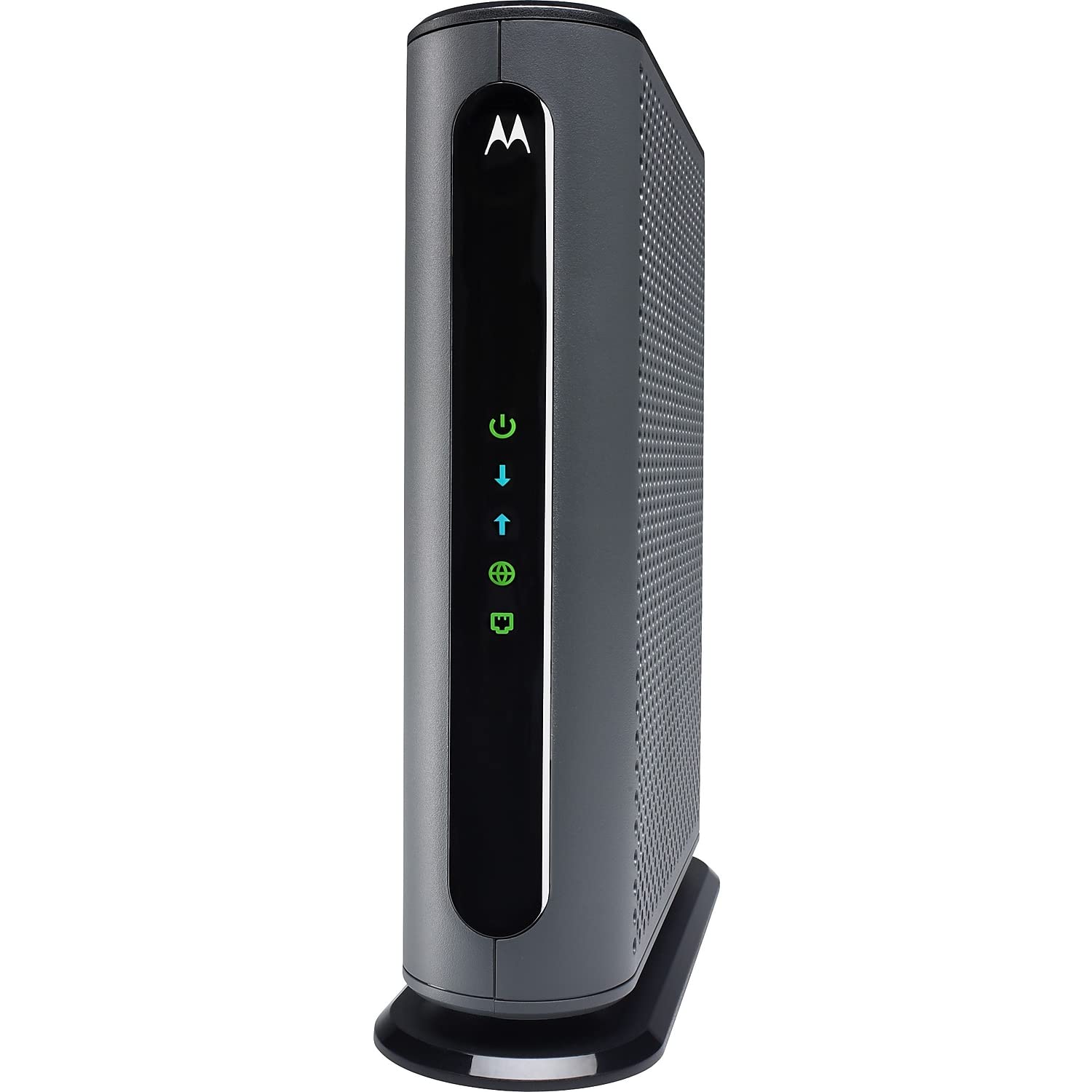
3. Motorola MB7621 Cable Modem
The plain black modem that pairs with the router you already like.
Some people do not want Wi-Fi baked in — they already have a router they trust. The MB7621 is built for exactly that. It is a DOCSIS 3.0 modem recommended for actual cable internet speeds up to 900 Mbps, with a Full-Band Capture digital tuner inside that keeps the connection steady. It pairs with any Wi-Fi router you own.
On raw rate, its data transfer rate sits at 1000 megabits per second against the Archer AX3000’s 2976. That is not a knock — they do different jobs. The modem handles the cable signal, the router handles the airwaves. What matters here is the downstream ceiling of 1000 Mbps and the upstream ceiling of 246 Mbps, which covers the typical household upload needs. The unit is 7.25 inches long, 2.25 inches wide, and 7.88 inches tall, so it tucks onto a shelf with room to spare. It has no built-in router and no phone port, which keeps it simple.
Owners give the build and the speed their highest marks, and the modem carries a strong reputation among people who have moved off rental gear. Not everyone escapes the activation snags — reliability and compatibility get mixed reviews, with a few describing dropouts months in. Treat it as a dependable mid-range modem that occasionally needs a support call, not a magic box.
Where it shines
- Full-Band Capture tuner for steadier signal
- Pairs with any Wi-Fi router you already own
- Compact 7.25 x 2.25 x 7.88 inch frame
- Approved for Xfinity, Cox, and Spectrum
What to watch
- DOCSIS 3.0, so not the multi-gig standard
- Mixed reliability reports from a minority of buyers
- No Wi-Fi inside — router sold separately
Pick it for: a mid-speed cable plan and a router you already love.
Pass it by for: a multi-gig tier, where a DOCSIS 3.1 unit is the safer bet.
4. TP-Link AX6000 Wi-Fi 6 Router (Archer AX80)

A 2.5G port that stops your gigabit-class plan from bottlenecking at the router.
If your cable provider sells you a plan above 1 Gbps, most routers quietly throttle it. This one does not. The AX80 carries a 2.5G Multi-Gigabit Ethernet port, which is a wired connection that moves 2,500 megabits per second, so the fast plan reaches the inside of your house. The total data transfer rate runs to 6000 megabits per second, with up to 4804 Mbps on the 5.0 GHz band and 1148 Mbps on the 2.4 GHz band.
Eight high-gain antennas with beamforming push that signal through a 3-plus-bedroom house. MU-MIMO and OFDMA work together so more devices get a stream at once with less lag — helpful when everyone is on at the same time. A VPN client lets the whole home reach a remote VPN server without installing software on every device. TP-Link OneMesh support means you can add a compatible range extender later and keep one network name. It works with all internet providers including Xfinity, again pairing with your own modem.
Performance is what owners talk about most, followed by how easy it is to get running and how far the signal reaches. Range and value get their own share of praise. The one honest wrinkle is a small number who hit connectivity or reliability snags; update the firmware first thing and keep it on a hard surface. It is the middle-ground router for someone who wants future-proof wired speed without jumping to the priciest tier.
The reason to pay more: a 6000 Mbps total rate and a 2.5G port mean an above-gigabit Xfinity plan actually arrives, with eight antennas doing the coverage work.
What it does not do: no coax input, no built-in modem — you feed it from a separate cable modem.
Suits you if: you are on a fast cable tier and want a future-proof router with headroom for wired speed.
Not for: a one-box shopper — you will need a modem on the shelf too.
5. Hitron CODA56 DOCSIS 3.1 Cable Modem
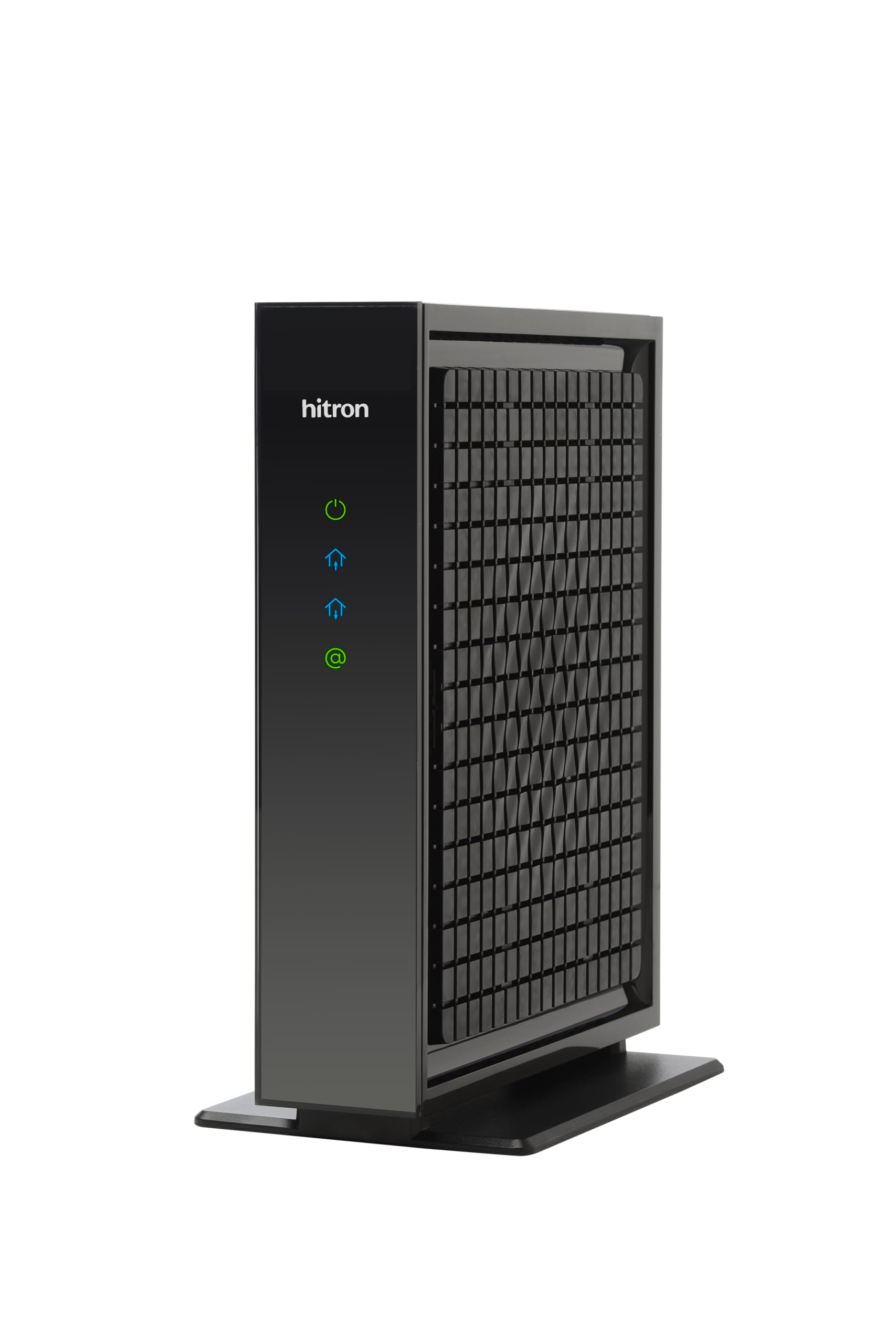
DOCSIS 3.1 with a 2.5 Gbps port, built for plans a gigabit and faster.
This is the modem for the household that just upgraded its Xfinity plan and watched the old gear max out. The CODA56 is DOCSIS 3.1, the newer cable standard, and it supports internet plans up to 2.5 Gbps through a 2.5 Gbps Ethernet port. Its maximum downstream rate is 2500 Mbps and its upstream is 700 Mbps. The listing notes Xfinity compatibility up to 2.33 Gbps, Spectrum at 1 Gbps, and Cox at 2 Gbps. Confirm your own plan and provider before you buy.
The most important thing to know: this is a modem only. It creates no Wi-Fi. Without a separate router, exactly one device connects, and only by Ethernet cable. You need a cable internet service, a Wi-Fi router with a 2.5 Gbps port to reach full speeds, and provider activation. It will not work with fiber, DSL, satellite, or fixed wireless, so a Verizon FiOS or AT&T Fiber home should look elsewhere. It is backward compatible with DOCSIS 3.0 networks and weighs 464 grams, so it sits small and light on a shelf.
The pattern in the reviews is encouraging — quality and easy setup lead, with downloads clocking in under 10 minutes and one setup reaching 1.3 Gbps on a speed test. Value gets a mention too, since ditching the rental fee adds up monthly. A few report compatibility friction with certain routers, and overheating shows up in a small batch. Keep it ventilated and pair it with a modern router.
Straight talk: a 2.5 Gbps port and DOCSIS 3.1 are what you are paying for, and the setup is quick once the provider activates it.
The fine print: cable service only, router sold separately, and it will not fire up on fiber or DSL — verify your internet type first.
Go for it if: you have cable internet on a gigabit-plus Xfinity, Spectrum, or Cox plan and already own a strong router.
Rule it out if: your internet is fiber, DSL, or satellite — it simply is not built for those lines.
6. Motorola MB8600 DOCSIS 3.1 Gigabit Cable Modem

A DOCSIS 3.1 modem built for gigabit cable plans, with no Wi-Fi to configure.
If you want a modem that simply works with the gigabit plan you already pay for, this is a strong candidate. The MB8600 is DOCSIS 3.1 with DOCSIS 3.0 32×8 channel bonding inside, so it handles all major cable speed tiers including Comcast’s gigabit services and Cox Gigablast. It pairs with any router you choose, from a basic unit to a full mesh system, through a 10/100/1000 Gigabit Ethernet port that serves one connected device.
The data transfer rate on the spec sheet reads 6 gigabits per second, well above the 2.5 Gbps class of the smaller cable modems. Its upstream ceiling is 1 gigabit per second. Active Queue Management is the quiet hero here — it reduces internet latency on both DOCSIS 3.1 and 3.0 service, which means snappier page loads and steadier video calls. A full-band capture digital tuner adds speed while saving energy. It has no built-in wireless router and no phone port, which keeps the box lean.
Owners lead with quality and speed, and the ease of installation draws real affection — one commonly shared experience is set up taking about 45 seconds to reach a running connection. Reliability, connectivity, and compatibility each draw mixed notes, so keep the firmware fresh and treat a single drop as a hiccup rather than a pattern. This is the steady, well-known choice for a gigabit household that wants a modem-only setup.
Why buyers keep it
- DOCSIS 3.1 with 32×8 channel bonding for all speed tiers
- Active Queue Management cuts latency for gaming and calls
- Approved for Xfinity, Cox, and CableOne
- Pairs with any router or mesh system
Where it asks more of you
- Modem only — no Wi-Fi inside
- A minority report connectivity or compatibility snags
- One Ethernet port serves a single device
Your best match: a gigabit cable plan and a router you already trust, with a modem that has been around long enough to prove itself.
Not the one: if you want a single box that also broadcasts Wi-Fi.
7. NETGEAR Nighthawk CAX30 Modem Router Combo

Buy once, drop the rental, and cover the whole house from one black tower.
This is the pick for someone who wants the rental gateway gone and nothing extra to plug into it. The CAX30 is a DOCSIS 3.1 cable modem and a dual-band Wi-Fi 6 router in one unit, replacing both pieces of Comcast gear. NETGEAR says it is certified with Spectrum and Cox up to 1 Gbps and Xfinity up to 800 Mbps, so check your provider’s ceiling before you commit. The listing also notes that future speeds with those providers may change over time.
Wi-Fi 6 with AX2700 delivers speed up to 2.7 Gbps and covers up to 2,500 square feet with 25 concurrent devices. Four Gigabit Ethernet ports support port aggregation, which combines two ports into one fatter wired pipe, and a USB 3.0 port handles a storage drive or a gadget you want on the network. It supports WPA, WPA2, and WPA3 wireless security, so your network is locked with the latest protocols. The Nighthawk app lets you manage Wi-Fi, run a speed test, and watch data usage from your phone.
Reliability is the flavor owners mention first, then setup and speed, with reports of internet speeds jumping from 250 to 450 Mbps after the switch. Signal holds strong far from the box, and people say it covers the whole home and yard. The trade is that this is a renewed unit, and a smaller group hit connectivity or setup trouble. The bundled modem also caps Xfinity compatibility at 800 Mbps, so on a faster plan you would be leaving speed on the table.
The value read: one renewed box does the modem and router job and frees up the rental fee, with AX2700 speed, four Gigabit ports, and a USB 3.0 port.
The fine print: Xfinity certification tops out at 800 Mbps here, and being renewed means a careful check-out is wise.
Good fit if: you want a single unit to replace your rental and your Xfinity plan sits at or below 800 Mbps.
Wrong turn if: you are on a multi-gig plan that needs faster certification.
8. Arris Surfboard S34 DOCSIS 3.1 Cable Modem

Two Ethernet ports and next-gen upstream support for the upload-heavy household.
The S34 is the modem for people who care about upload as much as download. It carries a 2.5 Gigabit port plus a separate 1 Gigabit port, so you can feed a fast router and still have a second wired handoff. DOCSIS 3.1 performance supports cable plans up to 2.5 Gbps, with a maximum downstream rate of 2500 Mbps and an upstream rate of 444 Mbps. Its trump card is support for the next generation of upload speed tiers that cable providers are rolling out.
Compared to the Hitron CODA56, the upstream ceiling reads 444 Mbps versus 700 Mbps — the Hitron wins on raw upload headroom, while the Arris gives you that extra Ethernet port for a second device. The S34 is CableLabs certified to work across major US providers and tested with Cox, Xfinity, and Spectrum. It is compact at 10.55 inches long, 6.75 inches wide, and 2.46 inches tall, with simple LED indicators for power, upstream and downstream, and online status. It is a modem only, so you still need a separate router for Wi-Fi.
Owners stress speed above all, with downloads reaching 1.4 Gbps and next-gen Xfinity upload speeds doing their thing. The compact size and quick setup get their due, and it is a clean fit for a modern shelf. Before you buy, confirm your provider lists the model, and remember it will not work on fiber, DSL, or satellite service. For an upload-minded household, it is a sensible forward-looking choice.
Points in its favor
- 2.5G and 1G Ethernet ports for two wired devices
- Supports next-gen upload speed tiers
- Compact 10.55 x 6.75 x 2.46 inch footprint
- CableLabs certified and tested with Xfinity, Cox, Spectrum
What to weigh
- Modem only — router required for Wi-Fi
- Lower upstream ceiling than the Hitron above
- No support for fiber, DSL, or satellite
Choose it when: you run a gigabit-plus cable plan with heavy uploads and want two wired ports on the modem.
Leave it for others when: upload headroom is your top priority — the Hitron spec sheet goes higher.
Know the Specs
DOCSIS version and plan speed
DOCSIS is the cable industry standard that governs how much data flows down the coax line. A DOCSIS 3.0 modem is fine for plans up to the speeds printed on its own spec sheet. DOCSIS 3.1 is the newer standard needed for multi-gig plans from providers like Xfinity. If you buy a 3.1 unit, you have headroom for upgrades. If your plan is modest, a 3.0 box saves you money without hurting anything.
Ethernet port speed matters more than you think
The Ethernet port on your modem is the doorway between the cable line and your router. A 2.5 Gigabit port moves 2,500 megabits per second, which is what a faster-than-gigabit plan needs. A 1 Gigabit port tops out at 1,000 Mbps. If your modem has a slow port and you buy a fast router, the modem becomes the bottleneck. Match the port speed to the plan you pay for.
Coverage in square feet
Routers and mesh systems quote a coverage figure in square feet, but that is a lab-style estimate, not a guarantee in your house. Walls, floors, and appliance placement all eat signal. A single router with beamforming focuses the signal toward your devices. A mesh kit spreads several units across one network name. Match the shape of the system to the layout of your home, and remember that firmware updates keep coverage honest.
Wi-Fi 5 versus Wi-Fi 6
Wi-Fi 5 is the older generation and still solid for streaming and calls on a normal cable plan. Wi-Fi 6, also called AX, adds features like OFDMA that let multiple devices share a band at once, which cuts lag when the house is busy. Wi-Fi 6 gear tends to cost more. If most of your devices are newer, the speed and responsiveness are worth it. If they are older, a Wi-Fi 5 mesh kit may serve you just as well.
Common Questions
Will Xfinity activate a modem I bought myself?
Do I need both a modem and a router for Xfinity?
Is DOCSIS 3.1 better than DOCSIS 3.0 for Xfinity?
Can a Wi-Fi router work with any cable modem?
Why does my cable modem keep disconnecting?
Will a DOCSIS 3.1 modem work on a slower Xfinity plan?
Does a mesh Wi-Fi system need a separate modem?
What does a 2.5 Gigabit port on a modem do for me?
Can I use a cable modem with fiber internet?
How much square footage can one Wi-Fi router cover?
The Bottom Line
For most Xfinity households, the TP-Link Deco S4 is the sensible first move — three units spread one network name across up to 5,500 square feet, and setup is painless through the app. If you would rather own a single box and cut the rental gateway entirely, the NETGEAR Nighthawk CAX30 does modem and Wi-Fi in one tower, just check that your plan sits at or below its Xfinity ceiling. And for a gigabit-plus plan where upload speed matters, the Hitron CODA56 brings DOCSIS 3.1 and a 2.5 Gbps port to the table. Start with your plan speed and your home’s layout, then pick the model that matches both.
How we choose
We do not accept paid placement. Every pick is matched to a real buyer and a real use-case; we do not hands-on test units.
Sources
Specifications: manufacturer listings and product documentation. Review insights: verified customer reviews, as of November 2026. Pricing: not shown on this page (it changes often); check the current price via the retailer link.
As an Amazon Associate, Tactical Gear Guy earns from qualifying purchases. This does not affect which products we feature.