Specs are compiled from manufacturer listings and verified buyer reviews and can change over time — please confirm the key details on the product page before buying.
You want your legs warm on a cold morning without the prickly, sweaty misery that cheap thermals deliver — and that is exactly where merino wool earns its keep. This guide sorts the real wool pants from the marketing, so you can pick the weight and fabric that matches how cold you actually get.
This guide is built by comparing the manufacturers’ published specifications and the patterns across verified customer reviews, so you get each pick’s real strengths and trade-offs instead of marketing spin.
Weight, micron count and cut decide whether a pair feels like a second skin or a sack of gravel. Below you get seven honest picks, from a heavyweight expedition knit down to a light everyday legging, all judged on warmth, thickness and fit. Here is the shortlist of wool thermal pants women actually keep wearing.
Top Picks
How To Choose The Best Wool Thermal Pants Women
The single biggest mistake with wool thermals is buying the thickest pair you can find. A heavyweight knit like a 400 g merino will roast you on a mild day and bunch up under slim jeans. Match the fabric weight to the temperature you actually meet, then worry about the cut.
Fabric weight tells you the temperature range
Weight is listed in grams per square meter, and it is the honest predictor of warmth. A 400 g knit is a deep-winter layer built for real cold, while a 175 g or 250 g weave suits milder days and active wear where you generate your own heat. If you mostly commute or walk the dog, a midweight does more work for you than an expedition pair.
Micron count is your itch test
Merino fibres are measured in microns — the diameter of each hair. The lower the number, the finer and softer the yarn, and 18.5 micron merino is the figure to look for if standard wool has irritated your skin before. A finer fibre bends instead of pricking, which is why a good merino legging feels smooth rather than scratchy.
Check the waistband and the rise
A wide, covered waistband sits flat under trousers and stops the dreaded roll-down when you bend. Watch the back rise too: a leg that runs short in the back will slide down every time you crouch. Look for a cut described as full-length with a secure waist, especially if you plan to wear them under work clothes.
Side-by-Side Comparison
| Model | Best For | Fabric | Weight | Rating | Amazon |
|---|---|---|---|---|---|
| LAPASA Merino Wool Base Layer Set★ Best Overall | All-round winter layering | 100% Merino Wool | — | 4.5+ | Amazon |
| Icebreaker 200 Oasis LeggingsBest for Activity | Active cold-weather days | Merino Wool | 200 g | 4.0+ | Amazon |
| Minus33 Expedition Bottoms | Serious deep cold | 100% Merino Wool | 400 g | 4.0+ | Amazon |
| MERIWOOL Heavyweight 400g | Frigid mornings and snow | 100% Merino Wool | 400 g | 4.5+ | Amazon |
| Helly-Hansen LIFA Merino Midweight | Wet, active outdoor use | Merino Blend | — | 4.0+ | Amazon |
| Icebreaker 175 Everyday Leggings | Everyday light layering | Merino Wool | 175 g | 4.0+ | Amazon |
| Merino Protect Merino Leggings | Budget-first merino | 100% Merino Wool | 250 g | 4.0+ | Amazon |
Detailed Reviews
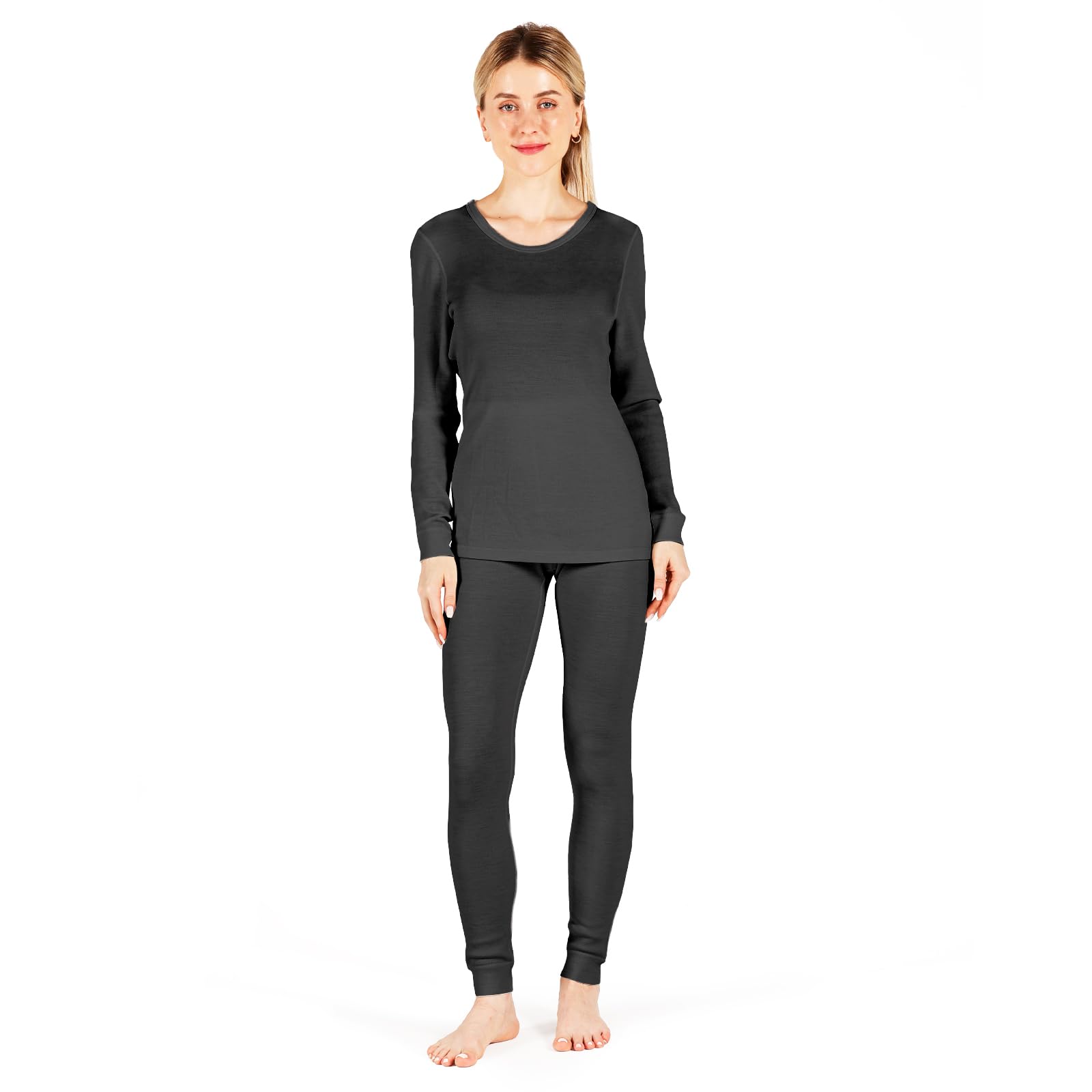
1. LAPASA Womens 100% Merino Wool Base Layer Set
Our pick — 4.5+★ from 500+ verified ratings; the strongest balance of quality and price.
The warm-without-scratch set that makes the most sense for most winters.
If you want one purchase that covers your whole lower half for the cold season, this is the set to beat. It is 100% merino wool built to regulate your temperature, and buyers consistently find it keeps you warm without turning clammy indoors. Warmth is the most-praised quality in buyer reviews, and reviewers report it holds up in extreme cold.
What makes it the top pick is how balanced it feels. Quality runs a close second in the praise, with the softness and the light weight both landing in positive territory. It is a full base layer set rather than just leggings, so you get a matched top and bottom that layer together without bulk. For a cold morning commute under your work trousers, it disappears and does its job.
The honest catch is sizing. Fit is the most-mixed point here, and the sizing runs come through as a coin toss in places. Check the size chart against your measurements rather than assuming your usual letter size carries over. A few people also find the fabric a touch firmer than they expected straight out of the pack.
What it gets right
- Full merino top-and-bottom set in 100% wool
- Warmth is the strongest, most-praised quality
- Regulates temperature so you are not roasting indoors
- Light and soft enough to wear under normal clothes
Where it can trip you up
- Fit and sizing draw mixed feedback — measure before you order
- Fabric can feel firmer than expected at first
Go for it: you want a matched merino set that handles deep cold and still layers thin under trousers.
Measure first: sizing is the weak link, so treat the size chart as required reading.
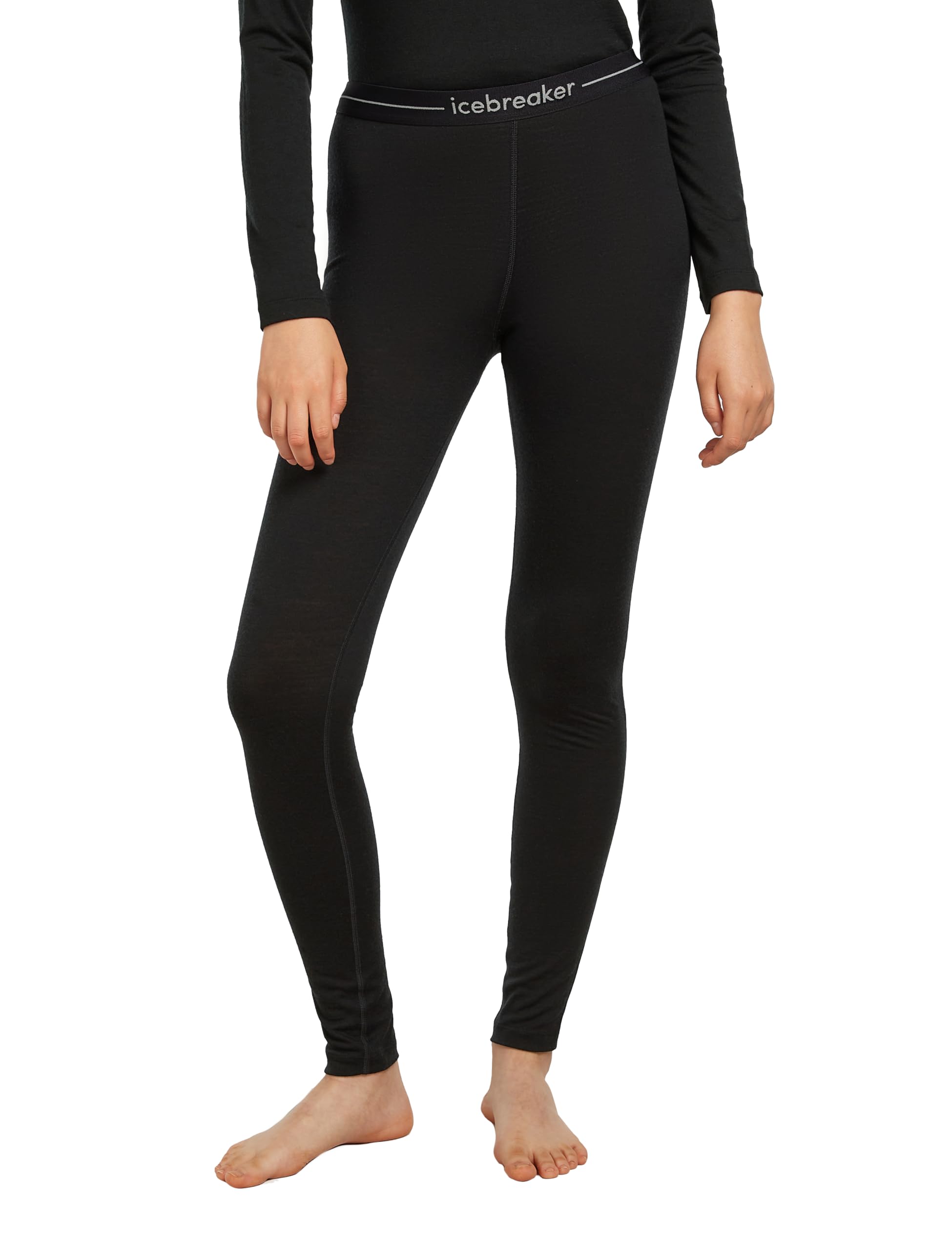
2. Icebreaker Merino Women’s 200 Oasis Leggings
A 200 g midweight aimed at the days you move and sweat, not sit still.
The 200 in the name is the fabric weight — 200 g merino — and that number tells you this is a midweight built for active cold-weather days. It sits between the light everyday leggings and the heavyweight 400 g knits below, so it works for skiing, hiking or a brisk walk where you warm up as you go. Warmth and quality both come through strongly, which is the right combination for a layer you will move in.
Comfort is not universal, though. Some people find the merino here scratchy, and the fit splits too, with the medium sizing reported to run large. That is your cue to size down if you sit near the boundary, and to consider the softer-cited options if your skin is sensitive.
Compared with the lightweight 175 g Icebreaker further down, this one gives you noticeably more insulation for the same brand’s fabric. If you want one legging that bridges autumn and the start of winter, this is the more flexible choice.
The payoff: a name-brand 200 g merino midweight that keeps you warm while you are on the move, with a reputation for holding up.
The watch-out: comfort runs mixed, so sensitive skin may prefer a finer, smoother knit, and check sizing rather than trusting your usual letter.
Right for you if: you want a midweight you can ski or hike in and never feel cold.
Look elsewhere if: your skin dislikes wool texture at the merino level — this one has its scratchy moments.
3. Minus33 100% Merino Wool Women’s Base Layer Bottoms

The expedition-weight wool bottom that was built for genuinely bitter temperatures.
Minus33 publishes exactly what you want to see: a 400 g interlock knit in 18.5 micron 100% merino wool. The 400 g weight is deep-winter territory, and the 18.5 micron fibre is fine enough to feel smooth rather than prickly. Buyers describe the fabric as silk-like against the skin, and it earns its keep under work clothes on a cold commute.
The brand history is note because it explains the build. The brand was created in 2002 by a wool family business dating to 1916, and its expedition line has seen Antarctic and Arctic use. As a base, mid or outer layer they are designed to work across the stack, which gives you flexibility most leggings lack.
Layering is where these shine relative to the lighter picks above — pair them under trousers and cold air simply does not get through. The one thing to plan for is the thickness. This is a warm, heavy knit, so it is not the pair to slide under tight jeans on a mild day.
Why it earns the slot: 400 g interlock in 18.5 micron merino gives you a genuinely warm legging that still feels smooth on the skin.
The trade-off: it is thick enough to bulk up snug trousers, so save it for the coldest days.
Pick it when: real cold is on the forecast and you want wool heavy enough to shrug it off.
Think twice when: you need a slim layer under skinny jeans on a temperate day.
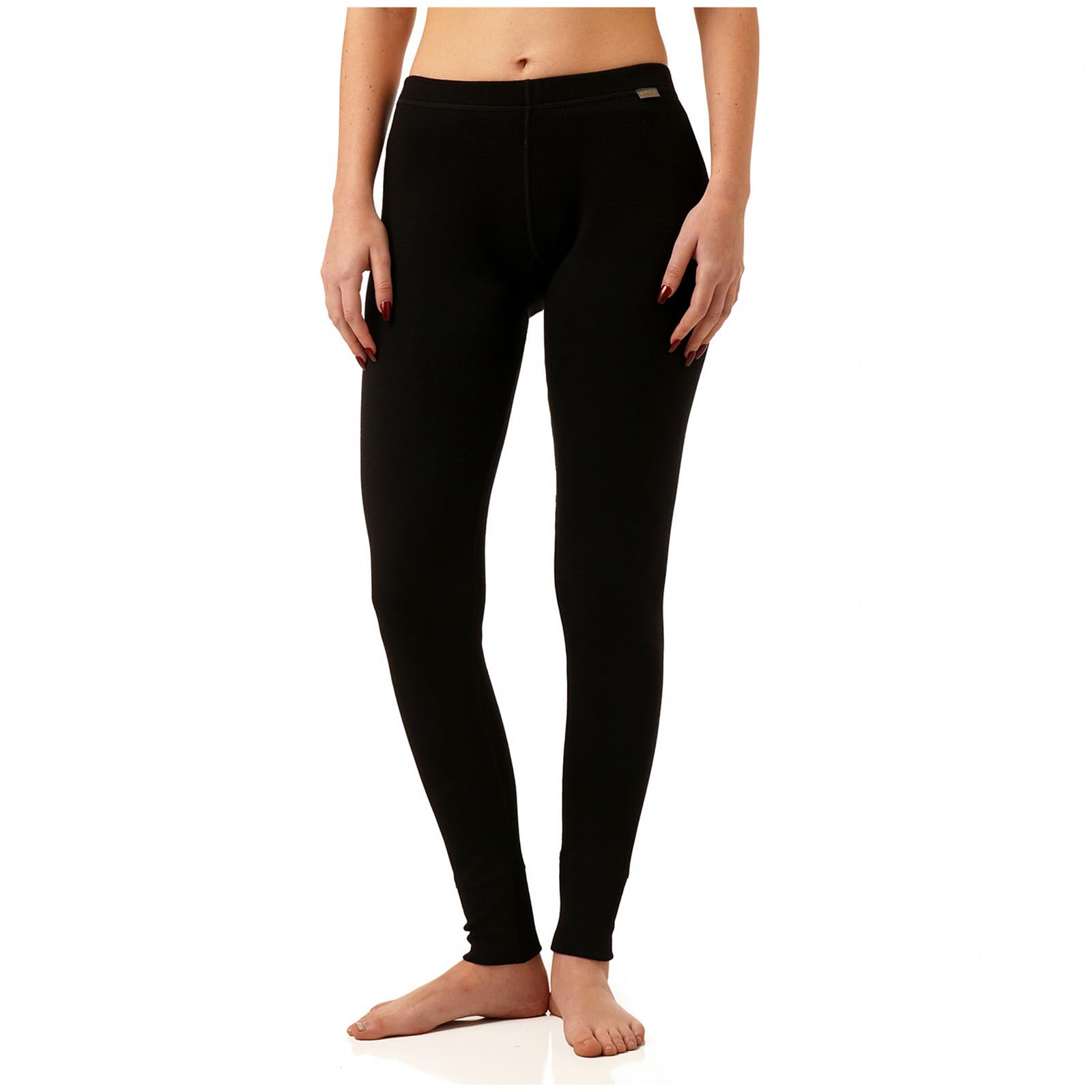
4. MERIWOOL Womens Base Layer 100% Merino Wool Heavyweight 400g
Merino’s heaviest knit, with a brushed inside that feels cosy the moment you pull it on.
This is the pair that cares about warmth first. Made from 18.5 micron 100% merino at a 400 g heavyweight weight, it is built for very cold weather and stays soft to the touch rather than itchy. The interior is brushed for extra cosiness, and buyers describe these as warm, comfortable and worth it, with the material praised for both quality and thickness.
Here is the number that matters if you are weighing merino options. This knit is 400 g versus the 250 g Merino Protect leggings. More grams means more trapped warm air, so this is the pair you reach for when the lighter options feel thin.
Care is refreshingly simple for a wool garment. Hang them to air dry and you skip a lot of washing, since merino needs fewer washes than synthetic fabric. Just factor in the bulk — this knit is thick enough to fill out whatever trousers you wear over it.
Strengths that stand out
- 400 g heavyweight merino built for very cold weather
- 18.5 micron fibres keep it soft and itch-free
- Brushed interior adds a cosy feel
- Air-dries and needs fewer washes than synthetics
What to keep in mind
- Its thickness makes it bulky under close-fitting trousers
- Heavier knit runs warm on milder days
Best for: snow, freezing commutes and anyone who runs cold and wants a proper heavyweight layer.
Not for: mild days or outfits where a slim silhouette matters.
5. Helly-Hansen Womens LIFA Merino Midweight Base Layer Pant

A Norwegian gear maker’s take on active merino, built by a brand rooted in foul weather.
Helly Hansen has built professional-grade gear in Norway for more than 140 years, and this midweight is aimed at people outdoors in wet, cold conditions. It is a merino blend rather than pure merino, which is a deliberate choice for a layer you wear while working hard and sweating. Merino midweight sits nicely under waterproof shell trousers for a day on the slopes or a rainy hike.
Because it is a blend, it trades a little of the pure-wool feel for durability and stretch — the sort of legging you can move in without worrying every time you crouch. The midweight rating makes it a solid bridge for active use where you generate heat yourself.
As an active layer it earns its place alongside the Icebreaker 200 above, though it leans more toward wet-weather work than the pure everyday feel of the lighter options. If you are layering for mixed winter weather and want a name built for the elements, this fits.
What it brings: a midweight merino blend from a heritage outdoor brand, aimed squarely at active cold and wet days.
Before you commit: it is a blend, not 100% merino, so if pure wool is your priority the Minus33 or MERIWOOL options suit you better.
Choose this: you want a durable, movement-friendly midweight for skiing, hiking or wet winter work.
Pass if: you specifically want a pure 100% merino knit.
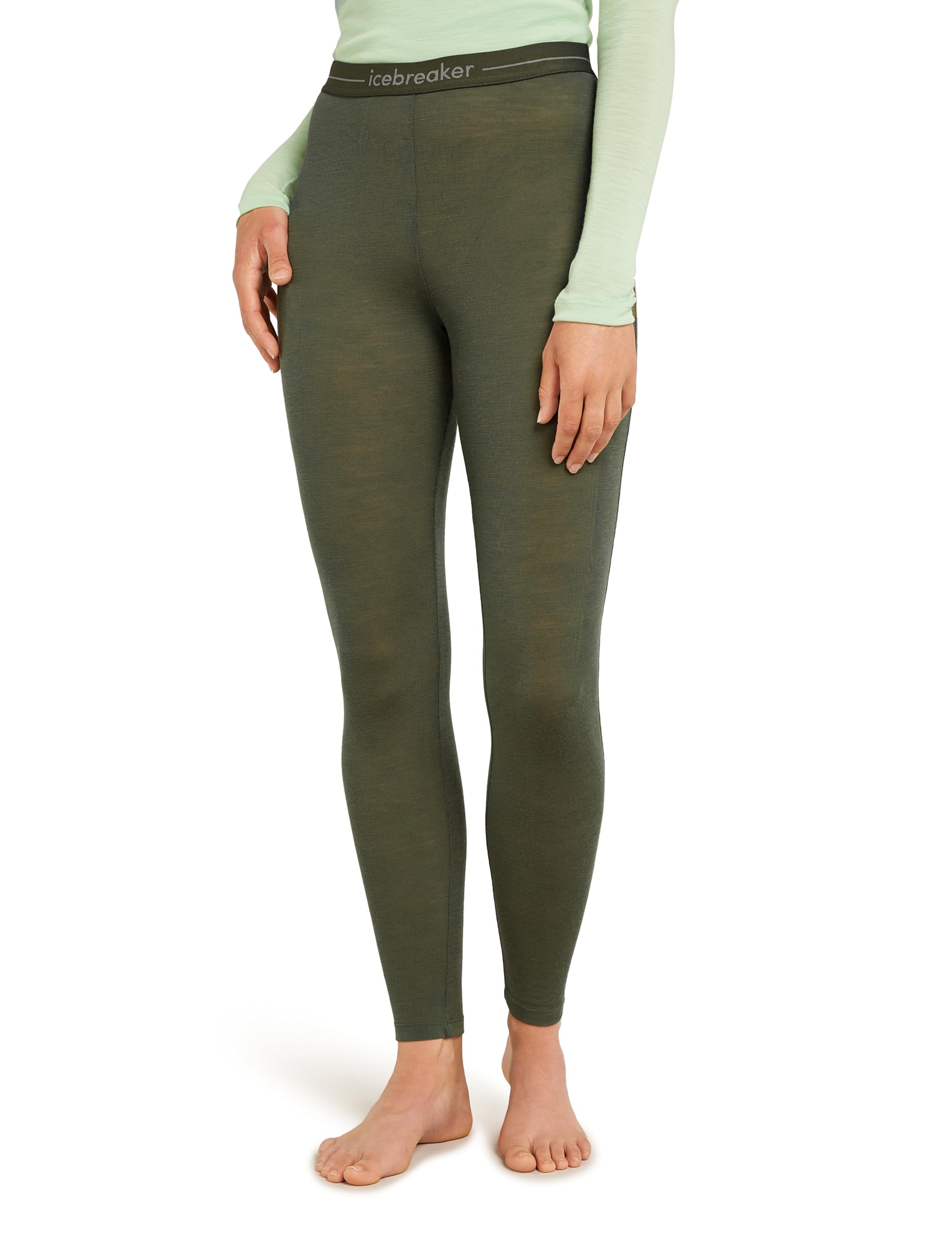
6. Icebreaker Merino Women’s 175 Everyday Leggings
The lightest, most versatile pair here — a legging that slips under almost anything.
At 175 g merino, this is the lightest weight on the list, and that is precisely its appeal. It is soft and thin enough to double as leggings under a dress or as sleepwear, so one pair covers more of your week than a heavy expedition knit. Fit is the standout quality, and versatility is a close second, which makes sense for a layer this adaptable.
That lightness comes with a cost, and it is the honest headline here. The material is thin enough that some people find it see-through, and durability draws real criticism, with holes showing up at the knees. It is also the kind of light knit people question the value of, so go in clear-eyed about what you are buying: a delicate everyday layer, not a rough-and-tumble one.
Under a dress in autumn or as an extra layer on a cool evening indoors, it does its job beautifully. It just is not the pair you thrash through a winter of hiking.
The wins
- 175 g light weight layers under almost anything
- Fit is the most-praised quality
- Doubles as leggings under dresses or as sleepwear
The honesty
- Thin enough to be see-through in places
- Durability is a weak spot, especially at the knees
Worth it for: light everyday layering, dresses in autumn and cosy nights when you want merino without bulk.
Not the one if: you need a pair tough enough for hard outdoor use.
7. Merino Protect 100% Merino Wool Leggings
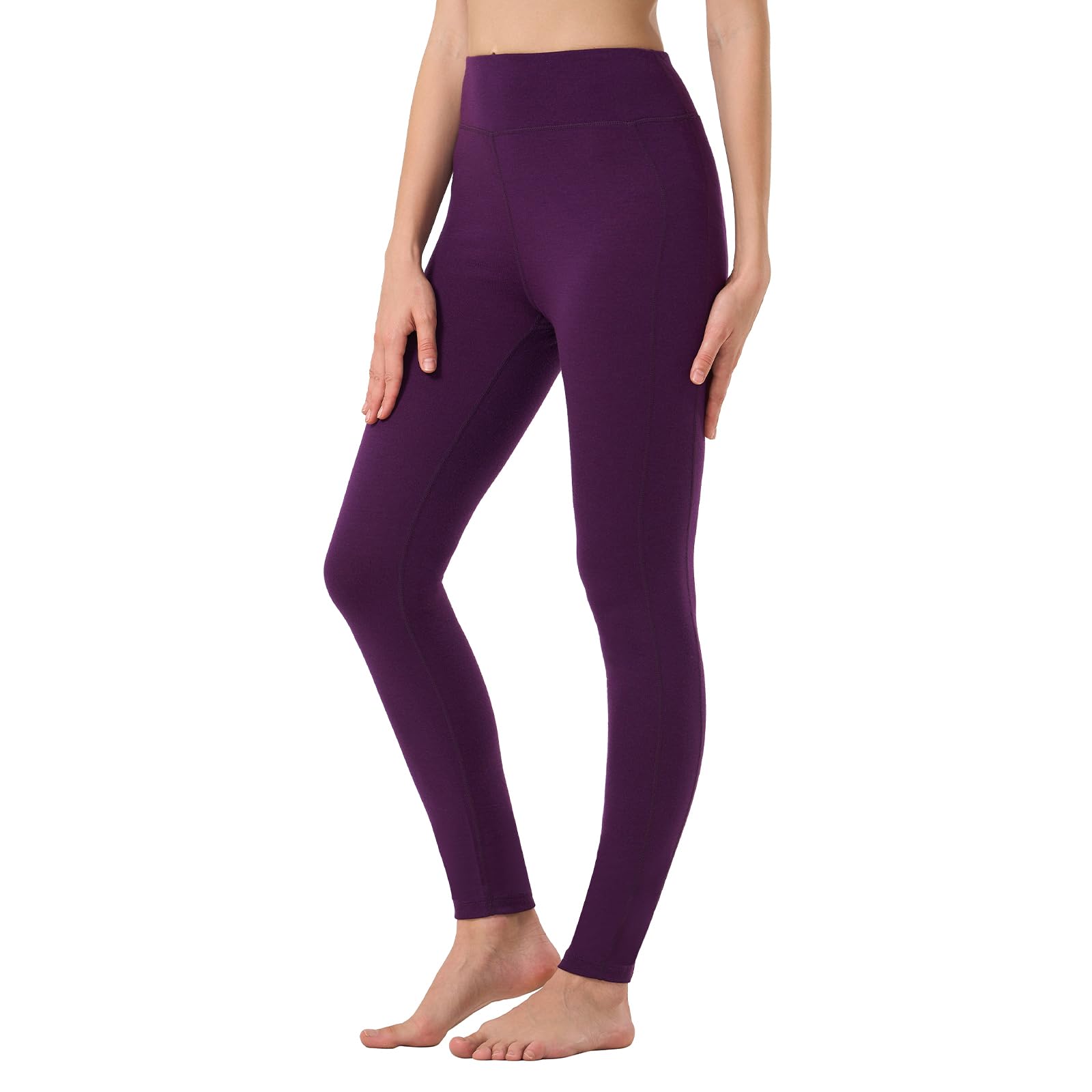
Real merino at the entry point — 250 g weight in a 100% Australian wool knit.
For an entry into proper merino without the premium layout, this is the one to look at. It is 100% Australian merino at 250 g and 18.5 micron, which sits in the middle of the weight range — warmer than the 175 g Icebreaker, lighter than the 400 g knits up top. Buyers find them comfortable, soft and warm, with good value coming through clearly.
The 18.5 micron fibres breathe while holding warmth, wick moisture and resist odour, so they work for hiking, travel or sleepwear. As an everyday long john, they are a sensible, gentle introduction to wool.
Fit is the part to think about. Some wearers love the wide waistband, while others find the fit tight, and the length runs short in the back for some. Check the measurements and consider sizing up if you plan to layer thickly.
The value story: a genuine 250 g 100% merino legging that brings wool’s warmth, breathability and odour control at the budget end.
The fit note: the waistband and length draw mixed reactions — some find it tight, some find the back short, so size with care.
Good match if: you want real merino and a midweight warmth level without paying premium-tier rates.
Reconsider if: fit is critical and you cannot easily size up to get the length right.
Know the Specs
Fabric weight (gsm)
Listed in grams per square meter — you will see it as 175 g, 200 g, 250 g or 400 g. The number is simply how much wool is packed into the knit. Higher means more trapped warm air and a heavier feel; lower means lighter and easier to layer. A 400 g knit suits freezing conditions, while a 175 g suits mild days and sleepwear.
Micron count
The diameter of each merino fibre, measured in microns. The lower the number, the finer and softer the yarn feels on your skin. 18.5 micron merino is the figure repeated across several of these picks, and it is fine enough to avoid the prickly feel of coarser wool. If standard wool has irritated you before, look for a low micron figure.
100% merino vs blend
Pure merino gives you the full natural warmth, breathability and odour control of wool. A blend mixes wool with other fibres to add stretch or durability, which can suit active use. Neither is better outright — pure wool is the pick if natural fabric matters most, while a blend is the practical choice for hard-wearing outdoor layers.
Fit and rise
Look at the waistband and the back rise before you buy. A wide, covered waistband stays put under trousers, and a full-length leg that reaches the back properly will not slide down. Because wool layers sit close to the skin, sizing accuracy matters more than with loose clothing — measure rather than guessing your usual letter size.
Common Questions
What is the difference between 175 g and 400 g merino leggings?
Will wool thermal pants make me itch?
Can I wear merino leggings under jeans?
How often should I wash merino wool base layers?
Is 100% merino better than a merino blend?
Do merino leggings run true to size?
Are these wool pants warm enough for skiing?
Why is merino wool more expensive than synthetic thermals?
Are merino wool leggings see-through?
Can I wear merino base layer pants as sleepwear?
The Bottom Line
The strongest all-round pick for the wool thermal pants women search is the LAPASA Merino Wool Base Layer Set, because it delivers a full 100% merino top and bottom that stays warm without going clammy — the balance most buyers want. If you run cold and want real heavyweight warmth, the MERIWOOL Heavyweight 400g at a 400 g knit — against the Merino Protect’s 250 g — is the one to reach for. And for light, versatile layering under dresses and around the house, the Icebreaker 175 Everyday Leggings does the job. Whichever you choose, measure before you order: fit is the single thing that trips up most merino buyers, and a size that sits right is what keeps wool comfortable all winter.
How we choose
We do not accept paid placement. Every pick is matched to a real buyer and a real use-case; we do not hands-on test units.
Sources
Specifications: manufacturer listings and product documentation. Review insights: verified customer reviews, as of November 2026. Pricing: not shown on this page (it changes often); check the current price via the retailer link.
As an Amazon Associate, Tactical Gear Guy earns from qualifying purchases. This does not affect which products we feature.