Specs are compiled from manufacturer listings and verified buyer reviews and can change over time — please confirm the key details on the product page before buying.
If your wrists sting halfway through a push-up, the block under your hands is usually the reason. A standard flat foam brick puts your wrist into extension — bent back toward the forearm — and that angle loads the joint every single rep. The fix is a block (or a matched pair) with either a cutout, a wrist-alignment shape, or enough density that it does not squash under your body weight. This guide covers nine real pairs, sorted by what each one actually does for a push-up.
This guide is built by comparing the manufacturers’ published specifications and the patterns across verified customer reviews, so you get each pick’s real strengths and trade-offs instead of marketing spin.
Push-ups on blocks change the geometry of the whole movement: your chest drops deeper, your shoulders work harder, and your hands sit higher than the floor. Below you will find the picks that survive that load without wobbling, plus the honest limits of each. These are the yoga blocks for push-ups worth putting under your palms before your next set.
Top Picks

How To Choose The Best Yoga Blocks for Push-Ups
The block that feels fine in a seated forward fold can feel wrong under a push-up. Under body weight the load runs straight down through your palm, and the block has to hold its shape while your wrist stays as close to neutral as possible. Three things decide whether a pair works here.
Wrist position beats block height
A flat slab forces your hand to bend back. A block with a hollow or a wrist cutout lets your palm sit level with your forearm, so the pressure spreads across the whole hand instead of jamming into the wrist crease. If wrist comfort is your main reason for buying, shop the cutout designs first.
Density decides whether the block squashes
Soft foam compresses when you press down, and a compressing block changes your hand angle mid-rep. Look for high-density EVA or solid cork. Cork is the firmer of the two and does not dent, but it is heavier to carry to the gym.
Match height to your push-up goal
A 3-inch block raises your hands a little, which adds a small range-of-motion gain to a standard push-up. A 4-inch block raises them more, deepens the stretch across your chest, and makes the move harder. Neither is better — pick the depth you can control for full sets.
Side-by-Side Comparison
| Model | Best For | Block Size | Material | Set Contents | Amazon |
|---|---|---|---|---|---|
| Gaiam Yoga Block 2-Pack★ Best Overall | All-round default pair | 6″L x 9″W x 4″Th | Dense foam | 2 blocks | Amazon |
| PROIRON Yoga BlocksBest Value | Firm grip on a budget | 9″ x 6″ x 3″ | High-density EVA | 2 blocks + guide | Amazon |
| TTolbi Yoga Blocks with StrapBest Kit | Full kit with band | 9″L x 6″W x 3″Th | EVA foam | 2 blocks + strap + guide | Amazon |
| Volcano Cork Blocks | Firm cork, no give | 6″L x 9″W x 4″Th | Cork | 2 blocks | Amazon |
| Trideer Cork Blocks | Lower-profile cork pair | 6″L x 9″W x 3″Th | Cork | 2 blocks + guide | Amazon |
| Deep-Zen Wrist-Friendly Set | Sensitive wrists and knees | 9″L x 6″W x 4″Th | DenseFlex EVA | 2 blocks + 2 knee pads + strap | Amazon |
| HAPBEAR Yoga Blocks | Hollow-grip hand comfort | 9″L x 6″W x 3″Th | EVA foam | 2 blocks + strap + band + ball | Amazon |
| Yes4All Wrist Support Blocks | Labelled left and right | 9″L x 8″W x 6″Th | Foam | 2 blocks | Amazon |
| Yoga-Grip Wrist Alignment Blocks | Push-up and plank stability | 8.5″L x 6″W x 3.6″Th | EVA foam | 2 blocks + card | Amazon |
Detailed Reviews
1. Gaiam Yoga Block 2-Pack
Our pick — 4.5+★ from 30,000+ verified ratings; the strongest balance of quality and price.
The pair that holds its shape under your palms without asking you to learn a new hand position.
Gaiam’s blocks measure 6″L x 9″W x 4″Th, and that 4-inch thickness is the number that matters for push-ups. It raises your hands higher than a 3-inch block, which drops your chest deeper on every rep and stretches the chest and front shoulders more. You feel the difference in the bottom position, not the top.
The foam is denser than a standard EVA block, which is why it does not mush flat when you press your weight through it. The beveled edges matter too — those are the sloped rims that let your fingers wrap slightly instead of sliding off a hard corner. Under a push-up that extra bite is what keeps your hand from creeping forward mid-set.
The trade-off is honest: these are flat blocks, so your wrist still bends back into extension rather than sitting neutral. If your wrist pain is the specific thing you are trying to solve, a cutout design below does more for you. Where this pair wins is as a do-everything set — mat work, stretching, and push-ups all handled by one purchase. Just expect a slight squish under heavy load, since the firmness is the most debated trait in the reviews.
Where It Holds Up
- Denser foam than a standard EVA block, so it resists squashing under weight
- Beveled edges give your fingers a real grip point
- 4-inch height deepens the push-up range without any extra gear
What To Expect
- Flat surface keeps your wrist bent back — not a wrist-alignment shape
- Spot clean only with a damp cloth and air dry
Go for this if: you want one pair that handles stretching and push-ups and you have no existing wrist trouble.
Think twice if: your main goal is stopping wrist pain — the cutout blocks below target that directly.
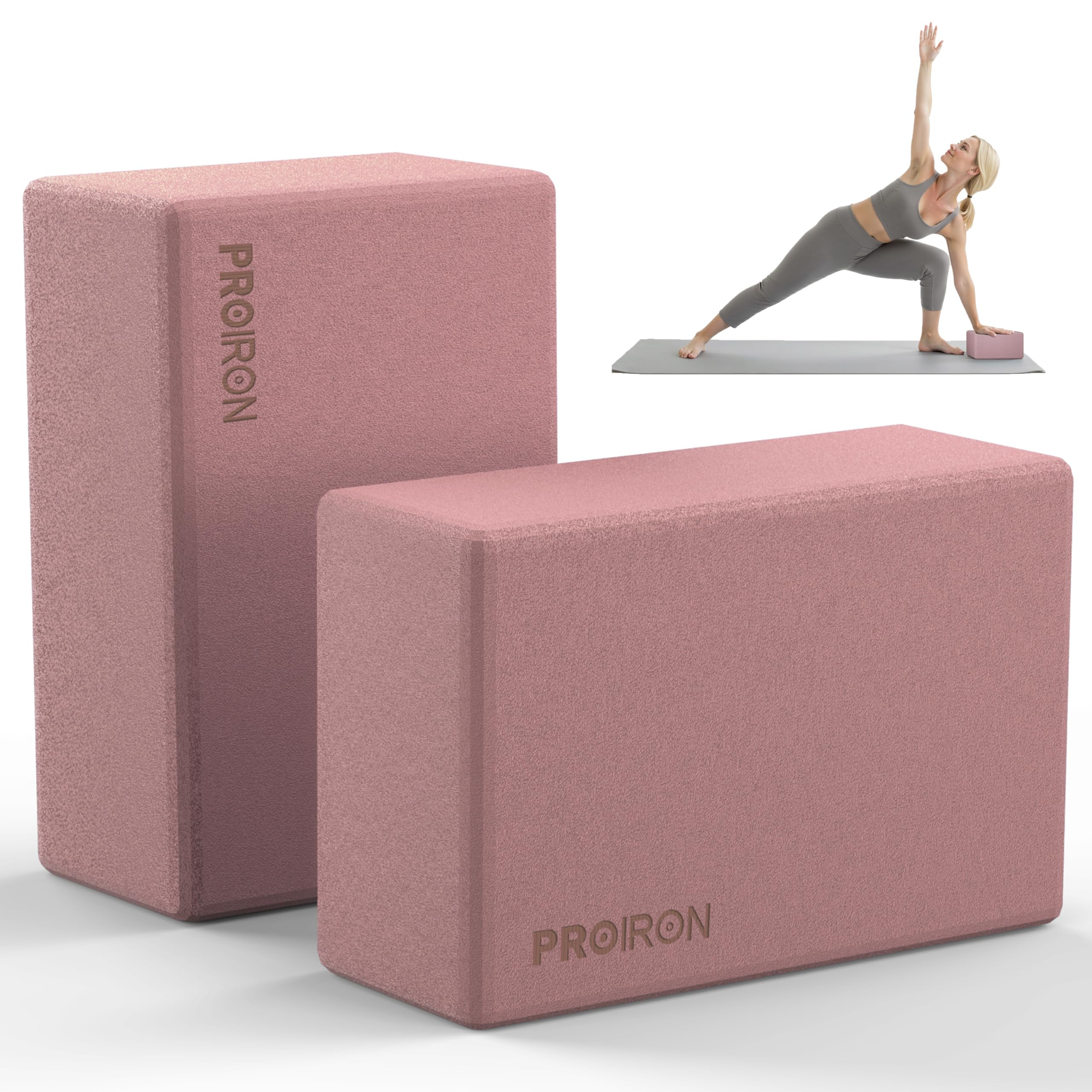
2. PROIRON Yoga Blocks 2-Pack
A firm, low-profile pair with a textured face that keeps your palms planted through the grind of a set.
PROIRON builds these in a denser foam than a standard block, and the maker claims three times the firmness of standard foam. Treat that as a manufacturer claim rather than a measured figure — but the point behind it is real: less give under your palm means your hand angle stays locked rep to rep.
Each block is 9″ x 6″ x 3″, so you get a shorter raise than the Gaiam above. That suits push-ups better than a tall block if your shoulders feel unstable at depth. The textured surface and curved edges do the gripping work, and the block is built not to distort under body weight — the exact trait you need when your chest is driving down.
The catch is the shape: curved edges help your fingers, but there is no wrist cutout, so your hand still sits on a flat plane. There is also a beginner exercise guide in the pack, which is more useful for stretching than for push-up form. For a short-height, firm block on a budget, this is the pick.
Grip that stays put: the textured face and curved rims mean sweaty hands do not skate across the surface mid-rep, and the 3-inch height keeps the raise modest enough that shoulder stability stays in your control.
The honest limit: a flat top is a flat top — if wrist extension is what hurts, this will not fix it.
Reach for this if: you want a firm 3-inch pair with real surface grip and a guide thrown in.
Look elsewhere if: you need the hand cutout or the taller 4-inch raise.
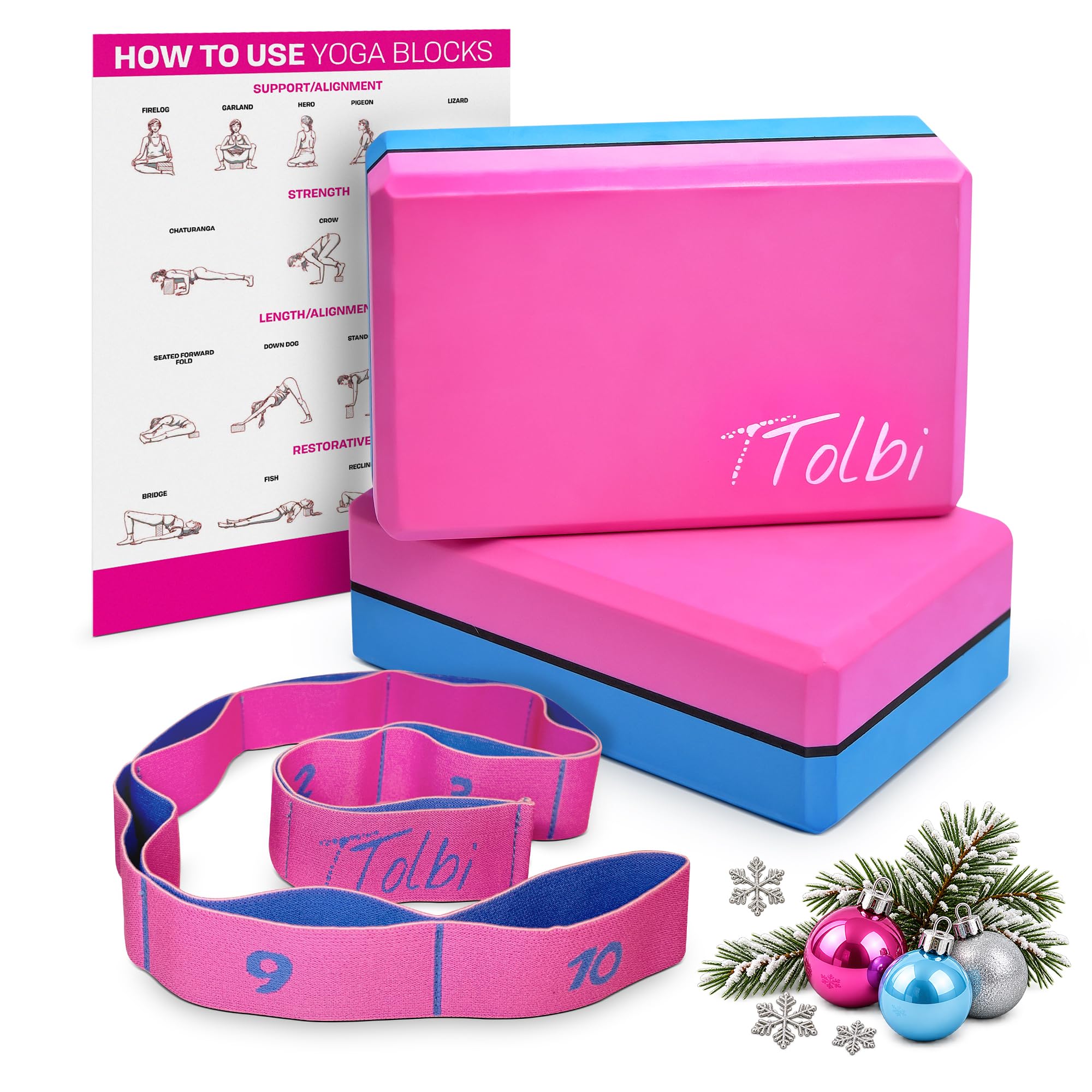
3. TTolbi Yoga Blocks 2-Pack with Strap and Guide
Two blocks, a stretch band, and a guide in one box — enough to warm up before you push up.
At 9″L x 6″W x 3″Th and 6.24 ounces per block, this is the featherweight of the group. Lighter blocks are easier to carry to a studio or a park, and they are also easier to knock out of alignment. Set them shoulder-width before each set and check the spacing again on your first rep.
The material is high-density EVA foam, which is the same family as most blocks here, so expect a little compress under full body weight. Grip is the strong suit — the non-slip face holds your palms steady during a push-up, and the block stays where you put it. The included strap is designed for warm-up and mobility work before you stretch, and the guide walks you through using the blocks.
Where it fits: this is the pair for someone building a home routine who wants the extras without buying them separately. What it is not is a wrist-alignment tool — there is no cutout, so it behaves like any flat block under your hands. The weight gap versus the Gaiam pair is worth knowing if you are hauling gear to a class.
What the box gets right: the strap and guide turn a bare pair of blocks into a warm-up setup, and the 3-inch height keeps the push-up raise moderate enough for most shoulders to control.
Where it stops short: at 6.24 ounces the blocks are the lightest here, so they are also the easiest to nudge out of place — and there is no wrist cutout.
Built for: the home practitioner who wants blocks, a band, and a guide in a single purchase.
Not the pick for: anyone whose wrists need a neutral-angle hand position.
4. Volcano Cork Yoga Blocks 2-Pack

Cork that refuses to dent, which is exactly what you want under a descending chest.
Foam blocks compress; cork blocks do not. That single difference is why these work under a push-up — the surface stays flat and your hand angle stays fixed through every rep. The cork comes from Portugal, and the maker says the cork resists high temperatures and cracking.
The dimensions are 6″L x 9″W x 4″Th, giving you the deeper push-up raise. Round edges help your fingers wrap for grip, and the textured surface holds your palms without a mat underneath. Because it is cork, it wipes clean with a damp cloth and survives sweat better than foam over time.
The honest cost of cork is weight and stiffness. At 2.04 kg for the pair, this is not the set you toss in a tote without noticing, and it is the heaviest of the cork options here. It also feels unyielding if you are used to foam — some hands prefer a little give. For a home setup where the blocks live in one spot, neither matters.
Reasons This Pair Earns Its Spot
- Cork surface does not compress under body weight, so hand angle holds
- 4-inch height deepens the push-up bottom position
- Wipes clean with a damp cloth and handles sweat well
Things To Weigh First
- 2.04 kg for the pair — the heaviest set in this list
- Zero give, which some hands find harsh compared with foam
The right call for: a dedicated home setup where firmness matters more than portability.
Pass on it if: you carry your blocks to class or prefer a softer surface under your palms.
5. Trideer Cork Yoga Blocks 2-Pack
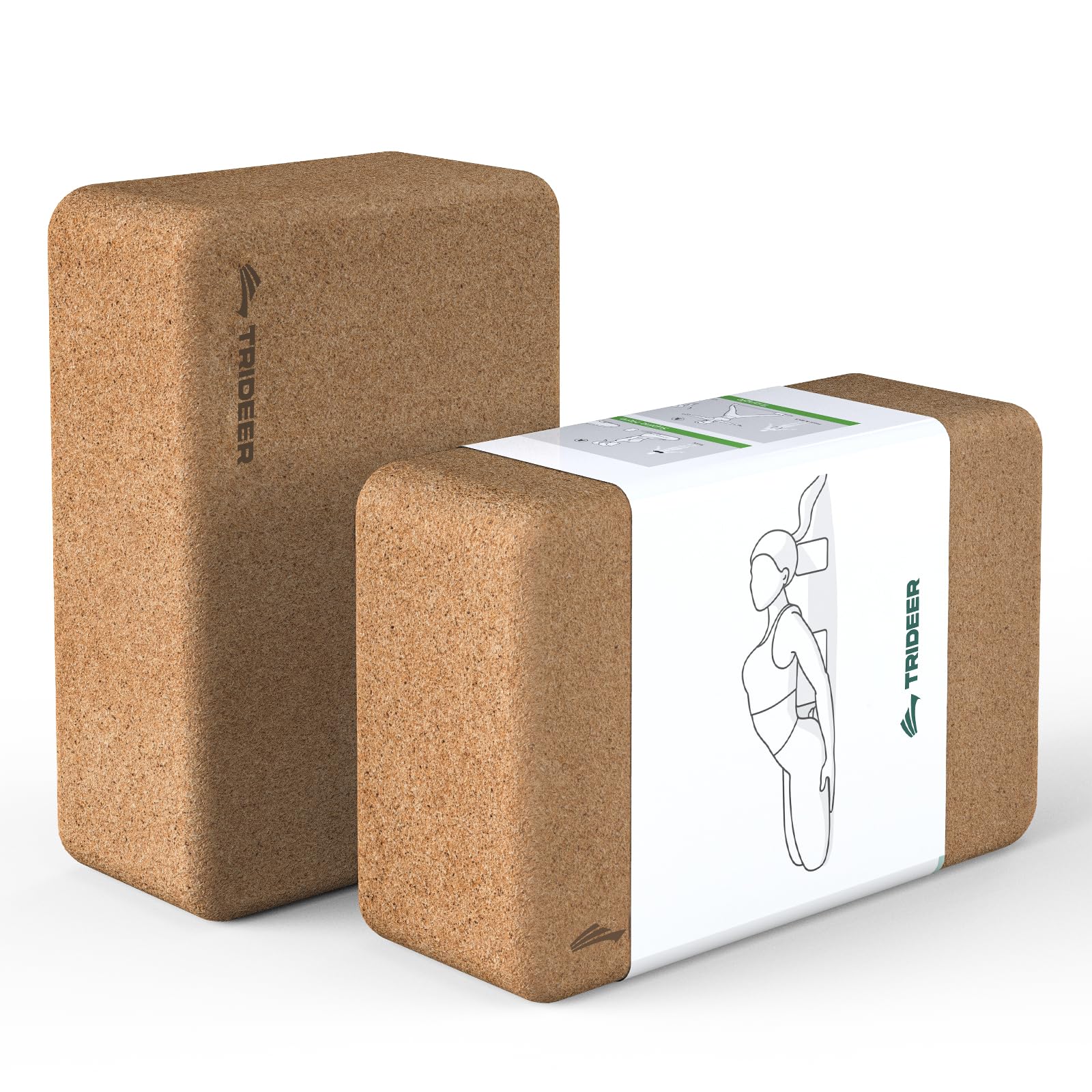
The shorter cork block, for anyone who wants firmness without the tall raise.
Trideer cuts these to 6″L x 9″W x 3″Th — a full inch shorter than the Volcano pair above. For push-ups that means a smaller hand raise, which keeps your shoulders more stable at the bottom and makes the move easier to control. If the 4-inch blocks felt too deep, start here.
The high-density cork is, per the maker, three times as hard as foam, so it resists distorting under body weight. Textured surface and contoured corners give your fingers somewhere to sit. It is also marketed as responsibly harvested cork oak and compliant with California Prop 65, which matters if you are avoiding questionable coatings on a surface your skin touches daily.
Weight is the honest catch at 1.59 kg for the pair — heavy enough that these live at home rather than in a gym bag. Size is the other thing buyers raise, so check that the shorter height suits the depth you want before committing. As with the Volcano set, an exercise guide ships in the box.
The stability story: firm cork plus a 3-inch profile gives you a push-up base that does not wobble and does not raise you so far that shoulder control becomes a fight.
One thing to check: at 1.59 kg for the pair, this is home equipment — and the shorter height is a fit decision, not a flaw.
Choose this when: you want cork firmness at a shallower push-up depth.
Skip the cork route if: you need a block that travels light.
6. Deep-Zen Wrist-Friendly Yoga Blocks Set

Cutouts that let your palm sit closer to neutral, plus two hand positions to switch between.
This is the set built specifically around wrist discomfort. The blocks have wrist-support cutouts and two hand positions, so you can find a grip where your palm sits level rather than bent back. Under a push-up that means less pressure jammed into the wrist crease and more spread across the hand.
The material is DenseFlex EVA foam with a non-slip texture and rounded edges, and the blocks run 9″L x 6″W x 4″Th — the taller raise. The set goes beyond blocks: two cushioned knee pads and a stretching strap ship in the box, five pieces total. The knee pads are the detail that makes floor work more comfortable when your knees are the second thing that complains.
It is foam, so expect a soft-touch feel rather than cork’s rigidity, and the cutout shape means the usable surface is a bit more specific than a flat block. That is the point — a block with no wrist cutout asks your wrist to do the work this one takes over.
What Makes It A Wrist Pick
- Wrist-support cutouts with two distinct hand positions
- Four-inch height with a soft-touch foam face
- Two knee pads and a strap included — five pieces in all
The Compromises
- Foam compresses slightly compared with cork
- Cutout shape is more specific than a plain flat block
Made for: wrists that object to a flat block and knees that want padding on the floor.
Not necessary if: you have no wrist trouble and want a plain flat surface.
7. HAPBEAR Yoga Blocks 2-Pack
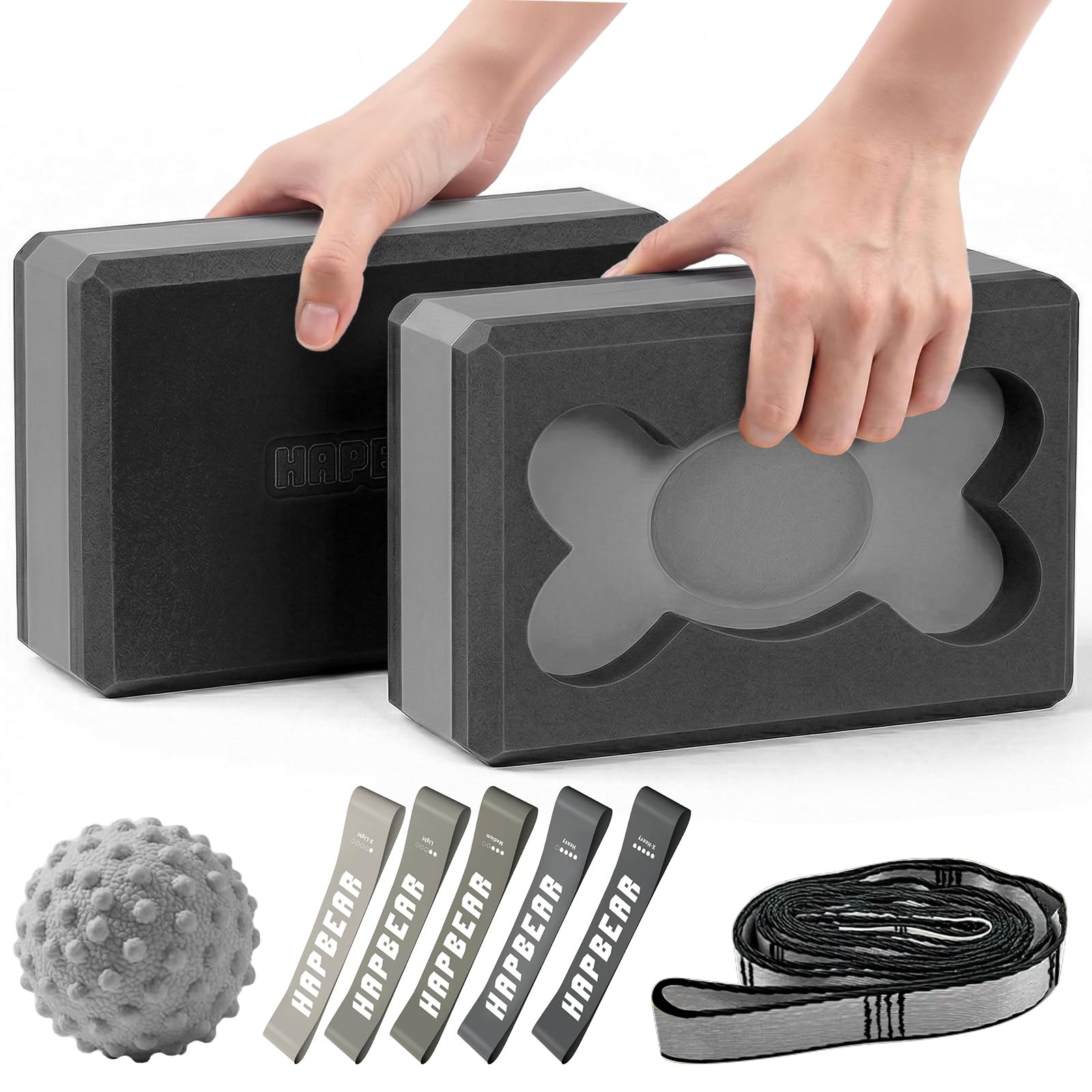
Hollow cutouts shaped to the curve of your hand, so long holds stop wearing on your grip.
These blocks are 9″L x 6″W x 3″Th and built with hollow cutouts that follow the natural curve of your hand. The idea is simple: your fingers curl into the hollow instead of pressing flat, which takes strain off the hand during a long push-up hold.
The foam is high-density EVA, and the maker claims it resists sagging and warping through daily use. A subtle textured surface handles sweaty palms and helps the block stay put during a flow. Stack them for extra height or split them for a wider two-hand base, depending on the move.
The bonus bundle is generous — a strap, resistance band, and massage ball on top of the two blocks. That makes it a full kit, though it also means more gear to store. The hollow shape is a real difference under your hands, but it does not sit like a flat block, so give yourself a set or two to settle into the grip.
The hand-fit idea: hollow cutouts reduce hand fatigue on longer holds, and the 3-inch height keeps the push-up raise moderate while the textured face holds against sweat.
Budget the adjustment: the grip is not a flat plane, so your first few sets will feel different from a standard block.
Worth it for: hands that tire on long push-up holds and anyone who wants a bundled starter kit.
Better to skip if: you want a plain flat press under your palms.
8. Yes4All Wrist Support Yoga Blocks

Shaped grips with clear left and right labels, so you stop guessing which block goes where.
Yes4All designs these blocks around a hand-designed grip shape — the maker claims its shaped grip shifts weight to the palm and cuts wrist pressure by 60%. That figure comes from the manufacturer, not a test we ran, so weigh it as a marketing claim. The design intent is straightforward: push the load into the palm rather than the wrist crease.
These are the widest and tallest blocks in the list at 9″L x 8″W x 6″Th, which changes how they feel under a push-up. A 6-inch height is a big raise, so your chest drops deeper and the move gets harder. Plan for that — this is not a beginner push-up height.
The L and R markings are the small detail that earns its keep. You grab the correct block without looking, which saves fumbling between sides during a set. At 1.3 pounds for the pair, they are stable and stay put. The catch is the height: if you want a modest raise, a 3-inch block suits you better.
What stands out: the labelled left and right blocks remove a small but real annoyance, and the shaped grip targets the palm instead of the wrist crease.
The height to plan for: at 6 inches these are the tallest blocks here, so they add serious depth to a push-up.
Pick these up if: you want maximum push-up depth and labelled blocks that always land on the correct side.
Reconsider if: you are new to push-ups or want a shorter raise.
9. Yoga-Grip Wrist Alignment Yoga Blocks
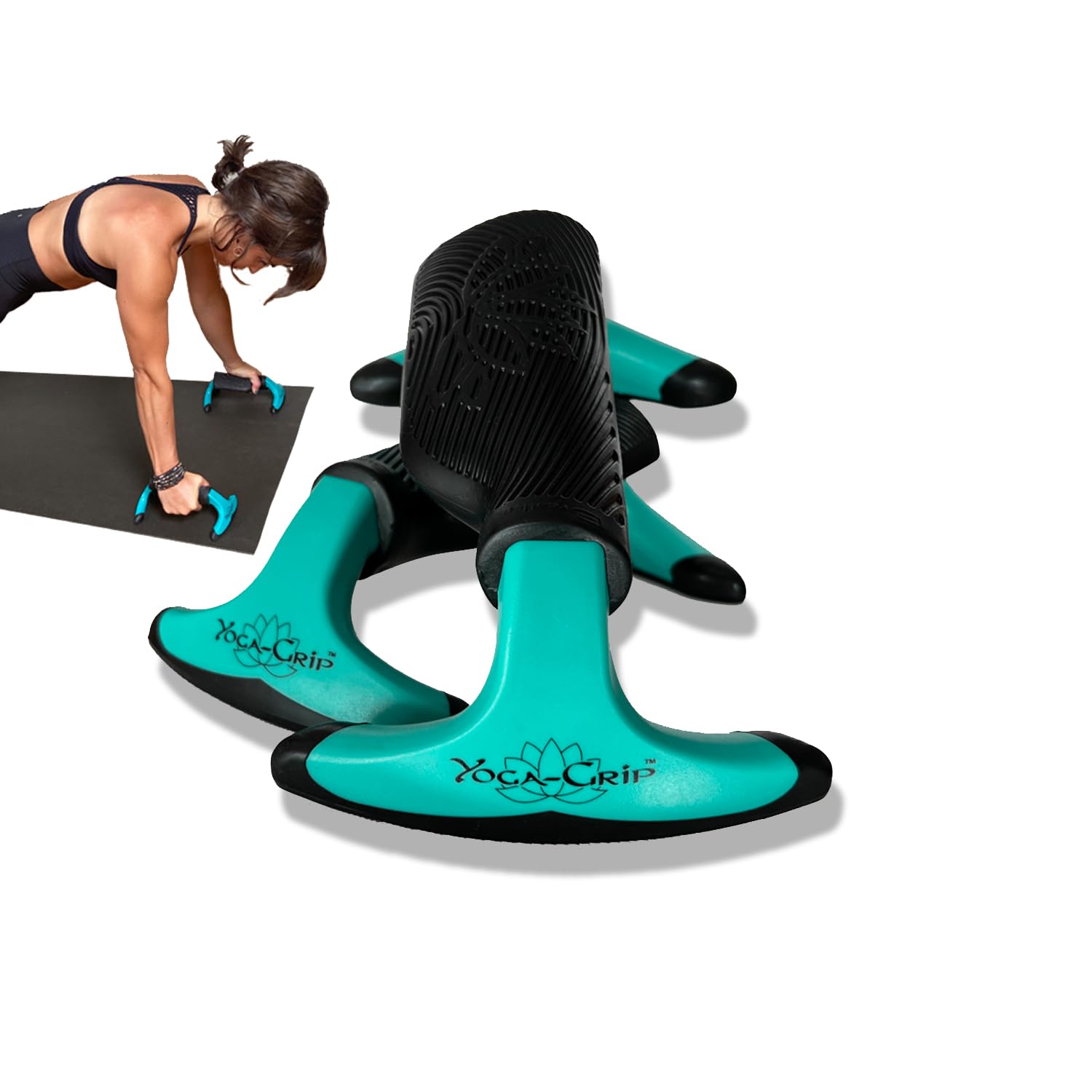
Low center of gravity, wide base — built to stay planted in plank and push-up rather than tip.
Yoga-Grip’s whole pitch is stability. The blocks sit low with a wide base, and the maker says they will not tip over — the exact failure mode that ruins a push-up set when a narrow block rolls sideways under your hand. The size is 8.5″L x 6″W x 3.6″Th, a middle height that gives a real raise without going as deep as the 4-inch blocks.
The grip is shaped to keep your wrist in a neutral line, and the maker calls it doctor tested and approved. That is a manufacturer statement, not something we verified, so treat it as their claim. The material is EVA foam with a soft grip, and the design has no moving parts to work loose.
One practical detail: the blocks ship packed with left and right swapped, and an instruction card in the box tells you to switch them before use. Do that first or the grip will feel wrong. No-slip covers for hot yoga are sold separately, which is worth knowing if your hands sweat heavily.
Why It Sits So Steady
- Low center of gravity and wide base resist tipping in plank and push-up
- 8.5″L x 6″W x 3.6″Th — a middle depth between 3-inch and 4-inch blocks
- Shaped grip is designed to keep the wrist neutral with no moving parts
Read Before You Buy
- Blocks arrive with left and right swapped — switch them before first use
- No-slip covers for hot yoga are a separate purchase
Best matched to: push-up and plank work where a tipping block has burned you before.
Hold off if: you need a cover included for a hot, sweaty practice.
Know the Specs
Block Height and Push-Up Depth
A block raises your hands off the floor, and how far it raises them decides how deep your chest goes. A 3-inch block gives a modest raise that most shoulders can control. A 4-inch block adds more depth and more difficulty. A 6-inch block is a big jump — good for experienced push-up hands, hard for beginners. Pick the depth you can hold for full sets with clean form.
Foam Versus Cork Density
Density is whether the block squashes when you press your weight through it. Standard foam gives a little; high-density EVA gives less; cork gives almost none. A block that compresses changes your hand angle mid-rep, so firmer is generally better for push-ups. The trade-off is weight — cork blocks are heavier in the hand and heavier in a bag.
Wrist Cutouts Versus Flat Tops
A flat top puts your wrist into extension — bent back toward the forearm — which loads the joint every rep. A cutout or shaped grip lets the palm sit closer to level with the forearm, spreading pressure across the hand. If wrist discomfort is why you are shopping, prioritize the cutout designs over the flat blocks, even at a higher tier.
Grip Surface and Sweat
A textured or beveled surface gives your fingers an edge to wrap around. Smooth blocks slip forward when your palms get damp. Look for a textured face or beveled rims if you sweat during sets, or plan to add a cover if the block is smooth.
Common Questions
Can I use regular yoga blocks for push-ups?
What height block should I use for push-ups?
Do wrist cutout blocks actually change wrist position?
Is cork better than foam for push-ups?
How far apart should two blocks sit for a push-up?
Will a single yoga block work, or do I need a pair?
How do I clean yoga blocks after sweaty push-ups?
Do yoga blocks tip over during push-ups?
Can I stack two blocks for a deeper push-up?
Are blocks that reduce wrist pressure safe for long sets?
The Bottom Line
If you want one pair that handles push-ups and everything else, the Gaiam Yoga Block 2-Pack is the safe call — dense foam, beveled edges for grip, and a 4-inch height that deepens the bottom of your rep. It sits at 4.5+ stars across 30,000+ ratings. For wrists that complain on a flat block, the Deep-Zen Wrist-Friendly set earns the money with its cutouts, two hand positions, and two knee pads. And if you want maximum push-up depth with labelled left and right blocks, the Yes4All Wrist Support pair is the one to reach for — just be ready for a 6-inch raise.
One honest nudge before you buy: if wrist discomfort is the reason you are shopping, skip the flat blocks and pay for the cutout design. If you just want a firm, faithful pair for a home setup, the Gaiam delivers without overspending.
How we choose
We do not accept paid placement. Every pick is matched to a real buyer and a real use-case; we do not hands-on test units.
Sources
Specifications: manufacturer listings and product documentation. Review insights: verified customer reviews, as of November 2026. Pricing: not shown on this page (it changes often); check the current price via the retailer link.
As an Amazon Associate, Tactical Gear Guy earns from qualifying purchases. This does not affect which products we feature.