Specs are compiled from manufacturer listings and verified buyer reviews and can change over time — please confirm the key details on the product page before buying.
You want your heart rate on your wrist without a charger in your pocket every night. That is the whole ballgame here. The bands below all read your pulse from the wrist and log it all day, and the best of them runs for weeks on one charge while the worst of them asks for a cable almost daily. Pick on battery life, screen size, and whether the readings hold up when you sweat — nothing else really changes how the band feels on day thirty.
This guide is built by comparing the manufacturers’ published specifications and the patterns across verified customer reviews, so you get each pick’s real strengths and trade-offs instead of marketing spin.
Some bands here give you a bright screen for messages and workouts, while others go screenless and stay out of your way. Either way, the goal is a wristband that keeps reading your pulse honestly and does not nag you for a charger. This breakdown covers the eight worth your attention and the one spec that decides most of it: how long the battery actually lasts.
The picks below break down by battery life, screen size and comfort so you can find the best wristband heart rate monitor for the way you actually wear one.
Top Picks


How To Choose The Best Wristband Heart Rate Monitor
Most buyers get this wrong by chasing a feature list instead of the two things that decide whether they keep wearing the band. The first is battery life in days, because a band you have to charge every night gets left in a drawer. The second is how the band senses your pulse — an optical sensor on the back of the wrist, which reads blood flow under your skin and turns it into a beats-per-minute number.
Start With Days Of Battery, Not Megahertz
Think in days on a charge. A band rated for 5 days means you plug it in roughly once a week, while one rated for 21 days can ride out a business trip without a cable. Screenless bands tend to stretch further because there is no bright display draining the cell. If you know you will forget to charge, weight that number heavily.
Screen Size And Why It Changes The Wrist Feel
A screen measured in inches tells you how much you can read in one glance. A 1.72-inch AMOLED display — an active-matrix organic light-emitting diode panel, a type of screen that stays readable in daylight — shows messages and heart-rate numbers clearly. Smaller displays like 0.96 inches stay compact and light but show less at a glance. Bigger screens read easier; smaller ones disappear on your wrist.
Water Resistance And The IP68 Rating
IP68 is a two-part durability code: the 6 means it is sealed against dust, and the 8 means it survives being submerged in water. On a wrist band, that covers hand washing, sweat, rain and swimming. It does not mean you should soak it in a hot bath or wear it in a sauna — heat degrades the seals over time.
Side-by-Side Comparison
| Model | Best For | Battery Life | Display | Water Rating | Amazon |
|---|---|---|---|---|---|
| FITVII Slim Fitness Tracker★ Best Overall | Everyday all-rounder | — | 1.47″ touchscreen | IP68 | Amazon |
| Xiaomi Mi Smart Band 10Biggest Screen | Longest battery, biggest screen | 21 days | 1.72″ AMOLED | — | Amazon |
| FITVII Screenless TrackerPremium Feel | Slim, distraction-free wear | 3–5 days | None | IP68 | Amazon |
| Dagakto Fitness Tracker C68L | Budget step counter | 5 days | 0.96″ | IP68 | Amazon |
| Bakoor 1.10″ AMOLED Tracker | Sports modes on a budget | Up to 7 days | 1.10″ AMOLED | IP68 | Amazon |
| Domhong Screenless Smart Band | Screen-free tracking | 30 days | None | IP68 | Amazon |
| Fitbit Inspire 3 | Coach-style daily guidance | 10 days | Color touchscreen | — | Amazon |
| Fitbit Charge 6 | Built-in GPS and payments | 7 days | Color touchscreen | — | Amazon |
Detailed Reviews
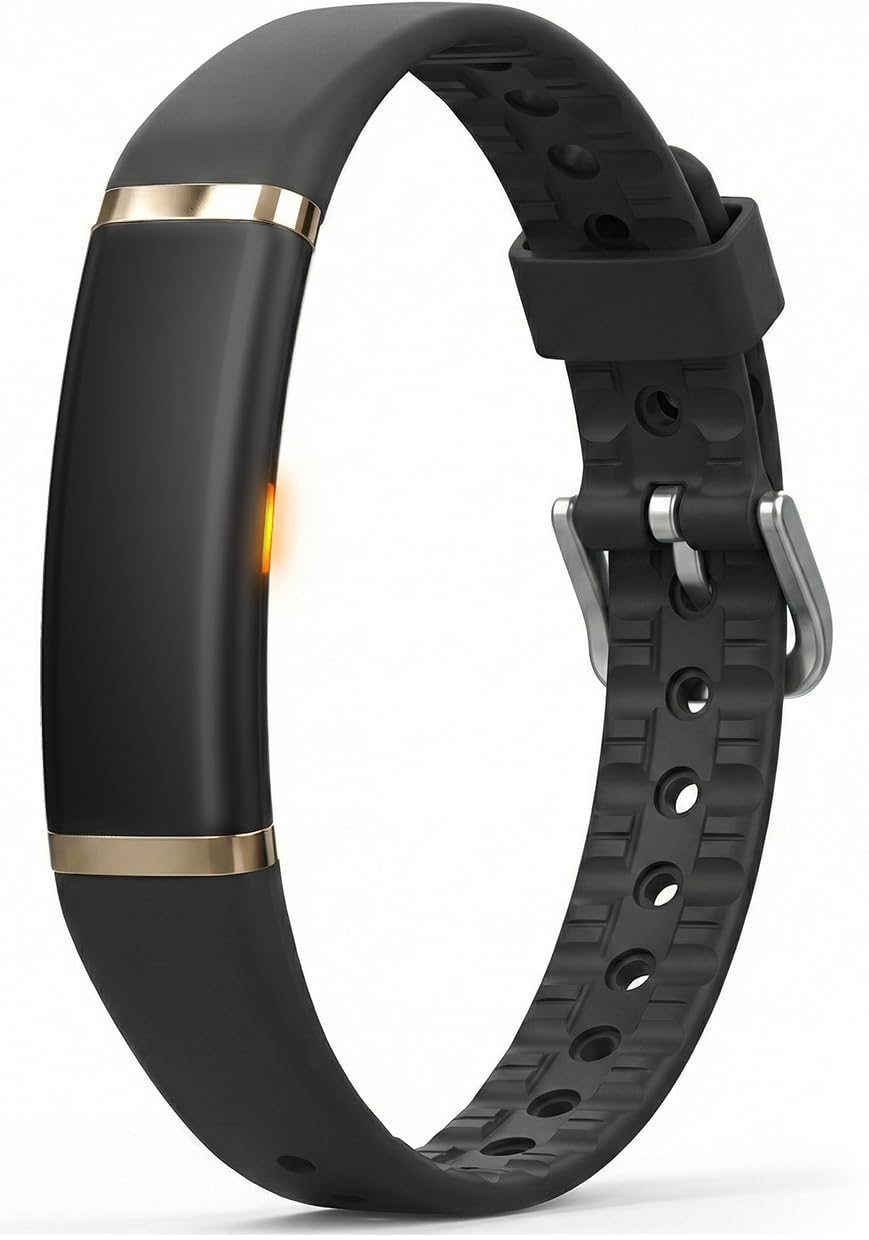
1. FITVII Slim Fitness Tracker for Women Men
Our pick — 4.5+★ from 90+ verified ratings; the strongest balance of quality and price.
The slim everyday band that reads your pulse all day and still feels invisible on your wrist.
For anyone who wants one band to cover heart rate, sleep and step counting without a big watch face, this is the pick. It logs 24-hour heart rate, blood pressure, blood oxygen and sleep, then syncs it all to the FitCloudPro app. The 1.47-inch color touchscreen is a TFT panel — a bright, high-saturation LCD type — so messages and heart-rate numbers stay readable at a glance.
It fits a wrist from 5.31in to 8.66in, which covers most adult wrists in one band. You get more than 89 watch faces to swap, and you can upload your own picture for a custom one. Calls, texts and app notifications from Facebook, WhatsApp and the rest land on your wrist, and you can see the caller’s name before deciding to pull out your phone. It syncs with Android 5.1 and iOS 10.0 and up over Bluetooth 5.0.
The comfort is what keeps it on: it wears light and stays clear to read all day, and the setup is simple enough that there are no complicated buttons or menus to learn. Owners most often praise the build quality — well over a dozen call it solid for the money. One honest catch: the display is listed in one place as a 1.47-inch screen and elsewhere as 1.45 inches, so do not buy it expecting a big, watch-style face. This is a slim band first.
What Earns It The Crown
- 24-hour heart rate plus blood oxygen, blood pressure and sleep in one slim band
- 1.47-inch color touchscreen with 89+ watch faces, including your own photo
- IP68 — hand washing, sweat and rain are fine
- Syncs to both Android and iOS and fits 5.31in to 8.66in wrists
Where It Asks Patience
- The screen is small, so long messages get cramped
- No official battery figure listed, so expect to charge more than once a week
- Not compatible with a PC or tablet — phone only
Reach for it if: you want continuous heart rate, sleep and notifications in a band light enough to forget.
Look elsewhere if: you need weeks between charges — the Xiaomi down the list runs far longer.
2. Xiaomi Mi Smart Band 10 (2025) Global Version
Three weeks between charges and a screen that stays legible in direct sun.
If the charger is your main frustration with fitness bands, this one solves it. It is rated for 21 days of battery life on a single charge, and when it does run down, an hour refills it. That is far longer than the 5-day Dagakto further down.
The display is the other headline, and it dwarfs the budget options. Its 1.72-inch AMOLED screen is larger than the Dagakto’s 0.96-inch display. AMOLED means each pixel lights itself, so blacks stay deep and the 1500 nits of HBM brightness (a peak-brightness mode meant for outdoor light) keep messages readable in the sun. Symmetrical 2.0mm bezels push the screen-to-body ratio from 66% to 73%, so more of the front is screen and less is frame.
It pairs over Bluetooth 5.4 and runs Xiaomi’s HyperOS 2 interface. There is a high-precision electronic compass for tracking swim direction in the pool, and detailed workout analysis after each session. One quirk to know: the Xiaomi Fit app only supports the metric system, so you have to bridge it with Google Fit to see pounds and inches. The battery is what wins people over — owners talk about going the better part of a month without a recharge on a band they compare favorably to a much pricier smartwatch.
Why it stands out: 21 days on a charge, reclaimed in an hour, on a screen that is bigger and brighter than anything else here.
The fine print: imperial units require a Google Fit workaround, and it is a fitness band first — a small watch face, not a full smartwatch.
Suits you best if: you want a long gap between charging and a screen you can actually read outdoors.
One real snag: imperial measurements need a third-party app bridge, so metric-only users are the smoothest fit.
3. FITVII Screenless Fitness Tracker for Women Men
For the professional who wants pulse data with zero glow on the wrist.
Some people cannot wear a glowing screen into a meeting, and this band is made for exactly that crowd. The screenless form sits flat against your wrist and reads heart rate, blood pressure, blood oxygen, HRV and sleep in the background with nothing lighting up. HRV here means heart rate variability — the small beat-to-beat timing changes measured from your pulse. Steps, calories and distance track alongside.
There is no subscription and no hidden fees — every core feature works without a monthly plan, and a guest mode lets you use the app without registering at all. That is a real difference from the Fitbit picks further down, which push a paid Health Premium tier. It is rated IP68 for workouts, sleep and daily wear, and it ships with two bands — S and L — to fit wrists from 6.22 to 9.45 inches.
Battery life depends on how you use it. With all automatic health monitoring on, it runs 3–5 days on a normal routine. Lean on sports modes heavily and that drops to roughly 1–3 days. So the trade for a clean, screenless wrist is charging more often than a band with a big battery. It syncs with Android 7 and iOS 13.0 and above over Bluetooth 5.0, phone only. One note the maker states plainly: it is not for medical use.
The winning quiet: continuous heart rate, blood oxygen, HRV and sleep with no screen glare and no subscription — you wear it and forget it is reading.
Charge accordingly: plan on roughly 3–5 days between charges, shorter if you hammer the sports modes.
Pick this one if: a glowing display has no place in your day and you refuse yet another subscription.
Think twice if: you want to glance at your pulse — this band gives you numbers only in the app.
4. Dagakto Fitness Tracker C68L
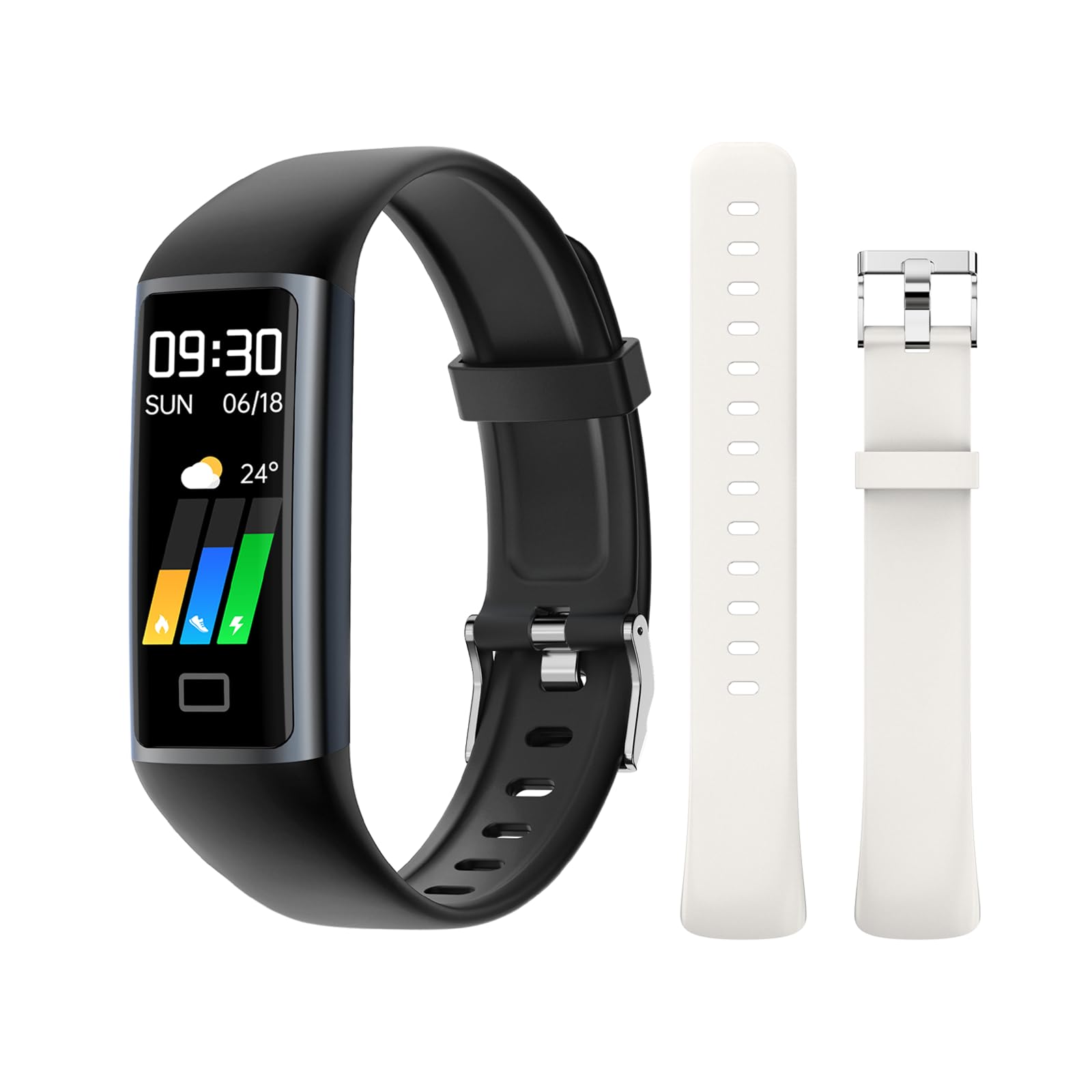
Entry-level money, a real heart-rate sensor, and two straps in the box.
This is the band for a first-time tracker or a gift, where the goal is honest basics without overspending. The 0.96-inch display is the smallest here — compact and light, but you will not be reading long messages on it. It tracks steps, calories, distance and time, plus heart rate and blood oxygen, and analyzes sleep across fall-asleep, deep, light and REM stages in the KuPoo app.
It carries an IP68 rating, so hand washing and swimming are covered — the maker does warn against long soaks and hot baths. Battery is rated at 5 days per charge via a USB magnetic cable. Against the Xiaomi’s 21 days, that is the shorter end of the list, so if you hate charging, look up the page. There is a family mode so relatives can share health data, and water plus sedentary reminders to nudge healthier habits.
It ships with a black strap and a spare white one, plus the band, cable and manual, and weighs 45 g. Notifications for texts and social apps including Facebook, WhatsApp and Instagram buzz through so you catch messages without the phone. The honest trade: with a 0.96-inch screen and 5-day battery, this is built for the basics rather than all-day messaging and multi-week wear.
What You Get For The Money
- Heart rate, blood oxygen and full sleep staging in the app
- IP68 water resistance for daily wear and swimming
- Two straps included — black and a spare white
The Trade-Offs
- 0.96-inch screen is the smallest on the list
- 5-day battery means a weekly charge
- No charging case or extra bands beyond the pair
Go for it if: you want a reliable starter band for steps and pulse and do not mind a weekly top-up.
Hold off if: a bigger screen or longer battery tops your list — that points up the page.
5. Domhong Screenless Fitness Tracker Smart Band
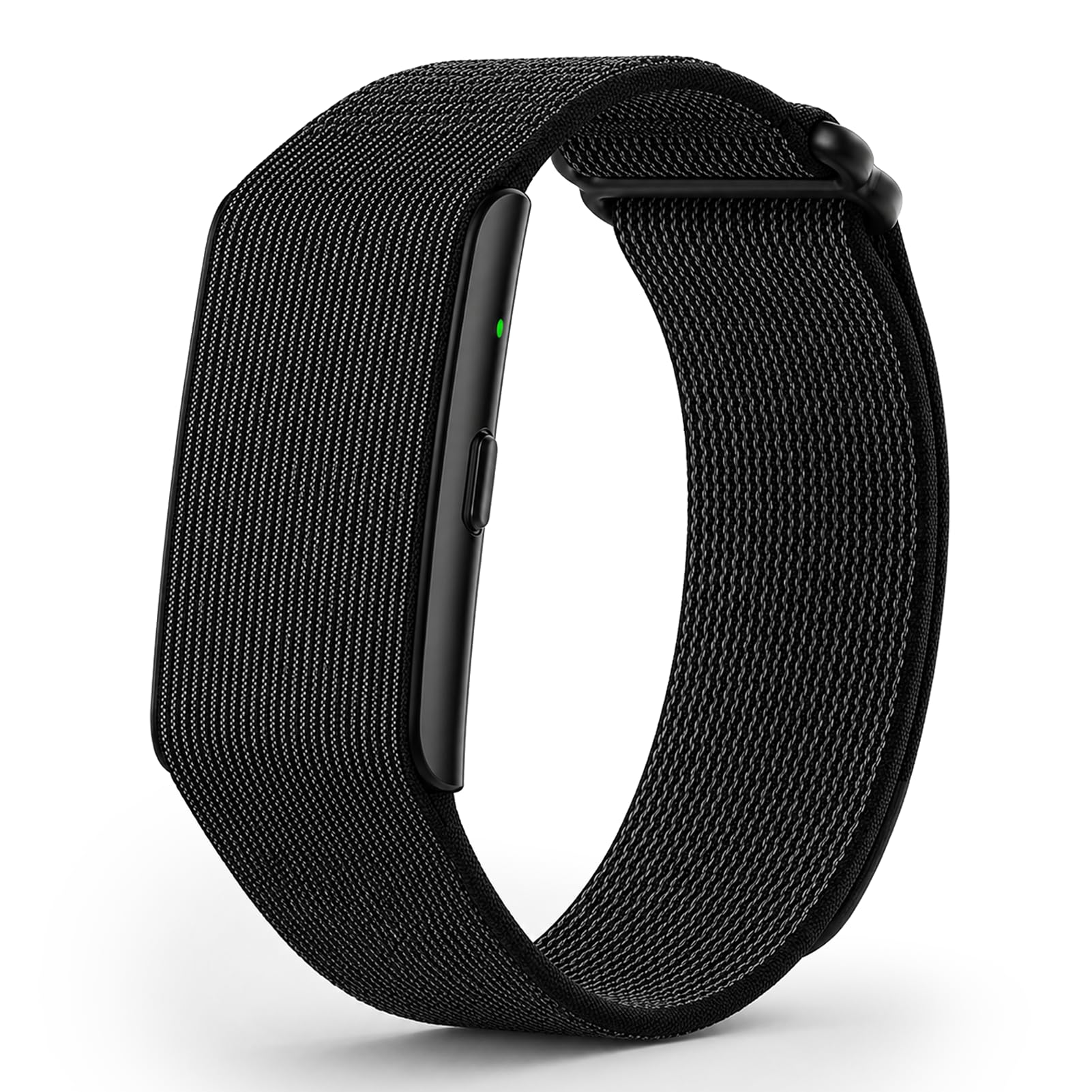
A month of tracking on one charge, with no screen ever asking for your eyes.
Here is the longest-rated battery on the list: 30 days of average use, backed by a 180mAh cell that refills in about 2 hours on a magnetic charger. At just 25 g, it vanishes on the wrist whether you are working out or sleeping. It reads heart rate, SpO2 (blood oxygen), HRV, stress, steps, distance and calories, then syncs to the free QwatchPro app with no subscription and no hidden membership fees.
The sports coverage is the broadest here by far — 170+ activity modes spanning walking, running, cycling, hiking, yoga and Pilates. Connected GPS through your phone maps supported outdoor routes in the app, so you get the distance without a built-in GPS chip draining the cell. Sleep tracking covers light, deep and REM, and a Daily Energy readout shows how your reserves move through the day so you know when to push or rest.
IP68 water resistance handles sweat, rain and hand washing, and a 22mm quick-release design lets you swap the nylon/silicone strap when you want a different fit. It is legitimately comfortable enough for overnight wear. The trade is obvious: no screen, so every number lives in the app. Owners praise the battery most for its long stretches between charges, with the activity tracking numbers next.
The month-long case: 30 days on a charge, 25 g on the wrist, and 170+ sports modes for the most variety anywhere on this list.
Where it cedes ground: screenless means no on-wrist glance, and the Maker states readings are for reference only.
Best matched to: the athlete or minimalist who wants a month between charges and every number in the app.
Least suited to: anyone who wants to see their pulse without reaching for a phone.
6. Fitbit Inspire 3
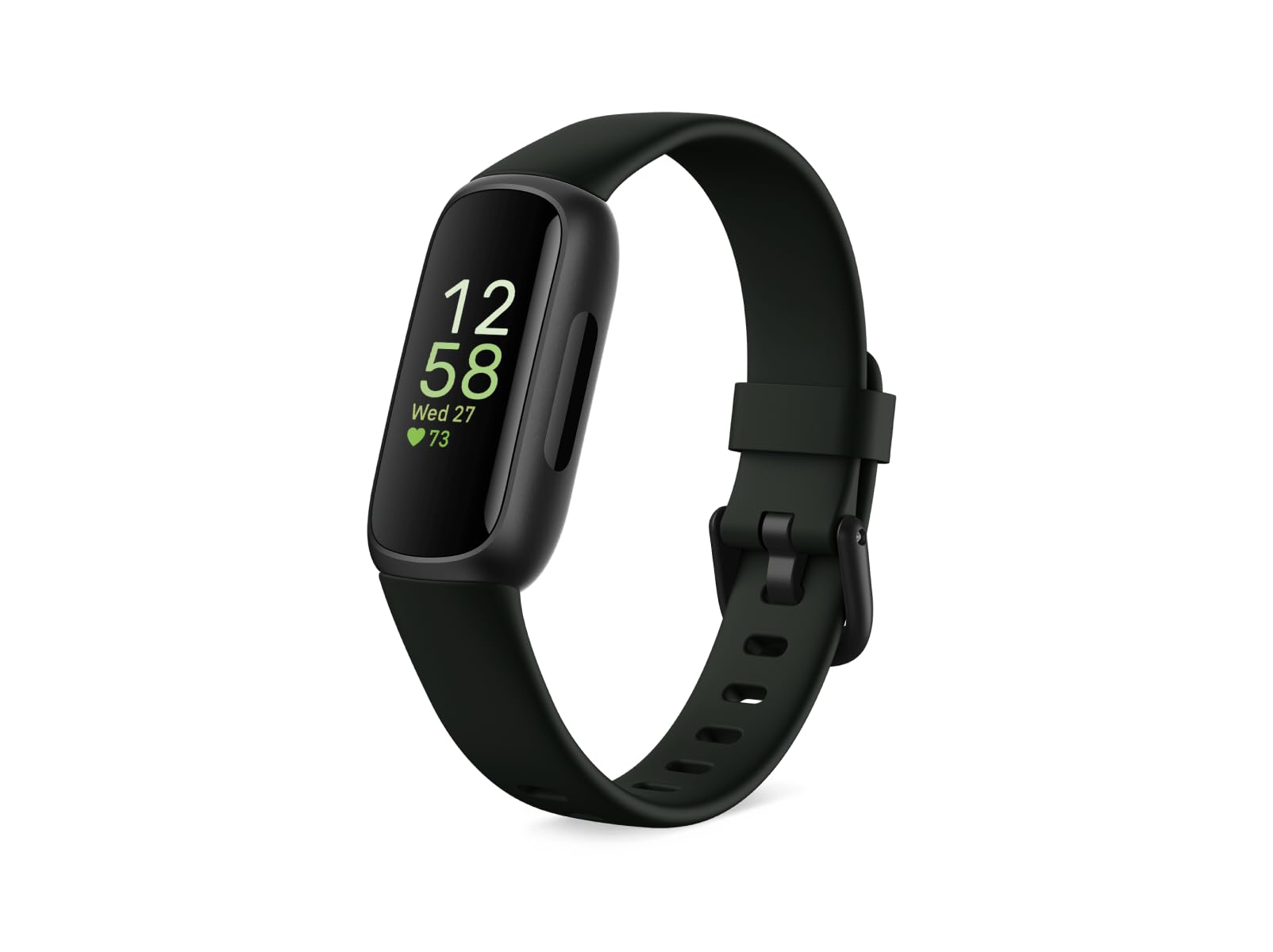
The coach in the room, with a Daily Readiness Score steering your effort.
Where the budget bands just count, the Inspire 3 tries to interpret. A Daily Readiness Score tells you whether to push or back off, Active Zone Minutes track time spent working hard, and all-day activity plus 24/7 heart rate feed the picture. It carries 40+ exercise modes with automatic exercise tracking and reminders to move. That guided approach is what separates it from the step-counters further up.
The stress and sleep tools round it out. A daily Stress Management Score, mindfulness sessions and relax breathing sessions help you wind down, while SpO2, resting heart rate and irregular heart rhythm notifications watch the physical side. Sleep gets automatic tracking, a daily Sleep Score and a smart wake vibrating alarm that nudges you gently rather than blaring.
Battery is rated at 10 days, recharged in about 2 hours — a solid middle ground between the 5-day Dagakto and the 21-day Xiaomi. It pairs with Apple iOS 16.4 or higher and Android 11.0 or higher. The catch is honest and recurring: battery reliability is the most-contested point, with some units stopping charging over time. Treat the charging routine gently and this is a capable guide on your wrist; the setup itself is friendly across the app.
Why the guidance wins: Readiness, Stress and Sleep Scores plus 40+ exercise modes turn the band into a daily nudge rather than a silent counter.
The caveat to weigh: the recurring gripe is battery charging — a small share of units fail to hold a charge.
Worth it for: people who want feedback and structure, not just a step tally — the guided scores are the draw.
Less ideal for: anyone who needs weeks of untethered battery — the Xiaomi and Domhong stretch further.
7. Fitbit Charge 6

Built-in GPS and tap-to-pay take your wrist beyond a plain step counter.
For runners and commuters who want navigation and payments without a phone in hand, this is the most loaded band on the list. Built-in GPS maps your runs and rides on its own — unlike most bands here that borrow your phone. You get 40+ exercise modes, all-day activity tracking, 24/7 heart rate and automatic exercise tracking. And when you link it to compatible machines like treadmills and ellipticals, you can see your heart rate in real time on the gym equipment.
The Google extras separate it further. Turn-by-turn directions from Google Maps route your runs, tap-to-pay with Google Wallet handles a grocery stop, and YouTube Music controls are on your wrist. On the health side, an ECG (electrocardiogram, an electrical read of heart rhythm), a stress management score and a nightly Sleep Score all feed the app.
Battery is rated at 7 days with a 2-hour charge. A premium Google Health Premium membership adds personalized coaching built with Gemini, with a 3-month trial at no cost, and the plan is sold separately after that. The honest trade here is reliability: durability is a frequently discussed concern, with some units dying in a couple of months even as many praise the overall quality. The feature set is the strongest of the group — just go in knowing the build is the question mark.
Why It Stands Apart
- Built-in GPS maps runs without a phone
- Google Wallet tap-to-pay and Maps directions on the wrist
- ECG plus Sleep and Stress Scores in the app
- Links to gym machines for real-time heart rate
What To Know Before You Buy
- Reliability is the recurring concern — build quality is the question
- Premium health coaching needs a paid Google Health Premium plan
- 7 days of battery trails the 21- and 30-day bands
Choose it for: GPS runs, tap-to-pay and gym-machine heart rate in one band — the most capable set here.
Weigh the build risk: durability is the most-discussed concern, so consider coverage or gentle handling.
8. Bakoor 1.10″ AMOLED Fitness Tracker
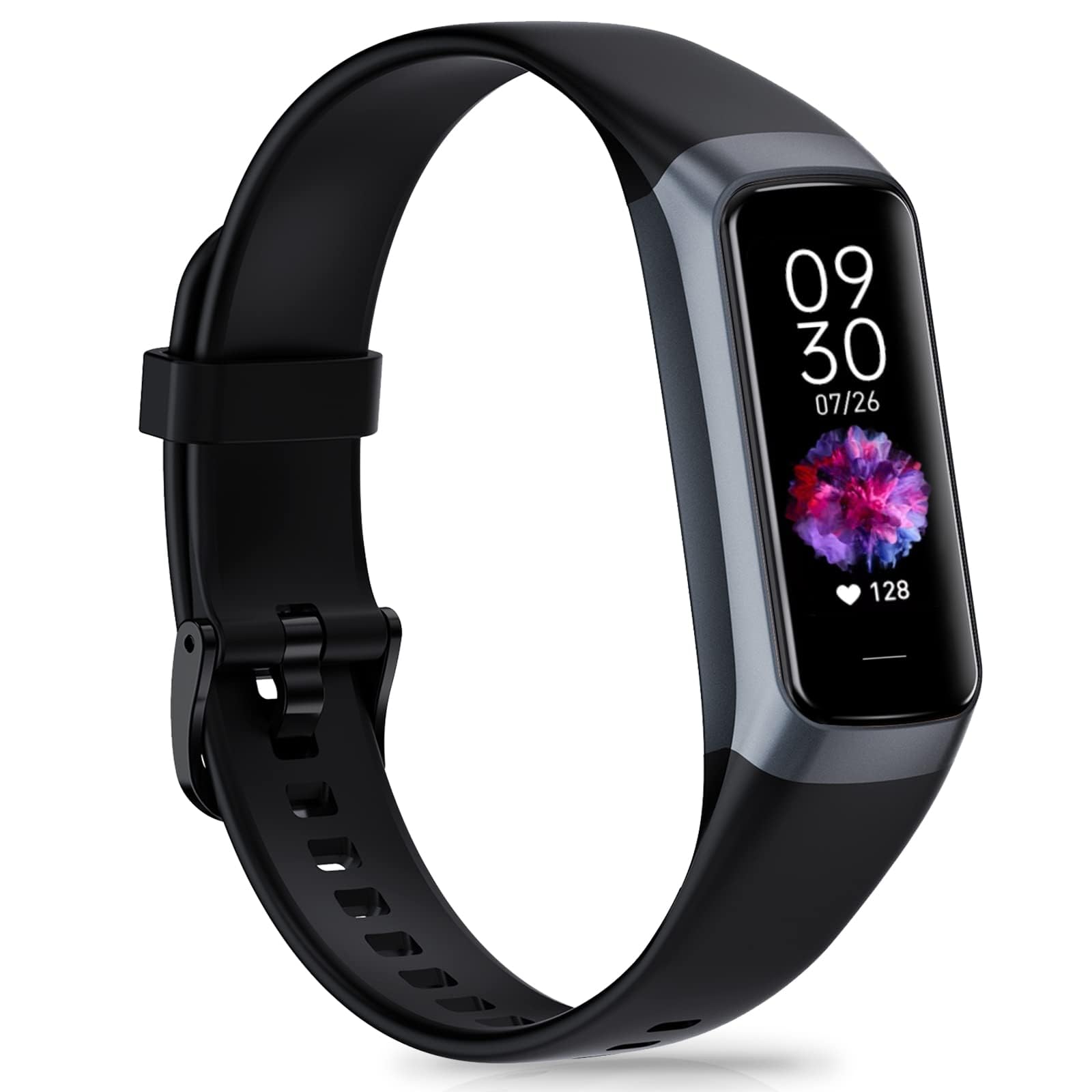
A color AMOLED screen and 25 sports modes on a small spend.
This is the value play for someone who wants a bright color screen without the price of the big names. The 1.10-inch HD touchscreen is an AMOLED panel, so it stays colorful and readable, and calls and messages show clearly on it. It tracks 24/7 heart rate, resting heart rate, breathing rate and heart rate variability, plus blood pressure and sleep, in the Keep Heath app.
Battery runs up to 7 days per charge, or 15 days on standby, and a full charge takes only 2 hours. That beats the 5-day Dagakto but trails the 21-day Xiaomi noticeably. You get 25 sports modes covering steps, calories, distance and exercise time, and connected GPS records your workout route through your phone. Weather updates, remote camera control, hydration and sedentary reminders, and female health tracking round out the extras.
It is IP68 water resistant, and the app is upfront that sleep data is for reference only and not a substitute for a doctor’s advice. The accuracy is the one mixed point — some readings land, others are off, so treat it as a tracker for trends rather than a precise gauge. Functionality is the most-discussed strength by a wide margin, with well over a hundred reviewers singling it out, followed by value for money.
The value pitch: a 1.10-inch AMOLED screen, 25 sports modes and up to 7 days of battery on a budget-tier spend.
Honest read on accuracy: readings are mixed, so use it for trend lines rather than precision numbers.
A fit for you if: you want a bright color screen and lots of sports modes without spending much.
Not for you if: precise heart-rate numbers matter more than screen time — accuracy is the soft spot.
Know the Specs
Battery Life In Days
The number of days you can go between charges. A 5-day band means roughly a weekly charge, while a 21- or 30-day band rides out trips without a cable. Screenless bands often stretch further because there is no bright display. Weight this figure against your willingness to remember a charger.
Display Size And AMOLED
Screen size in inches tells you how much you can read at a glance — a 0.96-inch screen stays compact, while a 1.72-inch AMOLED shows more. AMOLED means each pixel lights itself, so it stays bright and clear in daylight. Bigger screens read easier; smaller ones keep the band light on the wrist.
Heart Rate And HRV
An optical sensor on the back of the band reads blood flow under your skin and turns it into a beats-per-minute number. HRV, or heart rate variability, tracks the small timing changes between beats. Both are references for trends, not medical readings — several of these bands say so plainly in their own specs.
IP68 Water Resistance
IP68 means the band is sealed against dust (the 6) and survives submersion in water (the 8). On a wrist band, that covers sweat, rain, hand washing and swimming. It does not mean soaking it in hot water or wearing it in a sauna — heat wears on the seals over time.
Common Questions
How often will I actually have to charge a wristband heart rate monitor?
Will this band work with my Android phone and iPhone?
Can I swim with an IP68 wristband?
Is a screenless band better than one with a screen?
How accurate is a wristband heart rate monitor compared to a chest strap?
Do I need a subscription to see my heart rate data?
What is the difference between the Xiaomi Mi Smart Band 10 and the cheaper trackers?
Can a wristband measure blood pressure and blood oxygen at home?
Will a wristband track my sleep stages overnight?
What wrist size will these bands fit?
The Bottom Line
Want the safest all-round buy? Grab the FITVII Slim Fitness Tracker. It tracks your heart rate around the clock (24-hour heart rate), plus blood oxygen, blood pressure and sleep, in a slim band that syncs to both Android and iOS. Buyers back it too, at 4.5+ stars across 90+ ratings. If charging annoys you, the Xiaomi Mi Smart Band 10 runs 21 days on one charge and has the biggest, brightest screen here. And if you never want to glance at a screen, the screenless Domhong Smart Band stretches to 30 days. All three are worth buying; the real choice is if you want a screen, a month of battery, or both.
How we choose
We do not accept paid placement. Every pick is matched to a real buyer and a real use-case; we do not hands-on test units.
Sources
Specifications: manufacturer listings and product documentation. Review insights: verified customer reviews. Pricing: not shown on this page (it changes often); check the current price via the retailer link.
As an Amazon Associate, Tactical Gear Guy earns from qualifying purchases. This does not affect which products we feature.