Specs are compiled from manufacturer listings and verified buyer reviews and can change over time — please confirm the key details on the product page before buying.
Here is the short answer: buy a boot with a real insulation rating and a sealed waterproof build, not just a thick rubber shell. Insulation grams set how warm you stay, and a sealed waterproof build keeps slush from soaking through. Every pick below is insulated and waterproof for slush, snow and frozen ground.
This guide is built by comparing the manufacturers’ published specifications and the patterns across verified customer reviews, so you get each pick’s real strengths and trade-offs instead of marketing spin.
Insulation grams, toe type and shaft height each decide which jobs a pair can handle. Every pick here is insulated, waterproof and built for cold-weather work, and this roundup of the work boots for the winter covers the rubber pac to the leather lace-up so you can match the boot to your site.
Top Picks
How To Choose The Best Work Boots for the Winter
Cold-weather work boots are not one product. A rubber pac for a muddy feed lot and a lace-up leather boot for a frozen warehouse share almost nothing except warmth. Choose your outsole for the ground, your toe for the site rules, then your insulation grams for the temperature.
Insulation grams: pick by temperature, not by brand
Insulation is measured in grams, and the number tells you how much thermal fill sits between your foot and the cold. A 200-gram boot keeps you warm on cold concrete and damp job sites. A 600-gram boot handles a full winter shift outdoors. A 1200-gram boot is for standing in deep cold for hours, and it feels bulky and hot the moment you step inside.
Waterproofing versus water resistance
Water-resistant means the surface sheds some moisture. Waterproof means a sealed membrane or a moulded rubber shell keeps water out entirely. If your day involves slush, puddles or wet snow, you want the sealed kind. The trade-off is breathability, so look for a boot that names its waterproof construction rather than promising it in a slogan.
Steel toe, composite toe or no toe cap
A steel toe protects against impact and compression, and it is what most construction and industrial sites require. A composite toe does the same job without the metal, so it feels less cold against your toes and is lighter. Both matter for a winter boot because a metal cap pulls heat out of your toes fast on frozen ground.
Shaft height and outsole tread
Shaft height is how tall the boot rises up your leg. A 12-inch rubber pac keeps snow and slush from running over the top. An 8 or 9-inch lace-up gives you ankle support for ladders and uneven ground. On tread, look for a lugged or multi-directional outsole — that is the pattern of raised rubber blocks that bites into snow and frozen gravel.
Side-by-Side Comparison
| Model | Best For | Insulation | Shaft Height | Toe Type | Amazon |
|---|---|---|---|---|---|
| Kalkal Rubber Boots for Men★ Best Overall | Wet mud, muck and slush | 6mm neoprene | Mid calf | — | Amazon |
| ANGRYRAM Winter Steel Toe BootsSteel Toe Value | Harsh construction sites | Fleece lining | — | ASTM F2413-18 steel toe | Amazon |
| Georgia Boot HomelandComfort First | All-day comfort on site | Insulated | 8 inches | — | Amazon |
| ROCKY Blizzard Stalker 1200G | Deep cold, long outdoor shifts | 1200g 3M Thinsulate | 9 inches | Steel toe | Amazon |
| ROCKY Ranger GORE-TEX | Cold and damp work sites | 600g Thinsulate | 9 inches | Steel toe (ASTM F2413) | Amazon |
| LaCrosse Pac 12″ | Slush, muck and farm chores | Foam insulation | 12 inches | ASTM-rated steel toe | Amazon |
| Timberland PRO Direct Attach | Everyday winter work | 200g | 6 inches | Steel safety toe | Amazon |
| Terra Crossbow CT CP ESR | Cold sites with heel support needs | Insulated | 10 inches | Composite toe | Amazon |
| RefrigiWear Extreme Hiker | Extreme cold, gloved hands | Rated -40°F to 10°F | 8 inches | ASTM composite safety toe | Amazon |
| Carhartt CSA 8″ Rugged Flex | Puncture risk on winter sites | 400g | 8 inches | Composite toe | Amazon |
| KEEN Utility Dover 8″ 600g | Comfort on long cold shifts | 600g | 8 inches | Composite toe | Amazon |
Detailed Reviews
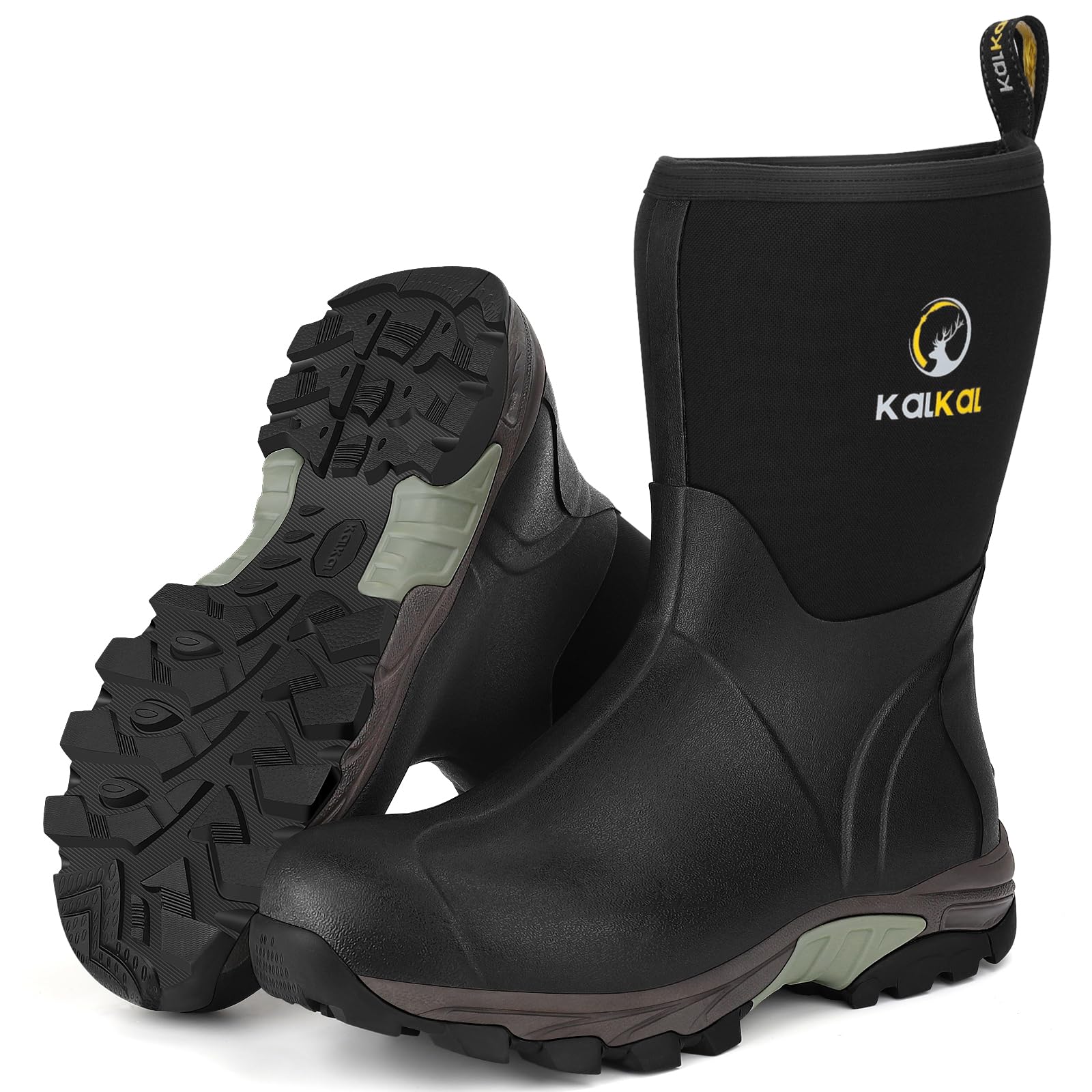
1. Kalkal Rubber Boots
Our pick — 4.5+★ from 400+ verified ratings; the strongest balance of quality and price.
The pull-on rubber boot that keeps slush off your shins and your toes out of the cold.
If your day is spent in muck, wet snow and standing water, this is the pair to start with. The boot is built from 6mm neoprene, a thick rubber-and-foam material that holds warmth even when it is soaked on the outside. A mid-calf height means snow and slush stay outside the boot instead of running down into your sock. You pull them on and off without bending over, which matters a lot when you are wearing heavy winter gloves.
What wins people over is how quickly they go on and how dry they stay — the quality of the build is the most-praised thing about them, with comfort right behind. They handle cooler weather, rain and snow in the same shift, so you are not swapping boots between the truck and the barn. For mud, muck and uneven slushy ground, this is the shape of boot that makes sense.
Where it delivers
- 6mm neoprene keeps feet warm and dry in wet snow and slush
- Pull-on design works with gloves on and no bending
- Mid-calf shaft blocks slush from running inside
- Handles rain, cooler weather and snow in one boot
The honest catch
- Durability is the split point — buyers report soles that hold up well and buyers who see soles come apart after one month of use, so treat the outsole as the wear item and check it often
- No steel or composite toe, so it is not a safety boot for a site that mandates toe protection
The catch is safety certification. This is a rubber work boot, not a rated toe-cap boot, so it suits farm work, hunting, gardening and general outdoor labour rather than a construction site that requires a protected toe. Size it over a thick winter sock and you get a warm, sealed boot for the wettest ground you walk on.
Made for: muck, slush and standing water where you need a fast pull-on boot and no safety toe.
Not the one for: a site that requires a certified protective toe — head to the steel or composite picks further down.
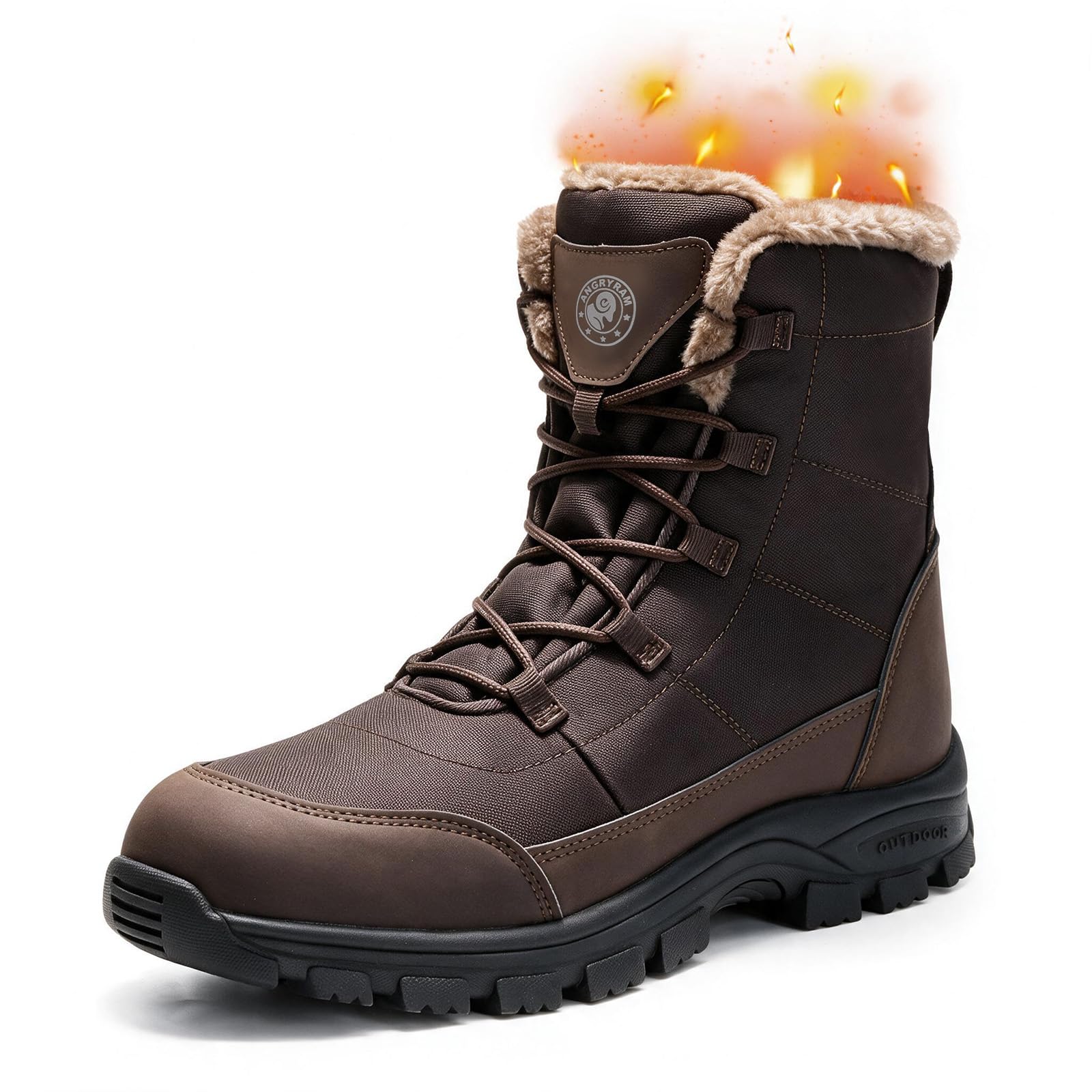
2. ANGRYRAM Winter Steel Toe Boots
A rated steel toe and a fleece lining, aimed squarely at the winter construction site.
This is the pick for the worker who needs a certified toe cap but cannot afford a premium price. The steel toe carries an ASTM F2413-18 rating, which is the published safety standard for protective footwear, so you can walk onto a site that checks toe protection. A puncture-resistant midsole sits under the foot to block sharp debris from pushing up. Inside, a fleece lining traps warmth against your foot.
The slip-resistant outsole handles frozen ground and wet concrete, and the whole boot is aimed at cold-weather outdoor work rather than a heated cab. If you need one boot for construction, snow and general site safety, this covers all three without you needing a second pair.
What the rating signals: it lands at 4.0+ out of 5 from 200+ buyers — a solid grade for a budget steel toe, and the reviews that accompany it trend toward value and protection rather than luxury.
The winter trade-off: the fleece lining keeps your feet warm, but it has no grams rating the way a Thinsulate boot does (Thinsulate is a synthetic insulation rated in grams, where more grams means more warmth). So treat this as a cold-weather boot for active work, not for standing still for hours in deep freeze.
Grab it for: site work that requires an ASTM-rated toe without a premium spend.
Look past it for: all-day standing in extreme cold where a high-gram insulation boot is the safer bet.
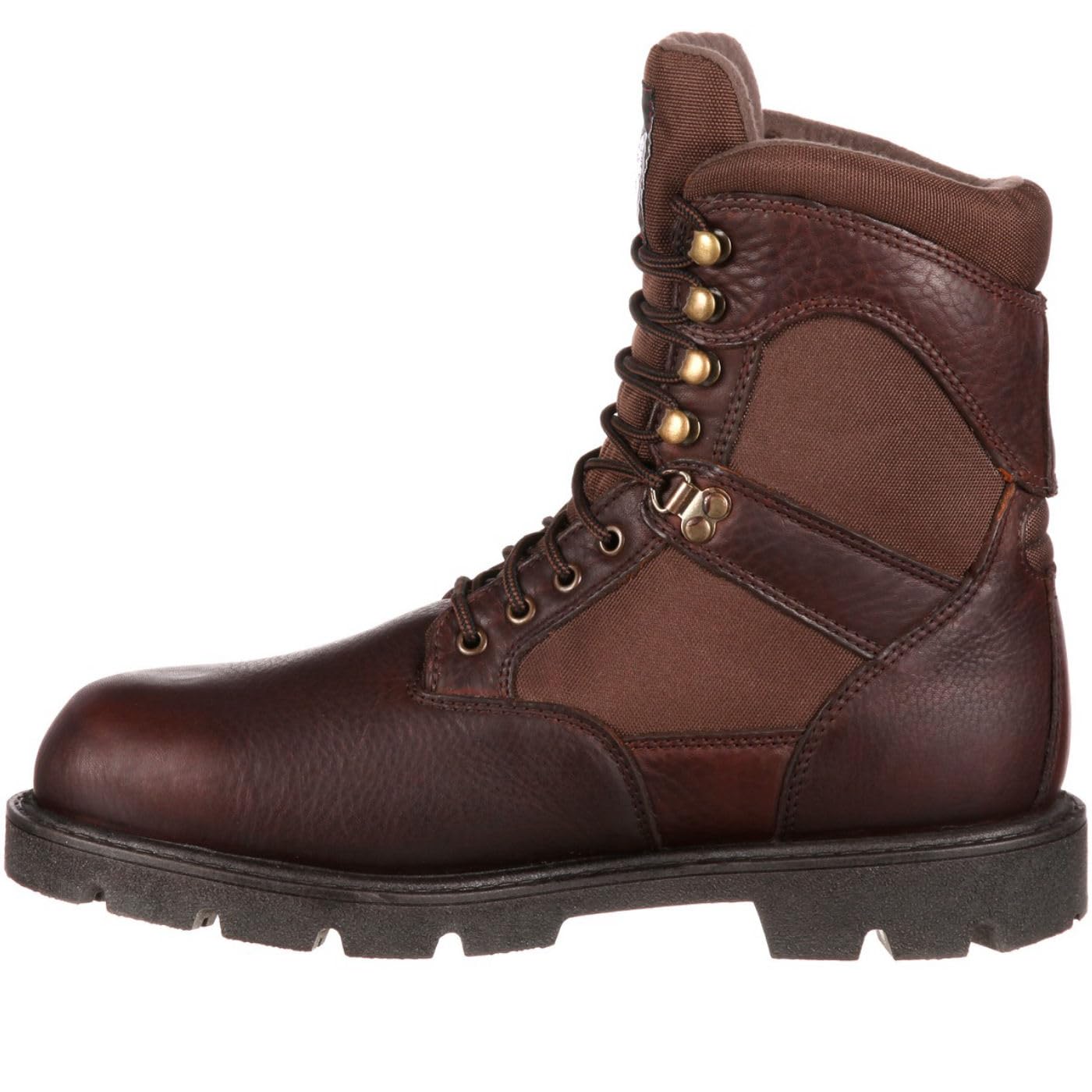
3. Georgia Boot Men’s Homeland Waterproof Insulated Work Boots
The lace-up that trades bulk for a soft, cushioned day on your feet.
Wearers describe these as comfortable, light on the foot and good-looking, which is rare for an insulated work boot. The 8-inch shaft gives ankle support without the height of a pac, and the waterproof build keeps your feet dry through winter rain and wet ground. A good gripping surface is the standout — owners walk it across wet clay and muddy slurry without losing their footing.
For a farm, a shop or a mixed outdoor day, this is the boot that feels broken in quickly instead of needing weeks. The softer comfort character is what carries it across a full shift.
Fit note: the 8-inch height sits comfortably under most work trousers and gives you the ankle hold a shorter 6-inch boot cannot.
Be realistic about: the listing gives package weight, not a per-foot weight or an insulation gram figure, so judge warmth by the insulated build rather than a number.
Suited to: the worker who values a soft, light ride over maximum thermal bulk.
Skip if: you work standing still in deep cold all day and need a heavy-gram boot instead.
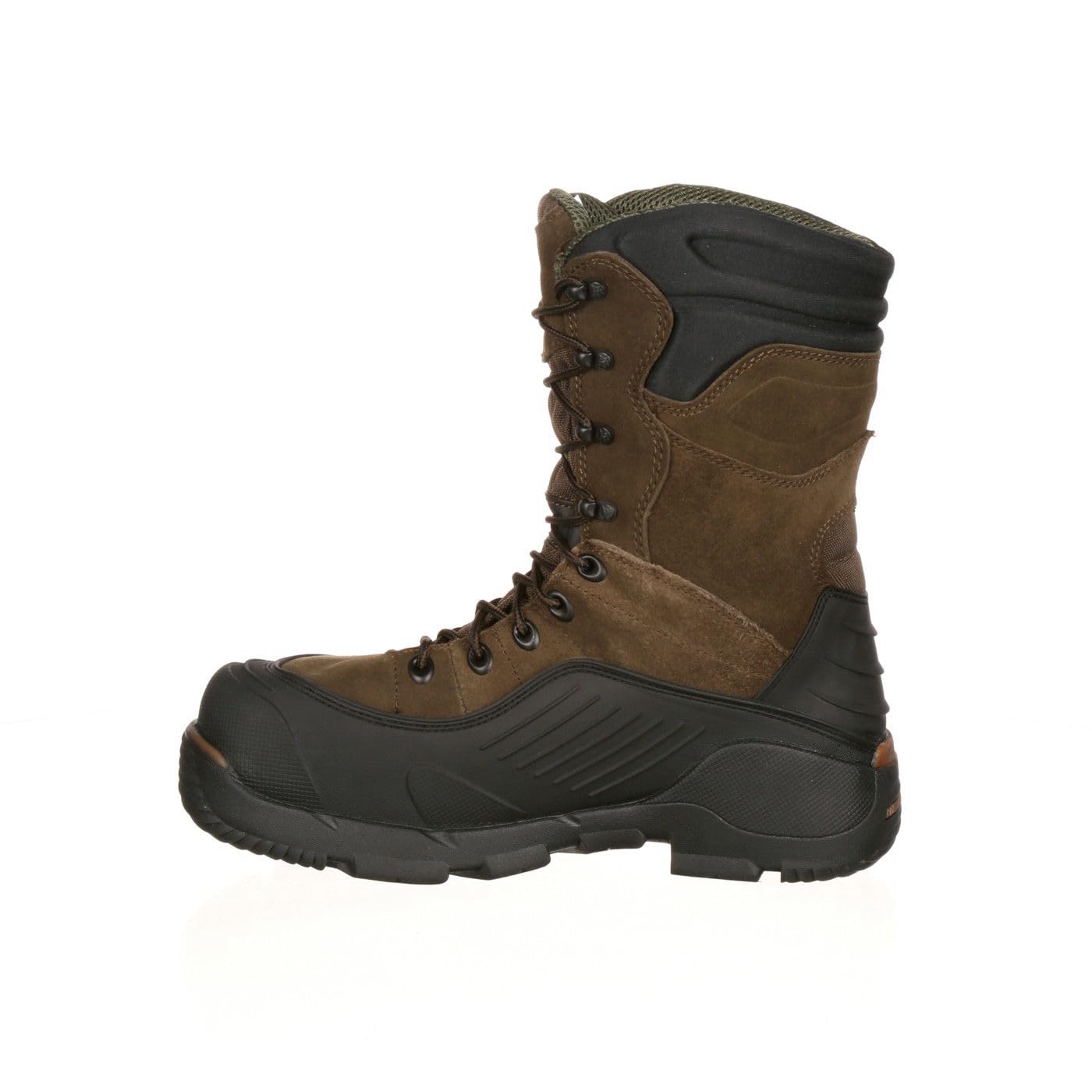
4. ROCKY Blizzard Stalker Steel Toe Boot
Twice the insulation fill of the Ranger — the boot for long hours in bitter cold.
Start with the number that decides everything: 1200 grams of 3M Thinsulate Ultra insulation. That is double the 600 grams in the ROCKY Ranger below, which makes this the boot for the person who stands outside in the cold for a whole shift rather than darting between a truck and a doorway. What earns the praise here is warmth — it is what buyers talk about more than anything else, with value close behind.
The nine-inch upper is a blend of split suede and 900 Denier high-abrasion fabric, a woven material that resists scrapes on rough ground. An extended tongue blocks snow and dirt from working its way down into the boot. A polyurethane footbed cushions your steps if you stand all day, and a TPU heel stabilizer — a stiff plastic cup around the heel — holds your foot steady as you walk. The steel toe is built to withstand up to 75 pounds of impact and compression.
Weight is where the insulation bill comes due. This boot runs 6.1 pounds per pair versus 5.0 pounds per pair for the ROCKY Ranger, so the extra warmth adds to the load on every step. The fit also draws mixed reports, with some finding it oversized, so try before you commit to a size. The multi-directional outsole earns its keep on snow-covered and uneven terrain.
Best at: deep cold, long outdoor shifts and snow-covered ground where maximum warmth outweighs extra weight.
Honest limit: bulky and heavy for a warmer, faster indoor transition, and the sizing needs a check against your usual boot size.
Reach for it if: your workday lives in the coldest hours outdoors and warmth is your first priority.
Think twice if: you need a light boot for constant walking or in-and-out door work.
5. ROCKY Ranger Steel Toe Boots
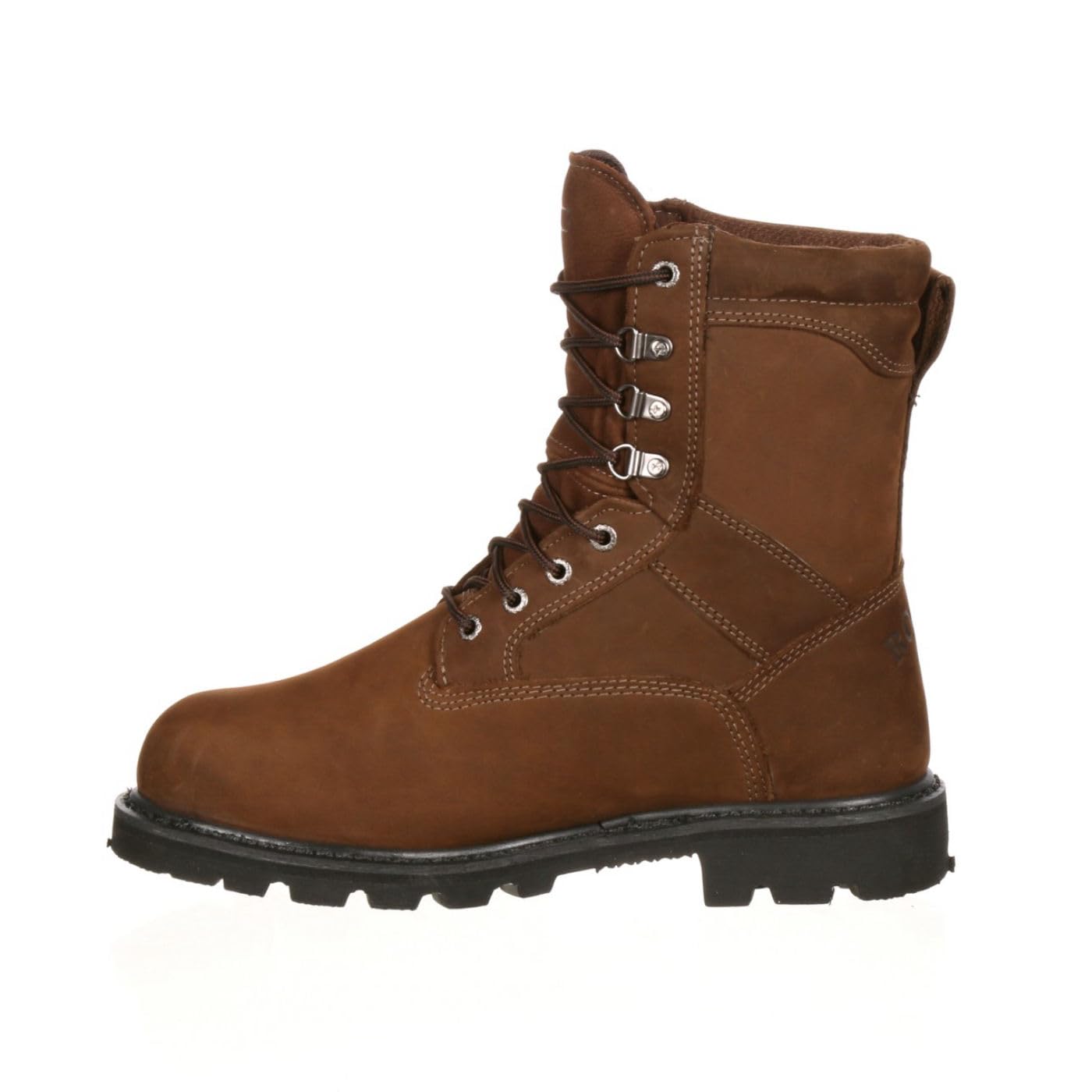
Half the insulation of the Blizzard Stalker, but noticeably lighter on your feet.
This is the balanced ROCKY. It carries 600 grams of 3M Thinsulate Ultra insulation — half of the 1200 grams in the Blizzard Stalker above — and it trades that warmth for a lighter walk. At 5.0 pounds per pair for a size 10, it is the lighter of the two, which you feel on a ladder or a long walk across a plant.
The waterproofing is the headline. GORE-TEX is a breathable membrane, meaning it blocks water from outside while letting moisture from your foot escape, so your feet stay dry in cold, damp conditions without the inside of the boot turning clammy. A rubber Vibram oil-resistant outsole gives you grip on slick floors, and Goodyear welt construction is a stitched method that ties the upper and sole together for a strong join. The steel toe is ASTM F2413-rated and withstands up to 75 pounds of impact and compression.
Fit is what this boot is known for — it is the thing owners celebrate most about it, with comfort close behind. Ease of use is the one area that draws mixed reaction, so expect a firmer break-in on the lacing side.
Why it holds its place
- 600g Thinsulate keeps feet warm in cold, damp weather
- GORE-TEX membrane is waterproof and breathable
- 5.0 pounds per pair for a size 10 — lighter than the 1200g Blizzard Stalker
- Vibram oil-resistant outsole and Goodyear welt construction
Where it asks patience
- Half the insulation of the deep-cold option, so it is not the pick for standing still in a deep freeze
- Ease of use reads mixed — the lacing takes some breaking in
Right for: cold, damp sites where you need waterproofing and a protective toe with less bulk.
Wrong for: sub-zero standing work where 1200g insulation earns its weight.
6. LaCrosse Pac 12″ Insulated Steel Toe Rubber Boots

A full 12-inch rubber pac that holds a protected toe and shrugs off deep slush.
The height is the reason to buy it. At 12 inches of shaft, this boot rises higher up your leg than the 9-inch ROCKY Blizzard Stalker, which is a meaningful difference when you are wading through slush, muck and standing water. It is a rubber pac, so the shell itself is waterproof without relying on a membrane, and it carries an ASTM-rated steel toe for site protection. Electrical-hazard protection adds a safety layer for work around live circuits.
Traction comes from a vulcanized Trac-Lite outsole, a pattern that grips on slippery and uneven ground in frozen conditions. Foam insulation works to hold warmth in wet, chilly weather. The lace-up top and ankle fit lock your heel in place so your foot does not slide forward on a long shift, and a rubber toe guard adds abrasion resistance where the boot takes the most scuffing. Owners find them comfortable and well-fitting, with insulation that keeps feet dry and warm through the day.
Durability splits opinion — some find these hold up extremely well, and a few describe a boot that feels worn after a month. Treat the upper as a hard-wearing shell but keep an eye on wear points. Fit, comfort and warmth are the three things that come up most in their favour.
Great for: deep muck, farm chores and wet job sites where a 12-inch waterproof shell and a steel toe both matter.
Be aware: the tall rubber pac is heavier and less ventilated than a leather lace-up on warmer indoor days.
7. Timberland PRO Direct Attach 6 Inch Steel Safety Toe
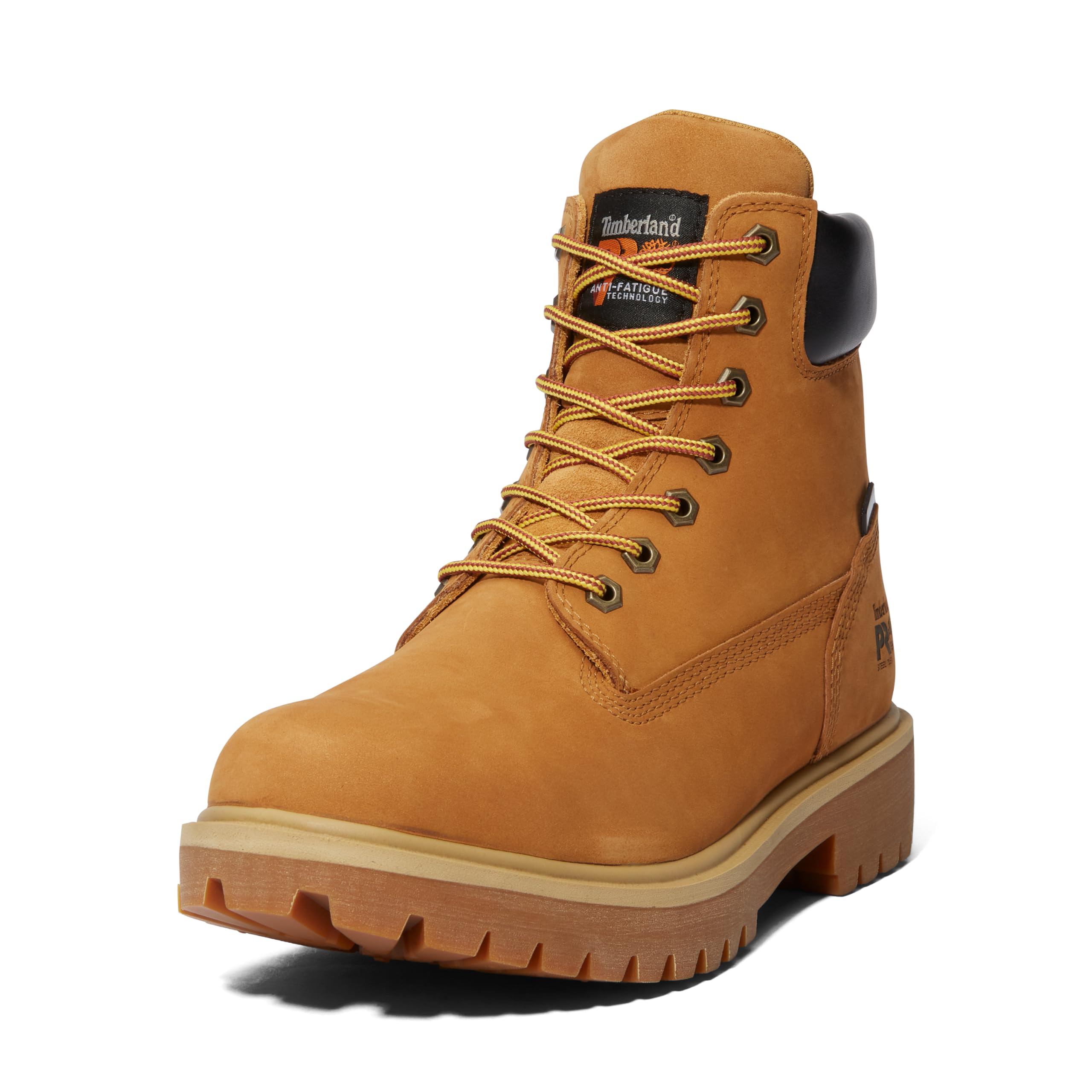
The light-insulation leather boot for a wet, cold shift that moves indoors and out.
With 200 grams of insulation, this is the lightest cold-weather build on this list — and that is on purpose. It suits the worker who spends part of the day outdoors and part of it in a warehouse or shop, where a 1200-gram boot would cook your feet. The seam-sealed waterproof leather upper keeps water out, and owners mention standing in ankle-deep water without getting wet. Padded collars and a heat-, oil-, slip- and abrasion-resistant rubber lug outsole round out the working side.
Anti-Fatigue Technology polyurethane footbeds give all-day shock absorption, which is the feature that carries you through a long concrete-floor shift. A breathable, moisture-wicking lining made from ReBOTL fabric, which contains at least 50% recycled plastic, helps move sweat away from your foot. Electrical hazard protection is included for secondary protection around live circuits.
The fit runs about half a size large according to the reviews, so size down if you are between sizes. The 6-inch height keeps the shaft low under trousers and out of the way when you are crouching.
Where it shines: waterproof leather and a 200g fill keep you dry in winter rain without overheating you inside.
Trade-off to plan for: only 200g of insulation, so it is not built for hours of standing still in a deep freeze.
Choose it when: your day moves between wet weather and a heated indoor space.
Pick something else if: your whole shift is outdoors in sub-zero cold.
8. Terra Crossbow CT CP ESR CSA Insulated Waterproof Boots

A tall composite-toe boot for cold sites where a metal cap chills your toes.
The 10-inch shaft on this boot sits between the 8-inch leather options and the full 12-inch pac, so it gives you more leg coverage than a standard lace-up without going full rubber. It uses a composite toe, which protects against impact and compression without the weight or cold-transfer of steel. The model naming includes CT for composite toe, CP for puncture protection and ESR for electric shock resistance, and the whole design is insulated and waterproof for winter work.
Warmth is the strength reported here — a heavy-duty insert is called out as part of what keeps these comfortable in cold conditions, and buyers treat them as good value for a tall, protected winter boot.
Fit is the honest sticking point. Reports go both ways, with some finding them large and others finding them tight, so a try-on or a careful size check is worth the effort before you rely on them for a full season.
Working strengths
- 10-inch shaft for more leg coverage than an 8-inch lace-up
- Composite toe protects without steel’s cold transfer
- Insulated and waterproof for cold, wet winter sites
- Considered good value for a tall, protected boot
Fit reality check
- Fit is split — some find it large, others find it snug, so check the size chart carefully
Works best for: cold outdoor sites where a tall composite-toe boot fits your budget.
Worth a pause if: you cannot try before you buy and fit uncertainty is a problem.
9. RefrigiWear Men’s Extreme Hiker Waterproof Winter Work Boots
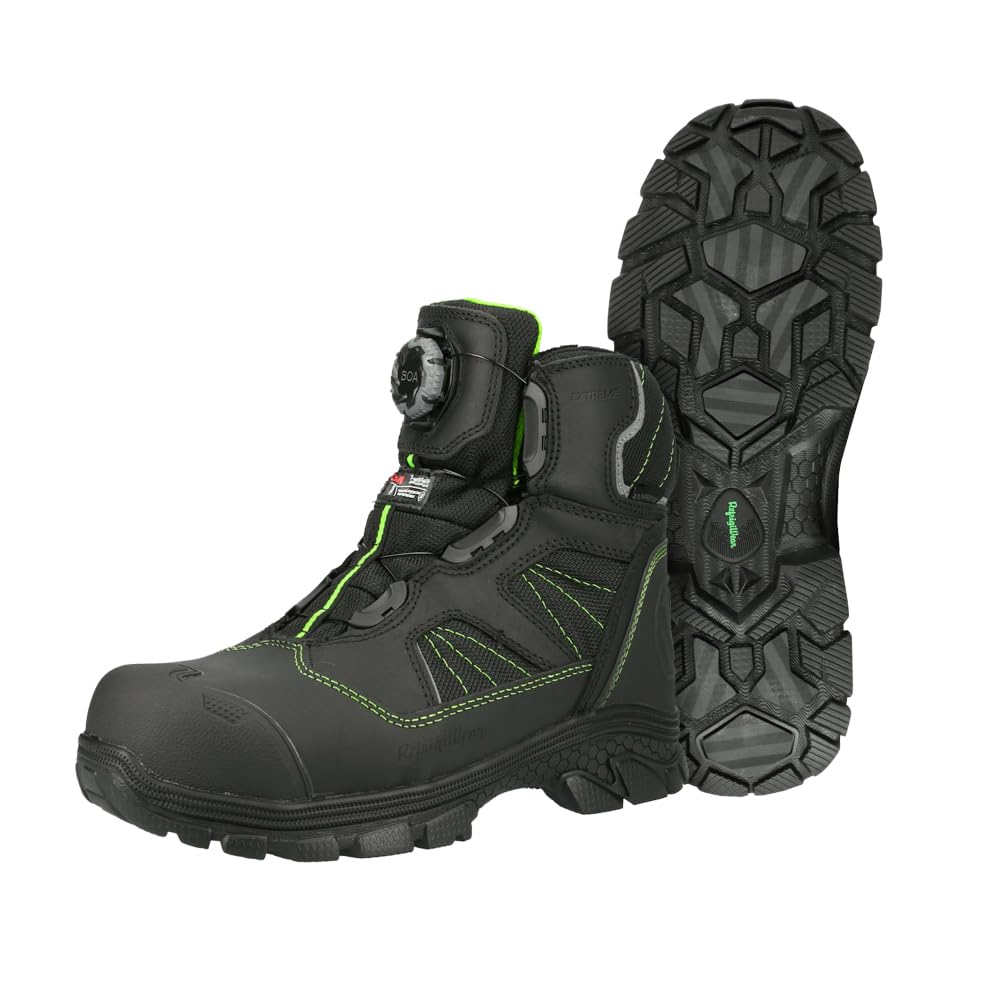
Rated for -40°F to 10°F, and you can cinch it without taking off your gloves.
This is the boot for the person who works in a freezer, a cold storage facility or a genuine deep-freeze outdoor job. The comfort rating is stated as -40°F to 10°F, which is the coldest working range on this list. It uses the BOA Fit System, a dial-and-wire lacing setup you tighten with a twist, which means you can adjust the fit with gloves on instead of fumbling with laces in the cold. An 8-inch nylon and leather upper works with the HYDRY waterproofing system to keep extreme winter weather outside.
VitaComfort absorbs shock from prolonged walking and standing, and rubber heel plates add protection where the boot wears hardest. Safety features include an ASTM composite toe, RefrigiWear Hybrid Traction outsoles and electrical hazard compliance. What stands out to buyers is the overall quality and the Boa system, with warmth and comfort close behind — the fit gets you through a full day of wear without complaint.
Value is the split point. Some find the boot overpriced for what it is, and durability gets mixed signals, so weigh that against how much a genuine deep-cold rating is worth to your job.
Standout spec: a stated -40°F to 10°F comfort range, plus glove-friendly Boa lacing you can adjust on the move.
Cost of the package: buyers see it as an expensive way into extreme-cold protection, so it earns its place only if the temperature range is what you actually need.
Made for: freezer work and genuine deep-freeze outdoor jobs where warmth is safety, not comfort.
Overkill for: ordinary winter days that a 200g or 600g boot handles fine.
10. Carhartt CSA 8″ Rugged Flex Composite Toe Work Boot
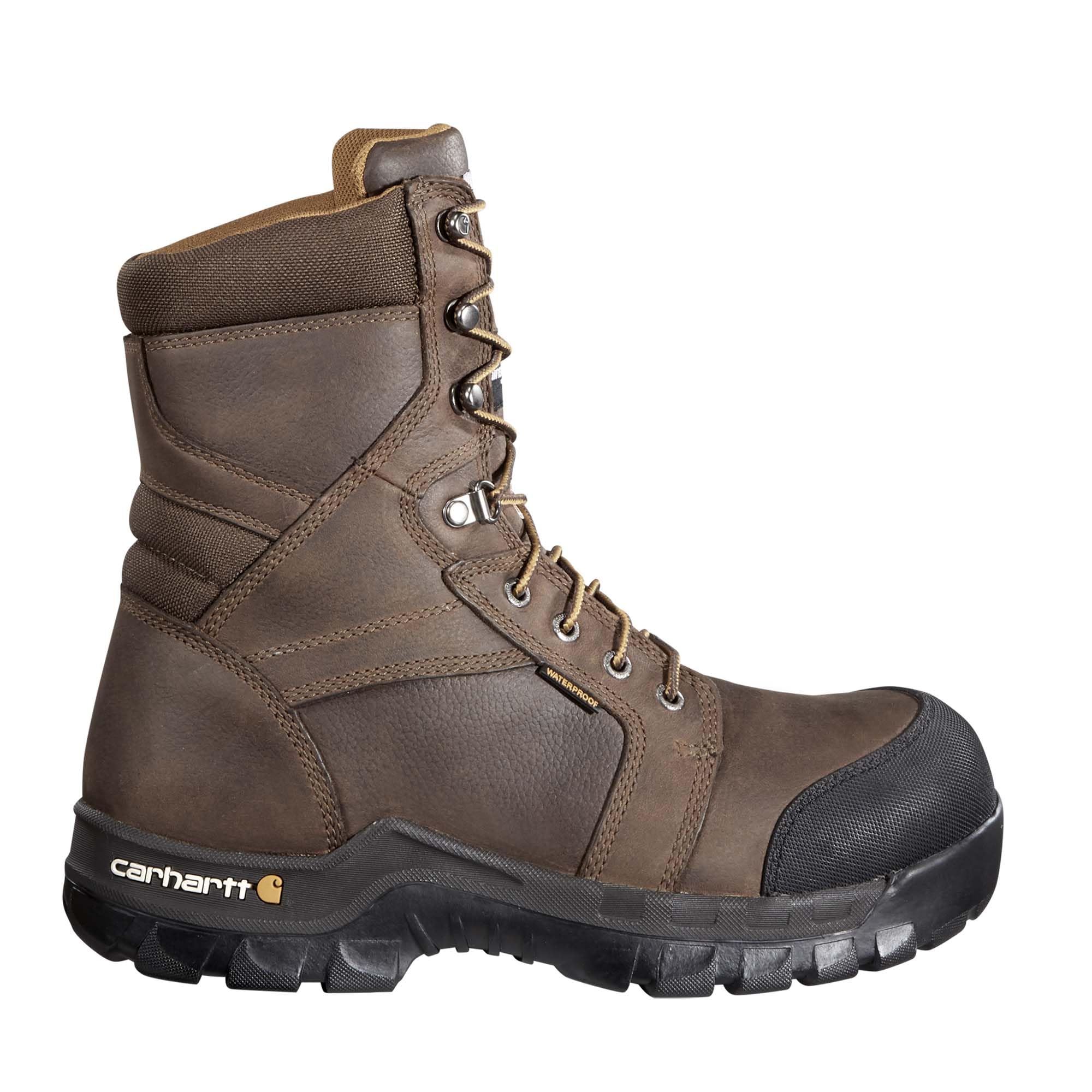
Built to stop a nail from underneath and keep your toes warm while it does it.
The feature that sets this boot apart is the integrated puncture-resistant plate under your foot — a stiff layer that guards against sharp debris pushing up through the sole. On a winter demo or a messy site full of nails and scrap, that is the protection you want. It pairs with a composite toe for impact and compression protection and carries an ASTM 2413-24 PR electrical hazard rating for secondary protection around live circuits.
The cold-weather side is handled by 400 grams of lightweight insulation working alongside a waterproof-breathable membrane, so feet stay dry in heavy rain and warm through freezing shifts. Premium oil-tanned leather and a reinforced toe bumper take the scuffs. The flexible design allows a natural range of motion, which keeps you from feeling locked into a stiff boot.
Comfort and fit are what buyers respond to most. The one recurring annoyance is the laces, which some describe fraying after a few weeks — a cheap fix with a sturdier set of laces, but worth knowing.
Protection you can name: 400g insulation plus a puncture-resistant plate and composite toe, all backed by the ASTM 2413-24 PR electrical hazard rating.
Small maintenance item: the supplied laces are the weak point, so plan on replacing them if you lace tight.
Built for: winter sites with nail and debris risk where you want warmth and puncture protection in one boot.
Consider alternatives if: you need maximum insulation for standing in open cold — this tops out at 400g.
11. KEEN Utility Dover 8″ Composite Toe Work Boots
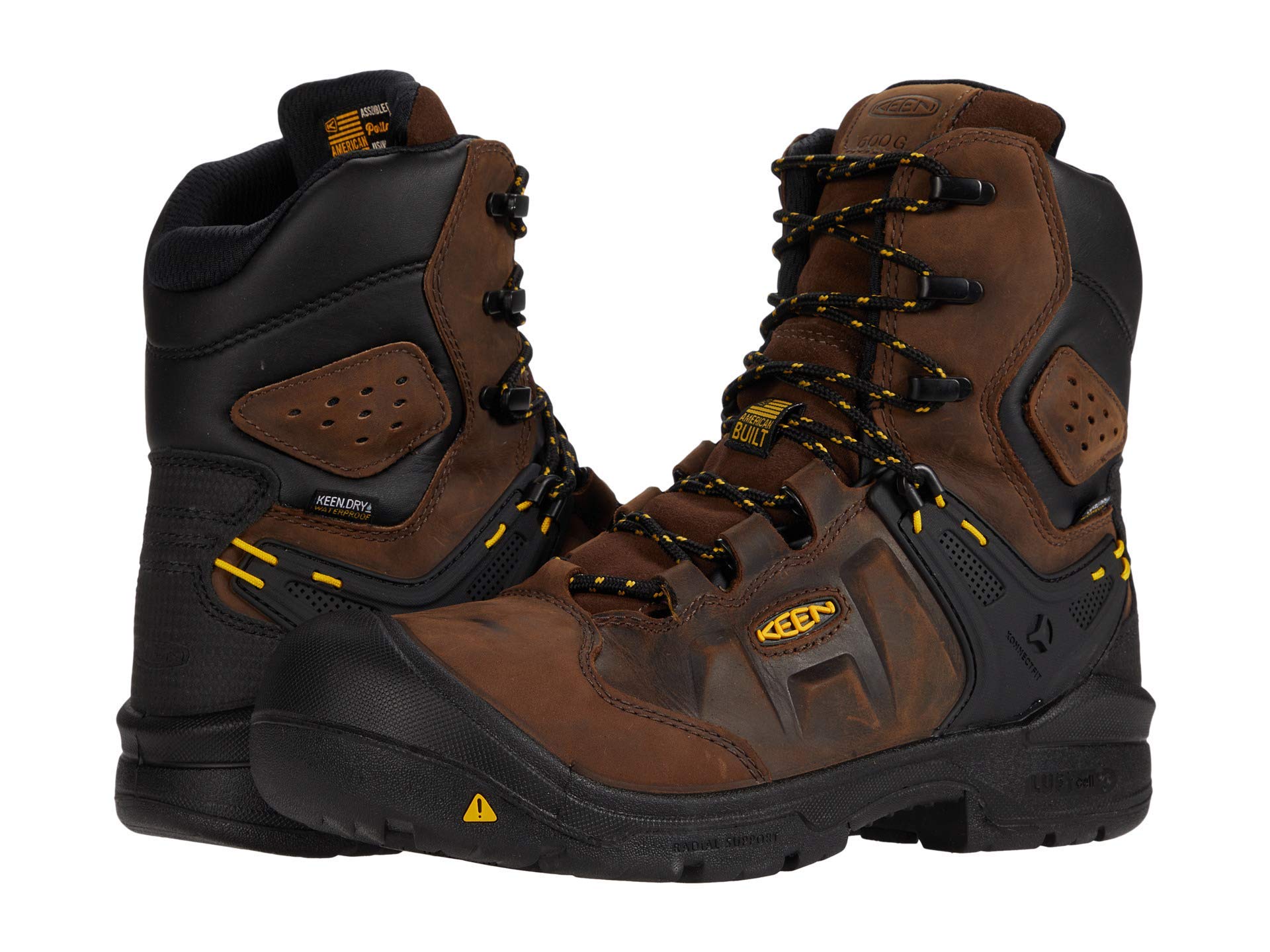
A cushioning 600g composite-toe boot that treats your feet well all shift.
This 8-inch waterproof boot pairs lightweight synthetic insulation at 600 grams with an air-infused midsole — a sole with tiny air pockets in the foam, which is what gives it that softer, springier step underfoot. The composite toe protects without steel’s weight and cold transfer. For long days on hard ground in chilly conditions, that combination is the reason to pick it.
What buyers notice first is the fit, with comfort right behind — the boot is built to feel broken-in rather than stiff, and it holds up well structurally. The composite toe keeps it a genuine safety boot for cold-weather work sites.
Warmth and water resistance are the honest limits, drawing mixed reports — some find it warm and waterproof enough for outside work, while others expect more warmth from a 600g boot. A few report an eyelet breaking early. It is a comfort-led boot, so treat the deep-freeze as the job it is not built for.
Comfort credentials
- Air-infused midsole padding softens long shifts on hard ground
- 600g lightweight synthetic insulation keeps the boot from feeling heavy
- Composite toe for impact protection without steel’s cold
- Fit and comfort are the two things owners rate highest
Where it falls short
- Warmth and water resistance split opinion — some want more of both
- A few report an eyelet breaking early, so check the hardware
Picks itself for: comfort-first workers who want a mid-weight insulated composite toe boot.
Not ideal for: the coldest outdoor shifts where a higher-gram boot earns its place.
Know the Specs
Insulation grams explained
Insulation is measured in grams, and it tells you how much thermal fill sits inside the boot. A low figure like 200 grams keeps you warm on cold concrete and in damp weather. A mid figure like 400 to 600 grams handles a full outdoor winter shift. A high figure like 1200 grams is for hours of standing in genuine deep cold, and it will feel hot and bulky the moment you step indoors. Match the gram rating to your working temperature, not the coldest figure in the listing.
Waterproof versus water-resistant
Water-resistant means the surface sheds some moisture but will soak through in standing water. Waterproof means a sealed membrane or a moulded rubber shell keeps water out entirely. A membrane like GORE-TEX blocks outside water while letting moisture from your foot escape, so the boot stays dry inside and out. A rubber pac gets its waterproofing from the shell itself. Either works in slush — just know which type you are buying.
Steel toe versus composite toe
A steel toe is a metal cap that protects against impact and compression and is what many construction sites require. A composite toe does the same protective job without the metal, so it is lighter and does not pull heat from your toes on frozen ground. Both can carry a published safety rating — look for the standard named in the listing rather than assuming.
Traction and outsole design
The outsole is the bottom layer that meets the ground. A lugged or multi-directional pattern bites into snow and frozen gravel, while an oil-resistant rubber compound resists slick surfaces on a plant floor. On winter sites, a lugged outsole matters as much as insulation — a warm boot that slips is still a hazard.
Common Questions
Do winter work boots have to be a size bigger for thick socks?
How many grams of insulation do I need for a winter work boot?
Is a rubber pac boot better than a leather boot for winter work?
Will a steel toe make my feet colder in winter?
Can I wear these winter work boots indoors all day?
How do I keep snow from getting inside a lace-up work boot?
What does electrical hazard protection actually do on a work boot?
Should I buy a soft toe or a safety toe for winter work?
How long shoulda winter work boot last?
Are BOA laces worth it on a winter work boot?
The Bottom Line
For most winter workers, the work boots for the winter winner is the Kalkal Rubber Boots for Men. It keeps slush out with a 6mm neoprene shell (neoprene is a waterproof rubber that stays flexible in cold), so your feet stay dry on wet jobs. You pull it on without bending over, and 400+ owners back it with a 4.5+ star rating for quality and comfort. If you need a certified toe cap on site, the ROCKY Blizzard Stalker brings 1200 grams of 3M Thinsulate (a synthetic insulation rated in grams, where more grams means more warmth) and a steel toe for the coldest outdoor shifts. And for glove-friendly extreme-cold work, the RefrigiWear Extreme Hiker is the one built for a stated -40°F to 10°F range, so it suits freezer and deep-winter outdoor work.
Match the insulation grams to your working temperature and the outsole to your ground. An over-insulated boot overheats you indoors just as a thin one freezes you outside.
How we choose
We do not accept paid placement. Every pick is matched to a real buyer and a real use-case; we do not hands-on test units.
Sources
Specifications: manufacturer listings and product documentation. Review insights: verified customer reviews, as of November 2026. Pricing: not shown on this page (it changes often); check the current price via the retailer link.
As an Amazon Associate, Tactical Gear Guy earns from qualifying purchases. This does not affect which products we feature.