Specs are compiled from manufacturer listings and verified buyer reviews and can change over time — please confirm the key details on the product page before buying.
If your felted wool keeps coming out lumpy and half-blended, the tool is usually the problem, not your hands. A good pair of hand carders turns a matted clump of fleece into an airy, even batt you can actually spin or felt with. This short list covers three pairs that real crafters keep buying, sorted by what each one does best so you can match it to your project and skip the rest.
This guide is built by comparing the manufacturers’ published specifications and the patterns across verified customer reviews, so you get each pick’s real strengths and trade-offs instead of marketing spin.
Carding surface, handle grip, and portability pull against each other, and you feel it the moment you sit down to card. A big surface speeds up blending, a small body travels easily, and a comfortable grip saves your hands on long sessions. This breakdown of the wool hand carders worth owning shows how those trade-offs play out, so you can pick the right set in about two minutes.
Top Picks

How To Choose The Best Wool Hand Carders
Hand carders are simple tools: two paddles covered in short wire teeth that you brush against each other to open, clean, and mix fiber. The hard part is knowing which size and build suits the work you do. Get these four things right and almost any pair will card cleanly.
Carding surface size decides your batch size
A bigger working surface holds more fiber per pass, so you blend larger batts in fewer strokes. The Colonial Needle pair carries a 1.75″ x 2.5″ felting surface on a 5″ body — small enough to toss in an apron pocket but slower for big batches. If you plan to card a whole fleece, size up.
What the teeth are made of matters
Resilient stainless steel teeth, like the ones in the Varku set, grip fiber firmly and resist bending over time. A pressed metal back, like the heidifeathers pair, holds its shape and keeps the paddles light in the hand. Either build works; the difference shows up in how the teeth and backing hold their shape after hundreds of passes.
Handle shape keeps your hands comfortable
You will hold these paddles for an hour or more at a stretch. A long turned wood handle angled away from the working surface, as on the heidifeathers carders, keeps your fingers clear of the teeth while you brush. A handle that keeps your fingers clear of the teeth is what separates a long carding session from scraped knuckles.
Side-by-Side Comparison
| Model | Best For | Card Surface | Pieces Included | Weight | Amazon |
|---|---|---|---|---|---|
| Varku 2PCS Wool Carders with Drop Spindle★ Best Overall | Full starter kit | — | 2 carders + drop spindle | 8.8 ounces | Amazon |
| Colonial Needle Fiber Blenders | Travel and small batches | 1.75″ x 2.5″ | 2 carders | — | Amazon |
| heidifeathers Hand Carders (Pair) | Light everyday carding | 11cm x 7cm | 2 carders | 125g each | Amazon |
Detailed Reviews
1. Varku 2PCS Wool Carders with Drop Spindle Set
Our pick — 4.0+★ from 90+ verified ratings; the strongest balance of quality and price.
The three-piece kit that hands you a carding pair and a spinning spindle in one box.
For a total beginner, this is the whole starter kit: two carders for blending colors plus a drop spindle, so you move straight from fluffy batt to yarn without hunting down a second tool. The stainless steel teeth are the resilient kind — they grip fiber firmly across hundreds of passes instead of bending out of line. With two carders you work both hands at once, brushing fiber back and forth to mix dyes and fibers into a smooth, even batt.
The included drop spindle measures 2.75″ across the whorl and 12.8″ long, a size that fits comfortably in one hand while you draft. A groove machined into the whorl holds your yarn strand so it doesn’t slip loose mid-spin. That groove keeps the strand from slipping while you learn to keep the spindle turning. The whole kit weighs 8.8 ounces, so it stows easily in a craft bag.
What wins people over is the quality across the set — that carries more owner praise than any other feature here, and the blending function runs a close second. There is an honest limit worth naming up front: these are general-purpose carder brushes, and the listing itself pitches them for pet grooming and fluffing sweaters alongside wool work. If you card only clean, fine fleece at high volume, a dedicated fine-tooth pair will suit you better.
Where the kit earns its keep
- Two carders plus a 12.8″ drop spindle in one set, so you can blend and spin without buying separately.
- Resilient stainless steel teeth blend different wool colors into an even hue.
- The whorl groove grips your yarn strand so it stays put while you draft.
Where it asks a little patience
- The carders are all-purpose brushes, so they are not fine-tuned for a single fiber type.
- Building a full fleece by hand takes many passes — these are hobby-scale, not production-scale.
Go for it if: you are new to felting or spinning and want carding and drafting covered in a single purchase.
Look elsewhere if: you already own a spindle and only need carders — you would be paying for a tool you skip.
2. Colonial Needle Fiber Blenders (2-Pack)
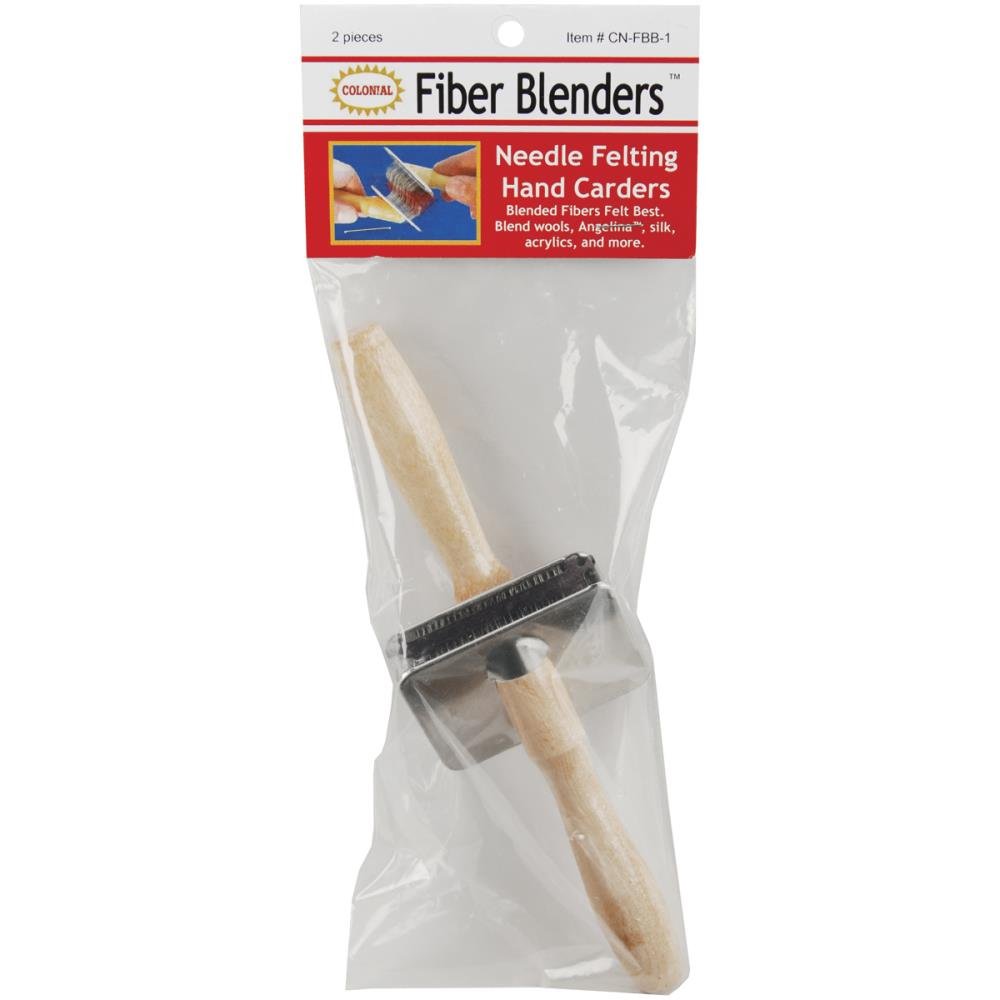
A pocket-sized pair you can keep in your project bag without giving up a clean blend.
Each paddle is 5″ long with a 1.75″ x 2.5″ felting surface — small enough to slip into a project bag, yet large enough to mix one color at a time into a tidy little batt. These are the carders for somebody who works in short bursts on the sofa or at a class, not the crafter pulling a whole fleece across a table. The comfortable wooden handles give you a secure grip for the quick back-and-forth brushing these brushes are built for.
They handle wools, silk, acrylics, and Angelina, so you can blend one fiber type into another for a custom color. One tip the maker points out: you can turn leftover yarn into felting fiber by brushing the loose end with a Blender. That trick makes this pair handy to keep next to your yarn stash for reusing leftovers. The working surface is small, so plan on working in smaller batches rather than one big pass.
Why crafters reach for it: the portability is the whole point here, and the 5″ body makes it the most compact carder on this list — noticeably shorter than the 12.8″ spindle kit. For travel and small-batch blending, that shortness is a feature, not a limitation.
The trade-off to weigh: the 1.75″ x 2.5″ surface means fewer fibers per pass than a full-size carder, so a big batch takes more work. Naming a blunt point type, these brushes are built for gentle blending, not heavy tugging.
Reach for this if: you want a compact pair for classes, travel, or quick blends on the go.
skip it if: you need to card a whole fleece in one sitting — the small surface will slow you down.
3. heidifeathers Hand Carders (Pair)
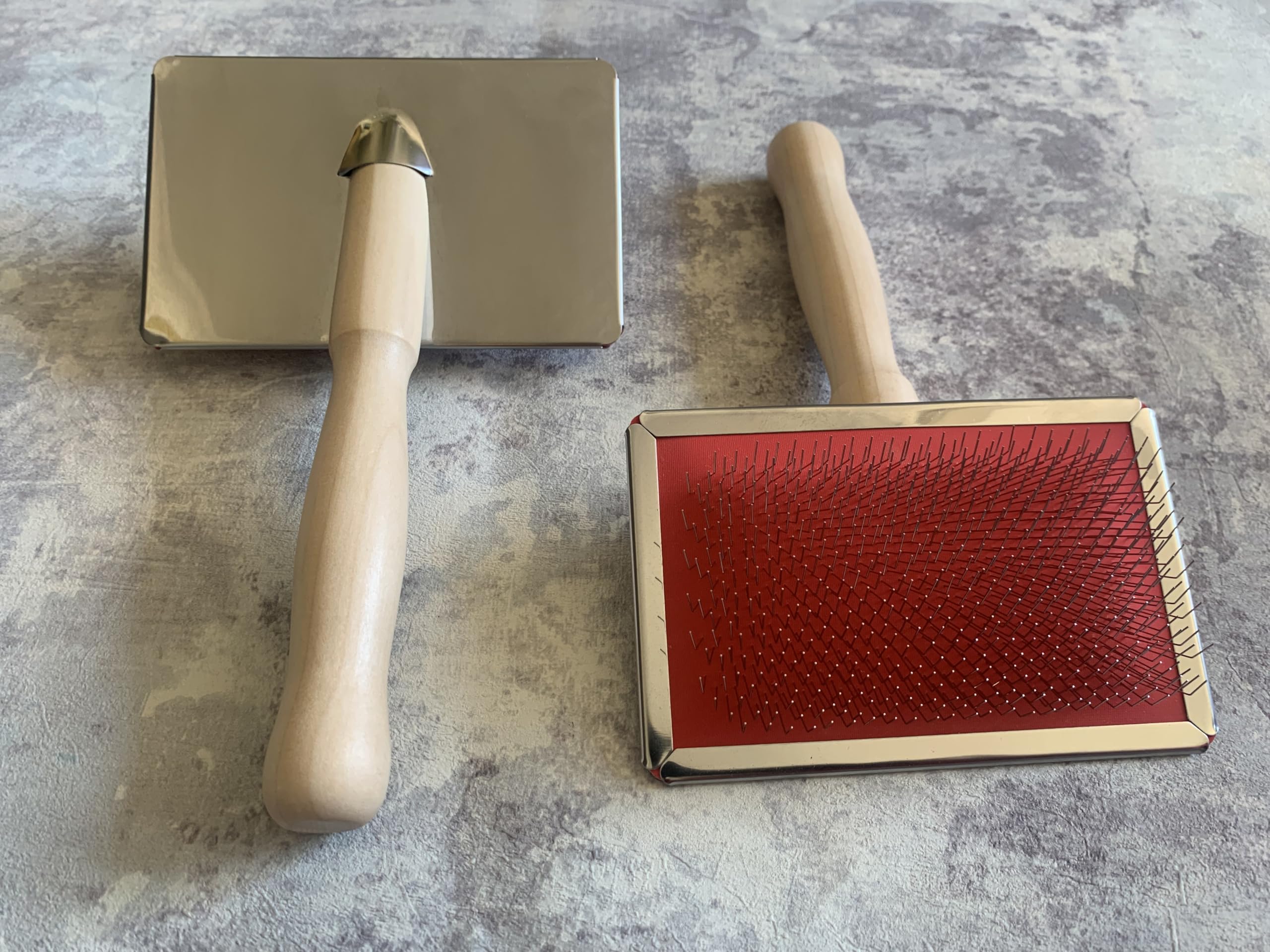
Light, sealed-wood carders with a long handle that keeps your knuckles clear.
Each paddle weighs just 125g, so your arms don’t get tired when you card batch after batch. The carding surfaces are set into a pressed metal back that holds its shape through heavy use. A lacquered finish seals the wood against wear, and the rounded corners keep the paddle smooth in hand and clear of loose fiber.
The chunky 13cm turned handle is the standout detail. It is angled to keep your fingers away from the working surface as you brush, which matters once you are deep into a carding session. The surfaces measure 11cm by 7cm — the listing is upfront that these are lighter and slightly smaller than standard carders. That smaller footprint makes them nimble for fine blends and tight on a table, but it is the one thing to keep in mind before you buy.
Function is what they are known for — handling many different types of fibers well is the praise that crops up most. The size is the recurring gripe, with several owners noting these cards are on the small side. Compared to the Varku set at 8.8 ounces for the whole kit, these are the lighter, more tactile choice for careful hand work.
What you feel first
- Just 125g per carder, so long sessions stay easy on the arms.
- The angled 13cm turned handle keeps fingers off the teeth.
- A lacquered, rounded-corner finish that resists wear and stays smooth in hand.
What to weigh first
- At 11cm by 7cm the surfaces are smaller than standard carders, so large batches feel tight.
- Sized for carding clean wool — add fiber prep elsewhere if your fleece is dirty or matted.
Pick these for: careful fiber blending where a light, well-sealed tool and a comfortable grip matter more than batch size.
Think twice if: you plan to card in volume — the smaller 11cm by 7cm surface will have you working in more, shorter passes.
Know the Specs
Carding Surface — how much fiber per pass
The working area, measured in inches or centimeters, tells you how much fiber you can open and blend in one stroke. A larger surface means larger batts and fewer passes. A smaller surface like the Colonial Needle 1.75″ x 2.5″ is more maneuverable and easier to carry, but you work in smaller batches. Match the surface to your batch size, not the other way around.
Teeth and Backing — how the carder holds up
The teeth trap and align fibers while the backing keeps them rigid. Resilient stainless steel teeth grip and resist bending; a pressed metal back keeps the paddles light and true. Both builds earn their keep — a sealed lacquered finish on the wood also protects against wear and keeps the tool smooth. Look at the build quality if you plan to card often, since the teeth and backing take the real wear.
Common Questions
What is the difference between hand carders and a drum carder?
Can these carders handle more than wool?
Will a small carder surface slow me down?
Do I need a drop spindle to start spinning?
How do I keep my fingers off the carder teeth?
Are these carders good for needle felting?
Can I use hand carders to groom my pet?
How long will a pair of hand carders last?
What size carder should a beginner buy?
Do hand carders come as a matched pair?
The Bottom Line
For most people, the best wool hand carders are the Varku 2PCS Wool Carders with Drop Spindle Set. You get two carders with stainless steel teeth plus a drop spindle (a weighted stick that turns carded fiber into yarn), so you can blend colors and spin them without buying a second tool. If you want a compact, nimble pair, the Colonial Needle Fiber Blenders pack a 1.75″ x 2.5″ carding surface into a 5″ body that fits in a project bag. For careful hand work with a light, well-sealed tool, reach for the heidifeathers Hand Carders at 125g each. Match the carding surface to the batches you actually card, and any of these three will do the job.
How we choose
We do not accept paid placement. Every pick is matched to a real buyer and a real use-case; we do not hands-on test units.
Sources
Specifications: manufacturer listings and product documentation. Review insights: verified customer reviews, as of November 2026. Pricing: not shown on this page (it changes often); check the current price via the retailer link.
As an Amazon Associate, Tactical Gear Guy earns from qualifying purchases. This does not affect which products we feature.