Specs are compiled from manufacturer listings and verified buyer reviews and can change over time — please confirm the key details on the product page before buying.
If your toes have spent years pressed into a pointed shoe, the fix is a flat sole and a toe box shaped like an actual foot, not a bigger size. That is what every pick below has in common: a 0 mm heel-to-toe drop, meaning the heel and the ball of your foot sit at the same height off the ground, plus a wide, foot-shaped front that lets your toes spread out instead of bunching. One honest note before we start: this list uses flexible matching for the wide toe box and zero drop spec, so a pick may be a women’s or men’s version of what you searched. The nearest same-type shoe does the same job.
This guide is built by comparing the manufacturers’ published specifications and the patterns across verified customer reviews, so you get each pick’s real strengths and trade-offs instead of marketing spin.
Below are nine flat-sole, roomy-toe shoes, sorted by what each one does best rather than by brand. I have grouped them so you can find your best zero drop wide toe box shoes in a couple of minutes.
Top Picks
How To Choose The Best Zero Drop Wide Toe Box Shoes
Buying this kind of shoe is really three decisions: how much foam you want under your foot, what surface you walk or run on, and how much room your toes actually need. Get them wrong and even a well-made shoe will feel off after a week.
Start with stack height, not brand
Stack height is the thickness of the sole under your foot, measured in millimeters. A 25 mm stack like the Lone Peak 8 gives you a forgiving ride on rocky ground. A thinner sole puts you closer to the ground so you feel the surface and your foot does more of the work. Neither is better: beginners usually want more foam, and seasoned barefoot wearers often want less.
Check the toe box shape, not just the width number
A real foot-shaped toe box is widest at the ends of your toes, not at the ball of your foot. That matters most for anyone with a bunion or a wide forefoot. When a description says the front allows toes to “spread” or “align,” that is the shape you want. A shoe can be labeled wide and still taper at the toe, so read the wording closely.
Match the outsole to your surface
Trail shoes use deep, angled lugs — the raised rubber blocks on the bottom — for bite on loose dirt. Road and gym shoes use flatter rubber so you are not rocking on knobs indoors. If you split your week between pavement and a gym floor, a flatter outsole is the safer single-shoe choice.
Side-by-Side Comparison
| Model | Best For | Drop | Stack Height | Weight | Amazon |
|---|---|---|---|---|---|
| ALTRA Women’s Lone Peak 8★ Best Overall | Trail days and thru-hikes | 0 mm | 25 mm / 25 mm | 10.7 oz / 303 g | Amazon |
| ALTRA Men’s Torin 8Best All-Day Comfort | Daily road miles and walking | 0 mm | 30 mm / 30 mm | 8.4 oz | Amazon |
| Xero Shoes Women’s Prio NeoMost Versatile | Gym, kettlebells, yoga | 0 mm | — | — | Amazon |
| Topo Athletic Men’s Magnifly 5 | Recovery runs and long walks | 0 mm | — | 6.6 oz (M9) | Amazon |
| HIKE Footwear Theora Pro | All-day walking comfort | 0 mm | — | — | Amazon |
| Hike Footwear HF Shade | Travel and everyday wear | 0 mm | — | — | Amazon |
| Vivobarefoot Motus Flex | Calisthenics and primal movement | — | — | — | Amazon |
| Flux Adapt Graphene XT | CrossFit and lifting | 0 mm | — | — | Amazon |
| Vivobarefoot Primus Lite 3.5 | Ground-feel training and casual runs | — | — | — | Amazon |
Detailed Reviews
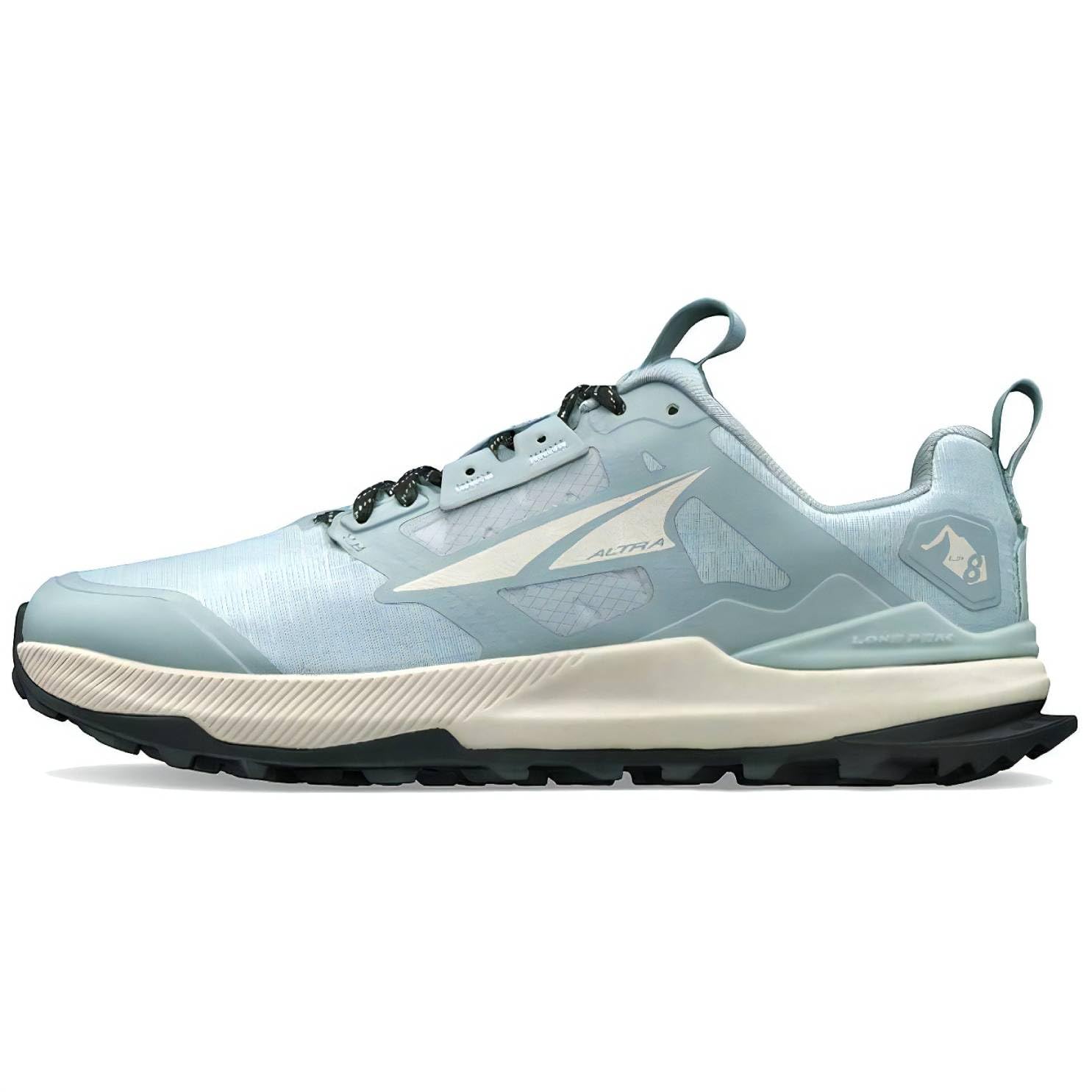
1. ALTRA Women’s Lone Peak 8 Trail Running Shoe
Our pick — 4.5+★ from 800+ verified ratings; the strongest balance of quality and price.
A trail shoe with a 25 mm cushion and a front end wide enough for your toes to spread out.
The Lone Peak 8 is the pick that covers the most ground, literally. It puts 25 mm of foam under both the heel and the forefoot, so your foot sits level at 0 mm drop while still having a forgiving layer between you and sharp rock. The outsole uses Altra’s MaxTrac rubber with TrailClaw — angled lugs placed under the metatarsals, the long bones behind your toes — so the grip sits right where you push off. If your weekend plan involves loose gravel, mud, or a long hike, this is the one built for it.
The upper is a ripstop mesh, a woven fabric with a grid of reinforcing threads that resists tearing, and the front is Altra’s roomiest FootShape toe box. What wins people over here is the overall build quality — it is the single most-praised thing about this shoe — and comfort lands right behind it. There is no break-in period to grind through; buyers report slipping them on and heading out. It weighs 10.7 oz / 303 g, which is respectable for a shoe with this much rubber underneath.
The honest catch is the cushioning feel, which draws a mixed reaction — some wearers want a softer, plusher ride than the mid-level foam gives. That is a preference issue, not a defect. Size up if you wear thick hiking socks, and treat these as trail-only; the aggressive lugs are wasted on a gym floor.
What earns its place at the top
- Equal 25 mm stack front and back keeps you genuinely level at 0 mm drop
- TrailClaw lugs sit under the metatarsals for grip where you push off
- Altra’s roomiest FootShape toe box leaves real space for toe splay
- Ripstop mesh upper holds up without a break-in period
Where it asks something of you
- Cushioning draws mixed feelings — this is a firmer ride, not a plush one
- 10.7 oz / 303 g puts it on the heavier side for pure speed work
Made for: hikers and trail runners who want one shoe that handles rough ground with toes free to move.
Think twice if: you want a soft, bouncy underfoot feel — this foam reads firm.
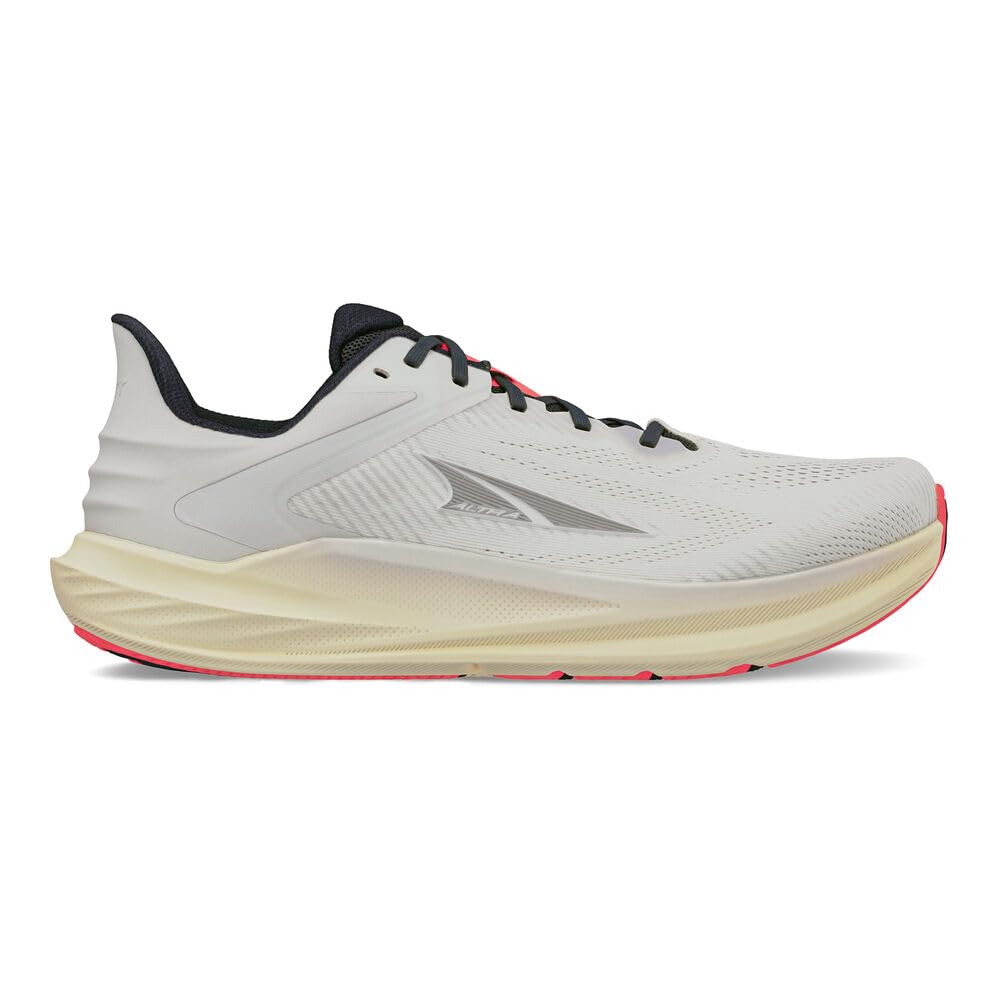
2. ALTRA Men’s Torin 8 Road Running Shoe
Thirty millimeters of plush foam with a flat profile — the closest thing here to a pillow that stays level.
Compare the Torin 8 to the Lone Peak 8 above and you see the trade-off clearly: 30 mm of stack versus 25 mm, so the Torin gives you more foam between your foot and the pavement. It is also lighter at 8.4 oz against the Lone Peak’s 10.7 oz / 303 g, because there is no aggressive trail rubber weighing it down. For daily road miles, recovery runs, or just long days on your feet, that combination is hard to argue with.
The midsole uses Altra’s EGO MAX foam, a compound built for a little extra bounce and a softer feel than standard foam. The upper is a jacquard mesh — a woven fabric with a pattern built in — and the heel collar molds around your ankle. Owners repeatedly call the toe box out as a highlight, alongside a secure heel that keeps the foot from sliding forward. The 0 mm drop stays true across the whole platform.
Durability draws mixed notes, and the outsole is plain rubber rather than a rugged trail compound, so save the technical terrain for another shoe. But if your miles happen on asphalt or a treadmill, this is the plushest flat shoe on the list.
The case for it: more cushion and less weight than the trail pick, with the same roomy FootShape front and a locked-in heel.
Worth knowing: the rubber outsole is road-focused, and durability expectations vary — treat it as a pavement shoe.
Reach for this if: you log road miles or stand all day and want maximum foam under a flat sole.
Look elsewhere if: you need lugged grip for mud and loose rock.
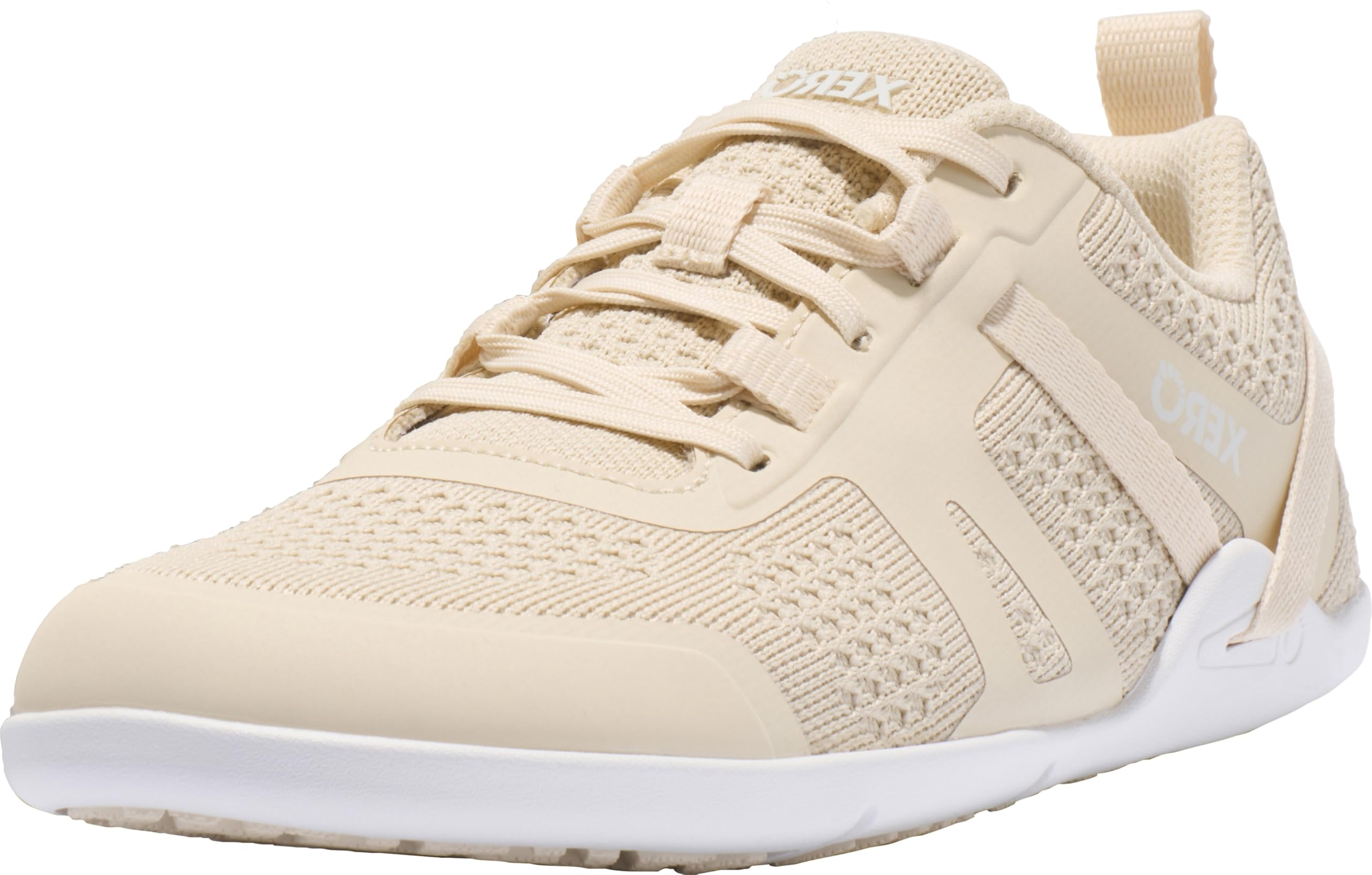
3. Xero Shoes Women’s Prio Neo Barefoot Training Shoe
One flat shoe that switches from kettlebells to yoga class without complaining.
Most shoes on this list are specialists. The Prio Neo is the generalist — a barefoot trainer with a wide toe box that owners take to walking, kettlebell work, and yoga classes alike. Comfort is what wins people over, and the front gives your toes genuine room rather than a token bit of extra width. If you want one pair for a mixed week of gym and errands, this is the shape of shoe to look at.
Because it is a training shoe, the point is ground feel and flexibility rather than a thick cushion. That makes it a different animal from the Torin 8 with its 30 mm stack — you are trading plushness for connection to the floor. Owners rate it as good value for what it does, and the styling gets mentioned enough to suggest it does not look like a specialty shoe.
Arch support splits opinion: some wearers find it stable, others say there is effectively no support at all. If you rely on a built-in arch, that is the honest caveat here. Durability feedback is likewise mixed. Neither is a reason to skip it — it is a reason to know what you are buying.
Why it earns a spot: a wide, roomy front and a flat sole that work across lifting, walking, and studio classes.
The trade-off: arch support and durability both divide opinion, so it suits people who want ground feel over built-in structure.
Suits you if: your week mixes gym sessions, walks, and yoga and you want one flat, roomy shoe for all of it.
skip it if: you need pronounced arch support built into the footbed.
4. Topo Athletic Men’s Magnifly 5 Running Shoes

At 6.6 oz in a men’s 9, this is the lightest road shoe on the list by a clear margin.
Weight is the number that defines the Magnifly 5. Set it beside the Lone Peak 8 at 10.7 oz / 303 g and you are looking at a shoe built for a very different job — one that disappears on your foot during a recovery run. The 0 mm drop holds, the toe box is anatomical (shaped to let toes spread), and the recycled mesh upper breathes. Topo’s ZipFoam midsole is the newer formula, described as softer, lighter, and more responsive than the previous version.
Fit is the thing wearers praise most, followed closely by comfort. People use these for walking as much as running, which tells you the ride is forgiving enough for daily wear. One note worth carrying: a wearer with sensitive spots on the foot found the shoe removed pressure there, which is the kind of detail that matters if you have a tender spot to work around.
Arch support and durability both get mixed feedback, and the lighter build is the reason — thin, light shoes trade some long-term toughness for that feathery feel. If you want a shoe to last through years of hard mileage, temper expectations. If you want a barely-there shoe for recovery runs, this is the lightest road pick here.
The reasons it made the cut
- 6.6 oz (M9) makes it the lightest road option here
- Anatomical toe box lets toes spread naturally
- ZipFoam midsole is softer and more responsive than the older formula
- Recycled mesh upper keeps it breathable
What you give up
- Durability feedback is mixed — light build, lighter tough
- Arch support splits opinion among wearers
Best match for: runners and walkers who prioritize a barely-there shoe over a long-wearing one.
Not the one for: heavy-mileage runners who want a shoe that shrugs off years of abuse.
5. HIKE Footwear Theora Pro Hiking Shoes
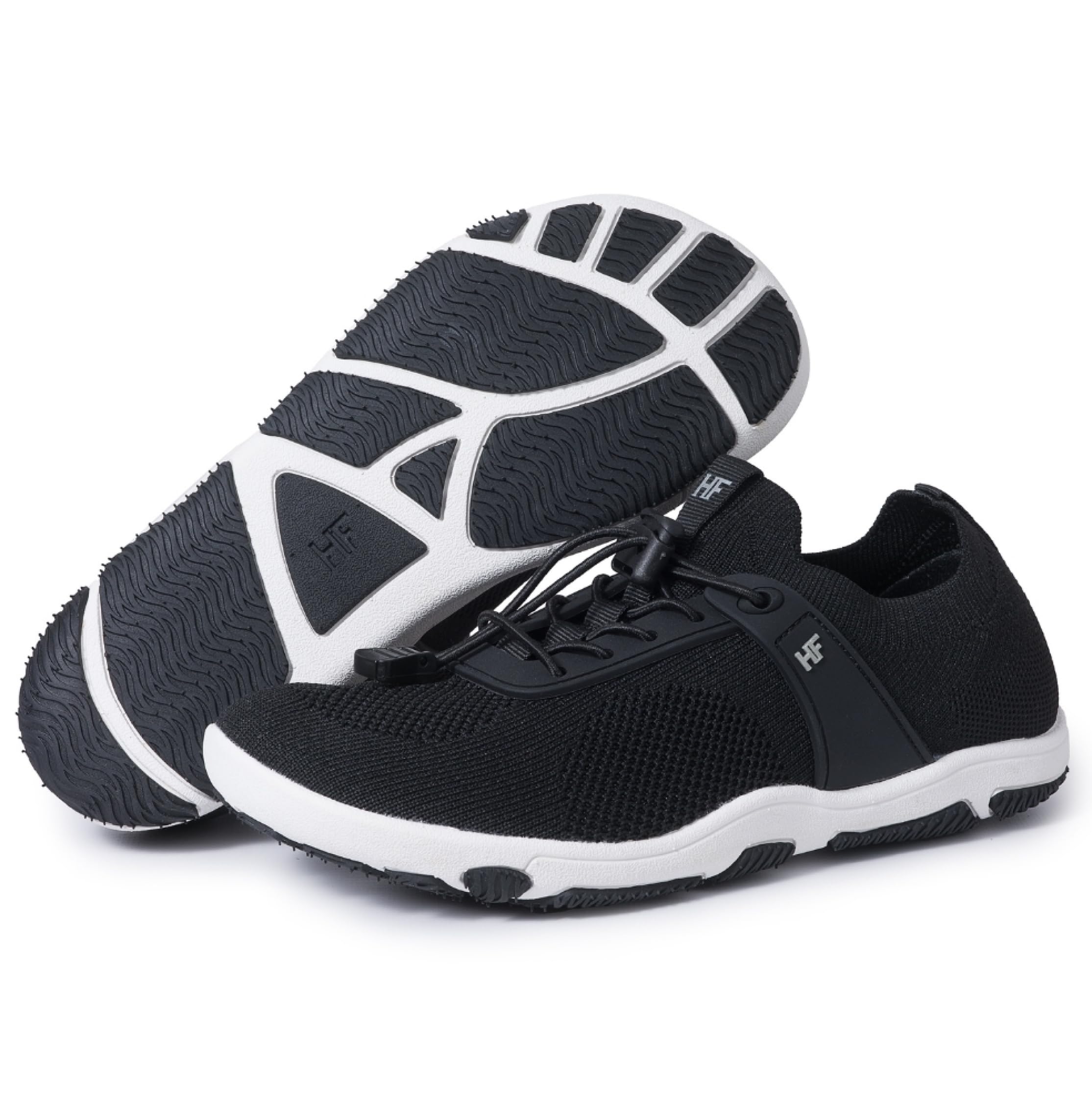
A budget-friendly hiking shoe that puts comfort first and keeps the toe box genuinely wide.
The Theora Pro is the entry point into flat, roomy footwear, and it earns its keep on comfort. Wearers describe walking all day without foot or back complaints, and quality ranks as the second most-praised trait after the comfort itself. The sole gets its own mention for having the right amount of cushioning — enough to soften pavement and packed trail without turning mushy.
It is also light, which the reviews call out, and the appearance gets positive notes — a shoe you would wear into town, not just onto a trail. That combination makes it a sensible first pair if you are curious about zero drop but not ready to commit heavily.
Where it gets murky is fit and durability, both of which draw mixed reactions. Some wearers find the sizing off, and long-term toughness is not a given. Arch support is another split. None of that makes it a bad shoe — it makes it a shoe to buy carefully, checking the size chart before you order.
The likable part: all-day comfort and light weight at the accessible end of the market.
The catch: sizing and durability doubts mean you should measure your foot before ordering rather than guessing.
Ideal for: first-time zero drop buyers who want a comfortable, light everyday walker without spending big.
Look at another pick if: you need a confident size guarantee — this one runs inconsistent for some feet.
6. Hike Footwear HF Shade Barefoot Shoes
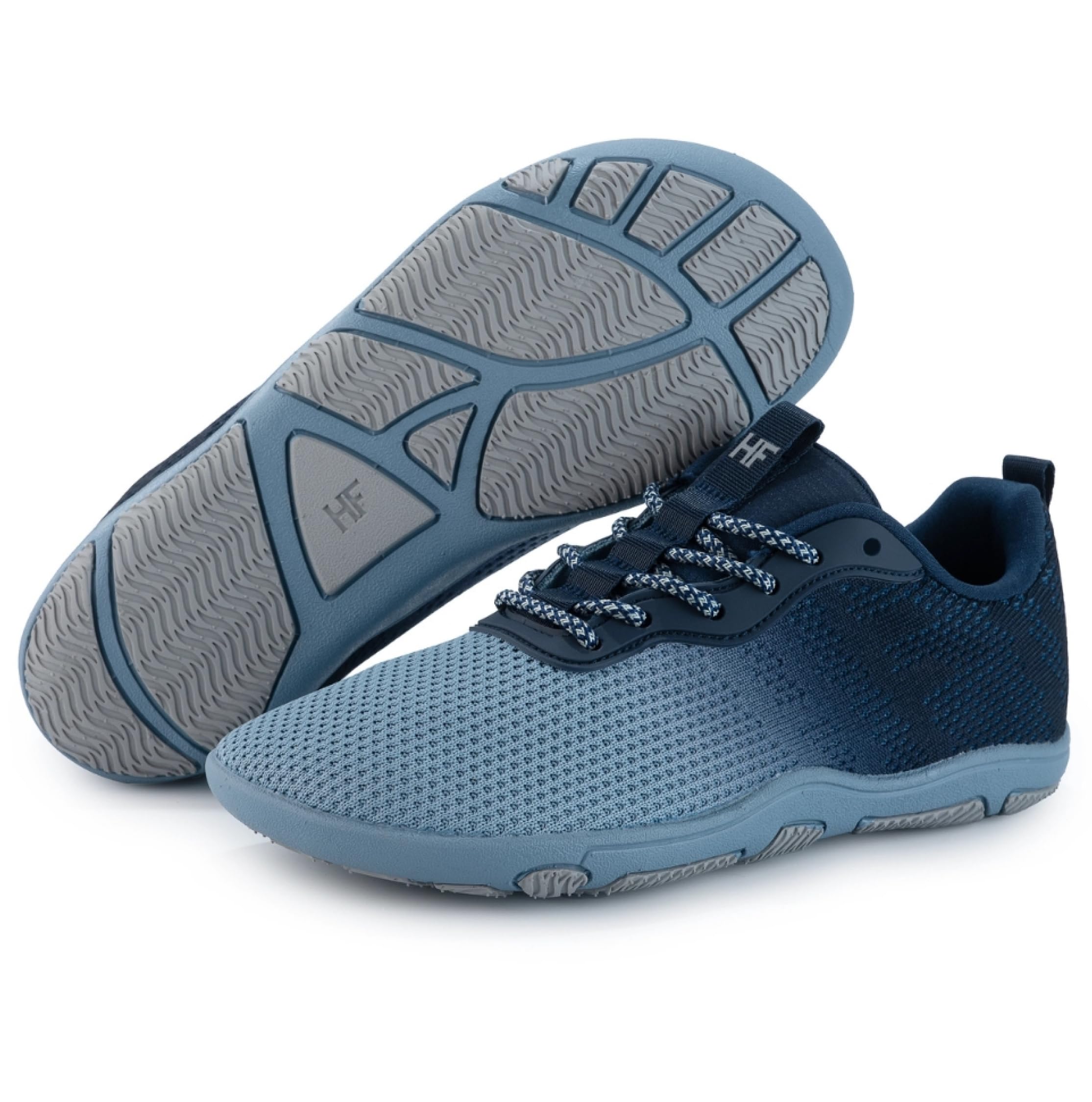
A packable barefoot shoe built for neighborhoods, airports, and long days of standing.
The HF Shade is aimed squarely at everyday life rather than training blocks. Its 0 mm drop and wide toe box let your foot spread and flex the way it naturally would, and the design is pitched at walking the neighborhood, traveling, or staying active. That makes it a good fit for someone who wants the flat-sole benefit without a technical look.
What people respond to is the comfort and the quality of the build, and the balance it gives — wearers describe feeling more grounded and steady on their feet. It is light enough to pack, which is exactly the point for travel. The styling also earns its share of approval, so it works as a shoe you wear all day and into a casual dinner.
The real caveat is the fit. Some wearers say it runs small, and a few note the toe box feels narrower than expected — which matters a lot in a category where toe room is the whole reason you are shopping. Order with care, and size up if you are between sizes. Long-term durability feedback is thin and mostly cautious.
What it does well: light, comfortable, steady-feeling walking shoe with a flat sole for travel and daily wear.
Watch the sizing: a small-running fit and a narrower-than-expected toe box mean you should check the size chart before buying.
Pick this for: travel and everyday walking where you want a light, flat shoe that looks ordinary.
Pass if: you have a very wide forefoot — the toe box runs narrower than the category promises.
7. Vivobarefoot Men’s Motus Flex Barefoot Training Shoe

The thinnest ground feel in the lineup — built for calisthenics and bodyweight work.
Not every shoe here is for running. The Motus Flex is a performance trainer for calisthenics, primal movement, and bodyweight training, and its whole identity is maximum barefoot feel and flexibility. If your workout is push-ups, lunges, and movement drills on a mat or gym floor, you want a shoe that bends with your foot rather than resisting it. That is what this one is for.
Build quality is the standout — it is the most-praised attribute — with comfort close behind, and wearers call the barefoot feel consistent, meaning it does not soften or change underfoot over time. It handles casual to intermediate use comfortably, which is a fair read on who it suits.
Fit is the divide: the shoe runs slightly large for some wearers while others find it true to size. Note the listing also shows a 2.13 lb item weight, which reflects the shipping package rather than a single shoe. If you are between sizes, trying your usual first is the sensible move.
The standout traits
- Built for calisthenics, primal movement, and bodyweight training
- Barefoot feel stays consistent over time
- Build quality is what owners praise most
Before you commit
- Fit divides wearers — some find it runs large
- Not designed for long road runs or trail abuse
Right for: gym-goers doing bodyweight and movement training who want the barest possible shoe.
Wrong for: runners logging long distances — this is a trainer, not a mileage shoe.
8. Flux Footwear Adapt Graphene XT Cross Training Shoes
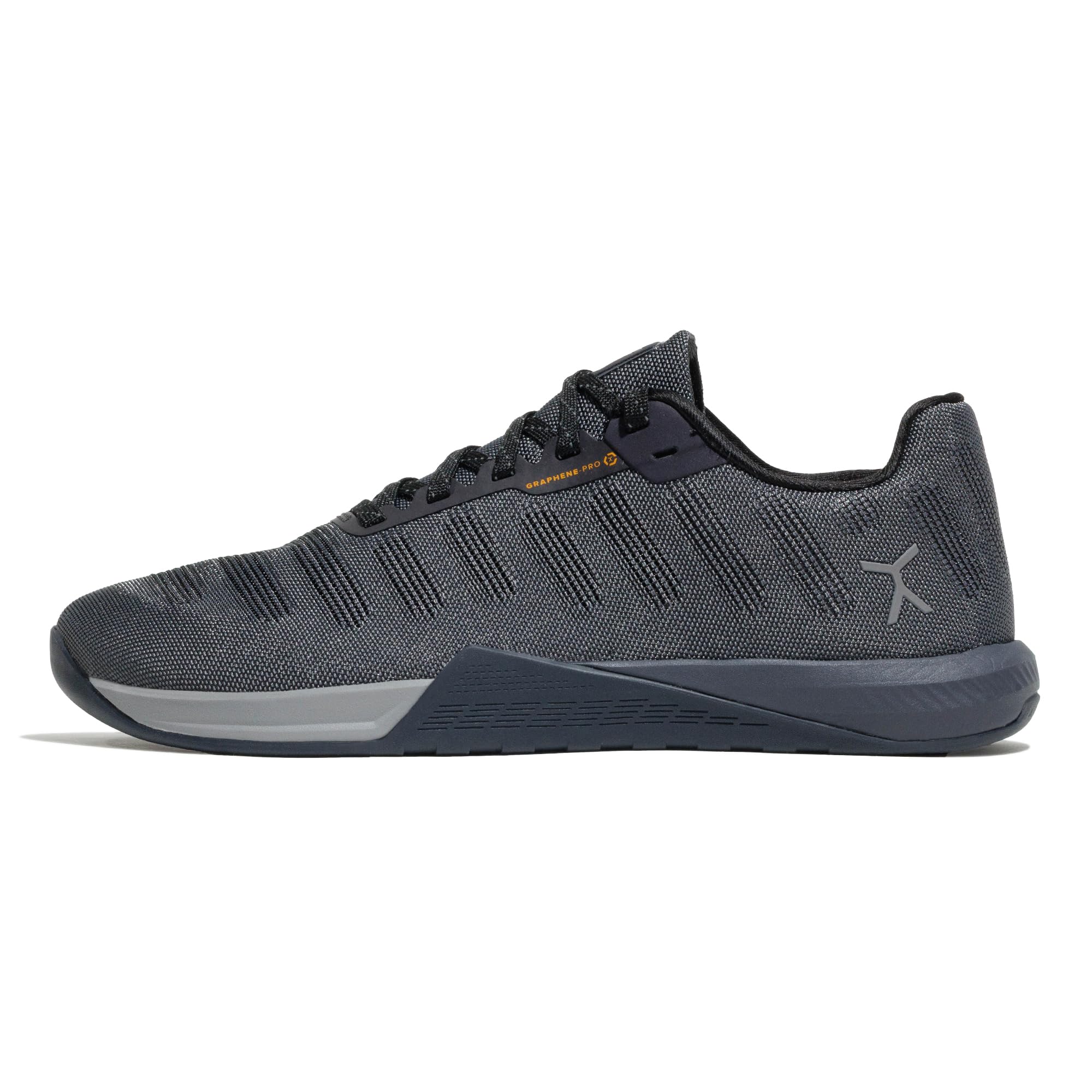
CrossFit, powerlifting, and quick sprints — one flat, wide shoe that covers the whole gym floor.
The Adapt Graphene XT is the premium cross-training option, and its wide toe box plus zero drop are the foundation. The upper is built with graphene, a carbon-based material the maker describes as the strongest ever discovered. That translates to a light, flexible top that is meant to hold up under gym abuse.
Versatility is where it shines. Wearers take it to CrossFit, powerlifting, and weightlifting in the same week, and it also handles quick sprints, jumps, and lateral movements. Foot support gets its own positive mention — the kind of thing that matters when you are moving sideways with a bar overhead. Comfort and fit round out the top three things people like about it.
One crucial buying note: the maker states it fits small for most people and recommends sizing up a half size. Do that. Value-for-money is the one area that draws mixed feelings, so know you are paying a premium. Cleaning is spot-only — water, mild soap, and a soft brush, never a machine wash.
The draw: a genuine do-everything gym shoe with a wide front, flat sole, and graphene-reinforced upper.
The buyer’s homework: size up half a size as the maker advises, and clean by hand — no machine washing.
Choose it for: mixed gym work where you lift, sprint, and move laterally in one session.
Consider cheaper picks if: you only need a walking shoe — the gym-focused build is overkill.
9. Vivobarefoot Primus Lite 3.5

An ultra-thin sole that lets you feel every root and rock — the bottom end of the cushioning scale.
The Primus Lite 3.5 sits at the opposite end from the Torin 8 and its 30 mm stack. Its sole is ultra-thin and durable, which is the whole point: exceptional ground feel and flexibility so your foot does the work. The hexagonal tread pattern underneath provides grip across varied surfaces, and owners describe it holding well on rocks and tree roots. It is a vegan build with a breathable black mesh upper.
It is not just a gym shoe. The design works for training sessions, casual runs, and everyday wear, and that versatility is one of the things people value most. Flexibility and design round out the positives, and the comfort is what earns the most praise. If you want your feet to feel the ground rather than float above it, this has the thinnest sole on the list.
Two things to square with. First, fit runs tight for running, so if you plan to log distance in these, give yourself room. Second, durability divides opinion sharply — some find them super durable, while others report seams tearing within three days. That is a real inconsistency to weigh before committing, and it is the main reason to think twice if you are hard on footwear.
Why it belongs here
- Ultra-thin sole gives the sharpest ground feel of any pick
- Hexagonal tread grips rocks and roots well
- Vegan build with breathable mesh upper
- Works for training, casual runs, and daily wear
The honest limits
- Fit runs tight for running — size with distance in mind
- Durability stories vary widely, from years to days
Go for it if: ground feel is the whole reason you are buying barefoot and you want a vegan option.
Hold off if: you need a shoe that reliably survives hard daily abuse.
Know the Specs
Zero drop (0 mm)
Zero drop means the heel and the ball of your foot sit at the same height off the ground — no raised heel at all. Traditional running shoes put the heel higher, which tilts you forward. A flat shoe lets your foot land more naturally. Ease into it slowly if you are used to a raised heel; your calves do more work at first.
Stack height in mm
This is how much foam sits under your foot, measured in millimeters. The Lone Peak 8 uses 25 mm front and back; the Torin 8 uses 30 mm. More foam means a softer, more forgiving ride on hard surfaces. Less foam means more ground feel and more work for your foot muscles.
Foot-shaped toe box
A foot-shaped toe box is widest at the ends of your toes, not pinched in at the ball. That shape lets your toes spread and align instead of bunching together. Look for wording about toes spreading or aligning rather than a bare width number, since a shoe can be labeled wide and still taper at the front.
Outsole rubber and lugs
Lugs are the raised rubber blocks on the bottom of a trail shoe. Angled lugs under the metatarsals put grip where you push off. Road and gym shoes skip the deep lugs and use flatter rubber, so you are not rocking on knobs indoors. Match the outsole to where you actually walk and run.
Common Questions
Do I need to break in a zero drop shoe slowly?
Will a wide toe box fix bunions and toe crowding?
How do I know a shoe is truly zero drop and not just flattish?
Which pick is better for trail running than road running?
Is the Flux Adapt Graphene XT true to size?
Can I use a barefoot training shoe for running?
How do I clean a graphene upper shoe?
What is the difference between a 25 mm and 30 mm stack?
Are these shoes suitable for standing all day at work?
Do I need a wide toe box if my feet are normal width?
The Bottom Line
The crowd favorite is the ALTRA Women’s Lone Peak 8, and it earns the top spot on build quality and a toe box that genuinely lets your toes spread — Its 4.5+ star average across 800+ ratings backs that up. For road miles and long days on your feet, the ALTRA Men’s Torin 8 gives you more foam at 30 mm and less weight at 8.4 oz. And if ground feel is what you are after, the Vivobarefoot Primus Lite 3.5 puts you closest to the floor of anything here.
One last nudge before you decide: match the outsole to where you actually walk rather than where you plan to. A trail shoe on a gym floor wastes its lugs, and a road shoe on mud slips — pick the surface first, then the shoe.
How we choose
We do not accept paid placement. Every pick is matched to a real buyer and a real use-case; we do not hands-on test units.
Sources
Specifications: manufacturer listings and product documentation. Review insights: verified customer reviews, as of November 2026. Pricing: not shown on this page (it changes often); check the current price via the retailer link.
As an Amazon Associate, Tactical Gear Guy earns from qualifying purchases. This does not affect which products we feature.