Specs are compiled from manufacturer listings and verified buyer reviews and can change over time — please confirm the key details on the product page before buying.
A wood router is the tool that turns a rough board into a finished edge, and the wrong one will scorch your stock, wander off the cutline, or fight you on every depth change. Here is the short version: match the base type to your work, match the motor to your hardest wood, and the rest falls into place. This guide covers nine routers that hold up under real cutting, with the honest trade-offs spelled out.
This guide is built by comparing the manufacturers’ published specifications and the patterns across verified customer reviews, so you get each pick’s real strengths and trade-offs instead of marketing spin.
You will see which base style suits table mounting, which motors hold speed through hard maple, and where each unit asks you to compromise. Read all nine and you can pick a router that cuts clean on the first pass.
Top Picks


How To Choose The Best Wood Working Router
Base type decides more about how you work than any other spec. A fixed base sits at one height and you adjust the bit through the base plate — it is the natural choice for router-table work. A plunge base lets you drop the spinning bit straight down into the stock and lift it back out, which is how you cut hinge mortises and interior cavities. Most picks here are corded, but the DEWALT DCW620B is cordless, so you can work away from an outlet with that one.
Fixed base or plunge base — or a kit with both
A fixed-base router keeps the motor locked to the base plate, so depth changes happen by turning a ring or dial. That makes it the steadier option when the router is mounted upside down in a table. A plunge router adds spring-loaded columns so the whole motor slides vertically, letting you start a cut in the middle of a board rather than at an edge. A combination kit gives you one motor and two or three bases, which is why those kits carry the higher price tags in this group.
Match the motor to the wood you actually cut
Horsepower and amp draw tell you how much the motor can push before it bogs down in a deep pass. A 2.25 HP motor with a 12-amp draw is a common mid-range pairing, while a 2.3 HP motor on a 15-amp draw is the heavier end of this list. A 1.25 HP compact unit is a different animal entirely — fine for light trimming, less happy in thick hardwood. Look for “constant response” or “electronic speed control,” which means the electronics hold the RPM steady when the bit meets resistance.
Collets, base openings and template guides
Bits mount into a collet, which is the clamping sleeve at the end of the motor shaft. A 1/2-inch collet holds the larger shank bits that stay stable in deep cuts; a 1/4-inch collet handles the smaller ones. Listen for whether a router ships with both collet chucks or just one — that changes what you can run on day one. If you plan to use template guides, check that the sub-base opening is wide enough to load the template, and that the sub-base accepts industry-standard guide bushings.
Side-by-Side Comparison
| Model | Best For | Motor | Base Type | Speed Range | Amazon |
|---|---|---|---|---|---|
| Bosch 1617EVS★ Best Overall | Fixed-base table work | 2.25 HP / 12 A | Fixed | 8,000–25,000 RPM | Amazon |
| DEWALT DW618KTop Performer | Hardwood hogging | 2.25 HP / 12 A | Fixed | 8,000–24,000 RPM | Amazon |
| Makita RF1101Cordless Pick | Quiet fixed-base cutting | 2.25 HP / 11 A | Fixed | 8,000–24,000 RPM | Amazon |
| DEWALT DW618B3 | Three-base flexibility | 2.25 HP / 12 A | Fixed, Plunge, D-handle | 8,000–24,000 RPM | Amazon |
| Bosch MRC23EVSK | Two-base combo kit | 2.3 HP / 15 A | Fixed, Plunge | 10,000–25,000 RPM | Amazon |
| Makita RF1101KIT2 | Low-noise full kit | 2.25 HP / 11 A | Fixed, Plunge | 8,000–24,000 RPM | Amazon |
| VEVOR Compact Router | First router on a budget | 1.25 HP / 7.27 A | Fixed, Plunge, Tilt | 10,000–30,000 RPM | Amazon |
Detailed Reviews
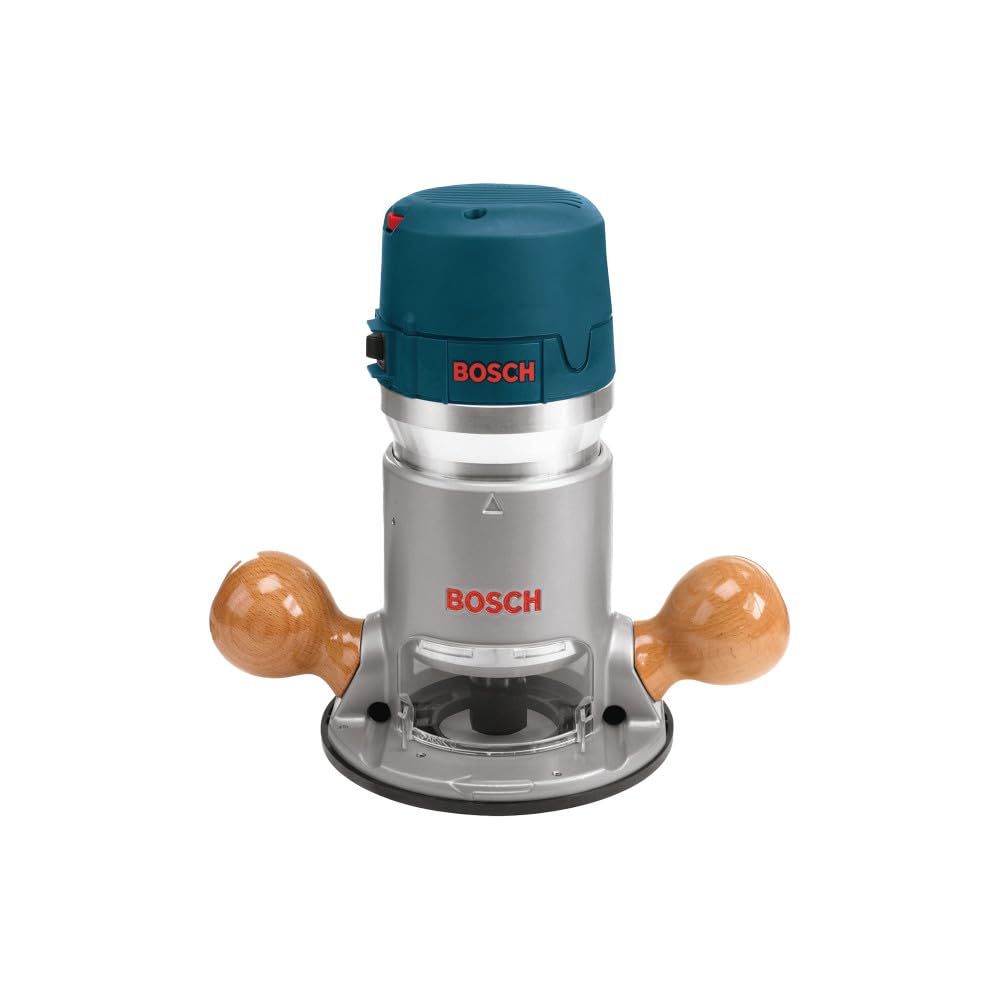
1. Bosch 1617EVS 2.25 HP Electronic Fixed-Base Router
Our pick — 4.5+★ from 3,500+ verified ratings; the strongest balance of quality and price.
The fixed-base router that holds its speed when the bit bites into hard maple.
The number to start with is 2.25 horsepower from a 12-amp motor, and the dial sweeps 8,000 to 25,000 RPM. That spread lets you slow the bit down for a wide panel-raising cutter and speed it up for a small roundover, which is how you avoid scorch marks on the edge. Bosch’s Constant Response circuitry is the electronic brain that keeps the RPM steady when the cutter meets resistance, so the motor does not audibly sag halfway through a pass. It carries a 4.5+ star average across 3,500+ ratings.
For table work, the threaded three-hole base pattern is the detail that earns its keep — it bolts to a router table plate quickly and stays put. The sub-base opening measures 2 inches, wide enough to load a template without fighting the bushing. Microfine bit-depth adjustment moves the bit in small increments, so a second pass that needs a hair more depth does not mean starting over. Both a 1/4-inch and a 1/2-inch self-releasing collet chuck come in the box, along with the 16 mm shaft wrench and 24 mm collet nut wrench.
What wins people over is the build — the quality of this tool is the thing that comes up most in owner feedback, with power and value trailing behind. The honest catch is fit on aftermarket tables: this base drops into some router table plates cleanly and refuses others, so confirm your plate’s hole pattern before you commit. Rounded hardwood handles and a dust-sealed power switch round out a tool built for long sessions. Against the VEVOR compact below, it carries 2.25 HP versus 1.25 hp — a different league of cutting capacity.
What earns the top spot
- 2.25 HP from a 12-amp motor holds speed through dense hardwood
- 8,000–25,000 RPM dial matches bit speed to the material
- Both 1/4-inch and 1/2-inch collet chucks included from the start
- Threaded three-hole base pattern mounts to a router table fast
Where it asks patience
- Base fit varies between router table plates — check yours first
- Fixed base only, so no plunge cuts without a separate base
Reach for this if: you want one fixed-base router that anchors a table and never flinches in hardwood.
Think twice if: your work is mostly hinge mortises and interior cutouts — you’ll want a plunge base.
2. DEWALT Router, Variable Speed, Fixed Base, 2-1/4 HP (DW618K)
A depth ring that clicks in 1/64-inch steps, built for repeatable passes.
Repeatability is what separates a good router from a frustrating one, and this DEWALT makes its case with a micro-fine depth adjustment ring that moves in 1/64-inch increments. Set a depth, cut, come back to it later and hit the same number. The 2.25 horsepower, 12-amp motor runs an electronic variable speed range of 8,000 to 24,000 RPM with full feedback control, which means the electronics compensate to hold speed as the load changes. Big flush-trim bits in tough wood are exactly where that pays off.
The tool-free steel motor cam lock is the other detail worth calling out — it lets you change bases and lock depth without hunting for a wrench, and it clamps solid. Quick-release motor latches pull the motor pack out for bit swaps and base changes. Weighing in at 11.4 pounds, it is 0.15 pounds heavier than the cordless DEWALT plunge model further down this list at 11.25 pounds — close enough that the difference is not what should decide it for you.
Owners consistently describe a top-quality tool that chews through tough woods, with adjustability and durability right behind quality in what gets praised. It does not ship with a plunge base, so if you need to drop the bit into the middle of a panel, look at the DW618B3 below instead. Think of this as the fixed-base workhorse for someone who already owns a table and wants a motor that will not tire.
Depth you can return to: the 1/64-inch adjustment ring and tool-free cam lock make setup repeatable, which matters more than raw power once you are cutting a run of identical parts.
The gap to know about: no plunge base in this kit — that flexibility lives in DEWALT’s three-base version, and this one trades it for a lower entry point.
Built for: the woodworker who sets a depth once and cuts twenty identical grooves.
Look elsewhere if: plunge cuts are on your list — this kit doesn’t include that base.
3. DEWALT 20V MAX XR Plunge Router DCW620B
A 3-1/4-inch motor barrel that makes one-handed guidance genuinely possible.
Grip size is an underrated spec, and Makita makes it a headline: the aluminum motor housing measures 3-1/4 inches in diameter, narrow enough for a comfortable wrap of your hand around the barrel. The motor is an 11-amp unit pushing 2.25 HP through a variable speed dial. Electronic speed control holds RPM under load, and soft start ramps the motor up so it does not twist in your grip on startup.
The sub-base accepts industry-standard template guides, so your existing bushings fit without an adapter. It is a fixed-base tool, so plan on a table or an edge-guided jig rather than freehand plunge work.
The quality and smooth performance get the most positive attention, and the rounded grip does its part in long sessions. The honest caveat is depth adjustment: the speed dial is welcome, but setting depth takes more fiddling than the dial-style rings on the Bosch and DEWALT fixed-base tools above. If you change depth constantly, that friction adds up. Set the depth once for a run of identical cuts and the fussiness never comes up.
The fit: a fixed-base router for someone with smaller hands or a shop where noise carries.
The trade: depth changes are fussier than the ring-style adjusters on other picks here.
4. DEWALT Fixed/Plunge Base Kit DW618B3

One motor, three bases, and a kit box that swallows the whole set.
Three bases are the whole pitch: a fixed base for table mounting, a plunge base for interior cuts, and a D-handle base with a trigger switch and lock-on feature for edge work where you want one hand on the trigger. One 12-amp, 2.25 HP (horsepower) motor feeds all three, running 8,000 to 24,000 RPM with electronic feedback control (it keeps speed steady as you cut) and soft start (no jump when you pull the trigger). The D-handle is the piece most kits skip, and it changes how confident you feel on long edge profiles.
Dust collection runs through the plunge columns rather than a bolt-on shroud, which DEWALT rates at 95% capture. Precision machined brass bushings and case-hardened steel guide rods give the plunge stroke its smooth, accurate feel, and a spindle lock button lets you change bits with a single wrench. There is a detachable cordset, which means a damaged cord is a swap rather than a repair.
Value and ease of use are the two things owners talk about most, with power and versatility right behind. The recurring honest note is durability: many units run for years, and a few stop early, so treat the detachable cordset and dust path as the maintenance points. Everything fits in the included carrying case, which is exactly what a kit like this needs. Against the single-base DEWALT DW618K above, you get two extra bases and the same motor — the flexibility is the upgrade.
Why the three-base setup wins
- Fixed, plunge, and D-handle bases all run off one 12-amp motor
- Through-the-column dust collection rated at 95%
- Brass bushings and hardened steel rods keep the plunge stroke true
- Spindle lock for single-wrench bit changes
What to keep an eye on
- Durability is uneven across units — a handful stop early
- Three bases and a case take up real shelf space
Buy it for: the one-tool shop that needs fixed, plunge, and D-handle capability without three separate motors.
Know going in: it is the bulkiest kit here, and longevity varies unit to unit.
5. BOSCH MRC23EVSK Combination Router
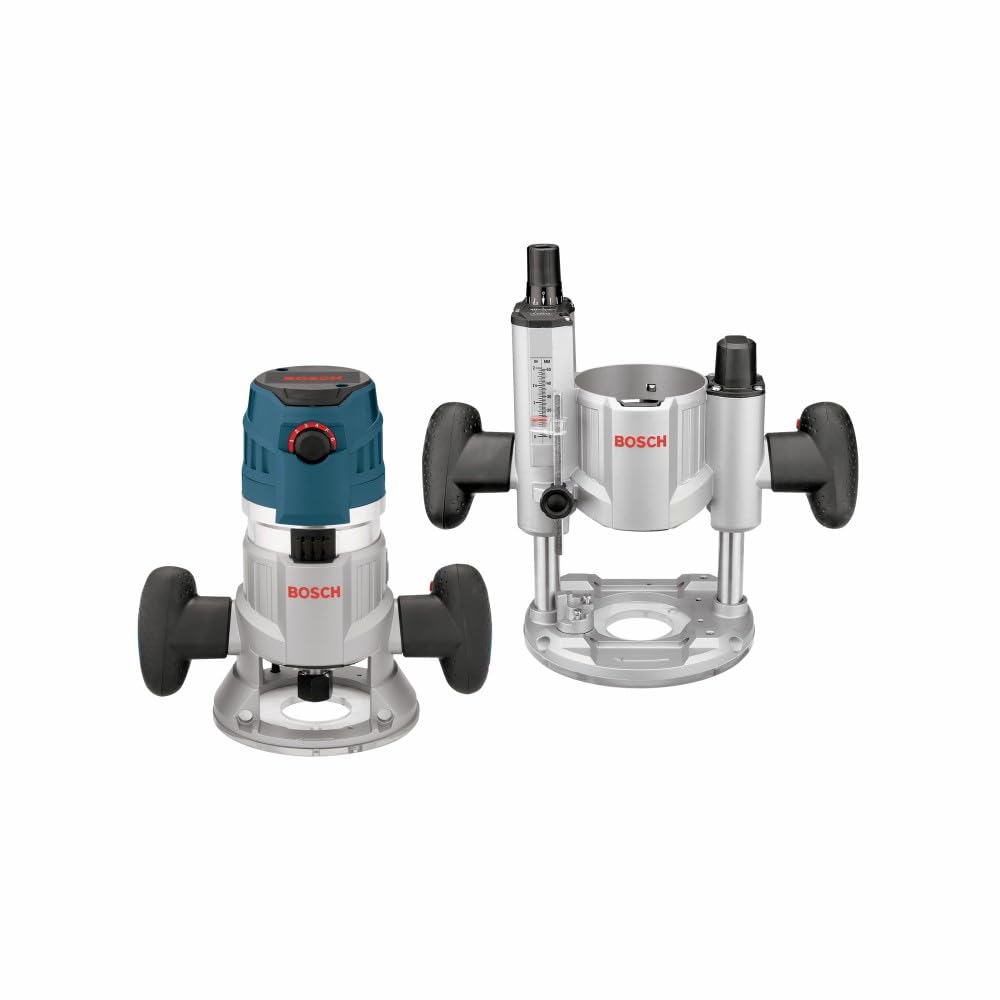
Fifteen amps split across a fixed and a plunge base, in one hard case.
This kit takes the 15-amp, 2.3 HP motor from the Bosch plunge above and gives it two homes: a fixed base for the table and a plunge base for interior work. Speed runs 10,000 to 25,000 RPM on a variable dial, and the motor is soft-start so it comes up smoothly rather than snapping to speed. The precision-center design keeps the bit on the cutline, which is the difference between a clean groove and a wander.
Fixed-base depth adjustment covers a 1-5/8-inch continuous microfine range — plenty for panel work. The fixed base has threaded holes for router table mounting, and the kit includes three M4 screws for exactly that. You get both a 1/4-inch and a 1/2-inch self-releasing collet chuck, a 16 mm shaft wrench, a 24 mm collet nut wrench, and a T-handle hex height adjustment wrench. Everything packs into the carrying case.
What lands well is the build quality — it gets far more positive attention than anything else on this tool. The honest split is in performance: most units run better than expected, and a small share arrive as non-starters, which is a warranty conversation rather than a design flaw. Value opinions divide the same way. If you want one motor covering both base styles and you like the Bosch trigger-in-handle layout, this is the combination to weigh against the DEWALT three-base kit above.
The match: a two-base Bosch kit for someone who wants the plunge and fixed setup without buying twice.
The check: a small number of units arrive dead — test it the day it lands.
6. Makita RF1101KIT2 2-1/4 HP Router Kit, with Plunge Base

The fixed-base Makita with a plunge base added — and just 81 dB at work.
An 11-amp motor delivers 8,000 to 24,000 RPM here, matching the speed range of the DEWALT kits above while drawing less current than the 15-amp Bosch models. The headline for a lot of shops is the noise figure: 81 dB, paired with low vibration for operator comfort. If your bench sits in a garage attached to the house, that difference is not trivial — it is the reason to pick this over a louder tool.
You get the same variable speed dial, electronic speed control that holds RPM under load, and soft start for smoother startups as the fixed-base RF1101. The kit adds the plunge base, which is the piece that turns a table-only tool into one that can drop into the middle of a slab. Owners describe it handling surfacing work on live edge slabs and weekend projects alike, with the smooth motor and build quality drawing most of the praise.
Functionality, adjustability, and ease of use all sit high in what owners value, and the variable speed control gets called out by name. The trade-off is depth adjustment again — it takes more care than the dial-ring systems on the Bosch and DEWALT fixed bases. Weight lands at about 3,220 grams, which is the lightest fixed-base motor in this group. For a shop where the router shares space with living areas, the 81 dB rating is a genuine spec advantage.
Why quiet matters: 81 dB and reduced vibration make long routing sessions easier on your ears and hands than the louder corded options here.
Depth takes care: the adjuster is less intuitive than a ring-style system, so plan your passes rather than tweaking on the fly.
Reach for this if: noise and vibration are real constraints where you work, and you want both base styles.
Look elsewhere if: you want a simple to use depth ring and nothing else will do.
7. VEVOR Compact Router 1.25HP
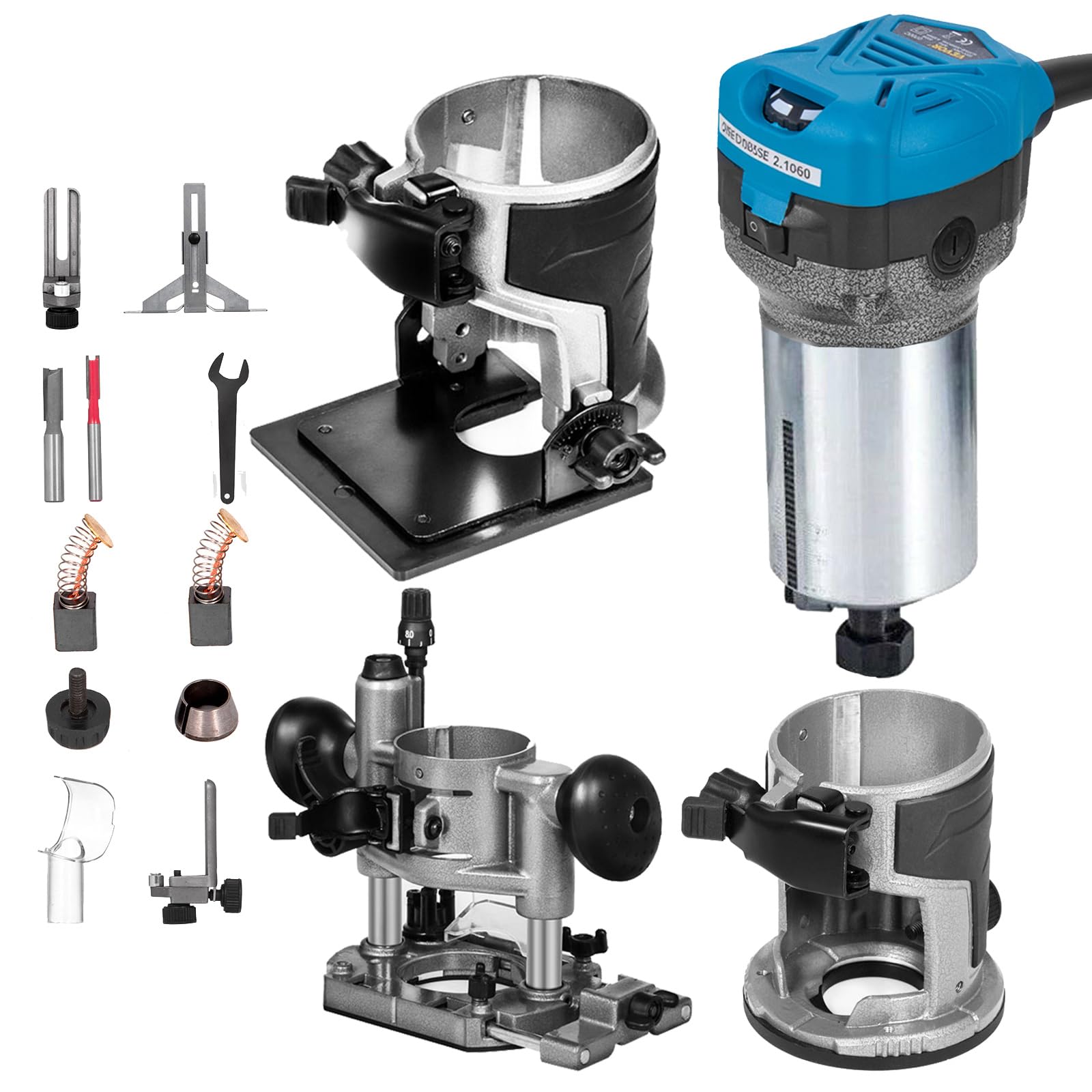
Three bases and a 30,000 RPM ceiling for the price of a single-base tool.
On paper this is the most flexible kit in the group per dollar: a 1.25 HP, 7.27-amp motor, a fixed base, a plunge base, and a tilt base — a base style none of the others here offer. Soft start reduces the initial kick so the palm-sized body does not jump in your hand.
The cast aluminum motor housing and fixed base are built to take shop abuse, and the vibration-reducing housing pairs with soft-grip handles for control. Depth uses an adjustable rack-and-pinion system with graduated inch and mm scales you can read at a glance. A quick-release cam lock handles depth changes and base swaps. Dust hoods connect to a vacuum, and the cord runs 70.87 inches. For hobbyists and light furniture work, three bases and a 30,000 RPM ceiling cover most jobs.
Value is what owners talk about most, and that is the correct lens for this tool — it asks for a fraction of what the 2.3 HP Bosch kits cost and hands you three bases. Be clear-eyed about the ceiling: 1.25 HP is a compact-class motor, not a 2.25 HP workhorse, and a few owners find the plunge base does not hold position firmly and report the motor seizing after repeated use. Treat it as an entry point for light routing, not a production tool. There is no warranty trial-and-error built in, so test it thoroughly in the first week.
Where it earns its place
- Three bases — fixed, plunge, and tilt — at a budget-tier price
- 10,000–30,000 RPM range, the highest ceiling here
- Soft start and vibration-reducing housing for control
- Rack-and-pinion depth with inch and mm scales
The realistic limits
- 1.25 HP motor is compact-class, not suited to heavy hardwood passes
- Plunge base hold and long-term motor life are the reported weak points
Great first router for: a hobbyist who wants to try three base styles before committing to a premium motor.
Not for: daily production work in thick hardwood, where a 2.25 HP motor is the safer bet.
Know the Specs
Horsepower and Amperage
Horsepower describes how much cutting force the motor can deliver before it slows; amperage describes how much current it draws to make that force. They tend to move together — the 2.25 HP and 2.3 HP motors here carry 11, 12, or 15 amps, while the 1.25 HP compact runs on 7.27 amps. The higher the horsepower, the deeper the pass you can take in dense hardwood without bogging down. For thin stock and light trim, a compact motor is plenty.
RPM Range and Constant Speed Control
RPM is how fast the bit spins, and different bits want different speeds — a large panel cutter tends to want slower RPM to avoid scorching, while a small roundover bit can run faster. That is why variable speed dials appear on every router here. Constant Response or electronic speed control is the electronics that hold the chosen RPM when the cutter hits resistance. Without it, the motor slows in the cut and leaves a rougher surface.
Collet Size
The collet is the clamping sleeve that grips the bit’s shank, and 1/4-inch and 1/2-inch are the two standard sizes. A 1/2-inch shank bit flexes less in deep cuts, so it stays truer. A 1/4-inch bit handles smaller profiles and detail work. Kits that include both collet chucks let you run either, which saves buying the second sleeve later.
Base Type and Depth Adjustment
A fixed base stays at one level and you adjust the bit through the base plate; a plunge base slides on spring-loaded columns so the bit can enter the middle of a board. Depth adjustment style matters just as much: a micro-fine ring that moves in small increments lets you repeat a setting precisely, while a rack-and-pinion or dial system varies in feel. If you cut many identical parts, the depth mechanism is the spec that will save or cost you the most time.
Common Questions
Will a fixed-base router fit my existing router table plate?
Do I need a plunge base or can I do everything with a fixed base?
What is the difference between 1/4-inch and 1/2-inch collets?
How long will a router motor last with regular use?
Can I use a cordless router for the same jobs as a corded one?
Does the RPM dial actually change the cut quality?
How much horsepower do I need for hardwood?
What does 81 dB mean on a router spec sheet?
Will standard template guide bushings fit these routers?
Is a router table necessary or can I use the router freehand?
The Bottom Line
For most woodworkers, the strongest all-around choice is the wood working router in the Bosch 1617EVS — 2.25 HP and a 12-amp motor, an 8,000 to 25,000 RPM dial, both collet chuck sizes (1/4-inch and 1/2-inch), and a threaded three-hole base pattern that makes table mounting simple. If you need the plunge side of the job, the Bosch MRP23EVS brings 15 amps and Afterlock depth adjustment to interior cuts. For a shop that wants one motor covering fixed, plunge, and D-handle work, the DEWALT DW618B3 is the flexible answer. And if you’re testing the water on a tight budget, the VEVOR Compact Router hands you three bases at a modest entry point — just keep your expectations calibrated to a 1.25 HP motor.
How we choose
We do not accept paid placement. Every pick is matched to a real buyer and a real use-case; we do not hands-on test units.
Sources
Specifications: manufacturer listings and product documentation. Review insights: verified customer reviews, as of November 2026. Pricing: not shown on this page (it changes often); check the current price via the retailer link.
As an Amazon Associate, Tactical Gear Guy earns from qualifying purchases. This does not affect which products we feature.