Specs are compiled from manufacturer listings and verified buyer reviews and can change over time — please confirm the key details on the product page before buying.
Your stove is only as good as the pipe carrying the smoke out of the room. If your fire smolders, your glass turns black, or smoke creeps back into the living room when the wind picks up, the flue is usually the culprit — not the stove. This guide sorts out which flue pipe, liner, or full kit actually solves that, so you get a warm, smoke-free fire.
This guide is built by comparing the manufacturers’ published specifications and the patterns across verified customer reviews, so you get each pick’s real strengths and trade-offs instead of marketing spin.
Every pick below is graded on the same few things: the diameter it actually fits, what it is made of, and whether it belongs inside a chimney, through a wall, or straight onto the stove collar. A DIY flue install is the cheapest stove upgrade there is, and the crowd favorite here — the Rockford liner kit — sits at 4.5+ stars across 400+ owners. Here is how to pick the right wood stove flue for your setup.
Top Picks


How To Choose The Best Wood Stove Flue
The first thing that trips people up is this: “flue pipe” is not one product. It is a set of different parts — a flexible liner that drops down inside a masonry chimney, a rigid length of pipe that runs up the side of a house, or a short connector that bridges the stove to the wall. Buy the wrong type and it will not matter how good the steel is. So start by deciding where the pipe has to go, then match the diameter and the material to that job.
Match the diameter to your stove collar first
Nearly every wood stove in a normal home uses a 6-inch flue collar, and almost every product on this list is built to that 6-inch standard. If your stove has a different collar, nothing here will seat correctly, so grab a tape measure before you shop. A pipe that is the wrong diameter either will not slide on or leaks smoke at the joint.
Know where the pipe is allowed to run
Single-wall black pipe is for indoors only, and it needs a large clearance to anything that can burn — the AllFuel HST telescoping pipe spells out 18 inches to walls, ceilings, and wood mantles. It cannot pass through a wall or ceiling and should not sit outside in the weather. Insulated double-wall pipe is the opposite: it is built to pass through a wall or run outside, and it needs far less room around it.
Steel grade and wall thickness decide how long it lasts
Look for 304 or 316 stainless steel on the spec sheet. The 316 grade is the more corrosion-resistant of the two and shows up on the liner kits here. Wall thickness also matters: the AllFuel telescoping pipe uses 21 gauge steel, which the maker states is 9% thicker than 22 gauge and 27% thicker than 24 gauge. Thicker steel holds its shape through heat cycles instead of denting.
Side-by-Side Comparison
| Model | Best For | Type | Diameter | Length | Amazon |
|---|---|---|---|---|---|
| Rockford 316 Flexible Liner Kit★ Best Overall | Relining a masonry chimney | Flexible liner kit | 6 inch | 25 feet | Amazon |
| AllFuel HST Telescoping PipeMost Adjustable | Adjustable stove-to-wall connector | Single wall, black | 6 inch | 18 to 30 inches | Amazon |
| LEIFIDE Black Matte Pipe (2-pack)Budget Pair | Basic indoor connector runs | Single wall, black matte | 6 inch | 24 inches each | Amazon |
| DuraVent DuraPlus 6DT-24 | Insulated pipe with small clearance | Triple wall, insulated | 6 inch | 24 inches | Amazon |
| AllFuel HST 6 x 36 Stainless | Long outdoor Class-A run | Double wall, insulated | 6 inch | 36 inches | Amazon |
| Selkirk SureTemp 206148 | Reaching the roofline in one length | Double wall, insulated | 6 inch | 48 inches | Amazon |
| FireSafe Flexible Liner Kit | Insert and wood stove relining | Flexible liner kit | 6 inch | 15 feet | Amazon |
| DuraVent DuraPlus Through-The-Wall Kit | Full wall-pass installation | Triple wall kit | 6 inch | Kit | Amazon |
Detailed Reviews
1. 316 Stainless Steel Flexible Chimney Liner Insert Kit 6 Inch x 25 Feet
Our pick — 4.5+★ from 450+ verified ratings; the strongest balance of quality and price.
A whole relining job in one box, sized for a masonry chimney and a 25-foot drop.
If your old clay-tile chimney is rough, cracked, or too big for your stove to draft properly, this is the fix. It is a flexible 6-inch liner you feed down the chimney from the top, then clamp at both ends with the quick-connect fittings — no mortar, no masonry work. The 316 stainless steel is the higher corrosion-resistant grade, which is the one you want sitting in the damp, acidic environment inside a chimney.
What wins people over is the build quality, and it is clearly the reason this kit leads the list. Owners routinely note that installing this liner themselves saves the several-hundred-dollar labor bill a sweep would charge. The kit arrives with the adapters you need for the hookup, and the maker backs it with a UL1777 listing in the USA and a ULCS635 listing in Canada. One important limit is printed right on the product: flexible liners of this kind are only for installation inside a masonry chimney, so this is not a substitute for a Class-A pipe run up the outside of a house.
The recurring friction point is straightening the coil — a roll of flexible liner arrives wound up and wants to stay that way, and feeding it down a tight flue takes patience and ideally a second set of hands. Fit also draws some mixed comments, mostly from folks whose chimney dimensions were unusual. Neither issue is a defect; they are the cost of a flexible liner versus a rigid one. Budget a full afternoon and a helper before you start.
What earns the top spot
- 316 stainless steel — the more corrosion-resistant grade for a damp chimney interior
- Quick-connect clamps mean a DIY install with no masonry work
- UL1777 listed in the USA and ULCS635 listed in Canada
- Comes with the adapters needed for the appliance hookup
Where it asks more of you
- The coiled liner resists straightening and is easier with two people
- For masonry chimney interiors only — not an outdoor Class-A run
Reach for this if: you are relining an existing masonry chimney and want to keep the labor cost in your own pocket.
Think twice if: your chimney is not masonry, because this liner is specified for masonry interiors only.
2. 18″ to 30″ Telescoping Pipe for 6″ Diameter
The measuring problem solver: one pipe that slides from 18 to 30 inches to meet your wall exactly.
Here is the headache this fixes. Single-wall stove pipe cannot be cut down, so if you buy a fixed length and it comes up short or long, you own the wrong pipe. This one slides between 18 and 30 inches and locks where you need it, which means you can dry-fit it, extend it, and get a clean joint without ordering three different lengths and returning two. It also connects to any brand of Class-A insulated chimney pipe, so it plays nicely at the transition point.
The 21 gauge steel is where it earns its keep. It is 21 gauge, which the maker states is 9% thicker than 22 gauge and 27% thicker than 24 gauge — that extra mass is what keeps the pipe from denting or warping when the stove runs hot and cools again. The black high-temperature paint is there to hold its finish instead of chipping or peeling off. And unlike the flexible liner above, this is a rigid connector you seat on the stove collar and run straight up to the ceiling support.
The trade-off is the clearance rule, and it is a big one. This pipe needs 18 inches of open space to anything combustible — walls, ceilings, wood mantles — and it cannot pass through a wall or ceiling or sit outside in the weather. That makes it an indoor connector only. If your stove sits close to a wall or you want to run pipe through a wall, you need insulated double-wall pipe instead, which carries a much smaller clearance.
Why it earns a place: the sliding 18-to-30-inch span removes the single most common measuring mistake in stove pipe, and the 21 gauge steel is genuinely heavier stock than the budget pipes.
What to plan around: that 18-inch clearance to combustibles rules out tight corners and wall passes — read your room before you buy.
Pick this one when: your run is indoor-only and you want the freedom to fine-tune the length on the spot.
Not your pipe if: it has to go through a wall or sit outdoors — that calls for insulated pipe.
3. 2 Pcs Black Matte Stove Pipe 6 x 24 Inch
Two straight 24-inch lengths of stainless black pipe in one box — the plainest, most affordable indoor connector here.
Sometimes you just need two straight lengths of pipe. Two 24-inch sections give you 48 inches of straight run to bridge a stove to a chimney entrance, and at 304 stainless steel they are not going to rust through the way plain steel would. The crimped end on each one slots straight into a fitting of the same diameter, so a first-timer can assemble them without special tools. Each joint just needs at least three metal plate screws, which you supply yourself.
Compared with the Selkirk pipe further down the list, this is a fraction of the length — 24 inches per section versus 48 inches — so if you are reaching a roofline, the Selkirk does it in one piece and this needs two plus a joint between them. For a short indoor connector run, though, the pair buys you both sections in a single order, which is handy if you are replacing old, rusted-out pipe.
The black matte coating is the honest sticking point. It looks sharp against most furniture, and it is designed to keep soot down while curing, but the paint taking wear over time is the most-discussed durability concern. Size a joint properly, tighten your screws, and treat the coating like a finish rather than armor. It is a fair trade at this price tier.
The case for the pair: two crimped 24-inch 304 stainless sections in one order is the low-fuss way to rebuild a short indoor connector run.
The catch to know: the matte black finish can wear, and you must supply the screws for every joint.
Best fit: a short indoor stove-to-chimney connector and you want both sections together.
Look elsewhere if: you need a long outdoor run, where only insulated pipe belongs.
4. DuraVent DuraPlus 6″ Diameter 24″ Length
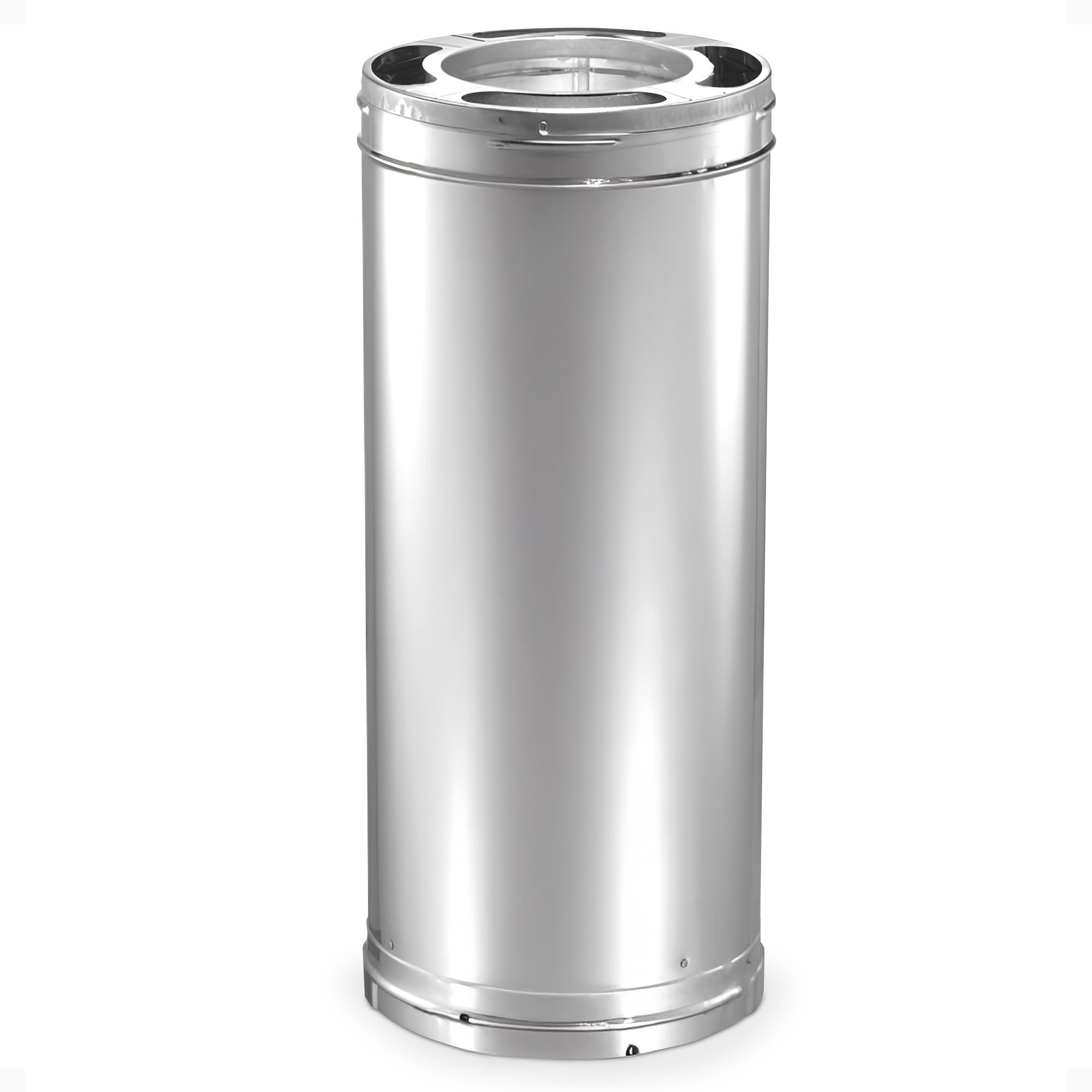
Insulated triple-wall pipe that needs only 2 inches of breathing room — the answer for a stove tucked near a wall.
This is a different class of pipe from the black single-wall sections above. It has a stainless steel inner liner wrapped in a ceramic blanket plus an air space, and that insulation is doing two jobs at once: it keeps the inside hot for a strong draft while the outside stays cool enough to pass close to combustibles. The number that matters is the clearance — 2 inches, versus the 18 inches a single-wall pipe demands. In a tight hearth corner, that difference decides whether the pipe fits at all.
It is UL Listed to UL 103HT (MH7399), rated for continuous 1,000°F flue temperatures and tested to 2,100°F for chimney fire conditions. It also vents wood, oil, coal, or gas appliances, so it does not lock you into one fuel. The twist-lock fittings let you seat lengths together without sealant, which is faster and cleaner than drilling and screwing every joint.
The honest snag is the finish. The listing describes a stainless steel liner, yet the outer shell on this version is galvanized steel, and that mismatch is the liveliest point of debate in the reviews — some buyers expected a fully stainless exterior. Value also splits opinion, with some finding it the best price for the class and others seeing it as costly. Know going in that the galvanized outer casing is normal for this pipe and it is the inner liner that carries the flue gases.
Why it fits tight spaces
- 2-inch clearance to combustibles — a fraction of single-wall pipe
- UL 103HT listed for 1,000°F continuous and 2,100°F chimney fire tests
- Ceramic blanket plus air space keeps the outer wall cool
- Twist-lock assembly needs no sealant at the joints
- Vents wood, oil, coal, or gas appliances
Set your expectations
- Outer shell is galvanized steel, not stainless — a common surprise
- Value draws a split, and the price of the class runs higher
It suits: a stove or fireplace that needs to run close to a wall or framing.
Size up first: confirm the galvanized outer finish is what you want before ordering.
5. Chimney Pipe, 6″ x 36″, 304 Stainless Steel
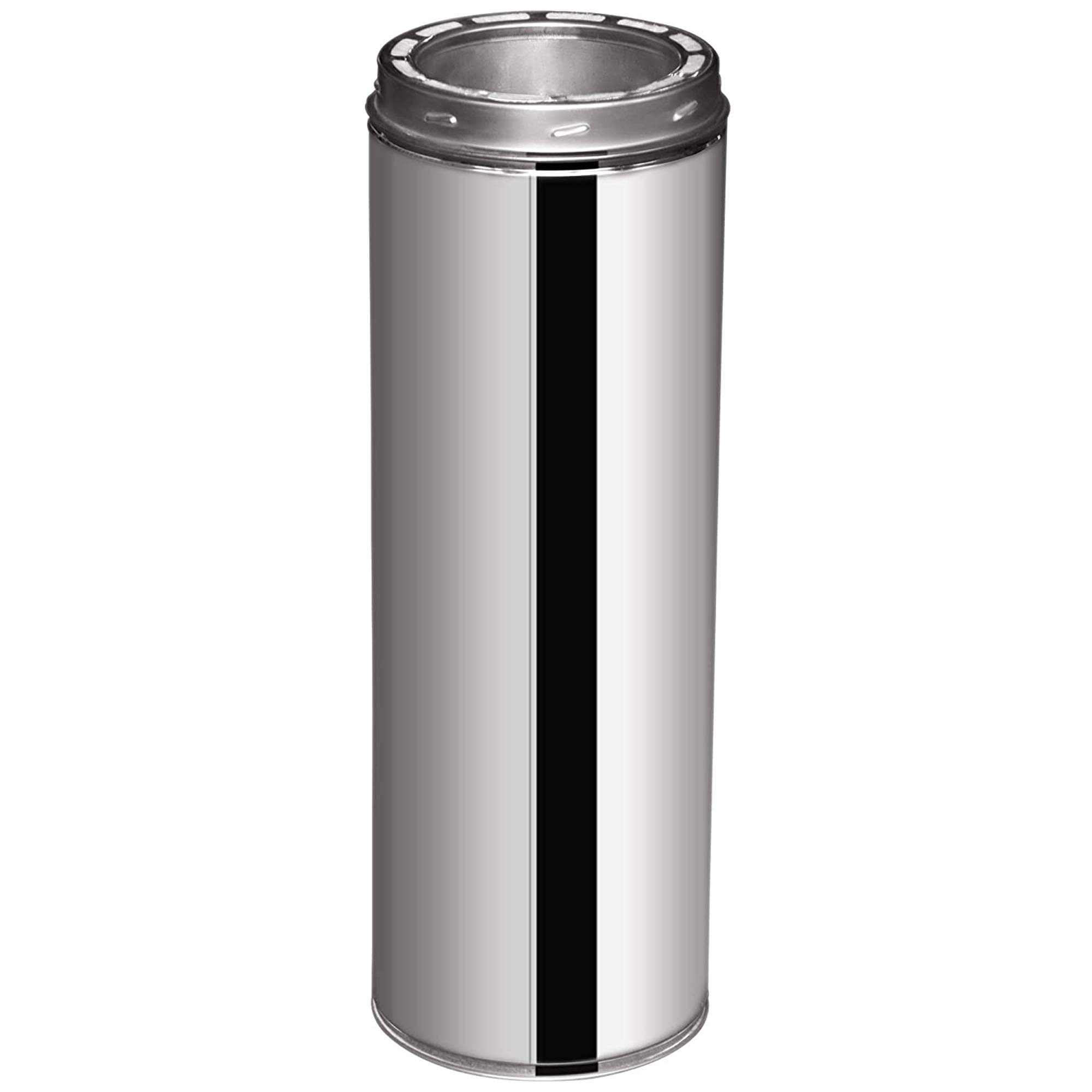
Stainless inside and out, with laser-welded seams built to shrug off weather on a long outdoor run.
If the pipe is going up the outside of your house, the material on the outside matters as much as the inside. This pipe uses 304 stainless steel on both walls with laser-welded seams, which the maker pitches as a step up from galvanized steel or 430 stainless steel in corrosion resistance — that is the corrosion that eats a pipe when it lives outdoors in rain and snow. It is a genuinely longer, taller section too: 36 inches to the 24-inch length of the DuraVent pipe above it, so you climb the wall in fewer joints.
Inside, it runs a ceramic fiber blanket that holds internal flue temperatures up for a proper draft while keeping clearance to combustibles at 2 inches. It is certified to UL103HT and vents wood stoves, fireplaces, furnaces, boilers, water heaters, and outdoor wood furnaces on wood, gas, coal, or oil. Fit is what buyers comment on most after the quality — the sections and the locking band go together smoothly and pull tight.
One rule cannot be worked around: this connects only to AllFuel HST Class-A double-wall chimney pipe and will not mate with other brands of Class-A chimney. So this is a brand-ecosystem purchase, not a pick-and-mix part. If your existing chimney is another brand, this is not the length for you.
Where it shines: 304 stainless on both walls and laser-welded seams give it real corrosion resistance for an exposed outdoor run.
The hard limit: it only joins AllFuel HST Class-A pipe, so a mixed-brand chimney is out.
It is built for: an AllFuel HST installation climbing an exterior wall with fewer joints to seal.
Do not buy it for: another brand’s Class-A chimney — the twist-lock will not connect.
6. Selkirk 6″ SureTemp 48″ Long Chimney Pipe

Four feet of insulated pipe in one piece — the tallest single length on this list, and the fastest way to the roofline.
The 48-inch length is the story. At 48 inches this pipe covers twice the height of the 24-inch LEIFIDE sections in a single joint, which means fewer seams to seal and fewer places for a leak to start on a tall run. The double-wall construction gives you the stainless inner liner with a tough outer casing, and it is rated in the same upper tier as the DuraVent — tested to withstand 2,100 degrees Fahrenheit during surges. It vents wood, coal, oil, or gas appliances, so it is not tied to one fuel.
Functionality is what people rave about — the pipe does its job quietly, fits properly, and looks clean on the wall, which matters when it is running up the front of the house. The locking band that comes with it ties the sections together with a bit more security than a bare twist. At roughly 11.7 kg, plan on lifting it into place with help rather than one-handed on a ladder.
Here is the catch worth knowing before you order. The durability feedback is genuinely split, with some buyers finding it very solid and others finding dented or bent pipe on arrival — thin-skinned chimney pipe shipped in a long box has room to get knocked around. Value is debated too. Inspect the length the day it lands, and you will be fine.
The draw: a full 48 inches in one length means fewer joints and a cleaner, faster climb on a tall installation.
The watch-out: long, thin-walled pipe can arrive dented, and the value is debated — check it on delivery.
Go for it when: your run is tall and you want to minimize seams with the longest section here.
Choose otherwise if: you prefer to inspect pipe before it ships — a long length has more room to get bent in transit.
7. Basic FireSafe Flexible Chimney Liner Insert Kit 6 Inch x 15 Feet
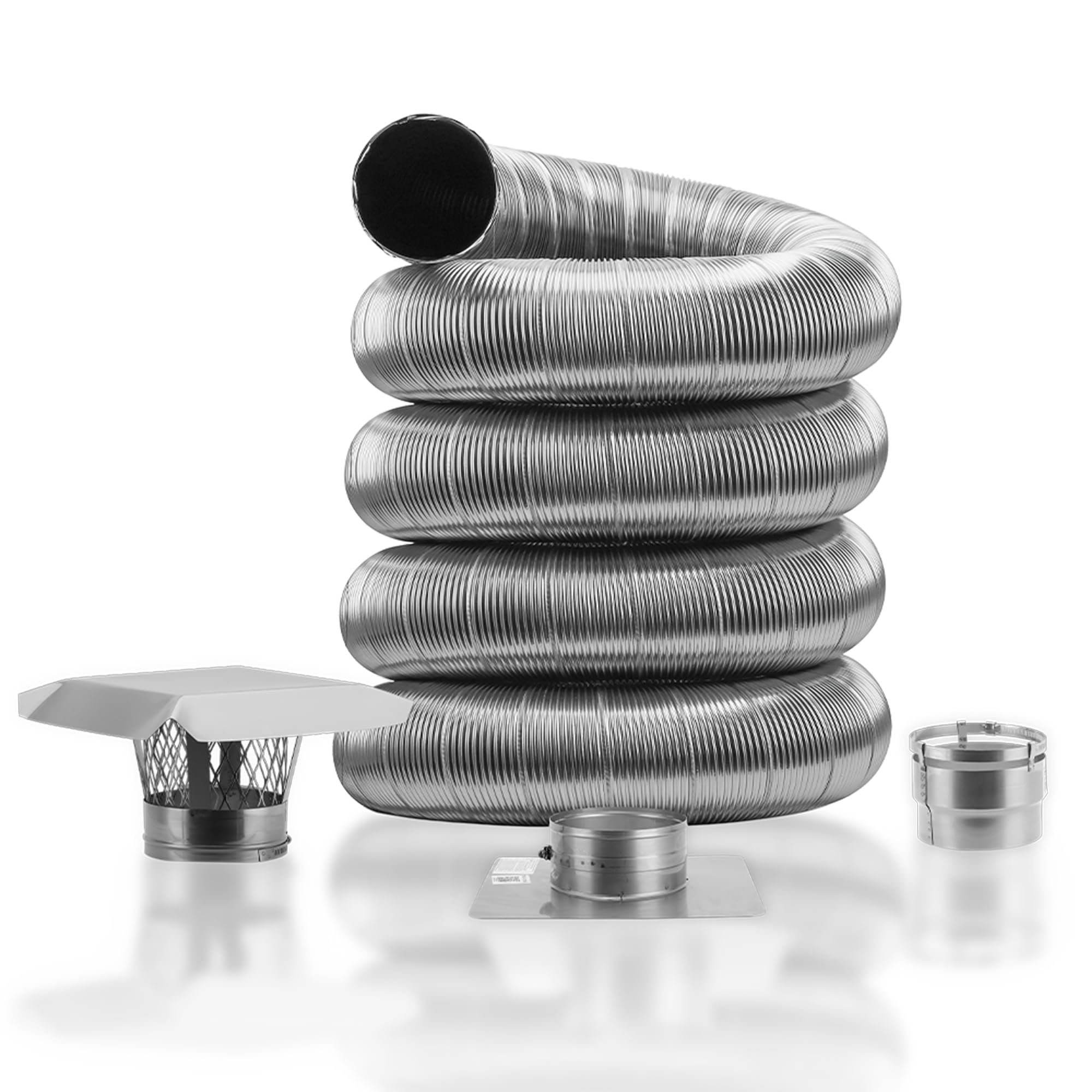
A wall-ready 15-foot liner kit for a fireplace insert — top plate, rain cap, and connector all included.
Where the Rockford kit above is a bare 25-foot liner, this one is a fuller package for a shorter run: 15 feet of 316 stainless liner plus a 13″ x 13″ top plate with a rain cap and an appliance connector for vertical hookups. The liner itself is built from 316 stainless, and its 7-ply seams and 10 corrugations are what create the gas- and watertight barrier. If you are dropping an insert into an existing fireplace, the top plate and rain cap are two of the parts you would otherwise be chasing down separately.
Build quality is the runaway strength here, and it is made in the USA from mill-certified stainless steel. The extra corrugations make the liner flexible enough to follow a chimney that is not perfectly straight, and once it is in, it holds shape. It also runs on wood, gas, oil, and pellet appliances, so it is a multi-fuel kit rather than a wood-only part.
The 15-foot length is the real constraint. Unlike the 25-foot Rockford kit, this one will not cover a tall masonry chimney — it is sized for a fireplace insert or a shorter flue. A few buyers also find the flexible liner fussier to handle than expected, especially with the deeper corrugation profile. Measure your flue height before you order, and this kit covers a whole lot of ground.
What you get in the box
- 15 feet of 316 stainless flexible liner
- 13″ x 13″ top plate with rain cap included
- 7-ply seams and 10 corrugations form a tight barrier
- Made in the USA from mill-certified stainless steel
- Works with wood, gas, oil, and pellet appliances
Before you commit
- 15 feet will not reach a tall masonry chimney
- The corrugated liner can be fussier to handle on site
Made for: a fireplace insert or short flue where you want the top plate and rain cap in one box.
Skip the 15-foot: if you need to line a full-height masonry chimney and require the longer roll.
8. DuraVent DuraPlus Through-The-Wall Chimney Kit
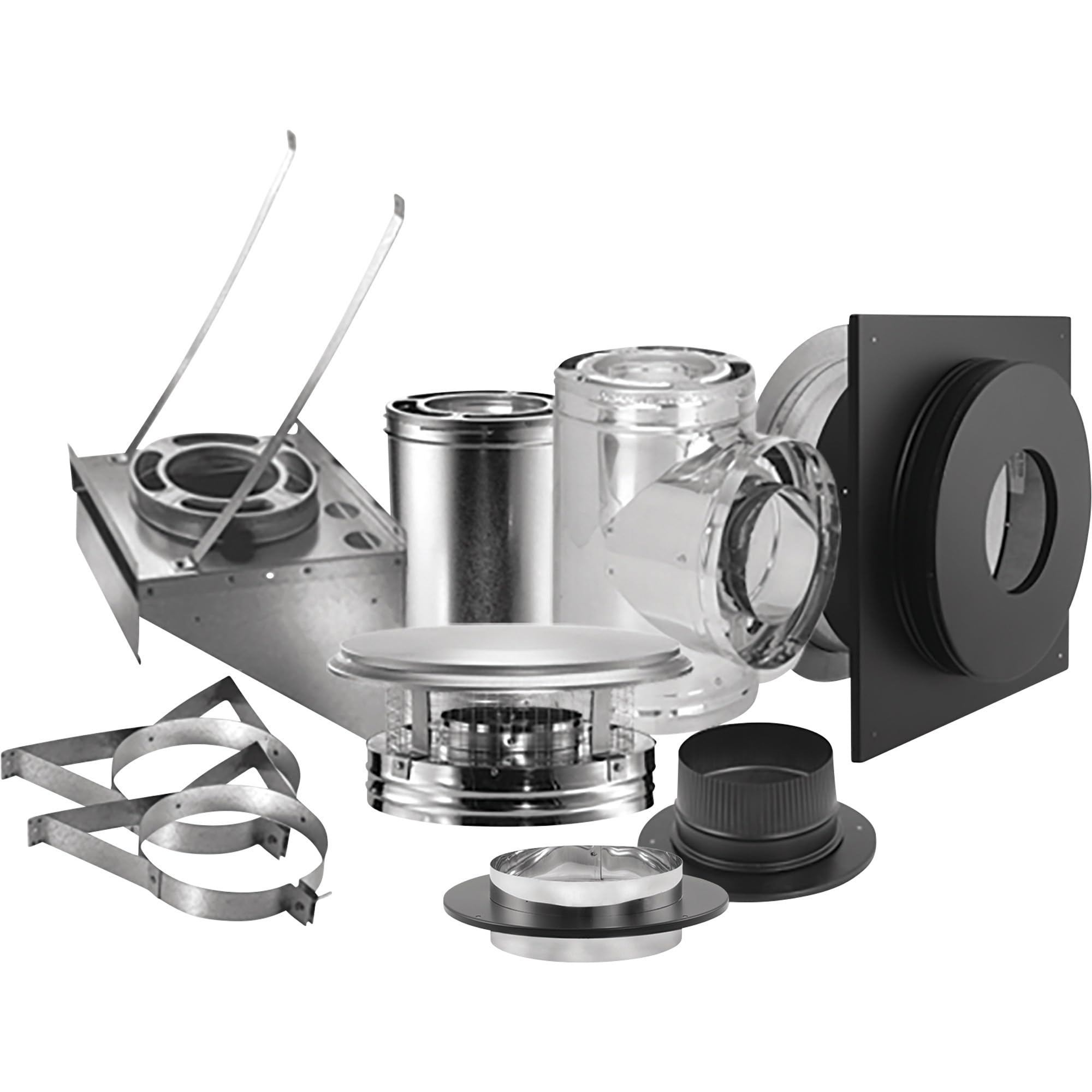
Every fitting needed to punch through a wall in one box — the shortest path from a stove to a finished chimney.
This is the kit you buy when you do not want to source a dozen separate parts. It bundles the wall thimble, one 9 inch x 6 inch horizontal chimney pipe, a tee with a clean-out cap, a tee support, two wall straps, and a chimney cap — the whole through-the-wall assembly in one order. It pairs with 6-inch DuraPlus pipe (sold separately) and supports up to 40 feet of it, so it can carry an entire vertical run up the side of a house.
The triple-wall DuraPlus body is the same insulated platform as the 24-inch DuraVent pipe above, so you get the hot internal draft and cool outer wall in one system. Quality is the strongest part of the reputation — the fittings are solid, the parts are well-made, and people who know what they are doing get clean, tight results.
Honesty matters here: mounting the tee support on the outside of the wall is a two-person job. The installation instructions also frustrate some folks, and the kit is a real project rather than a quick swap. If you are comfortable with a drill, a level, and a helper on a ladder, this saves you from a stack of separate purchases. If you are not, the value is lost on a job you cannot finish.
Best thing about it: the thimble, tee, tee support, wall straps, and cap all come together, so there is nothing to hunt down mid-project.
Where it gets hard: the tee support needs a helper, and the instructions tripped up more than a few installers.
The right buy if: you are comfortable with a real two-person installation and want one box with every fitting.
Rethink it if: you want a bolt-on job — the tee support outside the wall is not a solo task.
Know the Specs
Diameter and Length
Diameter is the single number that has to match — get it wrong and the pipe will not seat on your stove collar. Nearly everything here is 6 inch, the common wood-stove standard, so start there. Length is about reducing joints: a 48-inch section is one connection to seal, while two 24-inch sections are two connections plus the coupling between them.
Wall Type and Clearance
Single-wall pipe is thin and moves heat straight through, which is why the AllFuel HST pipe spells out an 18-inch clearance to walls, ceilings, and wood mantles. Insulated double- or triple-wall pipe holds that heat in and runs a much smaller clearance — the DuraVent pipe needs 2 inches and the AllFuel stainless uses the same 2-inch figure. Clearance is what decides whether pipe fits in your room at all.
Steel Grade
304 and 316 stainless steel are the two grades you will see. 316 is the more corrosion-resistant of the two and sits inside the liner kits here, which makes sense for a damp chimney. 304 is still a good stainless that resists rust far better than plain galvanized steel, and it appears on the rigid pipe and pipe sections.
Safety Listing
A UL 103HT listing means the pipe is rated for high-temperature wood-stove venting, and the DuraVent and AllFuel HST pipe both carry it, tested to 2,100°F for chimney fire conditions. A UL1777 listing, on the Rockford liner, is the liner standard. Check that the listing matches the job before you install anything.
Common Questions
Will a 6-inch flue pipe fit my wood stove?
What is the difference between single wall and double wall stove pipe?
Can I install a chimney liner myself?
Do I need a liner if I already have a clay chimney?
Can I cut stove pipe to length?
Can I run a stove pipe through a wall?
How much chimney pipe can one through-the-wall kit support?
Will one brand of chimney pipe connect to another brand?
Is 304 or 316 stainless steel better for a flue?
What clearance does insulated pipe need to a wall?
The Bottom Line
The winner for most people is the Rockford 316 Flexible Liner Kit, because it fixes the most common real problem — a rough or oversized masonry chimney that kills your stove’s draft — with a corrosion-resistant 316 stainless liner and quick-connect clamps you can install yourself. If you are building a run up an exterior wall instead, the Selkirk SureTemp 48-inch reaches the roofline in a single length, and the AllFuel HST 6 x 36 gives you full stainless construction for the same job. And if you just need a short, tidy indoor connector, the AllFuel HST telescoping pipe slides to fit without the cutting headache. Match the pipe type and diameter to your setup, and the fire will draw the way it should.
How we choose
We do not accept paid placement. Every pick is matched to a real buyer and a real use-case; we do not hands-on test units.
Sources
Specifications: manufacturer listings and product documentation. Review insights: verified customer reviews, as of November 2026. Pricing: not shown on this page (it changes often); check the current price via the retailer link.
As an Amazon Associate, Tactical Gear Guy earns from qualifying purchases. This does not affect which products we feature.