Specs are compiled from manufacturer listings and verified buyer reviews and can change over time — please confirm the key details on the product page before buying.
Your boots fit fine in October and turn into ice blocks by January. Wool shoe inserts fix that, and the best pick for most people is the 100% Wool Insoles, Cut to Size set — pure sheep wool you trim to fit your own boot, with 4.5+ stars behind it. Below are eight wool inserts explained in plain terms, from a hand-made German pair to a heavy felt slab that out-muscles everything else.
This guide is built by comparing the manufacturers’ published specifications and the patterns across verified customer reviews, so you get each pick’s real strengths and trade-offs instead of marketing spin.
A wool insert only works if it fits your boot’s leftover room, so check thickness before anything else. That one rule is what separates the picks below, and this breakdown of the wool shoe inserts worth your money keeps it front and center all the way through.
Top Picks


How To Choose The Best Wool Shoe Inserts
Start with the space inside your boot, not the brand name. A wool insert is a layer you add under your foot, so a thick pad in a tight boot squeezes your toes and ruins the fit you already liked. Measure what you have to give before you buy.
Thickness decides where the insert belongs
A thin wool felt around 7 mm to 8 mm slips into everyday shoes and dress flats without crowding. A fuller 13 mm to 17 mm profile is built for snow boots, work boots and anything with room to spare. The trade-off: more wool means more warmth, but also less leftover space for your toes.
Trim-to-fit versus a fixed shape
Some inserts you cut down to your own outline with scissors, which is forgiving if your size sits between two numbers. Others have a stitched edge that comes apart if you cut it, so you order the exact size instead. Know which kind you are buying before the scissors come out.
What the wool blend actually changes
Pure wool felt gives you dense, pressed warmth that holds its shape. Sheepskin fleece puts soft pile against your skin, and a cork core adds a firm middle layer for insulation. Wool also wicks moisture away, so these inserts stay dry when your feet sweat inside a boot.
Side-by-Side Comparison
| Model | Best For | Material | Thickness | Trim to Fit | Amazon |
|---|---|---|---|---|---|
| 100% Wool Insoles, Cut to Size★ Best Overall | All-round winter warmth | 100% sheep wool | — | Yes | Amazon |
| pedag Keep Warm Wool InsolesSweat Wicking Pick | Sweaty feet in cold weather | Wool with cork core | 0.25 inches | Yes | Amazon |
| riemot Genuine Sheepskin InsolesDeepest Loft | Deep snow and work boots | Australian wool fleece on sheepskin | Approx. 17 mm | No — stitched edge | Amazon |
| Alpaca Wool Warm Shoe Insoles | Softness without bulk | 85% alpaca, 15% wool | 7 mm | — | Amazon |
| The Felt Store 13mm Wool Felt | Steel-toe and snow boots | 100% wool pressed felt | 13 mm | — | Amazon |
| The Felt Store 8mm Wool Felt, 2 Pair | Two pairs, everyday shoes | High-density wool felt | 8 mm | Yes | Amazon |
| Pedag Viva Winter | Support plus warmth | Quilted wool, foam, foil | 0.16 inches | Yes | Amazon |
| PowerStep Pinnacle Wool | Arch support in the cold | Wool top over orthotic base | — | — | Amazon |
Detailed Reviews
1. 100% Wool Insoles
Our pick — 4.5+★ from 350+ verified ratings; the strongest balance of quality and price.
Pure sheep wool you size yourself with a pair of scissors, no guessing on fit.
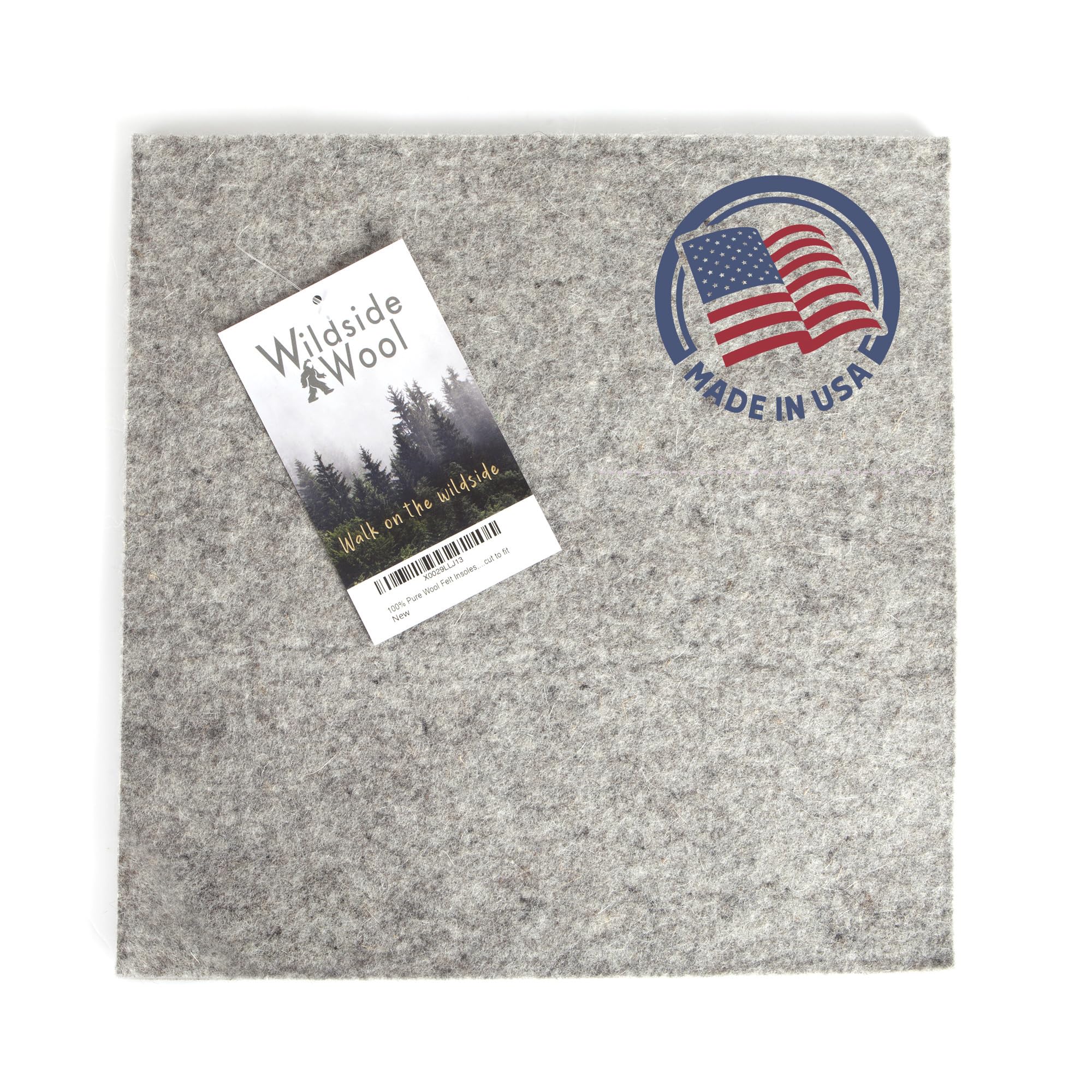
This is the safest first buy if you have never put wool under your feet before. The whole insole is 100% pure sheep wool, sourced from sheep farms in South America, and it has no synthetic content in it. That matters because wool felt is the warmth: natural fibers trap heat and let moisture pass out, so your foot does not sit in a cold puddle.
The trim-to-fit job is the real reason it wins. You line the insert up in your boot and cut it to the shape you need, so it works in a wide range of footwear for men, women and kids. Owners point to the thickness as the thing that wins them over most, with warmth right behind it — this is a properly dense pad, not a flimsy sheet. It also stays put once it is in; it does not slide and bunch under your heel all day.
Cleaning is hand wash with mild soap, then air dry — the maker names its own Outback Gold Wool Wash for keeping the softness. The catch: there is no published thickness figure in millimeters, so you cannot judge the loft from the spec sheet. If your boot is already snug, treat this as a roomy-footwear insert and trim on the generous side first.
What earns it first place
- 100% pure sheep wool with no synthetic fibers mixed in, so it insulates the way wool should
- Cut-to-size shape works across men’s, women’s and kids’ footwear instead of one fixed last
- Breathes and regulates temperature — warm in winter, not clammy in summer
- Hand washable with mild soap, so it does not become a throwaway after one season
Where it asks something of you
- No thickness in millimeters is published, so you trim and check rather than knowing up front
- Cutting it yourself means one bad trim is permanent — measure twice
- Not the pick for an already-tight dress shoe
Reach for this if: you want one honest wool insert that works in whatever boots and shoes you own, at a fair mid-range price.
Look elsewhere if: you need a factory-exact size from the start and would rather not cut anything.
2. pedag Keep Warm Wool Insoles Women US 7
Three quilted layers with a cork middle, built to stop sweat turning cold inside your boot.
Most wool inserts are a single slab of felt. This one is a sandwich — a wool top layer that wicks sweat away from your skin, a real cork core in the middle doing the insulating, and a felted wool base for durability. That is why it works for shoveling snow, skiing or high-altitude hiking rather than just standing at a bus stop.
It is genuinely light, at 1.76 ounces for the pair. Compare that with the 13 mm felt slab further down this list at 7.2 ounces and you see the difference a cork core makes — you get insulation without the weight. Quality is what people talk about most here, and warmth is a close second, which lines up with that layered build.
Now the honest part. Size is the recurring friction. The sizes run small and a share of owners find them narrow, so the maker expects you to line up your instep with the inner curve and trim the front and heel to match. It is not a heated insert and has no insulating foil, so it warms by trapping your own body heat. Trim it too small and it slides; too big and it cramps the shoe.
Washing without wrecking it: hand wash only, in cold water with a bleach-free gentle detergent, then air dry. Machine washing or drying will ruin the cork core.
Worth the extra care if: your feet sweat hard in cold weather and you want a light insert with a real cork layer under the arch.
Size up your thinking if: you wear a half size — the fit runs small, so trimming is part of the deal, not an optional extra.
3. riemot Sheepskin Insoles EU44
The thickest wool on this list at roughly 17 mm of lofted fleece — and it feels like new slippers.
If your winter boots are half a size too big, this is the fix. The overall thickness measures about 17 mm once the wool is fully lofted, versus the 7 mm profile of the alpaca pick below. That extra pile fills dead space and puts soft fleece right against your foot.
The build is three layers: wool fleece on top, genuine sheepskin leather in the middle, and a wool felt base. A stitched edge holds all of it together. That stitching is also the one rule you must respect — do not trim these, because cutting the edge lets the layers separate. Order your size and live with it.
Where it fits, it performs. Owners get these into Timberland boots and UGGs without trouble, and the quality and fit are the two things that get praised most. The fleece arrives compressed from shipping, so air it out and fluff it by hand to bring the loft back. A thin slice of owners find them much thinner than expected, which tracks with natural wool varying in pile height. Only buy if your footwear has real room inside.
The room question: this insert demands generous interior space. Check the leftover room in your boot before ordering, because it will not squeeze into a snug fit.
New-insole smell test: natural wool holds moisture, so let them air dry after a damp day instead of parking them next to a radiator.
Pick these when: your boots run roomy and you want the deepest, softest wool pile of the whole group.
Pass if: you need to trim to size — the stitched edge rules it out.
4. Alpaca Wool Insoles

Mostly alpaca rather than sheep, at 7 mm — warmth that fits where thick felt will not.
Alpaca fiber is the selling point here, and it is a real blend rather than a label: 85% alpaca and 15% wool. That combination delivers a distinctly soft, cozy feel underfoot without piling on bulk. The 7 mm thickness keeps it thin enough for shoes that will not take a heavier insert.
Ten sizes are available, which is unusual in this category and means you can usually order your actual foot size rather than cutting. The weight lands at 2.4 ounces, so it barely registers as an addition to your boot. Warmth is what people talk about most, then fit — and owners describe the thickness as neither too thick nor too thin, which is the balance thin-profile inserts aim for.
The trade-off is texture. A portion of buyers expected something more like fleece and found these closer to a standard insole in feel. Go in knowing it is a soft woven alpaca surface, not a thick pile. Durability is also only lightly commented on, so treat these as a single-season workhorse rather than a forever buy.
The size advantage: ten sizes mean you are not gambling on a trim job, which is a real edge over the cut-to-fit picks here.
Best suited to: boots and shoes that are already snug and cannot take a 13 mm or 17 mm slab.
Think twice if: you are chasing deep fleece pile — this is a smoother soft surface.
5. The Felt Store Wool Felt Insoles 13mm

A 13 mm slab of pressed wool felt that shrugs off a steel-toe work boot.
This is the heavy-duty option and the weight tells you so. The pair comes in at 7.2 ounces — versus the 1.76 ounces of the pedag pair earlier on this list. That heft comes from 13 mm of 100% wool pressed felt, which is dense enough to keep cold from creeping up through a hard rubber sole on a frozen job site.
Thickness is the thing people rave about here, with warmth next, and it makes sense: pressed felt holds its shape instead of squashing flat after a month. It is built for snow boots, work boots and steel-toe footwear with room to spare. Wool also moves moisture, so your foot stays dry when the boot gets warm walking to the truck.
The honest limit is width. The fit divides buyers, and some find them too wide for narrower boots. These are not a dress-shoe insert — they need a roomy boot to sit in. The maker also recommends airing them out occasionally rather than laundering, which is the maintenance route for dense felt.
Why the weight is the point
- 13 mm of 100% wool pressed felt delivers serious cold protection under a hard sole
- Dense felt resists flattening, so it holds its cushioning through repeated winter wear
- Naturally temperature regulating and breathable, so it does not turn hot in a heated cab
What to weigh before ordering
- On the wide side — narrow boots may not be a comfortable home for it
- 7.2 ounces adds noticeable heft compared with a thin fleece insert
- Needs a boot with generous interior room
The right call for: work boots, snow boots and steel-toe footwear that can swallow a thick felt pad.
Not the right call for: slim shoes or narrow lasts, where the extra width becomes a problem.
6. The Felt Store Wool Felt Insoles – 8mm, Adjustable, 2 Pair

Two 8 mm felt pairs — one for each boot pair you actually wear in winter.
An 8 mm insert sits in the middle of this category: thin enough for everyday shoes, thick enough to notice the cold gone. High-density wool felt gives you the same breathable warmth as the heavier felt slab above, just in a profile that fits more shoes. You get two pairs in the pack, which lets you kit out a work boot and a pair of casual shoes at once.
At 5.29 ounces for the pair, this insert keeps your boot light on your feet. The 13 mm version weighs 7.2 ounces, so you can feel where the extra material went. Buyers praise warmth most, then comfort, and Buyers report the 8 mm felt cushions long standing shifts, and one credits it with easing foot pain — a single report, not a promise.
Here is the catch to plan around. The fit divides people and the thickness gets mixed reactions, so order your size rather than assuming a trim will save it. These are 8 mm, so if you want maximum warmth go for the 13 mm slab. If you want coverage for two pairs of shoes, this is the smarter pack.
Where the value sits: two pairs in one pack makes this the pack to buy for a household with more than one pair of winter boots.
Choose this when: you want wool warmth in two different shoes without buying twice.
Skip the pack if: you only need one pair and want the thickest felt available.
7. Pedag Viva Winter Insoles

The one that adds arch support and foil insulation on top of wool warmth.
Warmth is the headline here, but the structure is what justifies the price tier. Inside you get quilted wool, a high-tech foam layer and an aluminum foil layer that reflects heat back at your foot. That foil is the difference between a wool pad that traps your own warmth and one that actively blocks cold from the ground up.
Then there is the support. A heel cushion, metatarsal arch protection and longitudinal arch alignment are built into a 0.16 inch profile — thin, but shaped. Owners single out arch support as one of the top things they get from this pair, alongside warmth and quality. If your feet ache in cold boots, this gives you warmth and support in one layer.
The practical note: there is no adhesive, so you can lift it out and move it between shoes. That also means it can shift, so try it indoors first before committing it to a tight boot. Universal fit covers US Women’s 6 through Men’s 15, and half sizes order up and trim.
Moving between shoes: no glue means you can swap these between dress flats and snow boots, which suits people who rotate footwear.
The thin-profile trade: 0.16 inches is not deep padding, so do not expect the plush feel of a 13 mm felt slab.
Go for it if: cold boots leave your arches aching and you want support and insulation from a single insert.
Hold off if: you mostly want deep cushioning — this leans on shaping, not thickness.
8. PowerStep Pinnacle Wool Orthotic Insoles
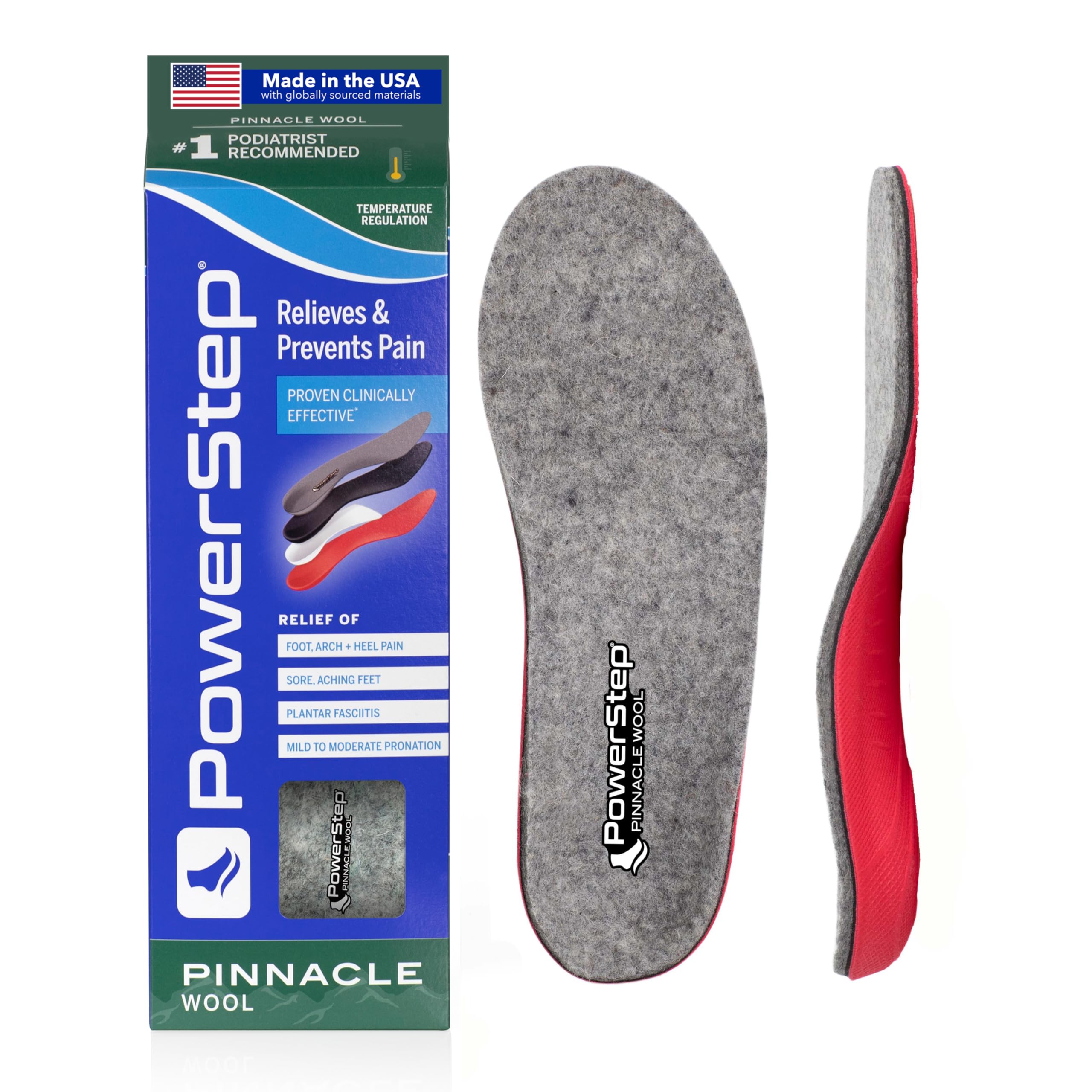
An orthotic first and a warm insole second — the arch is the whole reason it exists.
This sits at the top of the price range because it is doing two jobs. Its defining feature is a podiatrist-designed arch paired with a wool top layer for temperature control. It targets mild pronation, for people who want arch support in cold weather rather than just a warm layer.
Fit leads everything here — it is the aspect owners talk about most by a wide margin, with arch support next. That fits a product built around a fixed contoured shape rather than a flat pad. Owners run these in hiking and snowshoeing setups and report the cushioning holds up, and they stay warm without turning your boot into an oven.
The catch is the fixed shape. Orthotic-style insoles are less forgiving of a size mismatch than a flat wool felt you trim, and durability is the one area where reactions are mixed rather than unanimous. If your boot is already tight, adding a contoured orthotic may crowd your toes. PowerStep markets this as a podiatrist-recommended brand and cites its own survey claiming less foot, knee or back pain within two weeks — that is the maker’s marketing, not a guarantee.
Rules are fine: the arch shape is why this is the pick for anyone who needs support, and the wool top keeps it wearable through winter.
Worth the step up if: you already know you want an orthotic and want one with wool against your foot.
This earns its place when: support matters as much as warmth and you want both layers in one insert.
Think twice if: you just want cheap warmth — the felt picks cover that for a fraction of the outlay.
Know the Specs
Thickness in millimeters
This is the number that decides whether an insert fits. A thin 7 mm to 8 mm pad slips into everyday shoes, while a 13 mm to 17 mm profile needs a boot with room to spare. Thicker wool means more warmth and more cushioning, but it also eats the space your toes need. Always compare the insert thickness with how much room is left in your boot.
Wool type and blend
Pressed wool felt is dense and holds its shape, which suits work boots and heavy wear. Sheepskin fleece puts soft pile against your foot and traps more air. An alpaca blend runs softer and lighter. A cork or foil core adds insulation and structure in the middle. Each changes how warm the insert feels and how long it lasts.
Trim to fit versus fixed size
A trim-to-fit insert is cut with scissors to match your own foot outline, which is forgiving if you sit between sizes. A fixed-size insert with a stitched edge cannot be cut without the layers coming apart. Fixed shapes with arch support are even less forgiving of a mismatch. Know which you are buying before you start cutting.
Weight in ounces
A heavy insert adds noticeable heft to every step, but that weight usually comes from more wool or a denser build. A light insert is easier to wear all day and easier to swap between shoes. If you walk long shifts, weigh the insulation you want against how much extra mass you are willing to carry.
Common Questions
Will a thick wool insert make my boots too tight?
Can I trim any wool insole to fit my shoe?
How long do wool shoe inserts last?
Are wool inserts warm enough for steel toe work boots?
Do wool insoles make your feet sweat?
Can I wash wool insoles in a washing machine?
What is the difference between wool felt and sheepskin insoles?
Do wool inserts help with arch support?
Can I use wool inserts in summer?
Will a wool insert stop my feet sliding inside the boot?
The Bottom Line
For most people, the wool insert that does the job best is the 100% Wool Insoles, Cut to Size — pure sheep wool, trimmable into any boot, and it holds up across men’s, women’s and kids’ footwear. If your feet sweat hard in the cold, the pedag Keep Warm adds a cork core and a wicking top layer for a light, dry ride. And if your boots are already roomy and you want maximum pile, the riemot Genuine Sheepskin at roughly 17 mm is the deepest warmth on the list. Start with the leftover room inside your boot — that one measurement narrows the list faster than any spec sheet.
How we choose
We do not accept paid placement. Every pick is matched to a real buyer and a real use-case; we do not hands-on test units.
Sources
Specifications: manufacturer listings and product documentation. Review insights: verified customer reviews, as of November 2026. Pricing: not shown on this page (it changes often); check the current price via the retailer link.
As an Amazon Associate, Tactical Gear Guy earns from qualifying purchases. This does not affect which products we feature.