Specs are compiled from manufacturer listings and verified buyer reviews and can change over time — please confirm the key details on the product page before buying.
If you work outside in winter, your bib decides whether the shift is bearable. You need a shell that blocks wet snow, insulation that holds heat through a long shift, and a bib that stays put when you are kneeling, climbing, or hauling. Every pick below is a bib overall built for exactly that job.
This guide is built by comparing the manufacturers’ published specifications and the patterns across verified customer reviews, so you get each pick’s real strengths and trade-offs instead of marketing spin.
What separates a work-ready bib from a ski-only one is the shell, the seams, and how the legs close over your boots. Below you get five picks sorted by how they handle a real cold-weather shift, so the choice of the best work snow pants gets simpler fast.
Top Picks
How To Choose The Best Work Snow Pants
The wrong bib makes a cold shift worse: snow creeps in at your ankles, the shell wets through at the knees, and the straps dig in when you bend. Getting the right one means checking four things before you buy — the shell, the seams, the ankle closure, and the insulation.
Start with the shell, not the insulation
Insulation keeps your body heat in, but the shell is what keeps snow and slush out. A waterproof shell with sealed seams handles wet work; a water-resistant one tends to soak through during long shifts in heavy snow. Look for the fabric name and the seam treatment in the listing.
Denier tells you how tough the fabric is
Denier is a thickness rating for the outer fabric — a 300 denier shell is a heavier, more abrasion-resistant fabric than a light nylon. If you kneel on gravel, haul firewood, or brush past equipment, a heavier denier shell takes that wear better.
Ankle closures make or break the fit over boots
Your boots are bulky, so the leg openings need to accommodate them. Zippered ankles let you open the leg wide, slide the boot in, and zip down tight. Snap storm covers add another layer of protection over the zipper. Without a good ankle closure, snow finds its way in every time you step off a plowed surface.
Decide if you need heat built in
Heated bibs make sense if you work in extreme cold or have poor circulation in your legs. A battery-powered heating system adds weight and a charging routine. A plain insulated bib is lighter, simpler, and has nothing to recharge.
Side-by-Side Comparison
| Model | Best For | Shell Fabric | Waterproofing | Notable Feature | Amazon |
|---|---|---|---|---|---|
| Arctix Men’s Essential Insulated Bib Overalls★ Best Overall | All-around cold-weather work and snow sports | — | Insulated shell | Rubberized ankle bite | Amazon |
| Bass Creek Outfitters Insulated Snow BibsBest Value | Budget-friendly warmth and simple boot tucking | — | Weather-ready shell | Easy tuck into boots | Amazon |
| FREE SOLDIER Insulated Waterproof Snow Bibs | Tool-carrying outdoor work and hiking | 100% polyester | Waterproof and windproof | O-ring and zip pockets | Amazon |
| Pioneer Hi Vis Waterproof Bib Pants | Construction sites and road crews | 300 denier PU-coated oxford polyester | Heat-sealed seams | Startech reflective tape | Amazon |
| Heated Insulated Bib Overalls with Battery Pack | Extreme cold and long stationary shifts | Waterproof fabric | Sealed seams | 4-zone heating, 37Wh battery | Amazon |
Detailed Reviews
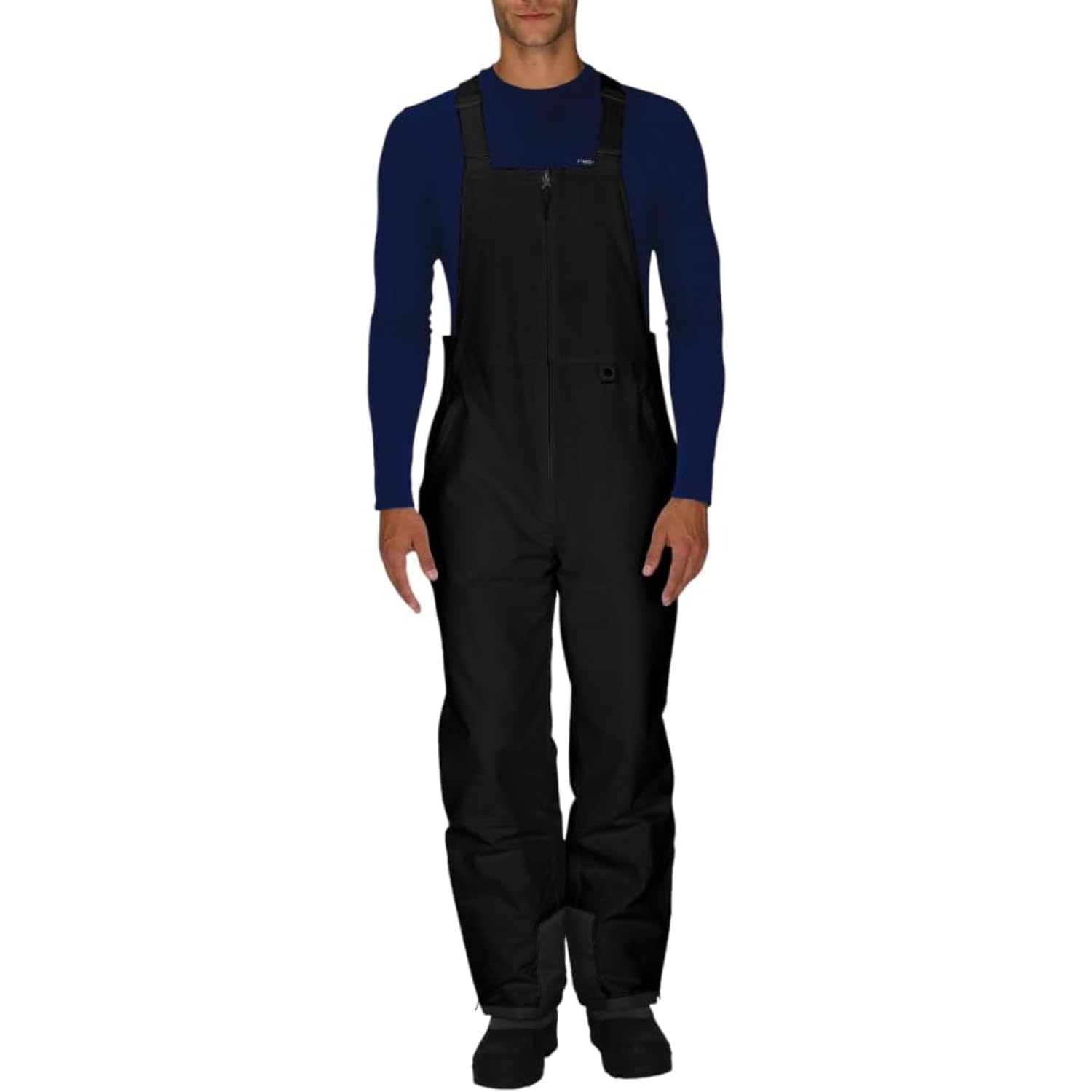
1. Arctix Men’s Essential Insulated Bib Overalls
Our pick — 4.5+★ from 34,500+ verified ratings; the strongest balance of quality and price.
The most-reviewed bib here, and owners back it up in the cold.
The Arctix Essential earns its spot as the safest bet in this roundup because it is a full-coverage insulated bib overall (a one-piece snow pant with a chest panel and shoulder straps) built for slopes and cold-weather work alike. You zip it on over your base layers and it holds warmth whether you are skiing, hiking, snowboarding, or just doing winter labor. The rubberized ankle bite (a grippy lining at the bottom hem) keeps snow from riding up your leg when you step into drifts.
Build quality is the strength owners mention most often, with fit and warmth close behind. Owners describe it as well-insulated and genuinely useful for skiing, snowboarding, and working in the snow, and it is widely seen as strong value for what you pay. On comfort over a long day, the fit and the elastic straps do the heavy lifting here.
Now the honest catch. Durability is the one field where sentiment splits: plenty of owners say the bib holds up well, while some report seams ripping over time. Sizing also draws mixed feedback, so measure against the size chart before you commit rather than trusting your jacket size. Neither issue is universal, but both are worth knowing going in.
Why it earns the top slot
- Quality is the aspect owners praise most, with fit and warmth close behind
- Rubberized ankle bite stops snow working up your leg over boots
- Insulated enough for skiing, snowboarding, and outdoor winter work
- Huge owner base makes this the lowest-risk pick of the five
What to weigh first
- Seam durability is the split point — a few buyers report rips over time
- Sizing runs mixed, so check the chart carefully before ordering
Go with it for: cold-weather work or snow sports where you want the most proven bib in the lineup.
Check the size chart: the fit is the one thing that splits opinion, so order by measurements.
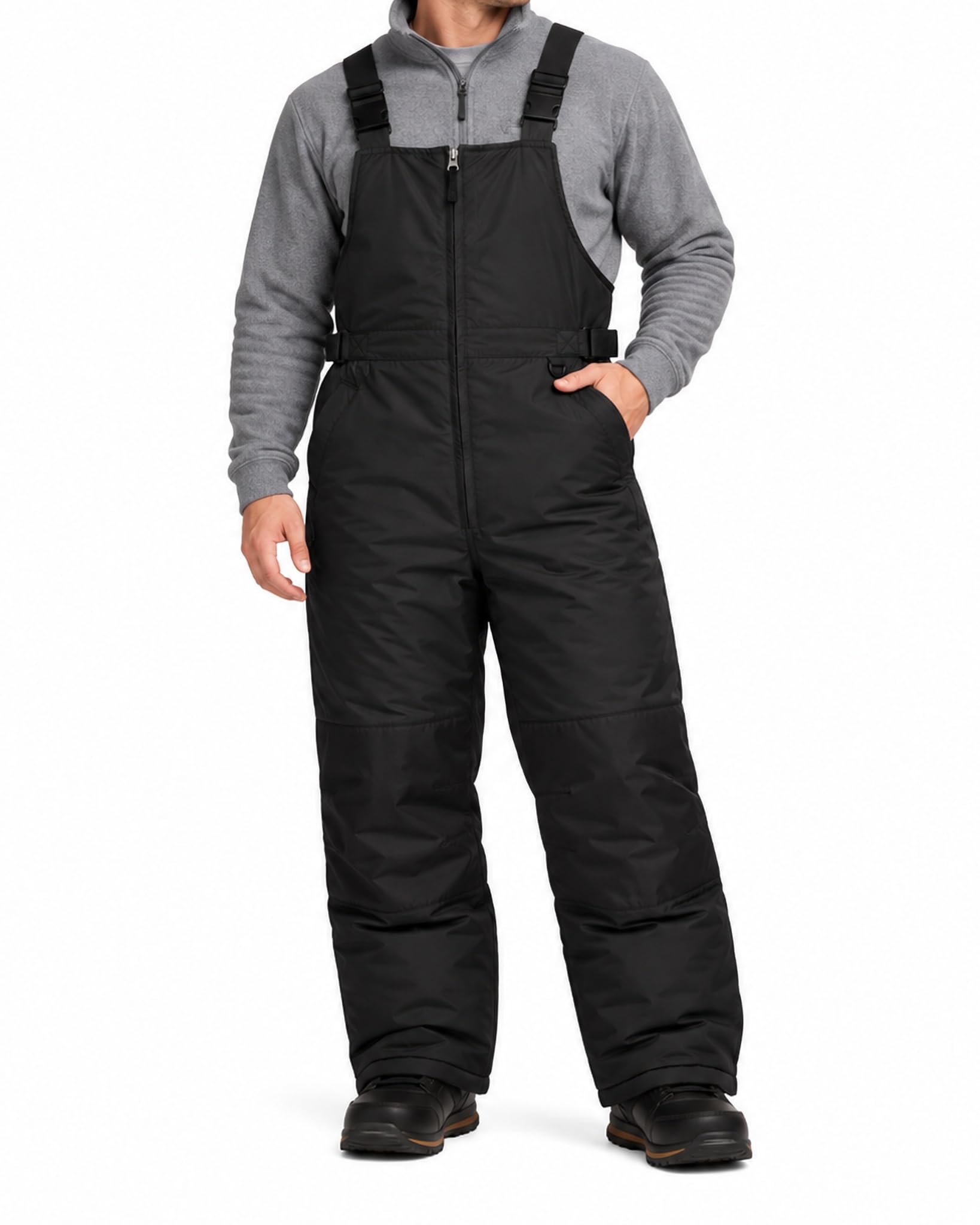
2. Bass Creek Outfitters Mens Insulated Snow Bibs
The cheapest insulated bib here, and it still keeps you warm and dry.
The Bass Creek bib is the lightest commitment in this group — an insulated snow bib and work overall that covers the core job: keeping you warm and dry in the snow. Where it shines is in plain, no-nonsense use. Owners find it warm, say it works well, and call it good value, and the wide leg openings make it simple to pull your boots on and tuck the cuffs in without a wrestling match.
Compared with the Arctix above, it is a simpler garment — fewer frills, a plainer build, and a much smaller owner base, so there is less history to lean on. What you trade for the lower outlay is polish, not warmth. For snowboarding, casual winter labor, or a kid-ready spare pair, it clears the bar.
The real thing to nail down is sizing. Fit is where feedback divides: some owners find it roomy and forgiving, others run into sizing issues and want a size up or down. Read the chart against your own measurements and you will land in the happy half of that split.
Where it fits: a reliable, budget-minded bib for occasional snow work and winter recreation — built to keep you warm and getting it done without extra bulk.
Know before you buy: sizing feedback is split, and the build is simpler than the higher-tier picks — so treat it as a warm, straightforward pair rather than a heavy-duty workhorse.
Right for: anyone who wants warm snow-work coverage and easy boot tucking on a tighter budget.
Look elsewhere if: you need a shell that stands up to daily construction-grade abuse.
3. FREE SOLDIER Men’s Insulated Waterproof Snow Bibs
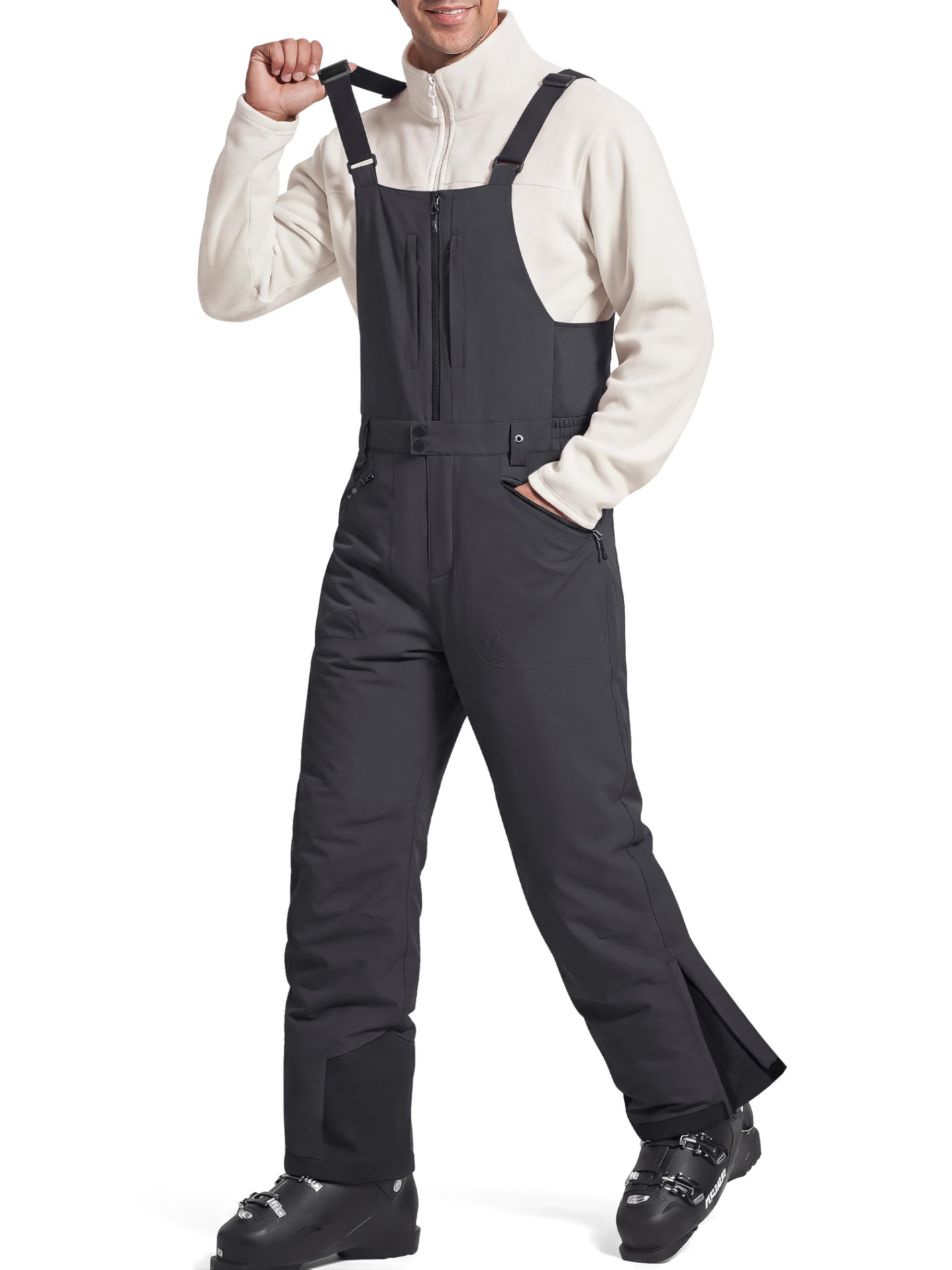
Built with an O-ring tool loop and waterproof zip pockets for carrying gear into the snow.
The FREE SOLDIER bib is the pick for hands-on outdoor work because it thinks about what you carry. An O-ring loop (a metal ring for hanging key rings and small tools) sits on the bib, plus two waterproof zippered pockets at the waist and zip pockets on both sides of the chest pocket so your stuff does not fall out or take on water. That is gear-friendly storage the ski-focused bibs simply do not offer.
The shell is 100% polyester and built waterproof and windproof, with a breathable insulated lining aimed at boosting warmth in cold weather. The body is shaped with a 3D structural design (a cut built around human ergonomics, not a flat tube) plus four folds at the knee for flexibility when you crouch and climb. An elastic waist gives you room to adjust, and the windproof zippered ankles block rain and snow from sneaking in above your boots.
The honest trade-off: the outer fabric is classed as lightweight and non-stretchable, so it prioritizes packability and freedom of movement over heavy abrasion armor. Pockets draw mixed durability feedback over time. If your work is more hiking trails and hauling gear than grinding against concrete, that is a fair trade.
The detail that sells it: an O-ring tool loop plus multiple zip pockets make this the most work-utility-focused bib of the bunch — you can hang keys and small tools instead of stuffing them in a glove.
One thing to plan around: the lightweight non-stretch shell favors movement and packability over hard-wearing armor, and pocket durability draws a few complaints.
Best for: winter trail work, hiking, and active outdoor jobs where you want a waterproof shell and real tool storage.
Not the pick if: you need a heavyweight shell for constant abrasive contact.
4. Pioneer Hi Vis Waterproof Bib Pants For Men & Women

The only hi-vis bib here, with Startech reflective tape and a 300 denier shell.
If your winter work puts you near moving equipment or traffic, visibility is the whole game, and this is the one bib in the lineup designed for it. The shell is 300 denier PU-coated oxford polyester — the heaviest, most abrasion-resistant outer fabric named in this group, which matters when you are kneeling on rough ground all day. Exclusive Startech style reflective tape runs across the garment for maximum visibility, so you stay seen in low light and short daylight.
Heat-sealed seams give it maximum water resistance, and a 180 GSM quilted polyester lining adds insulation — that GSM figure is the weight of the lining per square meter, and it means real padding, not a thin skin. Adjustable elastic suspenders with quick-release clips and an elastic waist let you move freely while keeping the bib where it belongs. Two-way leg zippers with snap storm covers seal the legs over your boots in rough weather, and there are two front slash cargo pockets plus a sealed inner chest pocket with a pen slot.
Be realistic on two fronts. The fit runs mixed — some owners say it matches the sizing description, others find it a bit snug, so size carefully. And while some owners mention staying dry and warm, others find it not completely waterproof and flag durability concerns. It is a safety-first work bib, not an alpine shell, so judge it on that footing.
The case for the Pioneer
- Startech reflective tape for maximum visibility on the job
- Heaviest shell here at 300 denier PU-coated oxford
- 180 GSM quilted lining adds real insulation
- Two-way leg zippers with snap storm covers over boots
Worth knowing up front
- Sizing feedback is mixed — some find it snug
- Water resistance and durability get split reviews
Reach for this if: you work construction or roadside and need high visibility plus a heavy abrasion-ready shell.
Size carefully: the mixed fit means you want your measurements ready before ordering.
5. Men’s Heated Insulated Bib Overalls
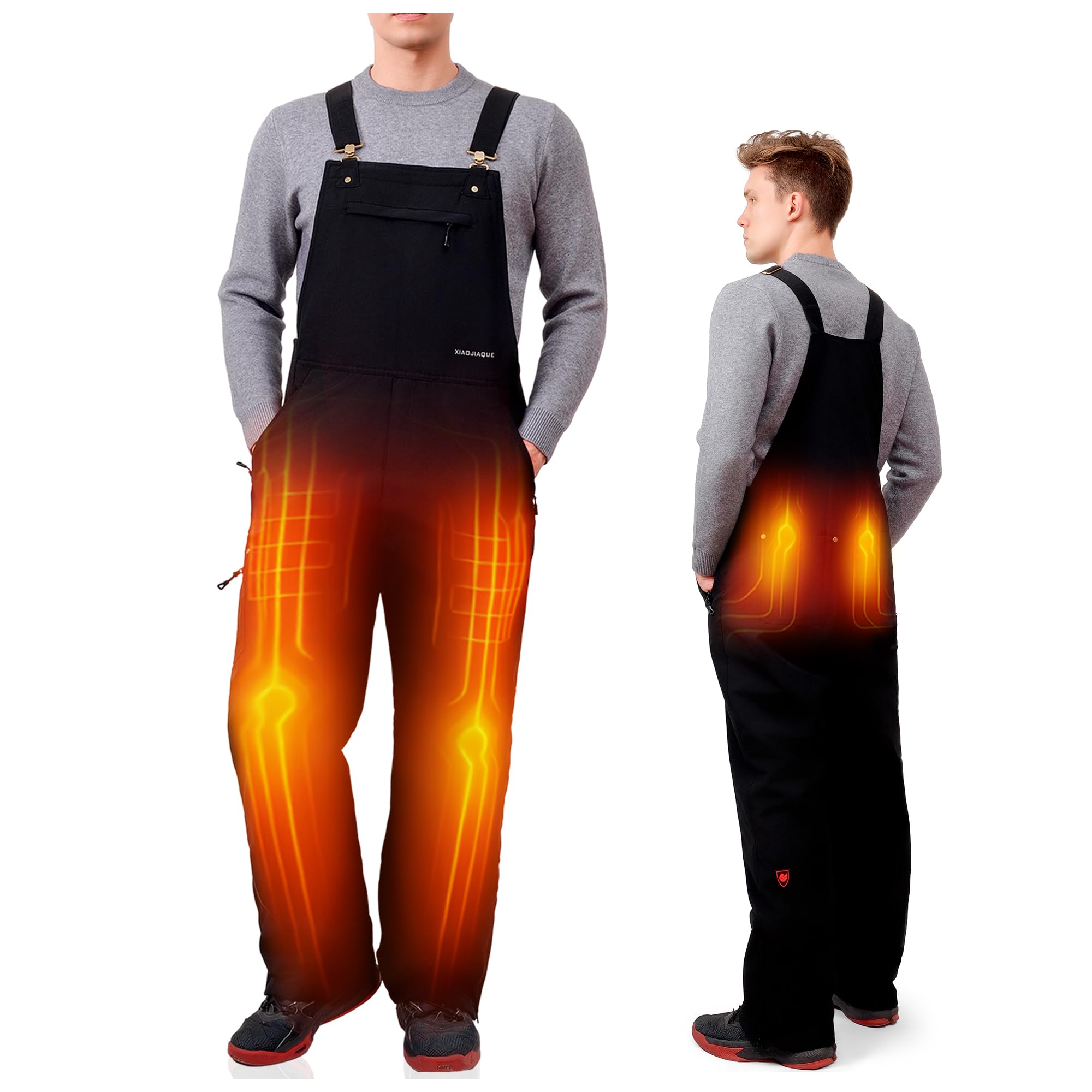
Four-zone leg and waist heat from an included 37Wh battery, under a waterproof shell.
This is the pick for the coldest work of all — the long, stationary shift in serious cold. Long, full-leg heating elements run down the legs and across the waist panels for broad coverage, and you get three adjustable heat levels driven by a 37Wh battery (watt-hours, a measure of how much energy the pack holds) that the maker lists as UL/FCC certified and REACH compliant. The battery is included, so there is nothing extra to source.
The shell itself is waterproof fabric with sealed seams, sized for snowstorms, ice work, and snow-covered trails. Adjustable suspenders, an elastic waist, and an ergonomic cut keep you mobile for farm work, construction, or time in the cold outdoors. Ankle zippers open wide to pull on over boots, and several zip pockets plus a tool loop keep gloves and gear close at hand. Owners describe it as warm enough that they barely need the heat on, and they call the fit a strong point and the buy worthwhile.
The trade-off is routine: this bib adds a battery, a charging habit, and more weight than a plain insulated pair. If your cold exposure is short or moderate, that complexity buys you little — a simpler bib covers it. For deep cold and long hours, the built-in heat is the reason to choose it.
The standout: 4-zone heating with long leg strips and waist panels, run off an included 37Wh battery with three heat levels — genuine warmth where a plain bib leaves your legs cold.
Plan for it: a battery means charging before each shift and more weight to carry, so it pays off most in deep, stationary cold rather than quick trips outdoors.
Made for: ice work, long cold shifts, hunting, and anyone who feels the cold in the legs and wants adjustable heat built in.
Stick with a plain bib if: you do not want to manage a battery and charge routine.
Know the Specs
Denier — how tough the shell is
Denier is a thickness rating for the outer fabric, and a higher number means a heavier, more abrasion-resistant shell. A 300 denier PU-coated oxford holds up to kneeling on concrete and brushing past rough surfaces far better than a light nylon, which is why job-site bibs lean on it. If your work is trail hiking rather than grinding contact, a lighter shell can make more sense for movement and packability.
GSM — how much insulation the lining carries
GSM stands for grams per square meter, a measure of how much material a lining holds. A 180 GSM quilted polyester lining is real padding rather than a thin skin, so it traps more warmth against your legs. When you compare bibs, a higher GSM lining usually means a warmer garment — but it can also mean more bulk, which matters if you need to move freely on the job.
Sealed seams versus plain seams
Water typically finds the stitches first, so sealed seams (heat-sealed or taped) are what keep meltwater and slush from wicking through over a long shift. A bib listed with heat-sealed seams is built for wetter work; a shell without that treatment is more of a dry-cold garment. This one detail tells you a lot about how the pants will hold up in heavy, wet snow.
Watt-hours on a heated bib
Watt-hours (Wh) measure how much energy a battery holds — a 37Wh pack is what the heated bib in this roundup runs on. More energy generally means longer run time at a given heat level, but the number that actually sets your shift is the heat setting you choose. A three-level system lets you dial down to stretch the battery when you need hours rather than maximum output.
Common Questions
Are work snow pants the same as ski pants?
Do I need waterproof or water-resistant for snow work?
Should I size up or down in insulated bibs?
How do heated bibs work and how long does the battery last?
Can I wear work snow pants over regular work clothes?
What are ankle zippers and snap storm covers for?
Is a bib overall better than separate work pants for winter?
What does 300 denier mean on the Pioneer bib?
Can I wear these snow bibs for hunting or ice fishing?
The Bottom Line
For most people who work in the cold, the Arctix Men’s Essential Insulated Bib Overalls is the pick — build quality, fit, and warmth all come through strong, and it is the most proven bib of the five. If your job site demands visibility and a heavy shell, grab the Pioneer Hi Vis Waterproof Bib Pants with its 300 denier fabric and reflective tape. And for deep, stationary cold where your legs never warm up, the Heated Insulated Bib Overalls bring 4-zone heat on an included battery. If you want tool storage and a waterproof shell on a mid-range budget, the FREE SOLDIER earns its place.
How we choose
We do not accept paid placement. Every pick is matched to a real buyer and a real use-case; we do not hands-on test units.
Sources
Specifications: manufacturer listings and product documentation. Review insights: verified customer reviews, as of November 2026. Pricing: not shown on this page (it changes often); check the current price via the retailer link.
As an Amazon Associate, Tactical Gear Guy earns from qualifying purchases. This does not affect which products we feature.