Specs are compiled from manufacturer listings and verified buyer reviews and can change over time — please confirm the key details on the product page before buying.
Here is the thing almost nobody tells you before you buy: most “Xbox One Bluetooth headphones” are not really Bluetooth to your console at all. The Xbox One does not stream game audio over Bluetooth, so the headsets that actually work either plug a small USB transmitter into your controller or console for a low-latency wireless link, or they pair over Bluetooth to your phone while the game audio runs on that transmitter. Once you understand that split, choosing depends on three things: a solid transmitter, a long battery rating, and a mic that holds up under pressure.
This guide is built by comparing the manufacturers’ published specifications and the patterns across verified customer reviews, so you get each pick’s real strengths and trade-offs instead of marketing spin.
Below you will find nine Xbox One-compatible headsets sorted by what they actually do well, from a 70-hour battery monster to a premium dual-wireless build, so you can match one to your setup fast. Every pick here is confirmed to work with Xbox One, and this breakdown of the bluetooth headphones for xbox one covers battery, drivers, mic quality, and real owner feedback in plain terms.
Top Picks


How To Choose The Best Bluetooth Headphones for Xbox One
The mistake most first-time buyers make is assuming “Bluetooth” means the headset talks wirelessly to the Xbox One console. It does not. Xbox One game audio travels over a USB transmitter that plugs into the controller or the console, and Bluetooth is a separate channel used for phones, tablets, and sometimes PCs. Pick a headset that handles both and you get game sound plus phone calls from one set of earcups.
Check the transmitter before anything else
A 2.4GHz transmitter (a small USB dongle that creates its own low-latency wireless link) is what makes game audio work on Xbox One. Some headsets ship with a USB-C transmitter and include a USB-A adapter so it fits older controller ports. Confirm the dongle is in the box, because a Bluetooth-only headset will not carry your game sound on this console.
Match battery hours to how you actually play
Battery ratings on these headsets run from 24 hours up to 110 hours, and that gap matters more than it sounds. A 24-hour rating covers roughly a week of two-hour evening sessions before you need the cable. A 60- or 70-hour rating stretches that into weeks. Charge time is the other half of the equation — a headset that tops up in 2 hours is far less annoying than one that sits on the cable for 3.
Weight and earcup material decide whether you finish the session
Comfort decides whether you finish a long session or take the headset off early. Look for breathable fabric or memory-foam cushions and a headband that adjusts. A lighter frame reduces pressure over a long match. Heavier premium builds often bring better materials but ask more of your neck on marathon sessions.
Side-by-Side Comparison
| Model | Best For | Battery Life | Driver Size | Bluetooth Version | Amazon |
|---|---|---|---|---|---|
| RIG 600 PRO HX Dual Wireless★ Best Overall | Balanced all-rounder | 24 hours (18 hours on 2.4GHz) | 40 millimeters | 5.3 | Amazon |
| X4 70H Wireless Gaming HeadsetLongest Battery | Longest battery life | 70 hours | 50 millimeters | 5.3 | Amazon |
| WolfLawS Wireless Gaming HeadsetBig Driver Punch | Loud, punchy game audio | 60 hours | 50 millimeters | 5 | Amazon |
| X3 60H Wireless Gaming Headset | Storage-friendly fit | 60 hours | 50 millimeters | 5 | Amazon |
| LucidSound LS500X | Glasses-friendly comfort | 50 hours wireless (70 hours Bluetooth) | 50 millimeters | 5.3 | Amazon |
| Razer Kaira HyperSpeed | Competitive positional audio | 30 hours | 50 millimeters | 5 | Amazon |
| Razer BlackShark V3 Wireless | Lowest-latency competitive play | — | 50 millimeters | 5.3 | Amazon |
| ASUS ROG Delta II Wireless | Marathon play sessions | 110 hours (2.4GHz, RGB off) | 50 millimeters | 5.3 | Amazon |
| Corsair Virtuoso MAX | Noise-cancelling immersion | 60 hours | 50 millimeters | 5.3 | Amazon |
Detailed Reviews
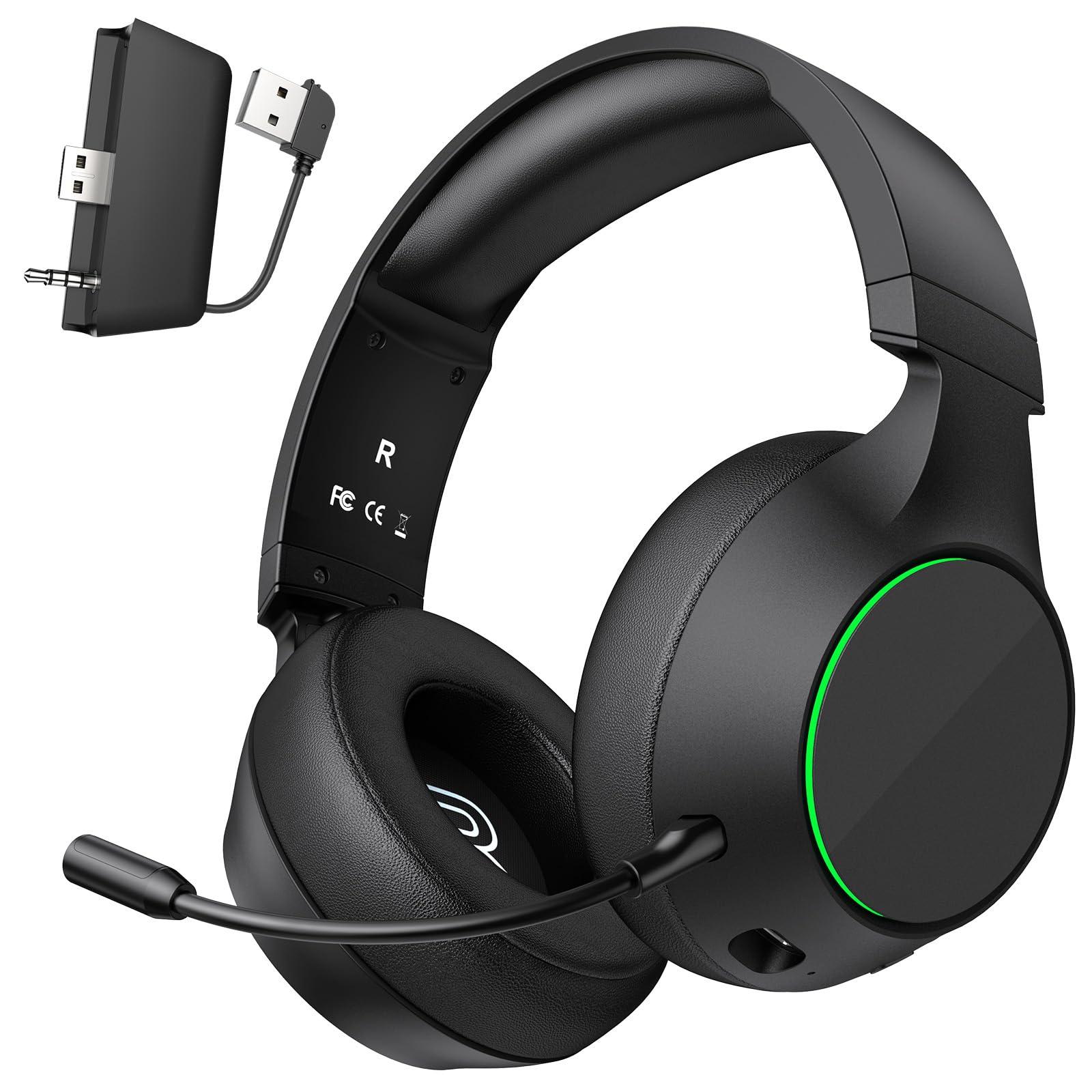
1. RIG 600 PRO HX Dual Wireless Universal Gaming Headset
Our pick — 4.0+★ from 350+ verified ratings; the strongest balance of quality and price.
Two wireless links in one headset, tuned so your game and your phone both fit.
The RIG 600 PRO HX is the pick I would hand to most Xbox One players because it solves the actual problem: it carries game audio over a 2.4GHz transmitter and carries everything else over Bluetooth 5.3. That transmitter is a small USB dongle that plugs into your controller or console and creates its own low-latency wireless link, and the box includes a USB-A adapter so it fits older ports too. Bluetooth 5.3 is simply the current short-range radio standard — it is what pairs to your phone for calls and music. The two do not run at the same time, so you choose which channel you are on.
Audio runs through 40mm dynamic drivers (the speaker cone inside each earcup) with bass-boosted tuning, and you can rebalance game audio against team chat from on-ear controls without leaving the match. The 40mm figure is the smallest driver on this list — the X4 and WolfLawS both run 50mm — but RIG tunes its chambers carefully and owners consistently single out the sound as the reason to keep it. The flip-to-hide boom mic folds into the earcup and mutes automatically when closed, which is a genuinely useful trick when someone walks into the room.
Battery is rated up to 24 hours on Bluetooth and up to 18 hours on the 2.4GHz transmitter, with a 2-hour charge time. Those are the shortest numbers here, which makes this a headset for players who plug in nightly rather than a once-a-week charger. The other honest catch is connectivity: the wireless link draws mixed feedback, and the microphone is the most criticized piece of the package. Firmware updates and keeping the dongle fully seated in the port clear up a lot of that. The Snap-Fit design adjusts across small, medium, and large fits in breathable fabric.
What holds up
- Dual 2.4GHz and Bluetooth 5.3 in one headset, with a USB-A adapter included for older ports
- Flip-to-hide boom mic mutes automatically, so no fumbling for a button mid-match
- Snap-Fit sizing covers small, medium, and large heads in breathable fabric
- On-ear game/chat balance lets you lift teammates without touching a menu
Where it asks more
- 24 hours on Bluetooth and 18 on the transmitter is the shortest rating on this list
- The wireless connection draws mixed reports and the mic is the weakest link
- 2-hour charge time means a cable is part of your nightly routine
Best for: players who want one headset to cover Xbox game audio, phone calls, and PC without juggling devices.
Think twice if: you want to charge once a week — the 18-hour transmitter rating will not get you there.
2. X4 70H Wireless Gaming Headset
Seventy hours on a charge means the cable stays in the drawer for weeks.
If you game in bursts and hate hunting for a charging cable, this is the number that decides it: the X4 is rated at 70 hours of continuous play, against the 24 hours of the RIG 600 PRO HX above. Charge time is 2.5 hours, so when it finally does run dry it is ready again by the next evening.
The speakers are 50mm dynamic drivers — larger cones than the RIG’s 40mm — paired with 3D surround sound for positional cues, and the claimed audio latency is 20 milliseconds (the delay between an event and the sound reaching your ear). Bluetooth 5.3 is on board for phone and Mac or Switch duty, while the 2.4GHz receiver handles PC, PS5, and PS4. On Xbox, the dongle plugs into an official controller only, and older Xbox One controllers need an extra Microsoft adapter that is not included. Read that line carefully if your controller is a few years old.
Owners consistently praise the sound and value together, and the air protein over-ear pads (a soft leatherette-style cushion) are built for long sessions. Connectivity draws mixed reports, and the mic is the piece that trips people up. The fix is usually procedural rather than a fault: switch to 2.4GHz mode explicitly, because the dongle cannot connect in Bluetooth mode, and confirm the receiver is fully seated. Turn off monitoring mode in the Xbox settings if you hear echo.
Where the value sits: 70 hours of rated play for a 2.5-hour charge is the best battery-to-effort ratio on this list, and the 50mm drivers deliver the surround cues that matter in shooters.
The catch worth knowing: older Xbox One controllers need an extra Microsoft adapter the box does not include, and the microphone needs the console settings dialed in before it sounds right.
Worth grabbing if: you want to charge rarely and hear footsteps clearly without spending premium money.
Look elsewhere if: your controller is an older Xbox One model and you do not want to source a separate adapter.
3. WolfLawS Wireless Gaming Headset
Fifty-millimeter drivers and sixty rated hours, in a green-trimmed shell that matches an Xbox pad.
WolfLawS takes a different route to the same destination as the X4. It also runs 50mm dynamic drivers — the exact same size — but rates the battery at 60 hours rather than 70, and charges in 2.5 hours. Against the X4’s 70-hour figure, that 60-hour rating will still cover a very long stretch of evening sessions. Bluetooth version is 5 here against the X4’s 5.3, which is a small step back in the short-range radio spec but changes nothing about how it pairs to a phone or tablet.
Sound is clearly the reason this one lands on the list. The overall read from owners is that it sounds impressive, with good soundproofing, and that the leatherette ear cups hold up across extended sessions. The 2.4GHz transmitter plugs into the official Xbox controller for the low-latency link, while the Bluetooth mode handles Mac, Switch, and mobile. The claimed latency is under 20 milliseconds. Volume, mute, and settings all live on push buttons on the earcups.
The honest weak spot is the microphone — it draws the most negative read of any piece of this headset. Value for money and connectivity both sit lukewarm rather than glowing. For chat-heavy squads that is worth weighing. For solo players chasing a big, surround-heavy sound on a modest budget, the trade is easy to accept. The adjustable headband and soft leatherette pads cover a range of head shapes without pinching.
What buyers keep coming back to: the sound stage and the soundproofing — the 50mm drivers with 3D surround do the heavy lifting, and the pads shut out the room around you.
Where it comes up short: the microphone is the weak link, and the Bluetooth version lags the X4 and RIG by a step at 5.
Reach for this if: big surround sound matters more to you than broadcast-quality chat.
Pass if: clear voice pickup is the whole point of your headset.
4. X3 60H Wireless Gaming Headset

Earcups that swivel flat, so the headset slips into a bag instead of fighting it.
Storage is the angle here. The X3 packs rotatable earcups and a foldable design, which means it lies flat in a backpack or a drawer instead of taking up a box worth of space. For a headset that travels between rooms, that shapes the daily experience more than any spec sheet number. It still runs 50mm dynamic drivers with 3D surround sound, so the positional audio that helps you place footsteps is present.
Battery is rated at 60 hours with a 2-hour charge time, and the 2.4GHz transmitter plugs into the official Xbox controller for the low-latency link — a claimed 20 milliseconds of delay, matching the X4 and WolfLawS. Bluetooth version 5 covers Mac, Switch, and mobile pairing. The directional boom mic is noise-reducing and flexible, and you can push it where your voice actually is rather than where the hinge happens to sit.
Comfort is built for the long haul, with soft memory foam cushions, breathable material, and an adjustable headband. That combination matters if you wear a headset through a whole evening rather than a quick round. The X3 wins no single spec, but the folding chassis and foam padding make it the easiest to carry and wear for hours.
The practical draw: rotatable, foldable earcups plus 60 rated hours and a 2-hour charge make this the easiest of the group to carry and keep topped up.
Set your expectation: the Bluetooth version is 5 rather than 5.3, so you are trading a spec step for the folding design.
Suits you if: the headset moves between rooms or travels, and you want it to pack flat.
Skip the switch if: your setup is one fixed desk and the neatest possible radio spec is the priority.
5. LucidSound LS500X Wireless Gaming Headset

Designed for a pressure-free fit that does not fight your glasses frames.
The LS500X is the one to consider if glasses make most gaming headsets uncomfortable by hour two. LucidSound engineered it for a secure fit without the clamping pressure that pushes frames into your temples, using moisture-wicking, breathable earcups on an ultra-lightweight frame. The 50mm custom-tuned drivers carry three EQ modes — Signature Sound, Bass Boost, and FPS — so you can push the tuning toward footstep clarity for shooters or low-end for everything else. Windows Sonic spatial sound is supported for that positional edge.
Connectivity splits cleanly between the included USB adapter (a switch on it toggles between Xbox and PC mode) and Bluetooth 5.3 for compatible devices, with a one-touch button to jump between the two. Battery is rated up to 70 hours in Bluetooth and up to 50 hours through the wireless USB adapter, with a 3-hour charge time. Voice prompts announce your battery level and which mode you are in, which saves the guesswork. It is officially licensed for Xbox Series X|S and Xbox One, and backed by a 2-year limited warranty.
On-earcup controls cover volume, game/chat balance, game audio mute, and mic monitoring — mic monitoring being the feature that lets you hear your own voice so you know how loud you sound to your squad. The flip-to-mute boom mic adds built-in noise reduction. The LS500X is the fit-first pick: nothing about it chases the biggest battery or the punchiest bass, but the glasses-friendly build and the 2-year warranty make it steady rather than flashy.
Comfort that earns its keep
- Engineered for a glasses-friendly, pressure-free fit with moisture-wicking breathable earcups
- Three EQ modes including a dedicated FPS tuning for footstep cues
- Official Xbox licensing with a 2-year limited warranty
- Voice prompts announce battery level and current mode
Where it steps back
- Up to 50 hours on the USB adapter trails the folding X3’s 60 and the X4’s 70
- 3-hour charge time is the longest here
- Neither battery nor bass tries to win the category
The fit-first choice: wearers with glasses or anyone who feels headset pressure after an hour.
Consider the X4 instead if: raw battery hours matter more to you than a gentler fit.
6. Razer Kaira HyperSpeed Wireless Gaming Headset

Titanium-coated drivers split highs, mids, and lows so a footstep cuts through the chaos.
Razer’s TriForce design is the story here. The 50mm drivers use titanium-coated diaphragms — a stiff, lightweight coating on the speaker cone — that let the headset tune highs, mids, and lows separately rather than blending them. In practice that means gunfire does not smear over the sound of someone moving in the next room. The HyperClear cardioid mic is bendable and shaped to reject noise from behind and to the sides, so your voice stays isolated when your team needs a callout.
Wireless runs through the included USB Type-C dongle on a 2.4GHz link, with a low-latency Bluetooth mode you trigger by triple-tapping and holding the SmartSwitch button when paired to a phone or tablet. Battery is rated up to 30 hours. That sits between the 24 hours of the RIG above and the 60-plus of the X4 and X3, so this is a every-few-nights charger rather than a once-a-week one. FlowKnit memory foam cushions use a breathable weave to cut sweat and heat during long sessions.
Expect a mixed picture on the wireless side: the connection works cleanly for some players and not at all for others, and the noise level draws divided opinions too. Those are fit-and-setup questions as much as product ones — the dongle wants a direct, fully seated port. Sound quality is where the Kaira earns its place, with positional detail that competitive players notice. It is officially licensed and developed alongside Xbox.
What competitive players get: titanium-coated 50mm drivers tuned for directional clarity, plus a cardioid mic that isolates your voice from room noise.
Know before you buy: 30 hours is a mid-pack rating, and the wireless link has been hit or miss for some setups — keep the dongle in a clean, fully seated port.
Pick this for: positional sound in shooters, with a mic built to keep your callouts clean.
Weigh the X4 instead if: you want 70 rated hours rather than 30.
7. Razer BlackShark V3 Wireless Xbox Gaming Headset
Ten milliseconds of delay — the tightest wireless timing on this list.
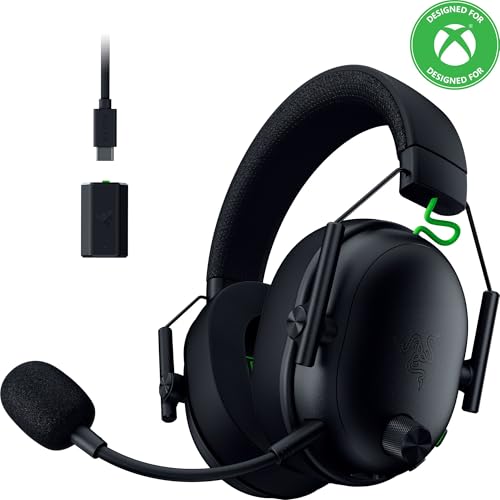
For clutch plays, latency is the whole game. The BlackShark V3 runs HyperSpeed Wireless Gen-2 at a claimed latency as low as 10 milliseconds, which is the quickest figure here. Audio lands in your ear essentially as it happens on screen, so the gap between seeing a shot and hearing it is gone. The Gen-2 TriForce Titanium 50mm drivers use a titanium-coated diaphragm tuned for positional detail, catching the audio cues that tell you where someone is before you see them.
Three modes of connectivity give it unusual flexibility: 2.4GHz wireless for console and PC, Bluetooth 5.3 for mobile, and USB-C if you want to stay plugged in. You can run 2.4GHz and Bluetooth at once and mix two devices, which is how you keep voice chat on your phone while the game runs on the console. On Xbox Series X|S and Xbox One you get a next-gen surround soundstage; on PC the surround goes up to 7.1.4. The detachable mic is a 9.9mm HyperClear Super Wideband unit, wider in frequency range than a standard boom mic for more natural voice detail.
Owners rate the build quality and sound highest, with wireless reliability close behind. The recurring caveat is the microphone, which lands in mixed territory: the hardware is capable, but it needs the right gain settings to sound its best. Customizable EQ profiles tuned with Razer’s esports roster can be built and saved straight to the headset, so your tuning travels with it.
Why competitive players rate it
- Claimed latency as low as 10ms via HyperSpeed Wireless Gen-2
- Three connection modes including simultaneous 2.4GHz and Bluetooth mixing
- Detachable 9.9mm wideband mic for more natural voice detail
- Esports-tuned EQ profiles you can save directly to the headset
Trade-offs to weigh
- The microphone draws mixed feedback and needs gain tuning
- Simultaneous mixing is a two-device trick, so plan which two
- Premium-position pricing puts it above the mid-tier picks
Built for: players whose match outcomes ride on split-second audio timing.
Not the pick if: you want a headset that sounds right with zero setup fiddling.
8. ASUS ROG Delta II Wireless Gaming Headset
One hundred and ten rated hours, then eleven more from a fifteen-minute top-up.
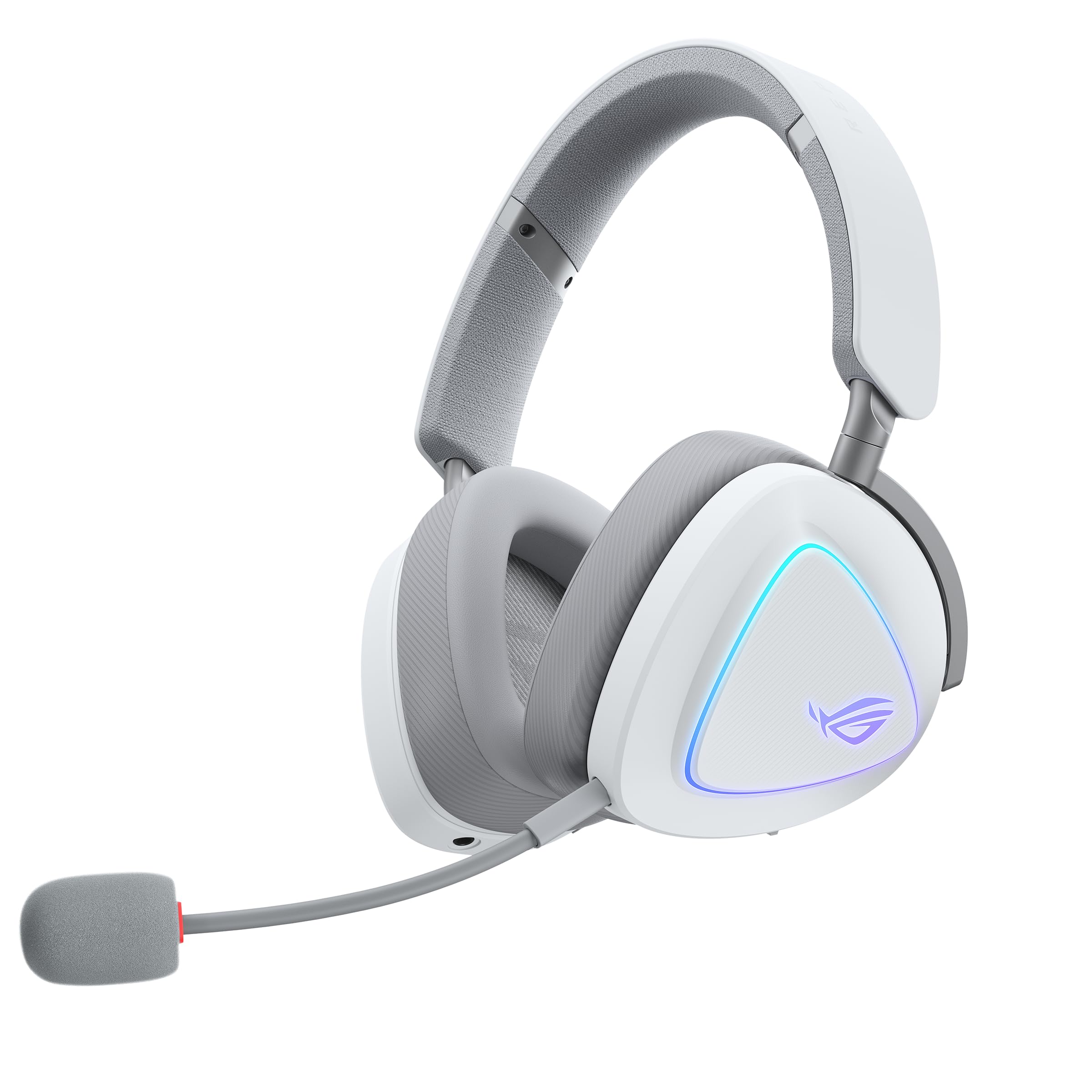
Endurance is the headline and it is not close. The Delta II is rated up to 110 hours on 2.4GHz with RGB off, and its fast charge delivers 11 hours of gameplay from just 15 minutes on the cable. Fifteen minutes on the cable returns 11 hours of play, enough for a full evening when you forgot to charge. Against the RIG’s 24-hour rating, the Delta II will run for days of sessions between top-ups.
Audio comes from 50mm titanium-plated diaphragm drivers delivering high-resolution 24-bit/96 kHz audio in 2.4GHz mode — the sample rate and bit depth describing how much detail the headset carries from the source. Connectivity is tri-mode: ROG SpeedNova 2.4GHz wireless, Bluetooth 5.3, and a 3.5mm wired option. DualFlow Audio lets you connect two devices at once over 2.4GHz and Bluetooth, so PC and phone can both be live at the same time and you switch with one earcup press. The 10mm detachable boom mic uses a super-wideband frequency range for clear voice capture.
At 318 grams the frame stays light for marathon sessions, and the ergonomic D-shaped cushions are designed for extended wear. You get two sets of cushions in the box — PU leather already fitted plus a spare set of mesh fabric — so you can swap for breathability if the leather runs warm. The mixed notes are value and fit, meaning the shape does not suit every head and it sits at the premium end of this group. Durability also draws divided feedback, which is worth knowing at this tier.
The standout spec: 110 hours on 2.4GHz plus 11 hours from a 15-minute charge makes this the headset you can genuinely forget about charging.
The honest caveat: the fit draws mixed reports and the price puts it firmly in premium territory, so head shape and budget both need a look first.
The endurance champion: players who game for hours and hate the cable more than anything.
Measure your head first if: you have had fit issues with D-shaped cushions before.
9. Corsair Virtuoso MAX Wireless Gaming Headset

Active noise cancellation and graphene drivers — the quiet-room, high-detail build.
The Virtuoso MAX takes a different stance from everything else here: it actively cancels outside noise. Active noise cancellation uses microphones that listen to the room and generate an opposing signal to mute it, so a fan, a TV, or street noise fades away and only the game is left. Combined with 50mm graphene drivers — graphene being a stiff, light material for the speaker cone — the aim is precise, detailed sound rather than sheer punch. Dolby Atmos spatial audio stages the mix in 3D on Xbox and PC.
Battery is rated at 60 hours with a fast 1.5-hour charge time, which is the quickest top-up on this list. Bluetooth 5.3 covers mobile and PC pairing, the omni-directional mic captures voice with broadcast-grade clarity in the maker’s description, and on-ear game/chat controls let you rebalance your squad against the action right on the earcup. For a headset built around immersion, that combination is coherent — silence the room, then separate the channels you want to hear.
This is the pick with the most divided reception in the group, and it deserves that honesty. Sound and comfort land mixed rather than glowing, with some players finding the audio mediocre and the fit uncomfortable over long sessions, while others rate the connectivity and battery highly. The comfort note deserves the most attention before you commit — a premium headset that pinches is a premium headset you stop wearing. If you want the quietest possible room and the fastest charge, it earns a look; if you want a safe comfortable fit, look elsewhere in this lineup.
What it does that others do not: real active noise cancellation plus Dolby Atmos staging and a 1.5-hour charge, in a 60-hour-rated package.
The part to weigh heaviest: sound and comfort feedback splits — this is the least universally loved fit on the list, so treat the return window as part of the decision.
Made for: players in noisy rooms who want the world muted and a fast top-up.
Better to look at the LS500X if: comfort over a long session is your first priority.
Know the Specs
2.4GHz Transmitter vs Bluetooth
A 2.4GHz transmitter is a small USB dongle that creates its own dedicated low-latency wireless link between the headset and the Xbox controller or console. Bluetooth is the standard short-range radio used for phones and tablets. On Xbox One, the game audio rides the transmitter and Bluetooth handles your phone. If a headset only offers Bluetooth, it will not carry console game sound — this is the single most important distinction in this category.
Driver Size in Millimeters
The driver is the speaker cone inside each earcup, measured across in millimeters. Larger drivers — 50mm in most of these picks, 40mm in the RIG — move more air, which usually means deeper bass and a wider soundstage. Size alone does not guarantee good sound; the tuning and the chamber behind the driver shape the result just as much.
Battery Hours and Charge Time
Battery ratings tell you how long the headset runs on one charge, and charge time tells you how long it sits on the cable. A 70-hour headset with a 2.5-hour charge covers weeks of play. A 24-hour headset with a 2-hour charge covers about a week. Match the pair to your habits: if you plug in nightly, short battery is fine; if you forget, go long.
Latency in Milliseconds
Latency is the delay between an in-game event and the sound reaching your ear. Lower is better for competitive play. The lowest figure in this group is a claimed 10 milliseconds on the BlackShark V3; several other picks claim 20 milliseconds. For casual play the difference is small; for split-second shooters it is why the low-latency picks cost more.
Common Questions
Do Bluetooth headphones work with Xbox One game audio?
Will these headsets work with an older Xbox One controller?
Can I take a phone call while the game is running?
How many hours of battery should I look for on a gaming headset?
Why does my headset microphone sound quiet on Xbox?
Does a bigger driver always mean better sound?
What is low latency mode on these headsets?
Are these headsets compatible with PS5 and PC as well as Xbox?
Can I wear these with glasses?
The Bottom Line
For most Xbox One players the winner is the RIG 600 PRO HX, because it delivers the two-channel trick — dedicated 2.4GHz wireless for game audio plus Bluetooth 5.3 for your phone — in one headset with a USB-A adapter in the box, and it holds a 4.0+ star rating across 350+ owners. If battery endurance is what you chase, the X4 70H runs 70 rated hours and outlasts the RIG’s 24 by a wide margin. And if you want the quietest possible room with the fastest top-up, the Corsair Virtuoso MAX is the one to reach for — just weigh the mixed comfort feedback against the active noise cancellation you gain.
How we choose
We do not accept paid placement. Every pick is matched to a real buyer and a real use-case; we do not hands-on test units.
Sources
Specifications: manufacturer listings and product documentation. Review insights: verified customer reviews, as of November 2026. Pricing: not shown on this page (it changes often); check the current price via the retailer link.
As an Amazon Associate, Tactical Gear Guy earns from qualifying purchases. This does not affect which products we feature.