Specs are compiled from manufacturer listings and verified buyer reviews and can change over time — please confirm the key details on the product page before buying.
Your knees complain first on a hard floor, and a mat that slides out mid-pose is the second problem. You do not need to spend a lot to fix either one. A decent affordable yoga mat costs roughly what two takeout lunches do. The difference between a good mat and a bad one depends on two numbers: thickness and grip.
This guide is built by comparing the manufacturers’ published specifications and the patterns across verified customer reviews, so you get each pick’s real strengths and trade-offs instead of marketing spin.
Thickness runs from a slim 6mm up to a full inch, and that single figure decides whether standing balances feel stable or wobbly. Below you will find the affordable yoga mats that get the cushioning-to-grip balance right, sorted by what each one actually does well.
Top Picks


How To Choose The Best Affordable Yoga Mats
At this price the foam is still dense TPE, NBR, or PVC, not the flimsy stuff that tears in a month. What separates a mat you keep for years from one you roll up and forget is how well its thickness and its surface match the way you actually move. Match thickness and surface texture to your practice and the strap, bag, and colour stop mattering.
Match the thickness to your practice, not the marketing
A thin mat — think 6mm, roughly a quarter inch — puts you close to the floor. That closeness is what makes standing balance poses feel planted, because your foot does not sink and wobble. A thick mat, by contrast, is a cushion: 10mm or 12mm of foam takes the sting out of kneeling lunges, seated forward folds, and long floor sessions. If your practice is mostly floor work, Pilates, or stretching on a hard floor, go thick. If you are holding warrior poses and tree pose, go moderate.
Understand the material before you buy
Most mats in this range are made from one of three foams. TPE (thermoplastic elastomer) is the light, springy foam that resists sweat and wipes clean easily — it is the most common choice here. NBR (nitrile butadiene rubber) is the softer, plusher foam used in the thickest mats; it cushions deeply but tends to be heavier. PVC is dense and grippy but the heaviest of the three and often arrives with a factory smell. Each foam suits a different job: TPE for travel, NBR for cushioning, PVC for a firm, sticky surface.
Check the length and width against your body
A standard mat is 72 inches long and 24 inches wide. That fits most people fine for yoga. But if you are tall, or you like a wide stance, or you do floor work that spreads your arms out, a 32-inch-wide mat gives you real breathing room. Width is the spec buyers overlook most often, and it is the one that decides whether your hands land on the mat or the hardwood.
Side-by-Side Comparison
| Model | Best For | Thickness | Dimensions | Material | Amazon |
|---|---|---|---|---|---|
| Fitvids 1/2-inch Thick High Density Mat★ Best Overall | Deep cushioning on hard floors | 1.2 in | 71″ x 24″ | Foam | Amazon |
| Circuit Fitness by Marcy Non-Slip MatBest for Travel | Lightweight daily travel | 0.25 in | 74″ x 24″ | TPE | Amazon |
| Gaiam Thick Yoga Mat with Cinch StrapTop Performer | Joint-friendly floor work | 0.39 in | 72″ x 24″ | NBR foam | Amazon |
| Readaeer Double Color Yoga Mat | Folding and packing flat | 0.24 in | 72″ x 24″ | TPE | Amazon |
| Gaiam Premium 6mm Print Mat | Style plus cushioning | 0.24 in | 68″ x 24″ | PVC | Amazon |
| YOTTOY Extra Thick TPE Mat | Kneeling and seated poses | 0.5 in | 72″ x 24″ | TPE | Amazon |
| KEEP Extra Wide Yoga Mat | Wide stance and tall bodies | 0.28 in | 72″ x 32″ | TPE | Amazon |
| ROMIX Pro Yoga Mat with Alignment Lines | Form guidance at home | 0.2 in | 72″ x 24″ | TPE | Amazon |
| Tone Fitness 1″ Extra Thick Mat | Maximum comfort on hard floors | 1 in | 72″ x 24″ | NBR foam | Amazon |
Detailed Reviews
1. Fitvids 1/2-inch Thick Yoga Mat
1.2 inches of high-density foam that puts real padding between your knees and a bare hardwood floor.
Here is the number that decides it: 1.2 inches of high-density foam. That is roughly five times the thickness of a standard 6mm mat, and it is the reason this Fitvids mat shows up in so many homes where the only workout space is a living room floor. Knees, hips, elbows, and your spine all get a real buffer against concrete, tile, or hardwood. It is also the crowd favourite by a wide margin — 4.5+ stars across 94,000+ ratings — which tells you the formula works for a lot of different bodies.
The surface is double-sided anti-slip, so it grips from both the floor side and the side you touch. The moisture-resistant foam wipes down with soap and water in under a minute, and the included strap lets you roll it, tie it, and carry it to class without juggling. At 71 by 24 inches, it fits most people comfortably along the full length of the body.
The honest catch is durability and grip once you start sweating. The foam that makes this mat so comfortable is also the part that can tear at the edges over heavy daily use, and a slick layer of sweat can reduce the grip you feel when dry. Treat it as a mat for cushioned floor work and gentle flows rather than hot, sweaty power sessions, and it will serve you well for a long time.
Where the Fitvids pulls ahead
- 1.2 inches of high-density foam cushions knees, hips, and spine on any hard floor.
- Double-sided anti-slip surface grips the floor and your hands at the same time.
- Moisture-resistant foam wipes clean with soap and water.
- Straps included, so it rolls, ties, and travels without extra gear.
- The crowd favourite at 4.5+ stars across 94,000+ ratings.
What to know before you buy
- The thick foam can tear at the edges under heavy daily use.
- Grip softens once sweat builds up on the surface.
- Best for cushioned floor work and gentle flows, not hot power yoga.
The right call for: anyone whose practice happens on a hard floor and whose knees have been complaining about it.
Think twice if: your sessions are sweaty and high-intensity — you want a firmer, drier-gripping surface.
2. Circuit Fitness by Marcy Yoga Mats
At 1.5 pounds, this closed-cell TPE mat adds barely any weight to a commuter bag.
Weight is the whole story here. This Marcy mat tips the scale at 1.5 pounds — and to put that in perspective, the Gaiam Premium print mat above weighs 3.1 pounds, so you are carrying roughly half the load to class. That is a serious difference when you are walking, cycling, or commuting with a bag already on your shoulder. The 74-inch length also gives taller practitioners a little extra room than the standard 72 inches.
The 6mm cushion is the balance point. It is thick enough to soften floor contact during seated work and thin enough that you still feel connected to the ground in standing poses. The closed-cell TPE foam — a smooth, sealed foam that resists absorbing sweat — is designed to shrug off moisture, which means wiping it with a damp cloth after a session keeps it fresh. Texture on both sides helps it grip hardwood, tile, and carpet.
What most buyers notice first is the thickness and the comfort level, and the size tends to come in a touch longer than expected. The grip is where you should keep expectations realistic: it holds fine on dry floors, but a very smooth surface and a lot of moisture can let it slide. If you plan on hot yoga, consider a mat towel.
Why it earns a spot: the closed-cell TPE and 1.5-pound weight make it the easiest mat in this group to carry every day without sacrificing a proper 6mm cushion.
The fair trade-off: grip on smooth, wet floors is not its strong suit, so a towel is a sensible companion for heavy-sweat sessions.
Reach for this if: you want a mat that travels light and still cushions properly.
Look elsewhere if: you never leave the house and want maximum plushness underfoot.
3. Gaiam Thick Yoga Mat
Ten millimetres of soft NBR foam that makes a kneeling lunge feel like a pillow.
If your practice is mostly floor work — kneeling lunges, seated folds, long stretches, Pilates — this is the shape you want. The 10mm NBR foam (a plush, rubbery foam that cushions deeply) is noticeably softer than a standard 6mm mat, and it puts real distance between your joints and whatever hard surface you are on. Beginners and anyone coming back from a long break will feel the difference in the first ten minutes.
There is a practical note nobody mentions up front: new foam can smell. This mat is made from low-odor NBR, but a faint factory smell is common on the first open, and it typically fades after airing out for 24 to 48 hours. Unroll it in a spare room for a day or two and you are set. The textured surface grips most dry hard floors, and the adjustable cinch strap makes it easy to haul between rooms or classes.
The trade-off is at the softer end. That plush foam cushions beautifully, but it is not as firm underfoot as a thinner mat. The surface can also slide on very smooth floors once it gets damp. It is the heavier option in this bracket at 1.27 kg. For a softer, comfort-first practice, though, this is the balance.
The cushioning case: 10mm of NBR foam is the most padded surface in this group, and the textured top helps you stay put during slow, controlled movement.
Air it first: unroll it for a day or two before your first session, and wipe the surface dry if your floor is polished.
Suits beginners and floor-work fans: if your practice is slow, seated, or kneeling, the 10mm foam is a genuine comfort upgrade.
Not for you if: you want a firm surface for fast standing sequences or a mat that weighs almost nothing.
4. Readaeer Double Color Yoga Mat

A mat that folds into a bag instead of rolling into a bundle — and that changes how you pack.
Most mats roll. This one folds, and that is the reason it exists. The foldable design means it slides flat into the included storage bag, so it packs alongside your clothes and a water bottle without eating the whole gym bag. The TPE foam is 6mm thick and weighs 0.77 kg, and it is the lightest of the 6mm options here — the Gaiam Premium mat of the same thickness weighs 3.1 pounds, and this one is under two. If you carry a mat back and forth several times a week, that gap adds up.
The surface is a proper double-sided design: a polygonal texture on the skin side for grip under hands and feet, and a wave texture on the floor side for stability. That combination holds its own on hardwood and gym floors. On the comfort front, the foam is dense and resilient, and it cushions joints without the wobble of a very thick mat. A one-year warranty rounds out the package.
Where it gives ground is sheer size and grip once damp. The 6mm foam is not a deep cushion for long kneeling sessions, and the grip is reasonable rather than tacky when things get moist. But for the commuter, the traveler, or anyone who wants a mat that disappears into a bag, that is a sensible trade.
Why the foldable shape matters
- Folds flat and packs into the included storage bag, no rolling required.
- 0.77 kg — the lightest 6mm option in this lineup.
- Double-sided texture: polygonal on the skin side, wave pattern on the floor side.
- One-year warranty included.
Where it stops short
- 6mm is not deep cushioning for long kneeling sessions.
- Grip is solid dry, less so when the surface gets damp.
Made for the bag-packer: the foldable design is the reason to pick this over a rolled mat if you commute or travel.
A poor match for: deep cushioning on a hard floor, where a thicker mat wins.
5. Gaiam Premium Yoga Mat, 6mm Thick Print Mat

A printed PVC mat with a firm, sticky surface that looks deliberate left out on the floor.
Design is the thing that keeps people coming back to this mat — 1,200 owners single it out, well above any other single attribute. The prints are varied and vivid, and the dark colourways are forgiving of everyday scuffs, which matters if the mat lives on the floor rather than in a cupboard. It is the kind of mat that makes a corner of a living room look deliberate.
Underneath the design is a 6mm PVC surface with a textured, sticky top. The dense PVC feels firmer and more grounded than the plush NBR mats, which makes it a better fit for standing poses where you want a stable base underfoot. It is also 68 inches long — slightly shorter than the standard 72 inches — so if you are tall, be aware your head or feet may reach the ends in a full stretch. The top surface is hand wash only, so plan on a wipe-down rather than a machine cycle.
Two things to know before you order. First, this mat is 6P-free PVC, meaning it is free of six specific phthalates (DEHP, DBP, BBP, DINP, DIDP and DNOP). It will arrive with a harmless odour, so air it out for two to three days as the maker advises. Second, grip is the honest weak spot: the sticky surface is fine for dry practice, but if you sweat heavily, it can feel slick. A mat towel is a smart add-on.
The look-and-feel win: 1,200 owners point to the design first, and the 6mm PVC base gives a firm, stable footing for standing work.
Accept the quirks: unroll it to air out for two to three days, and plan on a mat towel if you sweat heavily.
Pick this when: you want a mat that stays out, looks good, and feels firm underfoot.
Pass on it if: you need the longest surface available or sweat-soaked grip without a towel.
6. YOTTOY Extra Thick Yoga Mat

Twelve millimetres of TPE that makes kneeling postures feel like they are happening on a mattress.
This is the mat for anyone whose practice centres on the floor — kneeling, seated, reclining, or stretching out. At 12mm the TPE foam is genuinely deep, and it gives your knees, elbows, and hips a proper buffer from the ground. The material is certified by SGS and TUV (independent testing bodies) for environmental safety, free of heavy metals like lead and cadmium and free of ten types of phthalate. That level of documentation is uncommon at this price, and it is the reason to take this mat seriously if those concerns matter to you.
The surface is built for grip and sweat. The top side has granular protrusions that increase friction and absorb moisture, while the reverse side uses a water-ripple texture to grip whatever surface it is on. A one-piece foam process (meaning the mat is formed as a single piece rather than glued from layers) makes it waterproof and sweat-proof, and it cleans with a damp cloth, cold water, and mild detergent. Straps are included for carrying.
The honest note is that all that thickness is a two-way trade. The mat cushions deeply, but that same depth can feel less stable during fast standing sequences and balance work, and the surface can shift on a very smooth floor once it gets damp. If your practice is power yoga or lots of balancing, this may not be your mat. If it is gentle, floor-based, or restorative, it is one of the best-supported choices here.
What the YOTTOY does well
- 12mm TPE foam for deep support in kneeling and seated poses.
- SGS and TUV certified — free of heavy metals and ten phthalate types.
- Waterproof and sweat-proof, with straps for carrying.
- Granular top texture plus a water-ripple base for grip on both sides.
What the depth costs you
- The extra thickness feels less planted during standing balance work.
- Can shift on very smooth floors once damp.
Ideal for: restorative, seated, and joint-friendly floor practice where deep cushioning is the priority.
Not the one for: fast standing sequences where you want the floor to feel right under your feet.
7. KEEP Extra Wide Yoga Mat, 7mm Thick 72″ x 32″ Exercise Mat
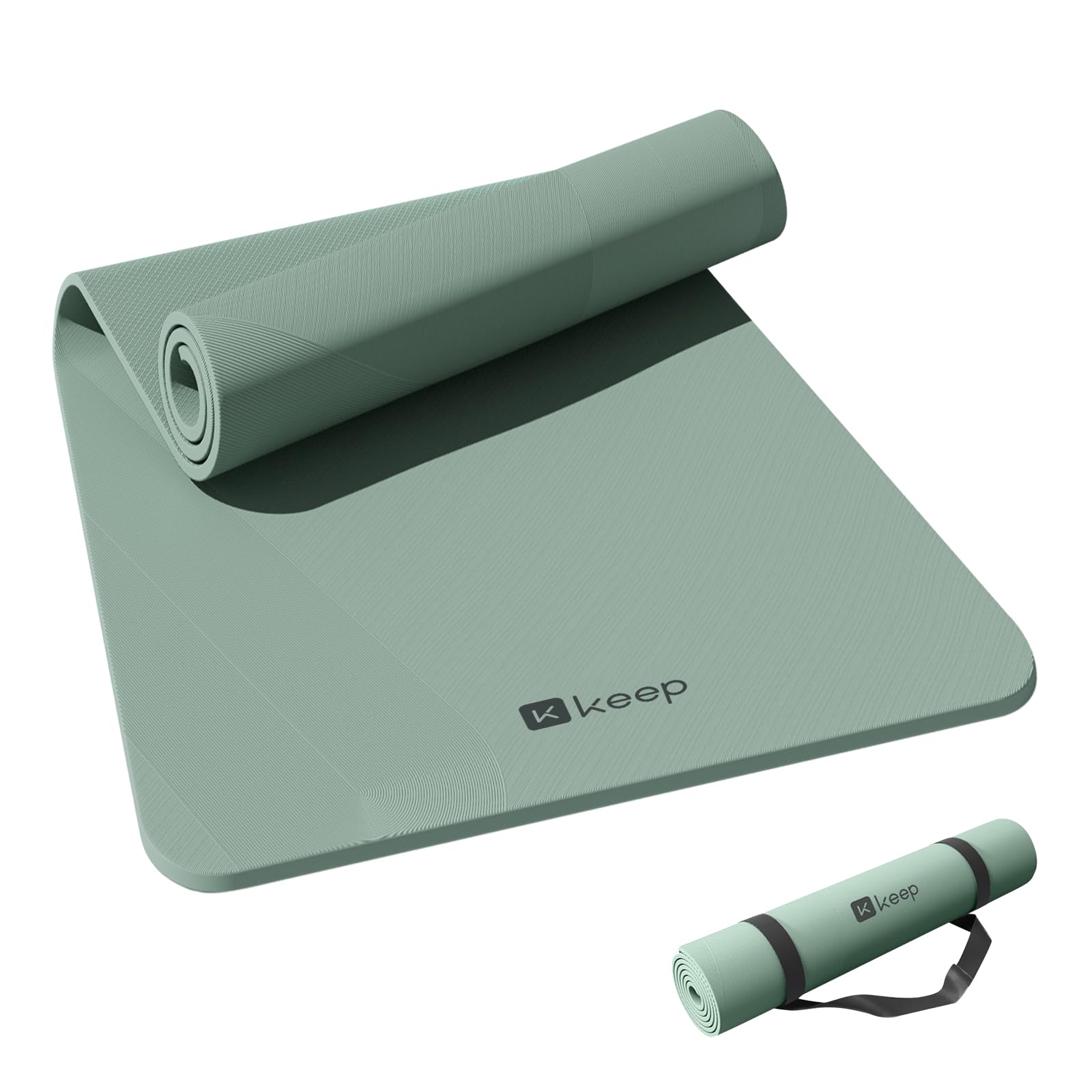
Eight extra inches of width, so your hands stay on the mat instead of the floor.
Standard mats are 24 inches wide. This one is 32. That sounds like a small detail until you try a wide-legged stretch or a floor routine that spreads your arms out — then those eight inches are the difference between a comfortable session and constantly re-adjusting. The 72-by-32-inch footprint suits taller practitioners and anyone who wants room for dynamic movement without the fear of rolling off the edge. Size is the second-most praised thing about it here, right after overall quality.
The cushioning is a middle ground. At 7mm the TPE foam sits between a slim travel mat and a plush 12mm option, which gives your knees and joints a decent buffer while keeping you close enough to the floor for balance. The top layer uses a fingerprint-like texture for precise grip, and the bottom uses a full anti-slip pattern to hold the mat in place. At 2.8 pounds it is light enough to carry, and the adjustable polyester strap is included.
What you should know is that width and grip come with a caveat. This is a TPE mat, and while it holds on dry floors, some owners find it slides on a very smooth, damp surface. The 7mm foam can also show wear over heavy daily use. Wipe it with a damp cloth in cold water rather than soaking it, and avoid long exposure to direct sunlight. For a wide, well-made mat, it is a strong choice.
The width is the story: 32 inches across gives you room for wide stances and spread-arm floor work, and the 7mm foam still cushions your knees.
The honest limit: on a polished floor with moisture, grip drops — a quick wipe and a stable surface keep it in place.
Best for: taller bodies, wider stances, and anyone tired of landing off the mat.
Skip if: a slim, compact mat that rolls small is what you are after.
8. ROMIX Pro Yoga Mat

Printed guide lines on the surface, so you can check your stance without a mirror.
Alignment lines are printed guides that show where to place your hands, feet, and hips in each pose. They are printed guides on the mat’s surface that help you line up your hands, feet, and hips during poses — useful if you are practising at home without a teacher to correct your form. They are subtle rather than loud, and they are a genuinely practical touch on a mat with a 6mm TPE surface.
The foam is a skin-friendly, latex-free TPE that feels denser and more grounded than the plush NBR mats. At 6mm it cushions enough to soften floor contact without the wobble of a very thick mat, so it holds up for both standing and floor work. The double-sided textured surface is designed to grip on both faces, and the mat comes with a carry bag. At 1 kg it is easy to roll, store, and take to a class. For a mat that helps you work on form, this is a smart pick.
What you should weigh is that this is a slimmer option than some. At 6mm it is not a deep cushion, so long kneeling sessions may feel firm under the knees. And while the texture grips well on a clean, dry floor, the surface can slip a little when it gets damp. For structured home practice and stretching, those are fair trade-offs for the alignment lines and the light weight.
The form-improvement angle: printed alignment lines help you check your stance at home, and the 6mm TPE surface stays firm and stable for both standing and floor poses.
The trade-off: not a deep cushion for long kneeling work, and grip softens when the surface gets damp.
A good fit for: home practitioners working on form who want a light mat with printed guides.
Not ideal for: deep cushioning needs or heavy-sweat sessions.
9. Tone Fitness 1″ Extra Thick Yoga Mat
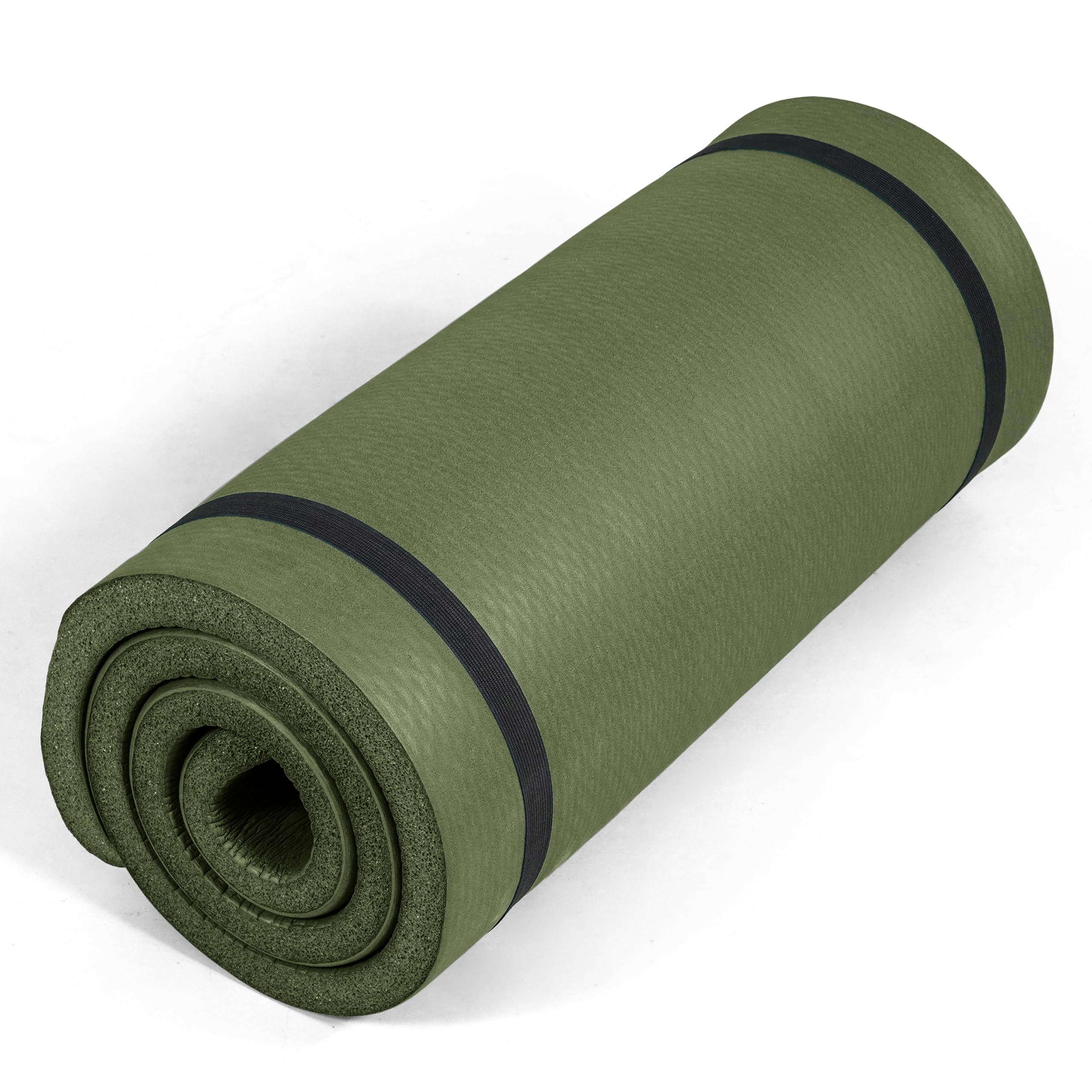
A full inch of NBR foam, for anyone who wants the floor to feel a long way away.
A full inch is a lot of foam — it is the most cushioning in this group, and that is exactly why this mat exists. If kneeling, seated folds, and long stretches leave your knees and hips aching on a hard floor, that inch of high-density NBR foam is a serious comfort upgrade. It is 72 by 24 inches, so it gives you room to stretch out, and it is latex-free for simple everyday care.
The surface has a textured finish that helps provide grip during poses and planks, and the NBR foam wipes clean after a session, so maintaining it is easy. The included strap lets you roll it up and secure it for storage, which matters when a mat this thick would otherwise take up floor space. Rolling it is simple, and that is the praised part of the experience — the mat rolls up easily and stows out of the way between sessions.
The trade-off is honest and well documented: all that foam can slide on a polished hardwood floor. Big, soft mats have a habit of creeping during movement, and this one is no exception. If your workout space is a hardwood living room, plan on a grip-friendly spot or a mat underneath. The other fact worth knowing is that at 1 inch it is not a stability mat — it is a comfort mat. If you want a firm base for balance poses, a thinner mat suits better.
Where it shines: a full inch of NBR foam gives deep cushioning for kneeling and seated work, and the latex-free surface wipes clean easily.
The one caveat: it can creep on polished hardwood, so check your flooring before you commit a corner of the room to it.
The pick for: comfort-first floor work on a non-slick surface, where cushioning beats firmness.
Look past it if: you need a firm, stable base for balance poses or your floor is polished and smooth.
Know the Specs
Thickness in millimetres and inches
Thickness is the number that decides how a mat feels underfoot. A 6mm mat (about a quarter inch) puts you close to the floor, which helps with balance and standing poses. A 10mm to 12mm mat adds a real buffer for your knees and hips, but the extra height can feel less stable during fast movement. An inch is the deepest cushion in the category, and it is best for floor-based practice rather than standing balances.
TPE, NBR, and PVC foam
These three materials behave very differently. TPE is light and springy, resists sweat, and wipes clean easily — the most common foam in this bracket. NBR is the soft, plush foam used in thick mats; it cushions deeply but tends to be heavier. PVC is dense and firm, giving a stable base but often arriving with a factory smell that fades after airing out. The material decides weight, grip, and how easy the mat is to care for.
Common Questions
How thick should a yoga mat be for someone with knee pain?
Will a 6mm mat be too thin for Pilates on a hard floor?
Why does a new yoga mat smell, and how long does it take to go away?
Is a wider mat actually better, or just bigger?
Can I use a thick yoga mat for balance poses?
How do I clean a yoga mat made from TPE or NBR foam?
What is the difference between a rolled mat and a foldable mat?
Do yoga mats come with a carrying strap?
Is latex-free the same as non-toxic?
The Bottom Line
For most people, the affordable yoga mats winner is the Fitvids 1/2-inch Thick Mat. Its 1.2 inches of high-density foam solves the problem most home practitioners actually have: a hard floor under knees and hips. It also comes with the strap, so nothing else is needed. If you travel or commute to class, grab the Circuit Fitness by Marcy Mat. It is the lightest here at 1.5 pounds and still gives a proper 6mm cushion. And for floor-based, joint-friendly practice, the YOTTOY Extra Thick Mat is the one to reach for, with 12mm of TPE that is SGS and TUV certified. Take a second look at the Fitvids: it is the highest-rated pick in this guide and the one most first-time buyers will be happy with.
How we choose
We do not accept paid placement. Every pick is matched to a real buyer and a real use-case; we do not hands-on test units.
Sources
Specifications: manufacturer listings and product documentation. Review insights: verified customer reviews, as of November 2026. Pricing: not shown on this page (it changes often); check the current price via the retailer link.
As an Amazon Associate, Tactical Gear Guy earns from qualifying purchases. This does not affect which products we feature.