Specs are compiled from manufacturer listings and verified buyer reviews and can change over time — please confirm the key details on the product page before buying.
For sit-ups, the mat that saves your tailbone is not the thickest one — it is the one thick enough to cushion your spine but firm enough to push back against. Too soft and your lower back sinks into a hole, your feet lose their anchor, and every rep becomes a wobble instead of a crunch. The right mat gives your sit bones a firm platform, keeps your feet planted at the anchored end, and stays put on hardwood instead of sliding mid-set.
This guide is built by comparing the manufacturers’ published specifications and the patterns across verified customer reviews, so you get each pick’s real strengths and trade-offs instead of marketing spin.
Below you get nine mats ranked by how well they hold a crunch, with the honest catch on each one spelled out — the tailbone-friendly platform in this lineup is the yoga mat for sit-ups from Gaiam.
Top Picks

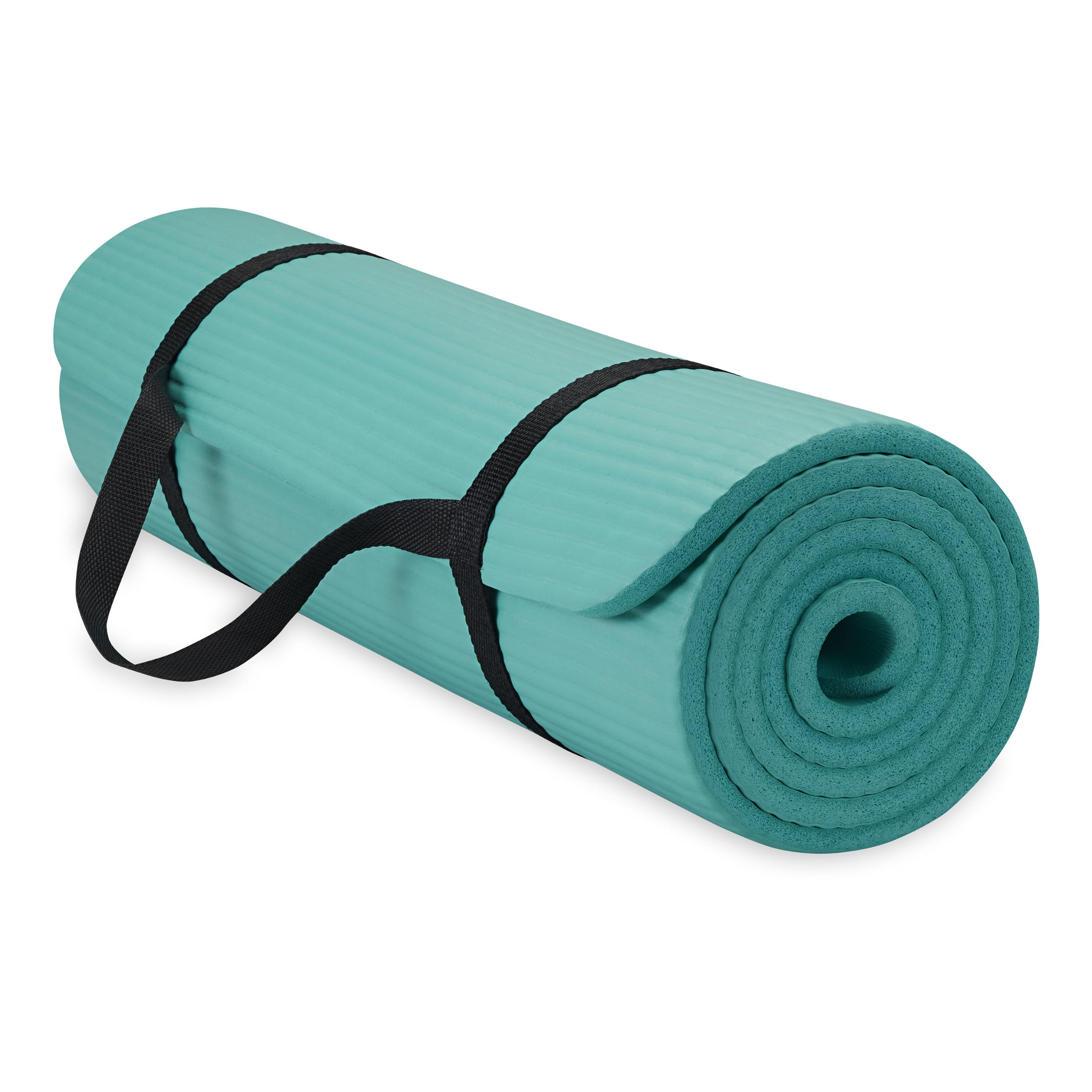

How To Choose The Best Yoga Mat for Sit-Ups
A sit-up is a leveraged movement: your feet anchor one end, your spine rolls up from the other, and your lower back presses down through the middle. A mat that cushions that lower-back contact without letting it sink is what separates a clean rep from a sagging one. Here is what actually matters.
Cushion you can push against
You want a mat that spreads pressure under your sit bones and lower spine — a 6 mm layer does that without swallowing your tailbone. A full inch of NBR foam (a soft, airy rubber foam that compresses easily) feels luxurious under knees and hips, but it gives too much for core work. On a 1-inch slab your hips drop, your lower back rounds into the soft spot, and you lose the firm push-off you need for a clean rep.
Grip where your feet anchor
Your heels press into the mat every single rep. A textured surface helps here, but material matters more. PVC tends to hold a sticky rubbery feel across sessions, while softer NBR foam and some TPE blends (a recyclable, rubber-like plastic foam) can go slick once your hands or feet get damp. If you sweat heavily, prioritize a sticky PVC surface over extra millimeters of foam.
Length and width for a full crunch
A standard 68-inch mat gives your whole spine room to lie flat and roll up. Anything shorter than 68 inches risks your head hanging off the end during the down phase. Width is quieter but still real: 24 inches is standard, while 32 to 36 inches gives you extra room to plant your feet apart or roll sideways between sets without sliding off the edge.
Weight and how you store it
If the mat lives rolled in a closet and unrolls on your bedroom floor, a 4-pound slab is no burden. If you carry it to a class or the gym, a mat near 2 pounds is easy on the shoulder, while a 3.8-pound slab starts to feel like a load. A carry strap or bag in the box saves you buying one separately for class days.
Side-by-Side Comparison
| Model | Best For | Thickness | Length x Width | Weight | Amazon |
|---|---|---|---|---|---|
| Gaiam Premium Yoga Mat, 6mm Thick Print Mat★ Best Overall | All-round sit-up mat | 6 mm | 68″ x 24″ | 3.1 lb | Amazon |
| Gaiam Thick Yoga MatJoint Cushion Pick | Joint-friendly floor work | 10 mm | 72″ x 24″ | 953 g | Amazon |
| YOTTOY Yoga Mat 1/2inchPlush Support Pick | Kneeling and sitting support | 12 mm | 72″ x 24″ | 4 lb | Amazon |
| KEEP Extra Wide Yoga Mat, 7mm Thick 72″ x 32″ Exercise Mat | Wide room to move | 7 mm | 72″ x 32″ | 2.8 lb | Amazon |
| HAPBEAR Large Yoga Mat – 72″x36″x6mm | Biggest footprint under you | 6 mm | 72″ x 36″ | 1.2 kg | Amazon |
| KEEP Extra Thick NBR Yoga Mat, 10mm, 72”x32” | Wide, cushioned floor workouts | 10 mm | 72″ x 24″ | 2 lb | Amazon |
| Tone Fitness 1″ Extra Thick Yoga Mat | Deep cushion for bad knees | 1″ | 72.05″ x 24.02″ | 3.8 lb | Amazon |
| Foldable Yoga Mat 10MM Thick SGS Certified TPE 75×26″ | Folding on the go | 10 mm | 74.8″ x 25.98″ | 2.6 lb | Amazon |
| Large Exercise Mat – 15mm/20mm/30mm Thick Yoga Mat | Maximum cushion, oversized | 15 mm | 72.05″ x 31.5″ | 2.77 kg | Amazon |
Detailed Reviews
1. Gaiam Premium Yoga Mat, 6mm Thick Print Mat
Our pick — 4.5+★ from 22,000+ verified ratings; the strongest balance of quality and price.
The 6 mm slab that gives your tailbone a firm push-back instead of a sinkhole.
This mat earns its spot because its 6 mm PVC (a dense, rubbery plastic foam that holds its shape) gives your lower back push-back instead of letting your hips sink into a soft pocket. That firmness is the difference between a crunch powered by your abs and one powered by a wobbling slab of foam. At 68″ long, you can lie flat with your head on the mat and still have room to roll up. The textured top adds traction under your heels, so your feet stay planted. At 3.1 pounds it stays put on a hard floor instead of skating away mid-set. The print and color options draw the loudest praise of anything on this mat, so it doubles as the pick if looks matter.
Grip is the trade-off. Some owners find the surface sticky from day one, while others find it slick until a bit of sweat or use warms it up. If you do high-rep sit-ups barefoot and sweat heavily, test it before you commit. The non-toxic 6P-free PVC build (free of six phthalate plasticizers listed on the label) is a genuine plus. But the maker asks you to unroll and air it out for 2 to 3 days before first use, because a harmless odor can be present out of the wrap. That initial smell is real, so plan for it.
The case for this one
- 6 mm cushioning is firm enough for core work — your lower back pushes back instead of sinking
- 68″ length fits a full spine roll-up with room to spare
- 3.1 lb heft keeps the mat planted on hard floors
- Free downloadable yoga class included with the purchase
What to expect
- Grip feedback is split — some find it slick at first
- Needs 2 to 3 days of airing out before it is odor-free
- Hand wash only, so cleaning is a wipe-down job
Best for: anyone who wants one reliable mat for sit-ups, Pilates and stretching without overthinking it.
Look elsewhere if: you need a wide mat for spreading your feet far apart — 24 inches is standard, not roomy.
2. Gaiam Thick Yoga Mat
A 10 mm foam layer that makes floor work easy on knees and hips.
NBR foam (a soft, squishy rubber foam full of tiny air pockets) is what gives this mat its plush feel. At 10 mm thick it spreads pressure across knees, hips and lower back — which is why it lands near the top for anyone whose sit-ups happen alongside stretching, Pilates or physical therapy. Thickness is the thing buyers talk about most here, and the softness runs a close second. At 72″ x 24″ you get a full-length surface, and the adjustable cinch strap lets you roll it up and carry it between rooms or to a class. Weight sits at 953 g, light enough to sling over a shoulder.
Here is the honest part: soft foam is a two-edged trade for sit-ups. That same plush surface that feels kind on your knees can let your knees and hips sit deeper than they would on a firmer mat when you squat into a crunch. Owners also split on durability and stability — some report it lasting through regular use and staying put, while others mention tearing over time and the mat sliding on smooth floors. If your core work is high-volume and you sweat, the softer foam may need more grip help than the firmer pick above.
Where it shines: knee and hip comfort on hard floors is the whole point of this mat, and 10 mm of NBR delivers it. Rotate it into a stretching or recovery slot next to your sit-up mat and you get the best of both.
The trade-off to know: the softer surface grips less reliably than the textured PVC pick when your feet get damp — grip, not thickness, is the watch-out.
Reach for this if: achy knees and hips are the reason you are shopping, and you want cushion first.
Think twice if: your sessions are sweaty and high-rep — the softer foam can go slick underfoot.
3. YOTTOY Yoga Mat 1/2inch
The 12 mm TPE giant — nearly twice the cushion of the six-millimeter pick up top.
If your sit-ups share the floor with kneeling and sitting postures, 12 mm of TPE foam is a real upgrade in comfort. That is 12 mm versus the 6 mm on the Gaiam Premium — the extra half-centimeter is what makes long kneeling stretches and cross-legged core work feel padded instead of punishing. The TPE build is SGS and TUV certified for environmental safety, free of heavy metals like lead and cadmium and of 10 harmful phthalate types. The granular protrusion top surface increases friction and soaks up sweat, and the water-ripple back grips a range of floors. It runs 72″ x 24″ at 4 pounds and ships with a carry strap.
Here is the flip side of that thickness: at 4 pounds it is heavier than the 3.1-pound Gaiam Premium, so it is less pleasant to lug around. And 12 mm of foam is soft enough that deep sit-ups can feel slightly cushioned-sinky compared with a firmer mat — great for joint comfort, less ideal for the most explosive reps. Stability feedback is mixed: some find it stays put, others say it shifts around during faster movements. A quick wipe with a damp cloth keeps the surface clean.
Why it earns its place
- 12 mm thickness is double the 6 mm premium mat for kneeling and sitting support
- SGS and TUV certified TPE, free of heavy metals and 10 phthalate types
- Textured top absorbs sweat and increases friction
- Water-ripple back grips a range of floor surfaces
The honest catch
- 4 pounds is heavier than a standard mat — a load if you carry it often
- Very thick foam can feel slightly soft under explosive reps
- Some owners find it shifts on fast movements
Pick it when: kneeling, sitting and long floor sessions are part of your routine and comfort outweighs portability.
Leave it if: you want a fast, firm surface for high-tempo core circuits.
4. KEEP Extra Wide Yoga Mat, 7mm Thick 72″ x 32″ Exercise Mat
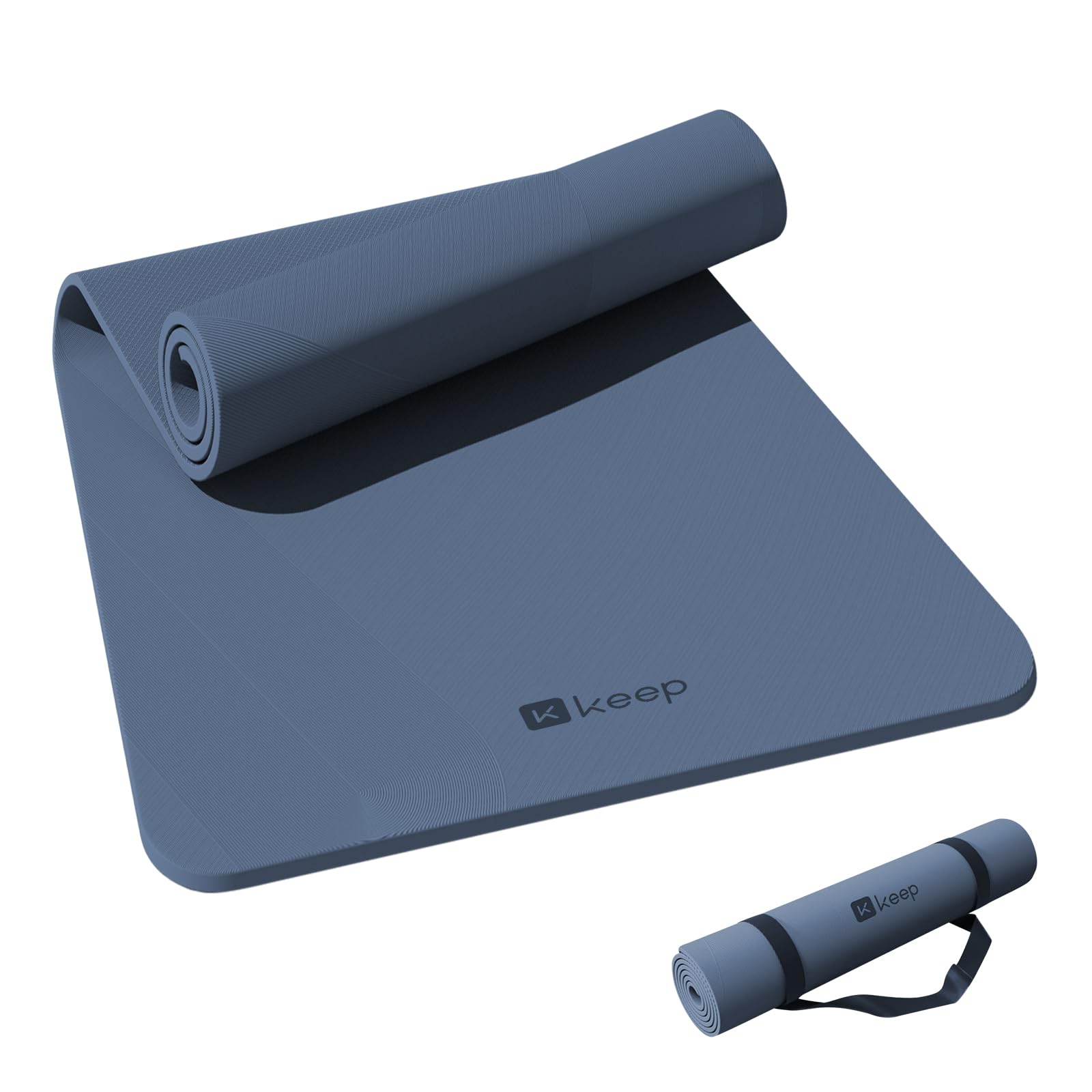
Eight extra inches of width for wide-footed anchors and rolling side to side.
This KEEP mat wins on room to move: 32 inches across versus the 24-inch standard, which gives you eight more inches of floor to plant your feet wider for sit-ups or stretch sideways without sliding off the edge. It runs 72 inches long, so a full-length spine roll-up fits comfortably. Thickness sits at 7 mm, a middle ground that cushions your lower back without the softness of the thicker NBR (a softer, foam-rubber material) mats. The TPE (a rubber-like foam free of plasticizers and formamide) build weighs just 2.86 pounds, and an adjustable polyester strap comes included.
The double-sided texture is where the story divides. The top has a fingerprint-like anti-slip pattern and the bottom a full anti-slip pattern, and while many find it sticks well on dry and wet floors, others find it too slippery for confident edge work. On durability and value the feedback also splits — a sign this mat is a solid buy that suits some body types and sweat levels better than others. For sit-ups specifically, the extra width is a genuine advantage when you brace your feet wide, and the 7 mm surface gives firm support for a controlled punch up.
The width win: 32 inches of surface is the stand-out spec here, and it pays off when your sit-up stance spreads your feet wide or when you roll between sets without wanting to reset.
One fairness note: at 2.86 pounds it is light for its size, so if your floor is slick and your session is sweaty, unroll it flat a while and check the grip before a hard circuit.
Made for: taller bodies, wide stances, and anyone who hates running out of mat at the edges.
Not the one for: you if you need wall-to-wall stickiness — grip is the one place this mat earns its mixed marks.
5. HAPBEAR Large Yoga Mat – 72″x36″x6mm

At 36 inches wide, this is the widest mat in the lineup — a full extra foot over standard.
The HAPBEAR takes the width crown: 72″ x 36″ gives you a full extra foot across over a 24-inch standard mat, and the brand puts it at 50% more width than standard. For sit-ups that means wide foot anchors, room to roll sideways, and no reaching for the edge. Thickness is 6 mm, the same firm cushion as the top pick, so your lower back gets support without sinking. The TPE material is built to stand up to frequent home workouts, and the carry bag makes transport easy. Owners praise the larger size as the reason this works better than a standard mat for full-body floor work.
Two things to know. First, the brand is clear this mat is not for use on carpet — it wants a smooth, hard surface for its double-sided grip to hold. Second, opinion on thickness is mixed: some find the 6 mm layer plenty comfortable, others feel it is almost no thickness at all, and durability draws both praise and disappointment. A light initial scent is expected, so let it air out for a day or two before regular use. For a firm, wide, sit-up-friendly surface, it delivers — just keep it off the rug.
What you get
- 36 inches wide — the widest mat reviewed, a full foot over standard
- 6 mm firm cushion suits controlled core work
- Carry bag included for easy transport
- TPE material built for regular home use
Where it stops
- Not designed for carpet — hard floor only
- Thickness feedback is mixed; some want more padding
- Short airing out helps with initial scent
Your match if: width is your bottleneck and you want a hard-floor mat with a firm, springy surface.
skip it if: your workout space is carpeted — this mat is explicitly not for use on carpet.
6. KEEP Extra Thick NBR Yoga Mat, 10mm, 72”x32”

Ten millimeters of NBR cushion on a wide 32-inch deck — and only 2 pounds to carry.
Here is a rare combo: NBR foam cushion at 10 mm thick, a wide 72″ x 32″ surface, and only 2 pounds on the scale — lighter than the 3.8-pound Tone Fitness 1-inch mat by a wide margin. That makes this an easy mat to roll up, strap and carry without sacrificing the plush feel. The dual-sided anti-slip ridges are built to grip both the floor and your hands, and the high-density NBR is designed for durability and sweat resistance — a simple wipe clean keeps it fresh. Quality is the aspect buyers come back to most, with cushioning rated right behind it.
Here is the sit-up reality. Ten millimeters of NBR (a softer, foam-rubber material) is soft, soft enough that your lower back may press deeper into the mat than it would on the 6 mm PVC pick above. Soft foam also gives a little less punch-back for controlled crunches. Stability divides opinion: some report it staying put through workouts, others find it very slippery. If your core work is slow and controlled and knee comfort matters, it is a lovely surface. If you want the firmest possible sit-up platform, look up the list.
Nice to have
- Wide 72″ x 32″ surface with 10 mm NBR cushioning
- Just 2 pounds — light for a mat this thick
- Dual-sided anti-slip ridges for floor and hands
- Wipe-clean surface resists sweat
Good to consider
- Soft 10 mm foam gives less firm push-back for crunches
- Slip feedback is mixed — some find it slick
- Not the firmest platform for explosive reps
Worth it for: slow, controlled floor sessions where a wide soft surface and light carry weight matter.
Pass for: high-tempo sit-up circuits that want a firmer, grippier surface.
7. Tone Fitness 1″ Extra Thick Yoga Mat
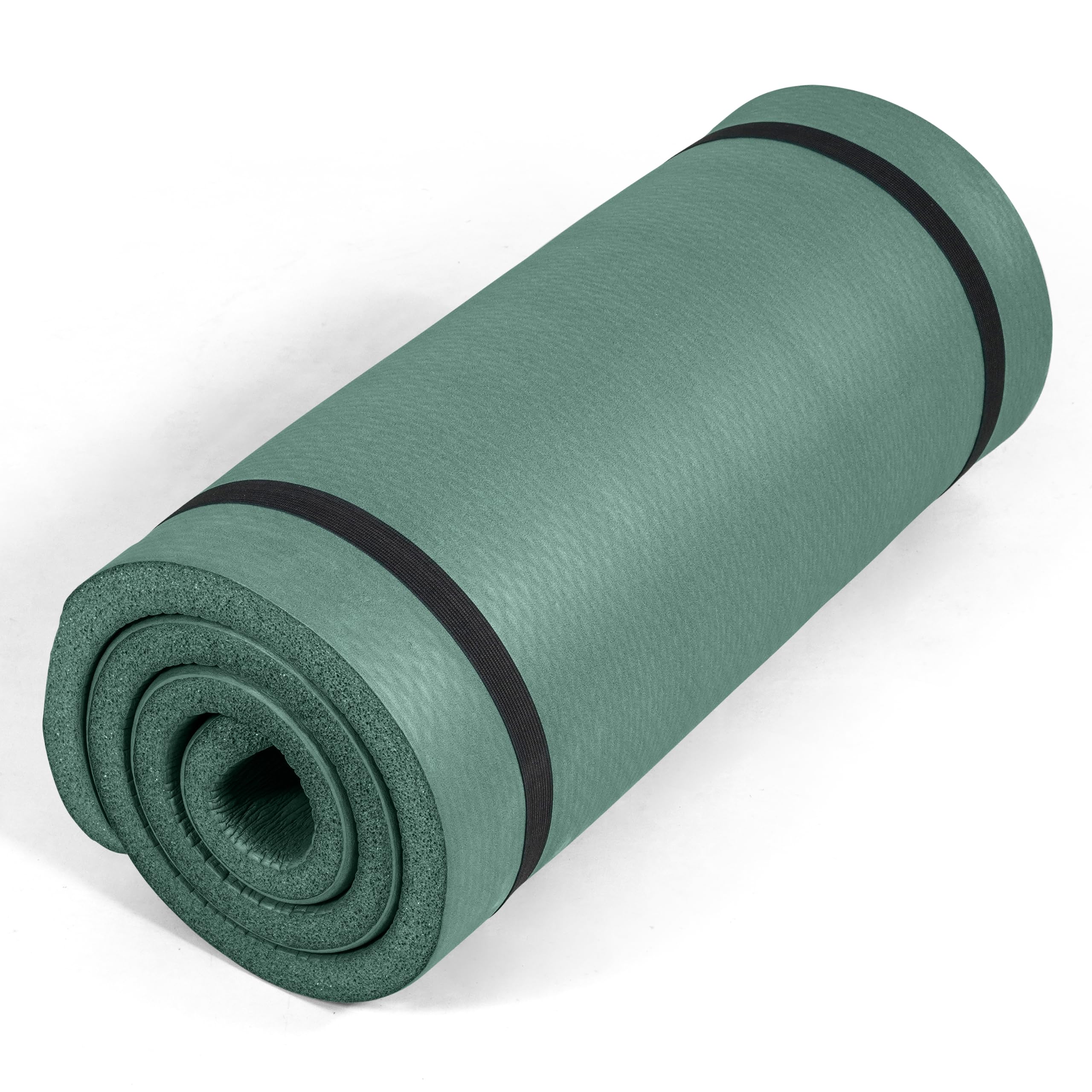
A full inch of high-density NBR for the deepest cushion in this lineup.
Nobody will call this mat thin. One inch of high-density NBR foam sits between you and a hard floor, cushioning knees, elbows, hips and back in a way the 6 mm mats simply do not. At 72.05″ x 24.02″ it is just slightly longer and wider than the 68″ x 24″ Gaiam Premium — practically the same length but six-tenths of an inch longer, which your heels will not notice. What you will notice is depth: quality ranks as the top praise point and thickness right behind it, and comfort follows close after. Latex-free NBR means easy wipe-clean care, and the included strap keeps it rolled and stowed.
For sit-ups, that inch of foam is both gift and trap. It is wonderful for protecting a bruised tailbone and sore hips during slow floor work. But an inch of foam lets your lower back sink and your feet give way, so you lose the firm anchor that makes a crunch powerful. This is a mat for easing pressure, not for chasing maximum reps. Stability is the weak spot: owners note it slides around on hardwood floors. Set it on a rug or a grippy underlayer, or expect to nudge it back into place.
Where it earns trust: one inch of NBR out-cushions every other mat here, so a tender back or a bad knee gets real protection on concrete and hardwood.
What you give up: that much foam softens your footing — the very thickness that helps your joints can let your feet slip during fast reps, so it rewards slow, deliberate movement.
Best fit: recovery-minded floor work, slow stretching and anyone who needs pressure off hips and back.
Choose another mat if: you train crisp sit-ups at speed and want a firm anchor for your feet.
8. Foldable Yoga Mat 10MM

Folds flat in seconds instead of rolling up — the grab-and-go option for sit-ups anywhere.
This folding mat earns its keep if your sit-ups happen at the gym, the park or a small apartment. The brand says it folds in 3 seconds and shrinks to one-seventh of its open size, so there is no winding and no wrestling. It measures 74.8″ long by 25.98″ wide at 10 mm thick, giving you a long, wide, padded surface. The brand also claims 30% more usable area than ordinary mats. The SGS-certified TPE (a rubber-like foam tested by the SGS safety group) is built to cushion the body and protect joints. Owners praise foldability most, with thickness next. The front has a line-pattern grip and the back a dot pattern in two-tone color, and it weighs just 2.6 pounds.
The trade-offs are about expectations, not function. Feedback on value is split — some feel it is worth it, others think it is overpriced for the quality — so it rewards a shopper who values the folding trick specifically. Ten millimeters of TPE is soft, which is lovely for kneeling but less firm for explosive crunches. And because thickness is a fold line itself, check the crease sits flat before you load weight onto it. For portability and a fast pack-up, it has no equal here.
Standout traits
- Folds in 3 seconds to one-seventh of its open size
- Long 74.8″ x 25.98″ surface with 10 mm TPE padding
- SGS-certified, double-sided line and dot grip patterns
- Just 2.6 pounds to carry
Points to weigh
- Value feedback is mixed for the quality
- Soft 10 mm foam is less firm for fast reps
- Folding creases need to sit flat under your back
Reach for this if: you move between gym, park and home and hate rolling a mat tight every time.
Think twice if: your workouts stay on one floor and you want maximum firmness over foldability.
9. Large Exercise Mat – 15mm/20mm/30mm Thick Yoga Mat

The thickest pad here at 15 mm, on a roomy 72″ x 32″ deck.
This nuveti mat pushes cushioning to the limit: 15 mm of high-density foam, offered in 15 mm, 20 mm and 30 mm variants, against the 6 mm, 8 mm or thinner mats most brands sell. On hard floors that extra depth soaks up impact and quiets vibration, so an ankle, knee or hip that protests on a thin mat gets serious relief. The surface is textured for added traction to help you hold postures, and the mat comes in a long 72.05″ x 31.5″ size so you are not short of room. Quality is the strongest point, with thickness right behind it. A free carrying bag is included.
The catch for sit-ups is the same one every thick mat faces, only more so: 15 mm of foam is soft, and soft means your feet lose their bite and your lower back sinks deeper than you want during crunches. Opinion splits between those who find it cushy and those who call it too hard. Portability draws mixed notes too: many find it difficult to roll up for storage, and at 2.77 kg it is not a travel mat. It is a great fit for stretching and joints, a lesser one for crisp, anchored sit-up sets.
Play to its strength: 15 mm of cushion on a 72.05″ x 31.5″ surface makes slow floor work and joint-friendly stretching feel protected — this is a pad for comfort, not for speed.
Know the limit: that much foam is hard to roll up and soft underfoot, so treat storage and firm footing as the price of deep cushion.
This is your mat if: deep padding on hard floors is the goal and you mostly work slowly.
Look elsewhere if: you need a mat that rolls tight for storage or stays firm under fast, hard sit-ups.
Know the Specs
Thickness (mm) and what it does for sit-ups
Thickness is measured in millimeters, and it decides how firm your tailbone feels. A 6 mm to 7 mm mat like the Gaiam Premium or KEEP Extra Wide gives a firm surface that pushes back, so your lower back does not sink and your feet stay anchored. A 10 mm to 15 mm mat such as the Gaiam Thick or nuveti adds plush cushion for knees and hips but softens your footing for fast reps. A one-inch or 12 mm mat like the Tone Fitness or YOTTOY is the softest option and works best for slow floor work.
Material: PVC, NBR and TPE
The material decides grip, weight and how the mat ages. PVC is dense and rubbery, which is why it keeps a sticky feel and holds its shape — good for a firm sit-up surface. NBR is a soft, airy foam full of tiny pockets that feels plush but compresses easily, ideal for protecting joints over firmness. TPE is a recyclable, rubber-like plastic foam that is lighter and often certified free of heavy metals and phthalates. Heavier mats tend to stay put; lighter, softer ones can slide on smooth floors.
Length and width: room for a full crunch
Length matters most for sit-ups because your whole spine needs to lie on the mat during the down phase. Around 68 to 75 inches fits a full roll-up; anything shorter risks your head hanging off. Width decides how far apart you can plant your feet and whether you can roll sideways between sets. Standard is 24 inches; 32 to 36 inches (like the HAPBEAR at 36 inches) gives you an extra foot of floor for wide anchors.
Weight and portability
A mat under 3 pounds is easy to sling over a shoulder, and a foldable model like the 2.6-pound PAIDU packs down fast. A slab near 4 pounds or a full kilogram adds heft that keeps it planted at home but makes it a chore to carry. Think about where the mat lives: a bedroom-floor mat can be heavy, while a class-and-gym mat wants to travel light.
Common Questions
Is a thick yoga mat good for sit-ups?
How wide should a yoga mat be for sit-ups with feet apart?
Will a yoga mat slide on hardwood during sit-ups?
What is the difference between PVC, NBR and TPE yoga mats?
How long should my mat be for a full sit-up?
Do I need to air out a new yoga mat before sit-ups?
Is a foldable mat as good as a rolled mat for core work?
Can I use my sit-up mat for stretching, Pilates and yoga too?
What is the best way to clean a yoga mat after sweaty sit-ups?
Does mat thickness affect how many sit-ups I can do?
The Bottom Line
For most people shopping for a yoga mat for sit-ups, the clear winner is the Gaiam Premium Yoga Mat. Its 6 mm firm cushion gives your tailbone push-back, and its 68-inch length gives your spine a full-length surface, which is exactly what a clean crunch needs. If knee and hip comfort lead your wishlist, the Gaiam Thick Yoga Mat adds 10 mm of plush NBR (a softer, foam-rubber material). And if you want the most floor space with a firm surface, the HAPBEAR hands you 36 inches of width to plant your feet wide.
How we choose
We do not accept paid placement. Every pick is matched to a real buyer and a real use-case; we do not hands-on test units.
Sources
Specifications: manufacturer listings and product documentation. Review insights: verified customer reviews, as of November 2026. Pricing: not shown on this page (it changes often); check the current price via the retailer link.
As an Amazon Associate, Tactical Gear Guy earns from qualifying purchases. This does not affect which products we feature.