Specs are compiled from manufacturer listings and verified buyer reviews and can change over time — please confirm the key details on the product page before buying.
You want a box that wood ducks will actually use, and the honest answer is that the Woodlink WD1 Cedar Duck House gets you there most reliably. It is a fully assembled cedar box with a 4 inch by 3 inch oval hole, and its 4.5+ stars across 250+ ratings make it the crowd favorite in this small market. Below you will see how it stacks up against eight other wooden boxes, from hand-built cypress units to large backyard coops for free-roaming birds.
This guide is built by comparing the manufacturers’ published specifications and the patterns across verified customer reviews, so you get each pick’s real strengths and trade-offs instead of marketing spin.
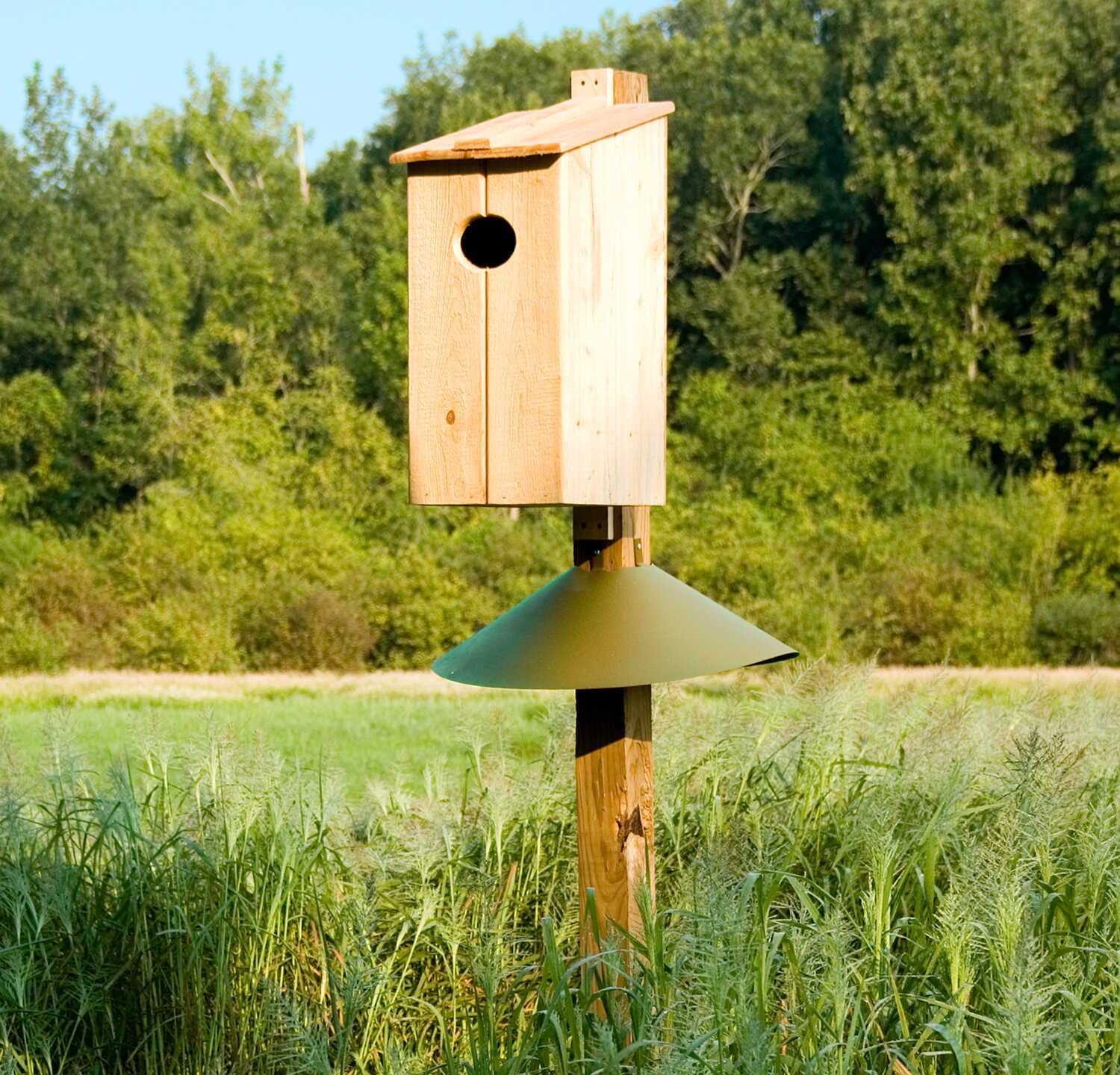
A wood duck does not nest in a tree trunk the way most people picture it. She looks for a dry cavity above or near water, and the box you mount is simply a stand-in for that hole. That single fact explains why entry-hole size, drainage, and duckling exit matter more than how the box looks on your shed wall. A hen only lays in a box she trusts, so check the entry opening and internal ladder before you hang anything.
Top Picks


How To Choose The Best Wooden Duck Box
The first decision you make is not about brand or finish. It is about which duck you are housing. A box hung over a pond for wood ducks is a completely different product from a floor coop your backyard Pekins sleep in at night. Mixing up the two is the most common mistake buyers make.
Mounting style decides the whole purchase
Wood ducks and hooded mergansers nest in cavities, so their boxes go up a tree or a post near water. That means pre-drilled holes, a hanger at the back, or predrilled screw points matter more than floor space. A coop with a ramp and a removable base suits free-roaming poultry on the ground instead. Pick the mounting method first, then compare the rest.
The entry hole is a filter, not a detail
A 4 inch oval entry hole is the size designed for wood ducks, and several boxes here use it. A round hole or an oversized opening lets larger birds in to take over the cavity or raid eggs. The oval shape gives a hen a wider entry than a round hole of similar height while still keeping predators out.
Drainage and clean-out access
Nesting material gets damp, and a wet cavity is a failed cavity. Floor drains or drainage holes let water escape, and a front or side door that opens lets you swap out the shavings at the end of the season. If you plan to check the box each spring, an openable panel is not a luxury.
Wood species and how it ages
Cedar and cypress resist moisture naturally, which is why many boxes for wetland use are built from them. Pine tends to need a penetrating oil finish to hold up. Fir is lighter still. None of that helps if the joinery is loose, so look at construction alongside the species.
Side-by-Side Comparison
| Model | Best For | Material | Entry Hole | Weight | Amazon |
|---|---|---|---|---|---|
| Woodlink WD1 Cedar Duck House★ Best Overall | Cavity nesting near a marsh | Kiln-dried red cedar | 4″ x 3″ oval | 12.8 pounds | Amazon |
| Applewood Outdoor Premium Pine HouseBest Pine Build | Ready-to-hang pine build | Pine, oil finish | 3″ x 4″ | 12.5 pounds | Amazon |
| Forestry Suppliers Cypress BoxEasiest Inspection | Easy inspection and cleaning | Cypress, brass hinges | 4″ oval | 14 pounds | Amazon |
| Audubon Wood Duck Nest Bird House | Pond-edge habitat box | Kiln-dried inland cedar | Oval | 13 pounds | Amazon |
| JCs Wildlife Cedar Box with Poly Roof | Predator-aware pond mounting | Cedar wood | 4″ oval | 11.5 pounds | Amazon |
| Amcortn Wood Duck House | First-time kit builders | Wood | 3″ x 4″ | 2.5 kg | Amazon |
| XYMZ Wooden Duck Nesting Box | Tree mounting by a lake | Cedar, pine and wood | 4″ x 3″ oval | 5 pounds | Amazon |
| PawHut Wooden Duck Coop | Ground housing for three birds | Fir wood | Double doors | 34 pounds | Amazon |
| Trixie Natura Duck Coop | Portable backyard resting place | Pine, fir wood | Folding ramp door | 30.3 pounds | Amazon |
Detailed Reviews
1. Woodlink WD1 Cedar Duck House, 1
Our pick — 4.5+★ from 250+ verified ratings; the strongest balance of quality and price.
The cedar box a hen will move into within days of hanging.
A 4 inch by 3 inch oval entry hole is the number that earns this box its place. That opening is sized for a wood duck instead of a larger bird that would take over the cavity. The box arrives fully assembled, built from re-forested, kiln-dried inland red cedar with chromate screws, so you hang it rather than build it. At 10.88 by 15.13 by 23 inches and 12.8 pounds, it is a solid, substantial box that stays put on a post through weather.
Construction is what wins people over here, and it is not a subtle thing in the review pages. The cedar boards feel dense and tightly joined, and the included shavings and fledgling ladder mean it hangs ready to use straight from the start. Reviewers report wood ducks moving in and nesting within days of hanging it. A front panel that opens makes end-of-season checks simple.
Compare it to the XYMZ nesting box, which lists at 5 pounds: this Woodlink is 12.8 pounds, and that extra mass comes from thicker cedar that holds its shape on an exposed post. The catch is that cedar this heavy needs a stout mount, so plan your post or tree fixing before you hang it.
What sells this box
- Correct 4″ x 3″ oval entry for wood ducks
- Arrives fully assembled with ladder and shavings included
- Kiln-dried red cedar that holds up outdoors
- Openable front for quick nest checks
What to plan around
- 12.8 pounds needs a firm, well-set post
- Premium cedar build sits above the entry-level boxes
Shell out for it if: you want a marsh-ready box that is hanging and waiting for a hen the day it lands.
Think twice if: your mounting spot is a flimsy fence rail, since 12.8 pounds of cedar wants real support.
2. Premium Pine Wood Duck House
A hanger already on the back means you skip the drilling entirely.
Pre-drilled mounting holes are common enough, but this box goes further with a heavy-duty steel hanger fixed to the back and three 2½ inch screws in the box. It is built to 9.5 by 10.25 by 20.75 inches and weighs 12.5 pounds. That weight is close to the Woodlink’s 12.8 pounds, though this one is 16% smaller on its outer dimensions, so the pine boards are dense and solid rather than thin.
The pine is treated with a natural, environmentally safe grain-penetrating oil finish, and the maker claims it is sturdier than a cedar build. Buyers consistently praise the dense pine boards and tight joinery. It is hand-built in a small Wisconsin woodworking shop from North American sourced materials. One point owners make: it is easy to mount onto a 4×4 structure, which is exactly the kind of post most pond-side setups use.
Ducklings get a way out here too, with grooves below the opening acting as a ladder up and out of the nest. Floor drains keep the cavity dry. The honest limit is that oil-finished pine will want a fresh coat as seasons pass if you want it to keep that weather protection. If you have a 4×4 post already standing, this is close to an off-the-shelf fit.
Where the value lands: the included steel hanger and screws remove the fiddliest step of hanging a box over water.
The follow-up question: how often does oil-finished pine need recoating? Plan on periodic upkeep rather than a set-and-forget cedar surface.
Your box if: you have a 4×4 post and want a domestically built pine box with the hardware in the carton.
Choose the Woodlink instead if: you would rather have bare cedar that needs no finish maintenance.
3. Wood Duck Nesting Box Side Access Doors
Side doors on brass hinges turn a nest check into a two-second job.
Most boxes give you one front panel. This one opens on the side, and the doors hang on solid brass hinges that will not seize or rust the way steel can near water. It is hand-built from cypress with sanded smooth edges, measuring 11 by 12 by 24 inches and weighing 14 pounds. That cypress shell is the heaviest box on this list, and its 24 inch height gives a hen a deep cavity to settle into.
The 4 inch wide oval entrance is the classic wood duck opening. Predrilled mounting points mean the installation is a matter of driving screws into your chosen post. Cypress is the reason the surfaces stay smooth over wet seasons, and the sanded edges matter more than they sound when you are reaching in to count eggs.
Against the Applewood pine box, this Forestry Suppliers unit is 14 pounds versus 12.5 pounds, and it stands 24 inches tall versus 20.75 inches. That extra height and heft is what you are paying for. The trade-off is that side doors need clear space on that face, so set your post so the door side is not jammed against a branch or trunk.
The feature that changes your routine: side access means you can inspect and clean without lifting the whole box or working around a single front panel.
One thing to plan: leave clearance on the door side when you mount it, or you will not get the full benefit.
Reach for this if: you check and clean your boxes regularly and want the least fuss per visit.
Look elsewhere if: your mounting spot is tight on all sides with no room for a swinging side door.
4. Audubon Wood Duck Nest Bird House
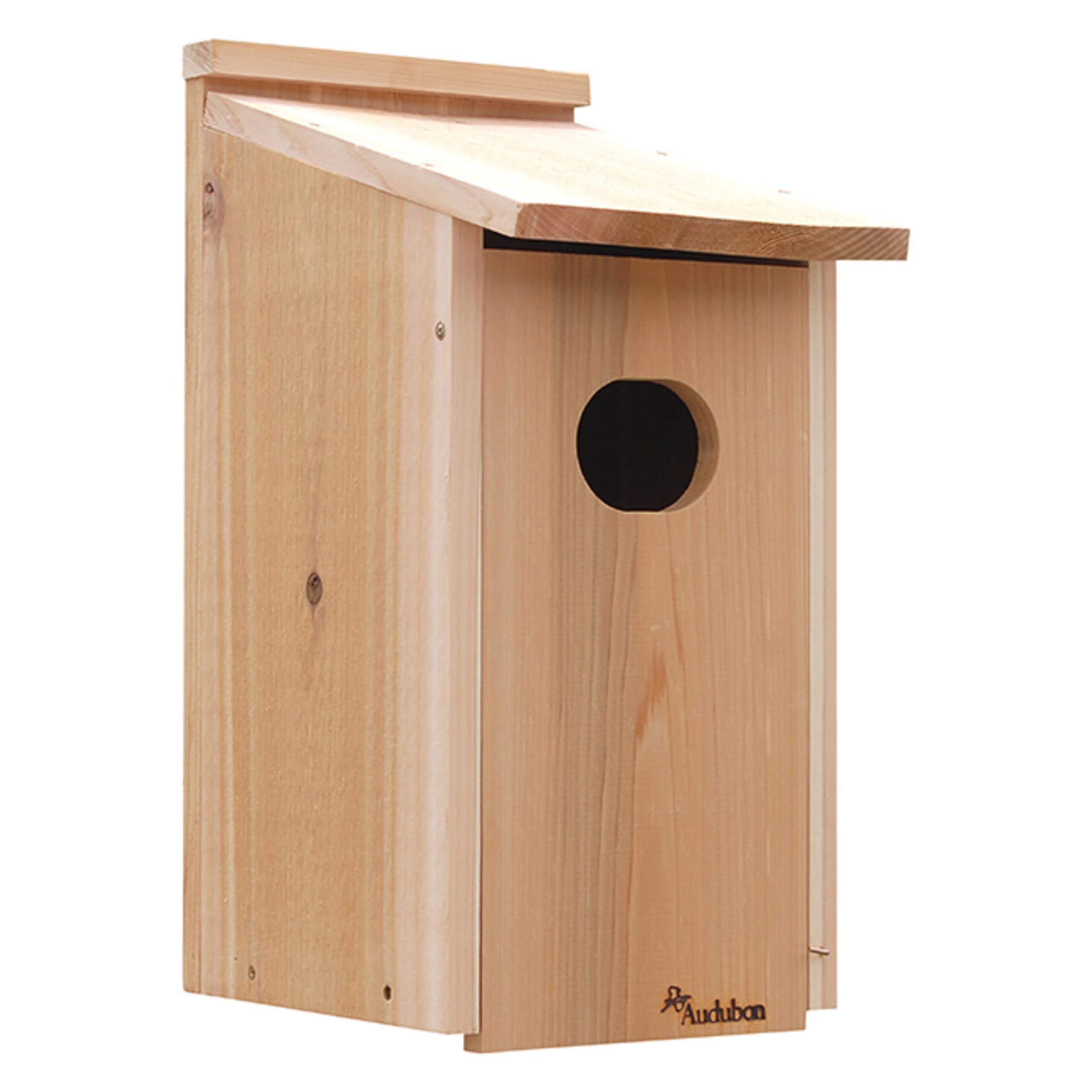
A cedar cavity box shaped the way the birds themselves prefer it.
Here is the sizing that matters: this box runs 15.35 inches deep, 11 inches wide, and 22.75 inches high, weighing 13 pounds. That depth is the largest on this list, which gives a hen a long, sheltered run from the entry to the back of the cavity. The oval entry is shaped specifically so a female wood duck can slip in easily. Crafted from hardy kiln-dried inland cedar, it is designed for year-round outdoor use.
The sloped roof sheds rain and keeps the interior drier, and the front panel opens for nest checks through the season. Mount it to a post or pole near a marsh, pond, or lake and leave it. Cedar does the weather protection here without any finish to maintain, so this is a low-upkeep option compared with oiled pine.
If you are comparing it to the JCs Wildlife box, both are cedar and both are built for water-edge use. The difference is the depth: this Audubon box is 15.35 inches deep against the JCs box’s 11.75 inches, so it offers more cavity length end to end. The caveat is the same as any deep box — you will need a post that can carry 13 pounds with the opening facing open water.
Why the depth earns its keep: a longer cavity gives the nest a buffer from the entry, which suits a wary hen in a busy pond area.
A minor trade-off: the deeper footprint takes a little more space to position than a shallow box.
Pick it when: you are setting up on a pond or lake edge and want a deep cedar cavity with no finish upkeep.
Skip the depth if: your post is short and you need a compact box rather than a long one.
5. JCs Wildlife Cedar Wood Duck Nesting Box
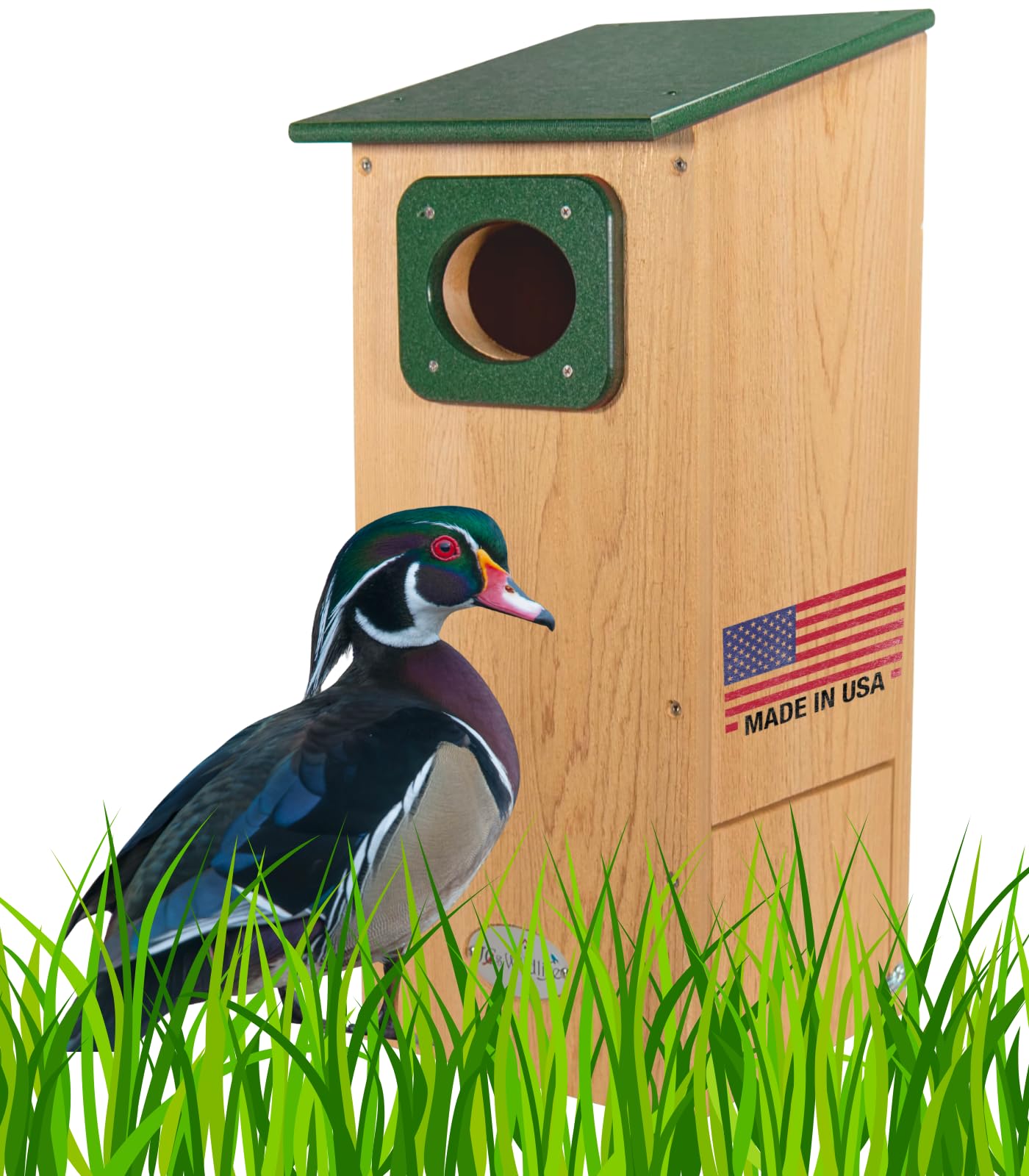
Built-in predator guard and kerfs mean no aftermarket add-ons.
The standout spec is the built-in predator guard paired with kerfs cut inside the box. The guard hardens the entry against a reaching raccoon, and the kerfs give ducklings a grip to climb out. Add a 4 inch oval entrance hole, a poly lumber roof, and drainage holes, and this is a box that answers the real threats to a nest. It measures 11.75 by 9.75 by 24.5 inches and weighs 11.5 pounds — the lightest of the premium cedar options here.
It arrives fully assembled with pilot holes drilled for mounting, and nesting material is included to help draw wood ducks in. The poly lumber roof is the point of difference: it is plastic-lumber material that shrugs off rain where a plain wood roof would soak it up. Reviewers consistently describe the cedar as solid and well-built.
Set against the Woodlink, this one is 11.5 pounds versus 12.8 pounds and stands 24.5 inches tall versus 23 inches. That lighter shell with a plastic roof is a smart pairing for a box you will hang and largely forget. The easy-open clean-out door lets you empty and replace nesting material in one motion at season’s end.
The predator-proofing angle
- Predator guard built in from the start
- Kerfs give ducklings a way out
- Poly lumber roof sheds rain
- Shavings and pilot holes included
Worth knowing before you buy
- Light 11.5 pound shell needs a properly set post
- Predator guard helps but is not a guarantee
Best match for you if: raccoons and wet weather are the threats you worry about most.
The one caveat: no guard stops everything, so keep your post clear and inspect the entry each season.
6. Amcortn Duck House for Outside, 17x10x10 Inches

Ships as six boards, a screwdriver, and everything a first build needs.
This box arrives flat and goes together with a screwdriver that is already in the carton. The kit is six wooden boards, seventeen screws, two longer screws, a screwdriver, and an instruction sheet. Dimensions land at 10 by 10 by 17 inches and 2.5 kg. Buyers single out the screwdriver-included assembly, and the wood is built without chemicals or solvents. Hitting the correct 3 by 4 inch opening size is a plus for a box at this end of the scale.
Grooves below the opening act as a ladder for ducklings, and drainage holes keep the cavity dry and hygienic. Pre-drilled mounting holes keep the post work simple. It is also positioned as a nature gift for families, and the wood-returns-to-nature approach comes through in the simple craftsmanship.
Against the fully assembled Woodlink, this is the faster route only if you enjoy building, and the slower one if you do not. It is a good starting point for a first pond-side project you intend to try with kids, where six boards and a screwdriver make the set-up the activity. Expect it to want re-checking of the screws each season as the wood settles.
Where it suits the beginner: everything needed to build is in the box, so there is no hardware run to the store.
The honest catch: a flat-packed wood kit settles over time, so tighten the screws before each nesting season.
Ideal for: a first-time builder or a family project where assembling the box is half the fun.
Pass if: you want to hang the box five minutes after the delivery arrives.
7. XYMZ Wooden Duck Nesting Box 10x10x17 Inch
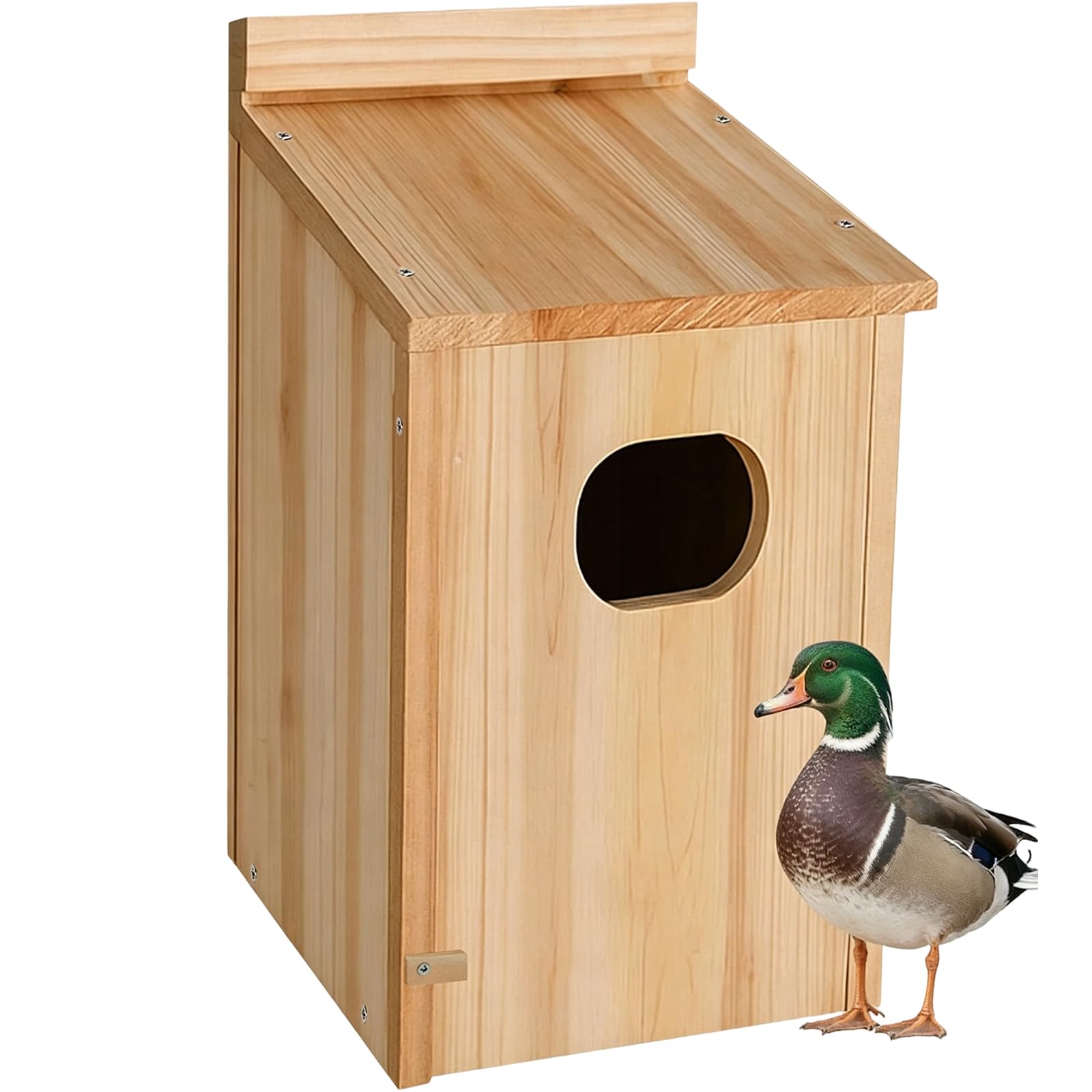
A five-pound box you can carry up a ladder in one hand.
At 5 pounds and 10 by 10 by 17 inches, this is the lightest nesting box in this whole lineup. That matters the moment you picture the job: carrying a box up a ladder into a tree and holding it steady while you drive screws. It uses a 4 inch wide by 3 inch tall oval entry hole sized for wood ducks, and it is built from cedar and pine. Tree mounting is the design focus, with a placement near ponds, lakes, or wetlands.
The weight difference against the Woodlink is stark: 5 pounds versus 12.8 pounds. If your only mounting point is an older limb that will not hold much, this one is the practical answer. Cedar and pine together keep the shell light while the natural finish lets it sit against the bark without standing out.
What you give up for the lighter build is heft and mass, which some pond owners read as toughness. Treat this box as a seasonal hang that may want a fresh mount each year. For a tree set-up near a pond where you want the box up high, it is the easiest to handle of the group.
The ladder-day advantage: 5 pounds versus 12.8 pounds for the Woodlink makes the whole climb-and-mount job far easier.
Where it gives ground: the light shell will not feel as substantial as a heavy cedar box when you lift it.
Go for it if: you are mounting into a tree and want the lightest box to handle up there.
Consider a heavier build if: you want maximum mass holding your post against wind.
8. PawHut Wooden Duck Coop
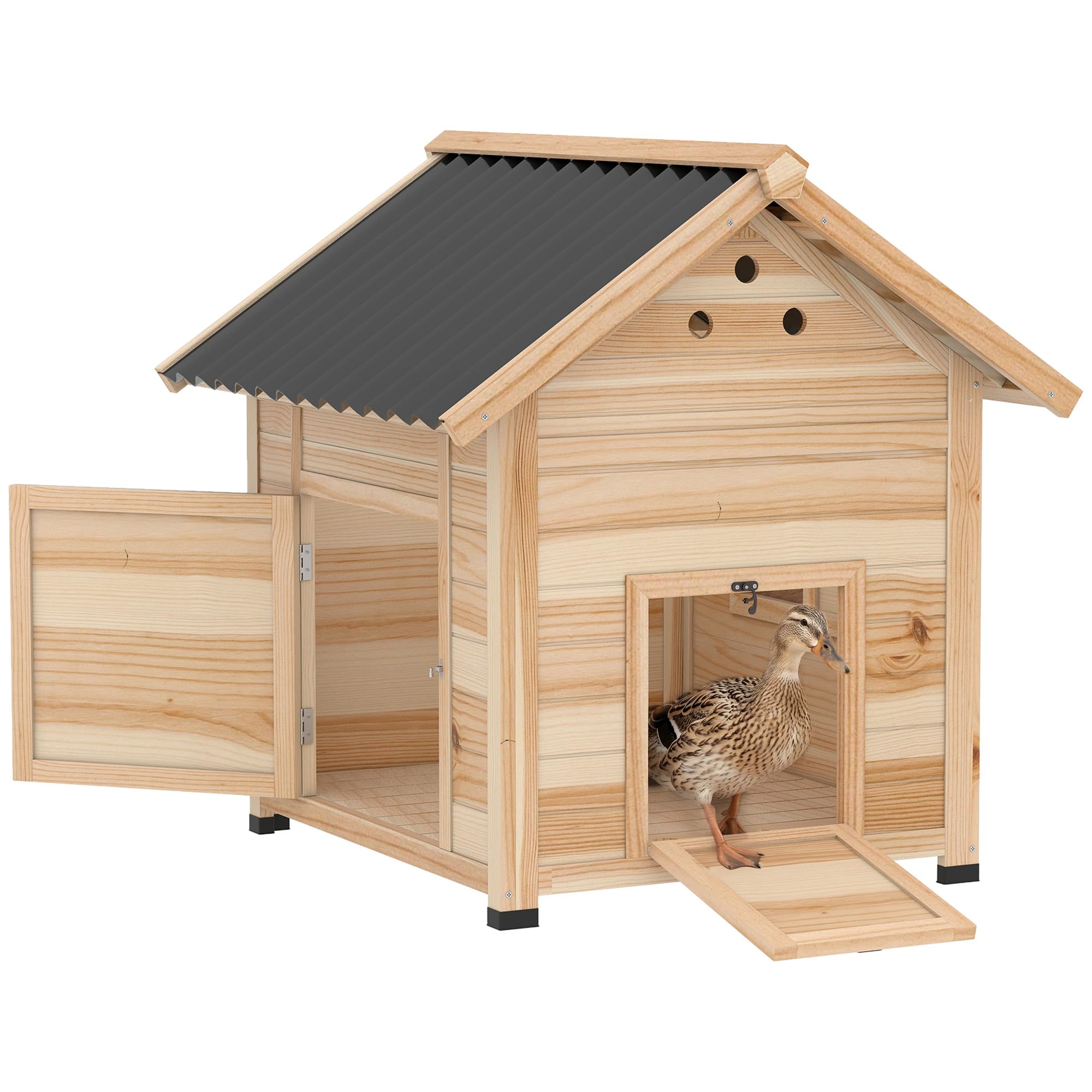
A floor-level night shelter for up to three ducks, not a tree cavity.
This is a different animal from the boxes above: it is a ground coop, and the listing fits three ducks at once. The dimensions are 30.75 inches long, 35.5 inches wide, and 36.25 inches tall, and it weighs 34 pounds. A sloped roof rolls rain off and fir wood forms the shell. The opening top and removable bottom are the cleaning features that make a coop livable for you as the keeper.
A front door ramp lets the birds walk in and out, while a side door gives you a way to reach in for handling. Ventilation is built into the design so the interior stays aired rather than stuffy. Buyers report their ducks settle in happily, and the 30.75 by 35.5 by 36.25 inch footprint fits two large Pekin ducks.
Durability is where feedback splits. Some find it sturdy, some read it as unfit for permanent outdoor exposure. That is a realistic picture of a fir-wood coop: shelter it under a roof or overhang and up off wet ground, and treat the wood as the wear item. The removable base and openable roof make that upkeep a lot less painful, since you clean it out rather than dismantle it.
What makes it livable: the openable roof and removable bottom turn the weekly clean into a quick scrape-out.
The trade-off on record: durability and build quality get mixed verdicts, so plan to shelter it from direct weather.
Right pick when: you keep two or three backyard ducks who need a dry place to sleep at night.
Wrong pick when: you want a cavity box for wild wood ducks near a pond.
9. Trixie Natura Duck Coop for Free Roaming Ducks

Recessed grips let you slide it across the yard to fresh ground.
Integrated recessed grips are the detail that shapes this coop’s whole purpose. You pick it up and move it to a new patch rather than committing it to one spot. It measures 29.5 by 36.5 by 27.5 inches, weighs 30.3 pounds, and is built from pine and fir wood in a brown finish. The listing fits up to four lightweight ducks.
Barred ventilation holes keep air moving through the shelter, and the door folds down into a ramp so birds walk out to grass on their own. The top opens for access to the interior. Assembly is easy, and the size suits a small flock — owners single out that it fits two Pekin ducks comfortably.
Here is the caveat you need to weigh honestly. Durability and construction draw tough feedback across many reviews, and some find the material cheap. That is a fir-and-pine portable coop, and treated as one, it does a job: a mobile shelter you shift around rather than a permanent fixture. If you need a coop that stays in one place through years of weather, look at the heavier builds here instead.
What it does well
- Recessed grips make moving it simple
- Folding door doubles as a walk-out ramp
- Ventilation holes keep air moving
- Fits two Pekin ducks with room
The real limitation
- Durability and build quality draw tough feedback
- Material feels cheap for a permanent setting
Worth it for: free-roaming ducks where you rotate the shelter onto clean ground every few days.
Not the one for: a fixed, exposed spot that has to survive every season.
Know the Specs
Entry Hole Size and Shape
A 4 inch wide by 3 inch tall oval hole is the size the boxes here use for wood ducks. The oval gives a hen a wider doorway than a round hole of similar height while keeping a larger bird or a reaching raccoon from fitting through. An oversized or round opening often invites takeover by bigger cavity nesters, so the entry size is one of the first things to check on any box.
Duckling Ladder (Grooves or Kerfs)
Once the eggs hatch, the ducklings have to climb from the nest floor up to the entrance and drop out. Rough grooves or kerfs cut below the opening give their feet something to grip. A box with a smooth interior wall can trap a brood inside. That small detail is one of the quietest differences between a box that works and one that does not.
Wood Species
Cedar and cypress resist moisture naturally and tend to hold up wet. Pine often needs an oil finish to protect it, and fir is lighter and softer. A good species still needs good joinery. Look at how the boards meet and how the roof overlaps the opening before you judge the wood.
Weight and Mounting Hardware
Nesting boxes here range from 5 pounds up to 14 pounds. That number decides whether you can haul it up a ladder and how sturdy your post or tree fixing must be. Pre-drilled holes, a steel hanger, or predrilled screw points all make the install simpler. Match the mounting hardware to the surface you actually have.
Common Questions
What entry hole size do wood ducks need in a nesting box?
Do wooden duck boxes need a duckling ladder inside?
Is cedar better than pine for a wood duck box?
Can I use a backyard duck coop for wild wood ducks?
How do I mount a wooden duck box on a tree or post?
Why does my duck box get wet inside?
Do I need to clean out a wooden duck box each year?
What is the difference between a nesting box and a duck coop?
Can larger ducks fit through a 4 inch oval entry?
Does the weight of the box matter for mounting?
The Bottom Line
For most people setting up a wooden duck box, the outright winner is the Woodlink WD1 Cedar Duck House. It has the right 4″ x 3″ oval entry, arrives fully assembled in kiln-dried red cedar, and draws a 4.5+ star score from 250+ ratings. If you want a built-in predator guard and a poly roof, grab the JCs Wildlife Cedar Box. And for a ground shelter for your backyard flock, the PawHut Wooden Duck Coop is the one to reach for. My one nudge: the Woodlink is the box the review pages keep pointing to, and it is worth hanging before the season turns.
How we choose
We do not accept paid placement. Every pick is matched to a real buyer and a real use-case; we do not hands-on test units.
Sources
Specifications: manufacturer listings and product documentation. Review insights: verified customer reviews, as of November 2026. Pricing: not shown on this page (it changes often); check the current price via the retailer link.
As an Amazon Associate, Tactical Gear Guy earns from qualifying purchases. This does not affect which products we feature.