Specs are compiled from manufacturer listings and verified buyer reviews and can change over time — please confirm the key details on the product page before buying.
You already know the moment: the monster truck fires up, the fireworks start, and your kid claps both hands over their ears instead of watching the show. What you need is a pair of earmuffs that actually seals around small heads and stays put — so your child hears your voice but not the 140 dB blast beside you. This list covers the eight pairs worth considering, sorted by who they fit and what they block.
This guide is built by comparing the manufacturers’ published specifications and the patterns across verified customer reviews, so you get each pick’s real strengths and trade-offs instead of marketing spin.
Every pair here is built for youth or small heads, and the biggest split is passive versus padded, tight-versus-loose, and how much reduction you actually get. I ranked these by real-world fit and honest noise reduction so you can pick the right pair for a Saturday at the track, a sensory-sensitive school day, or a long flight — which is exactly the job of good youth ear protection.
Top Picks


How To Choose The Best Youth Ear Protection
Start with the noise level your kid will actually face, not with the colour they want. A monster-truck show or a fireworks finale runs far louder than a school assembly, and that difference decides how much reduction you need. Then check the fit — a loose seal on a squirming four-year-old cancels out even the highest rating on paper.
Read the NRR and SNR numbers honestly
Passive earmuffs cut noise, they do not mute the world. Most kids’ pairs land in the NRR 20 to 27 dB zone, which lowers loud sound to a level young ears can handle while voices still come through. That last part matters — your child needs to hear “watch your step” at the track. Higher NRR does not automatically mean better; the cup has to seal properly to deliver it.
Fit and adjustability beat everything else
Look for a headband that adjusts on both sides and ear cups that swivel. A cup that tilts with the head keeps its seal when your kid turns to look at the trucks. If the band only adjusts on one side, the muffs tend to ride uneven — one cup sealing, the other leaking sound. Tighter is not better; gentle even pressure is what keeps them on for an hour.
Know when a sensory pick is the right pick
For a child with autism or sound sensitivity, comfort is the whole game. A pair that squeezes or itches gets pulled off in minutes, which defeats the purpose. Softer memory-foam cushions and a padded band make the difference between wearing them and fighting over them. Several picks here list sensory and autism use directly in their specs.
Side-by-Side Comparison
| Model | Best For | Noise Reduction | Age Fit | Design | Amazon |
|---|---|---|---|---|---|
| Dr.meter Ear Muffs★ Best Overall | Best all-rounder | SNR 27.4 dB / NRR 20 dB | Toddler to teen | Foldable | Amazon |
| ZOHAN 030 Kids EarmuffsSensory Pick | Sensory and autism | 25 dB | 3 to 12 years | Foldable, no metal parts | Amazon |
| homicozy Dinosaur EarmuffsKid Magnet | Kids who resist ear muffs | NRR 25 dB | 1 to 12 years | 3D dinosaur, swivel cups | Amazon |
| ProCase 2-Pack Earmuffs | Siblings on a budget | NRR 24 dB | 2 to 8 years | Folding, 2 pack | Amazon |
| JLab JBuddies Protect | Grows with the child | 23 dB | Infant to teen | Foldable, Cloud Foam | Amazon |
| MelonArt Kids Earmuffs | Loud shooting ranges | SNR 27 dB | Big kid | Swivel cups, foldable | Amazon |
| Alpine Muffy Kids | Motorsport fans | 21 to 28 dB | 3 to 16 years | Silicone-free, travel pouch | Amazon |
| Pro Ears ReVO Passive | Smaller adult heads too | NRR 25 | Children and small adults | ProForm leather | Amazon |
Detailed Reviews
1. Dr.meter Toddler Ear Protection Ear Muffs
Our pick — 4.5+★ from 21,000+ verified ratings; the strongest balance of quality and price.
The crowd favorite: SNR 27.4 dB of reduction that still lets your child hear you at a monster-truck show.
The number that decides this one is the SNR rating of 27.4 dB — a measure of how much sound energy the muff soaks up before it reaches the ear. That is a serious cut, and it lands right where a family at a monster-truck rally or a fireworks show needs it. Just as important, the Dr.meter is built to reduce noise rather than silence it, which is why your child can still catch your voice through the cups.
The comfort story holds up too. Memory-foam cores wrapped in PU leather (a smooth synthetic leather) make a breathable seal that stays cozy through long events — the model is aimed at monster jams, fireworks, concerts and sports. The headband adjusts smoothly from toddlers up to teens and even adults, so the same pair can serve more than one kid. When it feels tight from the start, the maker’s own trick is to stretch it over the box or a size 3 soccer ball for 4 hours to loosen it.
On safety, it carries ANSI S3.19-1974 and CE EN 352-1 certification — two recognised standards for hearing protectors. It folds down to palm size for a school bag or carry-on. The mixed note in buyer feedback is fit: some kids feel pressure at first, and the adjustability takes a little patience. That is a sizing quibble, not a defect — give the band a stretch and it settles.
Why it takes the top slot
- SNR 27.4 dB reduction that still lets voices through
- Memory foam and PU leather for hours-long comfort
- Adjusts from toddler through teen and adult
- Dual certification: ANSI S3.19-1974 and CE EN 352-1
- Folds palm-sized for kids’ bags and suitcases
Where it asks a little patience
- Some kids feel the band tight on the first wear — use the soccer-ball stretch trick
- Passive only, so it reduces noise rather than cancelling it electronically
Take this one if: you want one pair that fits a toddler today and a preteen next season, at a monster-truck show or a fireworks display.
Pause if: your child needs electronic noise cancellation rather than passive muffs — this is a reduce-only design.
2. ZOHAN 030 Kids Noise Cancelling Headphones for Autism
Built for kids who pull muffs off: a metal-free frame, extra-thick pads, and 360° cups a child can turn alone.
Here is the defining detail: the ZOHAN EM030 has no metallic parts at all, which removes the one thing that can pinch or hurt a child mid-show. The 25 dB rating is a notch below the Dr.meter’s 27.4 dB SNR, and for sensory use that small difference rarely matters — steady, comfortable reduction beats a higher number the child refuses to wear.
The pads are deliberately thicker and softer than typical budget muffs, and crucially not made of PVC, the plastic padding used on many cheaper pairs. The headband adjusts freely up and down, and the cups turn a full 360° and fold, so a kid can take them on and off without help. That independence is why this pair suits children with autism and sound sensitivity so well — the fit and the noise reduction are meant to work together, not fight each other.
The catch is durability. The review pages show a real split here: plenty of families rate the build quality and function highly, but a share of buyers report the headset coming apart within a week of use. Treat the ZOHAN as a lighter-duty sensory tool rather than a rough-and-tumble racing pair, and it delivers. It fits 3 to 12 years and comes in bright green, red, orange, blue and black so you can spot it in a crowd.
Sensory-first design: Metal-free build, thicker foam pads, and 360° swivel cups let a child manage the muffs alone — the reason it suits autism and sound-sensitive kids.
The honest caveat: Durability is genuinely mixed, with some units falling apart quickly, so this is best kept for calmer indoor use rather than heavy outdoor bashing.
Go here for: a sensory-sensitive child who needs soft, self-adjustable muffs for school, errands or quiet focus.
Think twice if: the muffs will see rough handling — the build here is the weakest part of the package.
3. homicozy Dinosaur Noise Cancelling Headphones for Kids
A 3D dinosaur shell that gets a reluctant toddler to keep the muffs on, with NRR 25 dB underneath.
The homicozy leans on one clever idea: if the muffs look like a toy, kids stop treating them as something to tear off. The 3D dinosaur shape pulls attention, and the stretchable headband fits ages 1 to 12. Underneath the fun exterior sits a sturdy ABS shell (a hard, impact-resistant plastic) plus an NRR of 25 dB — enough to take the edge off concerts, fireworks and monster-truck shows.
Comfort is handled with padded headbands that spread pressure evenly and ultra-soft ear cushions that form a seal around the ear. The cups rotate a full 360°, so they settle into place instead of jabbing into the jaw. It meets both ANSI S3.19 and CE EN 352.1 standards. There is also a 30-day full-money-back warranty with 24-hour support, which takes the risk out of trying the dinosaur shape on a picky kid. Compared with the Dr.meter’s slightly larger 4.33-inch cube footprint, the homicozy packs a bit differently, but both fold for a bag.
The honest follow-up question with any novelty design is whether it lasts. Here the feedback is genuinely mixed — quality and the design get plenty of praise, but noise cancellation and durability draw a split, with some families loving the block-out and others finding the cups less effective over time. As an everyday show-and-fair pair for younger kids, it earns its place.
What makes kids keep them on
- 3D dinosaur shell turns protection into something fun
- NRR 25 dB with ANSI S3.19 and CE EN 352.1 coverage
- Stretchable, padded headband fits ages 1 to 12
- 360° rotating cups for an even, jab-free seal
- 30-day money-back warranty and 24-hour support
What to weigh before buying
- Noise cancellation and durability feedback is split — not the most rugged pick
- Novelty appeal may fade as kids get older
Ideal for: a toddler or young child who resists plain black muffs and needs a friendly-looking pair for outings.
Look elsewhere if: you need a heavy-duty pair for repeated loud events over several years.
4. ProCase Noise Cancelling Headphones for Kids (2 Pack)

Two NRR 24 dB pairs in one box, sized 2 to 8 years, for households with more than one small head.
ProCase sells this as a 2-pack in purple and indigo, which solves the sibling problem in a single order. Each pair carries an NRR of 24 dB from thickened noise-dampening foam, a hair below the 25 dB and 27.4 dB picks above but well within the range that handles fireworks and crowded events. It is aimed at kids 2 to 8 years, with a retractable headband and 270° rotatable ear cups that dial in to a small head.
The comfort details are sensible for the price tier: a padded headband cuts pressure across the head, and soft ear cushions form a snug seal. The feedback from families is warm on this point — the muffs are easy for toddlers to put on independently and stay secure during movement. That self-sufficiency matters, because a two-year-old who can seat the cups alone is a two-year-old who keeps them on through the noisy part. The fold-flat design stores in a backpack without bulk.
The compromise is the narrower age window. At 2 to 8 years, this pair will be outgrown by a preteen, unlike the JLab or Dr.meter that stretch higher. And at 24 dB it sits at the lower end of this list’s reduction figures, so for truly deafening environments you might miss a little more reduction. For younger kids at fairs and flights, it does the job twice over.
Reach for this if: you have two young kids and want matching pairs without buying separately.
Skip if: your child is already past the 8-year mark, or you need maximum reduction for the loudest venues.
5. JLab JBuddies Protect Earmuffs

An infant-to-teen adjustable headband that lets one 23 dB pair cover years of growth.
The pitch here is range: the JBuddies Protect headband resizes from infants all the way to teens. That is unusual — most picks lock to a slice like 2 to 8 or 3 to 12 — and it is what puts this pair in a category of its own for families who want to buy once. The reduction sits at 23 dB, the lowest number on this list, so it is a better match for flights and sensory calm than for a front-row monster-truck seat.
Protection is layered. Acoustic foam absorbs sound waves, while EVA foam (a dense, rubbery foam) presses a tight seal around the ear so outside noise stays out. The Cloud Foam earcups are the soft, squishy kind that feel like a pillow against the head. Families find the muffs comfortable and well-fitting enough that kids simply leave them on through an outing. The foldable design stows in a bag or purse when the show is over.
In sensory settings, this is the pair parents tend to mention for meltdowns and anxious moments — the softer reduction and gentle fit calm a child without cutting them off from the room. The trade-off is that same lower 23 dB ceiling: if your priority is the absolute most reduction, the MelonArt’s SNR 27 dB or the Dr.meter’s 27.4 dB go further. For a first pair that lasts through the toddler and school years, it fits neatly.
The long-haul advantage: an infant-to-teen adjustable band and squishy Cloud Foam earcups mean one purchase covers years of growth.
What you trade: at 23 dB it is the gentlest blocker here, so the loudest, closest events call for a higher-rated pair.
Best when: you want a single pair that will still fit as your child grows, for flights, fireworks at a distance, and everyday sensory comfort.
Not the pick if: you need the maximum reduction for standing near the loudest engines.
6. MelonArt Kids Ear Protection Earmuffs

An SNR 27 dB reducer with solid ABS cups, aimed at shooting ranges and monster-truck grandstands.
If the places you take your kid get genuinely loud — a firing range, a packed stadium, drum practice in the garage — the MelonArt’s SNR 27 dB reduction is the reason to look here. That folds in high-density acoustic sponge and solid ABS cups, tuned to blunt the roar of a truck or the boom of fireworks. It is positioned as a prevent-hearing-damage pair for the noisiest environments, and the reduction number sits near the top of this list.
Comfort is handled with memory-foam cushions in a breathable protein leather (a smooth, skin-friendly synthetic leather), plus a padded headband and 360° swiveling cups that settle instead of clamping. The maker frames that swivel as a way to ease pressure on the head for hours of wear, which is what you want during a long air show or an overnight flight. It folds flat and slips into a bag, and the whole thing weighs about 190 g. The review consensus is favorable on quality and function, with users finding it effective for loud events and for sensory children.
Compared with the ZOHAN’s 25 dB, the MelonArt’s 27 dB goes a step further on reduction, which is the difference-maker for shooting-sports use. The honest note: the very attributes that make it a strong blocker — solid cups and a firm seal — mean it is less airy than the softest sensory pairs, so a child who hates any pressure at all may prefer the ZOHAN. For strong reduction at loud events, it is the tool for the job.
Choose it for: shooting ranges, monster-truck shows, and the loudest family outings where you want maximum practical reduction.
Consider softer options if: your child is highly pressure-sensitive and pulls tight muffs off immediately.
7. Alpine Muffy Kids Ear Muffs

Built for the circuit: 21 to 28 dB of certified attenuation, silicone-free materials, and a MotoGP travel pouch.
The Alpine Muffy is the specialist of the bunch. It is designed specifically for young race spectators, and the maker notes peak noise at the loudest MotoGP spots can reach almost 140 dB — a level where, as they put it, hearing damage can happen in seconds. These high-attenuation muffs are tuned to combat that. Certified acoustic attenuation runs from 21 to 28 dB in line with US and EU regulations, and the fit covers ages 3 to 16.
Comfort and materials get real attention here. The headband adjusts on both sides for a snug fit even on small heads, and the material is silicone-free and ultra-soft. For any child with a silicone allergy, that is a meaningful detail the other picks here do not state. The premium material is easy to clean, and a MotoGP travel pouch comes in the pack, so it stows neatly between race weekends.
The honest catch is that this is a specialist. At the low end of its 21 to 28 dB attenuation range, it will not beat the firmly-rated 27 dB pairs at an everyday birthday party or mall trip. It also skews toward the racing fan’s use case — the MotoGP branding and short-duration, high-intensity design are aimed squarely at spectators. If your Saturdays are at the circuit, nothing here fits better; for general sensory use, the softer picks above are more flexible.
Race-day specialists: certified 21 to 28 dB attenuation, a both-sides adjustable band, and silicone-free materials with a travel pouch — designed around motorsport-loud environments.
Where it is niche: it is built for high-intensity spectator events, so the softer all-round sensory pairs suit day-to-day wear better.
Made for: a small motorsport fan heading to a race circuit, where certified reduction and a secure small-head fit are exactly the point.
Steer away if: you need a general-purpose sensory pair for daily quiet time rather than race weekends.
8. Pro Ears ReVO Passive Ear Muffs
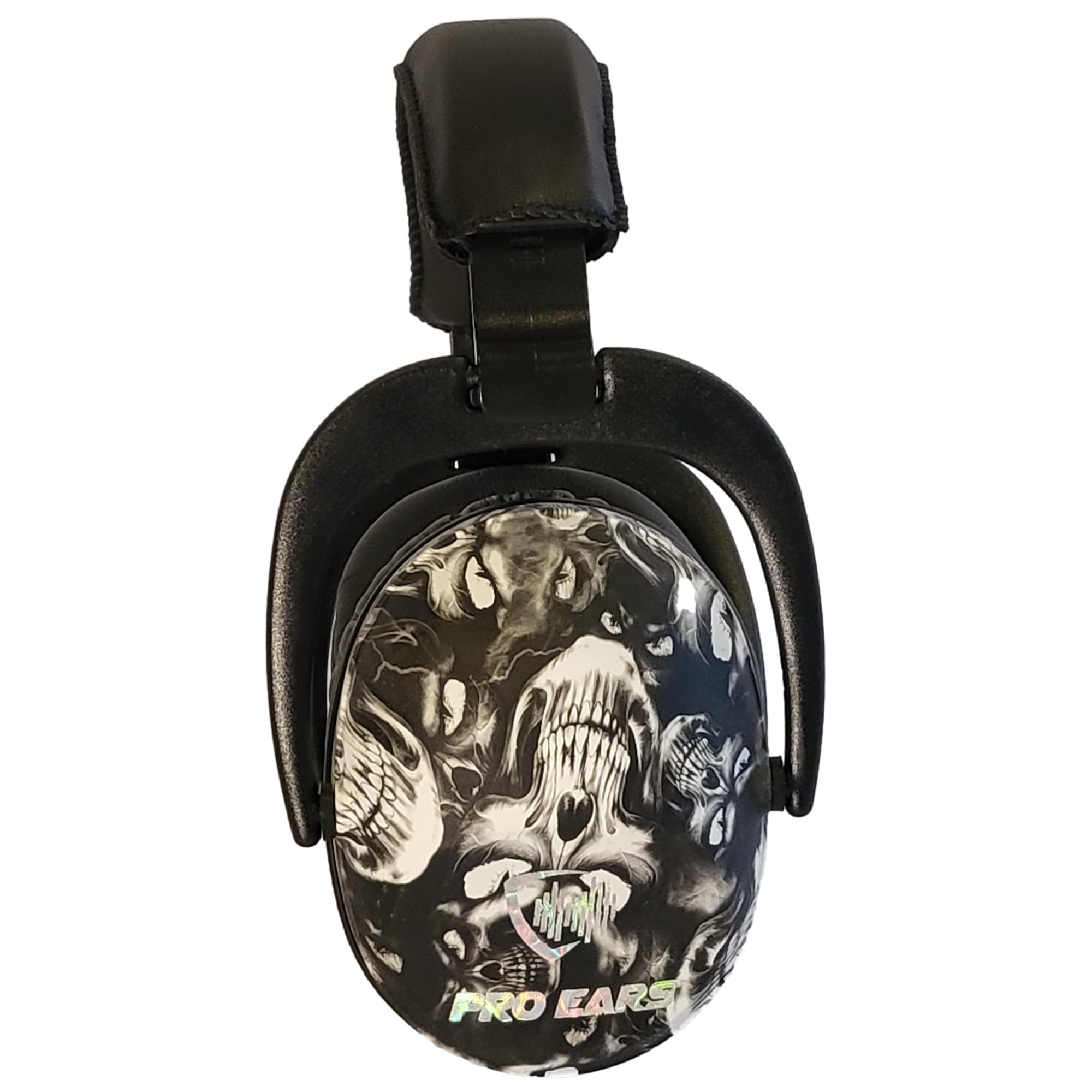
A passive NRR 25 pair sized for children and small-headed adults, so a parent can wear them too.
Pro Ears pitches the ReVO at a specific gap: heads that are smaller than full adult size, whether that is a child or a grown-up who finds standard range muffs too wide. The NRR of 25 puts it in the same bracket as the homicozy and ZOHAN, so it handles fireworks and loud events capably. The comfort detail families tend to single out is that it blocks sound without squeezing the face — softer pressure where it meets the head.
The ProForm leather cushions give it a snug fit, and colour options and adjustability are both points families call out as wins. Blocking loud environments while protecting young ears is exactly what this passive design is built to do. Because it is a passive muff rather than an electronic one, there are no batteries or switches to manage — you put it on and it works.
There is a real split in buyer sentiment worth knowing before you order. The fit earns the most consistent praise, but sizing and value are more divided, with some finding the fit just right and others feeling the pair fell short of the cost. For a family with one small-headed parent and a child, it doubles up neatly.
Worth it for: a child and a small-headed adult sharing one model, especially for a shooting-range or loud-event day.
Reconsider if: you want the lightest, softest toddler pair, or you are sensitive to a firmer fit and want the price to feel like a steal.
Know the Specs
NRR vs SNR — two ways of measuring the cut
You will see two ratings on these muffs. NRR (Noise Reduction Rating) and SNR (Single Number Rating) both measure how much noise a muff reduces, but they come from different standards. NRR is the US measure and tends to read a little lower; SNR is the European value and often reads higher for the same pair. That is why the Dr.meter lists both a 27.4 dB SNR and a 20 dB NRR. Higher is more reduction, but only if the cup seals snugly against the head — a loose seal drops the real-world number fast.
Passive versus electronic earmuffs
Every pick here is passive: the cups simply block and absorb sound through shell and foam, with no batteries. That keeps them light, cheap to run, and ready the second you grab them. Electronic muffs use microphones to let voices through while clipping loud bangs, but they cost more and need power. For most youth uses — fireworks, monster trucks, races, sensory calm — passive muffs with a solid NRR do the job without complication.
Why the seal and fit decide everything
A muff’s rating is measured under ideal conditions. In real life, hair, glasses, and a squirming head can break the seal and let sound sneak in. That is why adjustable headbands and swiveling ear cups matter as much as the decibel number. A cup that tilts to follow the jaw keeps contact; a band that tightens evenly keeps pressure gentle. Buy for fit first, then let the rating confirm it.
When to size up and when to fold up
Check the age range on each pair, because outgrowing muffs is the most common regret. Picks covering 1 to 12 or infant-to-teen stretch the furthest; narrower windows like 2 to 8 mean a shorter useful life. Also consider storage: a foldable pair that collapses to palm size is far more likely to travel in a school bag or carry-on than a fixed-shape one, and protection only helps when the muffs are actually with you.
Common Questions
What is the difference between NRR and SNR on kids’ ear muffs?
Will my child still hear me talk while wearing ear muffs?
How do I know which age range to buy for my kid?
Are these ear muffs safe for a child with autism or sound sensitivity?
Can these muffs be used at a shooting range?
Are passive ear muffs better than electronic ones for kids?
Why do some kids find ear muffs too tight at first?
How should I clean and store kids’ ear muffs?
Do ear muffs block enough noise for fireworks and monster trucks?
What if my child shares the muffs with a small-headed adult?
The Bottom Line
For most families, the youth ear protection winner is the Dr.meter Ear Muffs because its SNR 27.4 dB reduction, memory-foam comfort, and toddler-to-adult adjustability cover nearly every outing. If your priority is a sensory-sensitive child who needs soft, self-managed muffs, the ZOHAN 030 is built for that. And for motorsport weekends at the circuit, the Alpine Muffy is the specialist to reach for. Whichever you choose, check the age range and give the band a stretch — a snug, comfortable seal is what turns a rating on the box into real protection.
How we choose
We do not accept paid placement. Every pick is matched to a real buyer and a real use-case; we do not hands-on test units.
Sources
Specifications: manufacturer listings and product documentation. Review insights: verified customer reviews, as of November 2026. Pricing: not shown on this page (it changes often); check the current price via the retailer link.
As an Amazon Associate, Tactical Gear Guy earns from qualifying purchases. This does not affect which products we feature.