Specs are compiled from manufacturer listings and verified buyer reviews and can change over time — please confirm the key details on the product page before buying.
You want warm hands, but you still need your fingertips — for a phone screen, a knot, a trigger, a rod, a keyboard. Fingerless wool gloves solve exactly that, and the wrong pair will either leave your knuckles frozen or shred after a week of real use. The short answer: buy a wool or wool-blend pair with a snug elastic wrist, a palm that grips when damp, and a knit dense enough to hold heat. Below, nine pairs are ranked on real materials, real warmth, and what the review pages actually say.
This guide is built by comparing the manufacturers’ published specifications and the patterns across verified customer reviews, so you get each pick’s real strengths and trade-offs instead of marketing spin.
From a USA-made ragg wool classic to a merino-possum blend for deep cold, each pair here is built for exposed fingertips and cold air, which is exactly what you get from the best woolen gloves without fingers.
Top Picks


How To Choose The Best Woolen Gloves Without Fingers
Fingerless gloves are a trade by design: you give up fingertip cover to keep fingertip control. The goal is to make that trade pay off. You want enough warmth on the back of the hand and palm to last a cold hour outdoors. And you want enough freedom at the tips that you never peel the glove off to answer a text or tie on a hook.
Start with the fiber, not the color
Wool is why these gloves work. Its fibers trap a layer of warm air against your skin. They keep insulating even after they take on moisture, which is the difference between a wool knit and a plain acrylic one on a wet, windy morning. A blend like 70% wool and 30% nylon adds strength and holds its shape. That is because nylon resists the stretching and pilling (little fiber balls) that a pure wool knit can suffer over a season of hard use. If the listing names merino (a fine, soft wool), expect a less scratchy fiber against the skin. If it names a wool blend and nothing more, judge it on the warmth and quality feedback from owners instead.
Match the cuff to how you will wear them
A short elastic wrist keeps snow and debris out during a hike or a climb over a fence. A long cuff — the kind that runs up the forearm — is the better call when you are sitting still in a cold blind, working at a chilly desk, or layering the glove under a jacket sleeve. Some pairs fold and unfold at the cuff, which lets you choose how much coverage you want on a given day. Neither style is wrong; they just solve different cold-weather problems.
Look hard at the palm
The palm is where a fingerless glove lives or dies. A synthetic leather palm patch adds durability and a bit of friction protection when you are gripping a rod, a rope, or a tool. A silicone print on top of that gives you a secure hold even when everything is slick. If you only ever wear these at a keyboard, a plain knit palm is fine and softer. If you fish, hunt, or work outdoors, a grip palm is the difference between confident handling and fumbling.
Side-by-Side Comparison
| Model | Best For | Material | Fingertip Style | Cuff / Fit | Amazon |
|---|---|---|---|---|---|
| Fingerless Ragg Wool Gloves Made in the USA★ Best Overall | Everyday cold-weather wear | Ragg wool | Open fingers | Elastic wrist | Amazon |
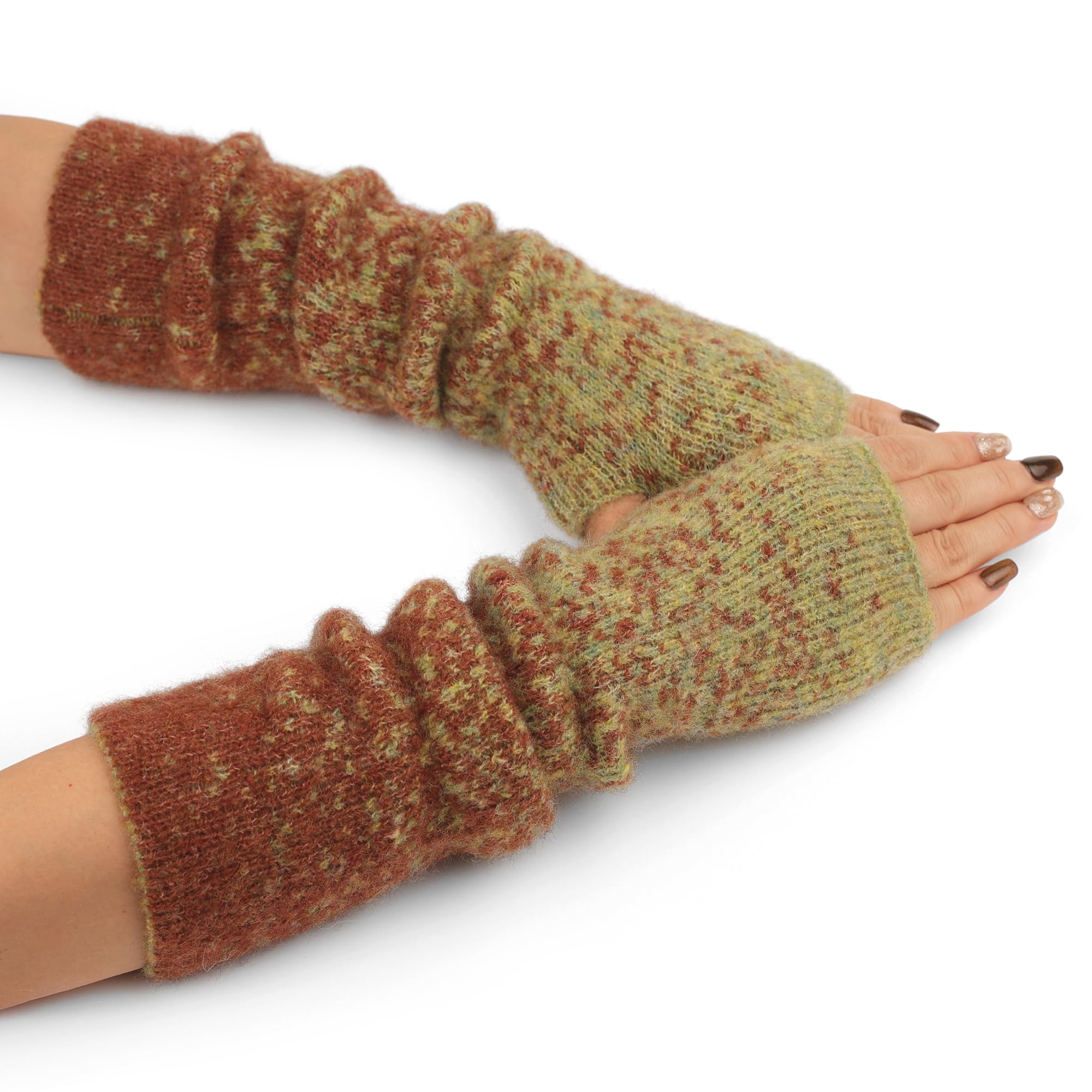
| Wool Blend Fingerless Gloves for Women, Long Arm WarmersLongest Coverage | Long-cuff warmth and style | Wool blend | Fingerless with thumb hole | 16-inch long arm warmer | Amazon |
| Mens Fingerless Ragg Wool GlovesBest for Big Hands | Large hands and extra palm warmth | Mixed wool blend with fleece palm | Open fingers | Foldable cuff | Amazon |
| Rothco Fingerless Wool Gloves | Utility and layering | 70% wool / 30% nylon | Open fingers | Pull-on | Amazon |
| Pure Wool Unisex Half Fingers Gloves | Soft unisex warmth | Pure wool (merino noted) | Half fingers | Knit fit | Amazon |
| Fish Monkey Wooly Precision Grip Half Finger Glove | Fishing and wet grip | Wool with synthetic leather palm | Half finger | Pull on, ambidextrous | Amazon |
| Palmyth Wool Fishing Gloves 3-Cut Fingerless | All-around outdoor work | Wool/nylon knit with silicone palm | 3-cut exposed fingers | Rib elastic cuff | Amazon |
| whitepeak Merino Wool and Possumdown Fingerless Gloves | Deep cold and layering | Merino wool and possumdown | Fingerless | Knit fit | Amazon |
| Outdoor Research Fairbanks Fingerless Gloves | Refined merino feel | Fine merino wool | Fingerless | Knit fit | Amazon |
Detailed Reviews
1. Fingerless Ragg Wool Gloves Made in the USA
Our pick — 4.5+★ from 550+ verified ratings; the strongest balance of quality and price.
A ragg wool classic with an elastic wrist that shuts out snow and keeps your fingers free.
These are the pair to buy if you want one glove that handles a cold morning walk, a hike, and a tailgate without asking you to take it off to use your phone. The knit is ragg wool — a coarse, flecked wool yarn that traps warm air well — and the maker points to wool’s natural insulating properties and its ability to repel water as the core reasons it works. An elastic wrist seals the gap at the base of the hand so snow and debris stay outside. It is the highest-rated pick on this list, at 4.5+ stars across 500+ owners.
What wins people over is the build. Quality is the most-discussed positive by a wide margin, and warmth follows right behind it — the two things you actually bought a wool glove for. The fingerless cut keeps your fingertips available for a touchscreen, a zipper, or a car key, and owners consistently mention that dexterity as the point of the design. Sizing runs generous in the palm and wrist for many, which suits layered winter wear but is worth a second look if you like a tight, second-skin feel.
Compare it to the Rothco pick below and the fiber is the difference. This one is all wool in a traditional ragg knit (a flecked, textured knit). The Rothco is a 70% wool / 30% nylon blend built for utility. Both are mid-range buys. The ragg knit here feels warmer of the two on a dry cold day. The elastic wrist is the detail that stops cold air crawling up your sleeve line.
What Earns The Top Slot
- Ragg wool knit holds heat on a cold, dry morning and repels light moisture
- Elastic wrist blocks snow and debris from getting in at the cuff
- Made in the USA by Illinois Glove Company
- Open fingers leave your touchscreen and tool handling untouched
Where It Asks A Little Patience
- The palm and wrist run roomy, so a snug fit is not guaranteed
- Coarse ragg wool is warmer than it is soft against bare skin
- Plain knit palm gives you less grip than a synthetic-leather patch
Go here for: a do-everything fingerless wool glove for walks, hikes, and cold-weather errands.
Think twice if: you need a palm patch for wet rope or rod work — the Fish Monkey and Palmyth picks below are built for that.
2. Wool Blend Fingerless Gloves for Women
Sixteen inches of wool blend running up the forearm — the warmest sleeve-line fix on this list.
If your problem is cold forearms rather than cold knuckles, this is the pair that solves it. The knit runs 16 inches up the arm, extending your sleeve’s coverage so body heat stays locked in where a normal glove stops. A dedicated thumb hole keeps the glove anchored while your four fingers stay free to text, type, drive, or scroll. It is the longest-coverage option here by a clear margin — the rest of the list ends at the wrist.
The pastel colorways and the Y2K, punk, and goth styling are the other half of the pitch, and buyers respond. Appearance and color both draw steady positive feedback. One shopper reports compliments nearly every time the gloves are worn. Softness gets praise too, and the knit is thick enough for real winter warmth rather than a costume piece. At 4.5+ stars, it is a solid mid-range buy.
The catch is fit and sizing. Both are marked mixed in owner feedback, with some buyers finding the arm warmer roomier or longer than expected, so measure your forearm before you commit. Comfort is mixed as well — the knit is warm and soft, but a 16-inch tube is more fabric against your arm than a short cuff, and not everyone loves that. If you want a trim, close-fitting glove, look at the whitepeak or Outdoor Research picks further down.
Best use case: a cold home office, a frigid lecture hall, or a breezy evening walk where your sleeve leaves your forearm exposed. The thumb hole is the detail that keeps the whole 16 inches from sliding down your arm.
Fit note: sizing and fit both come back mixed, so treat the 16-inch length as a measurement to check, not a one-size promise.
Reach for this if: you want warmth that climbs your forearm and a look that reads as deliberate style.
Look elsewhere if: you want a snug, short glove that disappears under a jacket cuff.
3. Mens Fingerless Ragg Wool Gloves
Fleece inside the palm and a cuff that folds — warmth where your hand actually grips.
Most fingerless gloves warm the back of your hand and leave the palm to fend for itself. This pair adds a fleece lining across the palm and thumb, which is exactly where your skin meets a steering wheel, a rod, or a shovel handle. The wool blend handles the outer shell. The cuff folds and unfolds so you can dial in how much length and warmth you want on a given day — a small feature that makes a real difference between a mild morning and a hard freeze.
Owners describe it as wonderfully soft, and the fleece palm is a big part of that. Fit earns strong marks, particularly for large hands, and the extra cuff length is credited with helping keep fingers warmer than a short-cuff glove manages. Quality and warmth are the two most-praised traits, which is the right pair of boxes to tick for a glove at this level.
Durability is the mixed note. Some owners find the knit holds up fine through a season; others see wear sooner than they would like, so treat these as a working glove rather than an heirloom. It is still a 4.5+ star pair across 450+ owners. For heavy daily abuse, the Palmyth and Fish Monkey builds below lean harder on synthetic-leather palms.
Why It Fits A Working Hand
- Fleece lining across the palm and thumb adds warmth right where you grip
- Foldable cuff lets you choose short or extended coverage
- Fit draws praise from buyers with large hands
- Wool blend outer keeps the insulating benefits of wool
The Honest Trade-Off
- Durability is mixed — the knit can wear before a full season of hard use
- Fleece lining makes the palm warmer but less breathable in mild weather
- Not the pick for someone who wants a thin, bare-knit feel
Built for: bigger hands that want a warm palm and a cuff they can control.
Skip if: you want a minimal knit with no lining and maximum breathability.
4. Rothco Fingerless Wool Gloves
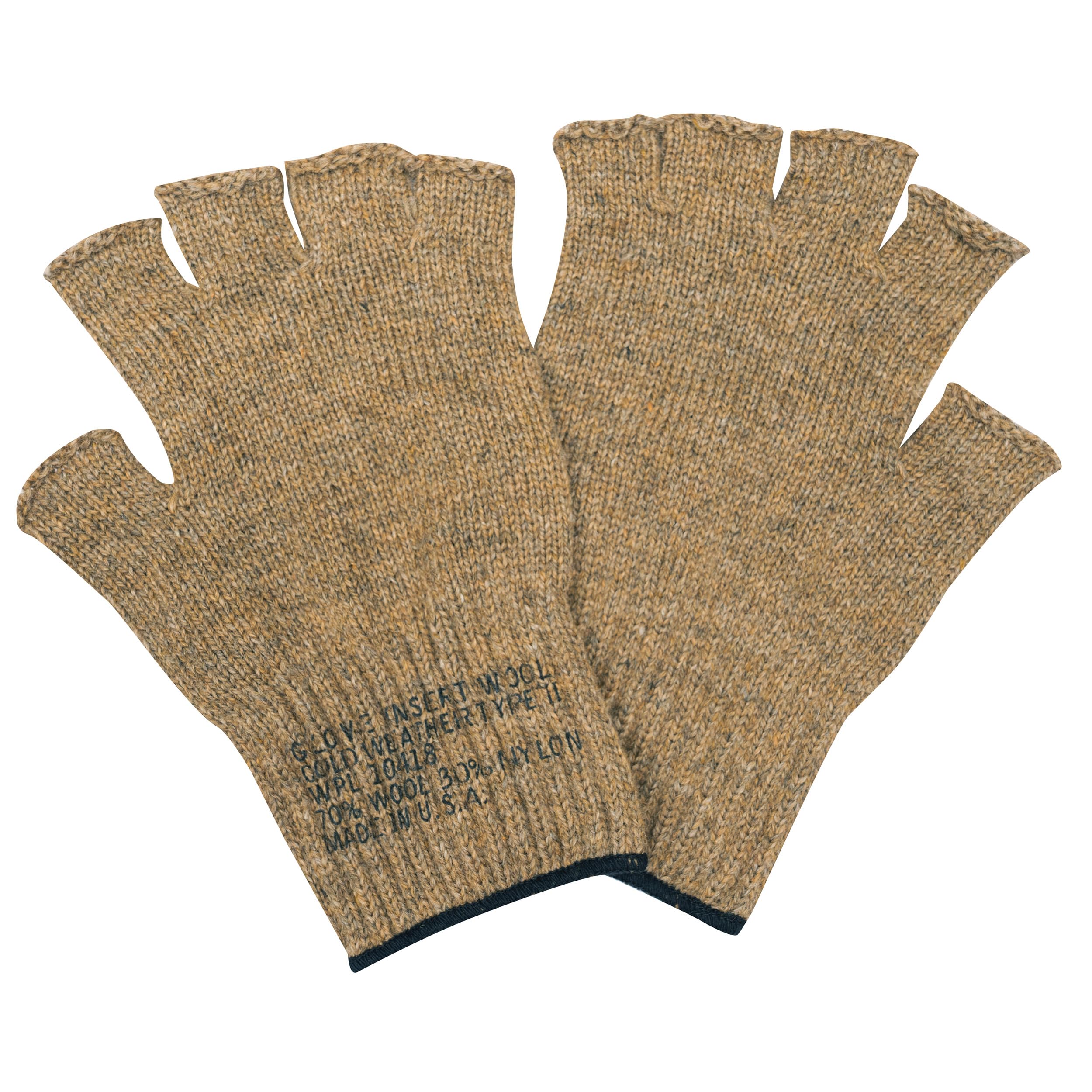
A 70% wool, 30% nylon utility glove built to be worn alone or slipped under a heavier shell.
The fiber split is the headline: 70% wool and 30% nylon. The wool does the insulating and the moisture-wicking, and the nylon adds the strength and shape that keeps a knit from going slack after a season of hard wear. No stretch in the fabric means the fit comes from the knit itself and the pull-on closure. In Coyote Brown with a spec-style wrist stamp, it looks like field gear because that is what it is.
Warmth is what this glove is known for, and versatility runs a close second. The maker pitches it for hunting, fishing, hiking, camping, photography, and outdoor work. It also doubles as a liner under a heavier glove when the temperature drops hard. Open fingers give you the dexterity to handle tools, ropes, cameras, and fishing gear without stripping the glove off. It is a 4.0+ star pair, and the value is decent for a name-brand utility knit.
Fit is the mixed note, and it is worth taking seriously: some buyers find these run too big. Comfort and value both come back mixed as well, and durability is split between owners who get a long run and owners who do not. The printed wrist design also draws some negative feedback — if a clean look matters to you, know that the stamp is part of the package. Measure your hand and size down if you are between sizes.
The layering play: wear it on its own for lightweight warmth in cool weather, or slide it under a heavier winter glove as a liner. That two-mode use is why it earns a spot on a field-gear shortlist.
The honest caveat: sizing runs large for a portion of buyers, and the printed wrist stamp is a love-it-or-not detail.
Worth it for: hunters, anglers, and outdoor workers who want a wool liner they can also wear alone.
Not ideal if: you want a precise, snug fit straight out of the bag — this one rewards measuring first.
5. Pure Wool Women Men Unisex Half Fingers Fingerless Gloves
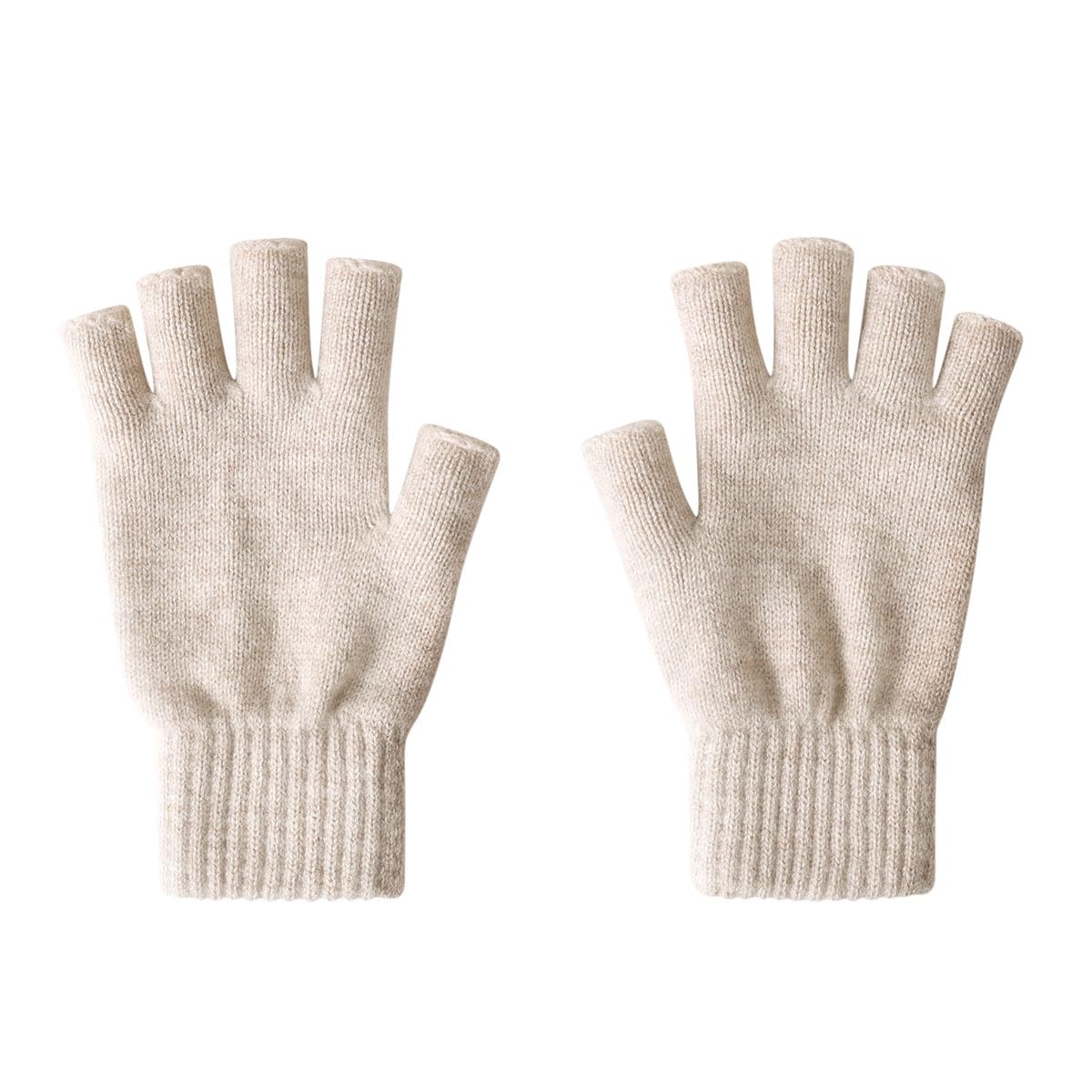
Pure wool, a camel-and-grey palette, and a softness that owners keep coming back to.
Not everyone needs a tactical palm patch or a 16-inch sleeve. This pair is the simple version done well: pure wool, a half-finger cut, and a unisex fit that works for men and women. Owners identify the fiber as merino, which is the finer, softer grade of wool — the kind that does not scratch at the back of your hand after an hour. The camel and grey colors earn their own compliments.
Warmth in genuinely cold temperatures is the trait that gets noticed, along with a softness that reads as a luxury knit rather than a work glove. The value is there for a pure wool glove at this level, and the 4.0+ star rating reflects a content, if not enormous, fan base across 150+ owners. If you want a glove that feels good on bare skin first and performs second, this is the one to try.
Fit is where it splits. Some buyers report a great fit right away; others find the knit initially tight before it relaxes. If you are between sizes or have wide hands, size up and let the wool settle into your hand. That is a fit note, not a flaw — the warmth and softness are what carry the recommendation.
What Owners Keep Coming Back To
- Pure wool knit with merino identified by owners — soft against the skin
- Warmth holds up in genuinely cold temperatures
- Unisex cut works for men and women
- Camel and grey colorways draw steady praise
What To Plan Around
- Fit comes back mixed — some find it tight at first
- No palm patch or silicone grip, so wet handling is less secure
- Pure wool needs hand-wash care to keep its shape
Choose this for: a soft, simple, pure-wool glove for everyday cold-weather wear.
Look past it if: you need a grip palm for wet work or a precise fit straight out of the bag.
6. Fish Monkey Wooly Precision Grip Half Finger Glove
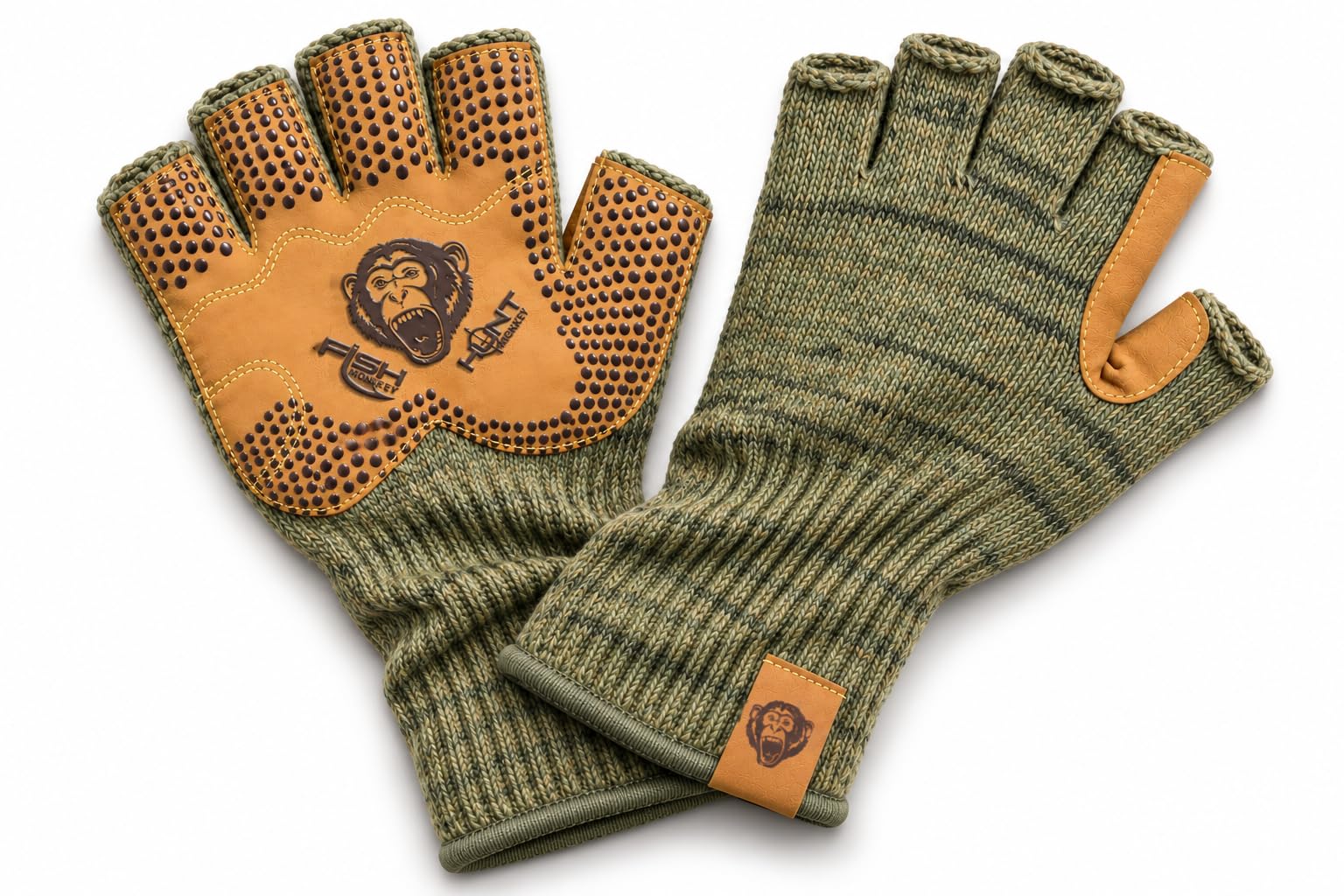
Wool that holds heat when wet, with a synthetic leather palm for a rod you cannot drop.
This is the specialist of the group. The wool insulation is chosen for a specific property: it retains warmth even when wet, which matters when you are standing in a boat with spray on your hands. The half-finger cut exposes your fingertips so you can tie a knot, rig bait, or control a trigger without pulling the glove off. A synthetic leather palm adds grip on rods, reels, and gear in damp conditions, and the knit construction moves with your hand for all-day wear. It weighs 54 g.
Moisture-wicking is the other half of the design — wool fibers breathe and pull sweat away so your hands stay dry. Owners confirm the fishing use case, praise the warmth in cold weather, and note the grip and durability. It is a 4.5+ star pair, and the premium price is acknowledged as worth it by the people who fish in them.
Fit is the caveat: some owners find these true to size, others find they run large, so know your hand measurement before you order. The half-finger cut leaves more of your fingers exposed than a full fingerless design, which is the trade for dexterity. If you want maximum exposed fingertip and a wet-grip palm, that is the point. If you want more knuckle coverage, the Palmyth pick below cuts a wider finger opening.
The fishing argument: a synthetic leather palm plus a wool knit that insulates when wet is a combination built for cold, damp hands on the water — not for a dry commute.
Sizing reality: the L/XL runs large for some buyers, so size down if you are on the fence.
The right call for: anglers who need grip and warmth on wet hands.
Wrong call if: you want a snug fashion fit or maximum knuckle coverage.
7. Palmyth Wool Fishing Gloves 3-Cut Fingerless

Three-cut exposed fingers, a synthetic leather palm, and a silicone print that holds when wet.
The 3-cut design is the differentiator: three openings across the fingers give you precise manual control for knot tying, line stripping, rod handling, and cameras, while the rest of your hand stays covered. The knit wool and nylon blend wicks moisture and holds warmth even in wet conditions. A synthetic leather palm adds durability and friction protection, and a silicone print on top of it gives a secure grip when everything is slick. The rib elastic cuff keeps the fit flexible as you move.
This is the most-reviewed glove on the list, and the feedback is strong. Quality and warmth both draw the most praise, and suitability for fishing and general outdoor work is called out again and again, along with the grip and the value. It weighs 2.88 ounces, so it packs light in a tackle bag or a jacket pocket. At 4.5+ stars, it earns the versatile label.
Two things to plan for. Fit is mixed, with some buyers reporting the sizing runs small — check the size chart and consider going up. Durability is also split, with some owners seeing fraying after a first wear. Hand-wash only and lay flat to dry to get the longest life out of the knit. It is a working glove, and it is priced like a working glove should be.
The Case For The Palmyth
- 3-cut finger openings balance dexterity with knuckle coverage
- Synthetic leather palm with silicone print holds grip when wet
- Wool and nylon blend wicks moisture and warms even in damp cold
- Rib elastic cuff keeps the fit flexible
- Light at 2.88 ounces for a tackle bag or pocket
Where It Can Fall Short
- Sizing can run small — size up if you are between
- Some owners see fraying after a first wear
- Hand-wash only; not a machine-wash glove
Pick it for: fishing, knot tying, and outdoor work where grip matters as much as warmth.
Steer clear if: you want a machine-washable knit or a guaranteed-off-the-shelf fit.
8. whitepeak Merino Wool and Possumdown Fingerless Gloves

Merino wool blended with possumdown — hollow-core fibers that trap air against your skin.
The fiber blend is the story here. Genuine merino wool gives you a soft skin-feel and a barrier to the elements, while brushtail possumdown adds hollow-core fibers that trap a cushion of insulating air. Both materials draw moisture away from the skin rather than trapping it, which is what keeps a glove from turning clammy on a long, cold walk. The maker credits a New Zealand knitter with developing the blend in 1992, and that provenance is part of the pitch.
Owners find these warm and functional, with softness, fit, and light weight all drawing praise. Versatility is a recurring theme — one buyer layers them under a coat, another wears them for phone and computer work. That is the range of this glove: it is thin enough to type in and warm enough for genuine cold. It sits in the premium tier and is rated 4.5+ stars.
The honest catch is shedding. Durability comes back mixed, and some owners note the knit sheds a fair bit at first, so expect some fiber on your cuffs until it settles. It also demands careful care: hand-wash in cold water and surface dry flat, like every real wool garment. If you want a glove you can toss in the wash, this is not it. If you want the warmest, softest fiber on the list, it is.
The deep-cold case: the merino-possumdown blend is the most engineered fiber story on the list, and it earns the premium tier on warmth and softness together.
What to expect: some initial shedding and hand-wash-only care. Neither is a defect — both come with the fiber.
Best for: cold-weather layers who want warmth, softness, and a glove thin enough to type in.
Think twice if: you want a machine-washable glove or one that will not shed at all.
9. Outdoor Research Fairbanks Fingerless Gloves

Fine merino in the classic fingerless cut that fishermen have leaned on for generations.
This is the refined end of the list. The Fairbanks takes the iconic fingerless silhouette — the one that has been standard gear for hard-working, hard-playing fishermen — and rebuilds it in a fine merino for more comfort against the skin. It is a straightforward glove: open fingers, merino knit, no palm patch, no silicone print. What you pay for is the fiber quality and the fit.
Owners find these warm in cold conditions — one buyer mentions 40-degree temperatures as the comfort zone — and praise the fit, softness, and functionality. The appearance and material both draw positive notes. It is a 4.5+ star pair in the premium tier, and for a glove with this little going on structurally, that rating says a lot about how well it fits.
The verdict is less clean on the other side. Value for money is mixed, with some owners feeling it is a lot to pay for a glove with no palm reinforcement. Durability is the weakest note on the list, with some reporting a short lifespan of about three months. The merino also pills easily, per owner feedback. It is still a lovely glove to wear, just not the one to buy if you want a hard-use workhorse.
What you are paying for: fine merino and a fit that owners rate highly. The Fairbanks is a comfort glove first, and the premium tier reflects the fiber, not extra hardware.
The durability question: wear reports are the weakest on this list, and the merino pills. Treat it as a light-duty glove and it will serve you well.
Yes for: a soft, well-fitting merino glove for light outdoor use and everyday cold.
No for: heavy daily abuse or a budget that cannot absorb a short lifespan.
Know the Specs
Wool Content and Blend
The fiber breakdown is the first thing to check. A high wool content like 70% wool and 30% nylon gives you the insulating, moisture-wicking benefits of wool plus the strength and shape retention of nylon. Pure wool knits feel softer and warmer against the skin but can stretch and pill more. Merino is the finer, less scratchy grade. Possumdown, blended with merino, adds hollow-core fibers that trap insulating air. The higher the wool content, the more the glove behaves like wool — warm when damp, but also more demanding on care.
Cuff Length and Finger Cut
Cuff length decides how much cold air reaches your forearm. A short elastic wrist keeps snow and debris out on a hike. A long arm warmer that runs up the forearm adds coverage for sitting still in a cold office, a blind, or a lecture hall. The finger cut is the second choice: a standard fingerless design exposes the tips; a half-finger or 3-cut design exposes more of the finger for maximum dexterity, which suits knot tying, tool handling, and trigger work. More exposure means more control and less warmth at the tips.
Common Questions
Do fingerless wool gloves actually keep your hands warm?
Is a wool blend as warm as pure wool?
How should I wash fingerless wool gloves?
Will fingerless gloves work with a touchscreen?
What is the difference between fingerless and half-finger gloves?
Can I wear wool fingerless gloves as a liner under heavier gloves?
Do wool fingerless gloves shrink or stretch over time?
Are fingerless wool gloves good for fishing and hunting?
How do I pick the right size in a knit wool glove?
Why do some wool gloves pill or shed at first?
The Bottom Line
For most people, the woolen gloves without fingers winner is the Fingerless Ragg Wool Gloves Made in the USA. The ragg wool knit, elastic wrist, and all-wool build handle cold-weather walks, hikes, and errands without asking you to take the glove off. If you want a wet-grip palm for fishing and outdoor work, grab the Palmyth Wool Fishing Gloves 3-Cut Fingerless. For deep cold and the softest fiber on the list, reach for the whitepeak Merino Wool and Possumdown Fingerless Gloves. That is a rare case where the best-reviewed pair is also the safest all-around bet.
How we choose
We do not accept paid placement. Every pick is matched to a real buyer and a real use-case; we do not hands-on test units.
Sources
Specifications: manufacturer listings and product documentation. Review insights: verified customer reviews. Pricing: not shown on this page (it changes often); check the current price via the retailer link.
As an Amazon Associate, Tactical Gear Guy earns from qualifying purchases. This does not affect which products we feature.