Specs are compiled from manufacturer listings and verified buyer reviews and can change over time — please confirm the key details on the product page before buying.
Here is the short answer: buy a natural rubber mat if you sweat during practice, because rubber grips harder as your hands get damp — and that one trait is what separates a mat you trust from one you fight all class. The rest of the choice is thickness, width, and how much weight you want to carry to the studio. Below you get seven rubber mats, each honest about what it does best.
This guide is built by comparing the manufacturers’ published specifications and the patterns across verified customer reviews, so you get each pick’s real strengths and trade-offs instead of marketing spin.
You do not need a dozen mats to find one that holds its grip in a hot room — you need the right thickness, width, and surface finish. You need to know which thickness, width, and surface finish match your practice — and the picks below cover that ground clearly. The quickest way to sort a shortlist is to read what owners praise about each rubber yoga mat before you commit.
Top Picks

How To Choose The Best Rubber Yoga Mat
Most buyers get this wrong the first time: they shop by color and thickness and ignore the surface. The top layer is what decides whether your hands stay planted in a sweaty class. Get the surface right and the rest is comfort tuning.
Start With Wet Grip, Not Dry Grip
Every rubber mat feels sticky in a dry room, so a dry-room test tells you almost nothing. The real question is what happens at minute forty of a heated flow. A textured natural rubber surface keeps its hold as moisture builds — that is the whole reason rubber mats exist for hot practice.
Thickness Trades Balance For Cushion
A thinner mat, often 4mm to 5mm, puts you closer to the floor so you feel your balance points in standing poses. A thicker mat, up to 10mm, softens pressure under knees and wrists but can make one-legged balances wobbly. If your knees ache during floor work, lean thicker. If you are working on stability, lean thinner.
Size And Weight Follow Your Body And Commute
A 24-inch width is the common standard, while 26 inches gives taller or broader frames room to spread their hands. Weight is the hidden cost — a 7-pound mat feels fine at home and like a chore on a twenty-minute walk. Decide how far you carry it before you decide how thick it should be.
Learn The Care Rules Before You Unroll
Natural rubber does not like being soaked, sun-baked, or scrubbed with soap. Most of these mats are hand-wash only for that reason, and a damp wipe with air drying is the everyday method. Treat the cleaning correctly and the surface stays grippy for years.
Side-by-Side Comparison
| Model | Best For | Thickness | Size (L x W) | Weight | Amazon |
|---|---|---|---|---|---|
| Plyopic Ultra Grip PRO★ Best Overall | All-round grip and alignment | 0.17 in | 72 in x 26 in | 2.4 kg | Amazon |
| UMINEUX Extra ThickBest Cushioning | Knee and joint cushioning | 0.4 in (10mm) | 72 in x 24 in | 5.5 lb | Amazon |
| Tatago Hot Yoga Mat | Tall yogis in hot classes | 0.2 in | 72 in x 26 in | 7 lb | Amazon |
| Manduka eKOLite | Carrying to class | 0.16 in (4mm) | 71 in x 24 in | 5.2 lb | Amazon |
| Manduka eKO | Natural feel and texture | 0.2 in | 71 in x 24 in | — | Amazon |
| Hugger Mugger Para Rubber | Firm support on sore joints | 0.25 in | 70 in x 24 in | 6 lb | Amazon |
| Liforme Printed | Hot classes with alignment cues | 0.16 in (4.2mm) | 72.83 in x 26.77 in | 2.5 kg | Amazon |
Detailed Reviews
1. Plyopic Ultra Grip PRO Yoga Mat
Our pick — 4.5+★ from 350+ verified ratings; the strongest balance of quality and price.
The mat that keeps its hold once your palms start sweating, with printed guides so you stop checking your stance.
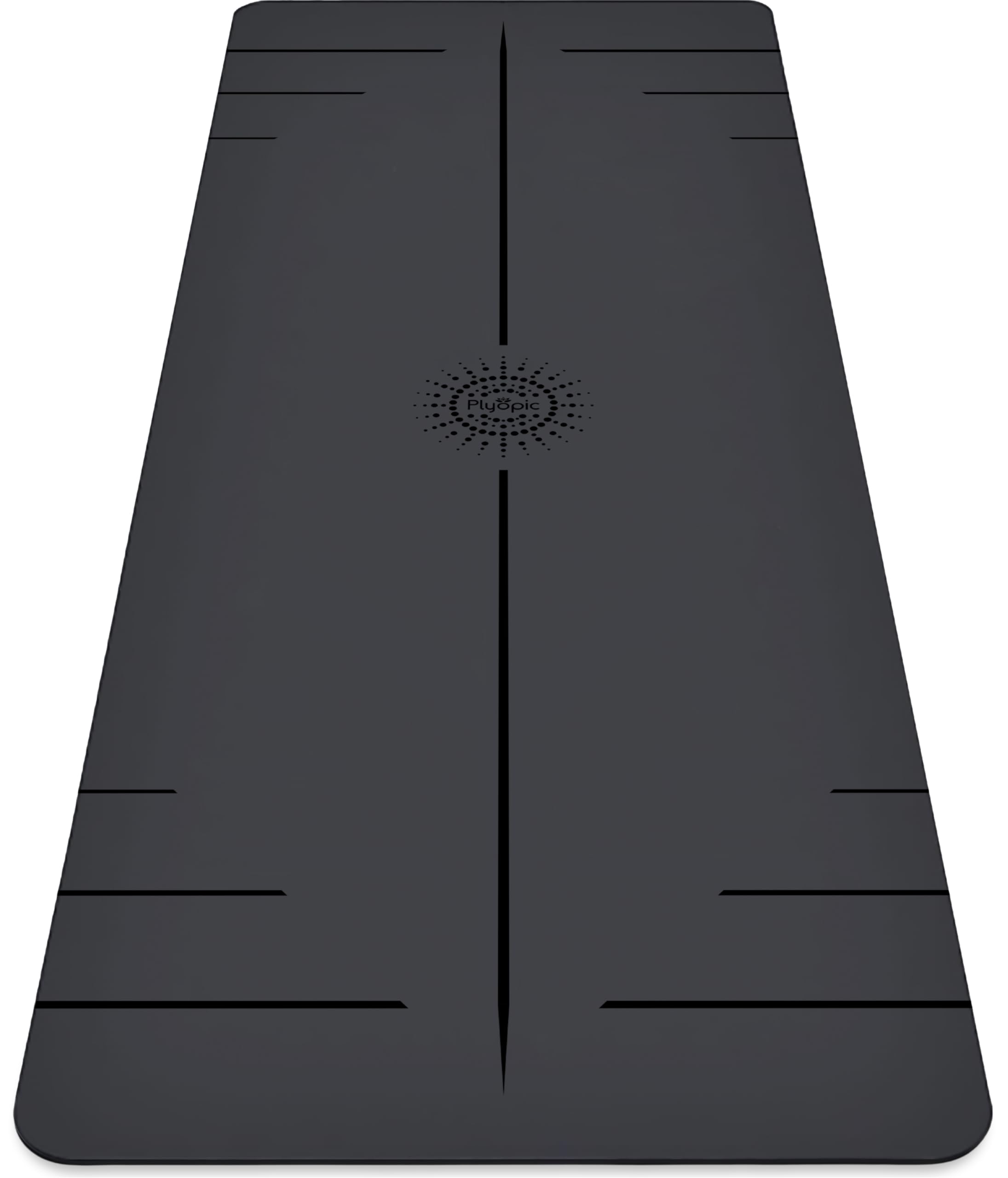
The Plyopic wins this list because nothing else here pairs two things a sweaty practitioner actually needs. It has a surface that keeps holding as moisture builds, and it has the PoseMap alignment reference printed on the mat itself. In a 72 x 26 inch footprint you get a long and genuinely wide platform, so your hands do not crowd the edge in wide-legged poses.
That width is a measurable advantage over the UMINEUX, which runs 24 inches against the Plyopic’s 26. The extra two inches matter most in a wide stance, where a narrow mat forces your palm half off the rubber. Weight lands at 2.4 kg, which is real heft in a bag — this is a mat you drive to class rather than hike across town with.
The surface is natural tree rubber topped with a polyurethane layer, and the maker notes an integrated fiber layer inside to stop the mat squirming under you. Where this mat has earned its keep across hundreds of ratings is plain build quality — the construction is what people talk about most, and the wet-slip performance comes right behind it. Cushioning is the split opinion: at 0.17 inches it is a close-to-the-floor mat, so if your knees want padding, this is not the soft one. The new-rubber smell also draws the loudest mixed feedback, so air it out before your first session.
What Earns Its Place
- Wet-grip surface designed to hold as sweat builds, not just in a dry room
- PoseMap alignment marks give hands, feet, and center reference across poses
- 72 x 26 in platform — two inches wider than the UMINEUX at 24 in
- Integrated fiber layer adds stability underfoot during transitions
Where It Asks Something Of You
- 0.17 in thickness is firm — thin under knees that want padding
- 2.4 kg is substantial to carry on a long walk
- Natural rubber scent needs airing before the first practice
- Hand wash only — soap and soaking hurt the surface
Reach for this if: you sweat hard, want alignment cues built in, and practice mostly at home or a short drive away.
Go softer instead if: your knees need thick cushion — the UMINEUX at 0.4 in is the padded pick here.
2. UMINEUX Extra Thick Yoga Mat
Ten millimeters of padding under your knees, which is roughly two and a half times the Plyopic’s depth.
If floor work leaves you sore, this is the mat in the group built for it. At 10mm — 0.4 inches — the UMINEUX sits far deeper than the 0.16-inch Manduka eKOLite, and that gap is the entire reason to pick it. Knees and wrists get a soft landing during Pilates and stretching, which is the use case the padding was designed around.
The build stacks natural rubber for grip with recyclable TPE for lightness, and both faces carry a texture. That combination gets the mat to 5.5 pounds instead of the dead weight of a full rubber slab. It arrives with a carry strap, and the reversible design lets you flip the texture to suit your preference. A 72 x 24 inch footprint fits a standard practice, though it is two inches narrower than the Tatago and Plyopic.
Owners consistently come back to the same two things: the overall build and the thickness itself. The padding wins particular favor from Pilates practitioners who spend long stretches on their knees. Durability is the honest split — some mats hold up well and some show wear sooner — and color varies a touch from the listing photos. Expect the harmless natural-rubber aroma to linger for several days, which the maker says fades over five to seven days in a ventilated spot.
The padding case: 10mm of rubber-and-TPE cushioning under 5.5 pounds, with a strap included — a home and studio mat that protects joints first.
What to expect down the line: thicker foam-and-rubber mats tend to wear faster in high-friction spots, and this one follows that pattern in some reports. Store it cool and dry and it holds far longer.
Suits you if: knees, hips, or wrists need a soft base for Pilates, stretching, and mat work.
Look past it if: you want a balance-focused mat — this much depth wobbles one-legged standing poses.
3. Tatago Hot Yoga Mat
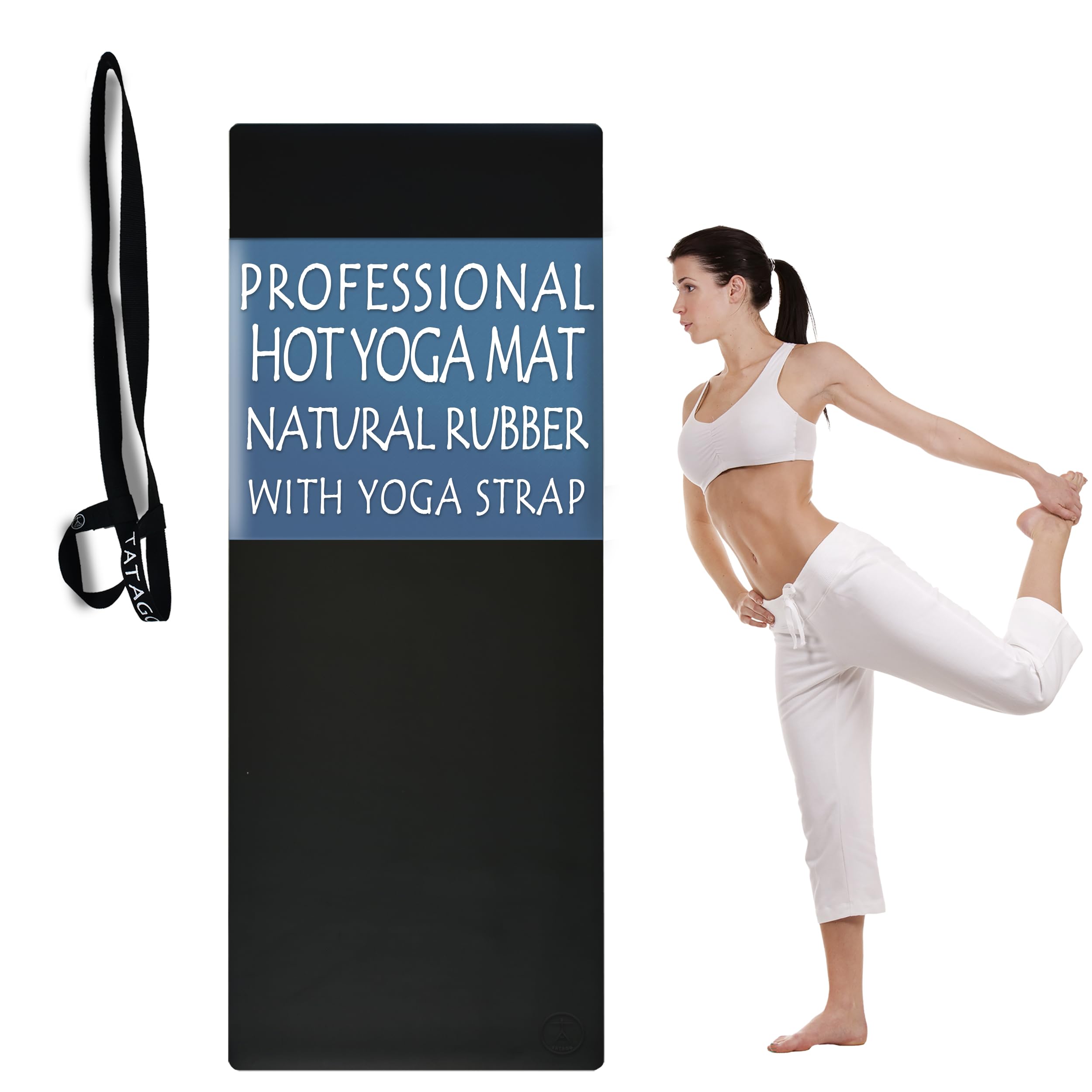
A long, wide slab of dense natural rubber that tall frames finally fit on, built for a soaked room.
Length is where the Tatago answers a very specific complaint. At 72 inches it gives you one more inch of length than the Manduka eKOLite at 71, and at 26 inches it is two inches wider than the UMINEUX. For a six-foot-plus practitioner whose heels keep dropping off the end, that is the difference between a mat you use and one you tolerate.
The rubber is natural and the construction is built to resist tearing, with a claimed non-slip surface aimed at hot and sweaty classes. Cushioning comes from ultra-dense 5mm rubber, which supports joints without the spongy sink of a thick foam mat. A black carry strap is included, and the maker suggests pairing the mat with a yoga towel for heavy sweat sessions. It weighs 7 pounds, which is the heaviest mat on this list and the main thing you feel on a commute.
Build quality and grip are what this mat gets noticed for, and wide size follows closely behind — owners with long limbs call out the room. Cushioning gets steady approval for knee and joint support. Thickness is the honest split: some would like it deeper still. At 0.2 inches it is a mid-depth mat, so treat the 5mm as support rather than pillow-soft comfort.
Why Taller Practitioners Gravitate Here
- 72 in length edges the eKOLite’s 71 in, with 26 in width over the UMINEUX’s 24 in
- Dense 5mm rubber supports knees and joints without sinking
- Natural rubber surface aimed at hot, sweaty classes
- Non-tear construction plus an included black carry strap
The Honest Trade-offs
- 7 lb — the heaviest mat reviewed here, felt most on foot
- 0.2 in thickness leaves some wanting more padding
- Hand wash only, like every natural rubber mat on this list
Made for: tall or broad-shouldered yogis who keep running out of mat in wide stances.
Weigh the weight first: if you walk to class, 7 pounds travels badly — the eKOLite at 5.2 pounds carries easier.
4. Manduka eKOLite Yoga Mat
The lighter half of Manduka’s rubber pair, trimmed down for smaller spaces and a bag on your shoulder.
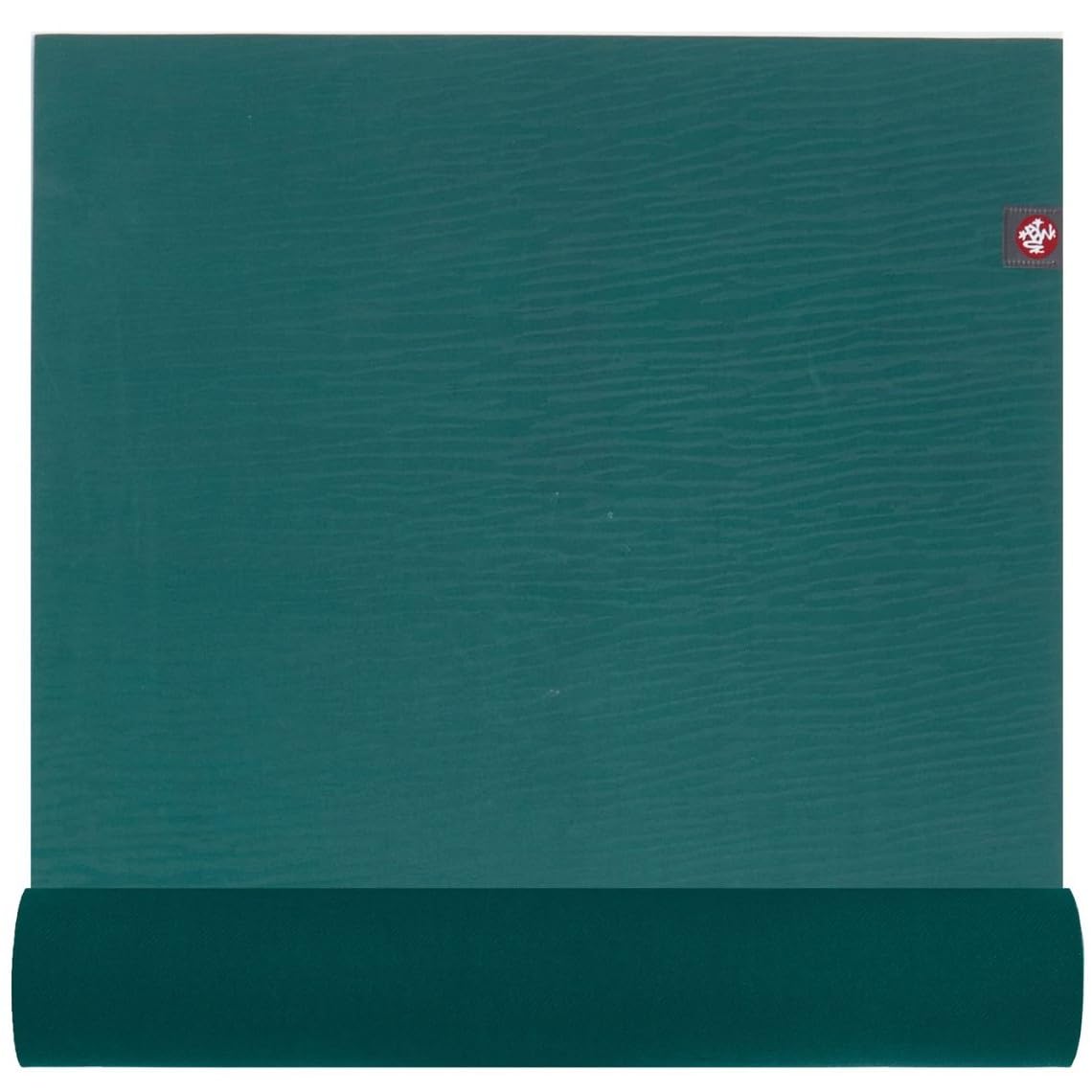
Manduka’s eKOLite is the travel-minded sibling of the eKO below, and the numbers show it. It weighs 5.2 pounds against the Tatago’s 7, and that difference shows up in your shoulder on the walk home. The 4mm build keeps it thin enough to roll tight, and the rippled surface texture gives you something to push against in strong flows.
The rubber is 100% natural tree rubber with a closed-cell design, which the maker says keeps moisture and buildup from soaking in. It is listed as 99% latex-free, and the surface is built to resist tearing and scratching. At 71 x 24 inches it is standard length but on the narrow side — two inches under the Tatago and Plyopic — so broad frames should check their stance width before committing.
Color and overall quality are what this mat is known for, and its suitability for hot classes gets steady praise. Grip is the split: dry, it does not slide; once you are soaked, some find it gives. Durability divides the same way — some mats run for years, some peel after months of light use. The scent draws the sharpest negative feedback of any trait here, so plan on airing it out.
The carry-first read: closed-cell natural rubber at 5.2 pounds and 4mm thick — a portable mat that packs flat and cleans easy.
The realistic caveat: this is a dry-grip mat with a softer surface, so heavy sweat and rough handling are the two things that shorten its life.
Your mat if: you carry it to a studio, roll it tight, and want easy-clean natural rubber.
Not your mat if: you plan to sweat through it daily in a heated room — the Plyopic holds wet grip better.
5. Manduka eKO Yoga Mat
The plusher, thicker full-size eKO, made from biodegradable tree rubber with a surface that feels like a grippy second skin.
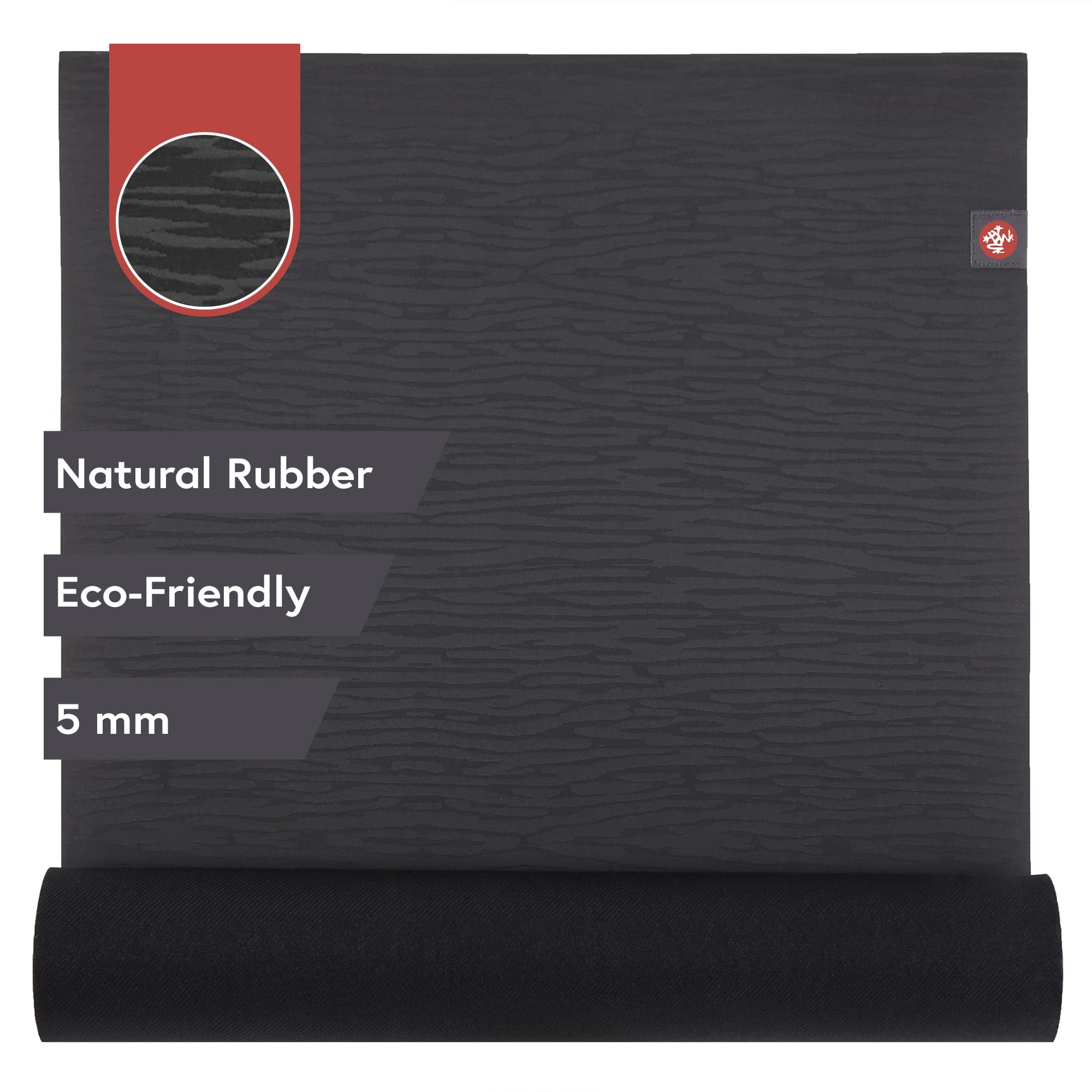
Where the eKOLite trims down, this eKO goes the other way. It is 0.2 inches against the eKOLite’s 0.16, so you get a visibly more substantial base underfoot. The rubber is biodegradable and 100% natural, and the textured surface gives a soft, close feel that many practitioners describe as wanting to practice barefoot on it.
The real distinction is texture over outright wet grip. Manduka describes the surface as giving reliable traction in dry conditions, which tells you the design intent: it is a dry-practice mat with a soft feel. At 71 x 24 inches it matches the eKOLite’s footprint. Care is the same strict routine — spray the maker’s rubber restore, wait five minutes, wipe dry, and never soak it, sun-bake it, or run it through a machine.
Quality is the overwhelming theme with this mat, and grip follows close behind — owners say it holds through sweaty sessions. Thickness earns genuine approval. Two things split opinion. Durability is one, with some mats holding up beautifully and others coming apart. Value and weight are the other, and heavy is the recurring word on the weight side. The scent is the loudest complaint — natural rubber carries a strong odor out of the wrapper, and these mats need real airing time.
What Owners Keep Coming Back To
- Biodegradable 100% natural tree rubber with a soft, textured surface
- 0.2 in thickness — a fuller base than the eKOLite’s 0.16 in
- Grip holds through sweaty sessions for most practitioners
- Non-toxic materials with a next-to-skin feel
What You Should Know Going In
- Strong rubber scent that takes real airing time to soften
- Heavier than the eKOLite, which matters on a commute
- Durability reports vary — some mats wear early
- Strict care: no soaking, no sun, no soap, no machine
Worth it for: yogis who want a soft, natural rubber feel and a little more depth, with grip that holds in a normal studio room.
Think twice if: your practice runs hot and heavy — this is a dry-condition mat, and the eKOLite is the lighter, easier-care option in the same family.
6. Hugger Mugger Para Rubber Mat

A quarter-inch of firm rubber that absorbs shock without squishing, streaked in a black-and-white pattern you will not lose track of.
At 0.25 inches this is the thickest mat on the list, and it uses that depth the right way. The cushioning is firm rather than plush, so it absorbs pressure while keeping you stable in standing poses. For anyone with sore joints, that firmness is the feature, not a compromise.
Grip runs on both faces, which makes the mat reversible without losing hold on either side. The natural rubber construction is built for durability and long life, and the material itself is renewable. Dimensions settle at 70 x 24 inches, so it is the shortest mat here — one inch under the eKOLite and two under the Tatago. At 6 pounds it sits between the heavier Tatago and the lighter Mandukas.
Quality and grip are the two things that carry this mat’s reputation, and cushioning follows. The firmness draws specific praise for people working through sore joints, since the mat supports rather than swallows. Two honest notes come up. The natural rubber smell is strong from the start and the mat is heavy to carry. Functionality lands mixed for a few buyers, though the core work — grip, cushion, support — lands well.
The support argument: 0.25 in of firm natural rubber with grip on both sides — a mat built for stability and shock absorption, not softness.
Sized to know: the 70 in length is the shortest here, so very tall practitioners should measure before buying.
Reach for it if: sore joints want firm support and you like flipping the mat for a fresh grip surface.
Pass if: you need a soft pillow-soft base — this one is deliberately firm, and its 6 lb weight travels heavily.
7. Liforme Printed Yoga Mat

The mat whose grip climbs as your sweat does, wrapped in full-color artwork with alignment markers printed across it.
Liforme’s pitch is unusually specific: the surface is designed to get grippier as you sweat, rather than holding best when dry. For a heated class, that inversion is the whole argument. The alignment markers are patented and built for bodies of all shapes and sizes, so a beginner and a long-time practitioner get the same reference points.
The footprint is the largest on the list at 72.83 x 26.77 inches, which gives tall and broad frames more room than the Tatago’s 72 x 26. Thickness lands at 4.2mm, thin enough for close floor contact. The top is a non-toxic, PVC-free eco-polyurethane over a sustainably sourced natural rubber base, and the printed design uses the maker’s own non-toxic inks. A yoga bag comes included.
Grip is what sells this mat — buyers report it stays sticky through sweat and never turns slick. The colors and printed design draw their own following. Value and durability are the honest splits: some mats prove rugged, others have the printed design lift away early. Cleaning draws mixed reports as well, with some finding it simple and others difficult. At 2.5 kg it is a substantial carry, though still under the Tatago’s 3.18 kg equivalent.
Where It Leads
- Sweat-activated grip that gets stickier as your practice heats up
- Patented alignment markers sized for all body types
- 72.83 x 26.77 in — the biggest footprint on this list
- PVC-free eco-polyurethane top over natural rubber, with a bag included
The Cost Of Ownership
- Design has been known to peel on some mats with heavy use
- Cleaning routine is fussier than a plain rubber surface
- 2.5 kg to carry, and premium-tier money for the print
Top choice for: hot-yoga regulars who want maximum grip plus alignment guidance in one mat.
Consider the Plyopic instead if: you want similar alignment cues at a friendlier tier — the plyopic’s PoseMap does the same job.
Know the Specs
Thickness In Inches And Millimeters
Thickness decides two things at once: how much your knees and wrists are cushioned, and how connected you feel to the floor. A 4mm mat is close to the ground; a 10mm mat is a soft base. Neither is better on its own — a balance-focused practice leans thin, a joint-comfort practice leans thick.
Grip Under Sweat
Dry grip is easy to manufacture, which is why most mats feel sticky in a cool room. Wet grip is the engineering. A textured natural rubber surface and a polyurethane top both hold onto moisture-dampened skin better than a smooth surface, which is why hot classes lean toward these materials.
Natural Rubber Versus Synthetic
Natural tree rubber is the material most of these mats share, and it brings both virtue and cost. It grips well and is renewable; it also carries a strong scent when new and dislikes soap, soaking, and sun. Plan on airing it out and wiping it with a damp cloth instead of washing it.
Dimensions And Carry Weight
A 24-inch width is the common standard, while 26 inches gives broader frames room. Weight runs from about 5 pounds up to 7 pounds across this list, and that spread matters far more to a commuter than to a home practitioner. Buy for how you carry, not just how you practice.
Common Questions
Is a rubber yoga mat better than a foam or PVC mat for hot yoga?
How thick should my rubber mat be for knee comfort?
Why does my new rubber mat smell so strong?
Can I use soap or a washing machine on a natural rubber mat?
Will a thick rubber mat make balancing poses harder?
What size mat should a tall person get?
Do alignment markers on a mat actually help?
How long does a natural rubber mat last?
Is a heavier mat worth it for home practice?
The Bottom Line
The mat that makes the most sense for the most practitioners is the Plyopic Ultra Grip PRO. It holds grip as sweat builds, carries alignment markers, and gives you 72 x 26 inches of room without tipping into premium territory. If thick cushion under your knees is the priority, the UMINEUX Extra Thick delivers at 10mm. And if you need length and width for a tall frame in a hot room, the Tatago Hot Yoga Mat is the one to reach for. For grip and alignment together, the Plyopic is the pick most buyers come back to — 4.5+ stars across 350+ owners and a surface that keeps working when the room heats up.
How we choose
We do not accept paid placement. Every pick is matched to a real buyer and a real use-case; we do not hands-on test units.
Sources
Specifications: manufacturer listings and product documentation. Review insights: verified customer reviews, as of November 2026. Pricing: not shown on this page (it changes often); check the current price via the retailer link.
As an Amazon Associate, Tactical Gear Guy earns from qualifying purchases. This does not affect which products we feature.