Specs are compiled from manufacturer listings and verified buyer reviews and can change over time — please confirm the key details on the product page before buying.
If you are shopping for a young lefty, the fastest way to buy the wrong glove is to grab a right-handed model off the shelf and hope. A left-handed throw glove is worn on the right hand so your player throws with the left, and that single design fact shrinks your options fast. The good news is you do not need to spend a lot to get a glove a six-to-ten-year-old can actually squeeze shut. This guide covers eight youth left-handed gloves that fit real kids, plus the sizing and web details that separate a keeper from a hand-me-down.
This guide is built by comparing the manufacturers’ published specifications and the patterns across verified customer reviews, so you get each pick’s real strengths and trade-offs instead of marketing spin.
Most parents get stuck on the label instead of the hand. The glove has to fit a small hand, close with little grip strength, and survive a full season of practices. Every pick below has been checked for a real left-hand throw orientation, a youth fit, and a web type that suits a beginner. youth left-handed baseball gloves sort themselves out quickly once you know what to measure.
Top Picks

How To Choose Youth Left-Handed Baseball Gloves
Three things decide whether a youth lefty glove gets used or ends up in the garage: the hand orientation, the length, and how easy it is to close. Get those right and the brand barely matters.
Get the hand orientation right first
A left-hand throw glove is worn on the right hand. That is the whole trick, and it is also the most common ordering mistake. If your child catches with the right hand and throws with the left, you want a left-hand-throw glove. Flip the two and you have bought a glove that will not work at all.
Match the length in inches to age and position
Youth gloves run from 9 inches up to about 11.5 inches. The shorter patterns suit t-ball and small infielders because there is less leather to manage. Longer patterns give an outfielder or first baseman more reach. A glove that is too big for a young player is harder to close and the ball rattles around loose.
Look hard at the break-in level
Ready-to-Play means the glove is soft enough to use almost straight away. That matters for a seven-year-old who does not have adult grip strength or a spare month to work a stiff pocket. A soft shell with padded finger linings keeps a young player comfortable through a full practice.
Side-by-Side Comparison
| Model | Best For | Size | Web Type | Break-In Level | Amazon |
|---|---|---|---|---|---|
| Easton Moxie Youth★ Best Overall | Beginners ages 6-9 at any position | 10.5″ | Basket | Ready-to-Play | Amazon |
| King Mills Left Handed YouthBest Value | First glove for entry-level lefties | 9″ | Basket | Ready-to-Play | Amazon |
| Wilson A200 Youth T-BallBest Construction | All-position t-ball and early youth | 10″ | H-Web | Ready-to-Play | Amazon |
| Easton Professional Youth 10″ | Small infielders wanting a pro-style shell | 10″ | I-Web | Soft | Amazon |
| Rawlings Mark of a PRO LITE | Style-minded players wanting camo | 9.5″ | I-Web | Ready-to-Play | Amazon |
| Wilson A500 Infield | Infielders wanting a lightweight shell | 11.5″ | H-Web | Ready-to-Play | Amazon |
| Akadema AHC94 | Older youth wanting a deep pocket | 11.5″ | Single Post | — | Amazon |
Detailed Reviews
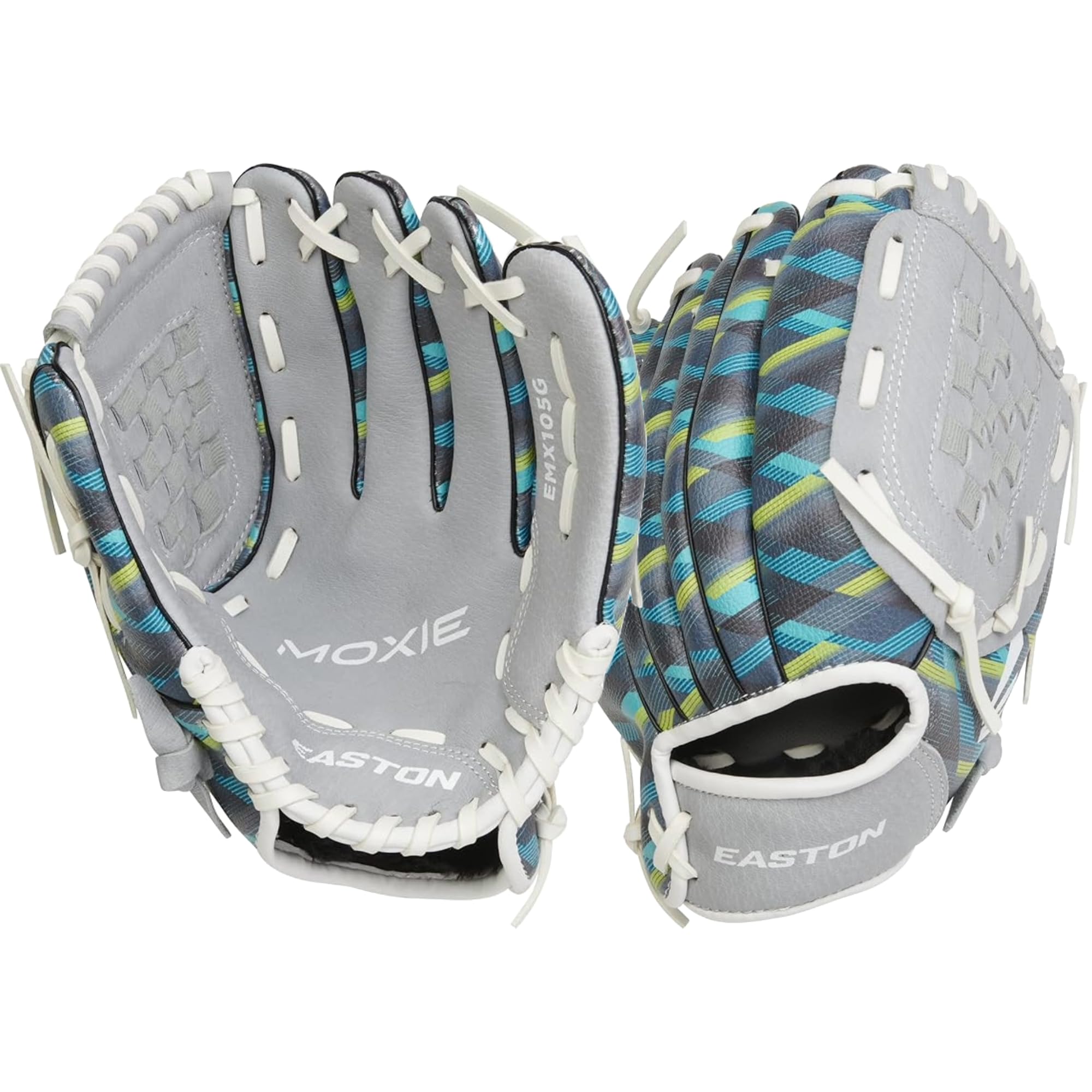
1. Easton Moxie Youth Baseball Glove
Our pick — 4.5+★ from 150+ verified ratings; the strongest balance of quality and price.
A soft 10.5-inch basket-web glove with Zero Shock palm padding that takes the sting out of catches for ages 6-9.
A six-to-nine-year-old does not need a perfect pocket. They need a glove they can squeeze shut and a palm that does not sting when the ball arrives. The Moxie answers both with a 10.5-inch basket web and Easton’s Zero Shock sting reduction built into the palm. The all-leather shell is soft enough that there is little break-in required, so a first practice does not turn into a month of wrestling with stiff leather.
Owners praise the overall build more than any other single quality, and it lands at a mid-range price. Padded finger linings keep a small hand comfortable through a long practice.
The catch is durability, which lands as the mixed note in owner feedback — a soft shell is easy to close precisely because it is softer, so plan on it giving out earlier than a stiff premium leather. The 10.5-inch pattern with that basket web is aimed squarely at ages 6-9 at any position, so a taller or older player will want more glove. For the value, the rating and volume here make this the safest starting point in the group.
Where It Wins
- Zero Shock palm takes the bite out of catches
- Soft all-leather shell closes with little break-in
- 10.5″ basket web sized for ages 6-9 at any position
- Padded finger linings for comfort
Where It Gives Ground
- Durability is the mixed note — soft leather wears sooner
- 10.5″ is short for an older or larger player
Reach For This If: you have a young lefty ages 6-9 who needs a soft, sting-free glove that is game-ready now.
Look Elsewhere If: your player is already past the fundamentals and needs a stiffer shell built for travel ball.
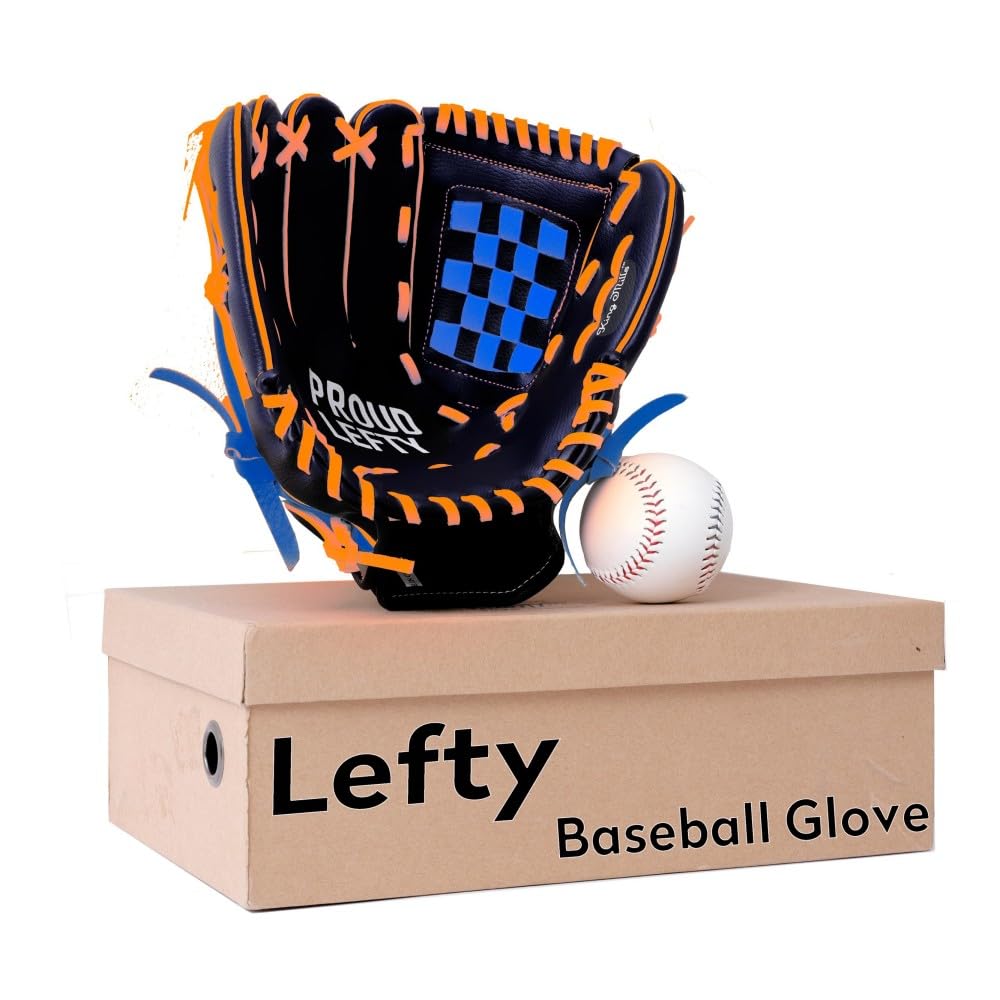
2. King Mills Left Handed Baseball Glove for Youth
A tiny 9-inch starter glove for the lefty who has never worn one before.
This one is single-purpose in the best way: it is built for lefties only, worn on the right hand for a left-handed throw. At 9 inches with a basket web, it is aimed at introductory t-ball training — short enough that a small hand can actually control it. That is a meaningful difference versus the 11.5-inch pattern on the Wilson A500 later in this list. Compare the two and the King Mills runs a full 2.5 inches shorter, which is the whole point for a first glove.
The glove uses PVC/PU mixed leather rather than full leather, which keeps it tough and strong while staying forgiving to close. It weighs in at 15.84 ounces and arrives ready to play, so there is no break-in routine to run through. The maker also includes a 9-inch baseball, which is handy — you get a ball sized to match the glove on day one.
Reviewers single out the build quality above everything else. The recurring caveat is fit, which comes back mixed — some players say it fits perfectly, while others find it too big for a young child. For a four-to-six-year-old, treat it as a strong choice, and check the hand against it once it arrives. It comes in black and blue and is easy to hand down as a first glove once it is outgrown.
What You Get: a 9-inch basket-web intro glove in PVC/PU leather with a matching baseball included, ready to play straight from the box.
Ideal For: a first-time lefty at t-ball age who needs a small, forgiving glove and a ball in one package.
Not Ideal If: your player is already in kid-pitch and needs a longer, leather-shell glove to hold up.
3. Wilson A200 Youth T-Ball & Baseball Glove
Rolled Dual Welting stitched into the liner is why this 10-inch H-web pocket resists flattening.
Rolled Dual Welting is the detail here. On this glove it is built into the liner instead of sitting on the surface, which reinforces the pocket so it resists flattening. That means a consistent feel on catch after catch, rather than a pocket that sags out after a couple of months. It is Pro Stock Leather with a 10-inch pattern and a classic H-web, so there is a clear window for a kid to track the ball.
The H-web and secure pattern make it an all-position glove — infield, outfield, or pitcher without swapping gear. For a small player bouncing between positions at t-ball age, that saves a scramble before every practice. It is royal, red, and yellow and marked ready to play, so young players can settle into a stable pocket without a long break-in. Kids who are learning to trust their hands on defense will notice the difference in that square web quickly.
The honest limit: this is a 10-inch t-ball-first pattern, and there are not enough owner reports in circulation to fill you in on long-term wear. That counts as a fresh listing rather than a red flag. What is clear is the build approach — the welting is genuinely stitched where a kid needs structure — and it comes in right below the Moxie on price.
What Stands Out
- Rolled Dual Welting hidden in the liner holds pocket shape
- H-web gives a clean window to the ball
- All-position pattern, one glove for infield and outfield
What To Weigh
- 10″ t-ball-first pattern suits younger players only
- Long-term wear is not yet well documented
The Case For It: the hidden welting makes this the smartest pick if you want a pocket that still looks square at the end of the season.
The Reason To Hesitate: at 10 inches it is a young player’s glove, so plan on sizing up as they grow.
4. Easton Professional Youth Baseball Glove 10″

A pro-style 10-inch shell in navy and white for a young infielder.
Note the orientation before you buy — this listing is a Right Hand Throw, which is the opposite of what a lefty needs. The 10-inch I-web pattern is built for an infielder’s quick transfer, with a synthetic lining and a soft break-in level that is friendly to younger players. Navy, white, and red make for a clean, classic look that holds up visually through a season.
The I-web pocket is the defining feature. It creates a narrow, flat channel that suits a player learning to funnel ground balls to the throwing hand. That is a different feel from the wide basket web on the Moxie — you get less forgiving catch surface and more structure for infield work. If your child plays mostly shortstop or second base, this is the shaping you want.
The one thing to check is the hand orientation. A left-handed thrower needs the mirror version of this glove, so match the model number carefully. With that box ticked, the profile is excellent: 10 inches, soft leather blend, synthetic lining, and enough rotation behind it to confirm the build holds up. It sits just above the Moxie on price.
The Pocket Story: an I-web is narrower than a basket web, which is great for infielders learning to funnel grounders and less forgiving for a raw beginner.
Pick It If: you need a compact infield glove and you have confirmed the exact left-hand-throw model on the listing.
skip it if: your child plays outfield or is brand new and needs a wider, more forgiving catch surface.
5. Rawlings Mark of a PRO LITE T-Ball & Youth Glove
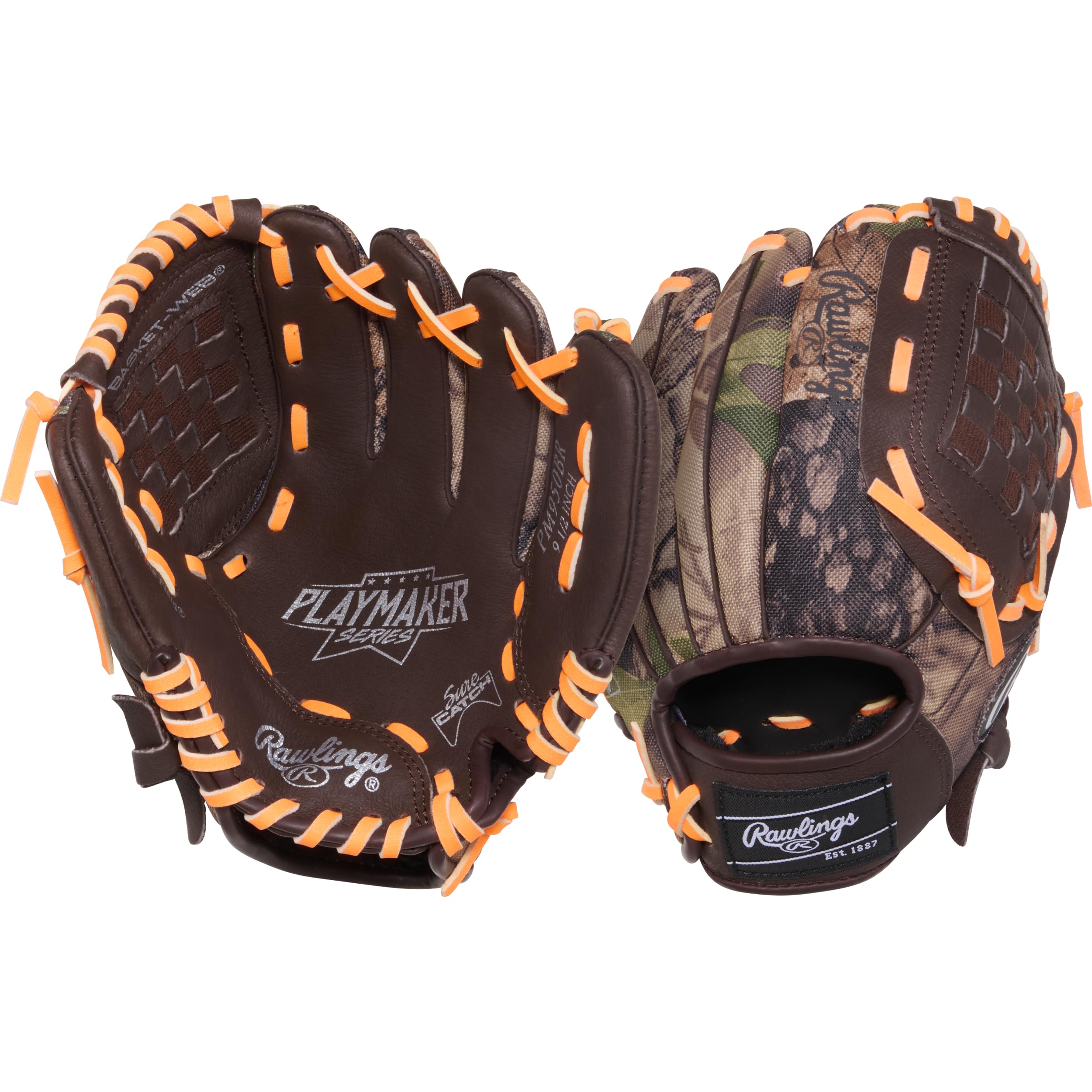
A hunting camo youth glove for the kid who wants to be noticed on the field.
Rawlings goes all in on looks with a bold hunting camo pattern in this special edition, offered in a left-hand throw version. It is available for left-hand throwers as well as right, so a lefty does not have to give up the look. The Pro-I web secures catches and supports quick transitions, which suits an all-around player rather than a single position.
The Youth Pro Taper wrist is the practical half of the pitch — it gives a snug, comfortable fit for younger players still building confidence. Full-grain leather is broken in from the start, so the glove feels game-ready without a break-in project. The 9.5-inch size is on the smaller end of the 9.5-to-11.5-inch range Rawlings offers in this line, which means it suits a smaller hand. As a first or second-season glove, that snug fit helps a young player control the leather rather than fight it.
Rawlings caps the leather at full-grain but does not break out a heavy break-in routine, and the size range runs 9.5 to 11.5 inches so you can size up the same model next season. The camo print is a love-it-or-leave-it choice — if your player wants a bold look, it is the answer here.
Field Presence: the camo print is the selling point, but the Pro-I web and full-grain leather do the actual work of catching the ball.
Choose This One: for the young lefty who wants the boldest look in the dugout and plays all over the field.
Think Twice If: your player prefers a classic leather finish and does not want pattern on the back.
6. Wilson A500 Youth Infield Baseball Glove

A lightweight 11.5-inch infield glove that stays locked through hard tags and dives.
Wilson’s Quick Fit wrist system cinches around the hand so the glove stays locked through tags and dives. It cinches smoothly around the hand for a stay-put feel, so the glove holds through hard tags and slides instead of twisting loose mid-play. The 11.5-inch H-web pattern is built specifically for infielders, and the resilient top grain leather keeps its structure while staying surprisingly light on the hand at 14.88 ounces. That is a shade lighter than the 15.84-ounce King Mills above, on a much longer and more structured glove.
Rolled dual welting runs through the finger backs to reinforce structure and hold a consistent pocket through countless catches. Traditional rolled finger binding smooths the edges to reduce hot spots and pressure, which is a real comfort point for a player who wears a glove three days a week. The H-web gives a clear window to track every hop and supports quick transfers.
This is sized toward the upper end of the youth range — 11.5 inches reaches the top of Wilson’s 10.5-to-12.5-inch span, so it suits a player who has grown and moved to kid-pitch or travel infield. If you have a young, small infielder, the shorter Moxie or Rawlings will be easier to close. Those ready to step up will appreciate the Quick Fit hold and the light weight.
Why It Stands Out
- Quick Fit wrist stays locked through tags and dives
- 14.88-ounce top grain leather feels light on the hand
- Rolled dual welting keeps the pocket consistent
- Rolled finger binding cuts hot spots
The Trade-Off
- 11.5″ is a longer, advanced pattern — big for a small kid
- Top grain leather wants a bit more care than a soft blend
Best Suited To: a growing infielder who wants a light, locked-in glove that will not slip on a dive.
Less Suited To: a seven-year-old with small hands, where the 11.5-inch pattern is more leather than they can manage.
7. Akadema AHC94 Professional Series Youth Glove
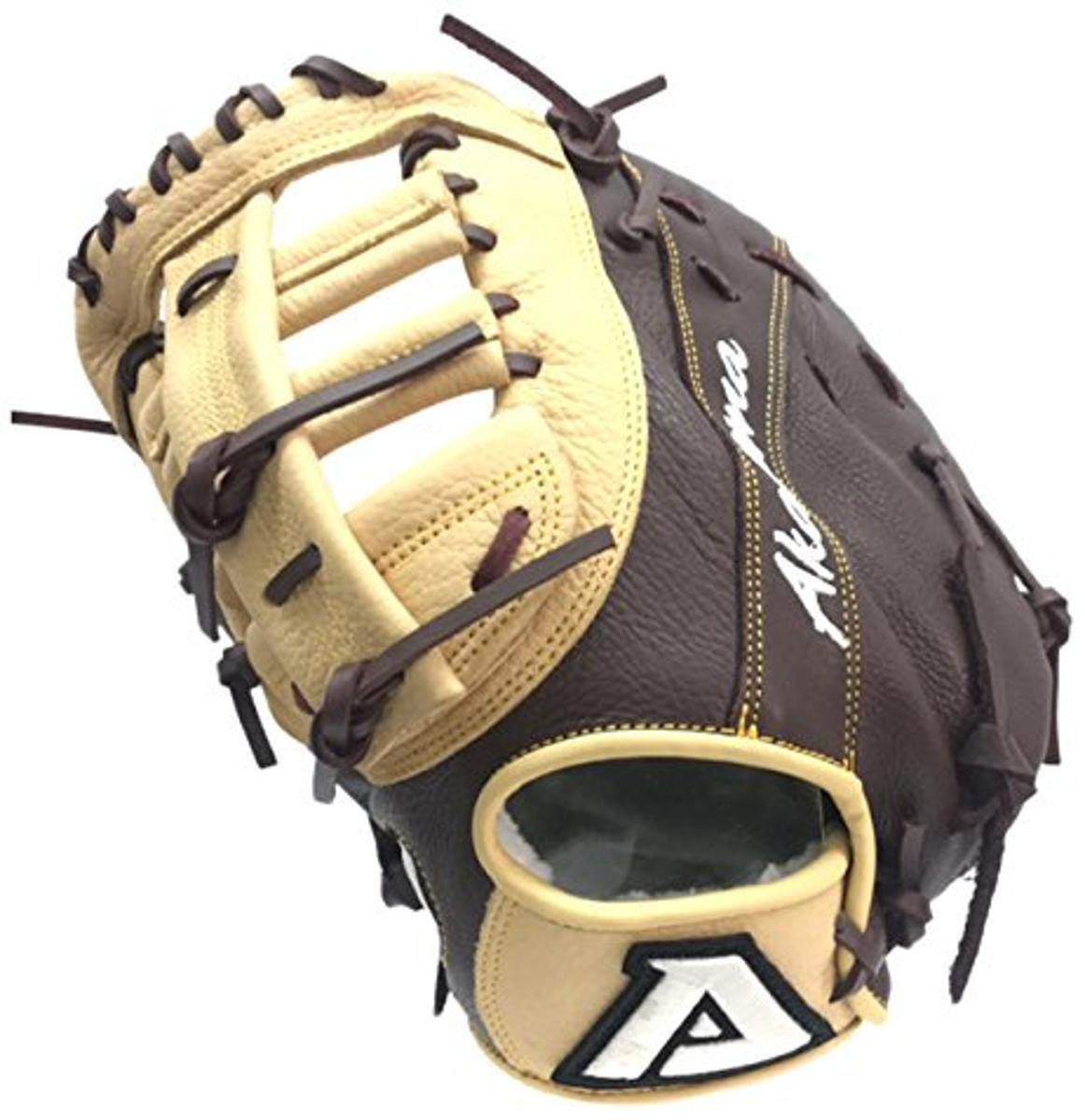
A deep-pocket first base pattern in all leather for the older youth player.
The AHC94 is a first baseman’s glove, and that is the point. The 11.5-inch pattern with a single-post, double-T web and an open back gives a deep pocket that is built to swallow throws in the dirt. It runs 16 ounces in solid leather, which is heavier than the lighter synthetic blends on this list but gives more mass to absorb a hard throw. If your lefty is learning first base, the deep pocket is a genuine advantage over a flat infield web.
Buyers report the value stands out, with several noting the leather holds up against pricier gloves. The caveats come back mixed: durability draws some complaints, break-in gets both praise for being easy and criticism for the opposite, and fit splits between players who love the deep pocket and smaller hands that find it too big. Treat that as a sizing note — this glove suits an older, larger youth player, and smaller hands should look elsewhere.
Akadema positions this in a professional series, and the all-leather build has real mass to it. For a young first baseman committed to the position, that deep pocket and 16 ounces give a feel the light infield gloves above cannot match. Just confirm the fit against your player’s hand before committing.
What It Delivers: a genuine first baseman’s glove — deep pocket, single-post double-T web, open back, full leather at 16 ounces.
The Target Buyer: an older youth lefty who plays first base and wants a deep, heavy-leather pocket to scoop with.
The Catch: fit runs big and durability feedback splits both ways, so check the size against your player’s hand and plan the break-in time.
Know the Specs
Hand Orientation and Left-Hand Throw
A left-hand throw glove is worn on the right hand so your player throws with the left. Every pick here lists a Left Hand Throw orientation, but brands still sell mirror versions of the same model, so confirm the exact variant before you order. Getting this wrong is the one mistake that cannot be fixed with a break-in routine.
Glove Length in Inches
Gloves run from roughly 9 inches to 11.5 inches in the youth range. A 9-to-10-inch pattern suits t-ball and small infielders because there is less leather to manage. An 11.5-inch pattern gives more reach for first base or outfield but asks a bigger hand and more grip strength to close.
Web Type: Basket, H-Web, I-Web, Single Post
The web is the webbing between thumb and fingers. A basket web gives a forgiving, wide catch surface for beginners. An H-web gives a clear window to track the ball and suits all-position play. An I-web runs narrow for infield funnels, and a single-post double-T web creates a deep pocket for first base scoops.
Break-In Level and Sting Reduction
Ready-to-Play means the glove is soft enough to use soon, so a young player can close it without adult grip strength. A stiffer shell takes more work to break in but holds its shape longer. Sting reduction pads the palm to take the bite out of a catch, which matters most for a kid just learning to catch a hard ball.
Common Questions
How do I know if my child needs a left-handed glove?
What size youth glove should I get for a six-year-old?
Will a 10.5-inch glove be too small for my nine-year-old?
Does a youth left-handed glove need to be broken in?
What is the difference between a basket web and an H-web?
Can a youth glove work for first base?
Does a left-handed thrower need a special first base glove?
How do I stop the sting when my child catches?
What weight should a youth glove be?
How long will a youth glove last?
The Bottom Line
For most young lefties, the winner is the Easton Moxie Youth Baseball Glove — a 10.5-inch basket web, Zero Shock palm padding, and a soft all-leather shell that closes without a break-in battle. It is the pick that gets a six-to-nine-year-old catching with confidence on day one. If you need the smallest first glove and a ball in one box, the King Mills Left Handed Baseball Glove is the value call with its 9-inch basket web. And for an older infielder who wants a light, locked-in glove, the Wilson A500 with its Quick Fit wrist and 14.88-ounce top grain leather is the one to reach for.
How we choose
We do not accept paid placement. Every pick is matched to a real buyer and a real use-case; we do not hands-on test units.
Sources
Specifications: manufacturer listings and product documentation. Review insights: verified customer reviews, as of November 2026. Pricing: not shown on this page (it changes often); check the current price via the retailer link.
As an Amazon Associate, Tactical Gear Guy earns from qualifying purchases. This does not affect which products we feature.