Specs are compiled from manufacturer listings and verified buyer reviews and can change over time — please confirm the key details on the product page before buying.
Cheap work boots have one job: keep your feet safe and steady through a full shift without wrecking your paycheck. The problem is that the cheap shelf is crowded with boots that split at the sole in a month or feel like concrete blocks by lunchtime. The fix is knowing which few pairs actually hold up, and what each one does best. That is what this list gives you: nine real steel-toe and soft-toe boots, sorted by what they do best, with the honest catch on each one spelled out.
This guide is built by comparing the manufacturers’ published specifications and the patterns across verified customer reviews, so you get each pick’s real strengths and trade-offs instead of marketing spin.
Below you will find the boot that fits your job, how to read a safety-toe rating before you buy, and the fit tricks that save you a return. The crowd favorite here holds 4.5+ stars across 500+ ratings, but every pick below is matched to a job site, not a scoreboard. Use this rundown of the cheap work boots worth your money to pick a pair once and stop re-buying every season.
Top Picks


How To Choose The Best Cheap Work Boots
Most people buying work boots on a budget make the same mistake: they chase the lowest tag and end up buying twice. The smarter move is to match the boot to your floor and your hazards — dropped objects, wet concrete, oily shop floors, or long miles of walking. Narrow that down first, and the right pick on this list becomes obvious.
Start with the toe, not the price
A steel toe is a metal cap built into the front of the boot that shields your toes from falling or rolling loads. Look for a toe that meets ASTM F2413 or ASTM F2412 standards — that is the recognized test for impact and compression protection, and it is what a site inspector will check. If your job has no dropped-load risk — roofing, landscaping, warehouse walking — a soft toe gives you far more flexibility and less bulk for the same money.
Read the outsole for your actual floor
Slip resistance is the spec that keeps you upright, and it is worth understanding what you are standing on. Oil and water demand a lugged rubber or TPU outsole with real tread depth; dry concrete is far more forgiving. A boot sold as slip resistant is a good start, but check whether the tread pattern suits the surface you work on daily, not a showroom floor.
Fit and weight decide whether you wear them
A boot that pinches at the sides gets left in the truck. Budget boots often run narrow, so know your width and read the fit feedback carefully. Weight matters just as much: a heavy steel toe over a 10-hour shift tires your legs faster than a lighter pa
Waterproof means resistant, not a wading boot
A waterproof membrane or treated leather keeps splash and rain out, and that is usually enough for a wet job site. But budget waterproofing has limits — standing in deep water or long soaks will eventually find a way in. Buy waterproof for splash and weather, and treat deep-water work as a different category of boot.
Side-by-Side Comparison
| Model | Best For | Toe Type | Safety Rating | Waterproof | Amazon |
|---|---|---|---|---|---|
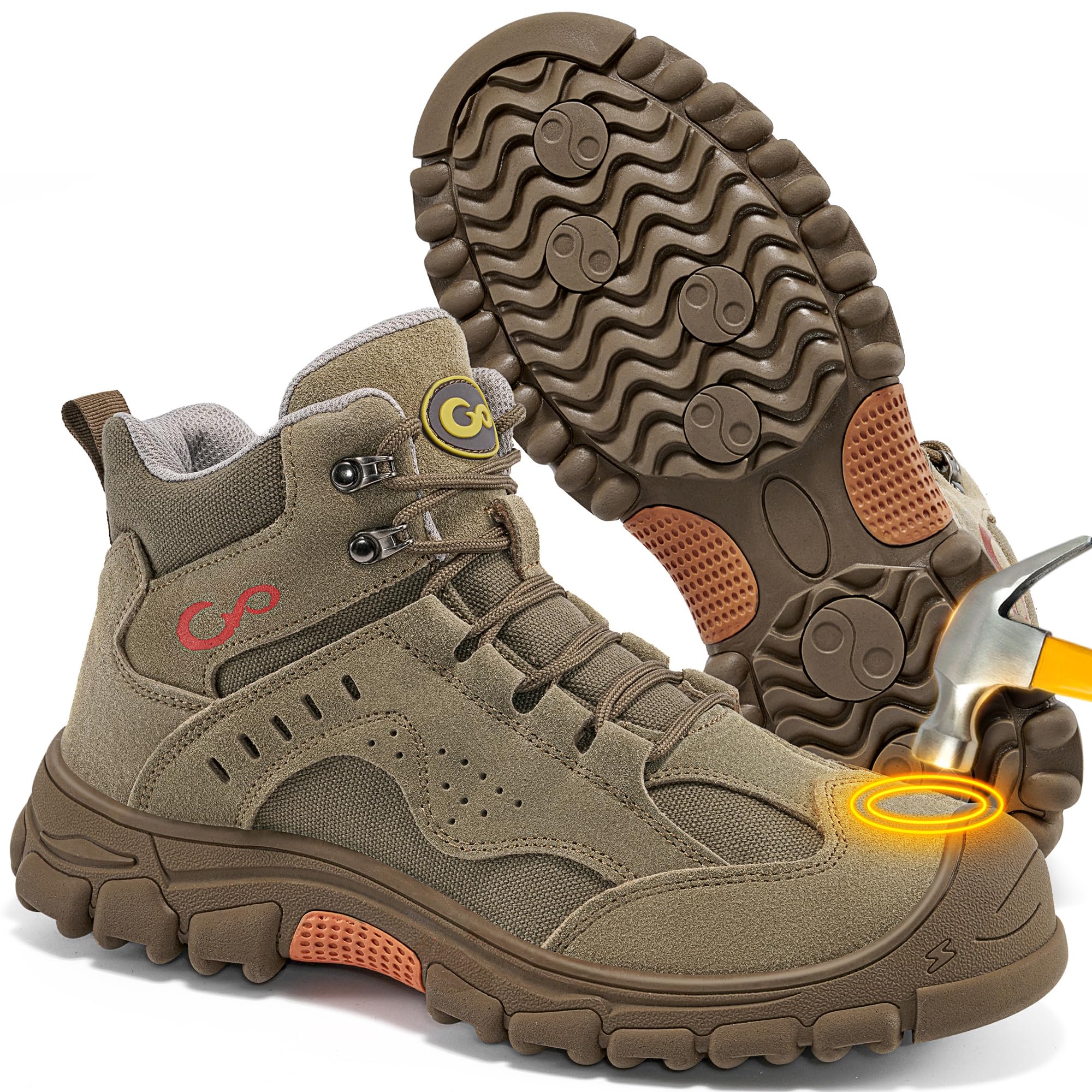
| Work Boots for Men Steel Toe (Ablanczoom)★ Best Overall | All-round budget safety | Steel toe | ASTM F2412-24 | — | Amazon |
| NINGO Steel Toe Boots (Puncture Resistant)Toughest Build | Heavy-duty abuse | Steel toe | Puncture resistant | — | Amazon |
| Lugz Men’s Monterey Steel ToeWidest Fit | Wide feet and all-day wear | Steel toe | — | — | Amazon |
| Lugz Drifter 6 Steel Toe | Style plus protection | Steel toe | — | Water resistant upper | Amazon |
| LARNMERN Soft Toe Waterproof | Light-duty and casual work | Soft toe | — | Waterproof leather | Amazon |
| Steel Toe Boots for Women Men (Lightweight) | Long days on your feet | Steel toe (200J impact) | Kevlar midsole, anti-puncture | Waterproof upper | Amazon |
| NINGO Waterproof EH Rated | Electrical-hazard job sites | Steel toe | ASTM F2413-24 (I-75/C-75, EH) | Waterproof | Amazon |
| ANGRYRAM Steel Toe Cowboy Boots | Western style on the job | Steel toe | — | — | Amazon |
| SUREWAY 6in Waterproof Soft Toe | Roofing and agility work | Soft toe (non-safety) | — | Waterproof Crazy Horse leather | Amazon |
Detailed Reviews
1. Work Boots Steel Toe
The featherweight steel toe that proves protection doesn’t have to mean lead boots.
The first thing you notice is the weight — or the lack of it. This boot comes in at 3.22 pounds, which is a whole lot lighter to lift thousands of times a shift than the Lugz Drifter 6 at 4.5 pounds. Lower weight means less leg drag on long days, and that is the single biggest reason this is the pick for most buyers.
It earns its ASTM F2412-24 rating, the recognized standard for steel-toe impact and compression protection, so it is site-legal for dropped-object work. The slip-resistant outsole handles ordinary concrete and shop flooring without drama. What wins people over beyond the specs is the overall build — it feels more solid than a budget boot usually does, and the breathable upper keeps things from turning into a sauna.
The honest catch lives in two places. Fit is a coin flip — some owners find these boots great straight off, others find them off — and a stretch of feedback notes the soles wearing out faster than expected on hard use. That is a real durability ceiling you should weigh if you are buying for demolition or heavy concrete, not a mystery the marketing hides.
Where it delivers
- 3.22 pounds — light enough to wear all shift without leg fatigue
- ASTM F2412-24 steel toe that meets the protection standard
- Breathable upper keeps feet cooler over a full day
- Slip-resistant outsole for wet and slick concrete
What to weigh
- Fit feedback runs split — try before you commit
- Soles wear faster under hard, heavy-duty use
Pick this if: you want a light, standard-compliant steel toe for general construction and warehouse work at the budget end.
Look elsewhere for: demolition-grade abuse, where a puncture-resistant sole like the NINGO below holds up longer.
2. Steel Toe Boots
Built for the guy who puts his boots through a war zone and needs them to answer.
If your workday involves nails, rebar, or dropped tools, the puncture-resistant sole here is the reason to pause on this boot. It is a steel-toe, non-slip design aimed squarely at heavy-duty tasks, and the build quality is what stands out — it comes across as genuinely durable and reliable in a way that cheaper boots rarely manage. In the photo it looks the part too, with a clean, workmanlike finish.
The functionality side is solid: it grips on slippery floors and the uppers hold their shape through hard use. Comfort lands in the middle of the pack, though — plenty find them good on their feet, while a share of buyers hit heel issues over long shifts. Weight and sizing also split opinion, so measure your foot and do not assume a standard size will float.
For a boot that has to survive a punishing jobsite without a big spend, this is the toughest-feeling option on the list. Just plan on breaking them in and confirm your heel agrees before you make them your daily pair.
The durability read: this is the pick to make if the sole sees nails and sharp debris all day — that puncture-resistant build is doing real work under you.
Heel first: the one honest grip holds on heel comfort, so break them in on shorter days before you trust a ten-hour shift.
Reach for these when: your feet need a heavy-duty, puncture-resistant barrier more than a featherweight feel.
Think twice on: long walking shifts if heel comfort is your weak point.
3. Lugz Men’s Monterey Steel Toe Work Boot
For the wide-footed worker who wants a safety toe that doesn’t pinch at the sides.
Wide-foot buyers usually suffer in budget steel toes — but this Lugz is the model that fit them well time and again. The memory foam insole cushions each step for long shifts, and the slip-resistant wedge rubber outsole gives you a stable platform on varied surfaces. Add the padded collar and tongue, and it reduces pressure around the ankle instead of digging in. The faux leather upper keeps it looking presentable, with two color combinations to choose from.
Where this boot really leans on its reputation is comfort on the job — no blisters breaking it in, and a ride that holds up over a full day. Buyers also tend to call it a great value, which is the whole game in this price bracket. It handles everyday wear and weekend projects as easily as site duty.
The caveat is materials and longevity. The durability side draws mixed reports, and a slice of feedback questions the faux leather’s staying power over the long haul. It is a comfort-first boot rather than an armored one — buy it for the fit and all-day feel, not for surviving years of abuse.
Comfort that shows up: the memory foam insole and padded collar are exactly why wide feet finally get a break here.
The gentle caution: treat the faux leather as a comfort material, not armor — heavy wear will show on it sooner than on full-grain boots.
This one’s for you if: your feet run wide and comfort through a shift matters more than maximum ruggedness.
Not the one for: jobs that expect years out of a single pair of uppers.
4. Lugz Drifter 6 Steel Toe Boot

The steel toe you’d actually wear off the clock — classic looks, real protection underneath.
Most work boots look like work boots. This one wears a six-inch classic silhouette, water-resistant upper, and signature speed-hook hardware that reads like street style as much as jobsite gear. The steel toe still delivers protection, so style does not cost you safety.
Weighing 4.5 pounds, it is the heavier end of this group — noticeably so next to the 3.22-pound Ablanczoom. That extra mass comes with a solid, grounded feel and a durable rubber outsole, and the molded memory foam insole cushions the stride. Owners consistently rate the fit as spot-on and the look as something that pairs with nearly any outfit.
Here is the trade-off: the design dates back to a classic pattern, and it favors feel and finish over lightweight agility. If you are on your feet and covering ground all day, the extra heft will register. If your day is more standing and walking than sprinting, the comfort and the look pay you back.
Why it earns a spot
- Water-resistant upper sheds splash and weather
- Steel toe plus classic good looks in one boot
- Molded memory foam insole cushions the stride
- Fit checks out — most find it true to size
What to weigh
- 4.5 pounds is the heaviest here — more drag on long-mile days
Go here for: a steel-toe boot that works the site and then cleans up for the weekend.
Skip only if: you cover serious ground on foot and every ounce matters.
5. LARNMERN Soft Toe Work Boots

A soft toe that skips the metal cap and leans into comfort, water shedding, and walkability.
No steel cap here, and that is the point. The soft toe construction lets your toes move naturally while still shielding the front from scuffs, which suits light-duty work environments and casual wear far better than an armored boot. The waterproof leather repels moisture, and the extra-thick padded collar takes pressure off the ankle.
What sticks with buyers is the general build — it feels well-made, the fit is generally right, and it holds up better than the price would suggest under rough conditions. The non-slip rubber outsole keeps grip on wet terrain and oily shop floors. It is the boot you grab when the job is light and you still want to look put-together.
Water resistance is where the limits show. Some find it keeps them dry, and others find water seeping in on a wet site. Treat it as a splash-and-rain boot, not a standing-water boot, and it does its job well.
Why it clicks: the soft toe frees your foot to flex, so long walks and light tasks feel way easier than in a rigid steel cap.
Wet-weather reality: waterproof leather handles rain and splashes — deep puddles on a heavy site are a step too far.
Best matched to: light-duty work, casual jobs, and anyone who wants waterproofing without the steel-toe bulk.
Not for: real-toe-protection jobs where a metal cap is required.
6. Steel Toe Boots Waterproof
The safety boot that floats — light on the foot, armored where it counts.
Here is the standout spec: a Kevlar midsole. That is a puncture-resistant layer built into the sole, designed to stop nails, steel bar, and sharp objects from coming up through the bottom. Pair it with a steel toe rated to 200 joules of impact resistance, and you are covered from both top and bottom.
Lightness is the other half of the story. The ultra-light sole means you shuttle around the workplace without tiring your feet, and the waterproof leather upper keeps them dry in humid conditions. It is also built to resist intermittent high-temperature sputter — handy if you work around welding or smelting. Comfort is clearly the priority, and it shows.
Now the honest part: sizing is a gamble. Some say they run big, others find them too narrow, so a true-size test before you commit is smart. Durability also splits — some boots hold up well, others have soles fail in the first weeks, so a careful first wear tells you a lot.
What earns the nod
- 200J impact-rated steel toe plus Kevlar anti-puncture midsole
- Ultra-light sole keeps you quick on your feet all day
- Waterproof leather upper resists short water rushes
- Anti-scald protection for welding and smelting work
The fit flip-side
- Sizing runs inconsistent — big for some, narrow for others
- A share of soles wear out early, so inspect on arrival
Suits you if: you want top-and-bottom protection — dropped loads plus punctures — without a heavy boot.
Look past it for: a guaranteed true fit; this one rewards trying before you rely on it.
7. Waterproof Steel Toe Work Boots
The site-certified workhorse for anyone who works around live electrical hazards.
Electrical hazard protection is rare at this level, and it is the headline here. The steel toe meets or exceeds ASTM F2413-24, covering impact (I-75), compression (C-75), and EH protection — three separate safety scores in one boot. If your site requires EH-rated footwear, this is the pick that gets you compliant.
The rest of the build backs it up. Full-grain leather resists abrasion, and the direct-attach construction bonds the outsole to the upper so it resists separation over time. The TPU SR outsole is made for wet, oily, and uneven surfaces, and the maker notes it offers up to three times greater abrasion resistance than traditional rubber. The removable high-rebound insole has gel heel padding to absorb shock and fight fatigue.
Comfort shows up quickly — it walks without foot pain and skips a painful break-in. Weight is the one split view, so if featherweight matters most, the Ablanczoom is the lighter alternative. Otherwise, this is a proper site boot dressed in an approachable package.
The compliance win: I-75, C-75, and EH protection together make this the safest pick here for electrical and heavy-object environments.
Weight honesty: opinions divide on how heavy it feels — worth trying if you are sensitive to bulk.
Made for: job sites where EH rating and full ASTM F2413-24 toe protection are non-negotiable.
Only skip if: a featherweight boot is your top priority over certified protection.
8. ANGRYRAM Steel Toe Cowboy Work Boots
A steel toe tucked inside a square-toe western silhouette — work boots that look the part.
If you want to wear cowboy boots to the job, this is the one. It carries a steel toe behind a square-toe western profile, so you get protection and that unmistakable western look. It’s built roughly twenty percent lighter than standard work boots, with a synthetic sole that still grips and resists wear. It also runs true to your usual boot size.
What people notice first is the look — it holds up as good-looking and comfortable, and buyers tend to call it good value. The deep hard-grip tread keeps you steady, and the synthetic sole keeps the whole thing from feeling like a brick.
Two catches to plan around. The steel toe area has been reported to rip and tear over time, and the fit runs narrow, so if you wear a wide foot this is not your boot. It is a style-led pick, and the toughness plays second fiddle to the western form.
Looks different, protects the same: the square-toe western shape separates it from a plain work boot, and the lighter build keeps it wearable all day.
The fit warning: narrow feet do well here; wider feet should size up or look at the Lugz Monterey instead.
Right for: western-wearing workers who want the cowboy look with a safety toe inside.
Wrong for: wide feet or anyone who needs the toe cap to survive years of hard knocks.
9. SUREWAY 6in Waterproof Work Boots

No steel cap, no bulk — the soft-toe boot built to move like a hiker on rough ground.
A soft, non-safety toe means zero bulk and full freedom of movement on ladders and uneven ground. The waterproof Crazy Horse leather develops a vintage patina with age, and the waterproof lining keeps your feet dry in weather.
The outsole is oil and slip resistant, built to grip slippery metal roofs and uneven outdoor terrain. A cushioned insole and breathable moisture-wicking lining work together to cut leg and foot fatigue through a long shift. It also carries a 180-day warranty — rare at this price.
The obvious caveat: there is no safety toe, so it is not the boot for a site that requires impact protection. If your job calls for a steel cap, look to the ASTM-certified options above. If your job calls for grip, lightness, and weatherproof leather, this one fits the bill.
Agility first: the flexible soft toe is the whole reason this boot climbs ladders and handles roofing without weighing you down.
The 180-day safety net: a warranty in this price range gives you a little breathing room on a pair with only a young track record.
Choose it when: your work is roofing, landscaping, or warehousing and agility beats toe armor.
Rule it out if: your job site mandates a safety toe — this one has none.
Know the Specs
Safety Toe Ratings (ASTM F2413 / F2412)
A steel or composite toe is tested to resist impact and compression — a falling load or a rolling one. Look for an ASTM F2413 or F2412 rating, the recognized standard a site inspector checks. The markings I-75 and C-75 describe the impact and compression protection levels. If a boot has no toe rating, it is a soft-toe boot and not a substitute on a site that requires protection.
Puncture Resistance and Midsole
A puncture-resistant sole or midsole — like the Kevlar layer on one of these boots — shields the bottom of your foot from nails and sharp debris. It matters most on demolition, construction, and anywhere scrap hits the ground. A steel toe alone does not stop a nail from coming up through the sole, so if the ground is hazardous in both directions, look for both features named together.
EH Rated Means Electrical Hazard
An EH-rated boot is built to reduce the risk of electrical shock when you are near live circuits on a jobsite. It is one of the three protection scores wrapped into an ASTM F2413 certification, alongside impact and compression. If your work touches electrical environments, prioritize a boot that states the EH rating outright rather than assuming steel toe covers it.
Slip-Resistant Outsoles and Materials
The outsole is the bottom crust of the boot, and its material and tread decide whether you stay upright on wet or oily floors. Rubber and TPU lug outsoles grip well on varied surfaces, and a wedge style with real tread works on concrete. On oil-heavy or slick surfaces, ask whether the outsole is rated for wet and oily conditions, not just dry ground.
Common Questions
What does the ASTM F2413-24 rating actually tell me on a work boot?
Do I need a steel toe or a soft toe for my job?
How do I get the right fit when I can’t try the boots on in person?
What is a puncture-resistant sole and do I need one?
Are cheap work boots waterproof enough for wet job sites?
How long should a budget pair of work boots last?
Do work boots need breaking in before I wear them on site?
What does EH rated mean and when do I need it?
Is a heavier steel toe boot better than a lighter one?
Can I wear steel toe work boots casually off the job?
The Bottom Line
Most jobsite workers want a light steel toe that meets the safety standard without spending much. The Ablanczoom Work Boots for Men Steel Toe is the smart buy for that: at 3.22 pounds it keeps your legs fresh, and it meets the ASTM F2412-24 protection standard (the industry test for toe impact and compression). It leads this list for all-round value. If your site requires certified EH protection (electrical hazard, meaning the boot resists a live circuit), grab the NINGO Waterproof EH Rated Steel Toe. It is the only boot here covering impact, compression, and electrical hazard together. For roofing, landscaping, or any job where a steel cap is not required, the flexible SUREWAY 6in Waterproof Soft Toe gives you agility, grip, and a 180-day warranty.
How we choose
We do not accept paid placement. Every pick is matched to a real buyer and a real use-case; we do not hands-on test units.
Sources
Specifications: manufacturer listings and product documentation. Review insights: verified customer reviews. Pricing: not shown on this page (it changes often); check the current price via the retailer link.
As an Amazon Associate, Tactical Gear Guy earns from qualifying purchases. This does not affect which products we feature.