Specs are compiled from manufacturer listings and verified buyer reviews and can change over time — please confirm the key details on the product page before buying.
You want heat you can actually see — a real fire behind a glass window, in a tent or a cabin, without smoke rolling into the room. That single requirement narrows the field fast, because a wood stove with a screen has to do two jobs at once: burn cleanly enough that the glass stays clear, and hold enough wood that you are not up at 3 a.m. feeding it. The five stoves below split cleanly into two camps — portable tent units you can fold into a bag, and a heavy freestanding heater built to warm a whole house.
This guide is built by comparing the manufacturers’ published specifications and the patterns across verified customer reviews, so you get each pick’s real strengths and trade-offs instead of marketing spin.
Some are built for a hot tent and a cast-iron skillet; others want a hearth and a chimney. What follows is a plain-English read on which one fits your shelter, your fuel, and your cooking plans. This is the honest breakdown of the wood stove with screen worth hauling home.
Top Picks

How To Choose The Best Wood Stove with Screen
The glass window is the part everyone wants and the part most buyers understand least. On a cast-iron stove the glass sits in a heavy door that radiates heat slowly; on a thin stainless tent stove the glass is often a microcrystalline pane rated for extreme temperature. Both let you watch the fire, but they behave very differently when it is cold outside and you need warmth fast.
Start with the shelter, not the stove
A hot tent, a bell tent, or a yurt needs a stove light enough to carry and short enough to fit under the roof line. A cabin or a room with a proper flue wants weight and a big firebox instead. Some portable stoves list coverage in square feet while others list none at all, so read the number that is actually printed and ignore the rest. If you plan to move the stove each season, the difference between a 26.5-pound stainless unit and a 280-pound freestanding heater is the whole decision.
Log length and burn time
A big firebox accepts long logs and holds heat while you sleep. The M6 lists a 2100 CU IN firebox that takes 10-inch logs, while the Ashley lists a 1.6-cubic-foot firebox that accepts logs up to 21 inches. Measure the wood you can actually get before you commit. A stove that only swallows short splits means more cutting and more refueling.
Glass type and what keeps it clear
Tempered and microcrystalline glass both handle high heat, and manufacturers publish their own temperature ratings. What really keeps a window clean is airflow across it — a secondary air inlet or an air wash system that pushes air down the inside of the glass. Look for that second-air mention before you assume the window will stay readable all evening.
Side-by-Side Comparison
| Model | Best For | Material | Weight | Stated Coverage | Amazon |
|---|---|---|---|---|---|
| YRenZ Tent Stove with Oven★ Best Overall | Tent cooking and baking | Stainless Steel | 7 kg | — | Amazon |
| TOMOUNT Hot Tent StoveBest for Cold Nights | Small to mid tents | 304 Stainless Steel | 26.5 pounds | 50-160 sq.ft | Amazon |
| PAOOPA Cast Iron Stove | Large shelters and villas | Cast Iron | 10.9KG net (medium 14.5KG, large 21KG) | Up to 75 sq meters | Amazon |
| CAMPJOURNEY M6 | Winter basecamp and RV | 304 Stainless Steel | 50.7 pounds | — | Amazon |
| Ashley Hearth AW2020-P | Whole-home heating | Alloy Steel | 280 pounds | 2,000 square feet | Amazon |
Detailed Reviews
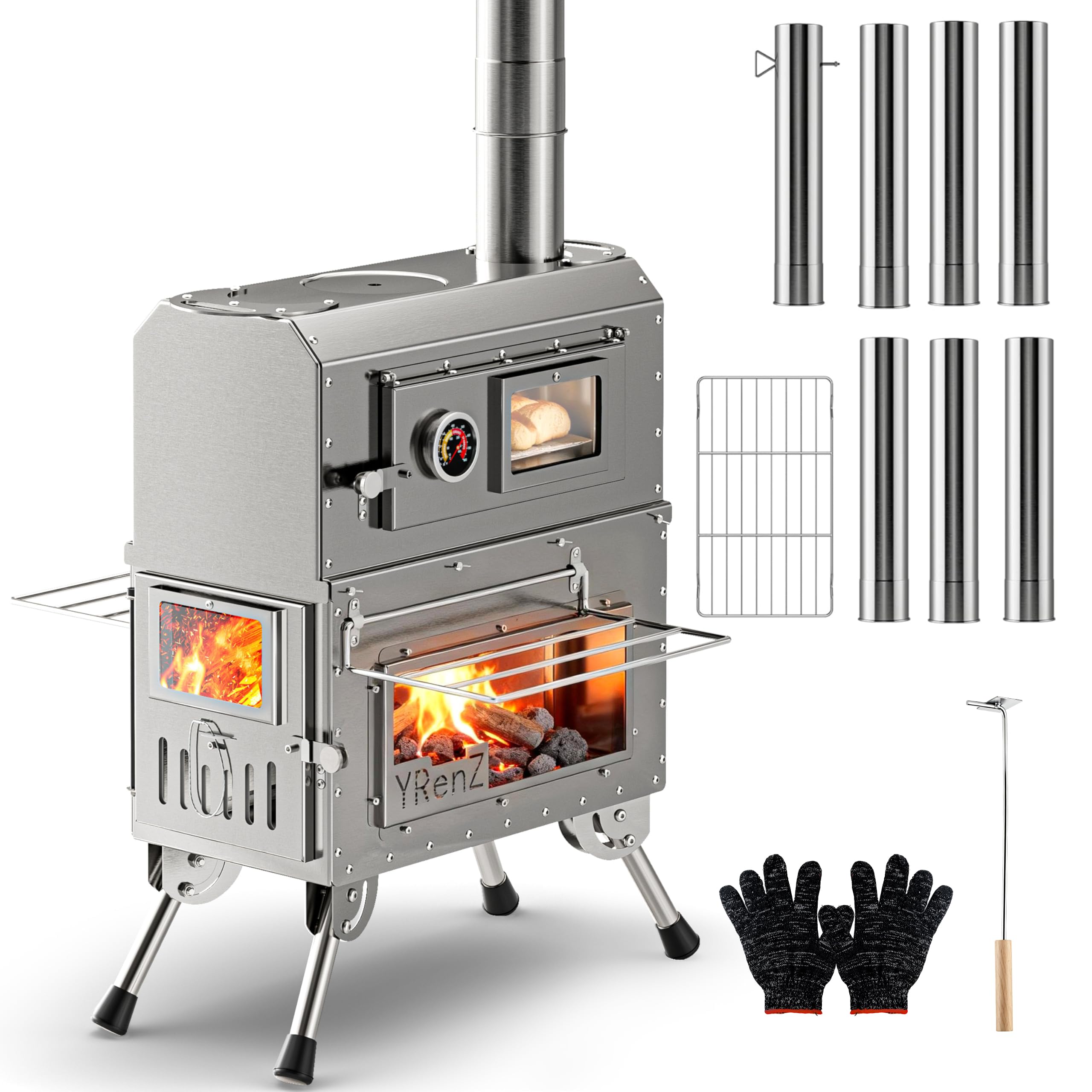
1. YRenZ Tent Stove Wood Stove with Oven
Our pick — 4.5+★ from 30+ verified ratings; the strongest balance of quality and price.
A fire you can watch and a door you can bake behind — the two-in-one the rest of this list splits apart.
The piece that settles it for most buyers is the oven. This YRenZ unit is a real tent stove and a baking box in a single freestanding body, so you are not choosing between heat and dinner. Its stainless steel shell is built from high-temperature steel and holds its shape through long burns, which matters when the stove is packed, hauled, and set up again season after season. The glass door is the part that sells it in person: you get a clear view of the fire without opening the door and dumping heat into the cold.
Secondary air inlets are the quiet hero here. Those extra inlets feed air into the top of the firebox so gases reburn instead of leaving as smoke, which is what gives you even cooking heat and a cleaner burn than a single-vent box. It arrives with the full kit — a temperature gauge, a smoke pipe, control valves, gloves, and hooks — so you are not ordering a chimney separately the night before a trip. Anti-slip feet keep the whole thing planted on uneven ground.
Weighing 7 kg, it stays in the carryable range for one person moving it from truck to tent. Be honest about the limit, though: there is no published square-foot coverage figure, so match it to a modest hot tent rather than a large wall tent. The two-in-one layout also means more seams and one more surface to keep clean after a greasy cook.
What you get in the crate
- Stove and oven in one freestanding stainless body, so heat and baking come from the same fire
- High-temperature stainless steel holds its shape through prolonged use
- Secondary air inlets for even heat and cleaner combustion
- Temperature gauge, smoke pipe, control valves, gloves, and hooks all included
- 7 kg body and anti-slip feet for stable placement on uneven ground
Where it asks for care
- No published square-foot coverage rating to size it against a big shelter
- Oven and stove seams need cleaning after messy cooking
Reach for it if: you want one unit that heats the tent and bakes a meal through the same glass door.
Think twice if: your shelter is large enough that you want a printed coverage figure before you buy.
2. TOMOUNT Hot Tent Stove with 7 Chimney Pipes
Seven chimney pipes, a firewood-holding frame base, and a window rated to 1832℉.
Here is the direct contrast with the M6 higher up this list: the TOMOUNT measures 15″D x 12.2″W x 15″H against the M6’s 53″D x 17″W x 98″H, and it weighs 26.5 pounds against 50.7 pounds. Translated into a real evening, that means one person can lift this out of the truck bed and set it up solo, and it fits under a lower tent roof. The thickened 304 stainless body resists deforming under open-flame heat, and the microcrystalline glass window is rated to withstand up to 1832℉ so you keep your view of the fire all night.
What wins people over is the build — the thickened 304 stainless body is what buyers single out above everything else, with heat output right behind it. The frame base is the practical touch that does the most work: it stores the stove itself and holds your firewood, keeping the cooking area organized instead of a sprawl of splits on the tent floor. A foldable side shelf flattens for transport, so spices and utensils have a home while the pot is on.
Refueling is easier than most small stoves because of the front-open design. The spacious firebox swallows large logs, which cuts how often you get up to feed it, and after the trip you tuck the chimney inside the stove to keep everything in one bundle. The 50-160 sq.ft coverage rating sits it squarely in the small-to-mid tent bracket, and air curtains, dampers, and precision chimney valves let you dial the burn from a hard cooking fire down to a slow overnight heat.
One honest reservation: 50-160 sq.ft is a real ceiling. A large wall tent or a yurt will outrun this firebox on a hard freeze, and that is a sizing fit, not a fault.
The campfire verdict: the pick for a solo or two-person hot tent where one person sets up and tears down alone.
The caveat to weigh: if your shelter runs past 160 sq.ft, this firebox is working harder than it should.
3. PAOOPA Thickened Cast Iron Heating Stove

Cast iron that takes coal or wood and heats a space measured in square meters, not feet.
This is the stove for someone heating a shed, a villa courtyard, a yurt, or a bell tent and wanting something that shrugs off rough treatment. The body is pure cast iron with a high-temperature coating rated to 1832°F that resists scratching, peeling, and blistering. The toughened glass window in the firebox door lets you watch the burn without cracking the door, and the manufacturer notes the fire-resistant glass also makes the crackle and pop part of the experience.
Where it separates from the stainless tent stoves is fuel flexibility and mass. It burns coal, firewood, branches, and wood chips — anything that burns — and the fully welded, airtight body with secondary combustion lets you load it at night, close the damper, and find it still burning in the morning. That overnight capability is the payoff for the weight: the net figure is 10.9KG, with the medium at 14.5KG and the large at 21KG, so this is a two-person lift, not a backpack item.
The coverage rating is the widest on this list at up to 75 sq meters, which is why it suits larger flame-retardant shelters, courtyards, and even sheds rather than a compact hot tent. The segmented pipes and sturdy metal legs detach and stow inside the stove for carrying with the handle. Treat it as a basecamp heater that travels by vehicle, and the cast-iron mass becomes an advantage rather than a burden.
Set it up right: the direct vent design wants a proper flue path, and the cast iron wants a slow first heat to settle the coating.
What the weight buys you: overnight burns and a body that holds heat long after the flames drop.
Choose this one for: a stationary or vehicle-supported shelter where heating capacity matters more than carrying weight.
Rule it out for: a solo backpack-in trip, where the 21KG large size is not going on your back.
4. CAMPJOURNEY M6 Hot Tent Stove with Oven and IGT Table

The basecamp furnace: a 2100 CU IN firebox, a built-in oven, and a camping table in the same kit.
Where the TOMOUNT is a two-person tent stove, the M6 is the winter basecamp answer. Its 2100 CU IN firebox accommodates 10-inch logs and provides steady heat for over 6 hours, which is the difference between waking up to feed the fire and sleeping through the cold. The high-temp microcrystalline glass window is rated to 2192°F / 1200°C, so the flame stays visible through a hard burn instead of fogging over. Build quality is what buyers talk about most here, and the double-layer top plate and 1.8mm stove body explain why.
It weighs 50.7 pounds against the TOMOUNT’s 26.5 pounds, and measures 53″D x 17″W x 98″H against the TOMOUNT’s 15″D x 12.2″W x 15″H — a genuinely larger footprint that earns its space with a 3-in-1 cooking system. The built-in oven includes a thermometer for baking, a removable circular cooktop handles boiling, and the open-flame option is there for searing. The maker states it heats 1.4L of water quickly on that large surface, and the pellet burner is sold separately if you ever want to switch fuel.
The kit is the part that saves planning. You get the 6-section adjustable chimney, a foldable IGT camping table, ash collector, ash rake, gloves, fireproof mat, nylon carry bag, guy lines, tent stakes, and chimney stake plates, and it all stores inside the stove for transport. Riveted construction with a smoke-sealed design, double air curtains, a front door vent, and a chimney spark arrestor keep sparks and leakage contained in a tent. The one place buyers split is value — the MIXED read on cost is real, because you are paying for the whole kit at once rather than buying it piece by piece.
The basecamp case
- 2100 CU IN firebox takes 10-inch logs and holds heat for over 6 hours
- Glass window rated to 2192°F / 1200°C for clear flame visibility
- Oven, removable cooktop, and open flame in one 3-in-1 cooking system
- Smoke-sealed body, double air curtains, and a chimney spark arrestor for tent use
- Full kit stores inside the stove, including the IGT table and carry bag
The unpacking reality
- 50.7 pounds and a large footprint make it a vehicle-supported setup
- Value is the split opinion here, since the full kit is priced as one package
The mic-drop spec: over 6 hours of heat from a 2100 CU IN firebox means the fire outlasts your sleep.
The practical limit: this is a truck-to-tent stove, not a carried one, so plan your access before you commit.
5. Ashley Hearth AW2020-P 2,000 sqft Wood Stove
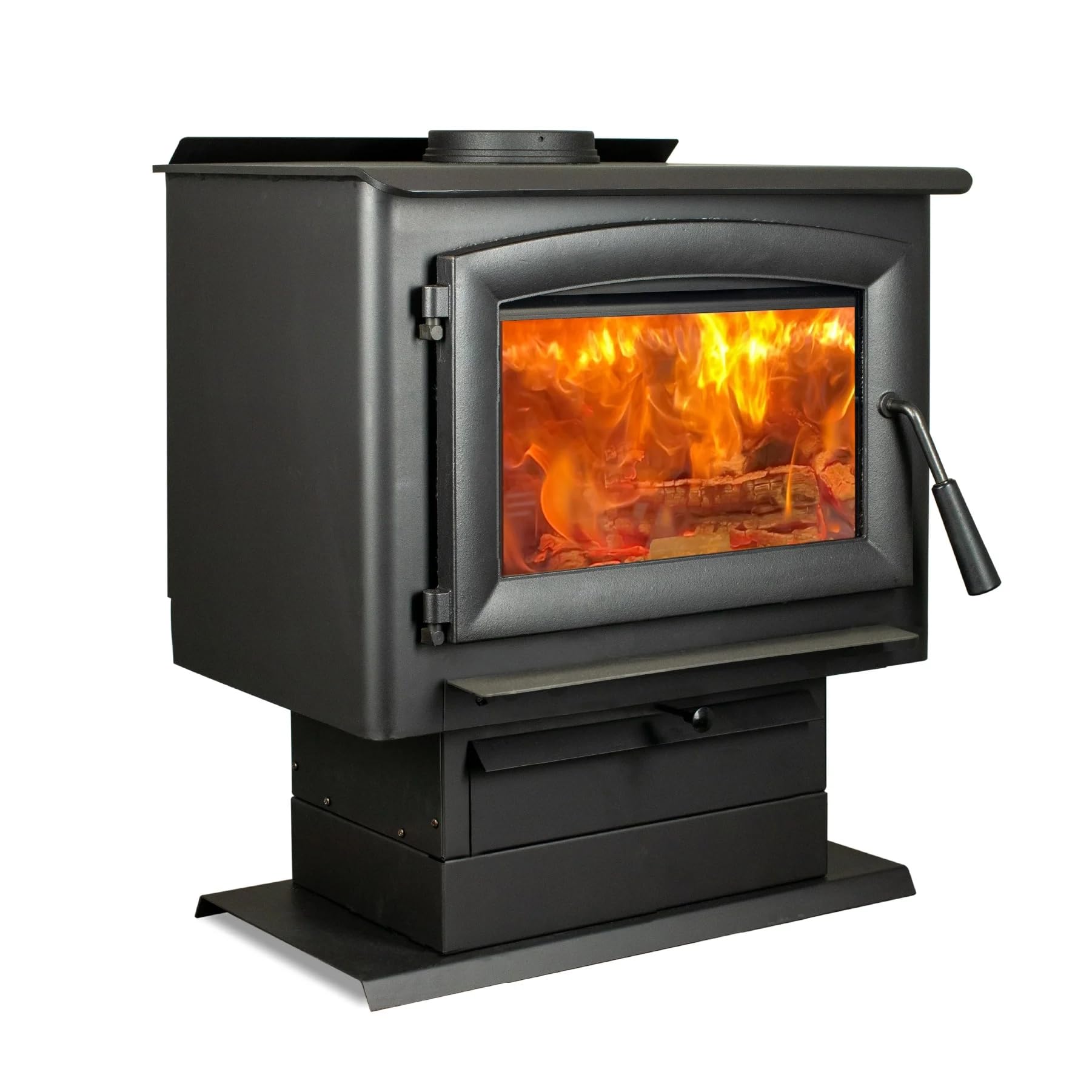
A whole-room heater with a glass door, an ash pan, and 89,000 BTUs of output.
Everything above this is a tent stove. This one is furniture. It puts out 89,000 BTUs and is rated to heat up to 2,000 square feet, which is the language of a living room rather than a campsite. The 1.6-cubic-foot firebox accepts logs up to 21 inches, so you can load long splits and get a longer burn with less refueling. EPA certification is stated on the spec sheet for buyers who care about burn efficiency in a permanent installation.
The glass door is the feature you will look at every evening, and the air wash system is what keeps it readable — it pushes air down the inside of the glass so the view stays clear without constant wiping. A large ash pan makes cleanup a matter of pulling the pan rather than scooping, and the brick-lined firebox with a brushed nickel door handle and pedestal base is designed to look at home in a room. It weighs 280 pounds, so this is a permanent hearth install, and it is compatible with the blower models CB36 or B36 sold separately for pushing heat further into the space.
Heat efficiency is the strength buyers keep coming back to, and buyers report it outperforming the stoves it replaced in the same homes. The honest trade-off is door hardware durability, the one recurring weak spot, and burn time varies with how the fire is started. Neither is a reason to walk away from a certified whole-home stove — it is a reason to treat the door handle gently and learn the draft before you judge the burn.
What a hearth owner gets: 89,000 BTUs across 2,000 square feet, a 21-inch log capacity, and an air wash that keeps the glass clear.
What to handle with care: the door hardware is the part to treat gently, and starting the fire cleanly takes a little practice with the draft.
Built for: a permanent home install where you want the fire visible and the whole room warm.
Not your stove if: the shelter moves with you — at 280 pounds, this one stays put.
Know the Specs
BTUs and Square-Foot Coverage
A BTU (British thermal unit) is a measure of heat output — how much warmth the stove puts into a space. Square-foot coverage is the manufacturer’s claim of how much floor area that output can handle. They are different numbers and they do not always track together, so read both rather than assuming a bigger BTU figure means a bigger tent rating. The Ashley states 89,000 BTUs and up to 2,000 square feet; the TOMOUNT states 50-160 sq.ft with no BTU figure at all.
Glass Window Ratings
A temperature rating on stove glass, like the 1832℉ and 2192°F / 1200°C figures here, tells you how much heat the pane is built to take before it fails. Higher is better for a hard burn, but the rating says nothing about soot. What keeps the window clear in daily use is airflow across the inside of the glass — a secondary air inlet or an air wash system. Check for that mention before you assume a clean view all night.
Firebox Size and Log Length
The firebox is the chamber where the wood burns. Its stated capacity and the maximum log length it accepts decide both how often you refuel and how much cutting you do. The M6 lists a 2100 CU IN firebox that takes 10-inch logs; the Ashley lists 1.6 cubic feet that accepts up to 21 inches. Measure the wood you can actually source and match it to that number.
Weight and Mounting
Every stove here is freestanding, but the weights run from 7 kg to 280 pounds, and that range is the real dividing line between a portable tent stove and a permanent heater. A lighter stainless body moves by one person; a cast-iron or alloy steel body wants two people and a vehicle. Decide how the stove travels before you fall for a firebox size.
Common Questions
Can I use a wood stove with a glass window inside a tent safely?
What does 89,000 BTUs actually heat?
How do I keep the glass window from turning black?
How long a log can each stove take?
Can a cast iron stove burn coal as well as wood?
Do these stoves come with the chimney pipe included?
How much does a wood stove weigh, and can one person move it?
Is a bigger firebox always better for overnight burns?
What is the difference between EPA certified and a standard wood stove?
Can I add a blower to move the heat further into a room?
The Bottom Line
For most people chasing a fire they can watch, the strongest all-rounder is the YRenZ Tent Stove with Oven, because it pairs a real oven with a stainless body and throws in the temperature gauge, smoke pipe, and gloves so nothing is missing on the first trip. If your priority is a solo setup with a view of the flames, grab the TOMOUNT Hot Tent Stove — its frame base doubles as firewood storage and it folds down to 26.5 pounds. And for a permanent hearth that heats a whole room, the Ashley Hearth AW2020-P is the one to reach for, with 89,000 BTUs and an air wash that keeps the glass clear.
How we choose
We do not accept paid placement. Every pick is matched to a real buyer and a real use-case; we do not hands-on test units.
Sources
Specifications: manufacturer listings and product documentation. Review insights: verified customer reviews, as of November 2026. Pricing: not shown on this page (it changes often); check the current price via the retailer link.
As an Amazon Associate, Tactical Gear Guy earns from qualifying purchases. This does not affect which products we feature.