Specs are compiled from manufacturer listings and verified buyer reviews and can change over time — please confirm the key details on the product page before buying.
Buying fire bricks for a wood stove is one of those jobs you want to do once. The right brick keeps your firebox lined, holds heat where it belongs, and spares you a mid-winter rebuild. The wrong one can crack after a few hot burns or arrive the wrong thickness for your stove’s grooves. This guide cuts straight to the picks that hold up, the sizes that fit common stoves, and the ratings to check before you order.
This guide is built by comparing the manufacturers’ published specifications and the patterns across verified customer reviews, so you get each pick’s real strengths and trade-offs instead of marketing spin.
You will see how thickness, brick material, and heat rating change what fits and what lasts. Every pick below is a real wood stove fire brick option, matched to the firebox size and temperature your stove actually runs. The picks below sort through the noise to help you find the best wood stove fire bricks for your firebox size and heat needs.
Top Picks


How To Choose The Best Wood Stove Fire Bricks
Fire bricks are a replacement part, not a decoration. Three numbers decide whether a set works for you: the brick’s thickness, its material, and its heat rating. Get any one of them wrong and you either fight the brick into a groove it does not fit, or watch it crack the first time your stove runs hot.
Match the thickness to your firebox grooves first
Most wood stoves take one of two thicknesses. A 3/4-inch brick is the thin liner style, and a 1-1/4-inch brick is the standard replacement that slides into the deeper grooves on many stoves. Measure your old brick, or the slot it sat in, before you order. A brick that is too thick will not seat, and a thin brick in a deep groove leaves a gap that lets heat escape.
Understand the material before you buy
Fireclay bricks are the traditional dense option and hold their shape well under heat. Vermiculite bricks are lighter and less brittle to handle, and the makers say they resist peeling after burning. Food-grade clay bricks suit pizza ovens and smokers where the brick touches food. Pick the material around your actual use, not around the listing photo.
Check the heat rating against your stove and your side projects
Wood stoves and fireplaces commonly run to a 2200°F rating on many replacement bricks. If you also braze, forge, or line a pizza oven floor, look for a 3000°F brick. That higher rating buys you headroom for direct flame and hotter work. Note that many listings warn against forging use, so read that line carefully if you plan to do more than heat a room.
Side-by-Side Comparison
| Model | Best For | Brick Size | Heat Rating | Pack Count | Amazon |
|---|---|---|---|---|---|
| USM-5 Heavy Duty Firebricks★ Best Overall | All-round replacement pick | 9″ x 4-1/2″ x 1-1/4″ | 2760°F | 5 Count | Amazon |
| Protalwell Vermiculite 6-PackTop Performer | Standard stove replacement | 9″ x 4-1/2″ x 1-1/4″ | 2200°F | 6 Count | Amazon |
| Protalwell Food Grade Clay BricksFood-Safe Pick | Pizza ovens and fire pits | 9″ x 4-1/2″ x 3/4″ | 3000°F | 6 Count | Amazon |
| 6 Pack High Temp Insulating Bricks | DIY hearth and forge lining | 9″ x 4.5″ x 1.25″ | 3000°F | 6 Count | Amazon |
| dndsim 12PCS Woodstove Firebricks | Full firebox rebuilds | 9″ x 4-1/2″ x 1-1/4″ | 2200°F | 12 Count | Amazon |
| Protalwell Vermiculite 12-Pack | Big-stove lining jobs | 9″ x 4.5″ x 1.25″ | 2200°F | 12 Count | Amazon |
| YANRUIPRO Clay Fire Bricks 12-Pack | Dense heat-retaining liners | 9″ x 4-1/2″ x 1-1/4″ | 2200°F | 12 Count | Amazon |
Detailed Reviews
1. USM-5 Heavy Duty Firebricks 5-Pack Fireclay, Chamotte 3000F
Our pick — 4.5+★ from 350+ verified ratings; the strongest balance of quality and price.
The fireclay brick that handles a forge and a fireplace without flinching.
Start with the number that decides it: a refractoriness of 2760 degrees Fahrenheit. That is the temperature this fireclay brick is built to take before it starts to soften, so your stove’s hot burns stay inside its comfort zone. Thinner than the chunky 1-1/4-inch replacement bricks in this list, it slides into shallow grooves where a thick brick simply will not seat.
The material is fireclay, the traditional dense choice for lining the inside of a firebox. The maker rates it for brick fireplaces, steel furnaces, heating stoves, barbecues, ceramics kilns, and blacksmith forges — a wide spread for one brick. You can cut and process it with a special tool if your stove needs a trimmed edge, which is the difference between a snug fit and a stubborn one.
Setup has one rule that catches people out. This is refractory masonry, so it needs a fireclay or alumina mortar rather than a cement mix. Moisten the contact surface with water before you lay them, and skip the ordinary cement. Quality is what earns this pick its place at the top — buyers consistently single out how well the bricks hold together, and the heat handling backs it up, with owners describing one face hitting 1000 degrees while the other stays at 200.
What earns it the top slot
- 2760°F refractoriness copes with hot stove burns and forge work
- Thin profile fits shallow firebox grooves
- Fireclay body can be cut and trimmed to fit
- Five-brick set covers a fireplace or steel furnace lining
Where it asks more of you
- Needs a fireclay or alumina mortar, not a cement mix
- Domestic use only — not for industrial units touching molten metal
Go for it when: you want one tough fireclay brick that covers a home fireplace, wood stove, or small forge and you are happy mixing the right mortar.
Pass it by when: your stove takes a full 1-1/4-inch brick and you need that exact thickness to seat properly.
2. Fire Bricks 6-Pack
The standard-size vermiculite liner built to drop into most stoves without a fight.
This is the brick to reach for when you are replacing a worn liner and want a straight swap. The 9″ x 4.5″ x 1.25″ size is a common replacement footprint, matching service part 1-00-900450125 for Harman and FBP6E for US Stove. That exact-size match is the whole point: you are not trimming or shimming, you are dropping six bricks in and closing the door.
Vermiculite is the material story here. The maker says it is not as brittle as clay bricks and resists peeling off after burning. Owners confirm the insulation keeps the firebox working efficiently and the bricks fit wood burning fireplaces cleanly. The flat surface is another quiet win: a level combustion chamber is easier to clean and looks tidier once the door is open.
Two cautions sit on the listing for good reason. The 2200°F rating is fine for wood stoves and fireplaces but not forging ovens. And these bricks are not waterproof, so keep them indoors. Treat the heat retention as solid rather than spectacular — it does the job a liner should, and it does it with a fit that does not make you swear.
Why it climbs the list: the cross-brand size match to Harman and US Stove part numbers removes the guesswork that sinks most fire brick orders.
The trade-off to note: vermiculite is gentle on handling but not a forging-temperature material — keep the 2200°F ceiling in mind.
Pick this one if: you are swapping out a standard 1-1/4-inch liner in a Harman or US Stove firebox and want a six-brick set that seats without cutting.
Look elsewhere if: you need a brick for forge or ultra-high-temp work, where the 2200°F rating falls short.
3. Food Grade Clay Fire Bricks
A 3000°F clay brick you can put under a pizza without a second thought.
Where most stove bricks stop at 2200°F, this one is rated to 3000°F. That extra headroom is the reason to buy it if your plans run past heating a room — pizza ovens, smokers, and fire pits all sit comfortably inside that ceiling. And because it is made of clay rated food-safe, the brick can touch food directly, so a pizza oven floor lined with these needs no extra barrier.
The surface is flat and smooth with no dents, which makes ash easy to sweep off. This set is also waterproof, so unlike the 2200°F bricks above, it can live outdoors in a fire pit for the long haul. Six bricks at 3/4-inch thick come in the pack, at 6.69 kg total — heavier than the thin Protalwell 3/4-inch set, which weighs 2.57 kg for the same six-brick count, because this is a denser clay body.
Here is the honest side. The quality draws split opinions, and cracking comes up more than once across owner experiences. Buyers who line a fire pit or smoke meat are generally happy; buyers expecting a forever liner for a hard-worked stove sometimes are not. The sealing is really a density problem — the maker presents it as high strength, but treat a hot, rapid cycle with care and let the bricks warm gradually where you can.
The standout: food-safe clay plus a 3000°F rating is a rare combination that opens up pizza ovens and smokers, not just fireplaces.
The candid reality: cracking shows up in enough owner reports that this is best framed as an outdoor and cooking brick rather than a heavy-duty stove liner.
Reach for this if: you are lining a pizza oven, smoker, or fire pit and want a food-safe, waterproof, 3000°F brick.
Leave it if: you need a dense permanent liner for a hard-used wood stove and want the toughest body you can get.
4. 6 Pack High Temp Firebricks
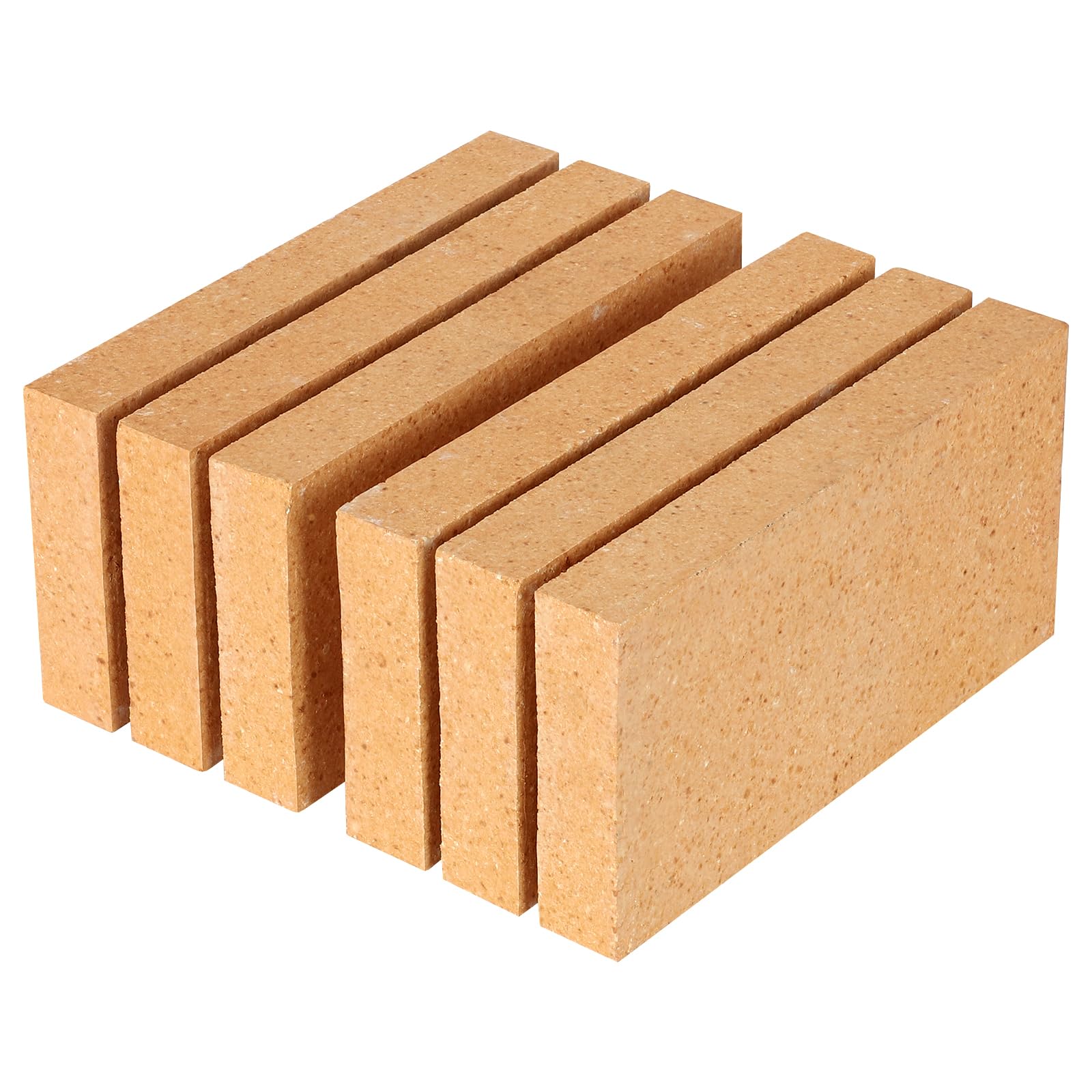
A 3000°F insulating block for hearth builds where heat loss is the enemy.
This brick makes a strong claim on heat speed. The maker claims 30% faster heat-up than traditional chamotte bricks and 40% less heat loss. Taken together, that is a brick aimed at getting a firebox hot sooner and keeping more of that warmth in the room. If your stove takes a while to come up to temperature, the logic here is worth a look.
The 3000°F refractoriness opens up non-industrial work like ceramic kilns, blacksmith forges, and outdoor ovens. It is designed to line furnace interiors and arrange hearth foundations, with insulation against thermal shock and abrasion. This is the heaviest pack in the lineup at 23.8 pounds — against the 4-pound USM-5 set above, that weight is the price of a dense, insulating block built for load-bearing and direct flame work.
Know what you are buying before you commit. The listing frames this as a DIY hearth and lining brick, so check the multi-size options against your firebox rather than assuming one thickness covers all. Durability draws some mixed notes, with cracking showing up across experiences. That is not unusual for an insulating brick under rapid heat, but it is the trade-off you accept for the insulation gain. Warm it gradually and it behaves far better.
Where it wins: the 3000°F rating and insulating design suit hearth builds, kilns, and forge linings where holding heat in matters as much as taking it.
Set expectations: an insulating brick is not the hardest-body liner on the market, so a gentle break-in protects your rebuild.
Choose it when: you are laying out a hearth, kiln, or forge lining and want an insulating 3000°F brick that gets the firebox hot fast.
Skip it when: you want a light, easy-to-handle brick — this pack is the heaviest here and built for stationary heat work.
5. 12PCS Woodstove Firebricks, Size 9″ X 4-1/2″ X 1-1/4″

Twelve standard bricks for a full firebox rebuild in one order.
When a liner job runs around three walls, six bricks are not enough. This set gives you twelve, all at the 9″ x 4-1/2″ x 1-1/4″ size that fits most wood stove and fireplace openings. One order covers a full reline, so you are not halfway through and short of one brick at the end of the firebox.
The rating is a familiar 2200°F, the level most stoveowners already. The maker claims the insulation improves heat distribution and prolongs appliance life. For a fireplace rebuild where you want to line the walls and close the door, this is the volume buy of the group — it matches the full 12-inch-count vermiculite set further down on size and heat rating, which makes those two near-twins on specs.
The honest note is that these bricks are meant for wood stoves and fireplaces, not forging ovens, and they are not waterproof. Keep them dry and indoors. If you are replacing a sturdy firebox wall and want the count to finish the job without a second trip, the twelve-brick set is the straight answer.
Right for a full reline: twelve bricks at the common 1-1/4-inch size means one order finishes a full firebox wall lining job.
Stay in its lane: the 2200°F ceiling and non-waterproof body keep this a dry indoor stove brick, not an outdoor or forge option.
The move for you: you are relining a whole firebox and want twelve standard-thickness bricks in a single pack.
Not for you: you only need a handful of thin 3/4-inch liners, or you plan to forge with them.
6. Woodstove Firebricks, Size 9″ x 4-1/2″ x 1-1/4″, 12-Pack

A dozen vermiculite bricks that install cleanly and keep a firebox looking sharp.
Twelve vermiculite bricks at 9″ x 4.5″ x 1.25″, matching the same Harman and US Stove service-part sizes as the six-pack above. They carry a 2200°F rating and weigh 17.95 pounds for the full dozen. Where the six-pack set fits a small stove, this one gives you enough to reline a larger firebox or keep spares on hand for the wall that cracks first.
The owner picture is steady. These bricks go in easily, cut well when a panel needs trimming, and settle into woodstoves with a level fit. Owners also like how they look once installed — a flat, tidy combustion chamber is easier to keep clean and nicer to look into on a cold night. Functionality and value are the themes that come through most, and the price-per-brick of a twelve-pack supports that value read.
Durability is where you should keep expectations realistic. Some owners see them last only a couple of months under hard use, and heat retention draws mixed opinion. That is the balance of a lightweight vermiculite brick: gentle to handle and easy to cut, but not the longest-lived body. Match it to a stove that runs a normal cycle rather than a hard-worked, roaring firebox all winter.
Why it stands out: ease of cutting and installation is what owners value most, and a twelve-brick pack makes a full reline painless.
Where it gives a little: a vermiculite body trades raw longevity for light, easy handling, so year-round heavy burning is not its strong suit.
This is for you if: your stove takes standard 1-1/4-inch vermiculite bricks and you want an easy-to-work twelve-pack that installs cleanly.
Look past it if: your stove burns hot and often all winter and you want the longest-wearing brick body you can find.
7. Fire Bricks Pack of 12
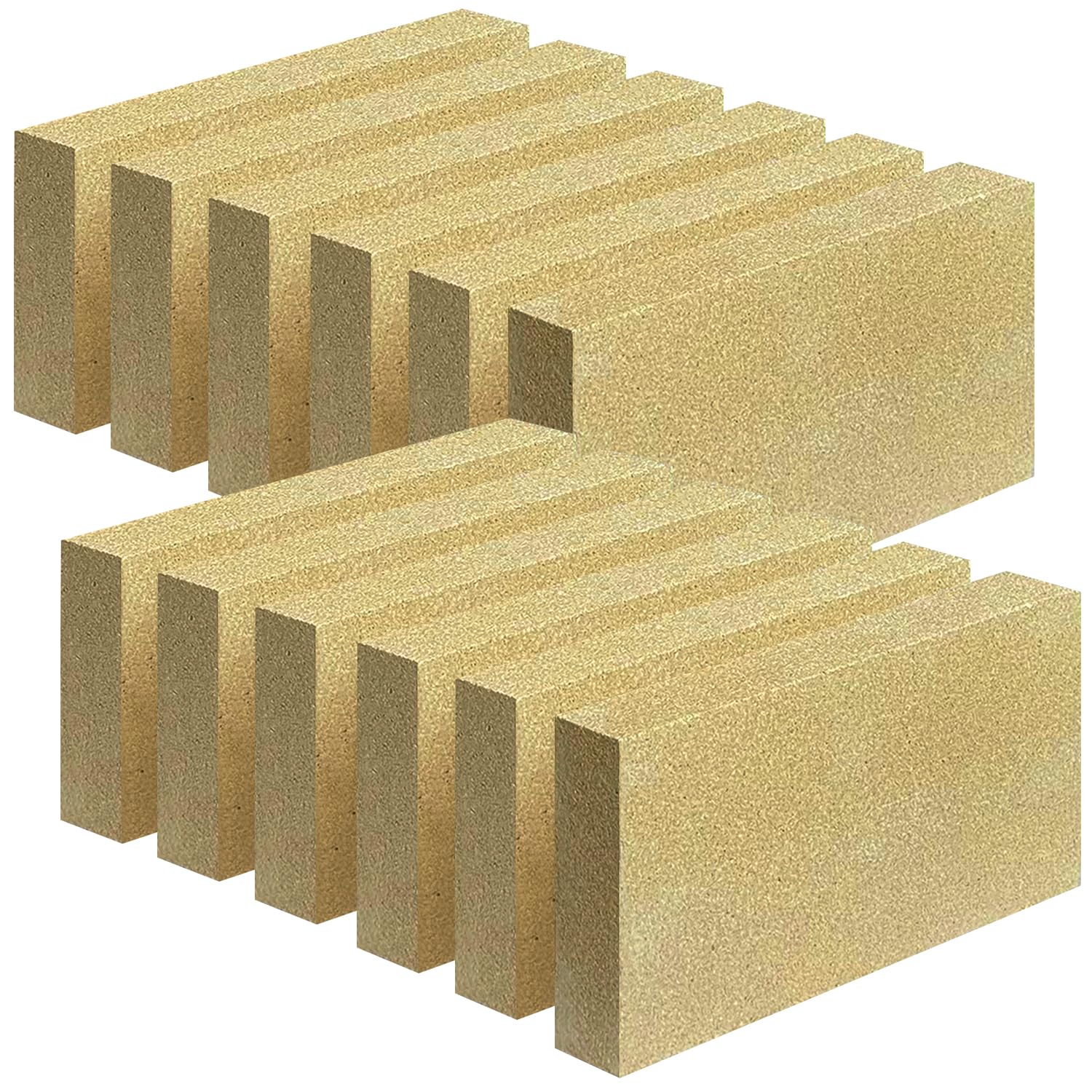
A dense clay brick set that leans on heat retention over featherweight handling.
The bricks here are high-quality clay, built for wood stoves, fireplaces, and ovens. The maker says the dense clay holds heat in and cuts chimney loss. If your goal is a firebox that stays warm between loads, that dense-clay approach is the reason to pick this over the lighter vermiculite bricks above. Twelve bricks at 9″ x 4-1/2″ x 1-1/4″ cover a full stove or fireplace reline.
Weight tells the material story plainly. This dozen runs 8.7 kg, which is far heavier than the twelve vermiculite bricks at 17.95 pounds, and the extra heft is the dense clay body doing its heat-retention job. Owners find them lightweight for what they are, easy to cut, and a clean fit in stoves, with one buyer lining a wood burner and getting a perfect result. Installation is straightforward, and the bricks stack into a hearth foundation as easily as they line a firebox wall.
The 2200°F ceiling is the line to hold in mind. They are fine for stoves, fireplaces, and ovens but not for forging ovens, and they are not waterproof, so keep them indoors. If you want a solid, hard-wearing clay brick and you are not chasing forge temperatures, this is the dense-plate option of the group.
Why the dense body pays off
- High-quality clay holds heat and reduces chimney loss
- Twelve bricks cover a full stove or fireplace reline
- Easy to install and easy to cut for a snug fit
- Versatile across stoves, fireplaces, and ovens
Where to keep it indoors
- 2200°F rating rules out forging ovens
- Not waterproof, so no outdoor fire pit duty
Worth it for: a heavy clay brick that holds warmth and lines a stove or fireplace in one twelve-brick order.
Not your fit if: you need a waterproof outdoor brick or a forging-grade 3000°F body.
Know the Specs
Heat rating (the °F number)
This is the temperature a brick is built to take before it weakens. Most stove and fireplace replacement bricks are rated to 2200°F, which covers normal wood burning. If you also run a pizza oven, kiln, or small forge, step up to a 3000°F brick for the extra headroom. Always match the rating to how you actually use the firebox, because a forge runs hotter than a living-room stove ever will.
Brick thickness (3/4″ vs 1-1/4″)
Thickness decides fit before anything else. A 3/4-inch brick is a thin liner for shallow grooves, and a 1-1/4-inch brick is the common replacement that seats into deeper slots on many stoves. Measure the old brick or the slot it came from. A brick that is too thick will not sit flush, and a thin one in a deep groove leaves a gap that leaks heat.
Material: fireclay, vermiculite, and clay
Fireclay is dense and holds shape under heat, and it can be cut and trimmed. Vermiculite is lighter and less brittle to handle, which makes it easy to cut and install. Food-grade clay suits pizza ovens and smokers where the brick touches food. Each material trades a little something — weight, brittleness, or heat ceiling — so choose around your actual job.
Mortar and installation
Refractory bricks often need the right mortar. Fireclay bricks in particular call for a fireclay or alumina mortar rather than a cement mix, and you moisten the contact surface before laying. Skip that step and the joint can fail under heat. Thin and vermiculite bricks usually just slide into place, which is why fit is the simpler part of the job.
Common Questions
Will a 3/4-inch fire brick replace my 1-1/4-inch brick?
What heat rating do I need for a wood stove?
Why do fire bricks crack after a few burns?
Can I use fire bricks in a pizza oven?
Is fireclay better than vermiculite for a stove liner?
Do I need mortar to install fire bricks?
Can fire bricks go outdoors in a fire pit?
How many bricks do I need to reline a firebox?
How do I cut a fire brick to fit?
Can I use fire bricks in a forge or blacksmith setup?
The Bottom Line
For most people replacing a stove liner, the winner is the USM-5 Heavy Duty Firebricks 5-Pack. Its 2760°F fireclay body takes hot burns and forge work in its stride, and it can be cut to fit a stubborn groove — the crowd favorite of the group at 4.5+ stars across 300+ ratings. If you want an exact-size drop-in for a Harman or US Stove firebox, grab the Protalwell Vermiculite 6-Pack, whose common 1-1/4-inch footprint seats without cutting. And for pizza ovens, smokers, or a fire pit where the brick touches food and weather, the waterproof 3000°F Protalwell Food Grade Clay Bricks is the one to reach for. Measure your thickness first, match the heat rating to your real use, and any of these will line your firebox to last.
How we choose
We do not accept paid placement. Every pick is matched to a real buyer and a real use-case; we do not hands-on test units.
Sources
Specifications: manufacturer listings and product documentation. Review insights: verified customer reviews, as of November 2026. Pricing: not shown on this page (it changes often); check the current price via the retailer link.
As an Amazon Associate, Tactical Gear Guy earns from qualifying purchases. This does not affect which products we feature.