Specs are compiled from manufacturer listings and verified buyer reviews and can change over time — please confirm the key details on the product page before buying.
Your splitter’s pump does the hard pushing, so a replacement has to match three things: flow rate in GPM (gallons per minute — how much oil it moves), the pressure it holds, and whether the shaft and ports bolt up to your engine. Below are seven hydraulic pumps that fit real log splitters and small-engine rigs, each matched to a specific buyer and job.
This guide is built by comparing the manufacturers’ published specifications and the patterns across verified customer reviews, so you get each pick’s real strengths and trade-offs instead of marketing spin.
You will see which pump fits a horizontal or vertical shaft engine, how the inlet and outlet sizes line up, and where a faster cycle is worth the extra strain on your engine. For most home firewood setups, the right pick depends on a smart buy on the wood splitter hydraulic pump.
Top Picks

How To Choose The Best Wood Splitter Hydraulic Pump
Most buyers ruin a perfectly good pump swap by matching the flow rate and ignoring everything else. The pump has to bolt to your engine shaft, feed your hoses, and survive the pressure your splitter cylinder pushes back at it. Get those three right and the GPM figure is the easy part.
Match the flow rate to your engine and your patience
Flow rate, measured in GPM (gallons per minute), sets how fast the ram travels toward the log. A higher GPM means a quicker cycle, but it also asks more of your engine. If your engine is small, a big-flow pump can bog down under load. A mid-flow pump is the safer match for a modest gas engine.
Two-stage pumps are the standard for a reason
A two-stage pump uses a big low-pressure gear set for the fast approach and a small high-pressure set for the actual split. That is how you get speed and force from one unit. Nearly every pump on this list uses that design, and it is why cycle time stays short even on a small engine.
Check the shaft before you check anything else
The shaft diameter, shaft length, and key size must fit your engine coupler or lovejoy spider. A 1/2-inch shaft with a 3/8-inch key is a common setup, while others run a 1/2-inch shaft with a 1/8-inch key. Measure your existing shaft first — this is the single most common reason a return happens.
Ports and pressure ratings you can trust
The inlet and outlet sizes are usually a 1-inch inlet and a 1/2-inch NPT outlet, and the pump needs to spin at the right RPM to hit its rated 3000 PSI. Going under the rated RPM starves the pump; going over can tear it up. Match the pump’s rated speed to your engine’s output and you get the pressure it was built for.
Side-by-Side Comparison
| Model | Best For | Flow Rate | Max Pressure | Max Speed | Amazon |
|---|---|---|---|---|---|
| VEVOR Hydraulic Log Splitter Pump★ Best Overall | Most home firewood setups | 11 gpm | 3000 PSI | 3600 RPM | Amazon |
| Concentric Hydraulic Pump 1001689Heavy-Duty Pick | Heavy daily use | 11 gpm | 2500 PSI (2nd stage) | — | Amazon |
| RYFT Wood Log Splitter Pump 16GPM | Fast cycle on a big engine | 16 gpm | 3000 PSI | 3600 RPM | Amazon |
| Nakkaa 16 GPM Aluminum Gear Pump | Budget speed upgrade | 16 gpm | 3000 PSI | 3600 RPM | Amazon |
| LIKARVA 16 GPM Two-Stage Pump | Efficiency-focused buyers | 16 gpm | 3000 PSI | 3600 RPM | Amazon |
| Nakkaa 13 GPM Aluminum Gear Pump | Between-size builds | 13 gpm | 3000 PSI | 3600 RPM | Amazon |
| Nakkaa 11 GPM Aluminum Gear Pump | Stock replacement on small engines | 11 gpm | 3000 PSI | 3600 RPM | Amazon |
Detailed Reviews
1. VEVOR Hydraulic Log Splitter Pump
Our pick — 4.0+★ from 50+ verified ratings; the strongest balance of quality and price.
An 11 GPM aluminum two-stage pump sized for stock small-engine splitters.
This is the pump for someone rebuilding a stock splitter who wants a straight drop-in that just works. It puts out 11 GPM (gallons per minute — how fast the ram travels) at a 3000 PSI working ceiling, and spins to a 3600 RPM maximum. That combination is the classic all-rounder for a gas-engine splitter: fast enough to save you time, and strong enough to push through knotty rounds.
The connections are the quiet win here. You get a standardized 1-inch inlet and a 1/2-inch NPT outlet, plus a 1.38-inch shaft with a 1/2-inch diameter. That means it mates to common small-engine splitters, snowplow hydraulics, and even press and machine-tool builds with less adaptor hunting. It ships with the flat key, Teflon tape, and a wrench in the box, so you are not stuck sourcing odd bits the day it lands.
At 5.7 pounds versus the RYFT 16GPM at 12 pounds. Lighter means less strain bolting it up, and the aluminum alloy body is built to shrug off rust outdoors. It runs below 75dB, roughly a loud conversation, so it will not add a new scream to your workday.
What it gets right
- 11 GPM at 3000 PSI is a proven all-round combo for small-engine splitters
- Standard 1-inch inlet and 1/2-inch NPT outlet drop into common rigs
- 5.7-pound aluminum body resists rust and heavy handling
- Runs below 75dB so it stays out of your ears
- Comes with flat key, Teflon tape, and wrench in the box
Where it asks a little patience
- 1.38-inch shaft length has to match your engine coupler — measure first
- 11 GPM is quick but a step behind the 16 GPM pumps on cycle time
Reach for this if: you want the safest all-around swap for a stock small-engine splitter and value easy bolting over peak speed.
Look elsewhere if: your build already runs a big engine and you are chasing the fastest cycle the GPM numbers can give.
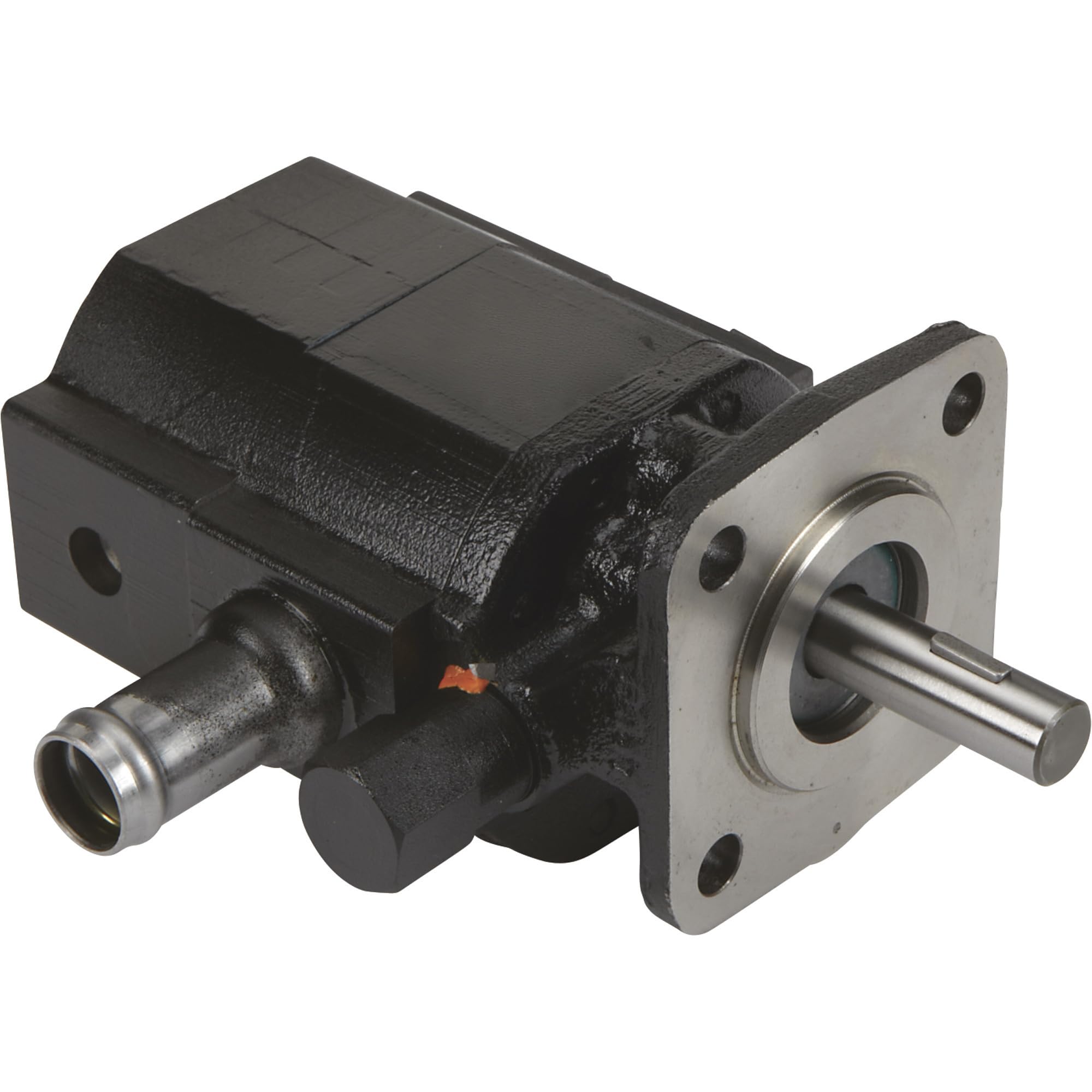
2. Concentric Hydraulic Pump 1001689
Cast iron where the others use aluminum — built for rigs that never get a break.
Most pumps on this list pour an aluminum housing, which is light and rust-resistant but softer under hard cycling. This one goes the other way: a cast iron body, hardened steel gears, and needle bearing construction. If your splitter runs all day through a cord of hardwood, that heavier build is the point. The first stage moves 11 GPM at 650 PSI for the fast approach; the second stage drops to 2.9 GPM at 2500 PSI for the actual push through the round.
That two-speed split — fast under low load, slow and strong under high load — is exactly how a good two-stage pump should behave. The 11 GPM headline matches the VEVOR’s flow rate, but the materials here are a different tier. Think of the cast iron as insurance on a machine that earns its keep every autumn.
The catch is fitment and RPM. The cast iron body adds weight — this one sits at 8.3 pounds versus the VEVOR’s 5.7 pounds. And a pump this stout tends to be matched to a specific engine and mounting setup, so confirm your shaft coupling and port sizes before you order. It is a specialized piece of gear, not a universal fit.
The build story: a cast iron housing, hardened steel gears, and needle bearings (small rollers that carry the shaft) hold up to constant hard cycling better than the aluminum pumps. Its two-stage design runs 11 GPM at 650 PSI in the first stage, then 2.9 GPM at 2500 PSI in the second stage — fast approach, then strong splitting force.
Worth knowing: at 8.3 pounds it is no featherweight, and the cast iron build needs a confirmed match to your engine and mounts before you commit.
Built for: the owner who splits season after season and wants the most durable housing money buys.
Not the fit if: you want the lightest bolt-up replacement and are not sure your rig matches a cast iron layout.
3. RYFT Wood Log Splitter Pump 16GPM

A 16 GPM two-stage pump that ships with a 25 GPM auto detent valve for faster cycles.
When cycle time is the thing you hate about your splitter, this pump answers it. It runs a 16 GPM HI/LO two-stage design, meaning a high-displacement gear set for the fast approach and a lower one for the hard push. Max working pressure lands at 3000 PSI and max speed at 3600 RPM. That 16 GPM is the fastest flow on this list alongside the other 16 GPM units.
The headline extra is the included 25 GPM auto control detent valve with a 1/2-inch work port — the control block that lets the ram return on its own. The end plate is cast steel, and the 12-pound aluminum body is built to shrug off impact, rust, and high pressure. A 4-bolt hole pattern and clockwise rotation let it take a horizontal or vertical shaft engine, which widens who can bolt it up.
Here is the honest trade-off: at 12 pounds versus VEVOR’s 5.7 pounds, and a big-flow pump like this leans on a healthy engine. If your powerplant is small, it can labor. The 1/8-inch keyed shaft is also a specific fit, so confirm your coupler key before you order. For the buyer with a strong engine and a full valve box, though, it is a serious upgrade.
Cycle-time leader: 16 GPM through a HI/LO two-stage gear set, plus a 25 GPM auto control detent valve in the package, is a lot of function for a home-built splitter.
Know the weight: 12 pounds is heavier than most aluminum pumps here, and its 1/8-inch keyed shaft and big flow demand a matched engine.
Right call when: a fast return and built-in detent control are worth bolting on a strong engine that can feed 16 GPM.
Skip this one if: your engine is small or your coupler key is not 1/8-inch, since the fit has to line up.
4. 16 GPM 2 Stage Hydraulic Log Splitter Pump
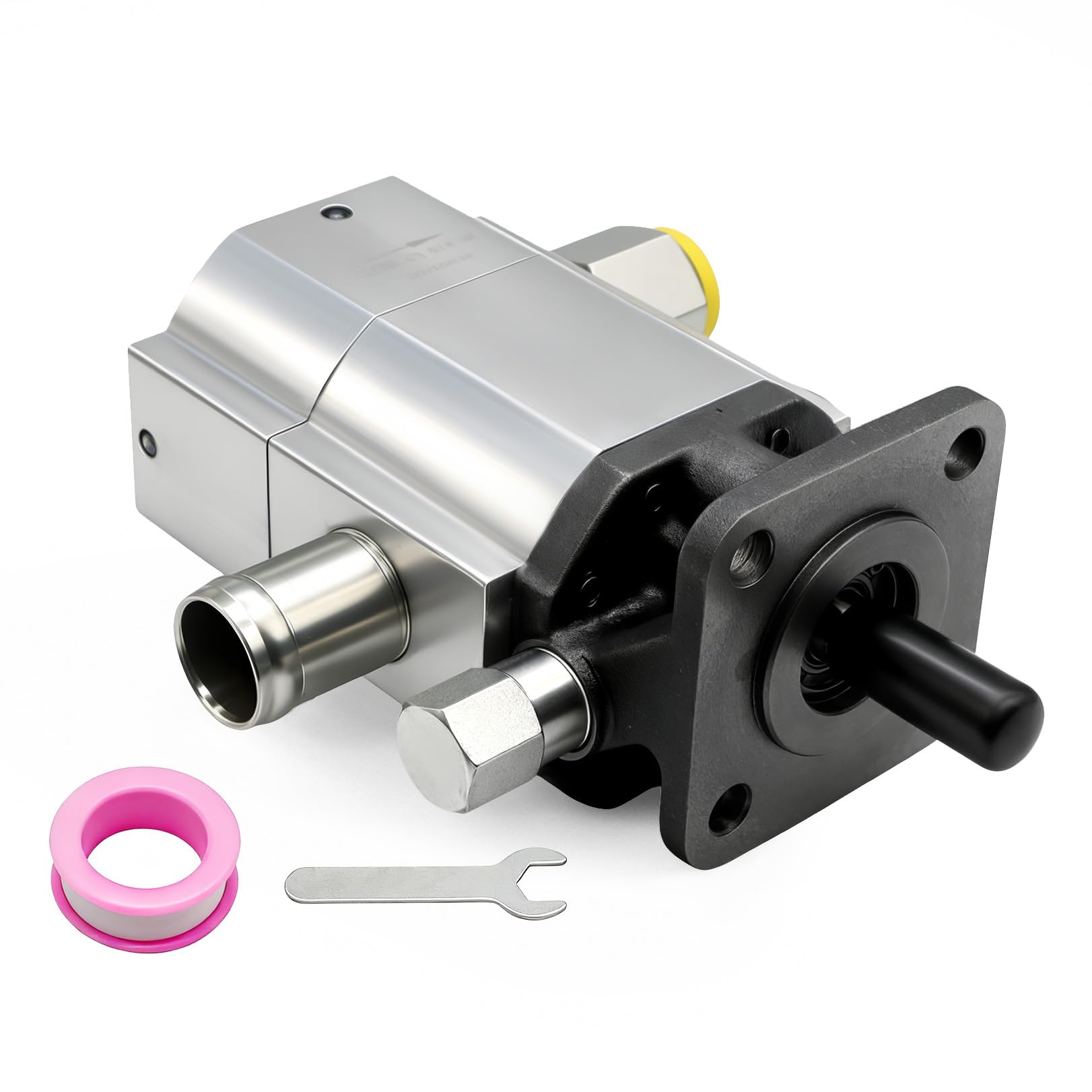
16 GPM of two-stage flow without a bundled valve, for builds that already have control gear.
If you want the speed of a 16 GPM pump but do not need the bundled valve, this does it plainly. It runs a 3000 PSI maximum working pressure and 3600 RPM maximum speed, through a 1-inch inlet and 1/2-inch NPT outlet. A two-stage pump like this gives you a fast low-pressure approach plus a slow high-pressure split, so you are not bleeding time on every round. It is also rated across presses, log cutters, truck snowplows, machine tools, and dump trailer lifts.
The body is high-strength extruded aluminum, which handles impact and rust while staying easier to mount. At 7.7 pounds versus the RYFT’s 12 pounds and the VEVOR’s 5.7 pounds. What stands out in the early owner feedback is that the pumps turn up working as they should, so the core job gets done without drama.
The honest caveat: a 16 GPM pump needs an engine that can turn it under load, and this one asks you to bring your own valve and control gear. If your rig already has a valve box and a stout engine, that is fine. If you are starting from scratch, budget the extras into your build.
What earns it a look
- 16 GPM flow at 3000 PSI is fast and capable
- Runs at 3600 RPM for its rated output
- Clean 1-inch inlet and 1/2-inch NPT outlet
- 7.7-pound aluminum body resists rust and impact
- Owner feedback centers on reliable working performance
What to plan around
- No valve included — you supply the control gear
- 16 GPM demands an engine with enough grunt to drive it
Pick it if: you already run a valve box and want fast flow without paying for extras you do not need.
Think twice if: your engine is modest or your build still needs a valve, since this pump does neither for you.
5. Hydraulic Wood Splitter Pump 16 GPM
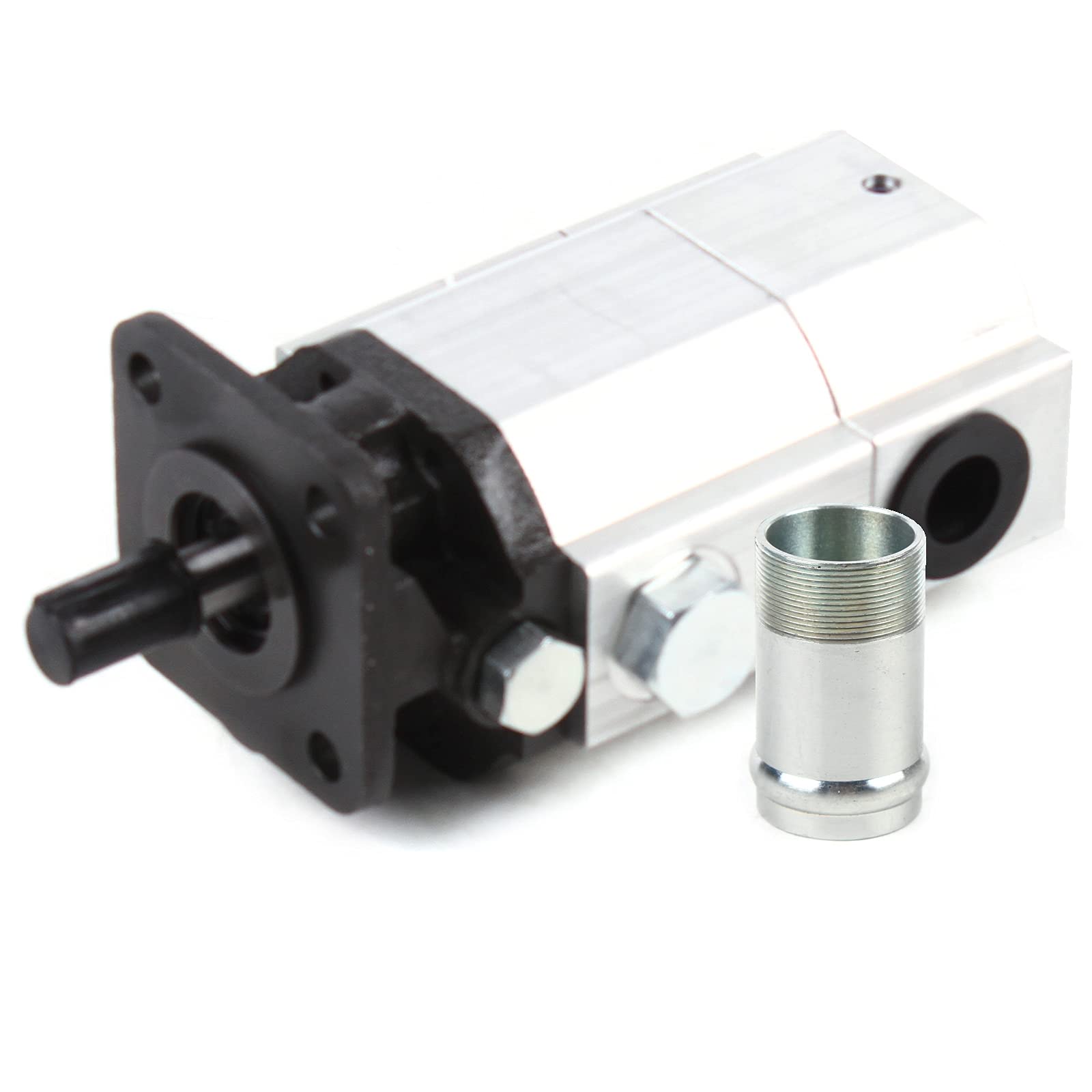
A 16 GPM two-stage pump rated by the maker at 92% efficiency at 3600 RPM.
The maker rates this two-stage pump at 92% efficiency at 16 GPM total flow and 3600 RPM, with a 3000 PSI ceiling. In plain terms, less of your engine’s power gets wasted as heat and more goes into moving the ram. The high/low gear set lets a big low-pressure pump and a small high-pressure pump share the load, outputting oil together or apart as the job needs.
It connects with a standard 1/2-inch NPT outlet and a 1-inch barb on the inlet, plus a 1/2-inch shaft with a 3/8-inch key that turns clockwise. The high-strength extruded aluminum case is built to resist impact, rust, and high pressure and to keep leaks in check. Buyers who have run it lean on reliability and build quality as the reasons it earns its place, rather than headline numbers.
What you give up is weight and simplicity — at 6.6 pounds versus the VEVOR’s 5.7 pounds, and a 16 GPM pump wants an engine that can keep up. It is an efficiency play for a buyer who already has the valve and control side sorted, not a first-time bolt-on with no extras.
Where it shines: a stated 92% efficiency at 16 GPM, a 3000 PSI ceiling, and a well-organized two-stage layout aim to put more of your engine’s effort into the split.
What it expects: 6.6 pounds of aluminum housing and 16 GPM of flow mean a healthy engine and a build that brings its own control gear.
Best suited to: the efficiency-minded owner who wants the most useful work out of a 16 GPM two-stage pump.
Hold off if: your engine is small or you still need a valve, because this pump assumes both are handled.
6. 13 GPM 2 Stage Hydraulic Log Splitter Pump

A 13 GPM two-stage pump for mid-size engines that bog on 16 GPM and feel slow at 11.
Not every engine wants 16 GPM or is happy at 11. This pump splits the difference at 13 GPM, with a 3000 PSI max working pressure, 3600 RPM max speed, and the standard 1-inch inlet and 1/2-inch NPT outlet. That middle flow lets a mid-size engine run a fast cycle without being overworked, which is the whole point of picking 13 over the extremes.
It uses a high-strength extruded aluminum case to soak up impact and squeeze loads, and it also carries a quieter running character than some. Like the other pumps in this family it handles presses, log cutters, truck snowplows, machine tools, and dump trailer lifts, so it earns its keep beyond firewood. If your splitter engine sits in the middle of the range, this is the size that matches it.
The one thing to watch is fitment rather than performance — the shaft and coupler need to line up, and the pump weighs 7.37 pounds. It does not include a valve, so that goes on your build list. For a mid-power engine, it is a sensible flow choice.
Reasons to go with 13
- 13 GPM splits the difference between 11 and 16 gpm setups
- 3000 PSI and 3600 RPM give it full-capability output
- Extruded aluminum case takes impact and squeeze loads
- Also serves presses, snowplows, machine tools, and dump lifts
Things to sort before ordering
- No valve in the box — plan for your own control gear
- Confirm the shaft and coupler match on your engine
Land on this one if: your engine sits mid-range and 11 GPM feels sluggish while 16 GPM feels like overkill.
Pass on it if: you want a pump with control hardware included or you are not sure your shaft matches.
7. 11 GPM 2 Stage Hydraulic Log Splitter Pump

An 11 GPM two-stage drop-in replacement for gas-powered splitters already running that flow.
When your old pump gives out, you do not want a project — you want the same size back in the machine. This 11 GPM two-stage pump delivers a 3000 PSI max working pressure and 3600 RPM max speed through a 1-inch inlet and 1/2-inch NPT outlet. It is billed as a direct replacement for gas-powered splitting machines, and it also suits presses, log cutters, truck snowplows, machine tools, and dump trailer lifts.
The extruded aluminum case is built to take impacts and stays stable across working conditions. It is a two-stage gear pump with a 2-Stage Gear Pump product style, so you get the fast approach and strong split you expect. The fit is the familiar 1-inch in, 1/2-inch NPT out, with clockwise rotation. Noise stays low in use, which matters when you are working a stack of rounds for an afternoon.
Here is your honest limit: 11 GPM is the modest end of this list — the 16 GPM pumps will cycle faster if your engine can feed them. And there is no valve included, so if your splitter has one, you reuse it. If you want an even flow match to your current machine without chasing more speed, this is the simple route.
The replacement story: same-size 11 GPM flow, 3000 PSI, and 3600 RPM make it a like-for-like swap with the classic 1-inch inlet and 1/2-inch NPT outlet.
What to keep in mind: it is the slower end of this group, and the valve and control side are yours to supply or reuse.
This is your pump if: your splitter already runs 11 GPM and you want the same flow back without an upgrade project.
One caution: if the old machine’s valve is worn, you are reusing it here — buy the valve separately before you start.
Know the Specs
Flow Rate (GPM)
GPM means gallons per minute — how much hydraulic oil the pump pushes each minute, and how fast the ram travels. A bigger GPM cycles quicker, but it needs a stronger engine to drive it. That is why a small-engine build often runs fine on 11 GPM while a big engine can use a 16 GPM pump to shorten every cycle.
Two-Stage Design
A two-stage pump uses two gear sets: a big low-pressure one for the fast approach and a small high-pressure one for the hard split. You get speed and force from the same unit, and the pump shifts from one to the other as the load changes. Nearly every pump here is a 2-stage, which is the standard for a log splitter.
Pressure (PSI)
PSI means pounds per square inch — the force the pump applies. The higher the pressure ceiling, the more stubborn a knotty round it can push through. A 3000 PSI pump is the common rating on this list, while the Concentric runs its second stage at 2500 PSI. Match the pressure rating to the force your cylinder and wedge can use.
Shaft and Port Fitment
Your engine coupler and your hoses decide whether a pump drops in or fights you. Watch the shaft diameter, shaft length, and key size — a 1/2-inch shaft with a 3/8-inch key is common, while the RYFT uses a 1/8-inch key. The inlet is usually 1 inch and the outlet 1/2-inch NPT. Measure both before you buy.
Common Questions
Will an 11 GPM pump run on my small gas engine?
What is the difference between a 16 GPM and an 11 GPM hydraulic pump?
How do I know which shaft and key fits my engine coupler?
What do the inlet and outlet port sizes on a splitter pump mean?
Can a hydraulic log splitter pump power something other than a log splitter?
Why does the pump have two stages instead of one?
Is a cast iron pump better than an aluminum pump?
Does a higher GPM pump make wood splitting faster?
Will these pumps work with a horizontal or a vertical shaft engine?
What PSI rating do I need for splitting hardwood?
The Bottom Line
For most home firewood rigs, the easiest drop-in is the VEVOR Hydraulic Log Splitter Pump: 11 GPM at 3000 PSI, a light 5.7-pound aluminum body, and standard 1-inch in / 1/2-inch NPT out ports (national pipe thread — the common US fitting size) mean it bolts up with little fuss. If you want the toughest housing for constant hard work, the cast iron Concentric 1001689 is the durable pick. And when a faster cycle on a strong engine is the goal, the RYFT 16GPM brings a 25 GPM auto detent valve (it kicks back to neutral by itself) along with its flow.
How we choose
We do not accept paid placement. Every pick is matched to a real buyer and a real use-case; we do not hands-on test units.
Sources
Specifications: manufacturer listings and product documentation. Review insights: verified customer reviews, as of November 2026. Pricing: not shown on this page (it changes often); check the current price via the retailer link.
As an Amazon Associate, Tactical Gear Guy earns from qualifying purchases. This does not affect which products we feature.