Specs are compiled from manufacturer listings and verified buyer reviews and can change over time — please confirm the key details on the product page before buying.
You want a wool poncho that actually keeps the wind out without turning your neck into sandpaper. Almost every poncho that looks good in photos is either too scratchy to wear against bare skin or so thin it barely blocks a cold morning. The picks below are sorted by what really matters — how much of you the wool covers, how it feels on your collarbone, and whether the fabric holds up after a few seasons. The top of the list is a mid-priced handmade Ecuadorean wool poncho that gets the warmth, softness, and drape right.
This guide is built by comparing the manufacturers’ published specifications and the patterns across verified customer reviews, so you get each pick’s real strengths and trade-offs instead of marketing spin.
Some ponchos run warm and wide enough to wear as a real jacket, while others are thin enough to stuff in a pack and forget. The trick is matching the wool percentage and the width to where you actually wear it. Here is how I sort the woolen poncho for men options so you can pick the right one in one pass.
Top Picks


How To Choose The Best Woolen Poncho for Men
A poncho is one of those garments where the label tells you almost everything. Get the fiber right and you have a warm, non-itchy cloak you will reach for every cold morning. Get it wrong and you have an acrylic-heavy blanket that itches and sits in the closet. These are the four things worth checking before you buy.
Wool Percentage Is The First Filter
The higher the real wool content, the warmer the poncho and the better it holds its shape. A 70% alpaca blend like several of the picks here behaves very differently from a garment that is mostly synthetic with a token wool component. Alpaca fiber is smooth, which is why it usually feels soft against bare skin instead of scratchy. Watch for listings that lead with “alpaca” but bury the actual percentage — a wool-blend with only a small amount of alpaca behaves more like an acrylic cloak. Also look for a blend partner like sheep wool or orlon, which adds structure and, in some cases, makes the poncho easier to wash.
Hood Or No Hood
A hood changes how a poncho sits on your shoulders and how much wind it refuses. If you wear it outdoors in real cold or snow, a hood is what stops the chill running down your neck. A hoodless cloak is lighter and reads a bit more dressy, but you will pair it with a hat or hoodie underneath to stay warm. Both styles appear in this list, so pick based on your actual weather, not the photos.
How To Read The Measurements
Ponchos hang loose, so the number that matters is the width when fully stretched — it tells you how far down your arms the wool reaches. A 210 cm horizontal spread gives you a wide, wingspan-style drape that covers your arms and hangs down over them. A narrower cut like 120 cm sits closer in and looks more like a wrapped shawl. The vertical number tells you where the hem lands — around 100 cm from the shoulders usually falls to the knees on most adults. Ignore the “one size fits most” label and check the actual measurements against your own frame.
Care And Wash
Wool is not fragile, but it wants attention. A pure alpaca or alpaca-sheep blend is typically hand-wash or spot-clean only. A blend with a synthetic partner like orlon, as some picks here use, can often be machine-washed on a gentle cycle. If you want the least fuss, check the care instructions — and never tumble dry a wool poncho. New wool can carry a faint natural scent out of the bag; airing it out usually clears it within a day, as the brand documentation notes.
Side-by-Side Comparison
| Model | Best For | Wool Content | Hood | Width When Stretched | Amazon |
|---|---|---|---|---|---|
| Alpaca Land Handmade Ecuadorean★ Best Overall | Everyday wear and cold mornings | 80% alpaca / 20% sheep wool | No | — | Amazon |
| INTI ALPACA Hooded PonchoCold-Weather Pick | Cold weather and gifting | Alpaca wool | Yes | 120 cm | Amazon |
| Alpaca World Cowboy Serape with HoodWestern Statement | Western look and festivals | 70% alpaca / 30% orlon | Yes | 210 cm | Amazon |
| Alpaca World Andean Cloak, 70% Bl | Winter top layer over outfits | 70% alpaca / 30% orlon | Yes | 210 cm | Amazon |
| Gamboa Alpaca Wool Poncho | Wearing in public and all-day use | Alpaca wool | No | — | Amazon |
| virblatt Wool and Fleece Hooded Poncho | Deep winter with a lined interior | New Zealand sheep’s wool, fleece lining | Yes | — | Amazon |
| Gamboa Mexican Poncho, Alpaca Wool | Four colorway choices | 20% alpaca (rest acrylic) | No | — | Amazon |
| Clint Eastwood Alpaca Wool Poncho | Western fans and statement wear | Alpaca wool | No | — | Amazon |
Detailed Reviews
1. Alpaca Land, Handmade Ecuadorean Alpaca Wool Ponchos
Our pick — 4.5+★ from 750+ verified ratings; the strongest balance of quality and price.
The one that proves warm wool can feel soft on bare skin — 80% alpaca, handwoven, zero itch.
The Alpaca Land poncho earns the top spot because it nails the two things that matter most in this category: real warmth and a soft hand. The fabric is 80% alpaca wool with 20% sheep wool, a blend the maker describes as long-lasting and non-itchy. Alpaca fiber is naturally smooth, which is why it usually sits comfortably against bare skin instead of scratching. That sheep wool partner adds structure, so the poncho holds its shape and doesn’t sag after a few wears.
What wins people over is the look of the thing — the appearance is what draws the most praise, with warmth a close second. It is handmade by Fair Trade artisans in the Andean foothills, and as the maker notes, each piece is unique, so sizing can vary slightly from one poncho to the next. That handmade variance is part of the charm but worth knowing if you are particular about hem length. The generous cut gives you plenty of room to layer a hoodie or sweater underneath without feeling cinched.
One thing to plan for: because it is a wool garment, you are looking at hand-wash or spot-clean care rather than tossing it in the machine. The fit is described by the maker as roomy, and it softens with wear and cleaning over time, so the first wear is not the final feel. It dresses up with jeans as readily as it pairs with sweatpants, which is rare for a garment this warm. If you want a single hoodless poncho that handles cold mornings, evenings on the porch, and a night out, this is the one.
Why it earns the crown
- 80% alpaca wool content means real warmth with a soft, non-itchy feel
- Handmade and unique — no two pieces are exactly alike
- Room to layer underneath without feeling tight
- Versatile enough for dress jeans or sweats
The honest trade-off
- Hand-wash or spot-clean care only
- Handmade sizing varies slightly piece to piece
- No hood, so your neck and head need separate cover in real cold
Grab this if: you want one warm, soft, good-looking wool poncho for everyday cold-weather wear and don’t mind a little hand-washing.
Look elsewhere if: you need a hood for wind and snow — several picks below have one built in.
2. INTI ALPACA Alpaca Hooded Poncho
A hooded Peruvian cloak that wraps 120 cm wide but asks you to check your neck size first.
The INTI ALPACA is the pick for anyone who lives somewhere windy and wants their ears and neck covered without a separate hat. It is a hooded cloak made from alpaca wool, 100 cm long and 120 cm wide, with a gray-and-brown vertical-line pattern the maker calls an elegant classic look. That hood is the whole point — it stops the chill running down the back of your neck on a snow-day walk.
The fit is where you want to pay attention. The neck runs tight for some wearers while others find it comfortable, so it is fair to say the collar is the variable here rather than the body. Compared to the Alpaca World Cowboy Serape, this one is much narrower at 120 cm against that one’s 210 cm, so it sits close to the body like a wrapped shawl instead of spreading over your arms. If you have a broad neck or like to wear a collar underneath, factor that in before ordering.
Alpaca fiber is the hero of this garment — it is naturally warm for its light weight because the fiber traps air. The maker also positions it as a gift option for cold climates, and it arrives in one size that the listing says fits most. For a pure cold-weather layer that covers the head as well as the shoulders, this hooded cloak does the job. Just measure your neck before you commit.
The test that matters: the hood and alpaca warmth make it a real outdoor layer for snow and wind, not just a decorative cloak.
Mind the collar: the neck opening is the one piece of fit feedback worth heeding — a snug neck is not for every frame.
Reach for it when: you want a hooded alpaca cloak for genuinely cold, windy days and prefer a close, shawl-like drape.
Think twice if: you have a broad neck or want a wide wingspan drape over your arms.
3. Alpaca Mens Poncho with Hood
The widest spread on the list — a full 210 cm of hooded Andean serape built for a festival crowd.
If you want the poncho that reads as a costume piece and serious outerwear at the same time, this is it. It is handcrafted in Otavalo, Ecuador, with coconut buttons and traditional Andean patterns, and it is 70% alpaca wool with 30% orlon — the orlon is what the maker says makes it machine-washable and keeps it soft. The vertical drop lands at 100 cm from shoulders to knees, so it hangs like a proper cloak, not a shrug.
The width is the defining number: fully stretched it spreads 210 cm horizontal and 130 cm vertical. Measured against the INTI ALPACA hooded cloak at 120 cm wide, this serape gives you a dramatically wider wingspan — the kind that hangs down over your arms and reads as a statement piece. It is built oversized for full-body warmth and to layer over whatever you already have on.
What people praise most is how it looks — the appearance is the clear favorite, with comfort close behind. It is non-itchy against the skin, the colors are described as vibrant, and it slips on and off easily thanks to the roomy cut. Consider pairing it with a hat rather than a hood for a sharper festival look, since the hood sits close and rustic. For a bonfire, a cold festival, or a weekend getaway where you want a 210 cm patterned serape that stands out, this is the pick.
Standout spec: 210 cm of stretched width gives you the biggest arm coverage on this list, so you can layer thick sweaters underneath.
Care note: the orlon share makes it easier to wash than pure wool, which is rare at this width.
Best match for: festival-goers and anyone who wants a wide, patterned serape that doubles as a statement piece.
Skip if: you want a slim, dressy drape — this one is built big and meant to swagger.
4. Alpaca Poncho for Men with Hood

A 70% alpaca hooded cloak tuned for wearing over your winter outfit, not just as a costume.
This Alpaca World hooded cloak is the sibling of the serape above, sharing the same 70% alpaca, 30% orlon build and the same 100 cm shoulder-to-knee drop. What makes it the winter-layer pick is how it pairs with your existing wardrobe: it is easy to slip over a sweater or jacket and still looks polished. The coconut buttons and Quichua-inspired pattern give it the same heritage look.
Warmth is the headline here — it is what the reviews talk about most, and that tracks with the alpaca content. Alpaca fiber traps air to hold heat without feeling heavy, which is why this works as a top layer over winter outfits rather than only as a costume. The fabric is soft rather than scratchy against bare skin. It spreads 210 cm horizontal and 130 cm vertical when fully stretched, so it covers your arms and hangs to the knees for full-body warmth.
Two picks here come from the same maker — this one and the serape — so how do you choose? Pick this one if you want warmth for cold weather and a clean look you can wear into town. The serape leans harder into the western statement. Both list as unisex with the same measurements and materials, so the choice depends on pattern and colorway: a festival look, or a frosty commute.
Where it delivers
- 70% alpaca blend holds heat without bulk
- Soft against bare skin with a fleece-free wool face
- Wide 210 cm spread covers arms and drops to knees
- Machine-washable thanks to the orlon share
What to keep in mind
- Unisex listing means fit varies across larger frames
- Coconut buttons need a gentler hand than plastic or metal
Choose this: if you want a hooded warmth-first cloak to throw over your winter outfit.
Choose the serape: if you want the same build but a bolder western look for festivals and weekends.
5. Gamboa Alpaca Wool Poncho Men

A lightweight alpaca cloak that goes to the office, the porch, and the rainy season without a fuss.
The Gamboa is the versatility play. It is a men’s alpaca wool poncho in a minimal western silhouette, lightweight yet warm, with a pattern borrowing from the traditional Mexican sarape. The maker positions it for everything from drinks to the office to sitting on your front porch, which tells you the drape is relaxed rather than dramatic. If you want one poncho that does not look out of place in public, start here.
It is deliberately light. That is the trade-off versus heavier cloaks like the wide serape, but it also makes it easy to wear indoors or during the rainy season. The warmth and softness are the two things people notice most, and the lightweight build keeps it from feeling like a blanket on your shoulders. Colors run from traditional black, brown, and gray to brighter shades, so you can pick a neutral or a louder one.
One quirk worth knowing: the neck hole is the most-discussed fit point, and a few wearers find it small. The body size also draws mixed feedback, with some finding it too big. So treat the collar as the measure to check and read the size suggestions carefully before you order. It is a functional, public-friendly poncho that covers the shoulders and keeps the rain off — just confirm the neck works for you first.
Best use: an everyday carry-around cloak for moderate cold, rainy seasons, and wear in public without looking costumed.
The catch: the neck opening runs small for some — check the size guidance and measure your collar before committing.
Worth it for: anyone who wants a light, public-appropriate alpaca poncho that travels well.
Pass if: you need serious deep-winter warmth or have a broad neck.
6. Poncho Men & Women Wool & Fleece

The lined one — untreated sheep’s wool on the outside, polyester fleece inside, built for deep winter.
Most ponchos here stop at a single layer of wool. This virblatt goes further: a New Zealand sheep’s wool shell over a polyester fleece lining, with a large drawstring hood and a front kangaroo pocket. That lining is what separates it on a genuinely cold day — it blocks the chill that a single-layer wool cloak can let through. The untreated wool also means the fiber’s natural warmth is left intact.
The flip side of untreated wool is that it arrives with the natural scent of the fiber, which the maker says fades after airing it out. A few wearers notice this on arrival, so give it a day on the line before you wear it out. The fleece interior also means it does not feel itchy against the skin, and the fabric stops right around the knees on most adults — a length that keeps the wind off your thighs. The middle-of-the-road warmth and the appearance lead the feedback here.
Sizing runs in S/M, L/XL, and XXL, and the cut hangs loosely so it fits comfortably over your clothes. The drawstring hood and pocket are the practical touches you will reach for on a park walk or a cold morning commute. It is made in small family workshops in Northern Thailand and Nepal. For a lined, hooded winter cloak that feels more like a coat than a costume, this is a strong pick.
The differentiator: a fleece lining and a kangaroo pocket — practical cold-weather touches most wool ponchos skip.
First-day note: natural wool scent is expected out of the bag; air it before wearing.
Ideal for: deep-winter wear where you want a hood, a pocket, and a soft lined interior.
Not for: anyone who wants a breathable single-layer alpaca feel — the fleece traps heat.
7. Gamboa Mexican Poncho for Men – Alpaca Wool
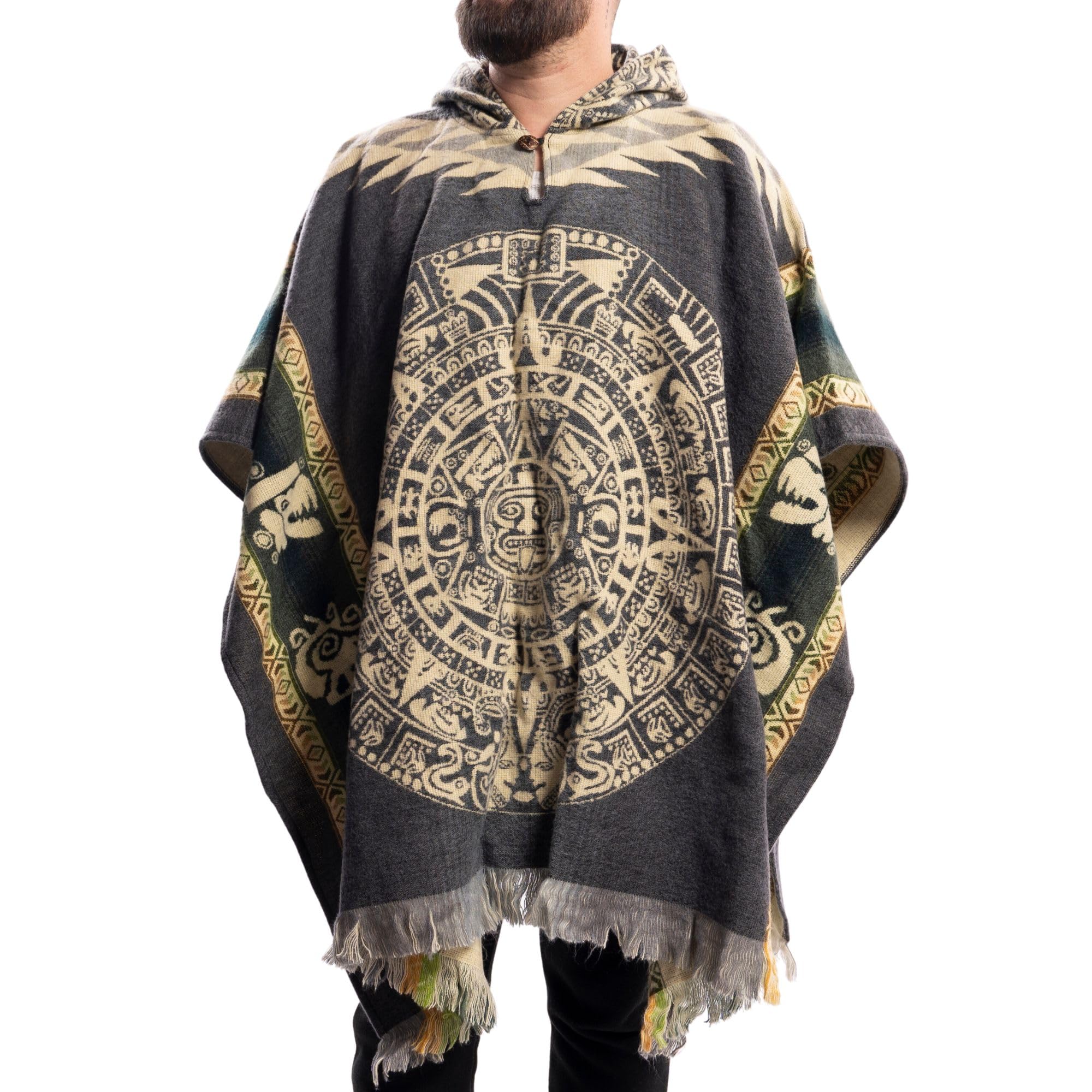
Four Mexican patterns to choose from — but read the fiber label before you fall for the look.
The draw here is choice: this Gamboa comes in four different Mexican poncho designs and colors, so you can match a look to your taste. It is positioned for cold weather and for both everyday use and special occasions. If you are shopping for a patterned cloak and want options, this is the one that hands you a spread of styles rather than a single colorway.
Now the part you should know before buying. The material is listed as alpaca, but the feedback is clear that it is only 20% alpaca, with the rest acrylic — and that is the thing people flag most. The quality, warmth, and comfort still draw praise, and it is described as soft and not itchy. But if your reason for buying a woolen poncho is a high real-wool content, this one does not deliver the same fiber ratio as the alpaca-heavy picks above. That is a fit-for-purpose issue, not a defect: it is a lighter wool blend at a value-friendly position.
The look also draws mixed notes, with a few saying it does not fully match the advertising picture. So come for the pattern options and the soft feel, and go in knowing the fiber is a blend. It will keep you comfortable on a cold day and stand out at a festival. Just do not expect the same warmth-to-weight of a 70% or 80% alpaca garment.
What you get
- Four Mexican-style designs to pick from
- Soft, non-itchy feel against the skin
- Warm enough for cold weather and special occasions
Read this first
- Blend is 20% alpaca with the rest acrylic — lower real-wool content than the top picks
- Some find the delivered pattern differs from the listing photos
Pick it for: the pattern variety and a soft, budget-friendly blend for lighter cold.
Choose the 70% blends instead: if real alpaca warmth is the whole point of your purchase.
8. Clint Eastwood Alpaca Wool Poncho

The Spaghetti Western icon replica — thick, warm, handwoven alpaca for the man who wants the look.
This is the poncho for the person who saw the movies and wants the real thing on their shoulders. It is a Clint Eastwood replica in authentic Ecuadorian alpaca wool, handwoven and styled for Western wear. The maker pitches it for casual wear, outdoor adventures, or as a costume piece, which sums up its dual life: it works as a serious cloak and as the finishing touch on a look. Quality is what people rave about most, with warmth right behind.
It is built wide enough to hang down over the arms, and the feedback calls it light for its warmth. That combination — thick-feeling warmth without a heavy weight — is the alpaca advantage. It is a unisex piece listed in a single size, so treat the width as your main fit check. It layers well over a winter outfit and reads as a genuine heritage garment rather than a printed costume.
The one honest variable is the fabric thickness: some find it thick and plush, others say it is thinner than expected. Handmade wool varies that way, and it is worth knowing if you are expecting a heavy blanket feel. At the premium end of this list, it earns its place on the strength of the craftsmanship and the iconic look. For a Western fan or anyone who wants a head-turning handmade alpaca cloak, it delivers the fantasy and the function.
Why fans love it: handwoven Ecuadorian alpaca with the authentic Western cut, wide enough to drape over the arms.
The variable: thickness runs from plush to thinner across pieces — handmade wool is not identical unit to unit.
The right buy for: Western fans and anyone who wants a statement handwoven alpaca cloak with real warmth.
Look at the 70% blends if: you want a predictable thickness and machine-washable care.
Know the Specs
Wool Percentage and Fiber Type
The percentage is the single best predictor of how a poncho will feel and perform. Alpaca wool is a smooth natural fiber, which is why high-alpaca garments usually feel soft instead of scratchy. A 70% or 80% alpaca blend holds heat well and keeps its shape, while a listing with only a token wool share behaves more like a synthetic cloak. Watch for the blend partner — sheep wool adds structure, and orlon (a synthetic) makes the poncho easier to machine-wash. If you have sensitive skin, higher natural-fiber content is your friend.
Measurements and Drape
Ponchos have no sleeves, so width is your coverage. The number that matters is the fully stretched horizontal spread — it tells you how far the wool reaches over your arms. A 210 cm spread gives an oversized, wingspan drape; a 120 cm cut sits closer like a wrapped shawl. The vertical drop tells you where the hem lands — around 100 cm from the shoulders usually hits the knees. Check both against your own frame and layering habits rather than trusting a “one size” label.
Hood, Lining, and Pockets
A hood covers your neck and head, which matters most in wind and snow. A fleece lining adds a second barrier against cold but traps more heat, so it suits deep winter better than a mild fall day. A kangaroo pocket keeps hands out of the wind. None of these are required — they define whether the poncho is a light layer or a real cold-weather coat. Decide based on your climate and how you plan to wear it.
Care and Longevity
Pure wool and high-alpaca blends generally want hand-washing or spot-cleaning, and they should never go in the dryer. Blends with a synthetic partner like orlon can often handle a gentle machine cycle. Untreated wool may carry a faint natural scent on arrival that fades after airing. Handled with basic care, a good alpaca poncho holds its shape and color for many seasons.
Common Questions
Will an alpaca wool poncho feel itchy on my neck?
How do I know what size poncho to order?
Can I machine wash a woolen poncho?
What is the difference between a hooded poncho and a hoodless cloak?
Is a 20% alpaca blend worth buying as a wool poncho?
Why does my new wool poncho smell a little strange?
How warm is an alpaca poncho compared to a regular coat?
Can a wool poncho be worn in warm weather too?
What should I check first when comparing two wool ponchos?
The Bottom Line
For most buyers, the woolen poncho for men winner is the Alpaca Land Handmade Ecuadorean Poncho because its 80% alpaca blend delivers real warmth with a soft, non-itchy feel — Its 4.5+ star rating across 700+ owners backs that up. If you want a hood for wind and snow, grab the Alpaca World Cowboy Serape for its 210 cm spread and machine-washable orlon blend. And for a lined, pocketed deep-winter cloak, the virblatt Wool and Fleece Poncho is the one to reach for. Any of the three will keep you warm; the right one depends on whether you are dressing for a commute, a festival, or a snow day.
How we choose
We do not accept paid placement. Every pick is matched to a real buyer and a real use-case; we do not hands-on test units.
Sources
Specifications: manufacturer listings and product documentation. Review insights: verified customer reviews, as of November 2026. Pricing: not shown on this page (it changes often); check the current price via the retailer link.
As an Amazon Associate, Tactical Gear Guy earns from qualifying purchases. This does not affect which products we feature.