

Canada’s military has conducted special operations warfare for almost a century, beginning with the 1st Special Service Force, which was a joint unit of American and Canadian commandos during World War II. Since then, Canada has been regarded as having some of the most elite and professional soldiers in the world.
But what Special Forces does Canada have today?
Prior to World War II, Canadian soldiers became well-known by their actions during The Great War in the battle at Vimy Ridge. While the American and British troops were unable to advance and overtake the German soldiers, the Canadians marched toward the German trenches in what was called a “creeping barrage“. The Canadians took Vimy Ridge with less men than the Allies had in casualties!
Not much is known about Canada’s Special Forces capabilities, or that Canada has Special Forces units at all! But there are numerous testimonies from other Special Forces operators who have worked alongside Canadian Special Forces and have made comments on how good they really are, sometimes to their surprise.
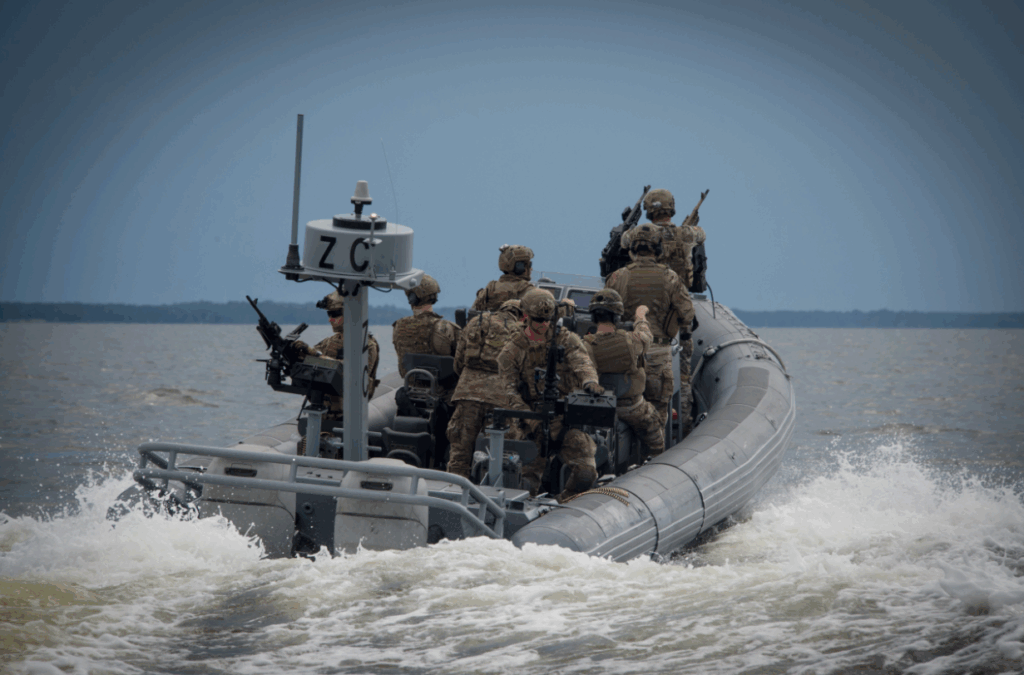
The Canadian Forces is broken down to three elements. The Army, Navy, and Airforce. Outside of these three is what’s called CANSOFCOM, which is short for Canadian Special Operations Force Command.
Within CANSOFCOM there are five individual units that work together to achieve mission success.
Joint Task Force 2 (JTF2)
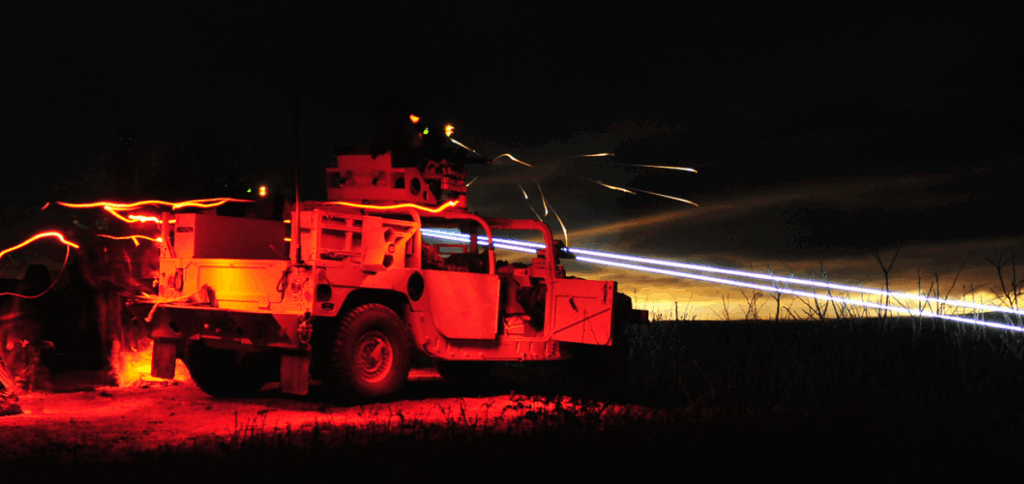
History of JTF2
JTF2 is the Tier 1 unit within the Canadian Forces, and they’re often compared to units such as Delta Force and SEAL Team 6 (DEVGRU).
JTF2 stood up in 1993 in order to conduct hostage rescue and counter-terrorism operations on Canadian soil, a responsibility which formerly belonged to the RCMP (Royal Canadian Mounted Police).
Very little is known about JTF2. After three decades, there are only a handful of individuals who have been in the unit that have given us a glimpse of what takes place.
A book released by a former JTF2 assaulter, who was a part of the unit when it stood up, wrote a book titled “We Were Invincible”. This book was written in French, but is available in English for e-readers.
Other JTF2 assaulters who have shared some of their experiences, while still keeping things relatively secret, are Dallas Alexander (featured on the Shawn Ryan Show and other podcasts) and Randy Turner on his YouTube channel Direct Action Performance.
How to join JTF2
In order to join JTF2 you must complete the following:
– Reg F: Served minimum 12 months after attaining Occupation Function Point (OFP)
– Res F: no minimum service, but must meet OFP
– Meet the minimum medical category
– Pass Military Swim Test
– Pass Pre-Selection Physical Fitness Evaluation (submit with application)
– Possess an unrestricted Provincial Drivers License
– Submit your Notice Of Intent (NOI) to receive guidance/support from CANSOFCOM
– Send application for Occupation Transfer through CoC to the BPSO
If you’re having difficulty obtaining the requirements due to operational tempo (swim test, fitness test, etc) you should reach out to the respective CANSOFCOM units selection and training cell for guidance.
What is the Pre-Selection Physical Fitness Test for JTF2?
Applicants for JTF2 must be able to perform the following standards for each test and achieve a total accumulative score of a minimum of 75 points.
- 2.4 km run withing 9 minutes and 45 seconds
- 40 push-ups without stoping
- 40 sit-ups within 1 minute
- 5 continuous pullups
- 1 Rep Max bench press of 145 pounds
Applicants for JTF2 are applying against others to be able to go to the Selection Phase, so meeting the minimum score wont make you that competitive. So, you should do your best to prepare for this portion of the selection process since your score will be compared to others’ scores.
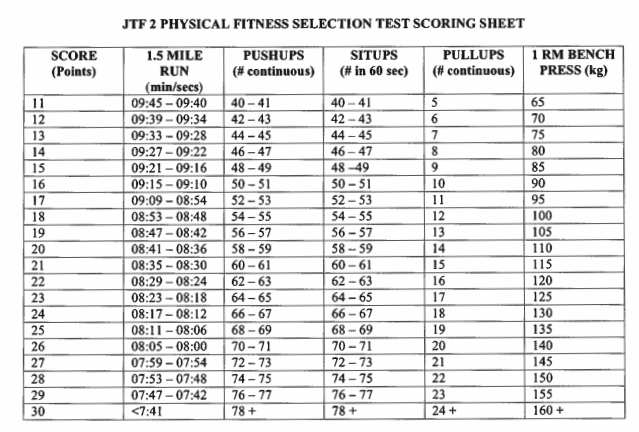
As you can see, passing the minimum requirements from each test is only worth a total of 55 points, and therefore not achieving the minimum score of 75 points required.
If you take 75 and divide it into 5 tests, the average score is 15 points for each test. So if you struggle with running and can only attain 11 points, but your bench press is strong and gets you 20 points, as long as your average is 15 points per test, then you’ll be fine. But again, that’s only for meeting the minimum requirements.
Canadian Special Operations Regiment (CSOR)
History of CSOR
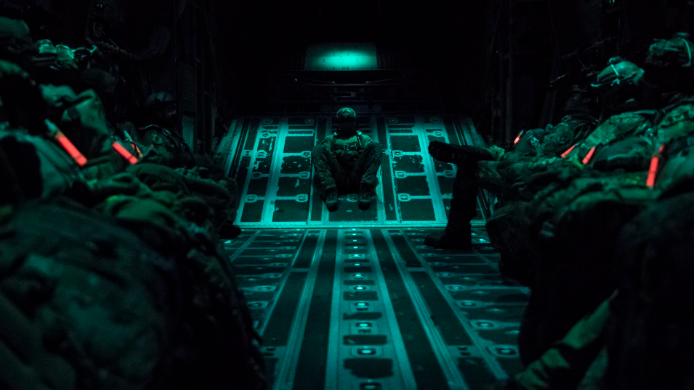
CSOR is Canada’s Tier 2 special operations unit which stood up in 2006 in order to support JTF2.
A comparison to the Americans would be similar to their Rangers or Green Berets. These units are Special Forces and can carry out missions on their own but are also used to support their Tier 1 brothers. Members typically make the step from the Rangers or Green Berets up to Delta, not the other way around.
CSOR can work independently in places around the world, but they are also used to support JTF2 missions.
CSOR has been used to help train foreign soldiers in areas such as marksmanship and counter-terrorism, like in the Sahara-Dessert back in 2014 as seen on CTV W5 special program SECRET WARRIORS.
How to join CSOR
In order to join CSOR you must complete the following:
– Reg F: Served minimum 12 months after attaining Occupation Function Point (OFP)
– Res F: no minimum service, but must meet OFP
– Meet the minimum medical category
– Pass Combat Swim Test
– Pass Pre-Selection Physical Fitness Evaluation (submit with application)
– Possess an unrestricted Provincial Drivers License
– Submit your Notice Of Intent (NOI) to receive guidance/support from CANSOFCOM
– Send application for Occupation Transfer through CoC to the BPSO
What is the Pre-Selection Physical Fitness Test for CSOR?
Applicants for becoming a Special Forces Operator must be able to perform the following standards for each test and achieve a total accumulative score of a minimum of 75 points.
- 2.4 km run withing 9 minutes and 45 seconds
- 40 push-ups without stoping
- 40 sit-ups within 1 minute
- 5 continuous pullups
- 1 Rep Max bench press of 145 pounds
Special Operations Technical Collection Operator (SOTCO)
History of SOTCO
Formally known as Canadian Joint Incident Response Unit (CJIRU), SOTCO role is to respond to CBRN threats at home and abroad.
Canada’s first CBRN Defence unit was No. 1 Radiation Detection Unit (1RDU) established in 1950 with years of changes in capabilities, titles, and reasonability transfers with the RCMP. Following the 9/11 attack in 2001, the Canadian Government became motivated to increase its CBRN Defence capability by establishing the Joint Nuclear Biological Chemical Defence Company (JNBCD Coy). This unit supported JTF2, and when CANSOFCOM was created in 2006 it became a part of the organization and re-designated as CJIRU.
How to join SOTCO
In order to join SOTCO / CJIRU, you must have completed the following:
– Complete 12 months of service after attaining Occupation Functional Point (OFP)
– Meet the minimum medical category
– Have a valid driver’s license with no restrictions
– Level II (SECRET) security clearance
– Meet SOTCO Fitness Entry Standard (see below)
What is the Fitness Entry Standard for SOTCO?
The fitness entry standard for SOTCO is the following:
- Hand Grip Test combined left and right must be greater than body weight (kg) + 20 kg (example: 80 kg person + 20 kg = 100 kg, so left + right grip must be greater than 100 kg.
- 72 kg Loaded Squat x 11 continuous reps
- 5 constitutive Pull-Ups
- 40 Situps in 1 Minute
- 20 Meter Shuttle Run (Beep Test) must achieve Level 8
- Basic Military Swim Standard
427 Special Operations Aviation Squadron (427 SOAS)

History of 427 Squadron
427 Squadron was established as a Bomber Squadron during WWII in late 1942 and disbanded less than 4 years later in June 1946. It was then reformed as a Fighter Squadron in 1952, and then changed again to a Nuclear Strike Role in 1962, and disbanded once again in July 1970. Less than 1 year later in January 1971, the squadron was reestablished as 427 Tactical Helicopter Squadron flying the CH-135 Twin Huey.
Fast forward 23 years later when the RCMP’s Special Emergency Response Team transferred its responsibility to the newly formed unit JTF2 in 1993, 427 Squadron also took the responsibility of flying for the elite unit, which was previously fulfilled by 450 SAH Flt (SERT Assault Helicopter Flight).
What aircraft does 427 SOAS use?
427 SOAS is a tactical aviation squadron that currently flies the CH146 Griffon, a utility helicopter made by Bell Helicopter similar to the Marine Corps UH-1Y Venom, designed for troop transport. The CH146 Griffon at 427 SOAS are painted with a blue paint scheme so as to not look militaristic. 427 SOAS also utilizes guns on the Griffon to use for self-defence, such as the .50 Cal Machine Gun or C6 GPMG.
Previous aircraft include the Griffon’s predecessor, the CH-135 Twin Huey, as well as the CH-178 which were the Russian made Mi-17 Helicopter on lease and used to fly covert Special Forces missions in Afghanistan.
At the time of this writing, the RCAF is looking into acquiring up to 19x UH-60M Black Hawk helicopters to be flown by 427 SOAS.
How to join 427 SOAS
In order to join 427 SOAS you must submit your NOI (Notice Of Intent) that you wish to join the organization. There is a screening process of the candidates in order to determine if applicants are a proper fit for the Special Operations Aviation Squadron.
Canadian Special Operations Training Centre (CSOTC)
History of CSOTC
Established in 2012, CSOTC mission is to provide training and education to CANSOFCOM personnel. Although it’s the most recent unit in CANSOFCOM, it was a desired concept during the original birth of CANSOFCOM in 2006, but due to the ongoing war in Afghanistan it was not created until years later.
CSOTC is always incorporating addition methods of training to CANSOFCOM support personnel in order to make sure they are ready to meet the high demands of supporting JTF2 Assaulters and Special Forces Operators.